Categories
IoT Robotics Sensors Wearables

Tiny, ingestible robot can deliver medicine, patch wounds, remove objects

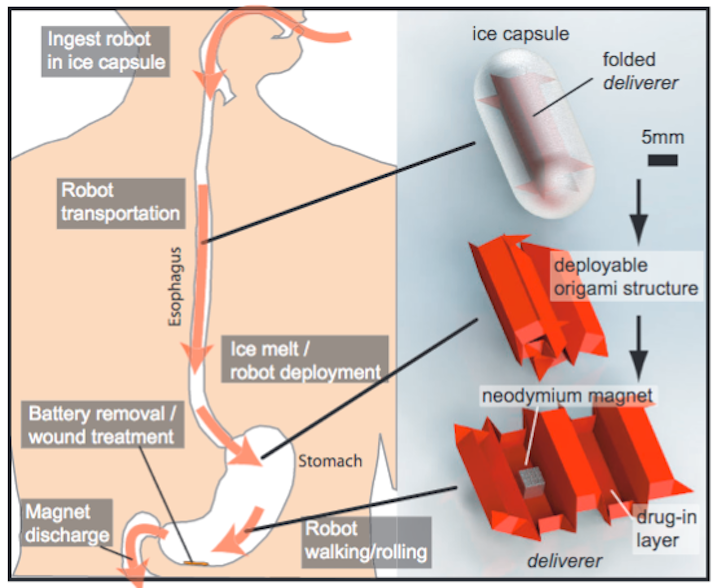
Daniela Rus and MIT, University of  Sheffield, and Tokyo Institute of Technology colleagues have developed an ingestible origami robot designed to patch wounds, deliver medicine or remove foreign objects from a person’s stomach.

The tiny robot, made of pig intestines, can unfold itself from a swallowed capsule. Steered by a doctor using external magnetic fields, the “microsurgeon” crawls across the stomach wall, and propels itself using a “stick-slip” motion.

Click to view MIT video


Wearable Tech + Digital Health NYC – June 7, 2016 @ the New York Academy of Sciences

NeuroTech NYC – June 8, 2016 @ the New York Academy of Sciences

Categories
AI IoT Machine Learning

AI on a chip for voice, image recognition

Horizon Robotics, led by Yu Kai, Baidu’s former deep learning head,  is developing AI chips and software to mimic how the human brain solves abstract tasks, such as voice and image recognition.  The company believes that this will provide more consistent and reliable services than cloud based systems.

The goal is to enable fast and intelligent responses to user commands, with out an internet connection, to control appliances, cars, and other objects.  Health applications are a logical next step, although not yet discussed.


Wearable Tech + Digital Health San Francisco – April 5, 2016 @ the Mission Bay Conference Center

NeuroTech San Francisco – April 6, 2016 @ the Mission Bay Conference Center

Wearable Tech + Digital health NYC – June 7, 2016 @ the New York Academy of Sciences

NeuroTech NYC – June 8, 2016 @ the New York Academy of Sciences


Categories
IoT Wearables

Swallowed sensors interact with smart devices

At a recent conference, Jawbone CEO Hosain Rahman said that his company is researching swallowable and implantable fitness sensors.  They would remain in a user’s bloodstream and be capable of monitoring multiple factors. The sensors could interact with smart devices, including adjusting thermostats if one’s body is too warm or cold, or not turning a car on if one’s blood/alcohol level is too high. While ApplySci believes that invasive, implanted sensors are not necessary for fitness/lifestyle applications, we applaud Jawbone’s work toward innovative, noninvasive devices

WEARABLE TECH + DIGITAL HEALTH SAN FRANCISCO – 4/5/16 @ MISSION BAY CONFERENCE CENTER

NEUROTECH SAN FRANCISCO – 4/6/16 @ MISSION BAY CONFERENCE CENTER

Categories
Assistive Technologies IoT

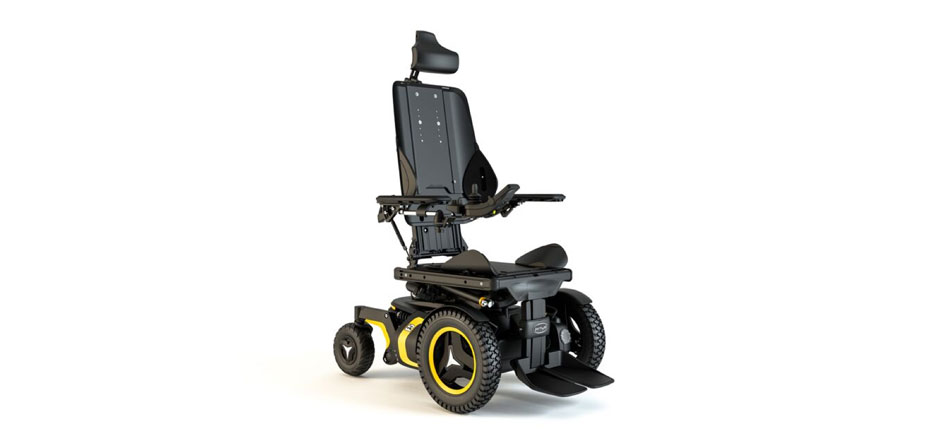
Connected wheelchair improves safety, comfort

AT&T and Permobil have developed a connected wheelchair concept meant to increase user comfort and independence.

The system monitors seating position, cushion pressure (to prevent pressure ulcers), whether a chair has turned on its side, battery level, and location, and it also predicts the need for maintenance.

The data, including location, can be remotely accessed from the cloud and shared with caregivers.

Categories
IoT Monitoring Seniors Sensors Sleep

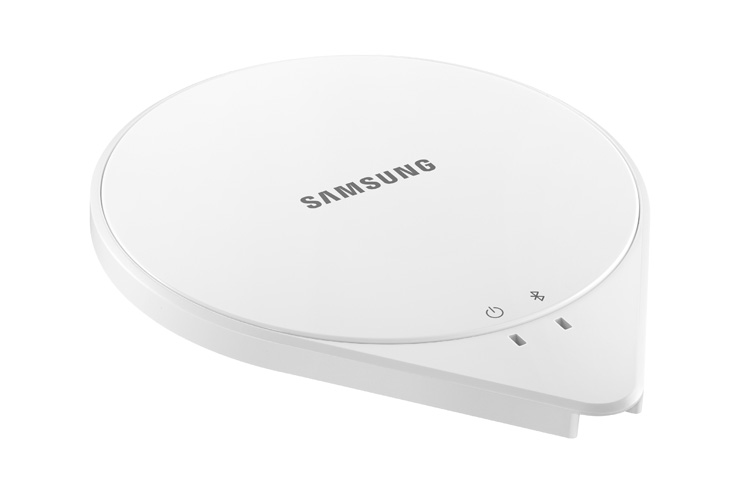
Sleep sensor directs appliances, allows remote monitoring

Samsung’s SleepSense measures breathing, heart rate, and movement in real time, without  touching the body. The company claims that this monitoring results in a 97% accurate sleep score, delivered to one’s phone.

SleepSense can communicate with a television, audio system, thermostat, and other household devices, to create a favorable sleep environment.  TVs can be turned off automatically; room temperature can be adjusted; lights can turned on in the morning; and a coffee maker can be directed to start brewing.

The cloud based system allows remote monitoring of an elderly or disabled loved one (with a mattress sensor)  and can receive emergency alerts.

Categories
Heart IoT Sensors

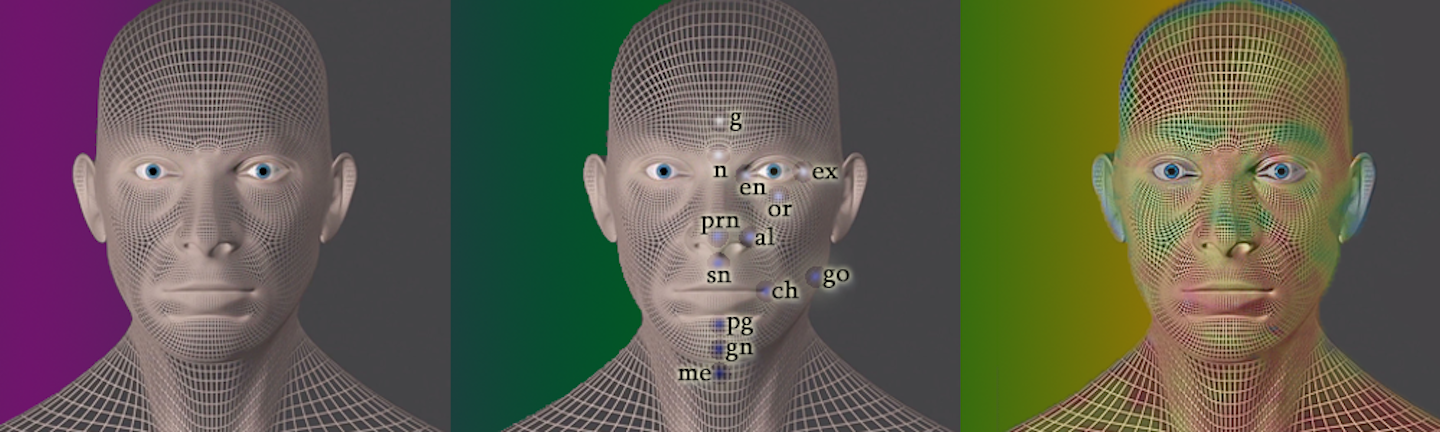
Mirror sensors, imaging systems, assess cardio-metabolic risk

Wize is a mirror that its developers claim can monitor health with breath monitors, 3D scanners, video cameras, and imaging systems. It assesses cardio-metabolic risk through changes in face shape and circulation, signs of anxiety, and  breath tests for heart attack-inducing chemicals.  After a user looks into the mirror for one minute, a health score is produced, and tips for improving health are sent.

Categories
Heart IoT Respiratory Wearables

Phone sensors measure oxygen saturation with out pulse oximeter

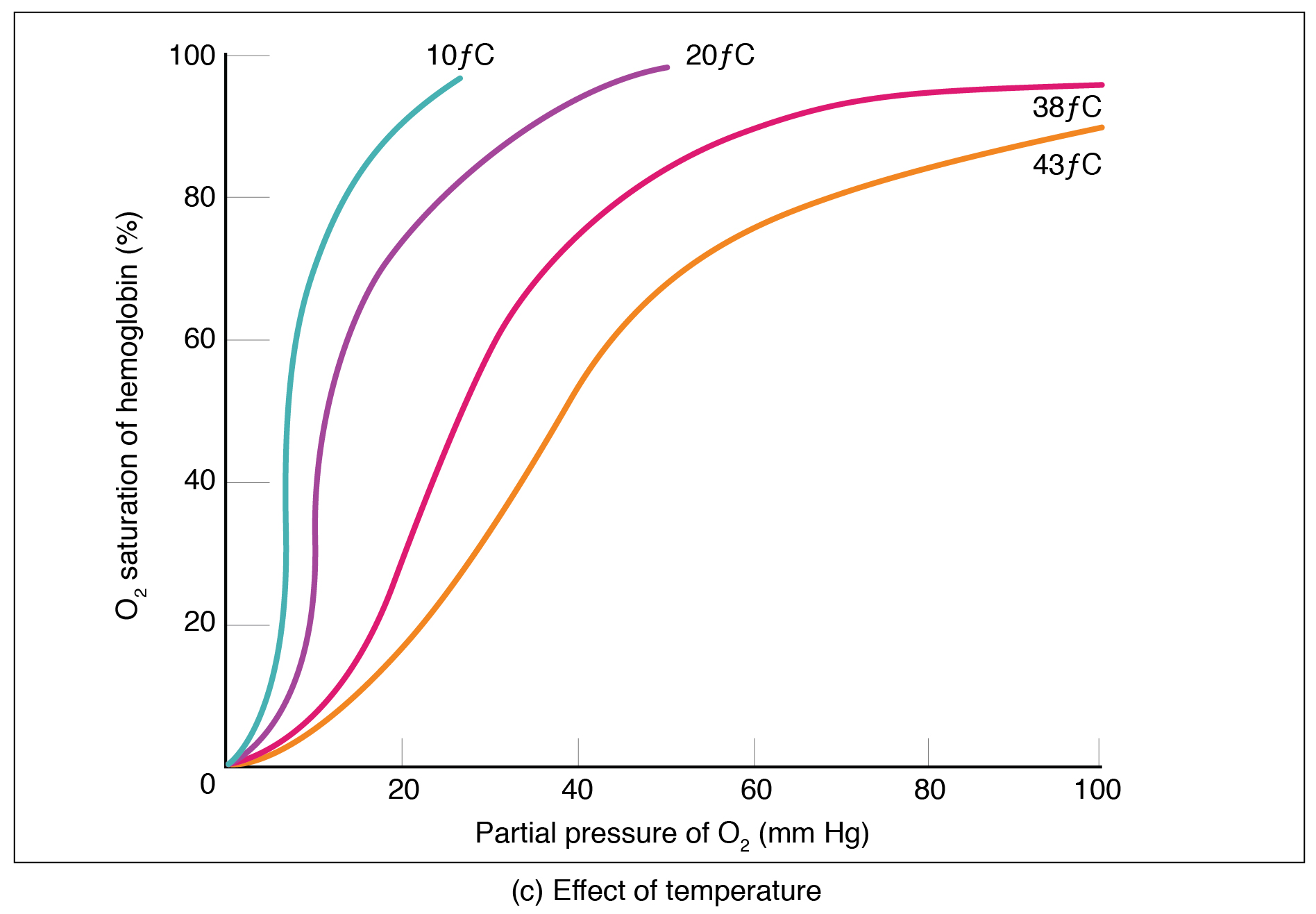
MoveSense allows oxygen saturation to be monitored  by phone sensors with what its developers describe as medical accuracy.  A mobile phone must be carried in one’s pocket, and no pulse oximeter is required.  The technology was developed by Bruce Schatz at the University of Illinois.

In a study, patients wore pulse oximeters (for comparison) and carried phones with MoveSense, which continuously recorded saturation and motion. Continuous saturation defined categories corresponding to status levels, including transitions. Continuous motion was used to calculate eight gait parameters from the data. Their existing gait model was then trained with these data points and used to predict transitions in oxygen saturation.

The researchers  discovered that analysis of the saturation, combined with the gait data, could predict saturation with 100 percent accuracy. The model accounts for patients walking faster and slower, which impacts their hearts and lungs.

Categories
fitness IoT Wearables

Samsung patent describes phone grip body fat measure

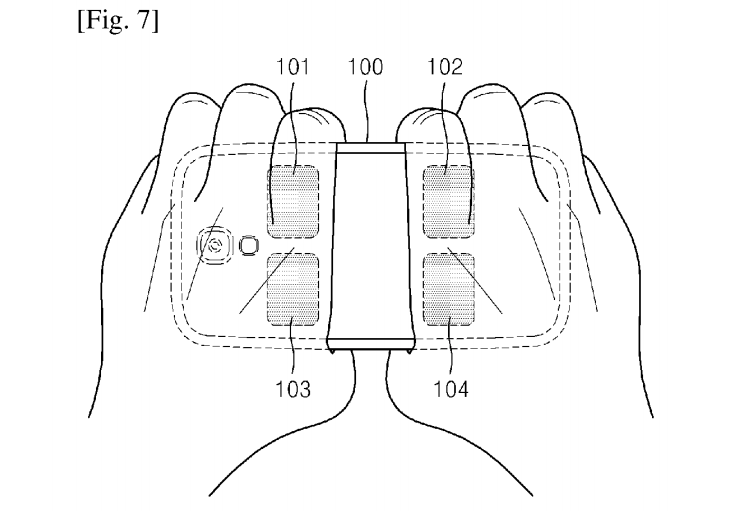
Samsung has filed a patent application describing technology that could measure body fat levels when a user grips a device. Four sensors would be incorporated into a smartphone or case.  “Input current and the intensity of the measured voltage”  are measured to determine fat levels.

Categories
Heart IoT Wearables

Phone ECG detects irregular heartbeat

USC‘s Leslie Saxon has released a study showing that smartphone ECG sensors can detect atrial fibrillation in the general population.

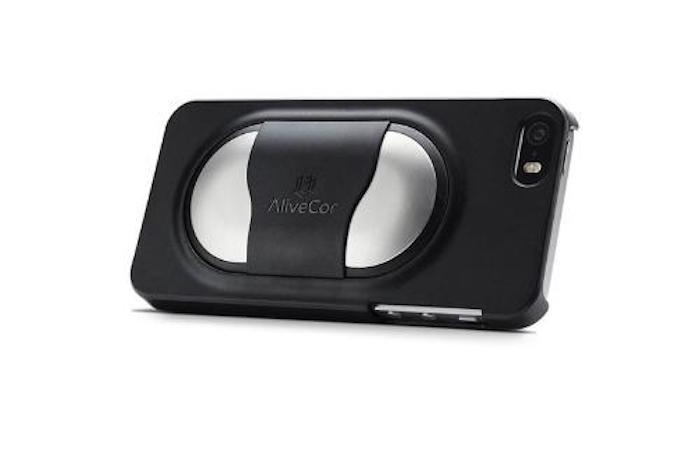
865 participants were given AliveCor enabled smartphone ECG sensors.  57,703 thirty-second ECGs were recorded and wirelessly transmitted to the cloud via an acquisition and interpretation app.  AF was detected in 185 recordings from 93 participants.

After 30 days, 73% of participants said that they were more aware of their heart rate and behavior.  According to Saxon, “Having an ECG device on smartphones is quite incredible because it makes tracking heart health and behavior accessible to almost anyone.”

WEARABLE TECH + DIGITAL HEALTH NYC 2015 – JUNE 30 @ NEW YORK ACADEMY OF SCIENCES.  REGISTER HERE.

Categories
IoT Seniors Sensors Wearables

Stamp sized wearable detects falls

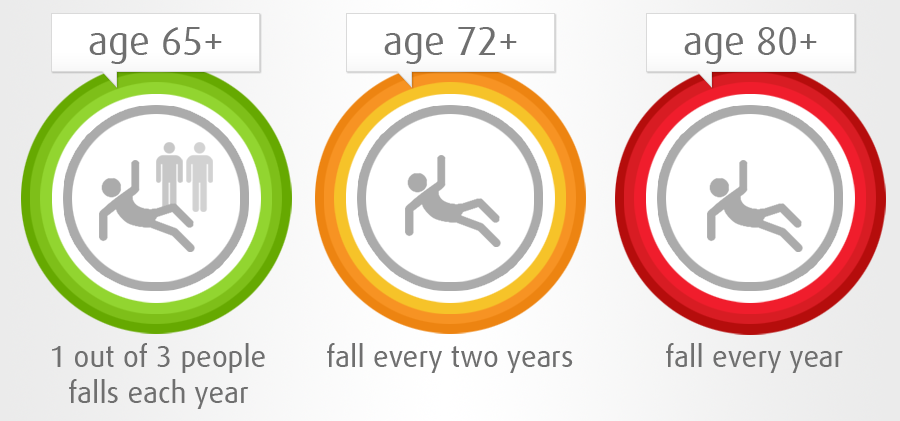
As part of its IoT Ubiquitousware platform, Fujitsu has developed a stamp sized sensor tag that detects falls, position, posture, and temperature changes.

The tags contain accelerometers, barometers, gyroscopes and microphones. They can also include heart rate sensors and GPS modules. Data is transmitted via Bluetooth Low Energy. Algorithms analyze the data and automatically send alerts to caregivers.

The sensors can be worn as wristbands, on lapels or pockets, or be attached to shopping carts and walkers.  Obvious potential users include seniors and  hospital patients.

WEARABLE TECH + DIGITAL HEALTH NYC 2015 – JUNE 30  @ THE NEW YORK ACADEMY OF SCIENCES.  REGISTER BEFORE FRIDAY, MAY 15th TO RECEIVE THE PREFERRED RATE.

Categories
Infectious Disease IoT mHealth Pregnancy

Smartphone blood test detects HIV, Syphilis

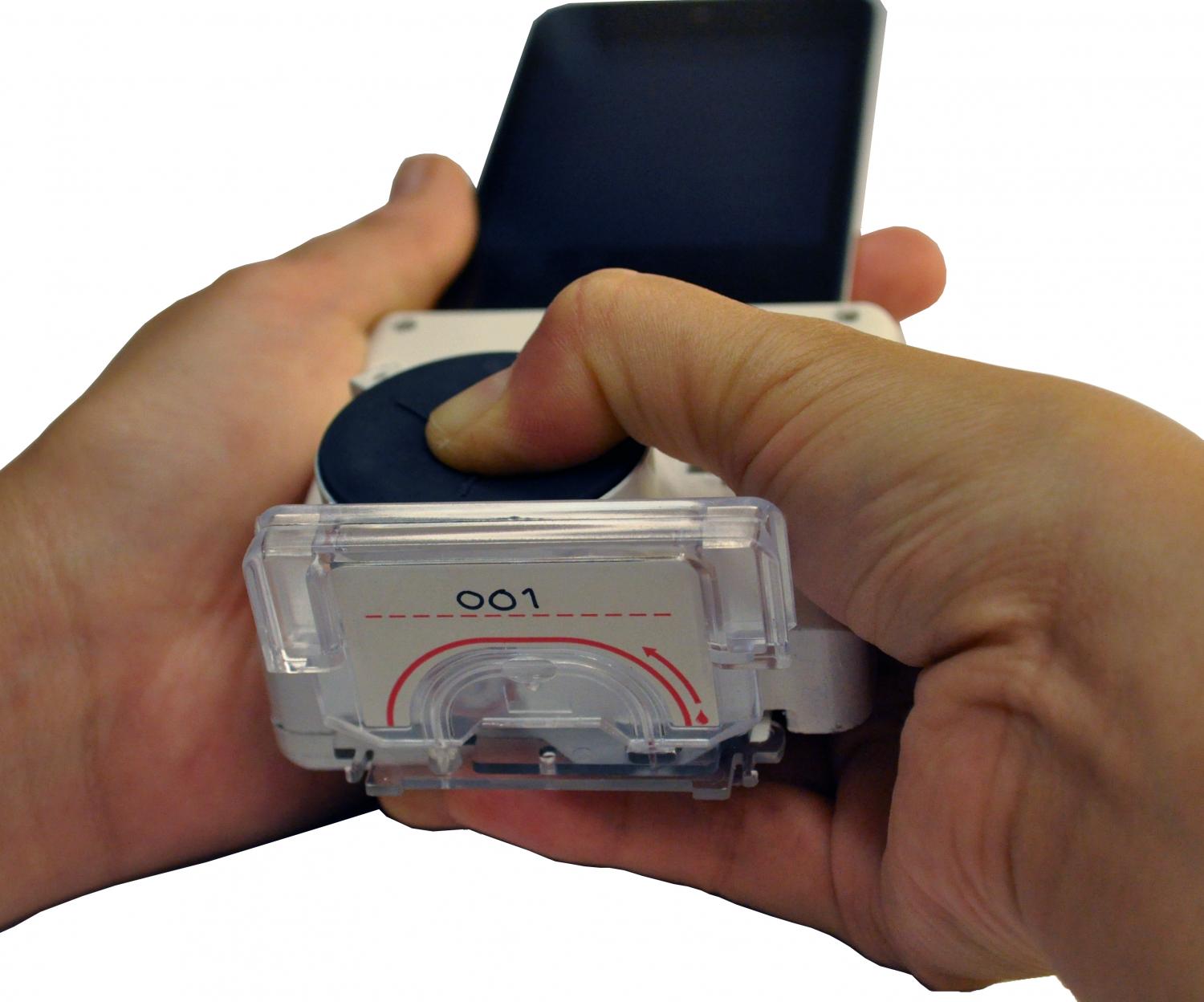
Columbia bioengineering professor Samuel K. Sia has developed a cheap smartphone dongle that can detect three infectious disease markers from a finger prick of blood in 15 minutes. The device replicates mechanical, optical, and electronic functions of a lab based blood test.  It performs an enzyme-linked immunosorbent assay without requiring stored energy, as power is drawn from the phone. Its triplexed immunoassay — HIV antibody, treponemal-specific antibody for syphilis, and non-treponemal antibody for active syphilis infection — is not currently available in a single test format.

This could be a breakthrough for disease prevention in the developing world.  A recent study details 96 patients in Rwanda who tested whole blood obtained via a finger prick, with the goal of preventing mother to child disease transmission.

Wearable Tech + Digital Health NYC 2015 – June 30 @ New York Academy of Sciences