 http://www.boston.com/lifestyle/health/gallery/wearable_trackers/
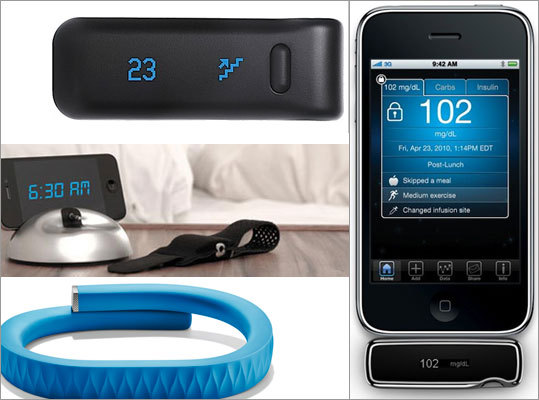
An overview of 8 new sensor based health tracking devices. Some predict that 400 million such products will enter the market by 2014.
 ApplySci - Deep Tech Health + Neurotech
http://www.boston.com/lifestyle/health/gallery/wearable_trackers/
An overview of 8 new sensor based health tracking devices. Some predict that 400 million such products will enter the market by 2014.
 http://www.wired.co.uk/news/archive/2013-03/20/implantable-chip-doctor
A multidisciplinary Swiss team has developed a tiny, implantable device that instantly analyses the blood before wirelessly sending the data to a doctor.
The device can be used for monitoring general health, but the team also sees immediate applications in monitoring the efficacy of treatments such as chemotherapy in order to tailor drug delivery to a patient’s unique needs.
 http://online.wsj.com/article/SB10001424127887324323904578368572640617966.html
The Health eHeart Study will use smartphone apps, sensors and other devices to gather data on a wide variety of measures associated with cardiovascular health—including blood pressure, physical activity, diet and sleep habits—in real time.
 http://www.sys-con.com/node/2582171
A Fujitsu research lab has developed software that can accurately measure a subject’s pulse using the small digital cameras attached to smartphones and tablets.
The technology is based on the fact that the brightness of an individual’s face changes slightly as their heart beats, due to their blood flow. Hemoglobin, which carries oxygen around the body, absorbs green light, so analyzing the change in color of parts of the face reveals their heart rate.
As most image sensors capture pixel information in red, blue and green, they have the ability to detect hemoglobin built in. Fujitsu’s technology keeps track of specific regions of the face over time to take pulse measurements.
 http://gigaom.com/2013/03/15/tictrac-emerges-to-help-make-health-tracking-more-mainstream/
It seems that every day a new app or device promising the ultimate in health or fitness monitoring enters the market. A startup has created a personal analytics dashboard which gives people a big picture view of their own aggregated data and underlying patterns, helping them make sense of the numbers.
 http://www.biometricupdate.com/201303/super-thin-wearable-sensor-monitors-health-transmits-data/
Eliminating the elastomer backing makes the device one-thirtieth as thick, and thus “more conformal to the kind of roughness that’s present naturally on the surface of the skin,” says John Rogers at the University of Illinois. It can be worn for up to two weeks and can measure temperature, strain, and the hydration state of the skin, and also be used to monitor wound healing.