Categories
Brain Parkinson's

Joe Wang developed, closed-loop, levadopa delivery/monitoring system for Parkinson’s disease

Early Parkinson’s Disease patients benefit significantly from levodopa, to replace dopamine to restore normal motor function. As PD progresses, the brain loses more dopamine-producing cells, which causes motor complications and unpredictable responses to levodopa. Doses must be increased over time, and given at shorter intervals. Regimens are different for each person and may vary from day-to-day.

Currently, clinicians assess levodopa’s benefit by patient testimony and clinical exam, making it difficult to determine optimal treatment. Novel levodopa delivery strategies and wearable sensors that track symptoms and disease progression have been created, but levodopa levels in the body have not been monitored in real time.

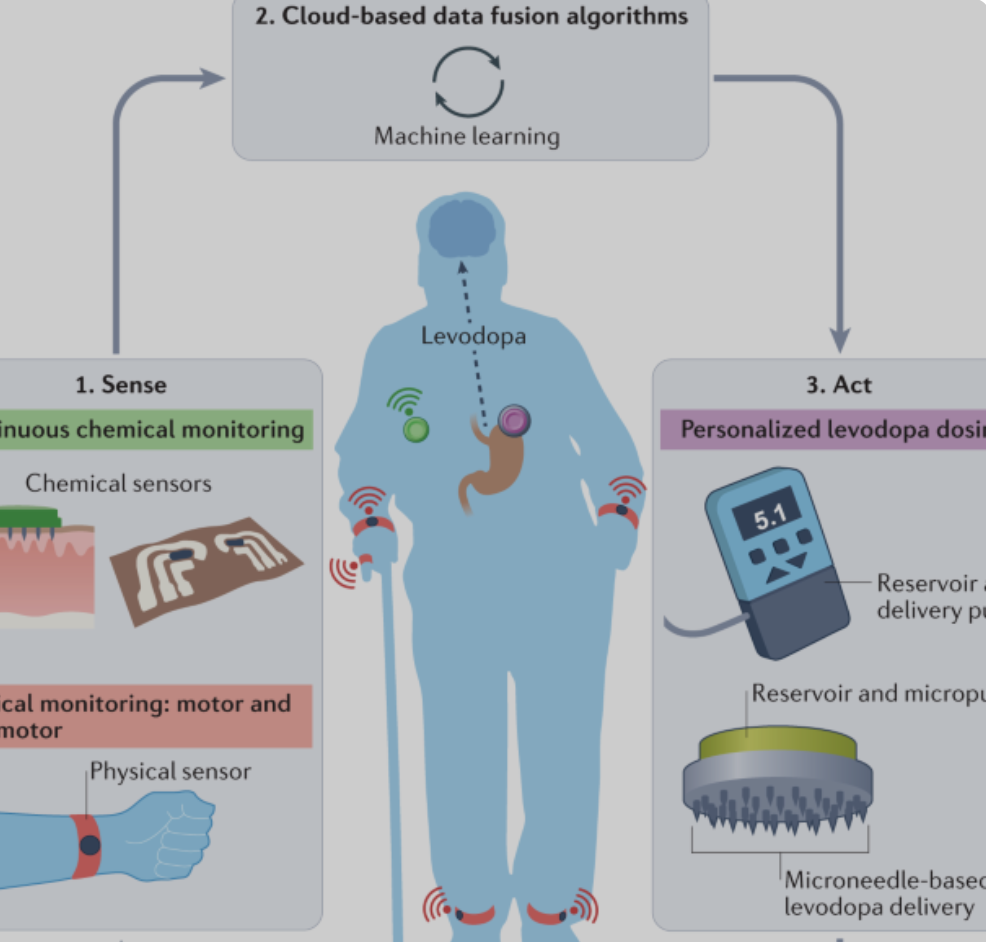
Joe Wang and colleagues have developed a closed loop levodopa delivery system. A network of physical and chemical sensors monitor levodopa levels and inform a delivery device, guided by algorithms, creating a personalized regimen. This can finally optimize the therapeutic management of Parkinson’s Disease.


Join ApplySci at MIT on September 30th for Deep Tech Health + Neurotech Boston

Categories
Diabetes Sensors Wearables

Microneedle wearable continuously monitors glucose, lactate, alcohol

UCSD Professor Joe Wang and colleagues have created a multiple biomarker monitor in the form of a painless microneedle patch, which Wang calls a “complete lab on the skin.” Glucose, lactate and alcohol levels are monitored simultaneously, in real time.

Microneedles enable the direct sample of interstitial fluid, which provides a similar measure of biochemical levels as blood.

The researchers gave the example of diabetes as a use case, as alcohol can lower glucose levels, and fatigue, measured by lactate, can influence the body’s ability to regulate glucose. Monitoring all three parameters at the same time could, therefore, better help diabetics manage their condition.

Five users wore the device on their upper arm, while exercising, eating, and drinking wine. Glucose levels were monitored simultaneously with either their alcohol or lactate levels. The glucose, alcohol and lactate measurements taken by the wearable patch closely matched the measurements taken by a commercial blood glucose monitor, Breathalyzer, and blood lactate measurement performed in the lab.

The company AquilX was established to commercialize the technology, with plans to add more sensors to the device, including those that can monitor medication levels.

Click to view UCSD video


Join ApplySci at MIT on September 30, 2022 for Deep Tech Health + Neurotech Boston
Categories
Sensors

Wang’s fingertip sweat sensor detects glucose levels

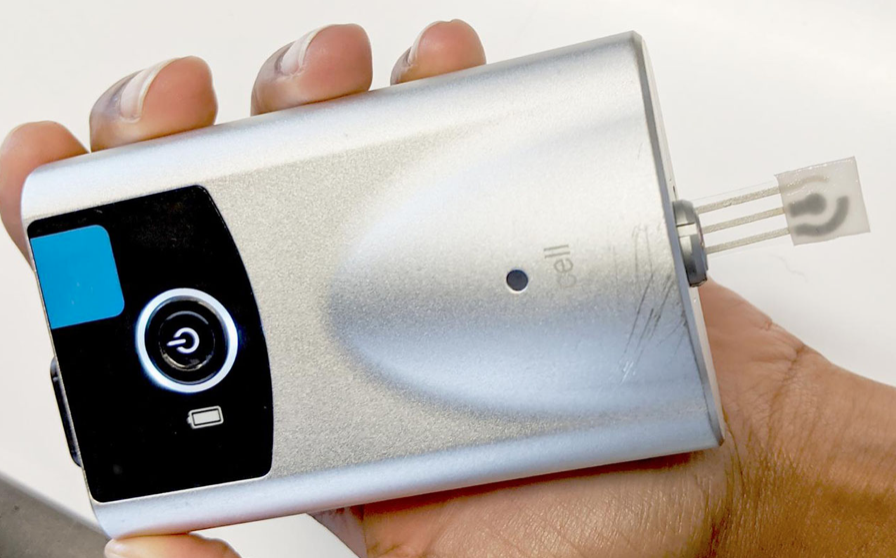
UCSD’s Joe Wang has developed a totally noninvasive sensor and algorithm to detect glucose levels from sweat on the fingertip. The painless, rapid, and accurate system could revolutionize diabetes management. The systemcombines a simple touch-based fingertip sweat electrochemical sensor with a new algorithm that addresses for personal variations toward the accurate estimate of blood glucose concentrations. It leverages the fast sweat rate on the fingertip for rapid assays of natural perspiration, without any sweat stimulation, along with the personalized sweat-response-to-blood concentration translation. A reliable estimate of the blood glucose sensing concentrations can thus be realized through a simple one-time personal precalibration. Such system training leads to a substantially improved accuracy with a Pearson correlation coefficient higher than 0.95, along with an overall mean absolute relative difference of 7.79%, with 100% paired points residing in the A + B region of the Clarke error grid. The speed and simplicity of the touch-based blood-free fingertip sweat assay, and the elimination of periodic blood calibrations, should lead to frequent self-testing of glucose and enhanced patient compliance toward the improved management of diabetes.

Click to view Joe Wang discussing wearable sensors at they 2019 ApplySci conference at Harvard Medical School.

Join ApplySci at the 14th Wearable Tech + Digital Health + Neurotech conference at MIT on April 8, 2022

Categories
Covid-19 Sensors

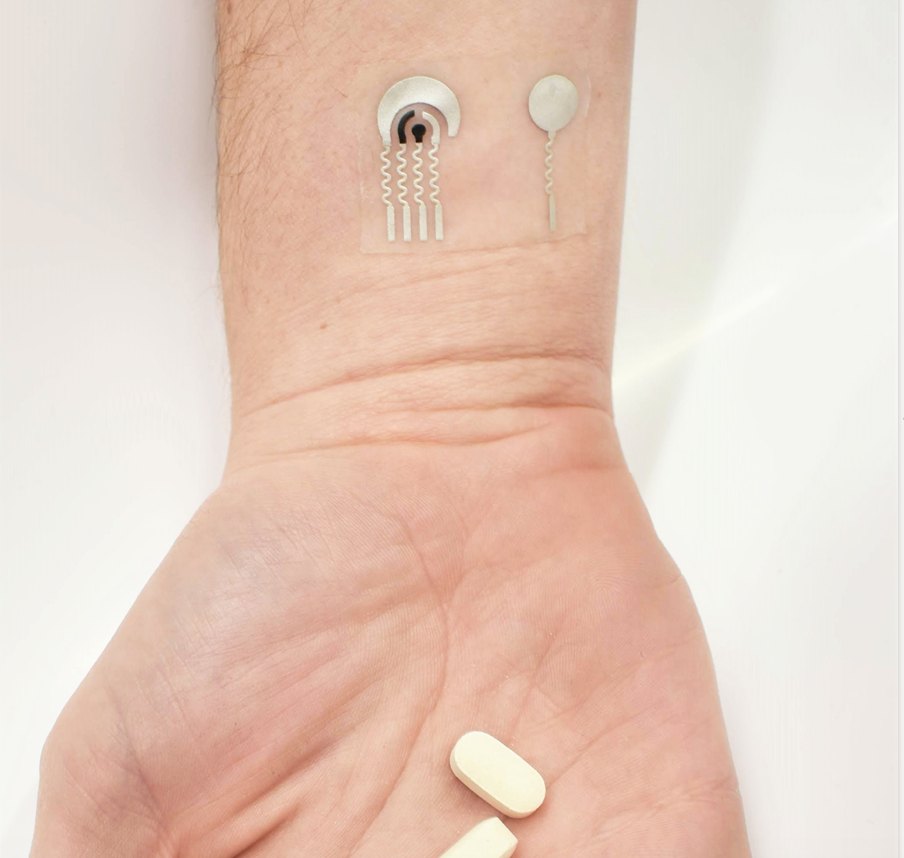
First nutrition monitoring wearable tracks vitamin C; could be useful in COVID treatment

UCSD’s Joe Wang has again disrupted chemical sensing, by creating a wearable vitamin C sensor, which is a departure from now common vital sign and activity sensing wearables. This is the first time a wearable has been used to track nutritional intake, a key component of general health and disease prevention.

Vitamin C cannot be synthesized by the human body and must be obtained through food or supplements. It supports immune health, collagen production, wound healing and may be useful in treating cancer, heart disease, and COVID-19. High doses have been linked to reduced mortality in COVID patients with Sepsis and/or ARDS in studies.

The adhesive patch, applied to skin, stimulates sweating, and quickly detects vitamin c levels using flexible electrodes containing the enzyme ascorbate oxidase. When vitamin C is present, the enzyme converts it to dehydroascrobic acid. The resulting consumption of oxygen generates a current that is measured by the device. 

Click to view Prof Wang’s (brilliant) talk at the recent ApplySci conference at Harvard Medical School.