Categories
Apps fitness Wearables

Gamified fitness with Atari classics

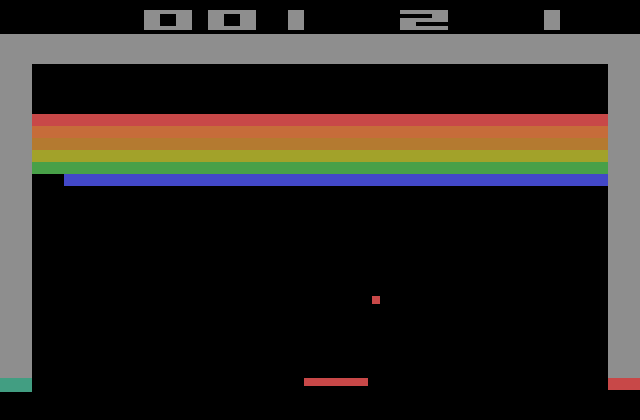
Atari is entering the digital health space, using classic games like Pong, Breakout & Centipede to incentivize users to participate in fitness challenges.  The gamified app is called Atari Fit and includes circuit workouts and running programs. Users exercise individually or with friends while earning points to unlock Atari games.  The app includes ranked leaderboards where skills are compared and shared socially.  Walgreens‘ digital health platform  will provide rewards for participating in challenges that log steps taken.

Atari Fit will be compatible with  popular wearables including Fitbit and RunKeeper.  It will also aggregate data from other platforms to allow users to comprehensively track activity.

Categories
Apps Monitoring Sensors

Hormone sensor + cloud platform for women

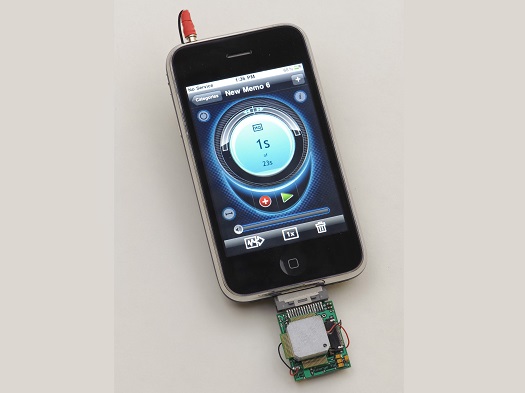
Open Source Health, a cloud based women’s healthcare platform, has unveiled a device for  self-measuring hormones using a drop of blood from one’s finger.  Each single use  bio-sensor chip performs up to 5 tests at home.  Estrogens, progestogens and androgens can be measured. Future plans include the ability to measure thyroid hormones (TSH, T3 and T4)  and nutrition and vitamin levels.

The device uses hyper-spectral sensing technology and advanced protein synthesis.  A single drop of blood in the sensor sends real time results to a smartphone, which are then uploaded to a cloud-based platform for analysis.


Categories
Apps Brain Sensors Wearables

Light tracking wearable to prevent seasonal depression

As the shortest day of the year approaches, we all risk the impact of a lack of sun on our personal wellness.

Bright light exposure has myriad mental health benefits, including improved mood, and enhanced digestion, energy and sleep.   Studies show that light therapy is as effective as antidepressant medication, with additional benefits and no side effects.  SunSprite is a wearable that empowers users to prevent seasonal depression (and other light-associated problems) by quantifying their own exposure to daily bright light.  Light affects hormone levels, key to many aspects of health, which ApplySci believes will be one of the key measurables in the next generation of wearables.

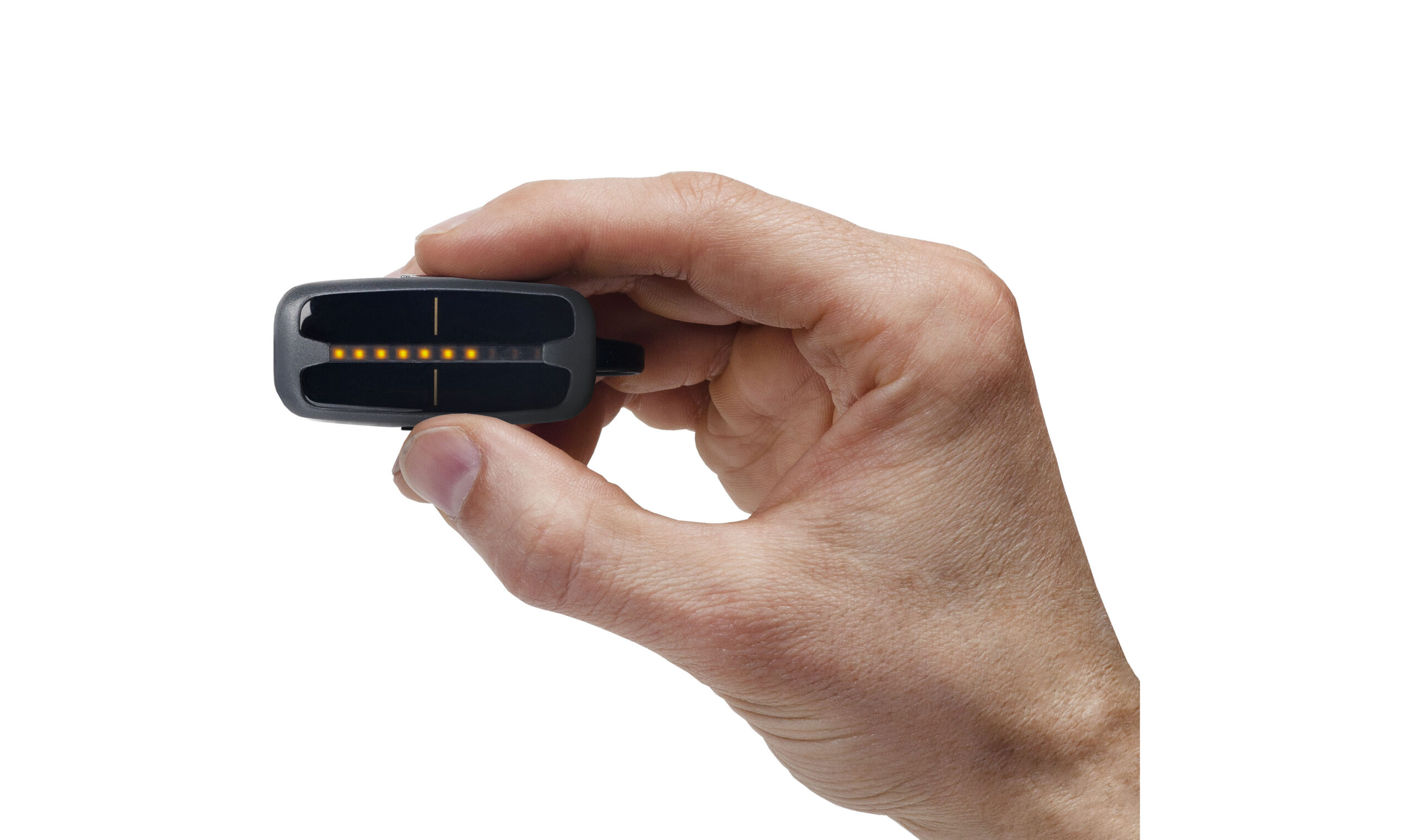
Bright light is absorbed through the eyes, travels through receptor cells on the retina, and then onto the brain, which controls hormonal cycles.  It is not absorbed through the skin, as is commonly thought.  SunSprite is solar powered and has dual sensors that measure visible and UV light.  It contains 10 LED lights, each representing 10% of a person’s daily goal.  A button is pushed to view progress and sync with a mobile phone via Bluetooth.  Users receive instant sun exposure feedback via the device’s display, and deeper analysis from the mobile app.  Personalized coaching is offered,  goals are set, and trends are tracked.

The company  is run by Ed Likovich and a team of Harvard scientists.  The device is compatible with iPhone, will soon be compatible with Android, and can also provide light feedback with out the mobile app.

Categories
Apps Brain Machine Learning

Speech app detects bipolar mood swings early

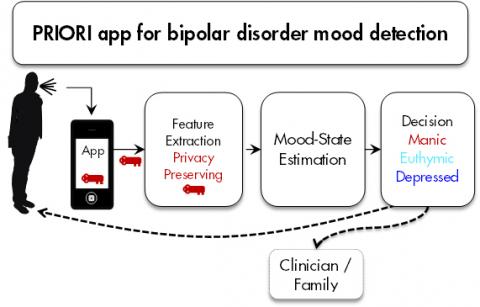
PRIORI is an android app that monitors subtle voice changes to detect bipolar mood swings.  It was developed by Zahi Karam, Emily Mower Provost and Melvin McInnis at the University of Michigan.  The hope is to anticipate swings before they happen, and intervene.  PRIORI was inspired by the families of bipolar patients, who often were first to detect an imminent mood swing during conversations.

Doctors routinely look for speech characteristics to assess mood in bipolar patients. Those heading toward a manic episode may speak louder or faster than usual, and may jump from topic to topic. A recent study showed depressed patients having longer speech pause times. The pauses often shorten as patients are treated with antidepressants.  Another study showed differences in pitch and jitter in different mood states among bipolar patients. PRIORI identifies these signals and notifies the patient or doctor.

The app monitors voice patterns during calls made, and during weekly conversations with a member of the care team.  Characteristics of the sounds  and silences of each conversation are analyzed. Only the patient’s side of calls is recorded.  The recordings are encrypted and not available to the research team. They see the results of the analysis, which are stored in secure servers to ensure privacy.  Standardized weekly mood assessments with a clinician provide a mood benchmark, and are used to correlate the acoustic features of speech with a patient’s mood state.

As other conditions also cause voice changes, the same technology is being tested for schizophrenia, PTSD and Parkinson’s patients.

Categories
AI Apps Brain Sensors

Smartphone sensors power mental health app

Dartmouth professor Andrew Campbell has developed a mental health monitoring app based on automatic smartphone sensing. StudentLife compares students’ happiness, stress, depression and loneliness to their academic performance

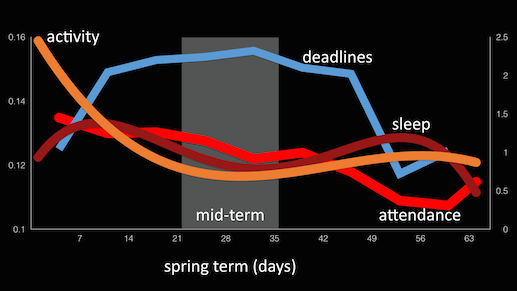
In a recent study, passive sensors continuously collected data on location, conversations, mobility, and sleep patterns of 48 participants over 10 weeks.  The students were also prompted with questions about their mood and stress several times per day.

The researchers administered (self reported) mental health and behavioral surveys at the start and end of the term, evaluating participants on depression, loneliness and stress.  Academic records, including GPAs, were also measured.

Campbell’s team found strong correlations between the self-reported data and the automatic sensing data.  They believe that, based solely on the automatic data, the app could effectively predict certain mental health issues and academic performance levels in students.

Categories
Apps

Mental health app analyzes data for early intervention

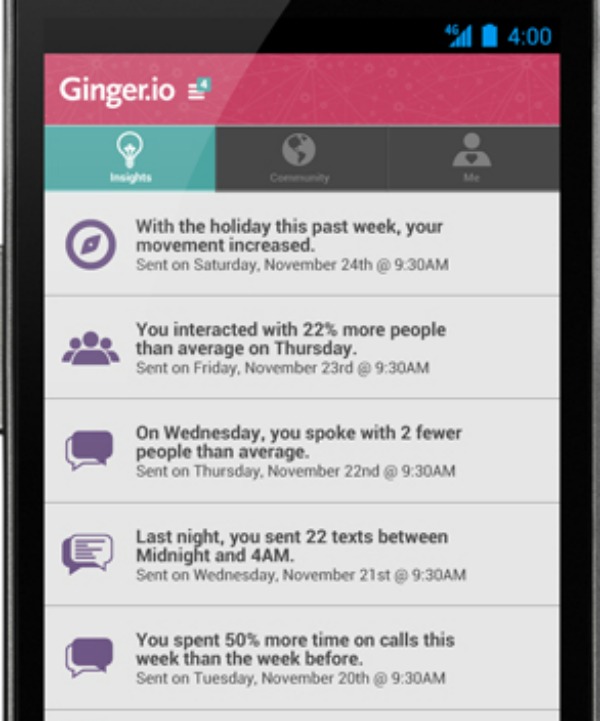
Ginger.io is a mental health app used to collect data and prompt early intervention of symptomatic patients to prevent relapses.  By passively analyzing mobile data, the app can detect if a patient with mental illness is acting symptomatic.

Symptoms may include lethargy (decreased movement captured by motion sensors) or infrequent texts (captured by the message log). If the app detects an unusual pattern, it sends text messages to the patient and his or her health care provider, who can monitor and intervene if necessary.

Ginger.io has also been used in research at UC San Francisco, to look at the role behavioral data plays in heart disease. Forsyth Medical Center in North Carolina used it to study how data can help discern behavioral differences in diabetes patients.  A UC Davis trial used the app as a low cost method of monitoring youth with psychosis.

Users complete a survey about their conditions, treatment, and health care provider. Ginger.io then begins passively collecting millions of interaction and location data points. Motion data is captured by a phone’s accelerometers. GPS pinpoints where a person visits. It also logs the duration and frequency of phone calls and texting patterns.

For a few days, the app records a person’s normal patterns.  Then algorithms look for significant deviations. If any are detected, the app alerts the user. A text may say “On Wednesday, you spoke with two fewer people” (signaling isolation), or “You traveled 50 percent less on Thursday” (signaling lethargy).

If the algorithms detect enough deviations to determine that the patient is behaving inconsistently, Ginger.io alerts the health care provider. The provider may see a text explaining that the patient is increasingly acting isolated or lethargic. Or they may see a green box next to the patient’s name turn to red, signaling a need for intervention.

Categories
Apps Data fitness

Apple focuses on digital health

This week, Apple announced its Health app and Healthkit framework in an attempt to standardize and the collection, display, and interpretation of of personal health data.

In a new ad, aired yesterday, the company highlights fitness hardware, including Misfit Shine, Zepp Golf Sensor, Adidas miCoach Smart Ball, Wahoo Fitness Blue and Withings Healthmate, and health apps including Nike+ Running, Strong Lifts, Sprinttimer, Argus and Johnson & Johnson Official 7 Minute Workout App.

“Developers have created a vast array of healthcare devices and accompanying applications – everything from monitoring your activity level, to your heart rate, to your weight, and chronic medical conditions like high blood pressure and diabetes. But up until now the information gathered by those applications has lived in silos,” said Software Engineering SVP Craig Federighi. “You can’t get a single comprehensive picture of your health situation. But now you can with HealthKit.”

Categories
Apps Cancer Sensors

Chemical sensor app for lung cancer detection

Vantage Health/ STSI Press Release

Vantage Health and Scripps Translational Science Institute are developing point-of-care chemical sensor apps.

STSI will help validate the sensors, which can detect basic volatile organic compounds by using gas chromatography and mass spectrometry. They intend to use the sensor to detect VOCs commonly associated with lung cancer.

Last month Vantage Health partnered with NASA to commercialize its patents in nanotechnology, chemical sensing, carbon nanotubes, medical diagnoses, and environmental sensing as mobile health products.  Their stated initial application was lung cancer.

Categories
Apps fitness

Streamlined, simplified, cloud based consumer health data

http://www.wellnessfx.com/

WellnessFX provides consumers with lab test results, real time heart rate data, and long feedback data from sleep sensors in a simple and well designed format.  They seek to empower individuals to control their health and fitness by monitoring themselves, making it “easy to view changes that occur between blood tests, allowing you to adjust your lifestyle for even better health.”

Categories
Apps Assistive Technologies Eyes

Smartphones and tablets assist the visually impaired

http://bits.blogs.nytimes.com/2013/09/29/disruptions-guided-by-touch-screens-blind-turn-to-smartphones-for-sight/?partner=socialflow&smid=tw-nytimesbusiness&_r=0

The New York Times Bits blog reports that “advocates for the blind say that smartphones and tablets could be the biggest assistive aid to come along since Braille was invented in the 1820s.”  Writer Nick Bilton explores some of the many ways–from voice commands to gesture readers–that mobile devices are helping the visually impaired.

Categories
Apps mHealth Monitoring Sensors

Crowdfunded breast exam sensor and software

http://eclipsebreasthealth.com

Eclipse Breast Health Technologies has launched a crowdfunding campaign to test and eventually bring to market a wireless sensor meant to aid in the early detection of breast cancer and the tracking of patients being treated for the disease.  The campaign is meant to support the company as it goes through the FDA approval process.  With the simplicity of the home self-check, and  the potential vast amount of data that the company can gather on its servers, this is a potentially disruptive clinical tool.  Clearly those cases where the device did not detect cancer when it should have will make or break this product.

The system consists of a handheld imaging device paired with imaging software that tracks changes in breast density over time, and also incorporates an element of social networking. Eclipse says the device, which uses what the company calls “transphotonic” technology – combining low-energy photons and light sensors, without the need for radiation – is as much as five times as sensitive as the human hand.

The imaging device links wirelessly or by USB to a PC, smartphone or tablet, where a Web application creates a visual representation of the self-exam and helps quantify observations. Data is uploaded to patient accounts on a platform that calls Pink Cloud. From there, women can compare readings over time, share the information with their physicians or connect with others on Pink Cloud, which incorporates a social network of Eclipse users.

Categories
AI Apps Assistive Technologies Brain mHealth Monitoring Seniors Sensors

Personalized robot companion for seniors

http://cordis.europa.eu/fetch?CALLER=OFFR_TM_EN&ACTION=D&RCN=11525

A European consortium of research institutes, universities and technology companies has developed a highly customizable robot companion to help seniors to maintain their quality of life, stay healthy and avoid social exclusion.

The robot, a mobile wheeled semi-humanoid figure equipped with cameras, sensors, audio, and a touch screen interface, can remind users to take their medicine, suggest they have their favorite drink, or prompt them to go for a walk or visit friends if they haven’t been out for a while. As part of a larger smart-home environment that can include smart clothing to monitor vital signs, the system can monitor user’s health and safety, and alert emergency services if necessary.