Categories
fitness Wearables

Apple patents more wearable sensors

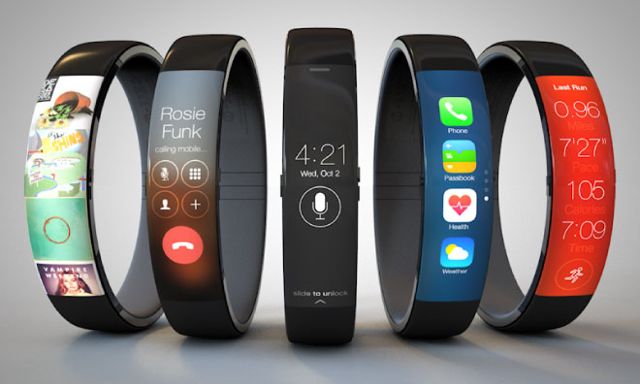
Apple Insider reports:  “A batch of Apple patent filings published on Thursday describe a system of interconnected sensors — some being wearable devices — that work with an iPhone hub to monitor activity levels, dynamically set or cancel alarms and manage push notification settings, among other automated tasks.”

The patents include: Method and Apparatus For Personal Characterization Data Collection Using Sensors,  Method and Apparatus for Automatically Setting Alarms and Notifications, and an update to a 2010 application describing a heart rate monitor embedded in a future iOS device.  All enable the iPhone to collect data from sensors in wristbands and other wearables to track activity levels and adjust settings based on a user’s behavior.
Categories
fitness Sensors Wearables

Apple patents weightlifting tracker

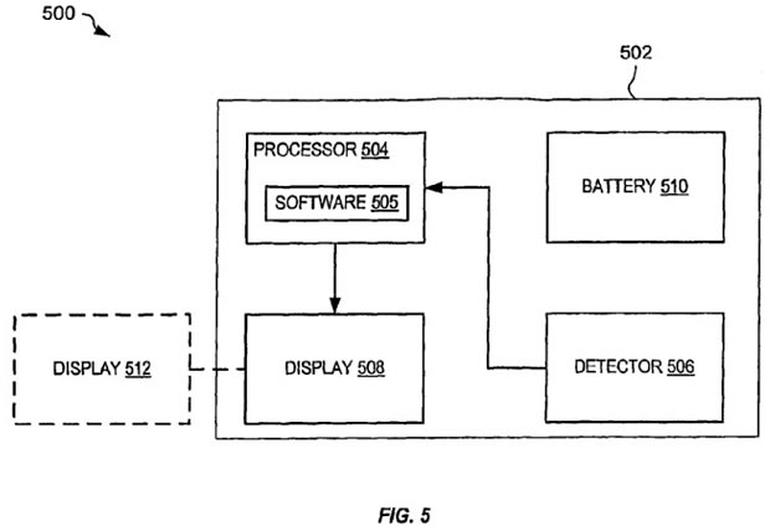
Apple’s U.S. Patent No. 8,749,380 is a “shoe wear-out sensor, body-bar sensing system, unitless activity assessment and associated methods.”   

The patent describes a system where a sensor-laden device attaches to a weightlifting bar and counts and displays repetitions.  A watch for remote readings is included.  It is widely thought to be a part of an iWatch weightlifting tracker.

The device incorporates sensors, accelerometers, and processors with its display. Data can be sent wirelessly to a watch. Sensor hardware clips to fitness equipment, including bars, dumbbells and machines, and monitors movement and number of repetitions. 

Categories
fitness Sensors Wearables

Samsung announces Simband health tracker

Samsung’s forthcoming Simband, pitched as a common platform for wearable health sensor development,  will record and analyze user vital signs in real time.  Data will be uploaded directly to the cloud, with out the need for a smartphone.

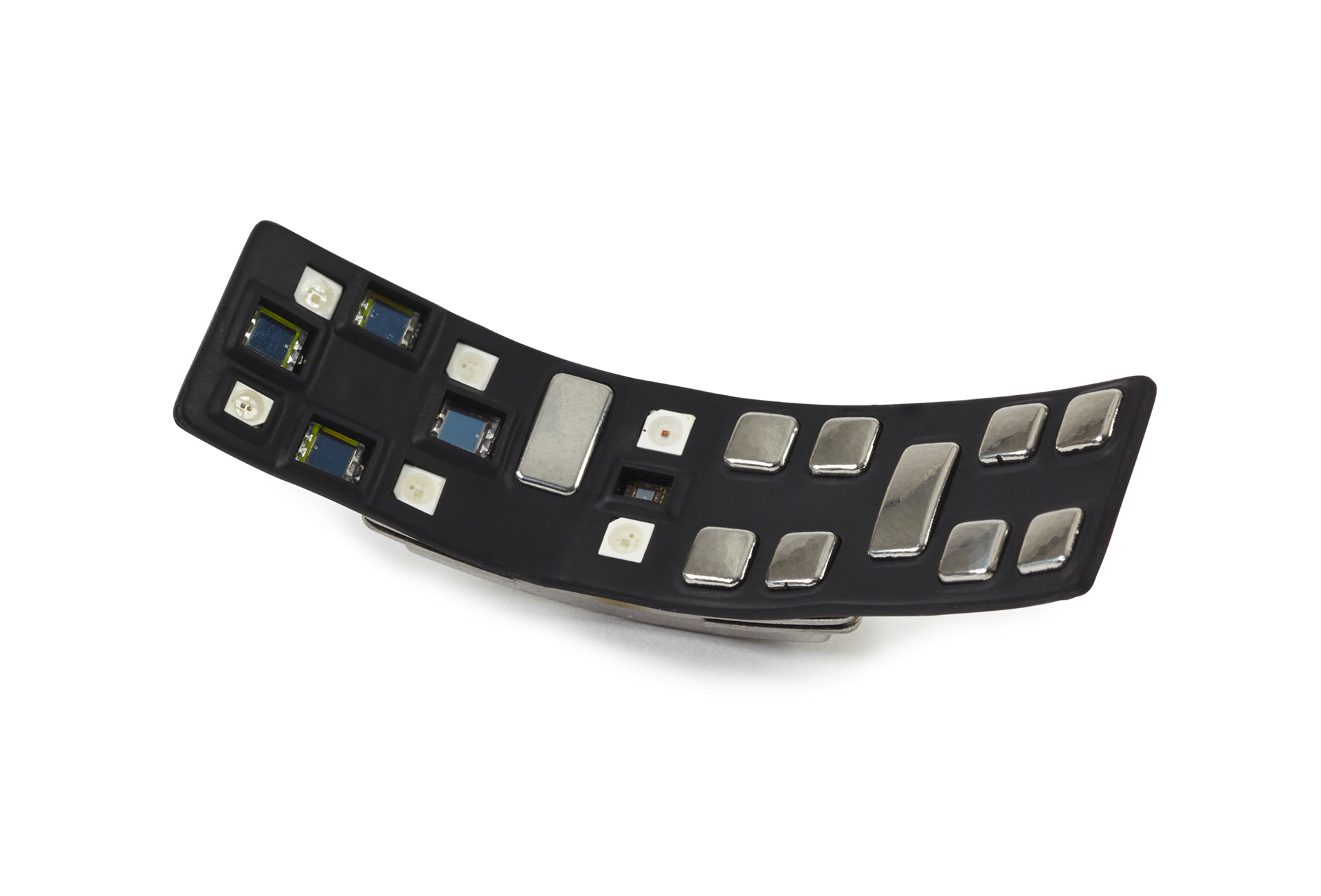
Simband has multiple sensors, a thin removable battery and a small motherboard. It is powered by a 1GHz dual-core Arm A7 processor and equipped with Bluetooth and Wi-Fi radios.

It contains the Simband Sensor Module, which can house optical, electrical and physical sensors. Data collected can be forwarded to SAMI (Samsung Architecture for Multimodal Interactions) and used with third party apps.

Categories
Monitoring Sensors Wearables

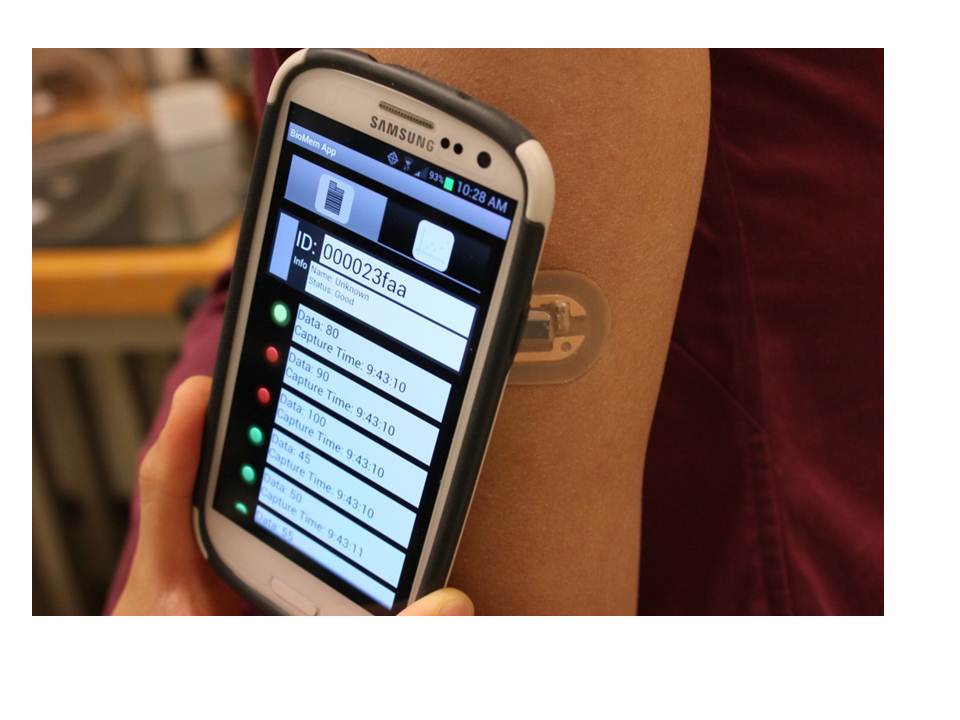
Sensor “band-aid” assesses physical and cognitive performance

Airmen at the Wright-Patterson Air Force Base are testing bandage-like sensors that analyze sweat to assess physical and cognitive performance.  This is based on a study by Dr. Josh Hagen of the Air Force Research Lab.  The sensors notify users when stress, dehydration, and other health issues are detected.

“Our vision is that every Airman at the beginning of their week, will be able to put on an electronic band aid that will quantify everything about them,” said Hagen. “It would measure the typical things a doctor would measure in a checkup.”

Some  Air Force Marathoners wore the sensor patch while running this year.  While typical performance monitoring is done by measuring heart rate, skin temperature and blood pressure, biological chemical/molecular data is obtained from fluids.  These include blood, urine, saliva and – in the case of the biosensor patch – sweat.

Categories
fitness Wearables

Smart glasses track fatigue

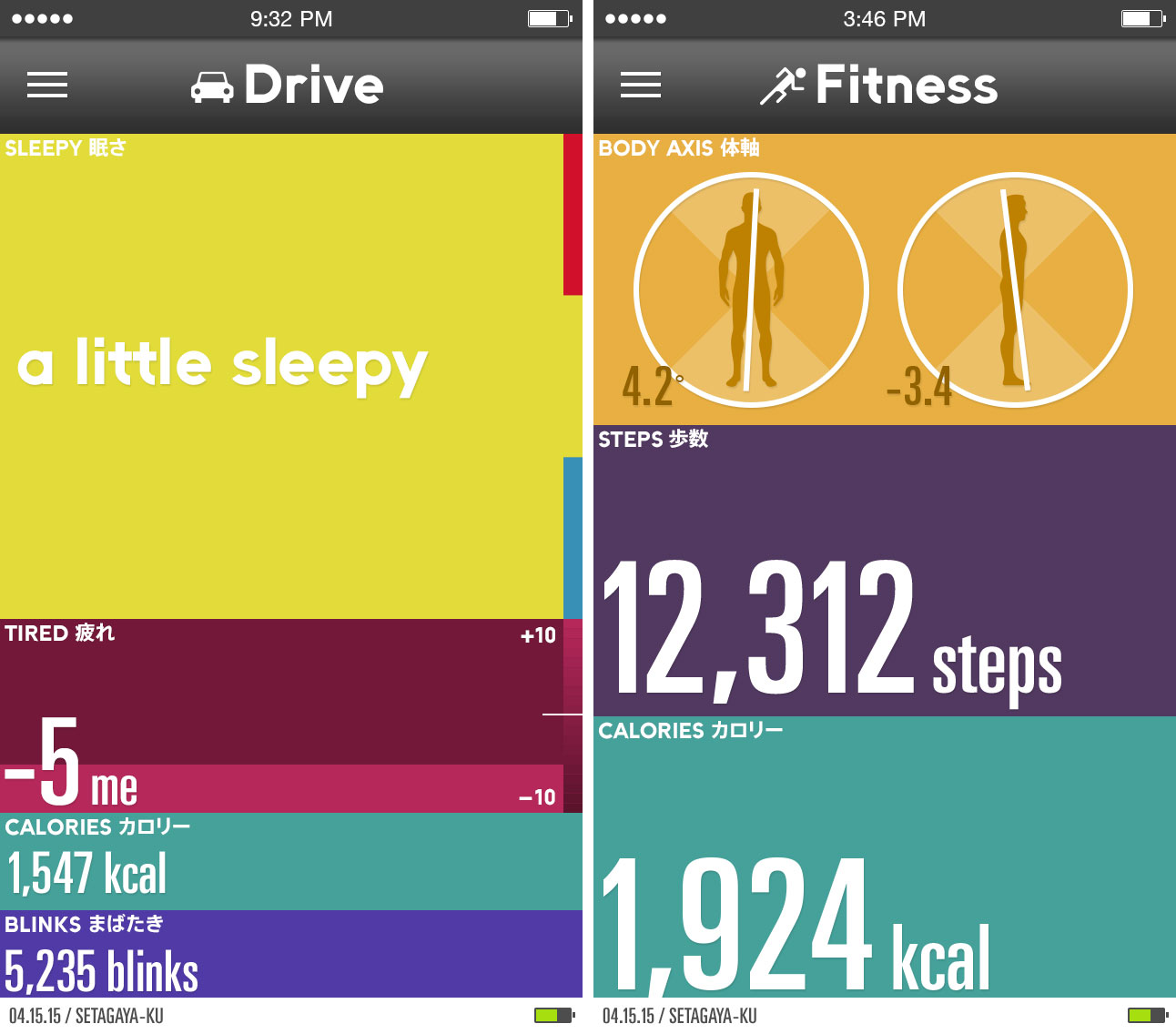
JINS MEME glasses track the correlation between eye strain and fatigue, and send mental and physical tiredness data to a user’s smartphone. 

The glasses monitor a user’s eye movements and gaze. They contain small metallic electrooculography sensors in the parts of the frame that touch the bridge of the nose and ears, determining the electrical potential of the eye movement.  Voltage change data is measured for alertness or fatigue.  It also has a motion tracking sensor that calculates body movements, posture and balance and can provide information about calories burned or exercise speed.

Categories
fitness Wearables

Wearable data integration quantifies self and dog

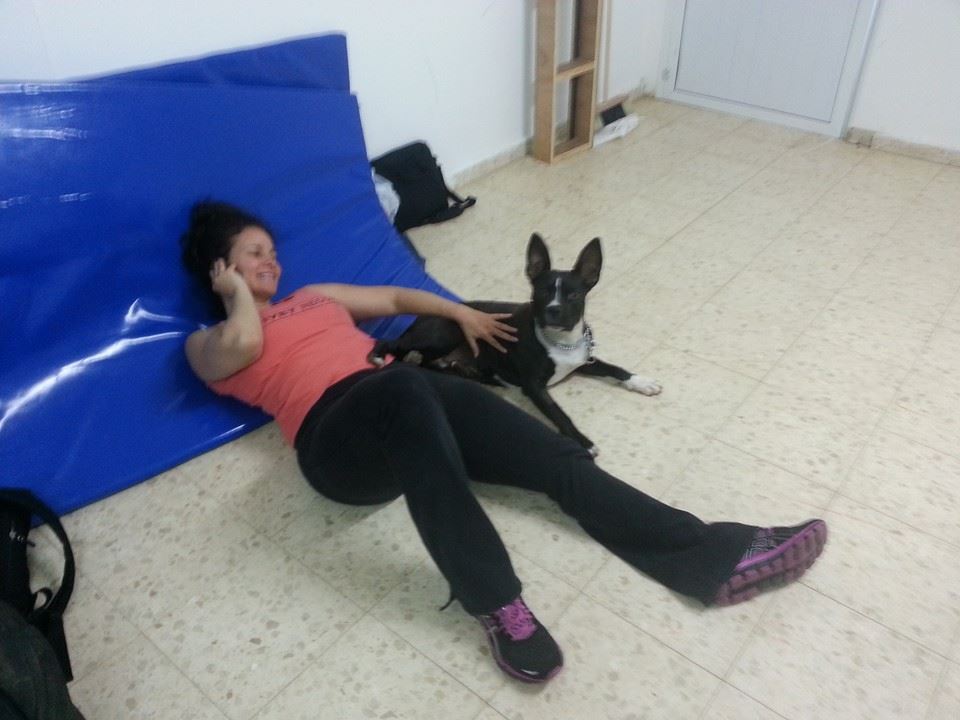
As more wearable devices integrate data, Jawbone and Whistle have partnered to combine self fitness tracking with a dog’s activity. The results are presented together in one graph.  

Through the Jawbone UP app, users can see resting, walking, playing, running, or swimming time with their dogs on their activity stream.

Whistle uses a three-axis accelerometer to track daily exercise and rest cycles.  Wi-Fi and Bluetooth connect the tag to your phone and the cloud. Daily benchmarks and activity graphs are presented on its app, which  generates events in a dog’s timeline.  Users can comment on, customize and share the data.

Categories
fitness Sleep Wearables

Wearables become beautiful (just in time for Mother’s Day)

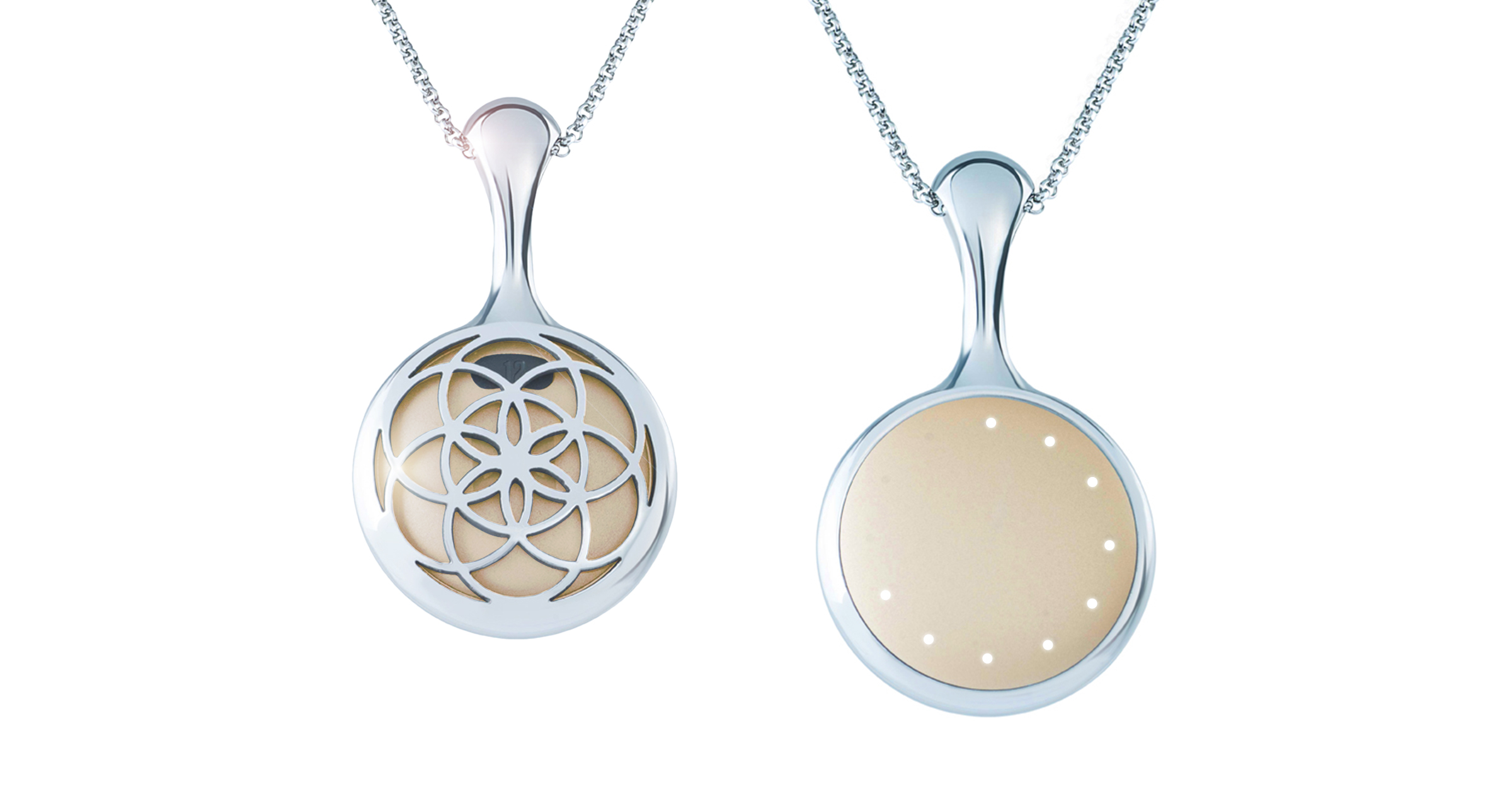
The Misfit Bloom is a stylish pendant with the same health sensing technology as a fitness band.

Shine sensor, originally crowdfunded on Indiegogo, is seamlessly integrated into the necklace, providing continuous monitoring of a user’s steps, calories and sleep.

As health monitoring becomes ubiquitous, ApplySci believes that the number of fashion forward wearable devices will steadily increase.

Categories
Children fitness Monitoring Wearables

Gamified wearable activity monitor for kids

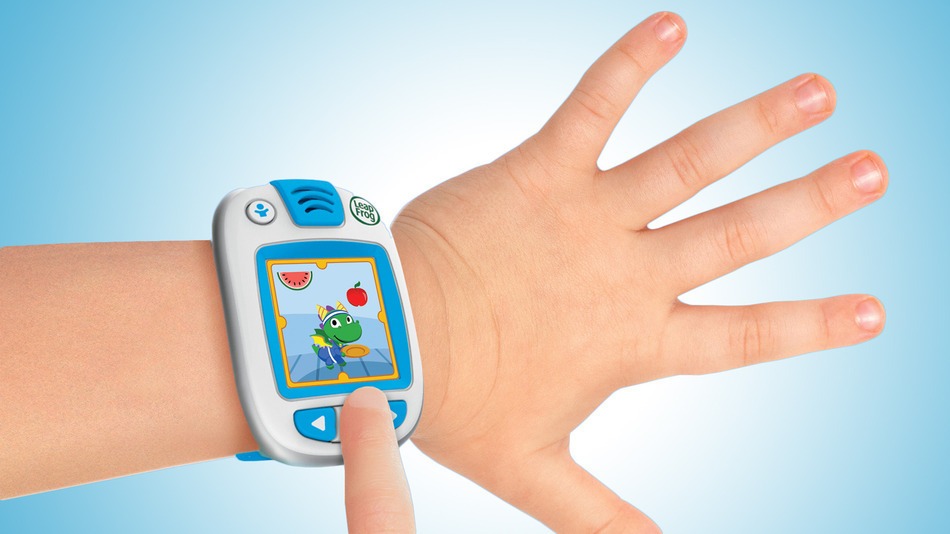
LeapFrog has embraced the wearables trend with a gamified fitness band for children aged 4-7.

The Leapband screen displays a personalized virtual pet  which guides a child through a series of activity challenges and games. The more active they are, the more points they win, and the more games they are able to unlock of the 50 offered.  Parents can monitor daily activity,  exporting the information via a companion app.

Categories
Ears Wearables

iPhone controlled hearing aids

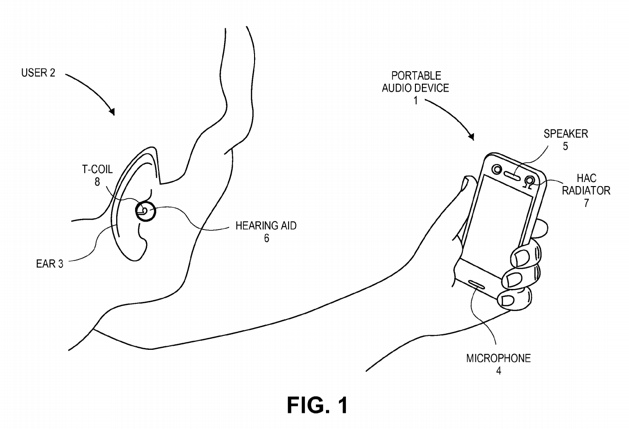
ReSound LiNX,  Beltone First and the Starkey Halo are hearing aids that work directly with iPhones.  Audio is sent to the device as it would a Bluetooth earpiece.  It can also act as a remote control.

One’s phone can be a hearing aid’s microphone,  record information about when and where it is adjusted, and track how often it’s used.  An audiologist can use this information to manage the device’s settings.  Lost hearing aids can be located via GPS.

Categories
Brain Wearables

Electronic headband may prevent migraines

Cefaly

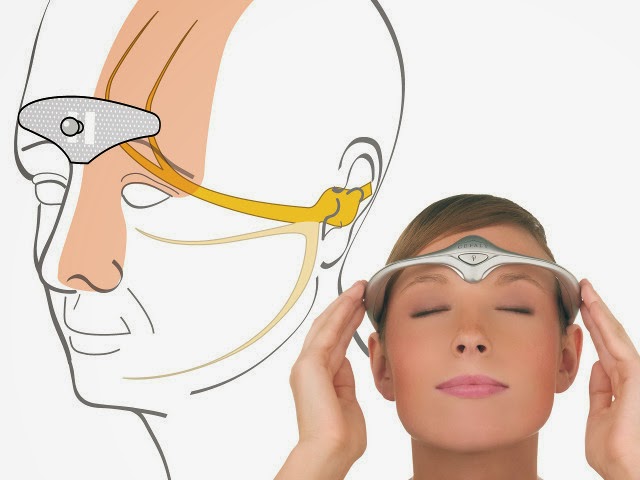
The Cefaly headband is a battery powered device that may prevent migraine headaches.  It works by pressing a self adhesive electrode, positioned at the center of person’s forehead, which sends an electrical signal through the skin to the trigeminal nerve.  By stimulating the nerve, the device was shown to help prevent the migraine headaches in a study of 67 people.  This week the FDA approved it for marketing.

Cefaly is only meant to be used once a day for 20 minutes, and should only be used by people 18 and older.

ApplySci cautions that the long term effect of brain stimulation is unknown, and the size of this study was limited.  Therefore devices like this must be used  carefully, and immediately stopped if  side effects are experienced.

Categories
Epilepsy Monitoring Sensors Wearables

Wearables track, manage, predict epileptic seizures

Artefact Dialog | SmartMonitor

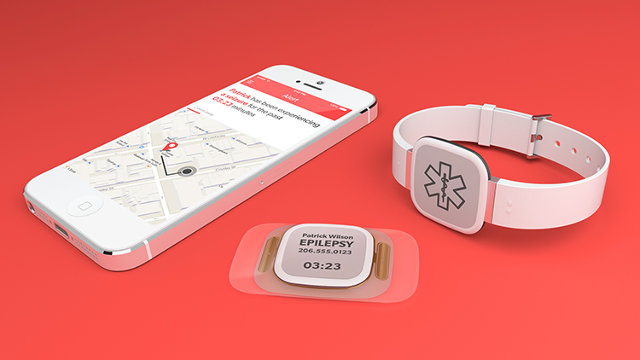
Artefact Dialog allows epilepsy patients to track, manage, and predict seizures.

The patch-like wearable connects via Bluetooth to a smartphone app.  It can help wearers remember to take their medications, warn them about seizures, and alert friends, family, or caregivers when a seizure happens. Connected apps help users analyze where they have been and what they were doing when seizures occurred, and instruct bystanders and responders what to do during an episode.

Featuring a UI based around natural interactions, Dialog allows patients to call for help with a grasp of the patch. A double tap allows a patient to record a pre-seizure aura, and can measure the typical time between an aura and a seizure. Tracing a smile or frown lets wearers track their moods, and vibrations alert users to take their medications.

Last year SmartMonitor released its epilepsy focused smart watch, with similar features but a more traditional design.

Categories
Assistive Technologies Crowdfunding Sensors Wearables

Crowdfunded, gesture controlled, bluetooth ring

Kickstarter campaign

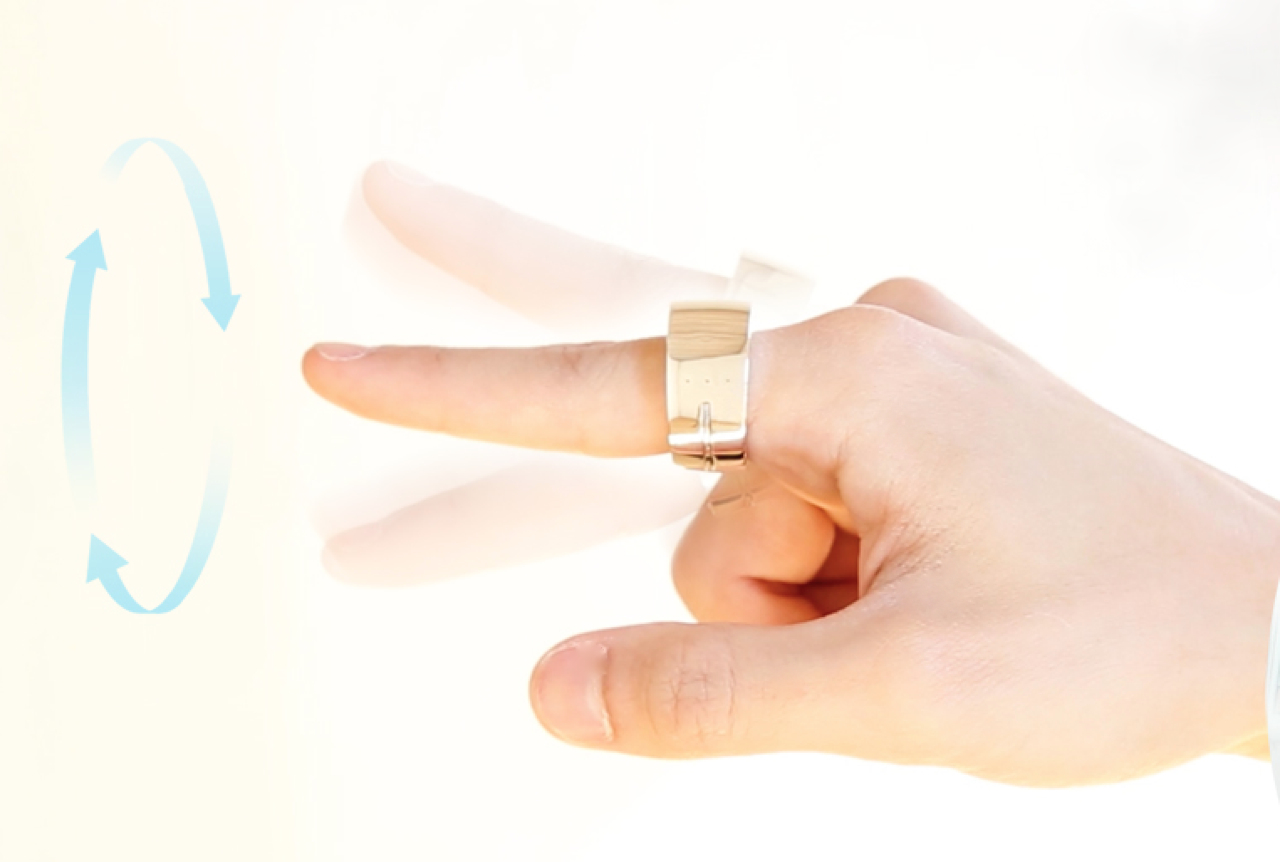
Logbar‘s sensor ring recognizes finger gestures and controls devices.  “Ring” allows the wearer to write text messages by drawing in the air,  make mobile payments,  or control lights or a television.  It is being tested for use with the Pebble watch, quadcopter drones and Google Glass.

It can be programmed to respond to original shape gesture commands, which  could be useful for the disabled or visually impaired.

Wearers can receive vibrating alerts or view LED pinpoints near the button port, performing up to 1,000 gestures before its battery must be recharged.