Categories
Asthma

Chest/wrist wearable system predicts, aims to prevent, asthma attacks

North Carolina State researchers are developing a multi-sensor wearable monitoring system meant to predict and prevent asthma attacks. A chest-worn patch  track one’s respiratory rate, skin impedance and wheezing in the lungs. A wristband monitors volatile organic compounds and ozone in the air, ambient humidity, and temperature, as well as a a wearer’s movements, heart rate and blood oxygen level. Users must also breathe into a spirometer several times per day to measure lung function.

An algorithm  identifies which environmental and physiological variables are effective at predicting asthma attacks. Wearers receive notifications suggesting a change in environment or activity to prevent an attack.

Categories
Diabetes

“Artificial pancreas” uses sensor + app monitoring system

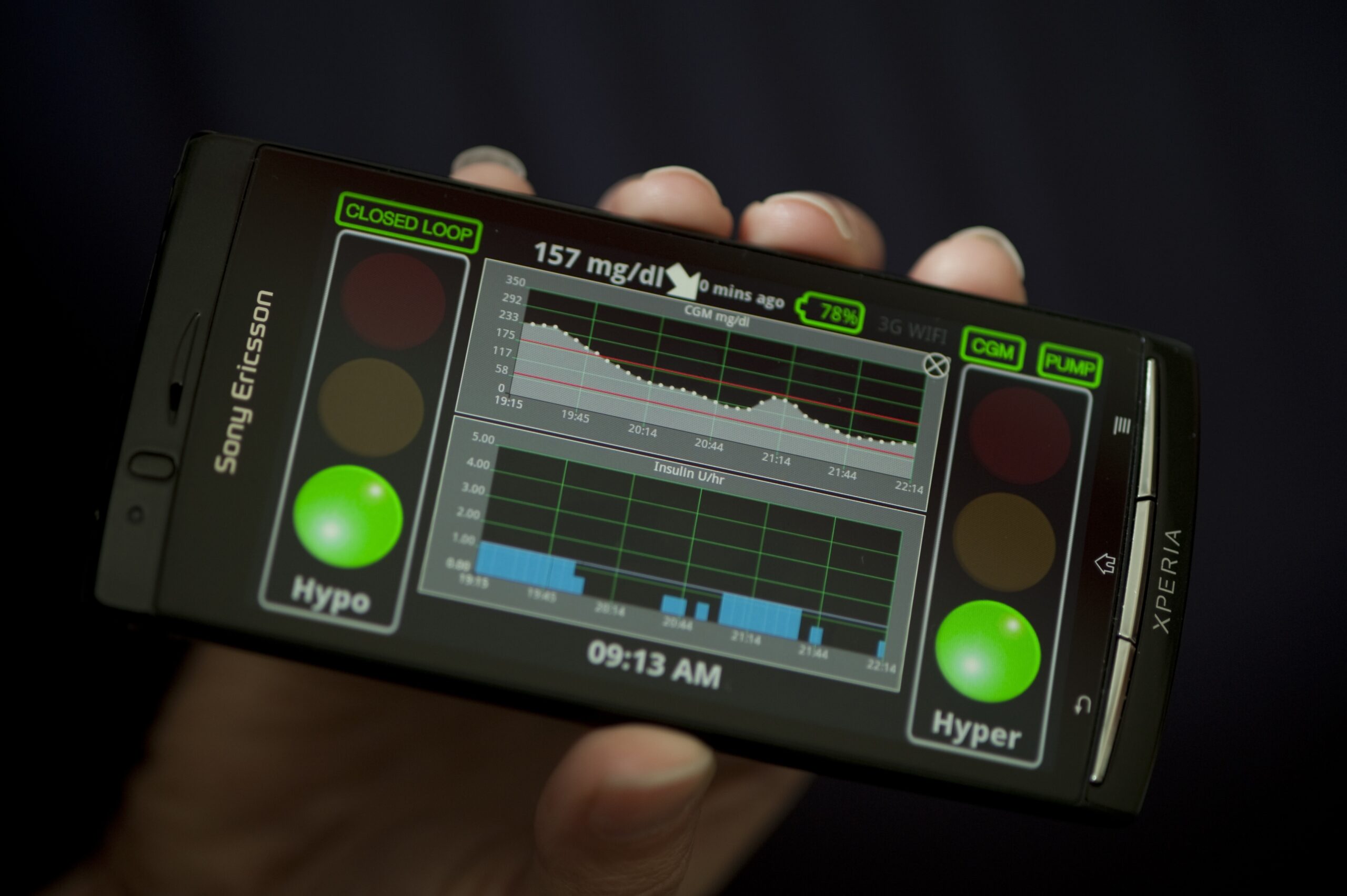
University Hospital of Montpellier researchers, led by Eric Renard, are developing a sensor/app “artificial pancreas” system for diabetics.

The sensor continuously monitors glucose.  The data is sent to a phone, where an algorithm calculates insulin needed, and to a pump, which then delivers the correct amount of insulin.

So far, the system has only been tested on 21 patients for 1 month, where the results were promising.  Obviously, much more research is needed. The next stage will involve 240 child and adult patients, who will use the device for 6 months.

Categories
Heart

Electronic scaffold replaces damaged tissue, stimulates heart

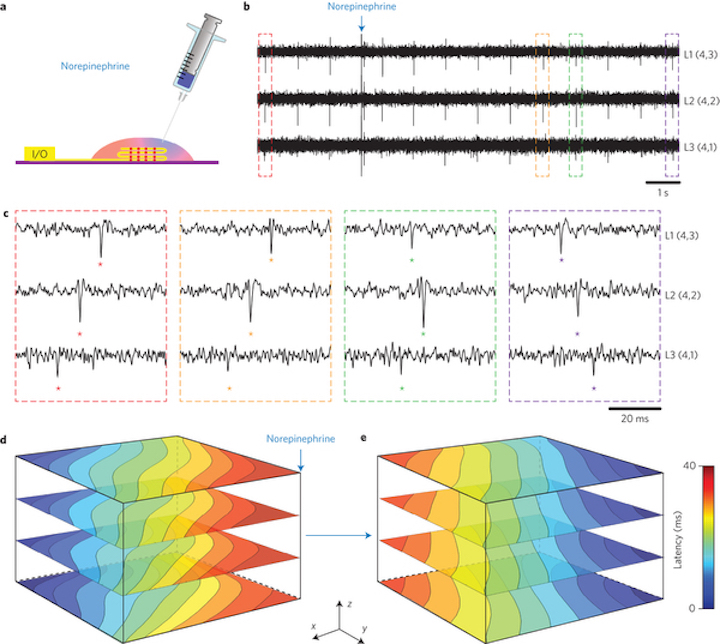
Charles Lieber and Harvard colleagues have designed nanoscale electronic scaffolds, seeded with cardiac cells to produce a “bionic” patch to replace damaged cardiac tissue.  The flexible electronics can also electrically stimulate the heart, and change the frequency and direction of signal propagation, as tissue feedback is continuously monitored.

Instead of being located on the skin’s surface, electronic components are integrated throughout the tissue, allowing the detection of  early-stage cardiac instabilities and faster intervention. The device operates at  lower, safer voltages than a traditional pacemaker.

The patch could also be used to monitor responses to cardiac drugs, or to help  determine the effectiveness of drugs under development.

Categories
Apps Brain

App + wearable to quantify mindfulness

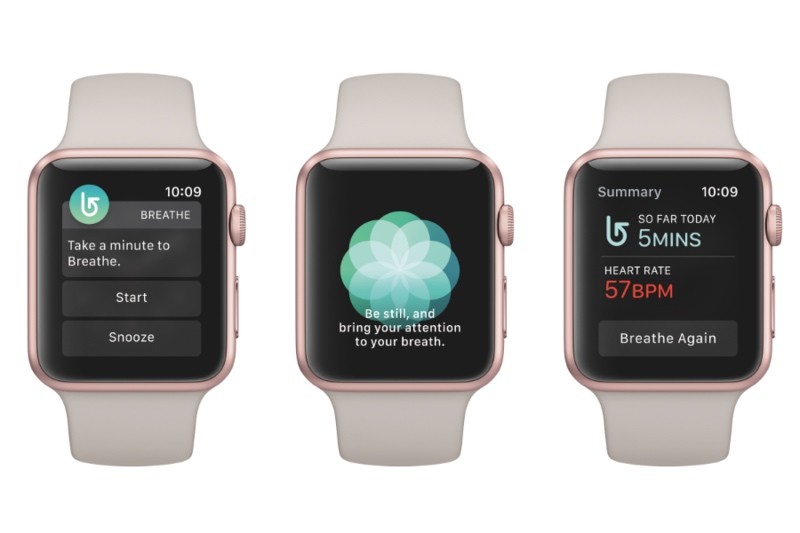
Apple’s Breathe meditation app follows the recent trend of using wearables to quantify mindfulness and improve mental health.

Every four hours (while wearing the Apple Watch) Breathe reminds one to inhale and exhale for one to five minutes. Concentric circles can be watched as they shift on the screen, or a wearer can respond to haptic touches. Heart rate changes are shown and tracked.

ApplySci’s recent NeuroTech San Francisco conference ended with  a session called “Transformative Tech – Mindfulness, stress, anxiety.”  With more accurate mobile EEG technology, these tools will soon be able to allow users to more reliably quantify their stress levels.

Categories
Brain

Mobile 3D ultrasound speeds brain injury diagnosis

University of Aberdeen researchers are developing software to create 3-D models of soldiers brains while on location, which is then sent to an expert for immediate diagnosis.

The software is designed to guide a medic with  basic ultrasound training to produce as detailed a scan of the brain.

The ultrasound image of the brain is acquired with  a movement sensor attached to a probe, used to scan the brain from points on the skull where the bone is thinnest. The probe captures  40 images per second, and the resulting 3-D image can be created from 2,000 individual photos.

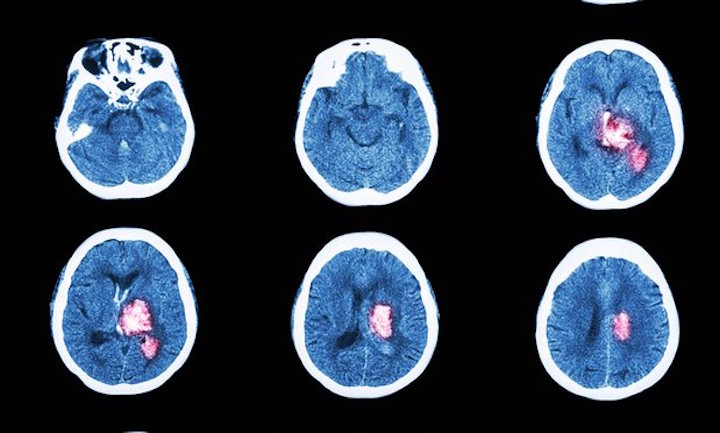
Early diagnosis of brain injury could prevent long term damage. The technology could also be used for non-military remote care, to help paramedics diagnose brain hemorrhage as a result of stroke or other causes.


Categories
Inspiration

Vivek Wadhwa interview at Wearable Tech + Digital Health SF 2016

ApplySci was delighted to welcome academic, researcher, writer, serial entrepreneur and humanitarian Vivek Wadhwa as a keynote speaker at our recent Wearable Tech + Digital Health San Francisco conference.  Attached is an interview, by StartUp Health’s Unity Stoakes, were Vivek discussed advances in technology and urged entrepreneurs to focus on healthcare developments that can solve the world’s health problems.  To make a difference.  It was a true privilege to hear his talk live, and we are happy to share some of his wisdom with you here.


Wearable Tech + Digital Health NYC – June 7, 2016 @ the New York Academy of Sciences

NeuroTech NYC – June 8, 2016 @ the New York Academy of Sciences

Categories
Diabetes Eyes

Contact lens/eyeglass system monitors blood sugar, dispenses drugs

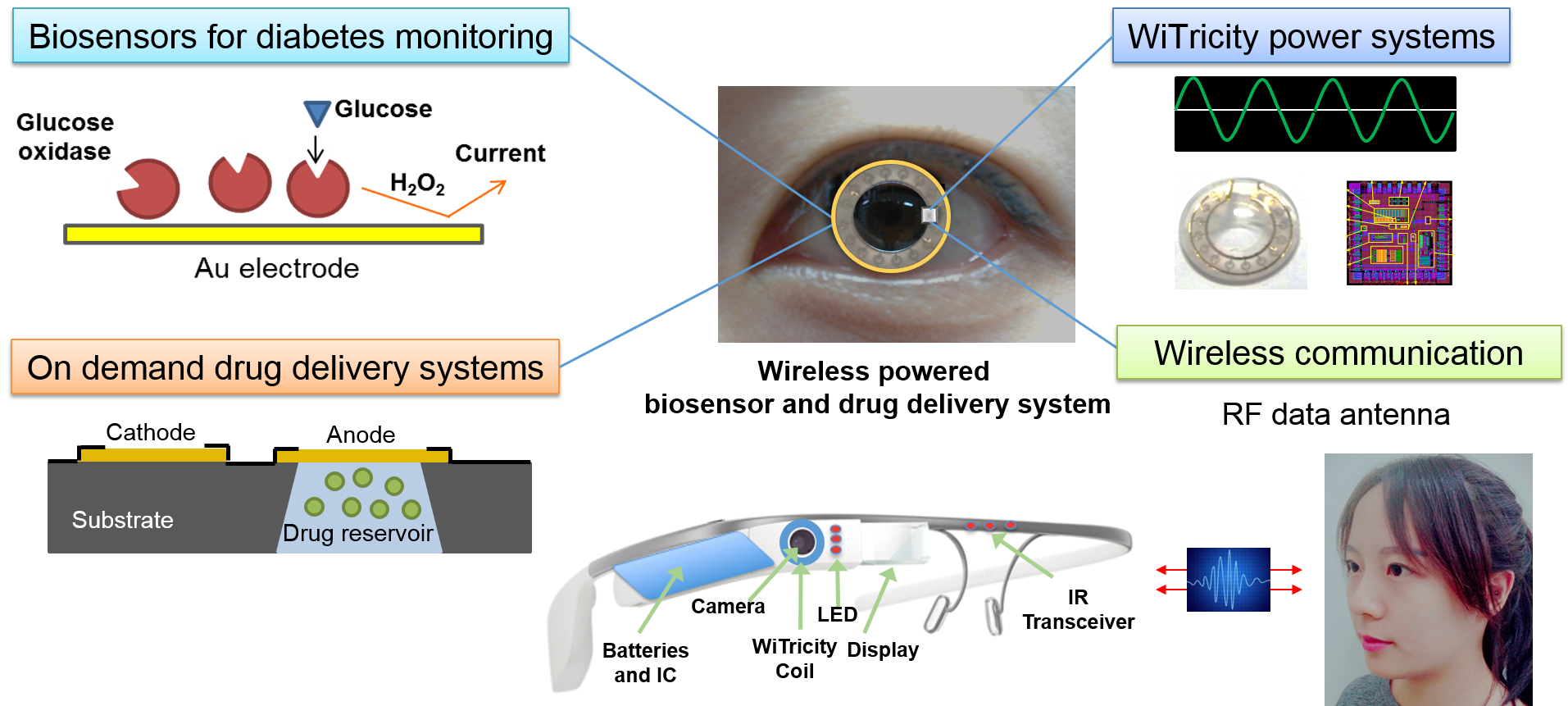
Pohang University’s Sae Kwang Han and Do Hee Keum have developed a contact lens/ eyeglass combination  to monitor diabetes and dispense drugs as needed.  The glasses wirelessly power and communicate with the drug-releasing lens, that monitors glucose concentration in tears.  An LED alarm lights up when sugar levels are very high. The lens can be worn for one month.

A user can  tell the eyeglasses to send a drug-releasing signal to the chip with voice commands. A control circuit is being created to automate the process,  deciding independently when medicine is needed. To release drugs, the chip draws on one of ten drug reservoirs chambers that are carved into the hydrogel, and covered with a thin gold electrode membrane. The voltage dissolves the membrane and releases the drug.


Wearable Tech + Digital Health NYC – June 7, 2016 @ the New York Academy of Sciences

NeuroTech NYC – June 8, 2016 @ the New York Academy of Sciences


Categories
Heart Seniors Wearables

Wearable detects cardiac arrest, notifies emergency services

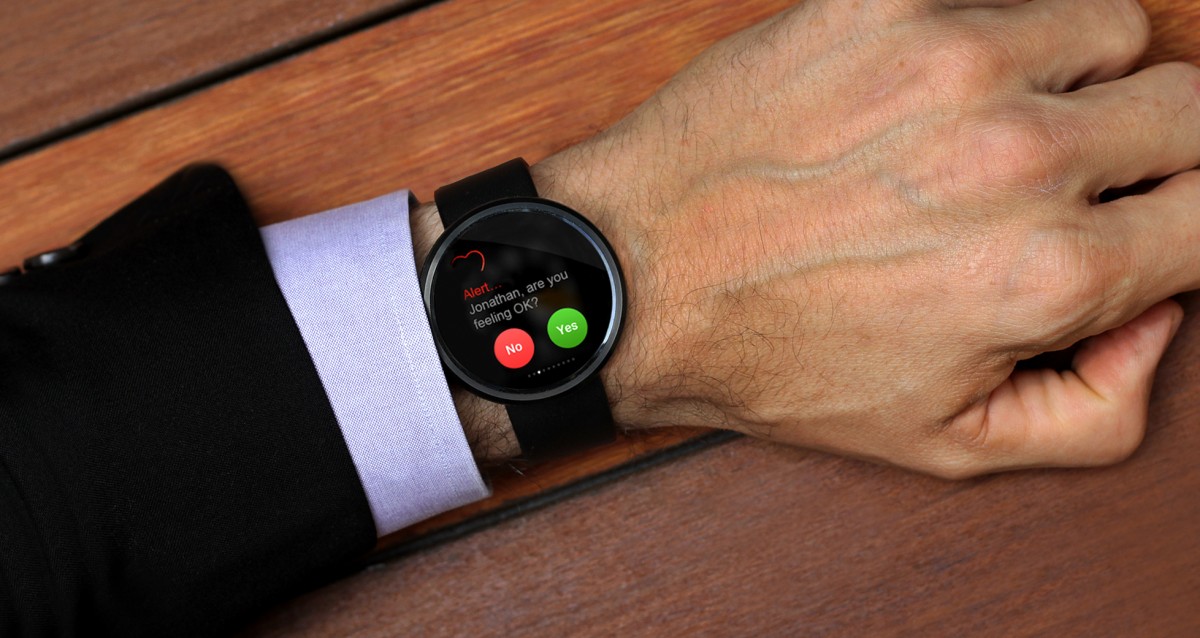
 iBeat is a wearable emergency response system that continuously monitors the heart.  Meant for seniors, it detects cardiac arrest in real time, provides alerts, and sends regular updates to caregivers.

If cardiac arrest is detected, the wearer receives a call within 10 seconds.  If he/she cannot be reached, an emergency contact and emergency medical services are called.

A user can also activate the device manually in an emergency, such as a fall, car accident, or home invasion.


Wearable Tech + Digital Health NYC – June 7, 2016 @ the New York Academy of Sciences

NeuroTech NYC – June 8, 2016 @ the New York Academy of Sciences

Categories
fitness Heart

Wearable patch simultaneously monitors biochemical, electric signals

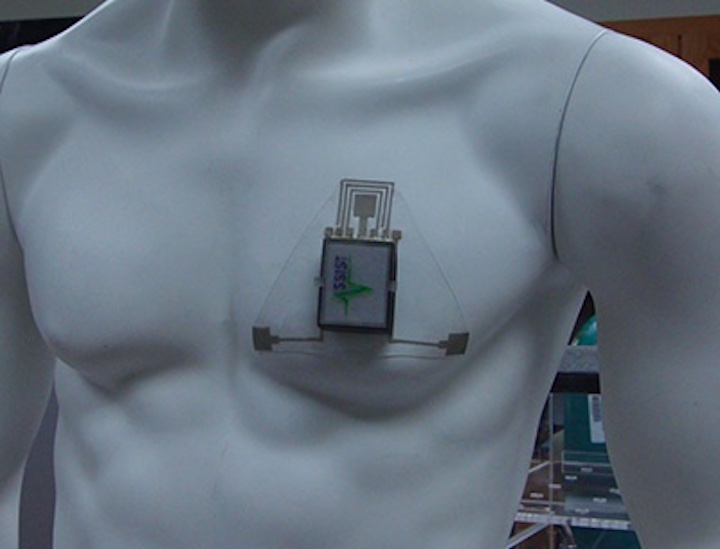
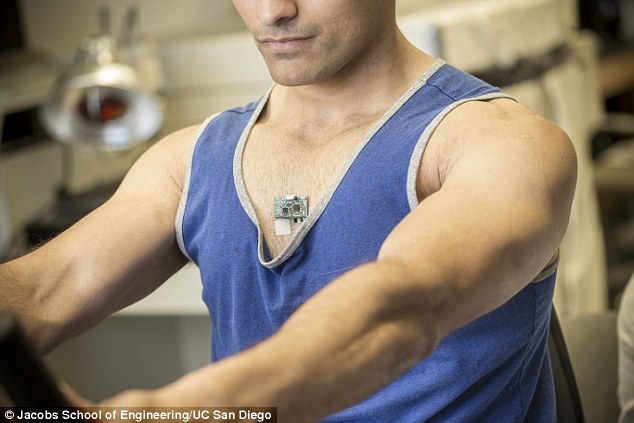
Joe Wang and Patrick Mercier of UCSD have developed a flexible, wearable, patch that monitors both biochemical and electric signals.

Most  wearables only measure one parameter, such as steps or heart rate, and few measure chemical signals. The Chem-Phys patch records EKG signals, and tracks lactate levels, marking physical effort, in real time.  It  is worn on the chest and communicates wirelessly with a phone or computer. The system could help optimize athletic training, or continuously monitor heart patients, among other uses.


Wearable Tech + Digital Health NYC – June 7, 2016 @ the New York Academy of Sciences

NeuroTech NYC – June 8, 2016 @ the New York Academy of Sciences


Categories
AI

Algorithm to help computers reason, imagine like humans?

Vicarious is developing a neural network algorithm designed to process data in a way that is similar to a human brain — giving it a computer “imagination.”  The company considers its work superior to current Deep Learning processes, as they claim it includes more features that appear in biology — including  the ability to envision what the learned information should look like in various scenarios.

In an MIT Technology Review interview, co-founder Dileep George said that “imagination could help computers process language by tying words, or symbols, to low-level physical representations of real-world things. In theory, such a system might automatically understand the physical properties of something like water, for example, which would make it better able to discuss the weather.”

The company has not yet announced any tangible products If successful, they could develop applications for assistive robots that could change the lives of the disabled.


Wearable Tech + Digital Health NYC – June 7, 2016 @ the New York Academy of Sciences

NeuroTech NYC – June 8, 2016 @ the New York Academy of Sciences

Categories
IoT Robotics Sensors Wearables

Tiny, ingestible robot can deliver medicine, patch wounds, remove objects

Daniela Rus and MIT, University of  Sheffield, and Tokyo Institute of Technology colleagues have developed an ingestible origami robot designed to patch wounds, deliver medicine or remove foreign objects from a person’s stomach.

The tiny robot, made of pig intestines, can unfold itself from a swallowed capsule. Steered by a doctor using external magnetic fields, the “microsurgeon” crawls across the stomach wall, and propels itself using a “stick-slip” motion.

Click to view MIT video


Wearable Tech + Digital Health NYC – June 7, 2016 @ the New York Academy of Sciences

NeuroTech NYC – June 8, 2016 @ the New York Academy of Sciences

Categories
BCI Brain Prosthetics

Thought controlled prosthetic arm has human-like movement, strength

This week at the Pentagon, Johnny Matheny unveiled his DARPA developed prosthetic arm.  The mind-controlled prosthesis has the same size, weight, shape and grip strength of a human arm, and, according to Matheny, can do anything one can do.

It is, by all accounts, the most advanced prosthetic limb created to date.

The 100 sensor arm was developed as part of the “Revolutionizing Prosthetics Program” of the Biological Technologies office, led by Dr. Justin Sanchez.

An implanted neural interface allows the wearer to control the arm with his thoughts. Sensors are also implanted in the fingertips, sending signals back to the brain, allowing users to feel sensations.

Click to view Johns Hopkins video.

Dr. Sanchez will be a keynote speaker at ApplySci’s Wearable Tech + Digital Health + NeuroTech NYC conference on June  7-8, 2016 at the New York Academy of Sciences.