Categories
AI Heart Pregnancy Respiratory

Human body simulation for health research

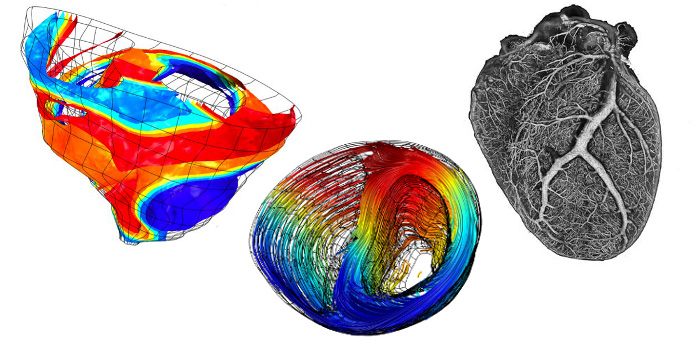
The Virtual Physiological Human project is a computer simulated replica of the human body that is being created to test drugs and treatments.  It will allow physicians to model the mechanical, physical and biochemical functions of the body as a single complex system rather than as a collection of organs.  The goal is to offer personalized treatment of disease.

The University of Sheffield is significantly contributing to the project:

Dr Paul Morris is creating personalized “virtual arteries” using images of a patient’s heart, which can accurately predict how effective an operation, such as the introduction of a stent, might be.

Professor Jim Wild believes that computer models of a patient’s lungs could allow doctors to detect signs of lung diseases such as emphysema much earlier.

Dr Xinshan Li  is researching the impact of pregnancy on women’s pelvic floor muscles.   “It’s positioned as a predictive tool,” she said. “The idea is to get the geometry of your pelvic floor either during pregnancy or before you become pregnant, and then run simulations of the birth process and see how likely it is that the muscle will be damaged. If the risk is high, then there are certain interventions we can do during the birth process to mitigate the risk.”
Categories
Heart Sensors

Custom fitted, 3D printed, sensor based, implantable cardiac device

Nature paper |  Washington University | University of Illinois

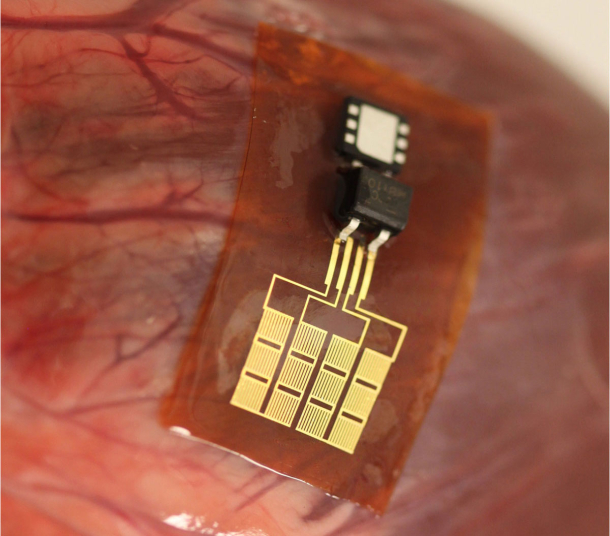
A custom-fitted, implantable device with embedded sensors, while invasive, may offer an improved method for detecting and treating heart issues.

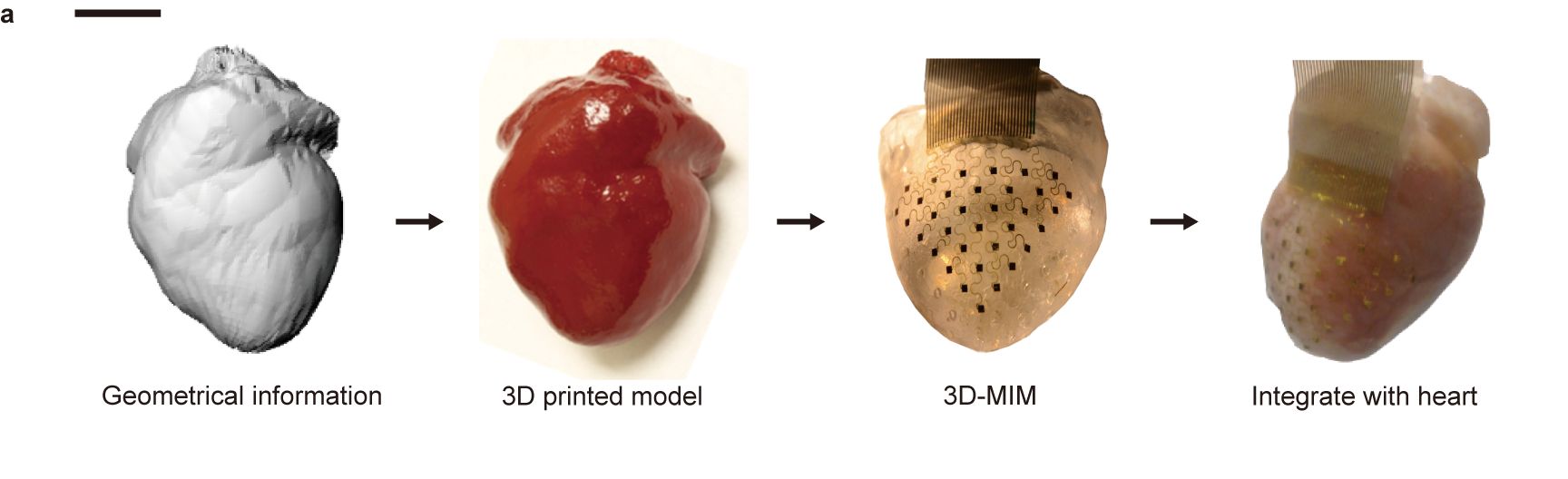
Washington University professor Igor Efimov and University of Illinois professor John Rogers (see previous ApplySci Rogers coverage) have created a 3-D elastic membrane made of a soft, flexible, silicon material that is precisely shaped to match the heart’s epicardium, or the outer layer of the wall of the heart. Current technology is two-dimensional and cannot cover the full surface of the epicardium or maintain reliable contact for continual use without sutures or adhesives.

Tiny sensors can then be printed onto the membrane that can precisely measure temperature, mechanical strain and pH, among other markers, or deliver a pulse of electricity in cases of arrhythmia. Those sensors could assist physicians with determining the health of the heart, deliver treatment or predict an impending heart attack before a patient exhibits any physical signs.

Categories
fitness Heart mHealth Monitoring Sleep

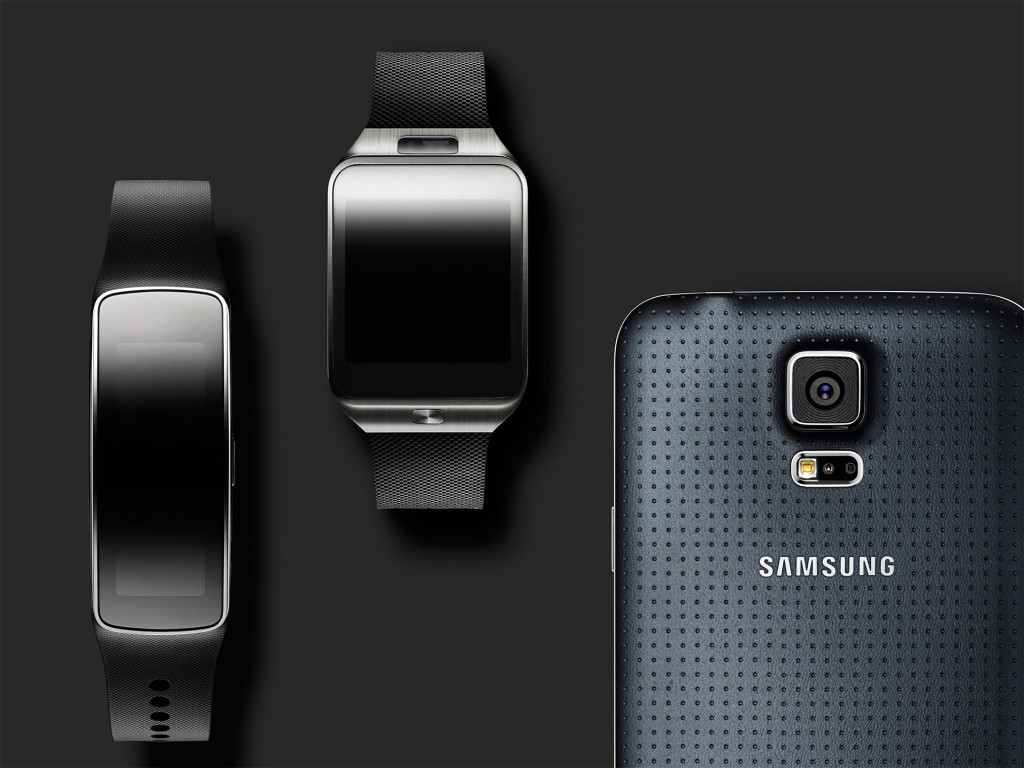
Update: Samsung increases health applications with Gear 2 watch, Gear Fit, Galaxy S5

Samsung has updated its devices as it tries to establish dominance in the health and fitness tracking market.

Its Gear 2 watch is now based on Samsung’s Tizen operating system rather than Android. It includes an accelerometer and gyroscope – capable of acting as a pedometer and an optical heart rate monitor. This allows the watch to integrate with Samsung’s health and fitness tracking applications, replacing the need for additional tracking gadgets.  Its various tools will measure exercise, sleep and stress levels.

Apple is expected to release a smartwatch in the near future with a strong focus on fitness and health tracking, as well as a “Healthbook” application for its next iteration of its iOS iPhone and iPad software.

The Gear Fit band tracks movement, heart rate and sleep patterns. It is water-resistant and includes phone notifications, a timer, stopwatch and a curved OLED screen.

The Galaxy S5 smartphone features an enhanced S Health 3.0 app, a comprehensive personal fitness tracker, a pedometer, diet and exercise records, and a built-in heart rate monitor. It will pair seamlessly with the next generation Gear products for real-time fitness coaching.

Categories
Assistive Technologies Brain Heart Stroke

Non-invasive, nanoparticle method for identifying atherosclerosis plaques

http://pubs.acs.org/doi/abs/10.1021/nl404816m

Case Western‘s Michael Bruckman and colleagues have developed a multifunctional nanoparticle that pinpoints blood vessel plaques caused by atherosclerosis using MRI.  The goal is to create a non-invasive method of identifying heart attack and stroke causing plaques vulnerable to rupture, in time for treatment.

Currently doctors can only identify narrowing blood vessels caused by plaque accumulation via incision and the insertion of a catheter inside a blood vessel in the arm, groin or neck. The catheter emits a dye that enables X-rays to show the narrowing.

The researchers found that a nanoparticle built from a rod-shaped virus, commonly found on tobacco, locates and illuminates plaque in arteries more effectively, with a fraction of the dye.  The tailored nanoparticles target plaque biomarkers, opening the possibility that particles can be programmed to identify vulnerable plaques from stable.  Untargeted dyes alone cannot accomplish this.

Categories
Diabetes Heart Sensors

Piezoelectric nanoribbons power pacemakers

http://news.cnet.com/8301-11386_3-57617483-76/nanoribbons-let-beating-hearts-power-their-own-pacemakers/

Scientists are studying various steady energy source alternatives for small biomedical sensors, including piezoelectric power.

University of Illinois researchers have attached small, flexible strips (piezoelectric nanoribbons) to internal organs of animals, and harvested energy from their movement  to power pacemakers and other medical devices.  Current practice depends on hard-to-change batteries.

This is a minimally invasive power source, which in the future can be activated by muscle activity other than the heart muscle, with potential implications for glucose pumps and other devices.  The researchers claim that their system is a  “complete, flexible, and integrated system that is capable of harvesting and storing energy from the natural contractile and relaxation motions of the heart, lung, and diaphragm at levels that meet requirements for practical applications.”

Categories
Heart

Study: Surgeons view detailed, real-time 3D holograms of heart

http://www.realviewimaging.com/

Philips and RealView Imaging recently completed a clinical study demonstrating the feasibility of using live 3D holographic visualization and interaction technology to guide minimally-invasive structural heart disease procedures. RealView’s technology was used to display interactive, real-time 3D holographic images acquired by Philips’ interventional X-ray and cardiac ultrasound systems.

In addition to viewing the patient’s heart on a 2D screen, doctors were able to view detailed dynamic 3D holographic images of the heart ’floating in free space’ during a minimally-invasive structural heart disease procedure, without using special eyewear. They were able to manipulate the projected 3D heart structures by touching the holographic volumes in front of them. The study demonstrated the potential of the technology to enhance the context and guidance of structural heart repairs.

The Yokneam, Israel based company says it plans to launch the system in 2015.

Categories
Heart

Miniature pacemakers inserted with out surgery

http://www.technologyreview.com/news/522306/worlds-smallest-pacemaker-can-be-implanted-without-surgery/

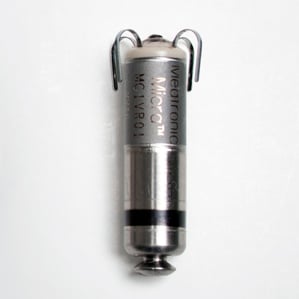
Medtronic and St. Judes Medical have developed miniaturized pacemakers that can be implanted in the heart through blood vessels via an incision in the thigh, reducing or eliminating the need for invasive surgery.

Doctors in Austria implanted the 24mm Medtronic device in a patient last week as part of a human trial. St. Jude Medical’s 41mm device has been approved for patients in Europe.

The manufacturers claim a battery life of 8-10 years when running at full stimulating capacity.  The pacemakers sit inside the heart and do not require long electrodes. Small prongs on Medtronic’s device fasten it to heart tissue, and an electrode that touches the heart delivers electric pulses. The design reduces the amount of power required and eliminates a major source of device failure.

Categories
Assistive Technologies Eyes Heart Stroke Wearables

NIH funds robots for the vision impaired, stroke patients, doctors performing catheter ablation

http://www.nih.gov/news/health/oct2013/nibib-23.htm

Three projects have been awarded funding by the National Institutes of Health.  All involve robots that cooperate with people and adapt to changing environments to improve human capabilities and enhance medical procedures.

  • A co-robotic navigation device for the blind: Cang Ye at University of Arkansas is incorporating 3D imaging sensor technology into the white cane. This enables it to detect and relay to the user critical information about the environment, like when there’s a potential obstacle in the way.  In related research, Professor Amnon Shashua at The Hebrew University in Jerusalem, through his company OrCam, uses Artificial Vision to compensate for lost visual abilities, and Professor Amir Amedi at the Hebrew University of Jerusalem is also developing cutting edge technology to help the vision impaired. His projects include reading in the blind, sensory substitution devices, multisensory perception, topographic brain, and seeing with music and sound.
  • MRI-guided co-robotic catheter: During traditional catheter ablation for the treatment of atrial fibrillation, one of the most common arrhythmias, a catheter with an electrode on its tip is threaded through a vein in a patient’s groin up to the heart. Doctors destroy tissue at certain points on the heart in order to prevent the occurrence of irregular heart activity. The constant movement of the heart and blood can make that process difficult. Researchers at Case Western Reserve University are developing a catheter that uses robotic planning strategies to compensate for those movements to increase accuracy of procedures in conjunction with MRI.
  • Platform for exploration of robotic ankle exoskeleton control: Researchers at North Carolina State and Carnegie Mellon are developing a method to compare different wearable devices to assist people recovering from stroke.
Categories
Heart Sensors Wearables

ECG wristband sensors use your heartbeat as your password

http://www.getnymi.com

The Nymi wristband confirms a user’s identity via electrocardiogram sensors that monitor the heartbeat and can authenticate a range of devices, from iPads to cars. Developers at Bionym, the Toronto-based company that makes the device, say the peeks and valleys of an individual’s heartbeat are harder to imitate than the external features of biometric systems, like fingerprints or facial recognition.  Bionym describes the process:

“When you clasp the Nymi around your wrist it powers on. By placing a finger on the topside sensor while your wrist is in contact with the bottom sensor, you complete an electrical circuit. After you feel a vibration and see the LEDs illuminate, your Nymi knows you are you and your devices will too. You will stay authenticated until your Nymi is taken off.”

Categories
fitness Heart mHealth Monitoring Wearables

Mayo Clinic studies step tracking data as a post-surgery monitoring tool

http://www.annalsthoracicsurgery.org/article/S0003-4975(13)01253-8/fulltext

Mayo Clinic has published a study using step recording from a  Fitbit activity tracker to monitor recovery in cardiac surgery patients and help hospitals determine the appropriate length of stay.  Those who had the shortest hospital stay walked the most on all days in the study, by a statistically significant margin. Likewise, patients bound for home walked more than those headed for a nursing facility.

Categories
Apps Data Heart mHealth Monitoring Sensors

Elfi-Tech – non-invasive sensor captures more meaningful health data

http://elfi-tech.com

Elfi-Tech of Israel, led by Dr. Ilya Fine,  has disrupted digital healthcare.  They are the only Israeli finalist in the Nokia XCHALLENGE competition, which “envisions a future of access to affordable, personalized healthcare through sophisticated sensing technologies”.  The company has developed a sensor that is more suitable as a continuous monitor with minimal discomfort. This is due to lower power consumption of the laser technology and less of a need to be very tightly secured to skin. Perhaps its most exciting feature is the non invasive measurement of many blood flow parameters, providing a more complete cardiac perspective at home.

Categories
Apps Heart mHealth Sensors

Stethoscope add-on improves patient assessment and diagnosis

http://rijuven.com/cardiosleeve.html

CardioSleeve, when attached to a stethoscope, records, displays and analyzes electrical and acoustical footprints of the heart in real time via any wirelessly connected portable device.    The data can be stored in the cloud or uploaded into an EHR.