Categories
AI Diabetes

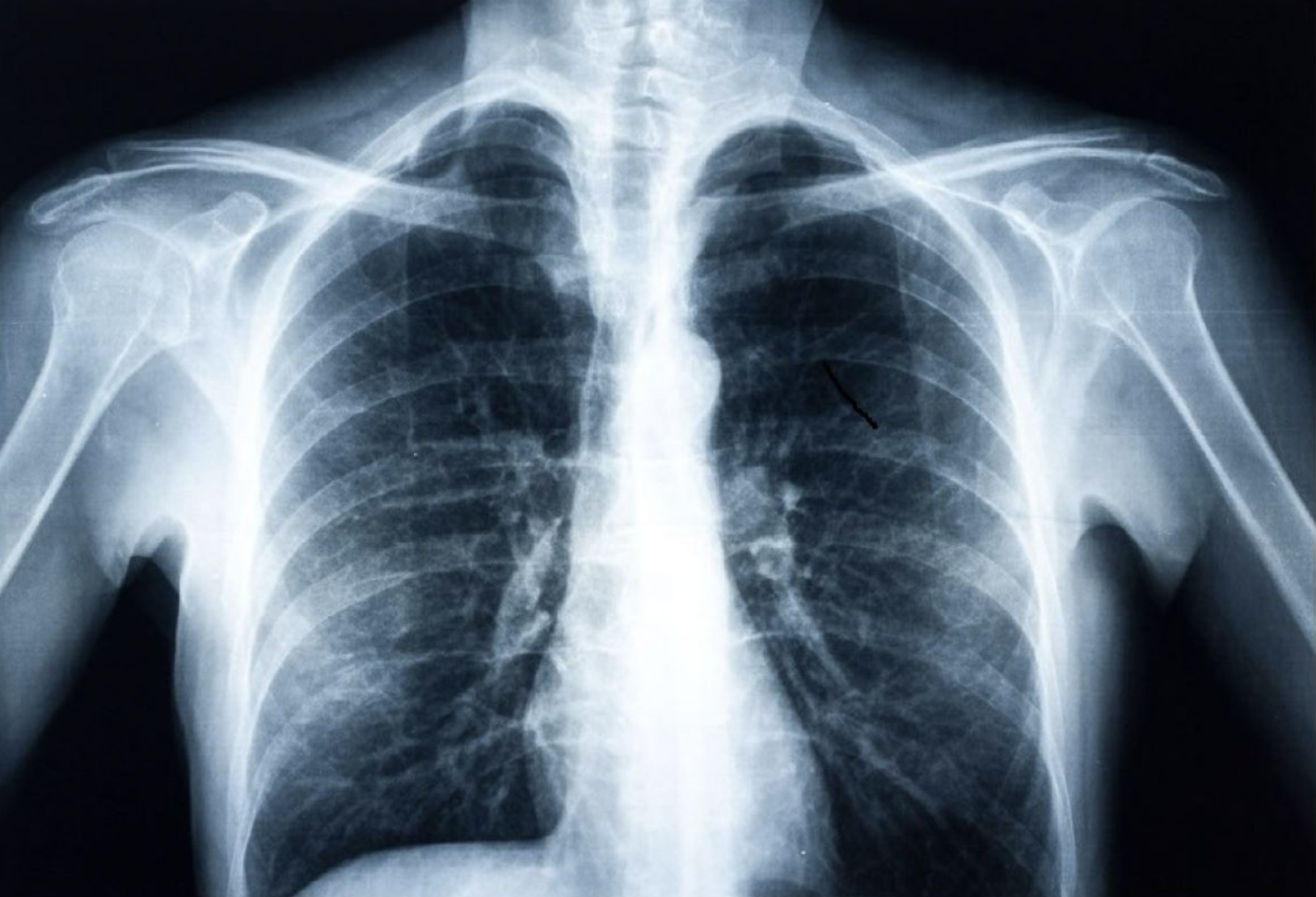
AI detects diabetes from fatty tissue in chest x rays

Judy Wawira Gichoya and Emory colleagues have developed an AI model that detects warning signs for diabetes in x rays collected during routine exams. The signs were also detected in patients who do not meet elevated risk guidelines.

Applying deep learning to images and electronic health record data, the model that successfully flagged elevated diabetes risk in a retrospective analysis, often years before patients were diagnosed.

Current guidelines suggest screening patients for type 2 diabetes if they are between 35 and 70 years old and have a body mass index (BMI) in the overweight to obese range. This strategy misses a significant number of cases, particularly in racial/ethnic minorities for whom BMI is a less effective predictor of diabetes risk.

Each year, millions of Americans receive chest x-rays for chest pain, difficulty breathing, injury or before surgeries. While radiologists are not looking for diabetes when they assess these x-rays, the images become part of a patient’s medical record and could be analyzed later for diabetes or other conditions.

The AI model was trained on more than 270,000 x-ray images from 160,000 patients, with deep learning determining the image features that best predicted a later diagnosis of diabetes. Because chest x-rays are not a common way to detect diabetes, the researchers also used explainable AI techniques to determine how and why the model made its determinations. The methods pointed to the location of fatty tissue as important for determining risk, a logic that aligns with recent medical findings that visceral fat in the upper body and abdomen is associated with type 2 diabetes, insulin resistance, hypertension and other conditions.

When the Emory team applied the model to a separate group of nearly 10,000 patients, they found the model predicted risk better than a simple model based on non-image clinical data alone.  

In some cases, the chest x-ray warned of high diabetes risk as early as three years before the patient eventually received a diagnosis. The model’s output also provides a numerical risk score that could potentially help clinicians customize the treatment approach for patients

The research team will now explore how to further validate the model and incorporate it into electronic health record systems so it can provide an alert to physicians to pursue traditional diabetes screening of patients flagged as high risk based on x-ray results. 

They’ll then turn to investigating how well chest x-rays can help diagnose other conditions, such as vascular disease, congestive heart failure, and chronic obstructive pulmonary disease.


Join ApplySci at MIT for the 14th AI + Deep Tech Health + Neurotech conference on September 18, 2023
Categories
Diabetes Sensors

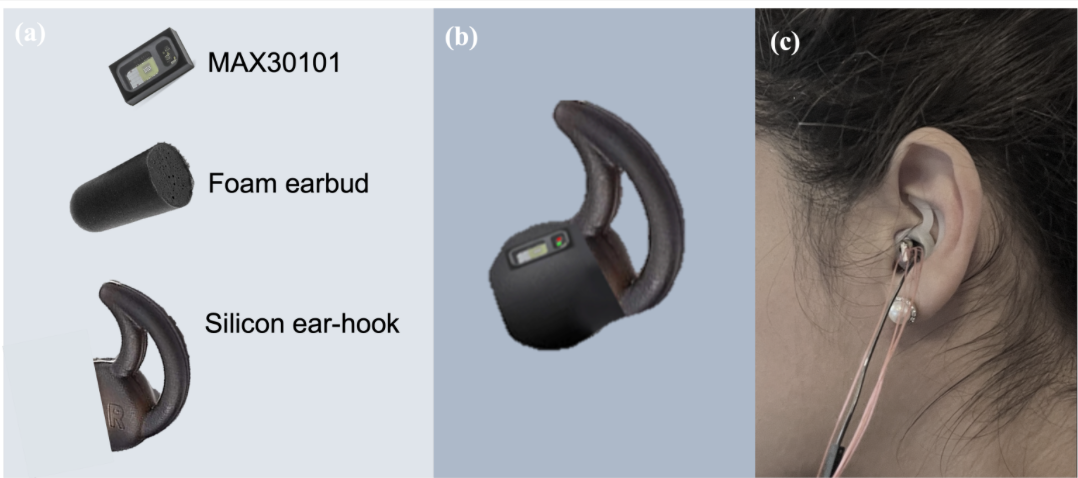
In ear PPG used to measure blood glucose levels in proof of concept study

Danilo Mandic and Imperial College colleagues have developed a novel in-ear PPG device for continuous blood glucose level measurement, using the infrared wavelength of a pulse oximeter.

In a recent proof of concept study, non-diabetic, pre-diabetic, type I diabetic, and type II diabetic states were considered. Recordings spanned 9 days, in both fasting and post carbohydrate consumption states. Blood Glucose Levels from PPG were estimated using regression-based machine learning models. An average of 82% of the BGLs estimated from PPG were in region A of the Clarke error grid plot, and 100% of the estimated BGLs in clinically acceptable regions A and B. The researchers believe that this demonstrates the potential of the ear canal for non-invasive blood glucose monitoring.

Categories
Diabetes Sensors Wearables

Microneedle wearable continuously monitors glucose, lactate, alcohol

UCSD Professor Joe Wang and colleagues have created a multiple biomarker monitor in the form of a painless microneedle patch, which Wang calls a “complete lab on the skin.” Glucose, lactate and alcohol levels are monitored simultaneously, in real time.

Microneedles enable the direct sample of interstitial fluid, which provides a similar measure of biochemical levels as blood.

The researchers gave the example of diabetes as a use case, as alcohol can lower glucose levels, and fatigue, measured by lactate, can influence the body’s ability to regulate glucose. Monitoring all three parameters at the same time could, therefore, better help diabetics manage their condition.

Five users wore the device on their upper arm, while exercising, eating, and drinking wine. Glucose levels were monitored simultaneously with either their alcohol or lactate levels. The glucose, alcohol and lactate measurements taken by the wearable patch closely matched the measurements taken by a commercial blood glucose monitor, Breathalyzer, and blood lactate measurement performed in the lab.

The company AquilX was established to commercialize the technology, with plans to add more sensors to the device, including those that can monitor medication levels.

Click to view UCSD video


Join ApplySci at MIT on September 30, 2022 for Deep Tech Health + Neurotech Boston

Categories
Babies Diabetes Sensors

Pacifier sensor detects glucose levels in babies

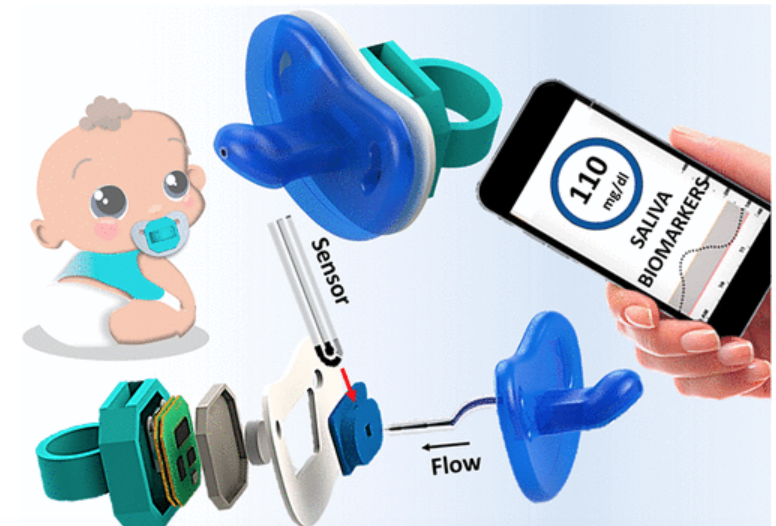
UCSD’s Joe Wang has developed a soft, flexible, pacifier-based biosensor that continuously monitors glucose levels in saliva to detect diabetes in babies. Until now,  continuous glucose monitoring in newborns,  available only in major hospitals, requires piercing the infant’s skin to reach interstitial fluid.

The team created a proof of concept pacifier where small amounts of saliva were transferred through a narrow channel to a detection chamber.  An enzyme attached to an electrode strip converted glucose in the fluid to a weak electrical signal, which could be detected wirelessly by an app. The strength of the current correlated with the amount of glucose in saliva samples.

The preliminary analysis was conducted on adults with type 1 diabetes.  The pacifier detected changes in glucose concentrations in  saliva before and after a meal.

The device could also be configured to monitor other disease biomarkers.


Joe Wang will be a keynote speaker at ApplySci’s 12th Wearable Tech + Digital Health + Neurotech Boston conference on November 14, 2019 at Harvard Medical School.  

Other speakers include:  Brad Ringeisen, DARPA  – Carlos Pena, FDA  – George Church, Harvard – Diane Chan, MIT – Giovanni Traverso, Harvard | Brigham & Womens – Anupam Goel, UnitedHealthcare  – Nathan Intrator, Tel Aviv University | Neurosteer – Arto Nurmikko, Brown – Constance Lehman, Harvard | MGH – Mikael Eliasson, Roche – Nicola Neretti, Brown – R. Jacob  Vogelstein, Camden Partners – Yael Mandelblat-Cerf, Biogen


Categories
Diabetes Sensors

Cheap, noninvasive patch monitors glucose

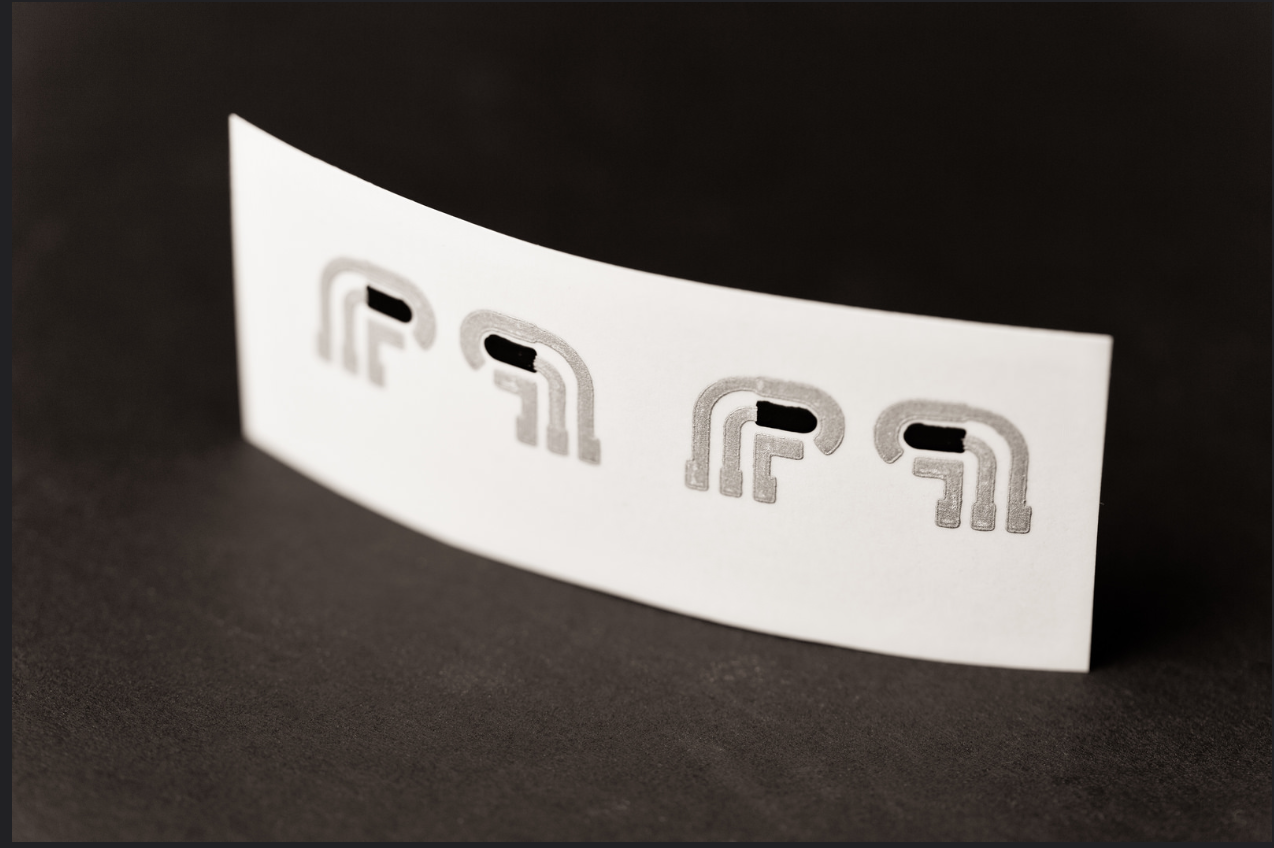
UCSD’s Joe Wang‘s needless adhesive glucose monitor has begun a phase I clinical trial.  The small patch measures insulin levels through sweat on the skin, eliminating the need for a skin prick.  The paper – tattoo is printed with two integrated electrodes that apply a small amount of electrical current.  Glucose molecules residing below the skin are forced to rise to the surface, allowing blood sugar to be measured.

Through its SENSOR study,  the team s testing the tattoo-like sensor’s accuracy, compared to a traditional glucometer. The  trial is enrolling 50 adults, ages 18 to 75, with type 1 or 2 diabetes, or diabetes due to other causes. Participants wear a sensor while fasting, and up to 2 hours after eating.

The goal is a cheap, noninvasive, discreet, user friendly glucose monitor that provides continuous measurement.  The sensor currently provides only one readout.


Join ApplySci at the 9th Wearable Tech + Digital Health + Neurotech Boston conference on September 24, 2018 at the MIT Media Lab.  Speakers include:  Mary Lou Jepsen – George ChurchRoz PicardNathan IntratorKeith JohnsonJuan EnriquezJohn MattisonRoozbeh GhaffariPoppy Crum

Categories
Diabetes Wearables

Non-invasive glucose monitoring patch

Richard Guy and University of Bath colleagues have created a non-invasive, adhesive patch, to measure glucose levels through the skin without a finger-prick blood test.

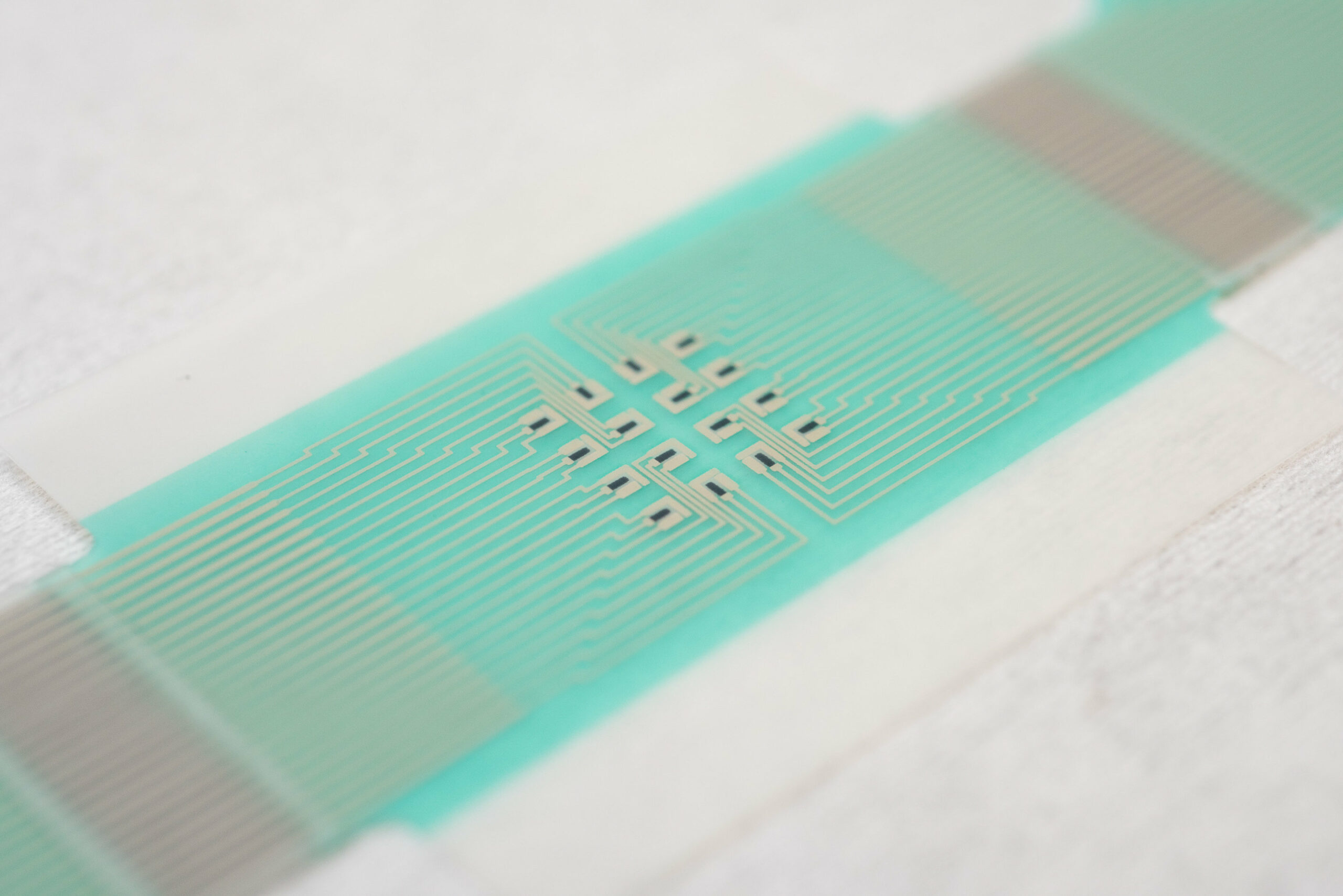
The patch draws glucose from fluid between cells across hair follicles, accessed individually via an array of miniature sensors using a small electric current. The glucose collects in tiny reservoirs and is measured. Readings can be taken every 10 to 15 minutes over several hours. Calibration with a blood sample is not required.

The goal is the development of a low-cost, wearable sensor that sends regular, clinically relevant glucose measurements to one’s phone or watch, with alerts when action is required.


Join ApplySci at the 9th Wearable Tech + Digital Health + Neurotech Boston conference – September 25, 2018 at the MIT Media Lab


Categories
Diabetes Sensors

Glucose-monitoring smartphone case

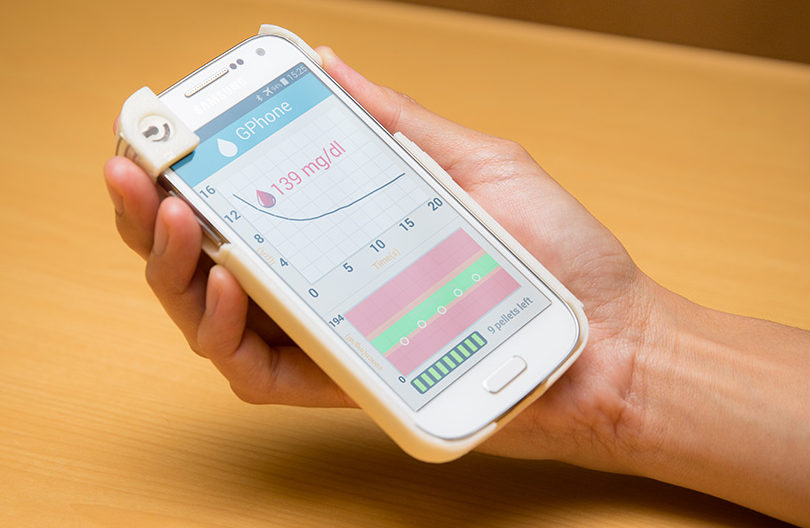
GPhone, developed by UCSD’s Joe Wang and Patrick Mercier, is a  smartphone case and accompanying app that records and tracks glucose readings. It is 3D-printed and has a permanent, reusable sensor on its corner. Enzyme pellets magnetically attach to the sensor, and are stored in a 3D stylus on the side.

Users dispense a pellet from the stylus onto a bare strip on the case, activating the sensor.  A drop of blood is then put on the sensor strip.  Results are displayed on the screen, and the pellet is then discarded.

The next step is to integrate glucose sensing directly into the smartphone.  This is now in the proof of concept stage.


Join ApplySci at Wearable Tech + Digital Health + Neurotech Silicon Valley on February 26-27, 2018 at Stanford University. Speakers include:  Vinod Khosla – Justin Sanchez – Brian Otis – Bryan Johnson – Zhenan Bao – Nathan Intrator – Carla Pugh – Jamshid Ghajar – Mark Kendall – Robert Greenberg – Darin Okuda – Jason Heikenfeld – Bob Knight – Phillip Alvelda – Paul Nuyujukian –  Peter Fischer – Tony Chahine – Shahin Farshchi – Ambar Bhattacharyya – Adam D’Augelli – Juan-Pablo Mas – Michael Eggleston – Walter Greenleaf

Registration rates increase Friday, December 15th

Categories
Diabetes Sensors

Patch monitors diabetes compounds in sweat for 1 week

University of Texas professor Shalini Prasad has developed an adhesive sensor that measures diabetes-associated compounds in small amounts of sweat.

Blood glucose levels, cortisol and interleukin-6 are detected in perspiration for one week with full signal integrity.  The device uses ambient sweat, created by the body with out stimulation.

The sensor can be placed anywhere on the skin and takes customized readings up to once an hour.  Data is sent to a user’s phone.

Prasad estimates that the sensors would cost 7 cents each if produced in bulk, making the technology truly accessible.


Join ApplySci at Wearable Tech + Digital Health + NeuroTech Boston on September 19, 2017 at the MIT Media Lab – featuring  Joi Ito – Ed Boyden – Roz Picard – George Church – Nathan Intrator –  Tom Insel – John Rogers – Jamshid Ghajar – Riccardo Sabatini – Phillip Alvelda – Michael Weintraub – Nancy Brown – Steve Kraus – Bill Geary – Mary Lou Jepsen


ANNOUNCING WEARABLE TECH + DIGITAL HEALTH + NEUROTECH SILICON VALLEY – FEBRUARY 26 -27, 2018 @ STANFORD UNIVERSITY –  FEATURING:  ZHENAN BAO – JUSTIN SANCHEZ – BRYAN JOHNSON – NATHAN INTRATOR – VINOD KHOSLA


Categories
Diabetes Eyes Sensors

Transparent, stretchable lens sensor for diabetes, glaucoma detection

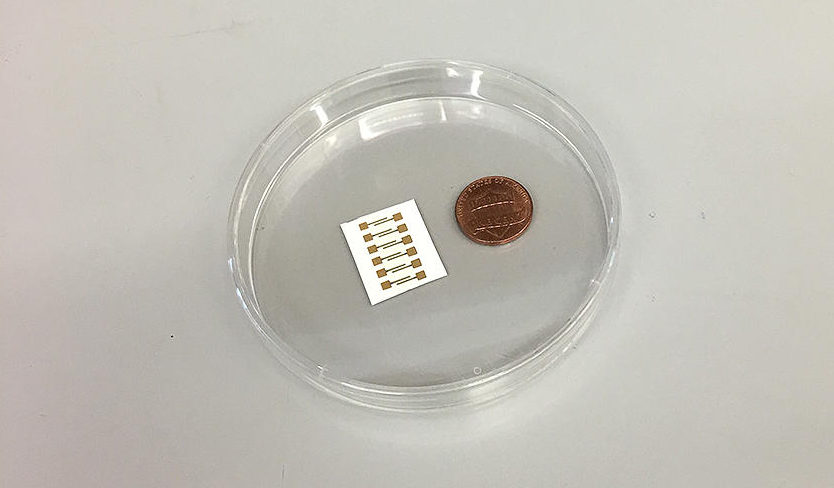
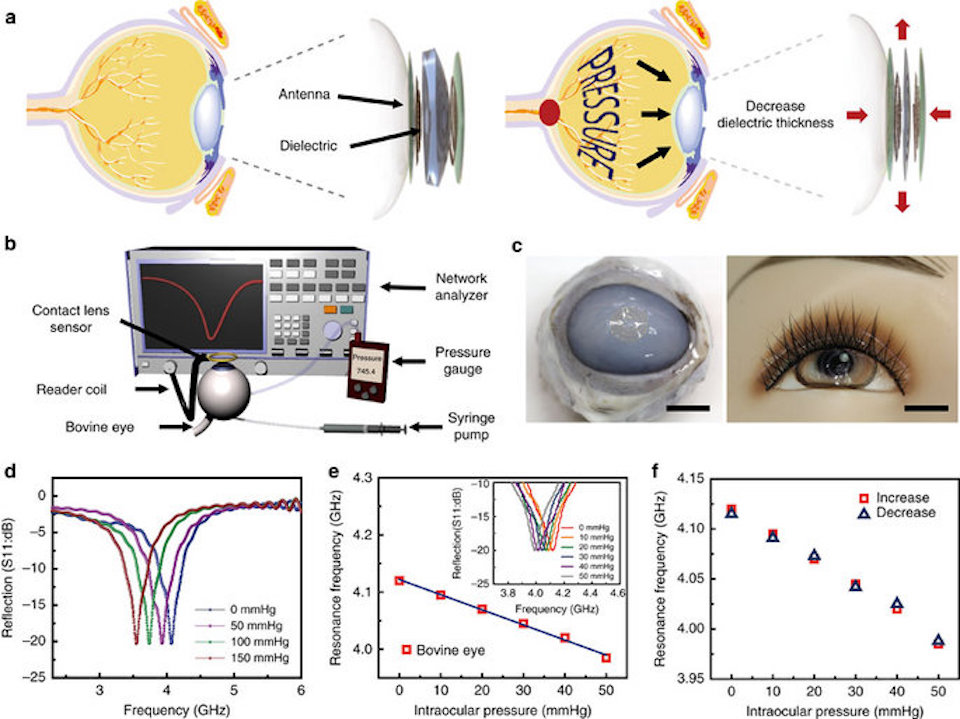
UNIST professors Jang-Ung Park, Chang Young Lee and Franklin Bien, and KNU professors Hong Kyun Kim and Kwi-Hyun Bae, have developed a contact lens sensor to monitor biomarkers for intraocular pressure, diabetes mellitus, and other health conditions. Several attempts have been  made to monitor diabetes via glucose in tears.  The challenge has been poor wearability, as the electrodes used in existing smart contact lenses are opaque, obscuring  one’s view.  Many wearers also complained of significant discomfort from the lens-shaped firm plastic material. The research team addressed this by developing a sensor based on transparent, stretchable, flexible materials  graphene sheets and metal nanowires. This allowed the creation of lenses comfortable and accurate enough for eventual self-monitoring of glucose levels and eye pressure. Patients can transmit their health information through an embedded wireless antenna in the leans, allowing real-time monitoring  The system uses  the wireless antenna to read sensor information, eliminating the need for a separate power source.

Join ApplySci at Wearable Tech + Digital Health + NeuroTech Boston on September 19, 2017 at the MIT Media Lab. Featuring Joi Ito – Ed Boyden – Roz Picard – George Church – Tom Insel – John Rogers – Jamshid Ghajar – Phillip Alvelda – Nathan Intrator
Categories
Diabetes Sensors Wearables

Apple reportedly developing non-invasive glucose monitor

CNBC’s Christina Farr has reported that Apple has been quietly developing a non-invasive, sensor-based glucose monitor.  The technology has apparently advanced to the trial stage.

Diabetes has become a global epidemic.  Continuous monitoring, automatic insulin delivery, and the “artificial pancreas” are significant steps forward, meant to control the disease, and avoid its debilitating side effects.  While some systems consist of micro-needles just below the skin, to date, none are totally non-invasive.

The ideal solution would be the use of the Apple Watch and other fitness/lifestyle trackers to control behavior to the point that the disease is avoided entirely.  However, if diagnosed, a non-invasive glucose sensor would transform the daily life of diabetics.


Join ApplySci at Wearable Tech + Digital Health + NeuroTech Boston – Featuring: Joi Ito, Ed Boyden, Roz Picard, George Church, Tom Insel, John Rogers, Jamshid Ghajar, Phillip Alvelda and Nathan Intrator – September 19, 2017 at the MIT Media Lab

Categories
Diabetes Wearables

Consumer wearable + medical monitor track exercise’s impact on glucose

Consumer wearables can complement medical devices by integrating activity data into a disease management strategy.

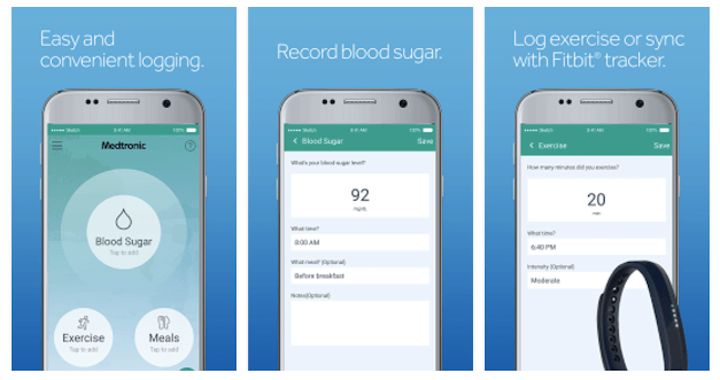
Fitbit movement data will now be used with a Medtronic diabetes management tool, with the goal of users predicting the impact of exercise on glucose levels.

Diabetics can monitor glucose with Medtronic’s iPro2 system continuously for 6 days. Fitbit data will integrated into the  iPro2 myLog app. Users will no longer need to log daily activity on paper, and the information is easily shared with physicians and caregivers.

ApplySci’s 6th  Digital Health + NeuroTech Silicon Valley  –  February 7-8 2017 @ Stanford   |   Featuring:   Vinod Khosla – Tom Insel – Zhenan Bao – Phillip Alvelda – Nathan Intrator – John Rogers – Roozbeh Ghaffari –Tarun Wadhwa – Eythor Bender – Unity Stoakes – Mounir Zok – Sky Christopherson – Marcus Weldon – Krishna Shenoy – Karl Deisseroth – Shahin Farshchi – Casper de Clercq – Mary Lou Jepsen – Vivek Wadhwa – Dirk Schapeler – Miguel Nicolelis


Categories
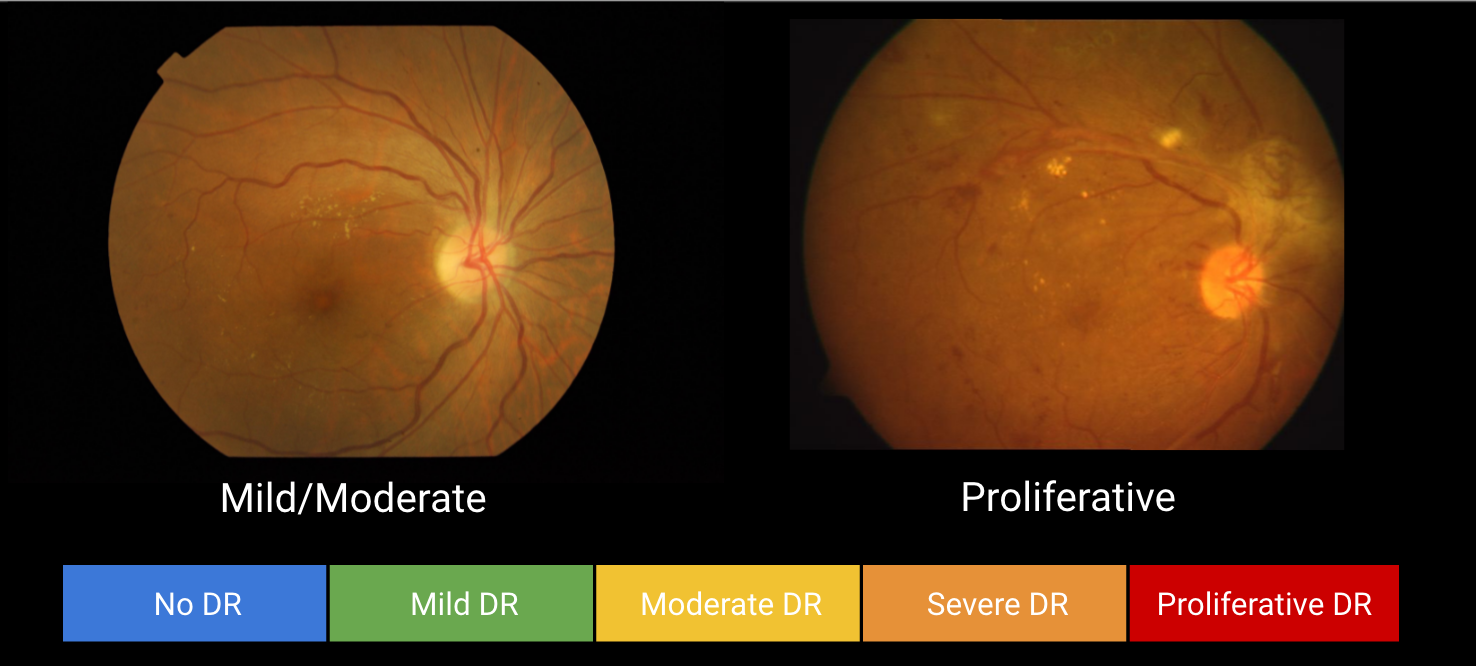
Computer Vision Deep Learning Diabetes Eyes

Diabetic retinopathy-detecting algorithm for remote diagnosis

Google has developed an algorithm which it claims is capable of detecting diabetic retinopathy in photographs.  The goal is to improve the quality and availability of screening for, and early detection of,  the common and debilitating condition.

Typically, highly trained specialists are required to examine photos, to detect the lesions that indicate bleeding and fluid leakage in the eye. This obviously makes screening difficult in poor and remote locations.

Google developed a dataset of 128,000 images, each evaluated by 3-7 specially-trained doctors, which trained  a neural network to detect referable diabetic retinopathy.  Performance was tested on two clinical validation sets of 12,000 images. The majority decision of a panel 7 or 8 ophthalmologists served as the reference standard. The results showed that the accuracy of the  Google  algorithm was equal to that of the physicians.


ApplySci’s 6th   Wearable Tech + Digital Health + NeuroTech Silicon Valley  –  February 7-8 2017 @ Stanford   |   Featuring:   Vinod Khosla – Tom Insel – Zhenan Bao – Phillip Alvelda – Nathan Intrator – John Rogers – Roozbeh Ghaffari –Tarun Wadhwa – Eythor Bender – Unity Stoakes – Mounir Zok – Krishna Shenoy – Karl Deisseroth – Shahin Farshchi – Casper de Clercq – Mary Lou Jepsen – Vivek Wadhwa – Dirk Schapeler – Miguel Nicolelis