Categories
Autism Brain MRI

Prenatal MRI study suggests autism differences may begin in the womb

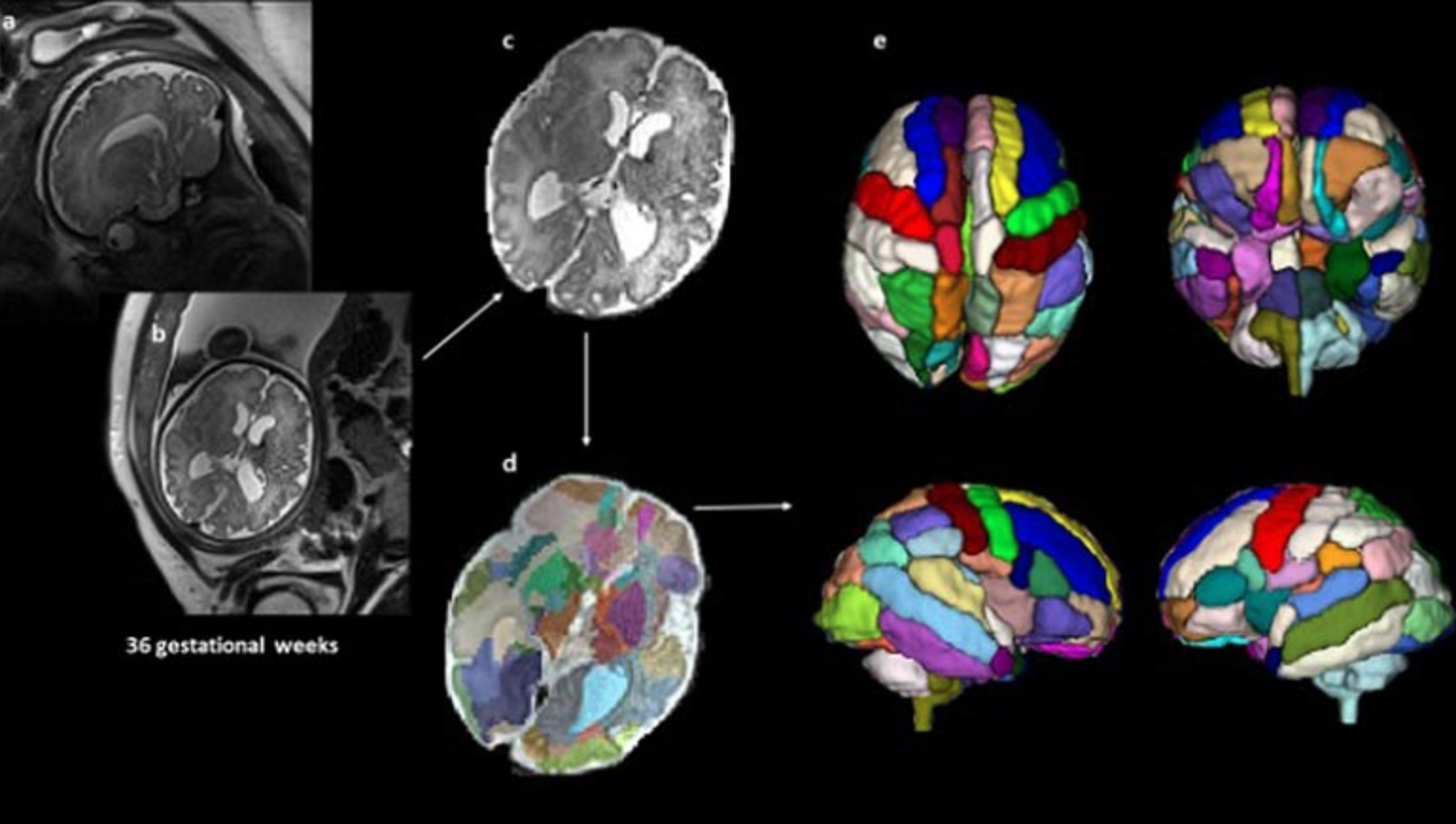
A small Boston Children’s Hospital study led by Assistant Professor Emi Takahashi and postdoc Alpen Ortug showed increased volume of the insular lobe as a potential strong prenatal MRI biomarker that could predict the emergence of ASD later in life. It revealed significant differences in brain structures at 25 weeks’ gestation between children who were later diagnosed with ASD and those who were not.

If validated, this could enable earlier treatment after birth, which could improve outcomes. Early treatment has been shown to improve language and cognitive abilities, but current diagnostic tools can only identify the disorder around 18 months of age.

39 fetal MRI brain scans at 25 weeks’ gestation taken at Boston Children’s Hospital were analyzed. 9 children were later diagnosed with ASD, 20 were neurotypical and 10 did not have ASD but had other conditions also observed in the children with ASD.

An atlas-based automated anatomical labeling method was used to segment the scans and compare brain regions between the different groups. The insular lobe was found to have significantly larger volume in the ASD group compared with the other 3 control groups.

The findings align with studies that have reported changes in the insular cortex in adults with autism, and suggests these differences may begin in the womb. The scans from children with ASD also showed a significantly larger amygdala and hippocampal commissure compared with children who had other health conditions but not ASD.

According to Ortug, “to the best of our knowledge, this is the first attempt to semi-automatically segment the brain regions in the prenatal stage in patients who are diagnosed with autism later and compare different groups of controls.”


Join ApplySci at MIT on September 30th for Deep Tech Health + Neurotech Boston 2022
Categories
Autism Robotics

Robot helps autistic kids engage

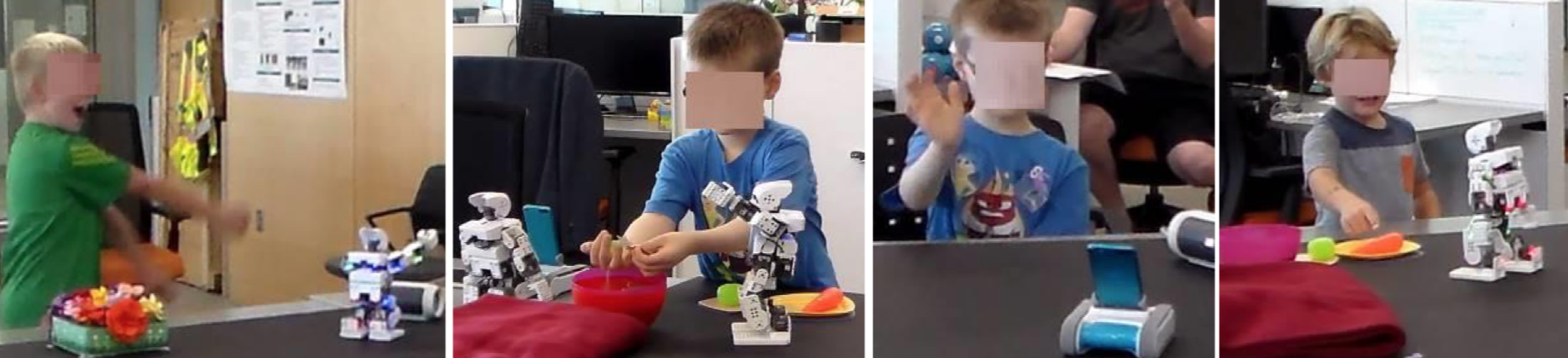
Georgia Tech professor Ayanna Howard is using interactive robots to help autistic kids engage with others,  socially and emotionally. Her company, Zyrobotics, is commericalizing this technology.

In a study, 18 kids, between the ages of 4 and 12,  five of whom had autism, interacted with two robots which expressed 20 emotional states, including boredom, excitement, and nervousness. As children heard, saw, smelled, tasted, and touched in different scenarios, the robots showed them appropriate responses. The results were increased engagement when the robots engaged with the participants in sensory stations.


Join ApplySci at the 12th Wearable Tech + Digital Health + Neurotech Boston conference on November 14, 2019 at Harvard Medical School featuring talks by Brad Ringeisen, DARPA – Joe Wang, UCSD – Carlos Pena, FDA  – George Church, Harvard – Diane Chan, MIT – Giovanni Traverso, Harvard | Brigham & Womens – Anupam Goel, UnitedHealthcare  – Nathan Intrator, Tel Aviv University | Neurosteer – Arto Nurmikko, Brown – Constance Lehman, Harvard | MGH – Mikael Eliasson, Roche – David Rhew, Samsung

Join ApplySci at the 13th Wearable Tech + Neurotech + Digital Health Silicon Valley conference on February 11-12, 2020 at Stanford University featuring talks by Zhenan Bao, Stanford – Rudy Tanzi, Harvard – David Rhew, Samsung – Carla Pugh, Stanford – Nathan Intrator, Tel Aviv University | Neurosteer

Categories
Autism Brain

MRI, algorithm predict autism before behavioral symptoms appear

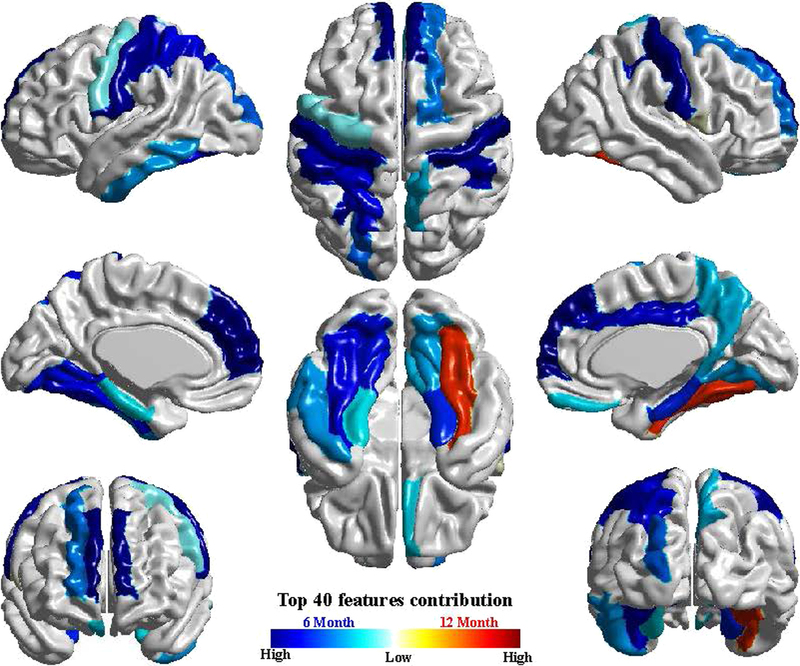
UNC’s Heather Hazlett has published a study showing that an overgrowth in brain volume, determined by MRI scans during the first year of life, forecasts whether a child at high risk of developing autism.

The goal is to give parents the opportunity to intervene long before behavioral symptoms become obvious, which usually occurs between ages 2 and 4.

The study was small, and further research is needed before it can be developed into a diagnostic  tool.

Two groups were studied: 106 high-risk  infants, with an older sibling with autism, and 42 low-risk infants, with no family history. MRI measurements of overall volume, surface area and thickness of the cerebral cortex in certain regions were done at set times between 6 and 24 months. An overgrowth of cortical surface area in infants later diagnosed with autism, compared with the typically developing infants, was discovered.

The researchers then developed an algorithm that predicted autism, based on brain measurements. Approximately 80% of the 15 high-risk infants who would later meet the criteria for autism at 24 months. Using the algorithm, the team also accurately predicted which babies would not develop autism by age 2.


Join ApplySci at Wearable Tech + Digital Health + NeuroTech Boston – Featuring Roz Picard, Tom Insel, John Rogers and Nathan Intrator – September 19, 2017 at the MIT Media Lab

Categories
Autism Wearables

Neurofeedback to suppress delta frequencies in autism

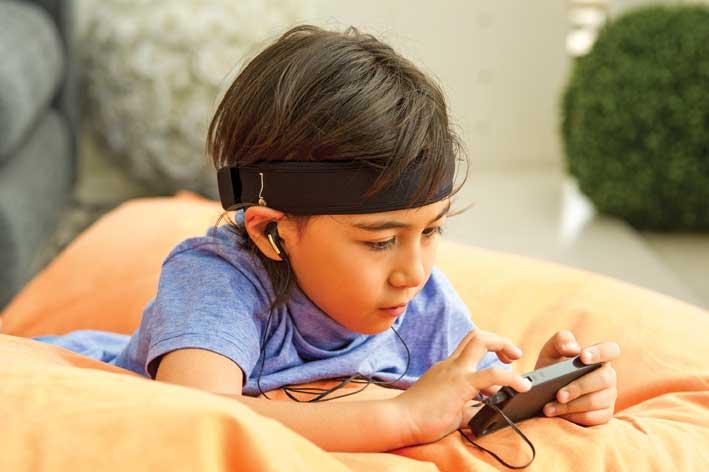
Mente is a neurofeedback system for autistic kids that creates personalized binaural beats, to suppress excessive delta frequencies, using auditory pathways in the brain.

Delta waves are typically associated with sleep and closed eyes, but autistic people experience high delta wave frequencies while awake. This  could be attributed to a feeling of isolation.

The company claims that Mente training should begin between ages 3 and 12, and that positive effects can be seen after 4 to 8 weeks of daily 40-minute  sessions.  The goal is enhanced concentration and communication.


ApplySci’s 6th   Wearable Tech + Digital Health + NeuroTech Silicon Valley  –  February 7-8 2017 @ Stanford   |   Featuring:   Vinod Khosla – Tom Insel – Zhenan Bao – Phillip Alvelda – Nathan Intrator – John Rogers – Mary Lou Jepsen – Vivek Wadhwa – Miguel Nicolelis – Roozbeh Ghaffari –Tarun Wadhwa – Eythor Bender – Unity Stoakes – Mounir Zok – Krishna Shenoy – Karl Deisseroth

Categories
Apps Autism Brain Children

App identifies early signs of autism

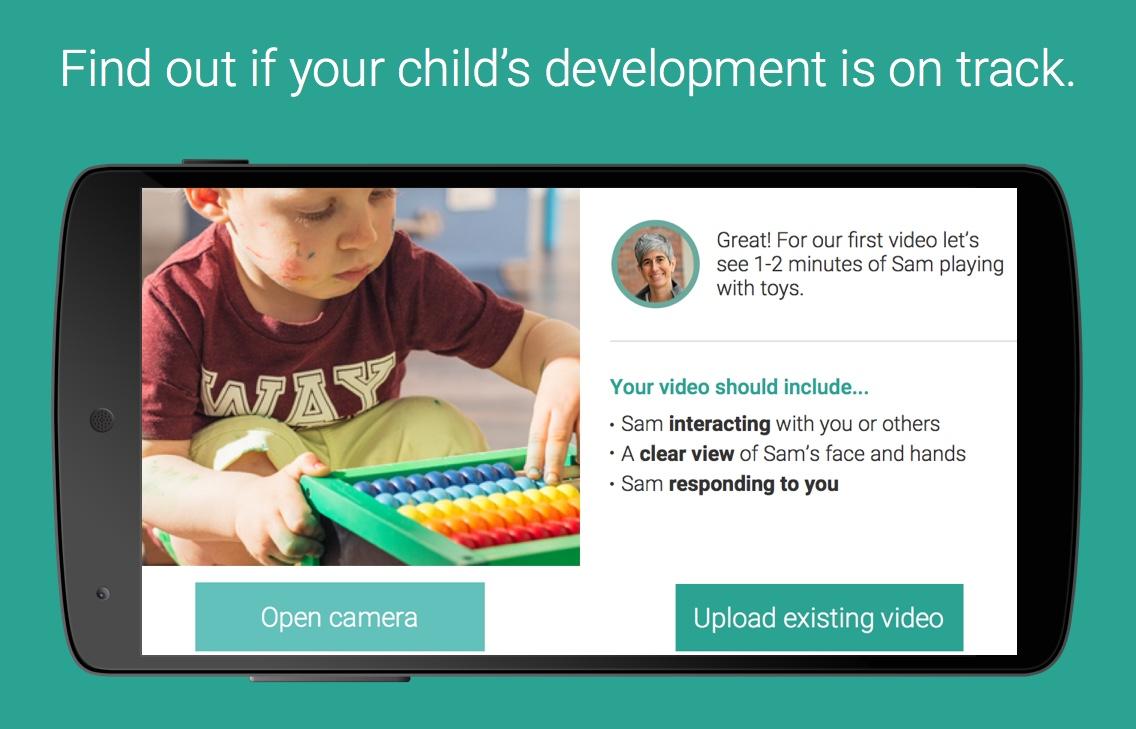
Cognoa is an app  that asks parents to answer 15 questions about behavior to indicate whether their child is at risk of autism.  It is based on data from 10,000 children and validation studies led by Stanford professor Dennis Wall.

The system focuses on specific behaviors from  standard diagnostic instruments that have the highest value for detecting developmental delay and autism. The predictive algorithm relies on the behavioral reports from parents and a video evaluation of the child.

It is meant to be used by non-clinicians to earlier identify issues that require treatment by a physician.

Professor Wall will be a featured speaker at ApplySci’s NEUROTECH SAN FRANCISCO conference  on April 6th, which immediately follows WEARABLE TECH + DIGITAL HEALH SAN FRANCISCO on Aprl 5th.

Categories
Autism Wearables

GPS, voice monitoring wearable for special needs kids

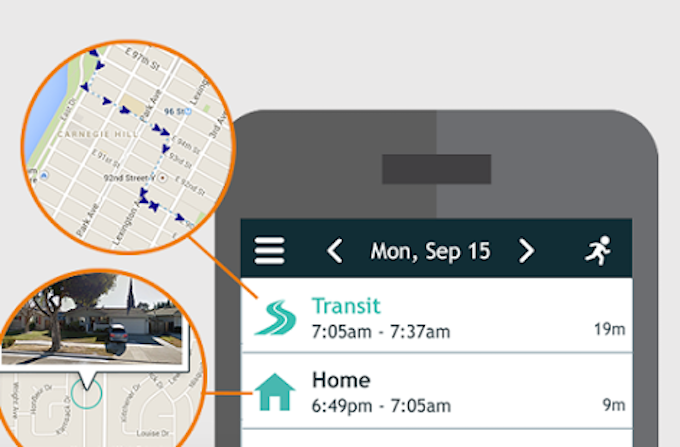
AngelSense is a tracking and voice monitoring wearable designed for children with special needs.  Parents can:

  • Receive an automatically generated real-time schedule
  • Listen to a child’s activities
  • Receive notifications of every location change
  • Locate a lost child with a 10 second live location update
  • Automatically download photos of the day’s locations

Continuous monitoring and real time alerts are enabled by cloud-based analytics and a web app.  Subscribers receive a visual diary of the child’s day, and an interface where parents and caregivers can share information and photos.

The company’s website highlights a case study where a parent and child review photos of the child’s day:  “Every evening Josh and I watch the places he visited. By using the pictures, Josh can finally share his day with me! He understands I keep him safe and feels more confident knowing I’m with him at all times.”

AngelSense customer service is staffed  with parents of special needs kids who are  expert users of product.

While AngelSense is geared toward children, ApplySci believes that it could be also be  used as a safety solution for dementia sufferers and their caregivers.

WEARABLE TECH + DIGITAL HEALTH SAN FRANCISCO – APRIL 5, 2016 @ THE MISSION BAY CONFERENCE CENTER

NEUROTECH SAN FRANCISCO – APRIL 6, 2016 @ THE MISSION BAY CONFERENCE CENTER

REGISTER BEFORE NOVEMBER 30TH TO RECEIVE THE PREFERRED RATE.

Categories
Autism Brain Wearables

Glass app helps autistic kids understand expressions, emotions

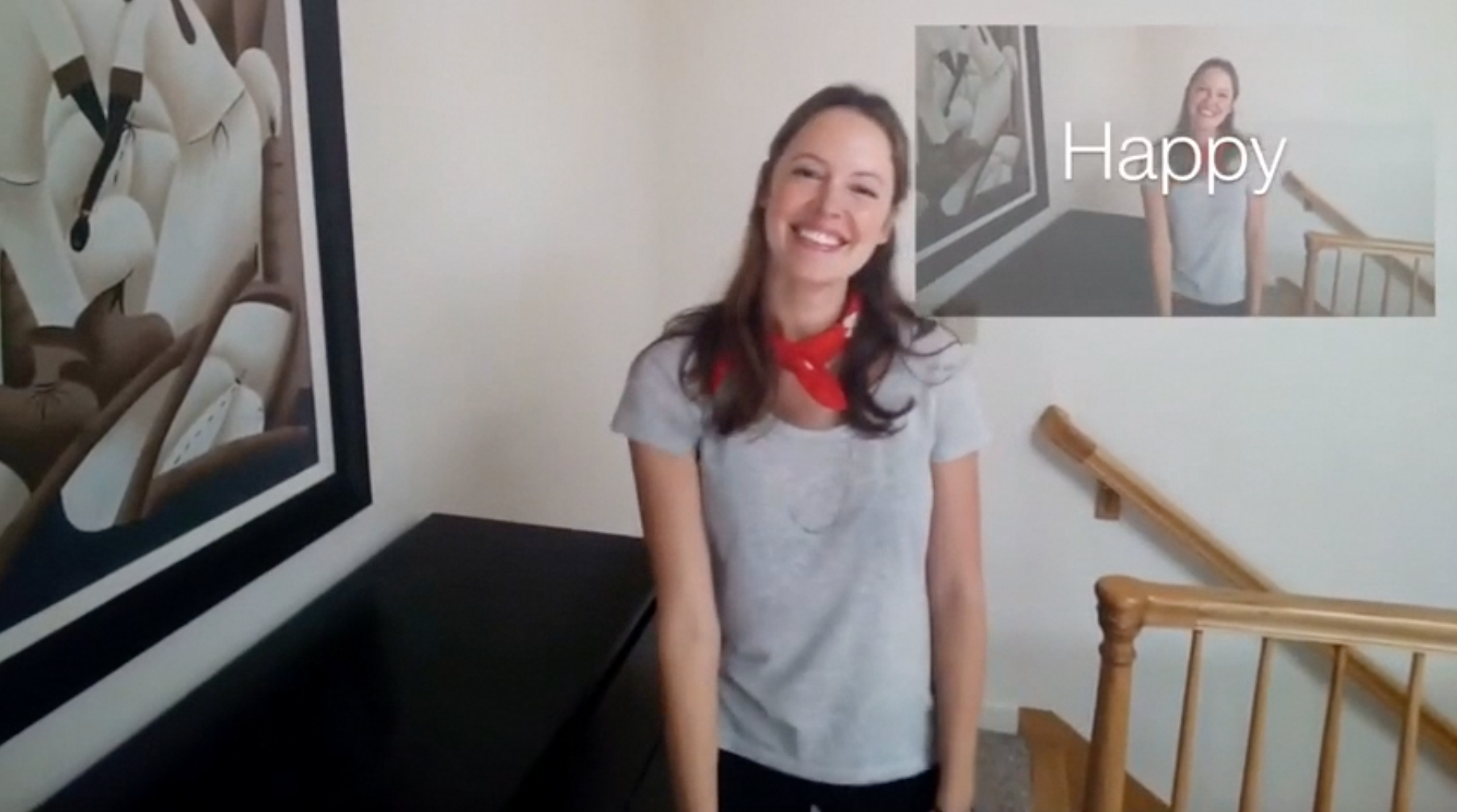
Dennis Wall, Catalin Voss, and  Nick Haber of Stanford’s Wall Lab are developing Google Glass software to help autistic children recognize and understand facial expressions and emotions.

Head motion tracking sensors, a microphone, and an eye tracking infrared camera analyze a wearer’s behavior during social interactions. Real time social cues are provided, and responses, including eye contact details, which can be analyzed in behavioral therapy, are recorded. The goal is to incorporate behavioral therapy into natural settings.

Last year ApplySci described a related technology,  Brain Power‘s Glass app, where expressions are interpreted and social engagement with parents is monitored, using games and exercises.

The Autism Glass Project has been tested on 40 children, and a clinical trial of 100 participants is now beginning.

WEARABLE TECH + DIGITAL HEALTH SAN FRANCISCO – APRIL 5, 2016 @ THE MISSION BAY CONFERENCE CENTER

NEUROTECH SAN FRANCISCO – APRIL 6, 2016 @ THE MISSION BAY CONFERENCE CENTER

Categories
Autism Brain

Reaction to smells, autism, linked

Weizmann Institute of Science researchers may have developed a test to detect autism based on a child’s reaction to smells.

The study suggests that children with autism spectrum disorder don’t adjust their sniffing instinctively when they encounter pleasant or foul scents. 18 children with an autism diagnosis, and 18 typically developing children, were presented with pleasant and unpleasant odors, and their sniff responses were measured.  Typically developing children adjusted their sniffing within 305 milliseconds. Children with autism did not respond as quickly

The researchers, who had not been told which children had autism, were able to identify those with autism 81 percent of the time. They also found that the farther removed an autistic child’s sniff response was from the average, the more severe the child’s symptoms were.

The goal is to be able to diagnose and address autism as early as possible.

Categories
Autism EEG Monitoring

Home-based autism therapies

The MICHELANGELO project creates home-based solutions for assessing and treating autism, including:

  • Pervasive, sensor-based technologies to perform physiological measurements such as heart rate, sweat index and body temperature
  • Camera-based systems to monitor observable behaviors and record brain responses to natural environment stimuli
  • Algorithms allowing for the characterization of stimulus-specific brainwave anomalies

These technologies will allow for more intense, personalized treatment, and give parents the role of co-therapist.

Wearable Tech + Digital Health NYC 2015 – June 30 @ New York Academy of Sciences.  Early registration rate ends Friday, 4/24.

Categories
Autism Robotics

Robot helps build social skills in autistic kids

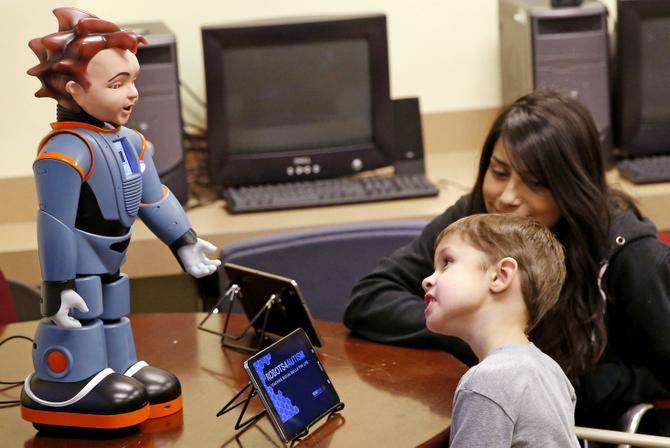
Milo by RoboKind is a humanoid robot designed to engage and build social skills in children with autism.  It is used with  the company’s Robots4Autism curriculum which includes conversation, social situation, and emotional understanding modules.

Milo is 2 feet tall, with a childlike voice and facial features.  Its arms move and facial expression change. Sensors gauge eye contact, which is often a problem for children with autism, and cameras and microphones record interactions.

Embedded software includes the Robots4Autism curriculum and components for reporting  interaction and progress. Children and therapists use tablets to interact with Milo.

Wearable Tech + Digital Health NYC 2015 – June 30 @ New York Academy of Sciences.  Early registration rate available until March 27th.

Categories
Autism Brain Parkinson's

Video game eye movement to diagnose brain disorders

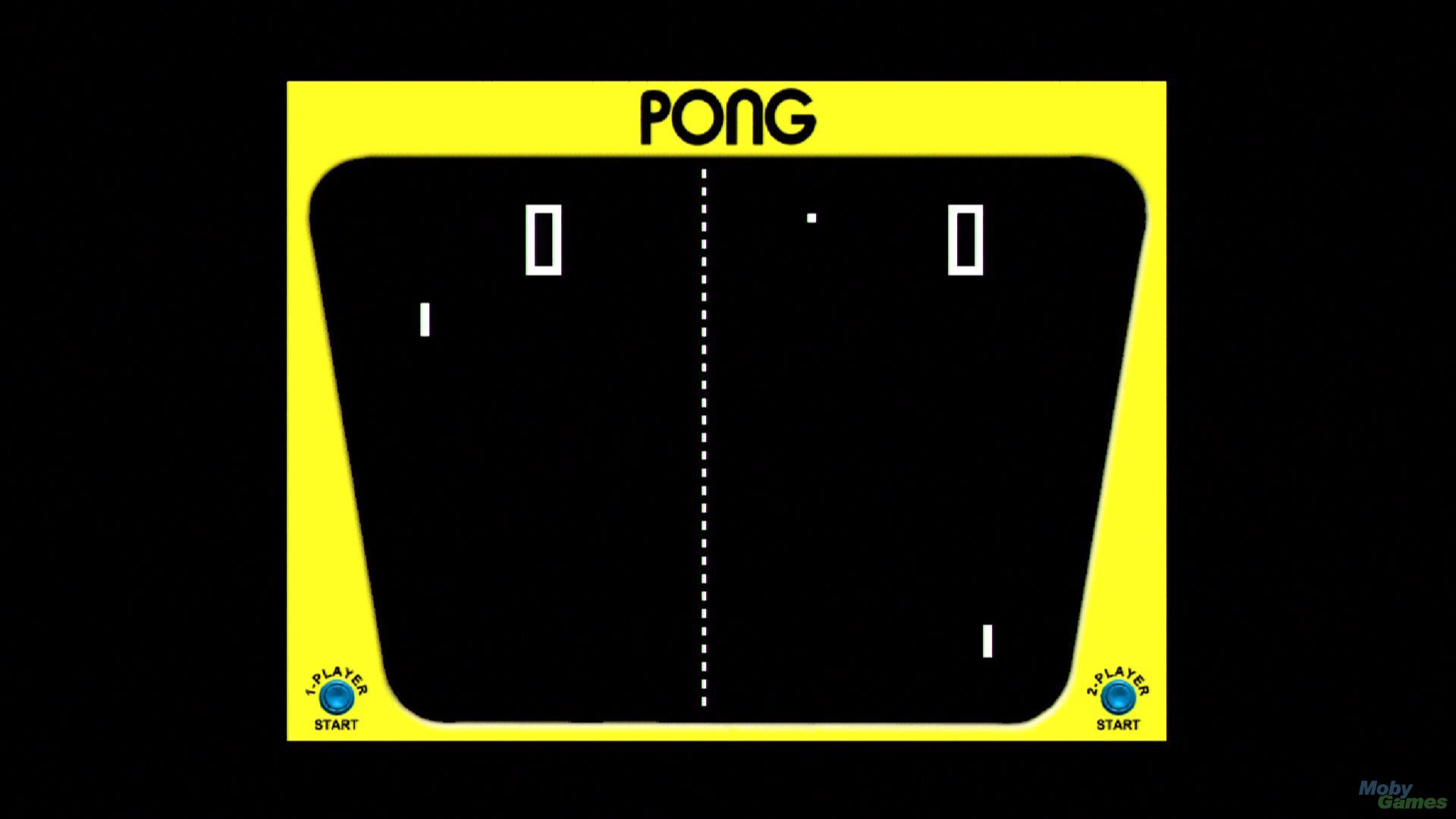
University of Chicago professor Leslie Osborne believes that the classic Atari game “Pong” is ideal for tracking eye movement, therefore helping  diagnose Parkinson’s, TBI or autism

Osborne’s lab focuses on eye movement behavior, known as smooth pursuit, that allows eyes to track moving targets.  At the recent Brain Research Foundation conference,  her paper showed that “when motion becomes predictable, gaze behavior is no longer captured by the same decision rule.  Researchers hope to apply this information to quantify the interaction between target, gaze, and time.  In a clinical context, researchers hope that it will expand the toolkit for diagnosing brain disorders which affect gaze behavior.”

This is classic video game maker Atari’s second newsworthy development in recent weeks.  In December ApplySci described Atari’s digital health partnership with Walgreen’s.

Wearable Tech + Digital Health NYC 2015 – June 30 @ New York Academy of Sciences

Categories
Autism Brain Children fMRI

Brain imaging technique identifies autism

Virginia Tech Carilion Research Institute professor P. Read Montague has developed a brain imaging technique that may be able to identify autism in children.  Current diagnosis is a long an unquantifiable process based on clinical judgment.

The study demonstrates that a perspective tracking response can be used to determine whether someone has autism spectrum disorder.  It investigates how the middle cingulate cortex response differs in individuals at different developmental levels.

Children were shown 15 images of themselves and 15 images of a child matched for age and gender for four seconds per image in a random order. The control children had a high response in the middle cingulate cortex when viewing their own pictures. Children with autism spectrum disorder had a significantly diminished response.

According to Montague, “the single-stimulus functional MRI could also open the door to developing MRI-based applications for screening of other cognitive disorders.”  Scientists can link the function of mental disorders to the disrupted mechanisms of neural tissue through mathematical approaches, such as brain scans.  Doctors then can use measurable data for earlier diagnosis and treatment.

Wearable Tech + Digital Health NYC 2015 – June 30 @ New York Academy of Sciences