Categories
BCI Brain

Brain-spine interface allows paraplegic man to walk

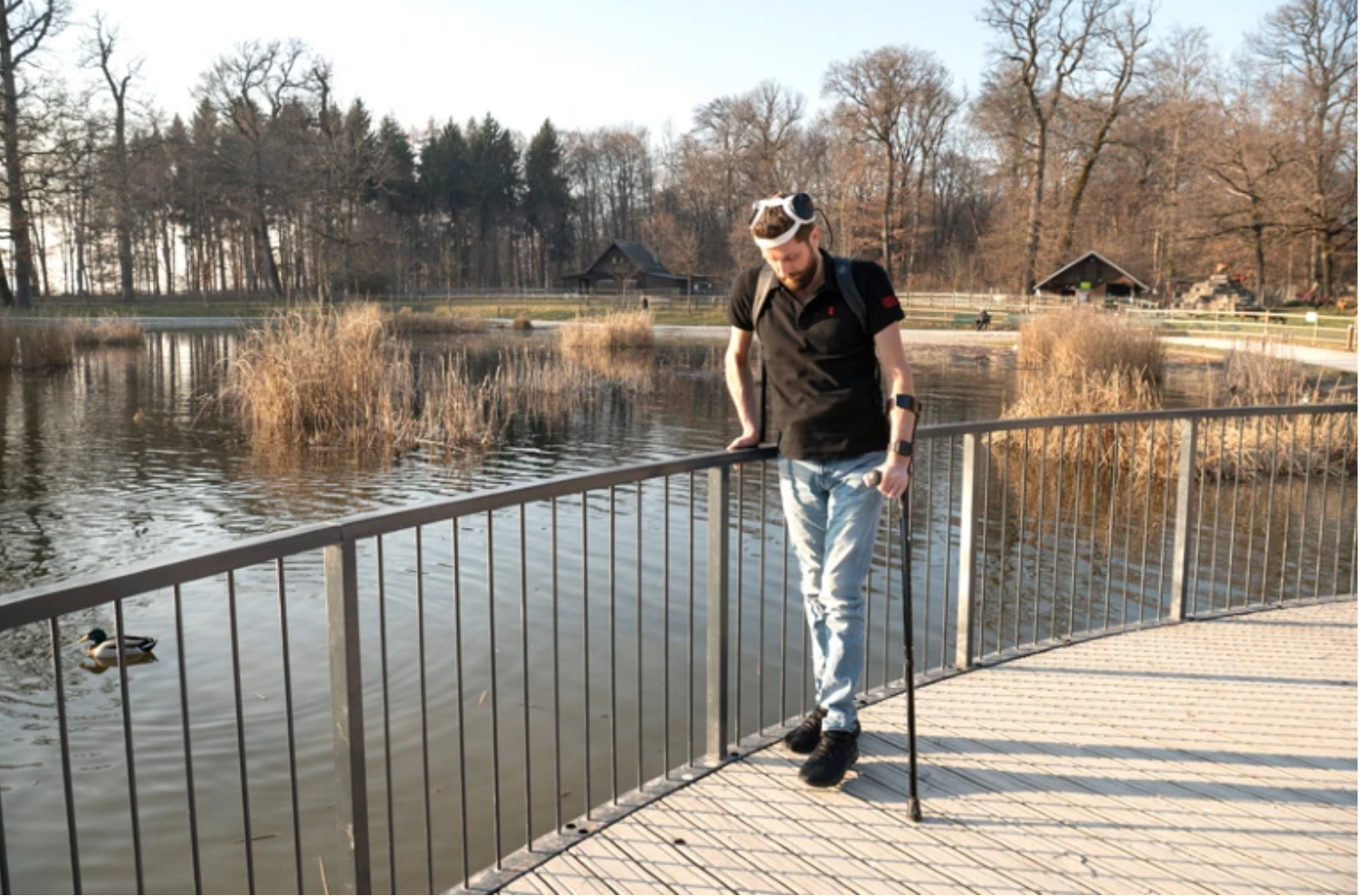
EPFL professor Grégoire Courtine has created a “digital bridge” which has allowed a man whose spinal cord damage left him with paraplegia, to walk.

The brain–spine interface builds on previous work, which combined intensive training and a lower spine stimulation implant. Gert-Jan Oskam participated in this trial, but stopped improving after three years. The new system pairs the existing implant with two disc-shaped skull implants, with two 64-electrode grids resting against the membrane covering the brain.

When Oskam thinks about walking, the skull implants detect electrical activity in the cortex, and wirelessly decode and transmit it to a computer in his backpack, activating the spinal pulse generator.

The previous device “pre-programmed stimulation” that generated robotic stepping movements. Now, Oskam has full control over the parameter of stimulation, allowing him to stop, walk, and climb stairs.

After 40 rehabilitation sessions with the brain–spine interface, Oskam regained the ability to voluntarily move his legs and feet, which was not possible with the previous implant. This suggest that the new device prompted further recovery in nerve cells that were not completely severed during his injury. Oskam can also walk short distances without the device, using crutches.

Courtine is now researching the ability of a similar device to restore arm movement.
Categories
BCI Brain

First US patient receives Synchron endovascular BCI implant

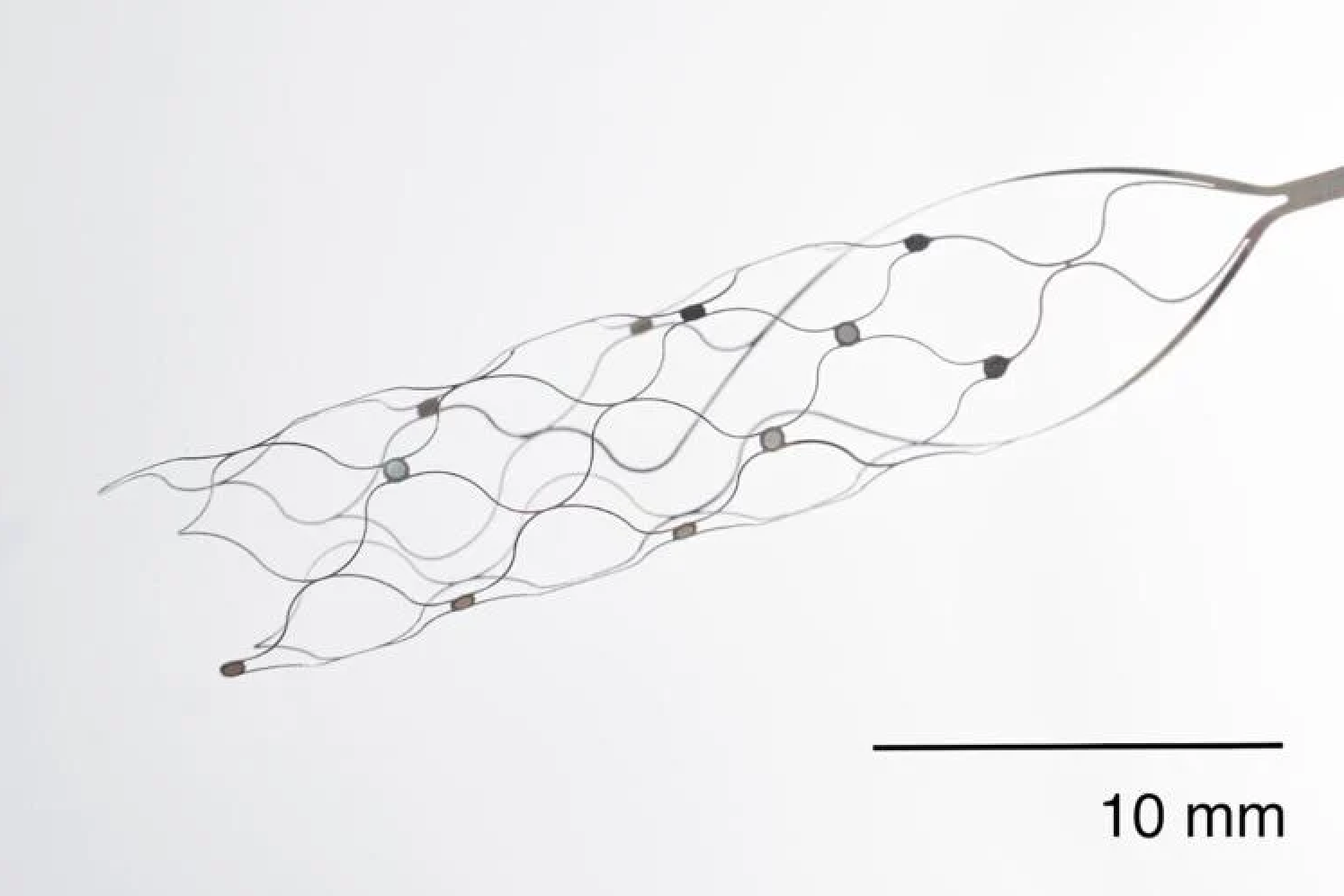
On July 6, 2022, Mount Sinai’s Shahram Majidi threaded Synchron‘s 1.5-inch-long, wire and electrode implant into a blood vessel in the brain of a patient with ALS. The goal is for the patient, who cannot speak or move, to be able to surf the web and communicate via email and text, with his thoughts.

Four patients in Australia have already received the Synchron implant. They have not had side effects, and have been able to send WhatsApp messages and make online purchases.

The “Stentrode” device can be inserted into the brain without cutting through a person’s skull or damaging tissue. An incision is made in the neck, and the stentrode is fed, via catheter, through the jugular vein, into a blood vessel within the motor cortex. As the catheter is removed, the stentrode opens and begins to fuse with the outer edges of the vessel. The procedure takes a few minutes.

A second procedure connects the stentrode to a computing device in the patient’s chest, with a wire. A surgeon creates a tunnel for the wire and a pocket for the device underneath the patient’s skin, similar to a pacemaker procedure. The stentrode reads neuron signals, and the computing device amplifies them and sends them to a computer or phone via Bluetooth.

Synchron aims to shrink the size of its devices, and increase their computing power. It hopes to be able to place numerous stentrodes in different parts of the brain, allowing the patient toperform more functions.

The company was founded by Dr. Thomas Oxley, who will be a featured speaker at ApplySci’s Deep Tech Health + Neurotech conference at MIT on September 30, 2022.

Categories
BCI

Shallow implant plus precise stimulation startup aims to treat depression

Inner Cosmos is a new, shallowly implanted brain stimulation system meant to address depression. It calls its system a “digital pill” but still requires a procedure for electronics to be placed under the skin on the head. Chief Medical Officer Eric Leuthardt is a top neurosurgeon from Washington University in St Louis and the CEO is former AR entrepreneur Meron Gribetz.

The goal is for tiny electrical pulses to normalize connections among neurons and improve mood with out deeply implanted electrodes. The patient would activate the system daily for 15 minutes by placing a second device, a magnetic power pod, on top of the implant. The implant sends pulses into the brain as the system measures neuronal activity to determine the appropriate amount of stimulation.

ApplySci was unable to locate photos of the device or papers describing the technology.


Join ApplySci at MIT on September 30, 2022 for Deep Tech Health + Neurotech Boston

Categories
BCI Brain

Nurmikko’s Neurograins can enable unprecedented brain signal recording detail, new therapies


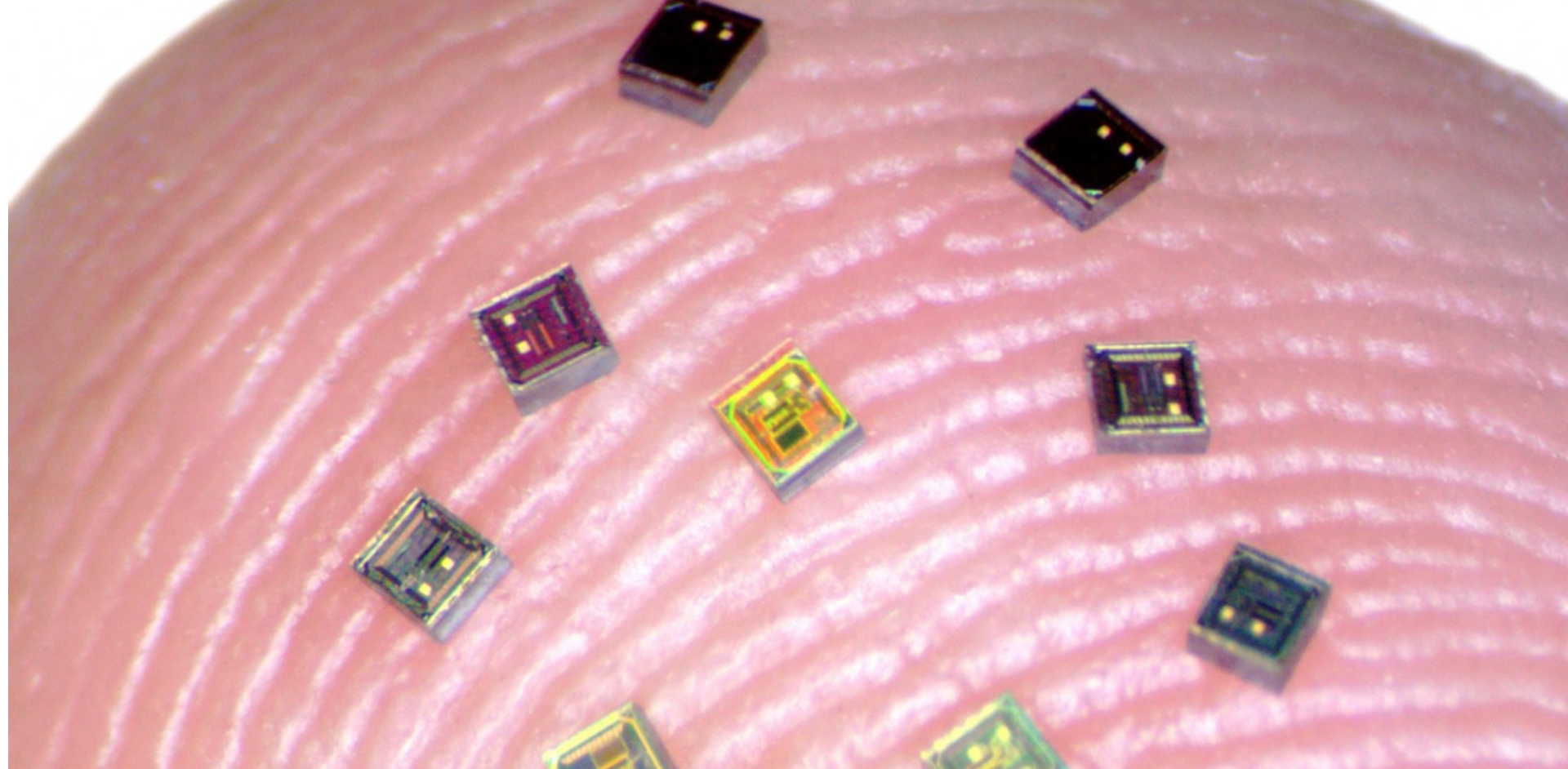
Arto Nurmikko and Brown colleagues have developed BCI system which employs a coordinated network of independent, wireless microscale neural sensors, to record and stimulate brain activity. “Neurograins” independently record electrical pulses made by firing neurons and send the signals wirelessly to a central hub, which coordinates and processes the signals.

In a recent Nature paper, the team demonstrated the use of 50 autonomous neurograins to record neural activity in a rodent. They believe that this can enable a future system of unprecedented brain signal recording detail, and new therapies for brain diseases and spine injuries.

According to Nurmikko, “one of the big challenges in the field of brain-computer interfaces is engineering ways of probing as many points in the brain as possible. Up to now, most BCIs have been monolithic devices — a bit like little beds of needles. Our team’s idea was to break up that monolith into tiny sensors that could be distributed across the cerebral cortex. That’s what we’ve been able to demonstrate here.”

48 neurograins were placed on a rodent’s cerebral cortex, and successfully recorded characteristic neural signals associated with spontaneous brain activity. The team also tested the devices’ ability to stimulate the brain with electrical pulses.

The size of the animal’s brain limited the team to 48 neurograins for this study, but the data suggest that the current configuration of the system could support up to 770. Ultimately, the team envisions scaling up to many thousands of neurograins, which would provide a currently unattainable picture of brain activity.

Click to view Professor Nurmikko discussing Brain Computer Interfaces at the 2019 ApplySci conference at Harvard Medical School.

June us at the 14th Wearable Tech + Digital Health + Neurotech Boston conference, on April 8, 2022 at MIT.

Categories
BCI

Algorithm isolates specific brain signals, provides feedback

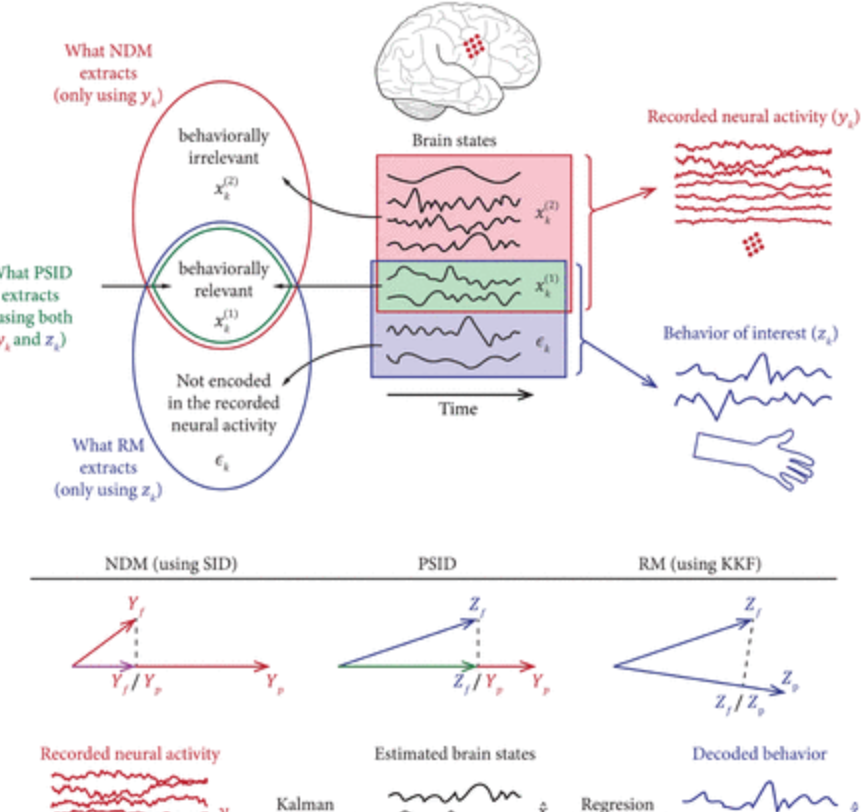
The US Army and USC Prof Maryam Shanechi have developed an algorithm that can determine which specific behaviors—like walking and breathing—belong to specific brain signals.

Segmenting brain signals has been notoriously difficult, as all signals associated with tasks mix together. Shanechi and her team used the algorithm to separate behaviorally relevant brain signals from behaviorally irrelevant brain signals.

Army research office project manager Hamid Krim said that if the algorithm detects behavior indicating a soldier is stressed or overloaded, then a machine could alert that soldier before they recognize their own fatigue. This may enable the development of technology that can interpret signals from the brain and then send signals back, to automatically correct behavior, or to enable soldiers to communicate with out speaking.

In the civilian world, this could allow locked-in patients to communicate, and those with various disabilities and brain diseases to improve function.

Categories
BCI Brain Sensors

Polymer improves medical implants, could enable brain-computer interface

David Martin and University of Delaware colleagues have developed a bio-synthetic coating for electronic components that could avoid the scarring (and signal disruption) caused by traditional microelectric materials. The PEDOT polymer improved the performance of medical implants by reducing their opposition to an electric current.

Pedot film was used with an antibody to stimulate blood vessel growth after injury, and could be used to detect early stages of tumor growth. The polymers could also help sense or treat brain or nervous system disorders, while versions could theoretically attach peptides, antibodies and DNA.

The team believes that materials, when inserted, could connect brains to a computer.

Categories
BCI Brain Featured

Facebook’s Mark Chevillet on Brain-Computer-Interfaces

Mark Chevillet’s recent talk at the ApplySci Silicon Valley conference, called “Imagining a new Interface: Hands-free Communication With Out Saying a Word” is now live on the ApplySci YouTube Channel.

Join ApplySci at Deep Tech Health + Neurotech Boston on September 24, 2020 at MIT

Categories
BCI Brain

Implanted electrodes + algorithm allow thought-driven 4 limb exoskeleton control

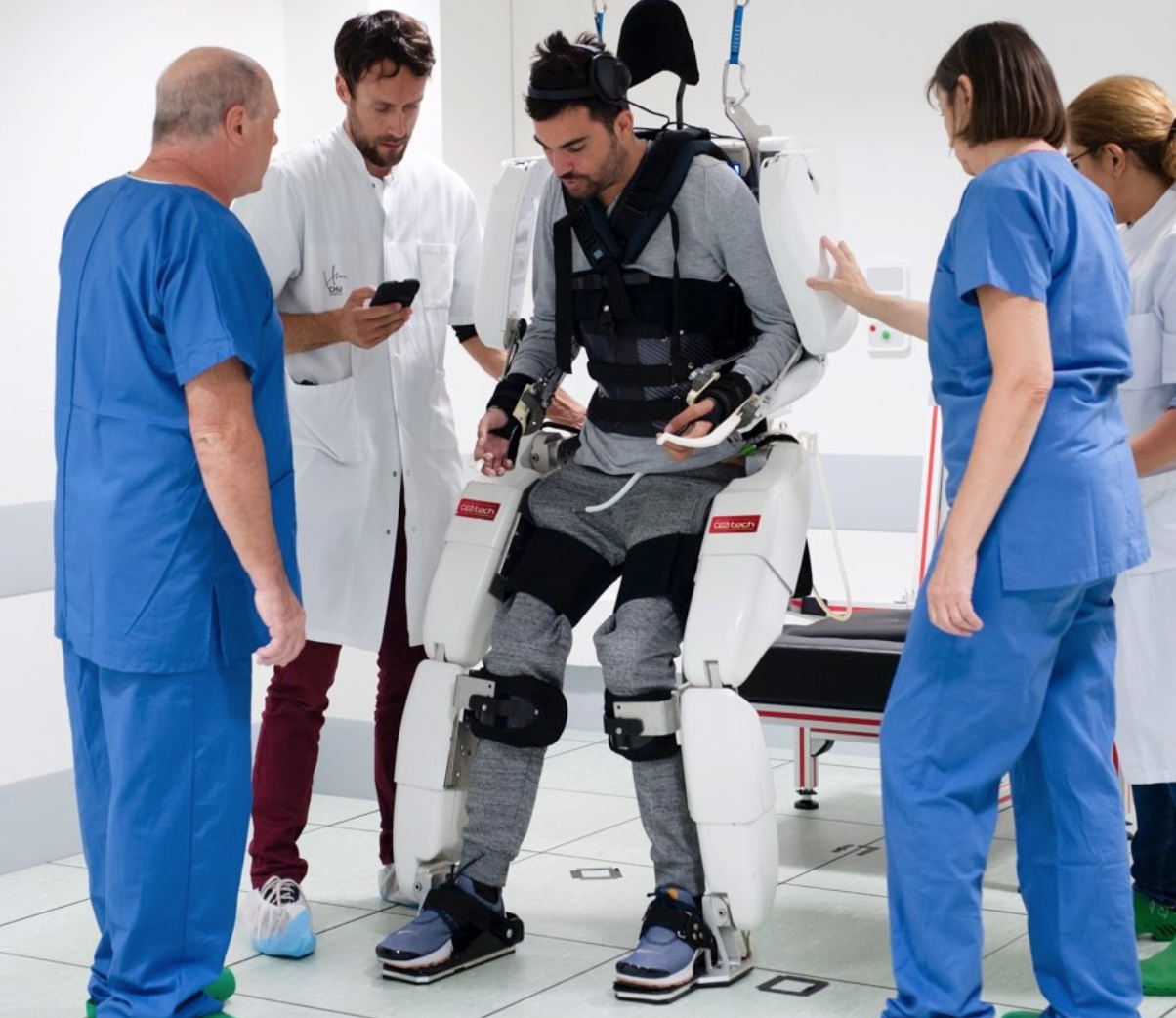
Alim Louis Benabid and Clinatec/University of Grenoble colleagues have developed a brain computer interface controlled exoskeleton that enabled a tetraplegic man to walk and move his arms.  Two 64 electrode brain implants drove the system.

Benabid explained the benefits, stating that “previous brain-computer studies have used more invasive recording devices implanted beneath the outermost membrane of the brain, where they eventually stop working. They have also been connected to wires, limited to creating movement in just one limb, or have focused on restoring movement to patients’ own muscles.”

The exoskeleton can only be used in the lab at this point, as it still must be connected to a ceiling-harness, since it is unable to make small adjustments necessary to prevent falls.


Join ApplySci at the 12th Wearable Tech + Digital Health + Neurotech Boston conference on November 14, 2019 at Harvard Medical School featuring talks by Brad Ringeisen, DARPA – Joe Wang, UCSD – Carlos Pena, FDA  – George Church, Harvard – Diane Chan, MIT – Giovanni Traverso, Harvard | Brigham & Womens – Anupam Goel, UnitedHealthcare  – Nathan Intrator, Tel Aviv University | Neurosteer – Arto Nurmikko, Brown – Constance Lehman, Harvard | MGH – Mikael Eliasson, Roche – Nicola Neretti, Brown

Join ApplySci at the 13th Wearable Tech + Neurotech + Digital Health Silicon Valley conference on February 11-12, 2020 on Sand Hill Road featuring talks by Zhenan Bao, Stanford – Rudy Tanzi, Harvard – Shahin Farshchi – Lux Capital – Sheng Xu, UCSD – Carla Pugh, Stanford – Nathan Intrator, Tel Aviv University | Neurosteer – Wei Gao, Caltech

Categories
BCI Brain

CTRL-Labs acquired by Facebook for 500M – 1B

Congratulations to CTRL-Labs and Lux Capital on Facebook’s acquisition of the four year old Neurotech startup. The company, whose technology assists in decoding brain activity and intention, will join Facebook’s AR/VR team.

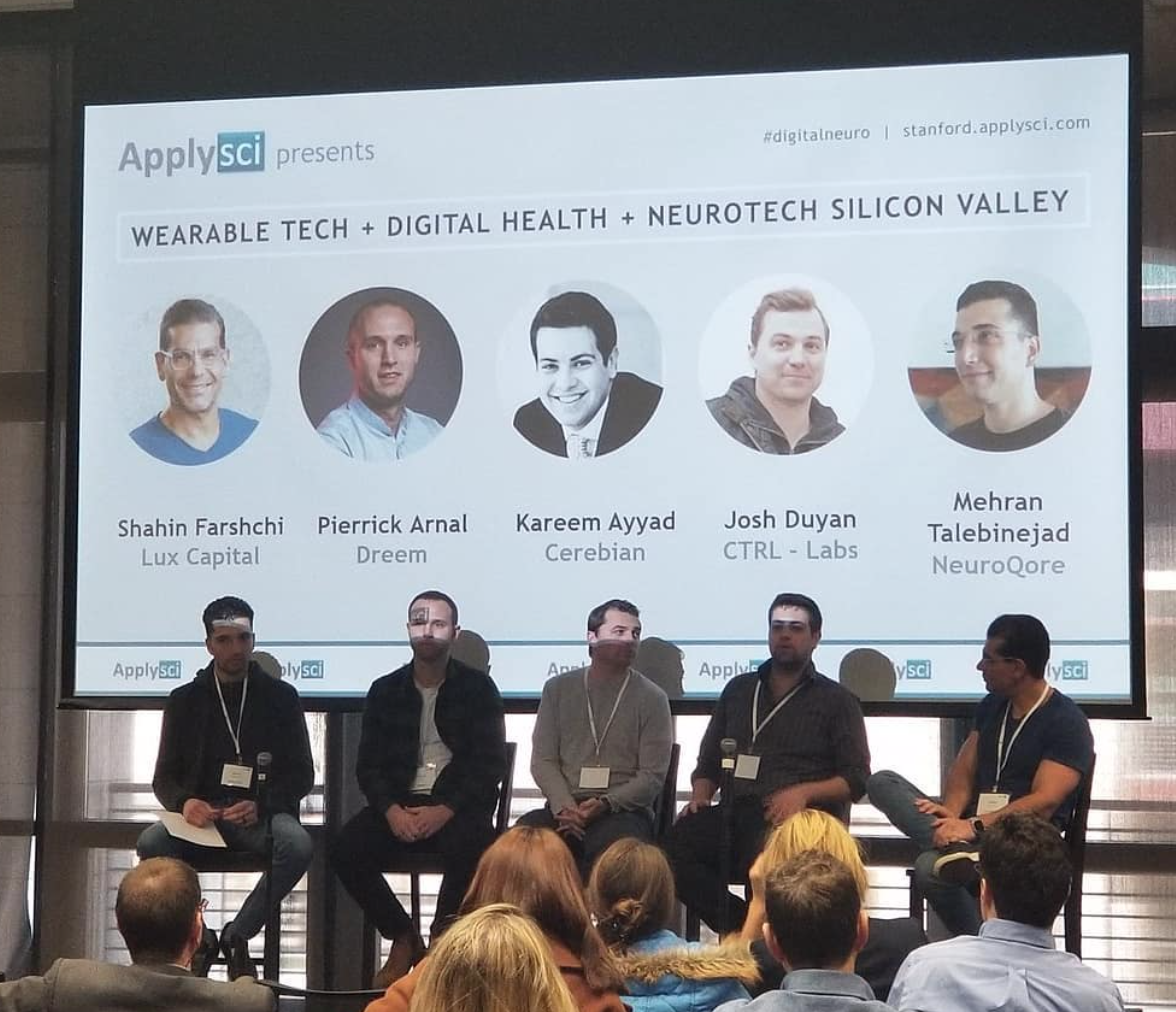
CTRL-Labs participated in a recent ApplySci panel of startups at Stanford led by Lux Capital’s Shahin Farshchi. Facebook presented its Brain Computer Interface work at the ApplySci conference at the MIT Media Lab in 2017.

ApplySci’s next conference, at Harvard Medical School, will take place on November 14, 2019. It will again include a panel of startups — perhaps the next unicorns — and a series of talks by leading brain and body health scientists.

I hope that you’ll join us.


Join ApplySci at the 12th Wearable Tech + Digital Health + Neurotech Boston conference on November 14, 2019 at Harvard Medical School featuring talks by Brad Ringeisen, DARPA – Joe Wang, UCSD – Carlos Pena, FDA  – George Church, Harvard – Diane Chan, MIT – Giovanni Traverso, Harvard | Brigham & Womens – Anupam Goel, UnitedHealthcare  – Nathan Intrator, Tel Aviv University | Neurosteer – Arto Nurmikko, Brown – Constance Lehman, Harvard | MGH – Mikael Eliasson, Roche – Nicola Neretti – Brown

Categories
BCI

BCI reads whole words from thoughts; no virtual keyboard necessary

Edward Chang at UCSF, Mark Chevillet at Facebook, and colleagues, have published a study where implanted electrodes were used to “read” whole words from thoughts.  Previous technology required users to spell words with a virtual keyboard.

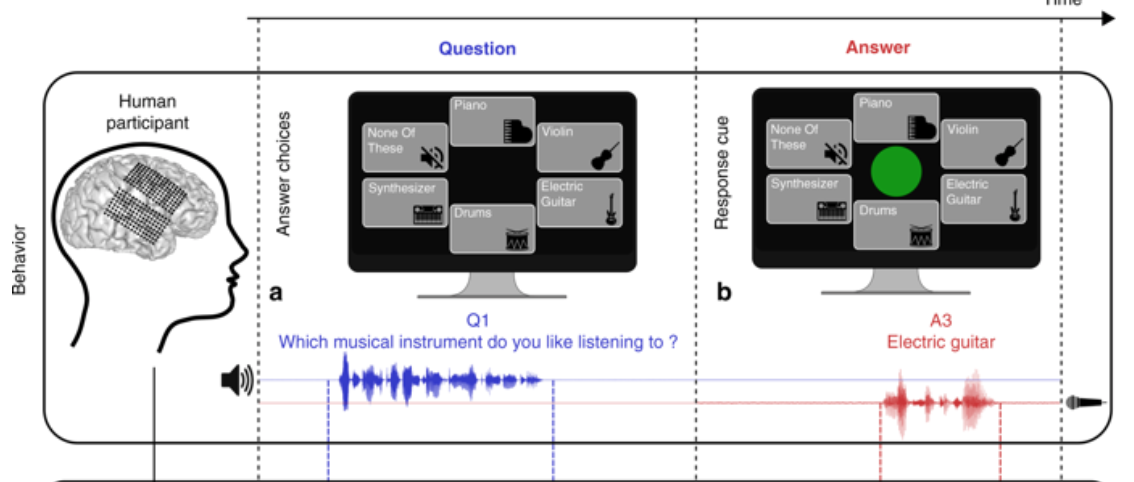
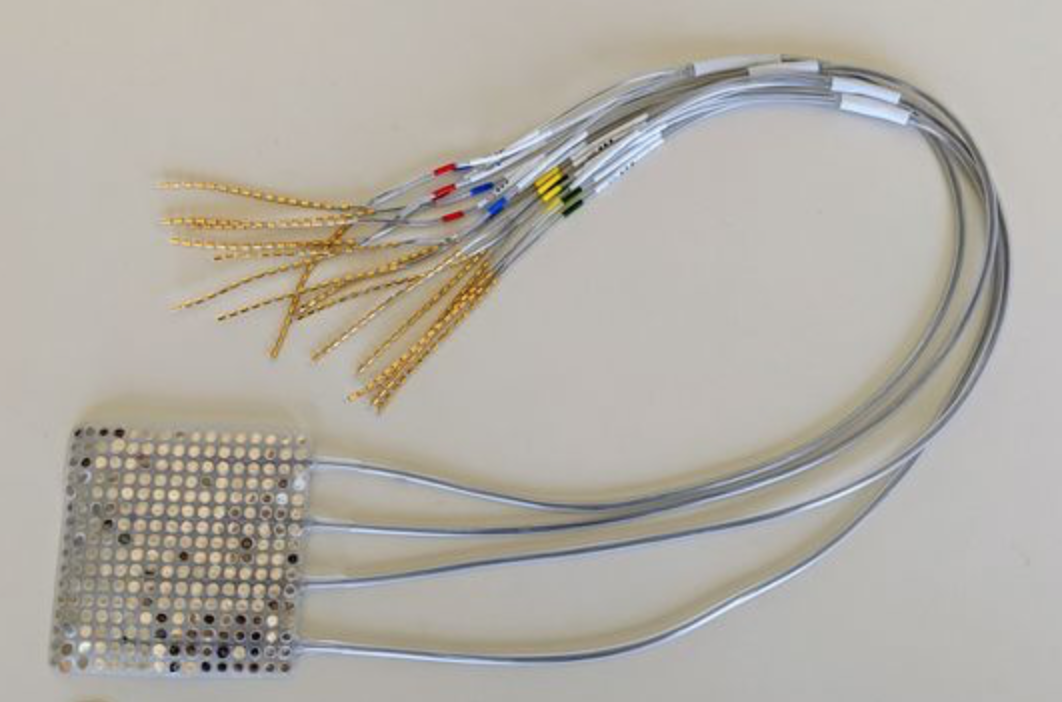
Subjects listened to multiple-choice questions and spoke answers aloud.  An electrode array recorded activity in parts of the brain associated with understanding and producing speech, and sought patterns that matched with words and phrases in real-time.

Participants responded to questions with one of several options while their brain activity was recorded. The system guessed when they were asking a question and when they were answering it, and then the content of both speech events. The predictions were shaped by prior contex. Results were 61 to 76 percent accurate, compared with 7 to 20 percent accuracy expected by chance.

This builds on Facebook technology described by Mark Chevillet at the ApplySci conference at the MIT Media Lab in September, 2017, and could result in the ability for the speech-impaired to freely communicate.


Join ApplySci at the 12th Wearable Tech + Digital Health + Neurotech Boston conference on November 14, 2019 at Harvard Medical School featuring talks by Brad Ringeisen, DARPA – Joe Wang, UCSD – Carlos Pena, FDA  – George Church, Harvard – Diane Chan, MIT – Giovanni Traverso, Harvard | Brigham & Womens – Anupam Goel, UnitedHealthcare  – Nathan Intrator, Tel Aviv University | Neurosteer – Arto Nurmikko, Brown – Constance Lehman, Harvard | MGH – Mikael Eliasson, Roche – David Rhew, Samsung

Join ApplySci at the 13th Wearable Tech + Neurotech + Digital Health Silicon Valley conference on February 11-12, 2020 at Stanford University featuring talks by Zhenan Bao, Stanford – Rudy Tanzi, Harvard – David Rhew, Samsung – Carla Pugh, Stanford – Nathan Intrator, Tel Aviv University | Neurosteer

Categories
BCI Brain

Study: Noninvasive BCI improves function in paraplegia

Miguel Nicolelis has developed a non-invasive system for lower-limb neurorehabilitation.

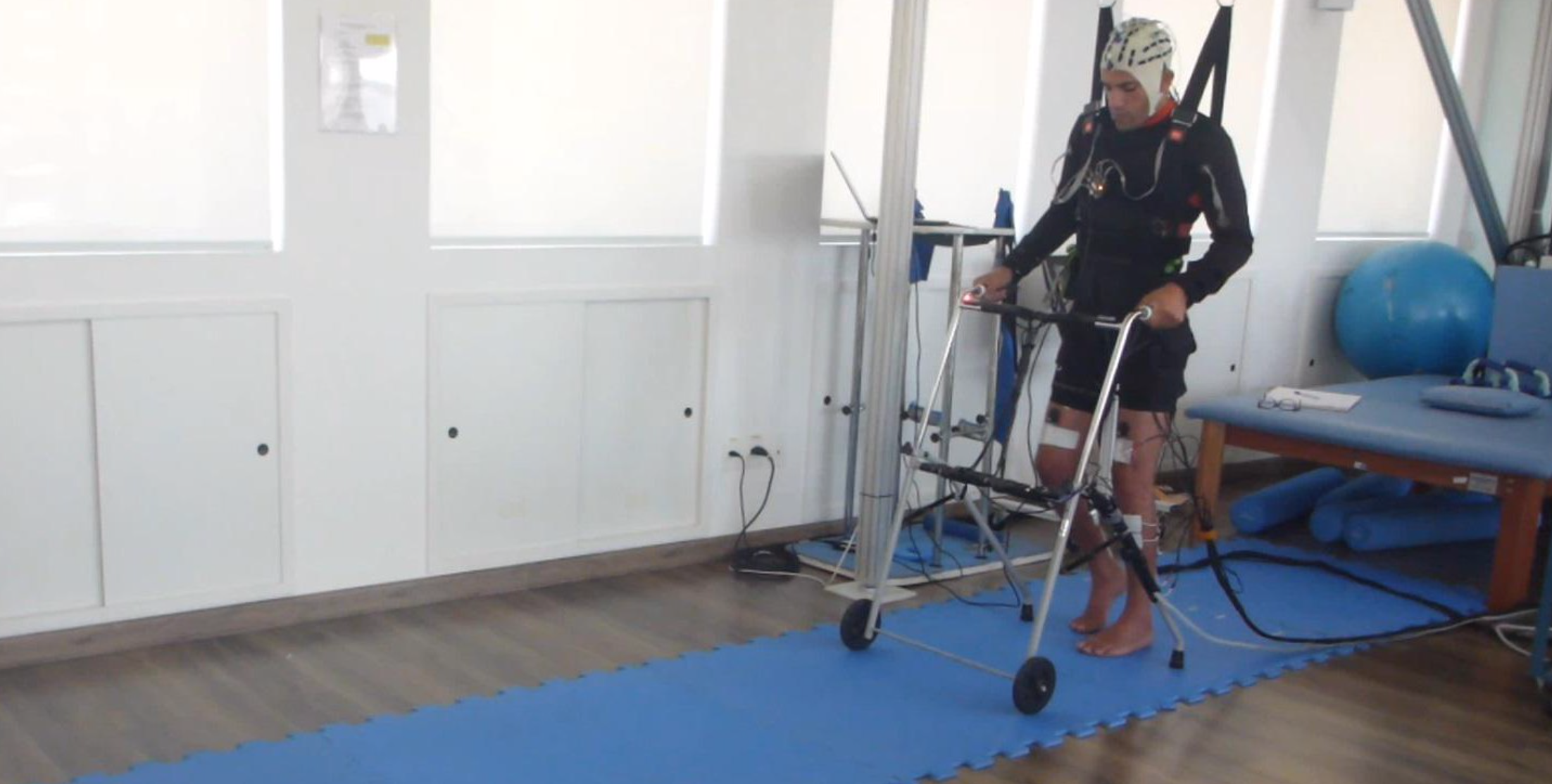
Study subjects wore an EEG headset  to record brain activity and detect movement intention. Eight electrodes were attached to each leg, stimulating muscles involved in walking.  After training, patients used their own brain activity to send electric impulses to their leg muscles, imposing a physiological gait. With a walker and a support harness, they learned to walk again, and increased their sensorimotor skills. A wearable haptic display delivered tactile feedback to forearms, to provide continuous proprioceptive walking feedback.

The system was tested on two patients with chronic paraplegia. Both were able to move with less dependency on walking assistance, and one displayed motor improvement. Cardiovascular capacity and muscle volume also improved.

Click to view EPFL video


Join ApplySci at the 12th Wearable Tech + Digital Health + Neurotech Boston conference on November 14, 2019 at Harvard Medical School and the 13th Wearable Tech + Neurotech + Digital Health Silicon Valley conference on February 11-12, 2020 at Stanford University

Categories
BCI Brain

Thought generated speech

Edward Chang and UCSF colleagues are developing technology that will translate signals from the brain into synthetic speech.  The research team believes that the sounds would be nearly as sharp and normal as a real person’s voice. Sounds made by the human lips, jaw, tongue and larynx would be simulated.

The goal is a communication method for those with disease and paralysis.

According to Chang: “For the first time, this study demonstrates that we can generate entire spoken sentences based on an individual’s brain activity.”

Berkeley’s Bob Knight has developed related technology, using HFB activity to decode imagined speech to develop a BCI for treatment of disabling language deficits.  He described this work at the 2018 ApplySci conference at Stanford.


Join ApplySci at the 12th Wearable Tech + Digital Health + Neurotech Boston conference on November 14, 2019 at Harvard Medical School and the 13th Wearable Tech + Neurotech + Digital Health Silicon Valley conference on February 11-12, 2020 at Stanford University