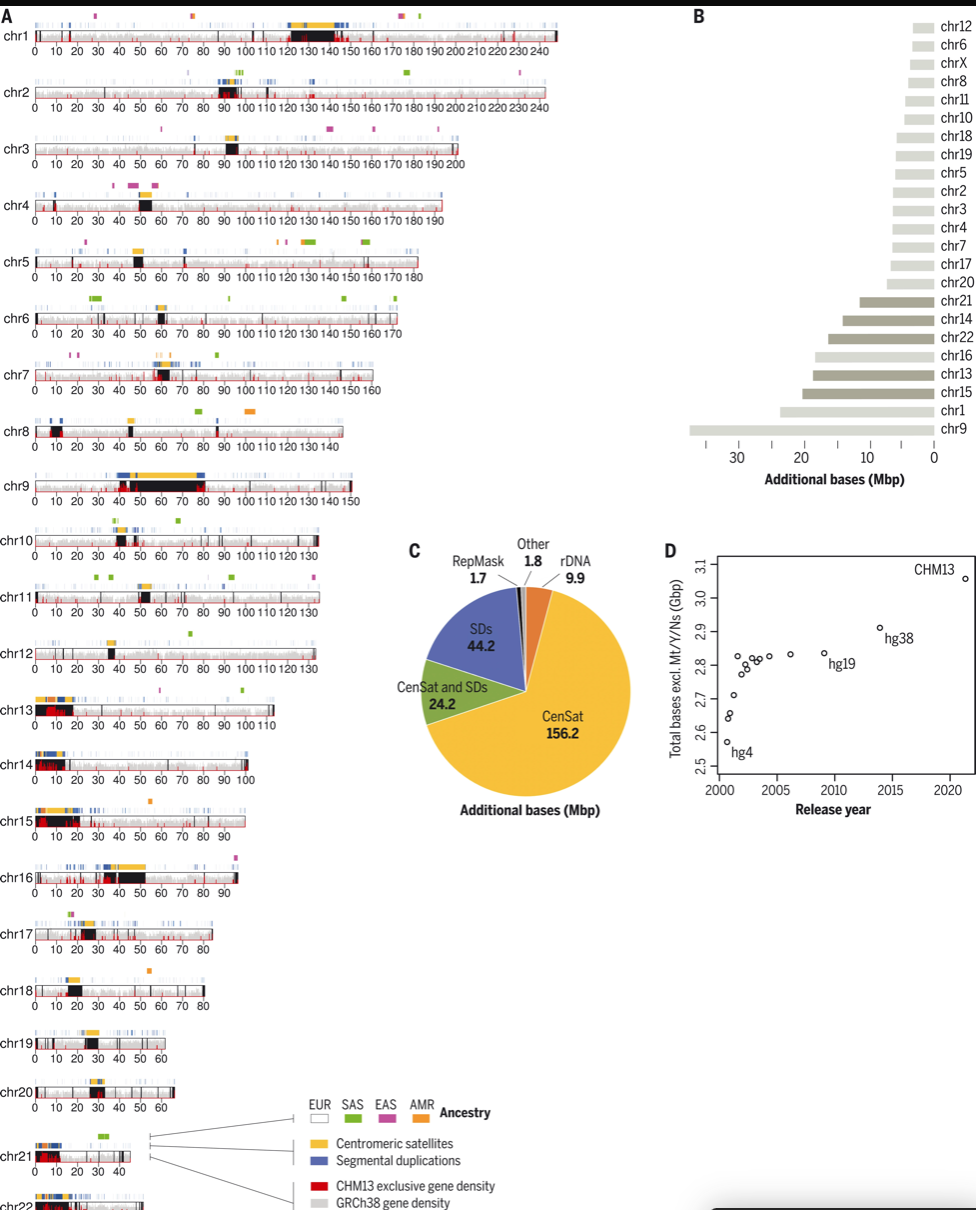
The T2T consortium have published the first complete, gapless sequence of a human genome, two decades after the Human Genome Project produced the first draft human genome sequence. Having a complete, gap-free sequence of the roughly 3 billion bases in our DNA is critical for understanding the full spectrum of human genomic variation and for understanding the genetic contributions to certain diseases.
This will significantly add to our knowledge of chromosomes, including more accurate maps for five chromosome arms, to answer basic biology questions about how chromosomes properly segregate and divide. The T2T consortium used the now-complete genome sequence as a reference to discover more than 2 million additional variants in the human genome. These studies provide more accurate information about the genomic variants within 622 medically relevant genes.
Consortium co-chair Adam Phillippy believes that sequencing a person’s entire genome should become less expensive and more straightforward, enabling physicians to better guide their healthcare.
Join ApplySci at MIT on September 30 for Deep Tech Health + Neurotech 2022