Categories
Sensors

Video: John Rogers on soft electronics for the human body

Recorded at ApplySci’s Wearable Tech + Digital Health + Neurotech Boston conference on September 19th at the MIT Media Lab.


Join ApplySci at Wearable Tech + Digital Health + Neurotech Silicon Valley on February 26-27, 2018 at Stanford University. Speakers include:  Vinod Khosla – Justin Sanchez – Brian Otis – Bryan Johnson – Zhenan Bao – Nathan Intrator – Carla Pugh – Jamshid Ghajar – Mark Kendall – Robert Greenberg – Darin Okuda – Jason Heikenfeld – Bob Knight – Phillip Alvelda – Paul Nuyujukian –  Peter Fischer – Tony Chahine

Registration rates increase today – November 10th, 2017

Categories
Prosthetics Sensors

Prosthetic “skin” senses force, vibration

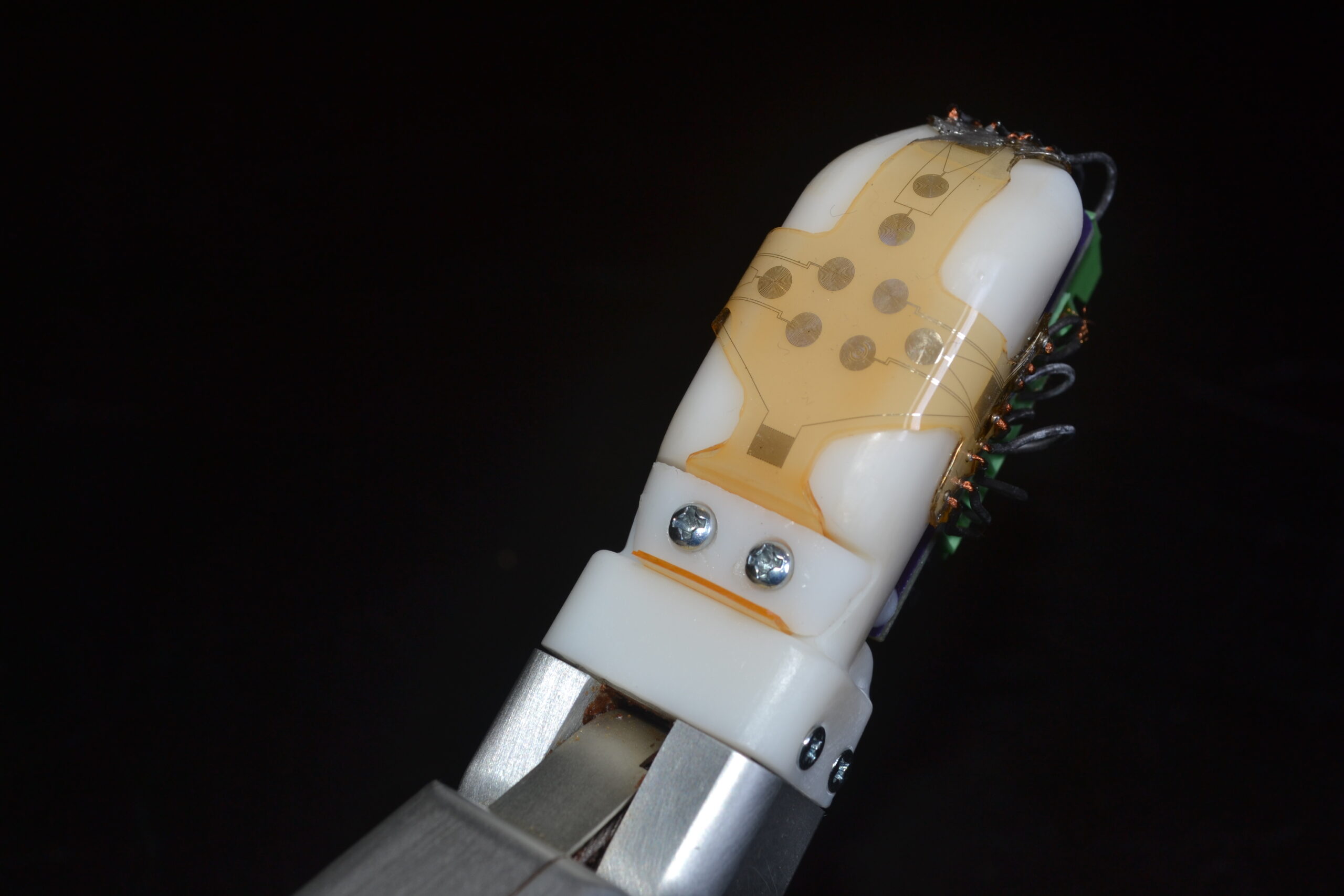
Jonathan Posner, with University of Washington and UCLA colleagues, has developed a flexible sensor “skin” that can be stretched over prostheses to determine force and vibration.

The skin mimics the way a human finger responds to tension and compression, as it slides along a surface or distinguishes among different textures. This could allow users to sense when something is slipping out of their grasp.

Tiny electrically conductive liquid metal channels are placed on both sides of of a prosthetic finger. As it is slid across a surface, the channels on one side compress while those on the other side stretch, similar to a natural limb.  As the channel geometry changes, so does the amount of electricity. Differences in electrical resistance correlate with force and vibrations.

The researchers believe that the sensor skin will enable users to better be able to open a door, use a phone, shake hands, or lift packages.


Join ApplySci at Wearable Tech + Digital Health + Neurotech Silicon Valley on February 26-27, 2018 at Stanford University, featuring:  Vinod KhoslaJustin SanchezBrian OtisBryan JohnsonZhenan BaoNathan IntratorCarla PughJamshid Ghajar – Mark Kendall – Robert Greenberg Darin Okuda Jason Heikenfeld

Categories
Sensors

Pressure sensors generated from pattern-forming bacteria

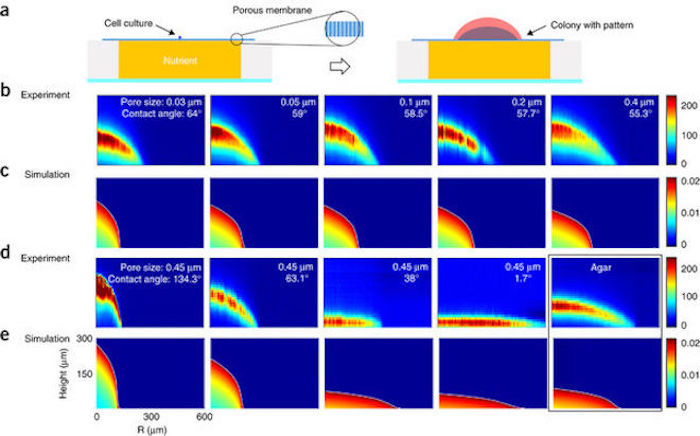
Paul Ruffin Scarborough, Stefan Zauscher, and Duke colleagues have programmed bacteria with a synthetic gene circuit to turn them into working devices.

As a bacterial colony grows into the shape of a hemisphere, the gene circuit triggers the production of a protein, to distribute within the colony, that recruits inorganic materials. Gold nanoparticles enable  the system to form a shell around the bacterial colony, resulting in  a pressure sensor.

This is the first time that a composite structure was produced by programming the cells themselves, and controlling their access to nutrients, but still leaving the bacteria free to grow in three dimensions.

Click to view Duke University video


Join ApplySci at Wearable Tech + Digital Health + Neurotech Silicon Valley on February 26-27, 2018 at Stanford University, featuring:  Vinod KhoslaJustin SanchezBrian OtisBryan JohnsonZhenan BaoNathan IntratorCarla PughJamshid Ghajar – Mark Kendall – Robert Greenberg

Categories
Sensors

Ingestible, flexible sensor to diagnose gastrointestinal disorders

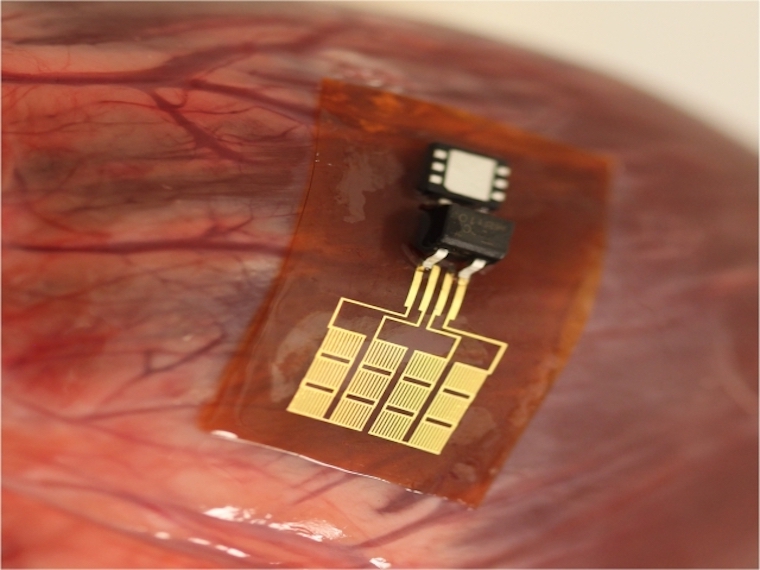
Canan Dagdeviren, Giovanni Traverso, Bob Langer, and MIT and Brigham and Women’s colleagues have built a swallowable, flexible sensor that adheres to the stomach wall or intestinal lining to measure digestive track contractions.  It could be used to help diagnose gastrointestinal disorders or to monitor food intake.

The piezoelectric device generates a current and voltage when mechanically deformed. Elastic polymers allow it to conform to and stretch with skin.

The sensor has only been tested on pigs.  It was able to remain active for 2 days.  If found safe to be used in humans, its flexibility could help avoid the side effects associated with current, rigid ingestible devices. Future versions will include the harvesting of some of the piezoelectric generated energy to power additional sensors and wireless transmitters.  The elimination of a battery would further improve safety.


Join ApplySci at Wearable Tech + Digital Health + Neurotech Silicon Valley on February 26-27, 2018 at Stanford University, featuring:  Vinod KhoslaJustin SanchezBrian OtisBryan JohnsonZhenan BaoNathan IntratorCarla PughJamshid Ghajar – Mark Kendall

Categories
Prosthetics Sensors

Sensor-embedded prosthetic monitors gait, detects infection

The Monitoring OsseoIntegrated Prostheses uses a limb which includes a titanium fixture surgically implanted into the femur. Bone grows at the implant’s connection point, leaving  a small metallic connector protruding from the remaining leg.  An accompanying artificial limb then can be attached or detached. The same procedure can be performed for upper limbs.

Advantages include less pain, a fluid walking motion, and a more stable, better-fitting limb. However, infection risk is increased due to the metal profusion. This is meant to be addressed by electrochemical and skin sensors, including a  bio-compatible array embedded within the residual limb. The array tracks changes in body temperature and pH balance, which indicate infection. It also monitors the fit of the bone and prosthetic limb, and the healing process, which could help doctors to speed recuperation.


Join ApplySci at Wearable Tech + Digital Health + Neurotech Silicon Valley on February 26-27, 2018 at Stanford University, featuring:  Vinod KhoslaJustin SanchezBrian OtisBryan JohnsonZhenan BaoNathan IntratorCarla PughJamshid Ghajar – Mark Kendall

Categories
Infectious Disease Pharmaceuticals Sensors

Piezoelectric sensor determines antibiotic efficacy in 1 hour

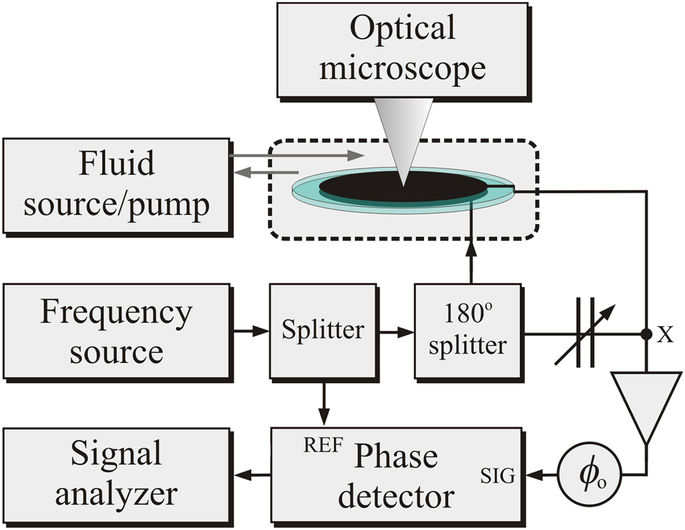
Ward Johnson and NIST colleagues have developed a piezoelectric sensor to rapidly determine whether an antibiotic combats an infection. Quartz-crystal resonators, with varying vibrations, measure surface particle changes, to quickly sense mechanical fluctuations of bacterial cells and changes induced by an antibiotic.

 Results are provided in less than an hour.  Current antimicrobial tests require days to grow colonies of bacterial cells, which could result in the progression of infections before an effective treatment is identified, and lead to antibiotic resistant bacterial infections.

Click to view NIST video.


Join ApplySci at Wearable Tech + Digital Health + Neurotech Silicon Valley on February 26-27, 2018 at Stanford University, featuring:  Vinod KhoslaJustin SanchezBrian OtisBryan JohnsonZhenan BaoNathan IntratorCarla PughJamshid Ghajar – Mark Kendall


Categories
Sensors

Radar monitor uses appliances to track health wirelessly

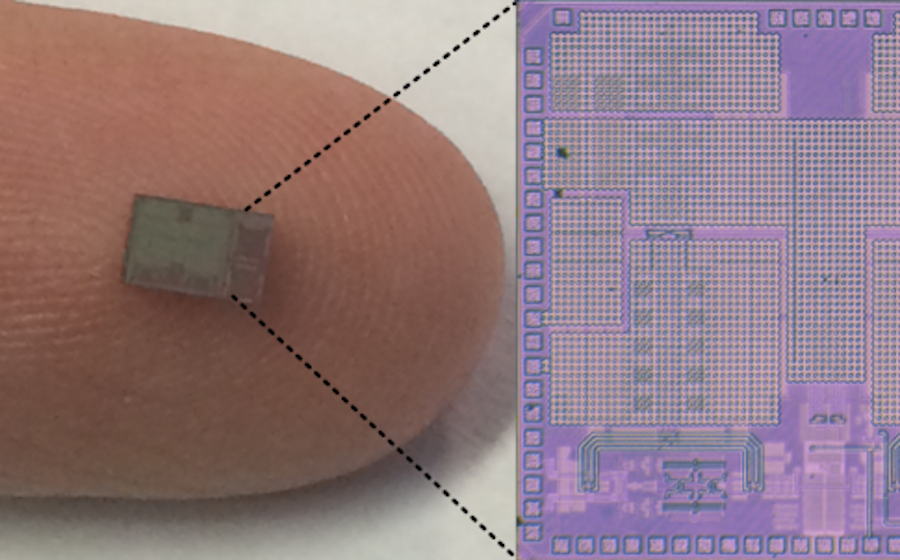
Toru Sato and Kyoto University and Panasonic colleagues have refined a wireless, radar-based  vital measuring device they developed last year.

The original sensor combined a radar with signal analysis algorithms to measure how the body moves as the heart beats. Software filters isolated the heart’s minute motions while the body moved.  However it was extremely large.

The team has now integrated:

  •  A wider 79-GHz frequency band
  • Improved measurement sensitivity by integrating CMOS semiconductors into a single chip for millimeter-wave radar
  • Increased sensitivity with finer resolution in the distance direction of the measurement range
  • Precise separation of the noise that would otherwise affect the estimation accuracy of the heartbeat interval in order to simultaneously measure the heartbeat intervals of several people with a single radar

The device is now 1/10 of its predecessor’s size.

The goal is to seamlessly integrate health sensors in household appliances, such as lighting, to safely, accurately, and unobtrusively monitor residents.

Click to view Panasonic video


Join ApplySci at Wearable Tech + Digital Health + Neurotech Silicon Valley on February 26-27, 2018 at Stanford University, featuring:  Vinod KhoslaJustin SanchezBrian OtisBryan JohnsonZhenan BaoNathan IntratorCarla PughJamshid Ghajar – Mark Kendall

Categories
Diabetes Sensors

Patch monitors diabetes compounds in sweat for 1 week

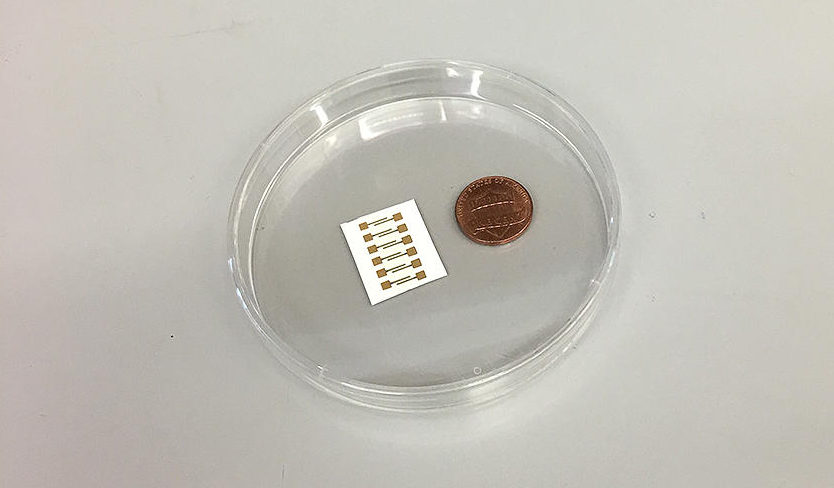
University of Texas professor Shalini Prasad has developed an adhesive sensor that measures diabetes-associated compounds in small amounts of sweat.

Blood glucose levels, cortisol and interleukin-6 are detected in perspiration for one week with full signal integrity.  The device uses ambient sweat, created by the body with out stimulation.

The sensor can be placed anywhere on the skin and takes customized readings up to once an hour.  Data is sent to a user’s phone.

Prasad estimates that the sensors would cost 7 cents each if produced in bulk, making the technology truly accessible.


Join ApplySci at Wearable Tech + Digital Health + NeuroTech Boston on September 19, 2017 at the MIT Media Lab – featuring  Joi Ito – Ed Boyden – Roz Picard – George Church – Nathan Intrator –  Tom Insel – John Rogers – Jamshid Ghajar – Riccardo Sabatini – Phillip Alvelda – Michael Weintraub – Nancy Brown – Steve Kraus – Bill Geary – Mary Lou Jepsen


ANNOUNCING WEARABLE TECH + DIGITAL HEALTH + NEUROTECH SILICON VALLEY – FEBRUARY 26 -27, 2018 @ STANFORD UNIVERSITY –  FEATURING:  ZHENAN BAO – JUSTIN SANCHEZ – BRYAN JOHNSON – NATHAN INTRATOR – VINOD KHOSLA


Categories
Sensors Wearables

Small, adhesive, wireless patch collects, transmits, extensive health data

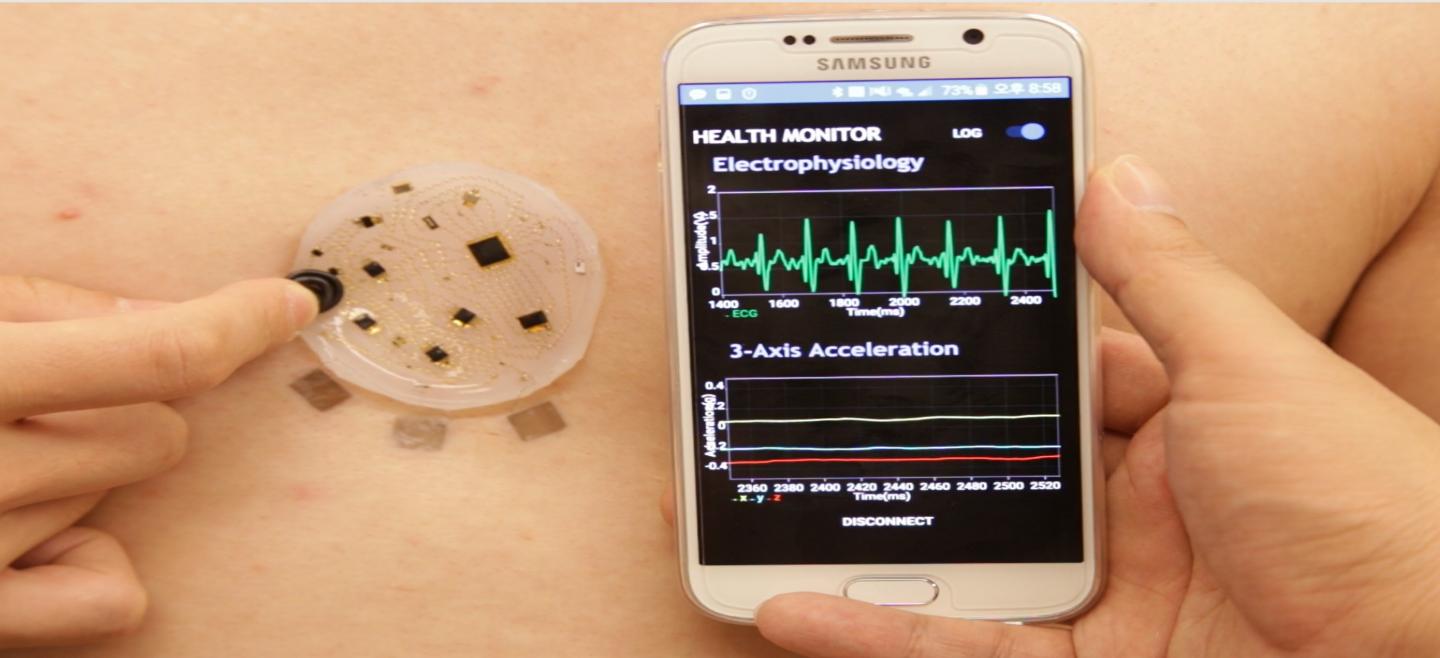
Northwestern’s John Rogers and Kyung-In Jang of the Daegu Gyeongbuk Institute of Science and Technology have developed a small, adhesive, flexible silicone patch capable of monitoring multiple health parameters.

The soft, body-conforming wearable contains 50 components connected by  250  3-D wire coils embedded in protective silicone.  It collects and wirelessly transmits data about movement, respiration, and  electrical activity in the heart, muscles, eyes and brain.

Jang believes that the biosensors could be devloped into a closed loop medical system using big data and AI, and thereby facilitate quality remote healthcare. The team is also exploring the use of the patch in robotics and self-driving cars.

Professor Rogers will present his research at ApplySci’s upcoming Wearable Tech + Digital Health + Neurotech conference, on September 19th at the MIT Media Lab.


Join ApplySci at Wearable Tech + Digital Health + NeuroTech Boston on September 19, 2017 at the MIT Media Lab – featuring  Joi Ito – Ed Boyden – Roz Picard – George Church – Nathan Intrator –  Tom Insel – John Rogers – Jamshid Ghajar – Phillip Alvelda – Michael Weintraub – Nancy Brown – Steve Kraus – Bill Geary – Mary Lou Jepsen

Registration rates increase Friday, August 25th.


ANNOUNCING WEARABLE TECH + DIGITAL HEALTH + NEUROTECH SILICON VALLEY – FEBRUARY 26 -27, 2018 @ STANFORD UNIVERSITY –  FEATURING:  ZHENAN BAO – JUSTIN SANCHEZ – BRYAN JOHNSON – NATHAN INTRATOR – VINOD KHOSLA

Categories
Monitoring Sensors

Apple patents multi-parameter, phone-based health tracking

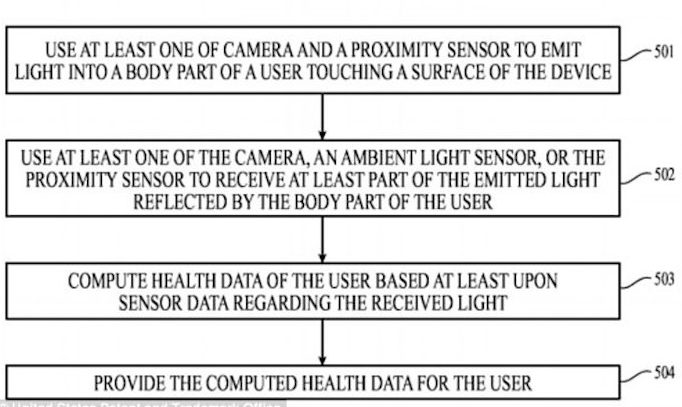
Apple  has been granted a patent for phone technology using a front-facing camera and light, proximity, and multiple sensors to measure body fat, heart rate, circulation, blood pressure, and breathing, as well as emotional state via galvanic skin response. The device computes health data of the user based upon sensor data regarding the received light. It has been reported that Facebook and Google are also developing device driven health monitoring systems. Mindstrong Health, co-founded by former NIMH and Verily Life Science head Tom Insel, is developing phone-based technology to measure and monitor emotional and mental health. Insel will be a featured speaker at ApplySci’s Wearable Tech + Digital Health + Neurotech conference, on September 19th, 2017 at the MIT Media Lab.


Join ApplySci at Wearable Tech + Digital Health + NeuroTech Boston on September 19, 2017 at the MIT Media Lab – featuring  Joi Ito – Ed Boyden – Roz Picard – George Church – Nathan Intrator –  Tom Insel – John Rogers – Jamshid Ghajar – Phillip Alvelda – Michael Weintraub – Nancy Brown – Steve Kraus – Bill Geary – Mary Lou Jepsen – Daniela Rus

Registration rates increase Friday, August 11th.


ANNOUNCING WEARABLE TECH + DIGITAL HEALTH + NEUROTECH SILICON VALLEY – FEBRUARY 26 -27, 2018 @ STANFORD UNIVERSITY


 

Categories
Sensors

Sensor glove translates sign language, mimics gestures

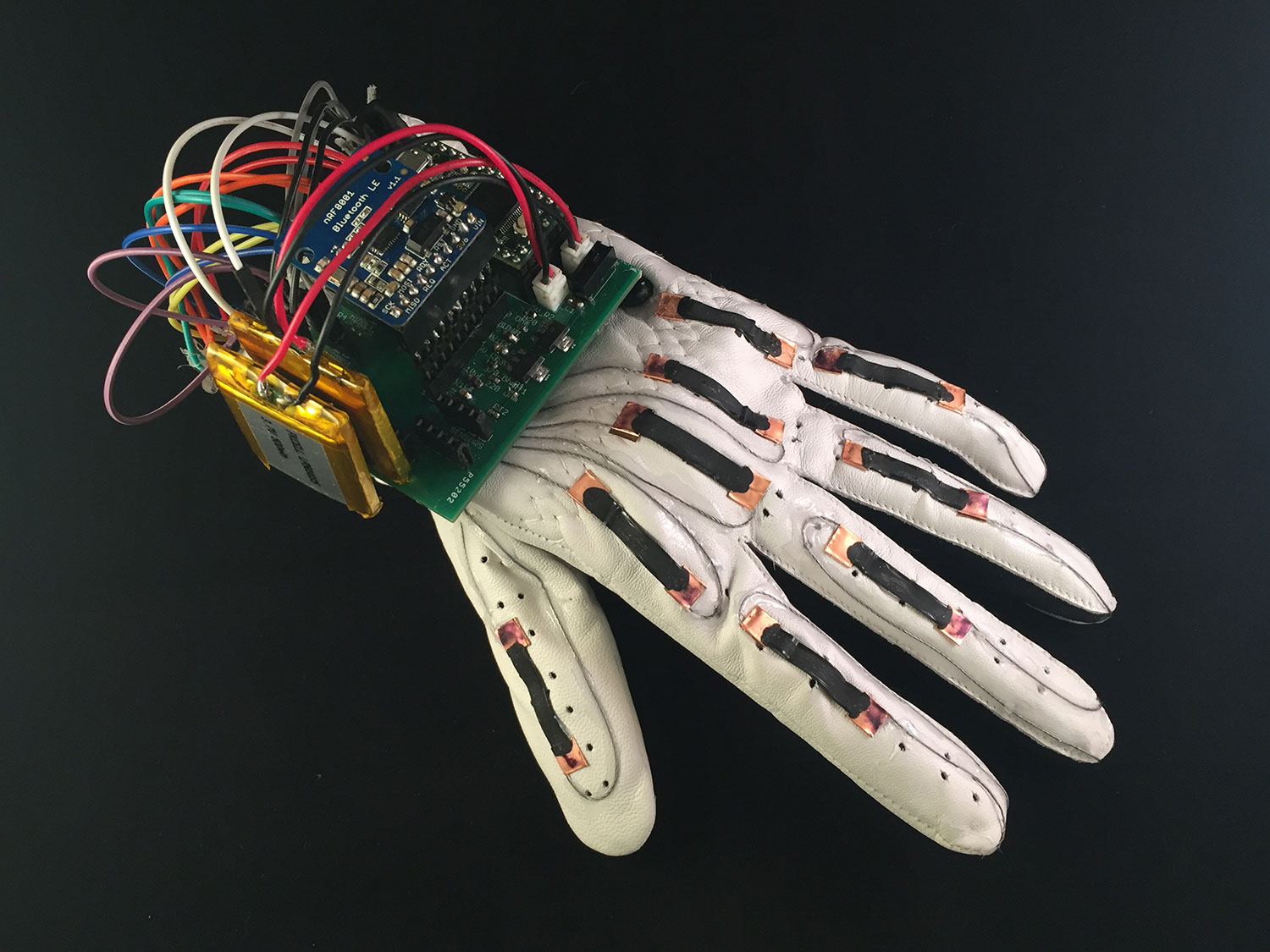
UCSD’s Timothy O’Connor and Darren Lipomi have developed  The Language of Glove — glove that wirelessly translates American Sign Language into text, and controls a virtual hand to mimic sign language gestures. It was built for less than $100 using stretchable and printable electronics.

Nine silicon-based polymer sensors, with a conductive carbon paint, were taped to the back and knuckles of a leather glove.  They  were secured with copper tape, and stainless steel thread connected them to a low power, custom-printed circuit board, at the back of the wrist.

The sensors changed their electrical resistance when stretched or bent. This allowed them to code different letters of the American Sign Language alphabet, based on the positions of all nine knuckles. The circuit board converted the  code into letters, and transmitted the signals via Bluetooth to a  phone or computer.

The team is investigating other uses for the glove, including VR, AR, telesurgery, technical training, and defense. The next version  is intended to have a sense of touch.


Join ApplySci at Wearable Tech + Digital Health + NeuroTech Boston on September 19, 2017 at the MIT Media Lab – featuring  Joi Ito – Ed Boyden – Roz Picard – George Church – Nathan Intrator –  Tom Insel – John Rogers – Jamshid Ghajar – Phillip Alvelda – Michael Weintraub – Nancy Brown – Steve Kraus – Bill Geary – Mary Lou Jepsen – Daniela Rus

Registration rates increase Friday, July 28th.


ANNOUNCING WEARABLE TECH + DIGITAL HEALTH + NEUROTECH SILICON VALLEY – FEBRUARY 26 -27, 2018 @ STANFORD UNIVERSITY
Categories
Sensors

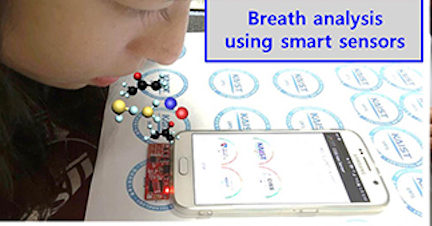
Sensor detects asthma, cancer, diabetes in breath

KAIST professor Il-doo Kim 김일두 has developed a sensor that can diagnose diseases by measuring the concentration change of the specific gases in the breath, with out blood or imaging tests. Animal protein is used as a catalyst.  The researchers claim that detection can be done at the time of disease metabolism, enabling early diagnosis.

Hydrogen, acetone, toluene, ammonia, hydrogen sulfide, nitrogen monoxide, and moisture are biomarker gases are emitted at high concentrations in patients with  diseases such as asthma, lung cancer, and Type 1 diabetes.  The 16 sensor array system recognizes human fingerprints and individual breathing patterns associated  with each condition.

Technion professor Hossam Haick has been studying non-invasive breath-based detection of disease, including cancer, since 2007, and his Na-Nose technology was commercialized in 2013.

Click to view Il-Doo Kim discussing breath-based disease detection.

Click to view Hossam Haick discussing breath-based disease detection.


Join ApplySci at Wearable Tech + Digital Health + NeuroTech Boston on September 19, 2017 at the MIT Media Lab – featuring  Joi Ito – Ed Boyden – Roz Picard – George Church – Nathan Intrator –  Tom Insel – John Rogers – Jamshid Ghajar – Phillip Alvelda – Michael Weintraub – Nancy Brown – Steve Kraus – Bill Geary – Mary Lou Jepsen – Daniela Rus

Registration rates increase Friday, July 21st