Categories
Sensors Sleep

Contactless sleep and fatigue sensor

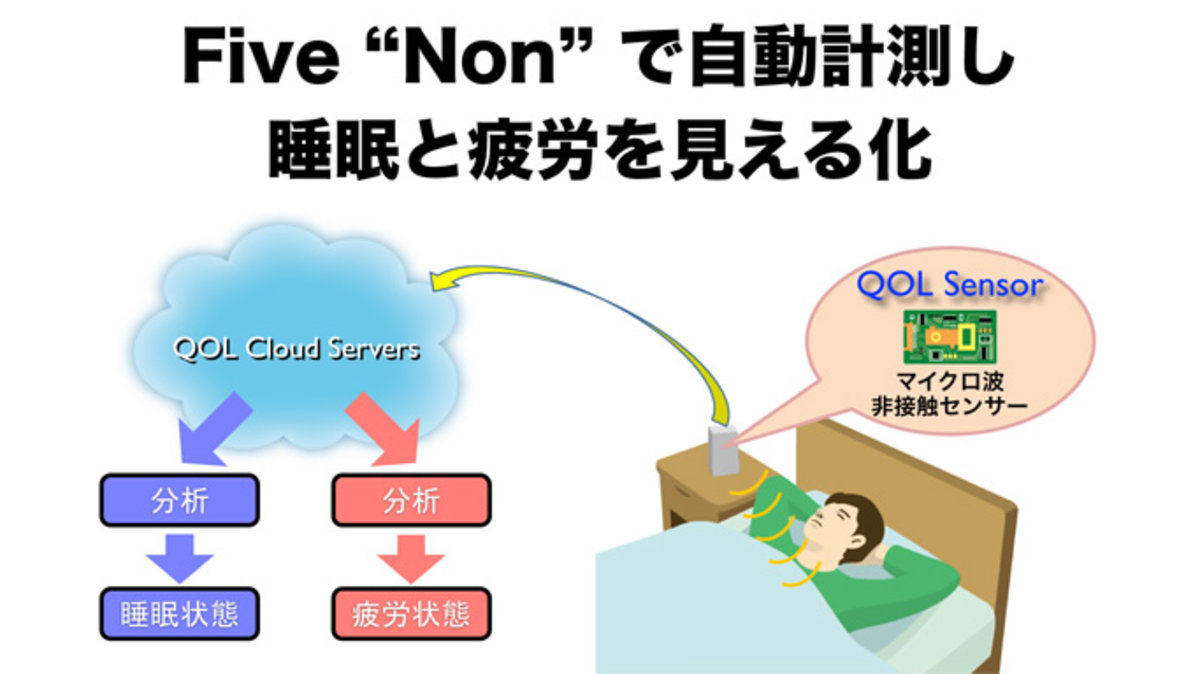
Entering the digital health market, Nintendo is developing a contactless device to track a user’s sleep and monitor fatigue.  It is based on a non-contact radio frequency sensor which measures breathing, heartbeat and body movement.

The company describes the system as five “Non” Sensing elements:

 1.  “Non-wearable.” Nothing is attached to the body.

2.  “Non-contact.” The product will not have any physical contact with the body.

 3.  “Non-operating.” Not requiring the user to operate the device.

4.  “Non-waiting.” Eliminating the wait for measurement results to be produced.

5.  “Non-installation efforts.” Not requiring users to install the product to start.

The nightstand based “QOL sensor” receives the data and  sends it to Nintendo’s cloud servers.  It is analyzed and sent to the user’s smartphone, tablet, Nintendo gaming system or other device. The software advises the user on ways to reduce fatigue.

Categories
fitness Heart Sleep Wearables

Biometric shirt monitors astronaut vital signs

Astroskin is a  prototype medical monitoring shirt and headband for astronauts that could be used to continuously monitor patients. Its sensors record and analyze the wearer’s vital signs, sleep quality and activity level. Data is relayed to medical teams on the ground to monitor a crew member’s health, behavior and performance during daily operations and exercise, or to monitor sick or injured astronauts.  It is a refined version of Hexoskin, the commercially available biometric shirt for sports performance, sleep, and health tracking.  

Both shirts contain embedded sensors to measure vital signs and activity. An electrocardiograph measures heart rate and heart rate variability, and plethysmography sensors assess breathing rate and respiration volume by torso shape changes. Calories burned are calculated based on that heart rate and respiration data. An accelerometer tracks steps and the number of steps per minute. A user’s “sleep-efficiency score” is determined by movement, heart rate, and respiration through the night.  A small device in a pocket does preliminary data processing and sends the information to a user’s smartphone and to  Carré Technologies servers for analysis.

Astroskin was recently tested on a one month trek in Antarctica led by Alexandre Byette.

Categories
fitness Sleep Wearables

Wearables become beautiful (just in time for Mother’s Day)

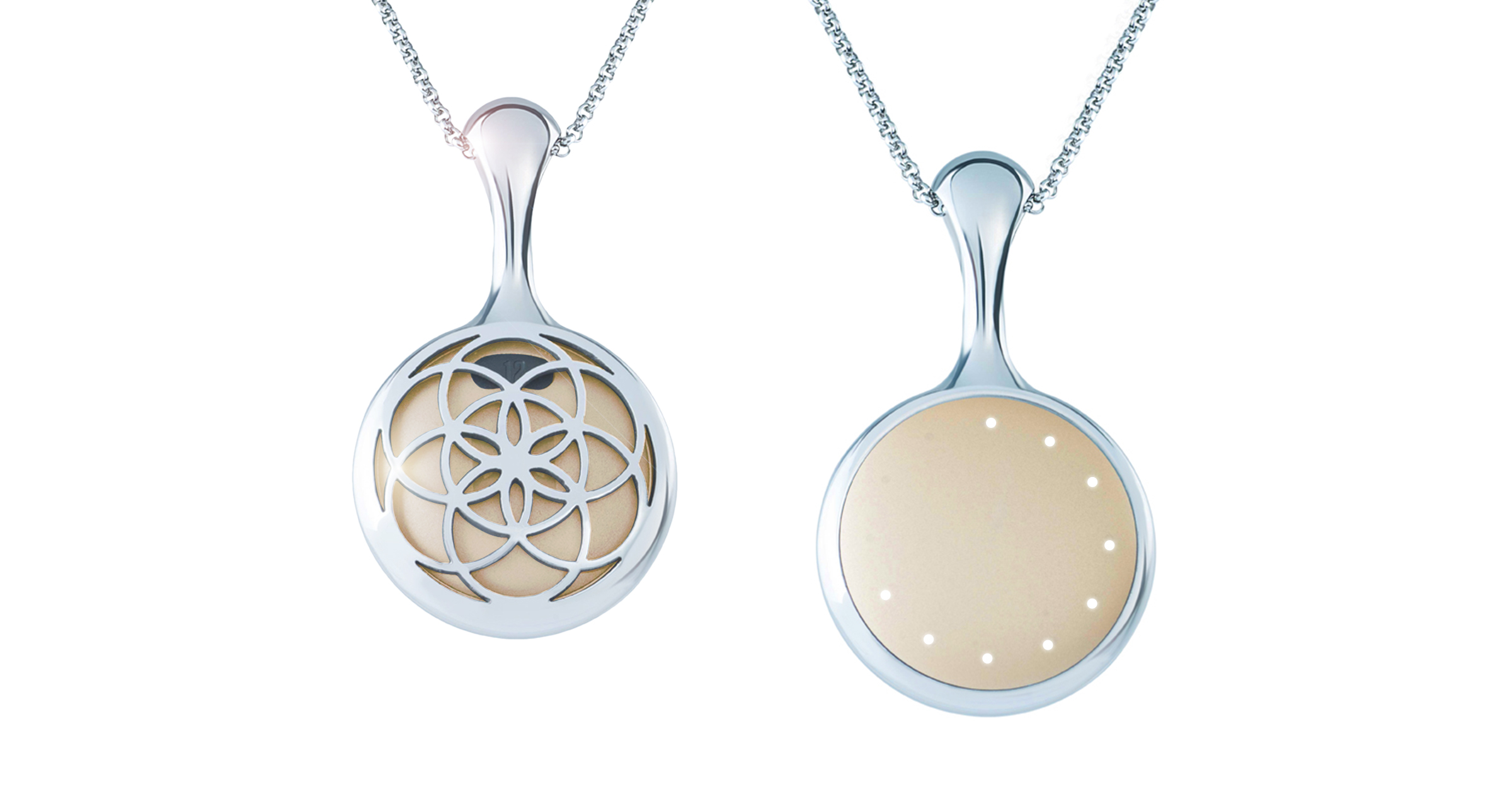
The Misfit Bloom is a stylish pendant with the same health sensing technology as a fitness band.

Shine sensor, originally crowdfunded on Indiegogo, is seamlessly integrated into the necklace, providing continuous monitoring of a user’s steps, calories and sleep.

As health monitoring becomes ubiquitous, ApplySci believes that the number of fashion forward wearable devices will steadily increase.

Categories
fitness Heart mHealth Monitoring Sleep

Update: Samsung increases health applications with Gear 2 watch, Gear Fit, Galaxy S5

Samsung has updated its devices as it tries to establish dominance in the health and fitness tracking market.

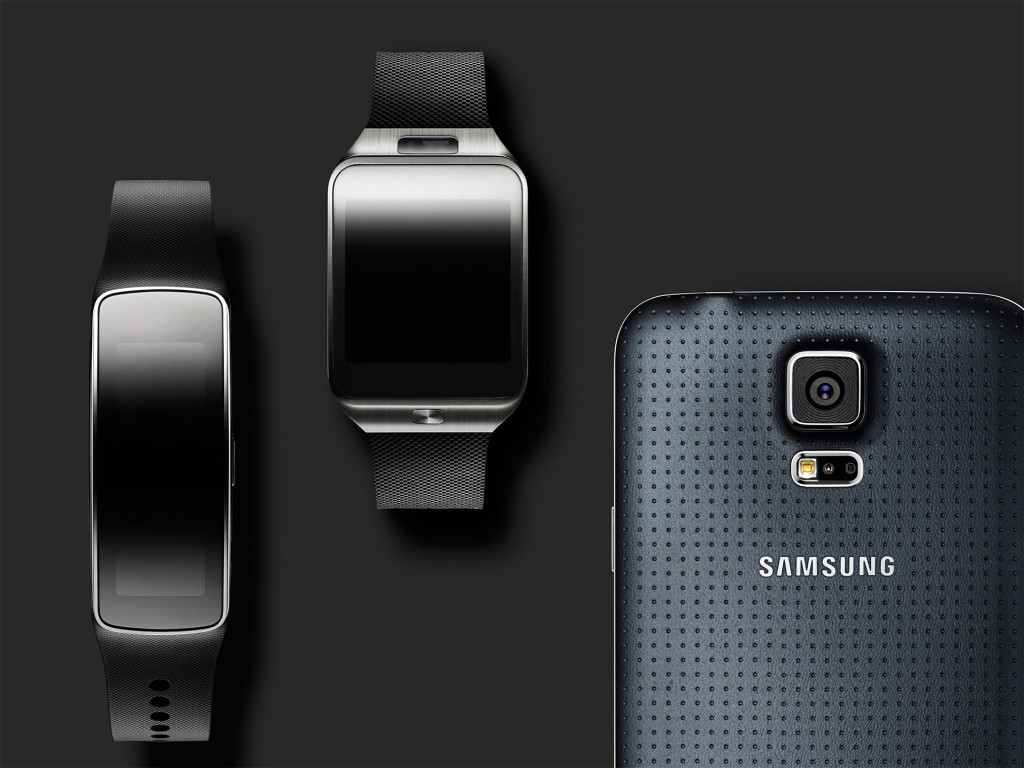
Its Gear 2 watch is now based on Samsung’s Tizen operating system rather than Android. It includes an accelerometer and gyroscope – capable of acting as a pedometer and an optical heart rate monitor. This allows the watch to integrate with Samsung’s health and fitness tracking applications, replacing the need for additional tracking gadgets.  Its various tools will measure exercise, sleep and stress levels.

Apple is expected to release a smartwatch in the near future with a strong focus on fitness and health tracking, as well as a “Healthbook” application for its next iteration of its iOS iPhone and iPad software.

The Gear Fit band tracks movement, heart rate and sleep patterns. It is water-resistant and includes phone notifications, a timer, stopwatch and a curved OLED screen.

The Galaxy S5 smartphone features an enhanced S Health 3.0 app, a comprehensive personal fitness tracker, a pedometer, diet and exercise records, and a built-in heart rate monitor. It will pair seamlessly with the next generation Gear products for real-time fitness coaching.

Categories
Sensors Sleep

Nerve stimulation for sleep apnea

http://www.nejm.org/doi/full/10.1056/NEJMoa1308659

Current sleep apnea treatments are intrusive and uncomfortable. University of Pittsburgh Professor Patrick J. Strollo has developed a  “pulse generator” which, when surgically implanted, senses one’s effort to breath.  It then sends pulse stimulation to the hypoglossal nerve, controlling the neck muscles that keep the airway open, preventing collapse.

Standard treatment for sleep apnea is a device called a CPAP. It is a machine that applies air pressure through a mask, which, if worn while sleeping, keeps the airway open. Many people find the masks bulky and uncomfortable, choosing instead to leave their apnea untreated.

Categories
Babies Conference Sensors Sleep

Baby onesie tracks breathing, sleep, movement, temperature

http://mimobaby.com/

Sensor based baby monitoring is receiving a lot of exposure at CES.  One such monitor, by Mimo baby, includes three parts: the Kimono, the Turtle and the Lilypad station. The Kimono is a cotton onesie, with machine washable sensors, worn by a baby when sleeping. It houses the Turtle, which tracks a baby’s respiration, skin temperature, body position and activity levels. The Turtle conveys the information via Bluetooth to the base station, called Lilypad, in the baby’s sleep room. The Lilypad is connected to the home Wi-Fi network.  It processes the information and transmits it to a smartphone app.

Categories
Babies Monitoring Respiratory Sensors Sleep Wearables

Crowdfunded “smart sock” monitors baby’s breathing

http://www.owletcare.com

Owlet Baby Monitors has created a baby “smart sock” with sensors that transmit a child’s heart rate, oxygen levels, skin temperature, sleep quality, and sleep position (rollover alerts) to a parent’s smartphone.  The company has launched a crowdfunding campaign as it goes through the FDA approval process.

Categories
Apps Data fitness mHealth Monitoring Sensors Sleep Wearables

Home medical device data uploaded to EHRs; patient participation encourages behavior modification

http://www.bostonglobe.com/lifestyle/health-wellness/2013/07/28/century-house-call/tdupWvOQI6b3dKdKcEgdGM/story.html

Boston’s Partners HealthCare has launched a system that allows patients to upload information from their medical devices directly to their electronic records in doctors’ offices.  Patients can regularly use glucometers, blood pressure cuffs, bathroom scales, and pulse oximeters at home, and send the data to their doctors.  Doctors are also becoming increasingly interested in eating habit, movement, and sleep data collected by patients using consumer health-tracking devices.

A recent study by the company showed a significant decrease in diastolic blood pressure among participants who both took their readings and uploaded them to a web interface where they could track and monitor their progress.

Categories
Babies Monitoring Sensors Sleep

Sensor and smartphone based baby monitor

http://medcitynews.com/2013/06/sensors-and-smartphones-bring-the-baby-monitor-into-2013/

Sensible Baby’s “Smart One”  is a small, round sensor worn inside a newborn’s onesie. It constantly measures a baby’s temperature, position and chest movement, and sends the data to a smartphone app once per second.  Parents can program their app to set off an alert when the baby isn’t moving, reaches a temperature above a certain threshold, or is sleeping on its stomach.

Categories
Apps Asthma fitness mHealth Monitoring Sensors Sleep

Mobile phone microphones as health sensors

http://www.economist.com/news/technology-quarterly/21578518-sensor-technology-microphones-are-designed-capture-sound-they-turn-out

The Economist’s Technology Quarterly describes how mobile phone microphones are being used as versatile sensors with myriad health applications.  Examples follow:

1. Professor Tanzeem Choudhury of Cornell has created StressSense to capture and analyze voice characteristics such as amplitude and frequency. Her team concluded that “it is feasible to implement a computationally demanding stress-classification system on off-the-shelf smartphones”.

2. BeWell’s sleep-tracking feature, also by Professor Choudhury,  determines whether the phone’s user is awake or not by analyzing usage, light and sound levels, and charging habits. Physical activity is monitored using built-in accelerometers for motion-detection. Social activity is measured by sounds that indicate that the user is talking to someone, either in person or over the phone.

3. Professor John Stankovic of the University of Virginia uses microphones to capture heartbeats. Researchers in his group use earphones modified with accelerometers and additional microphones that detect the pulse in arteries in the wearer’s ear. This makes it possible to collect physical state information, including heart rate and activity level, which is transmitted to the smartphone via the audio jack.

4. Shwetak Patel of the University of Washington uses a smartphone to measure lung function when users blow on its microphone. His team has developed the SpiroSmart app, which simulates a digital spirometer, to measure the volume of air a person can expel from his or her lungs. Spirometers help doctors better understand the health status of patients with conditions like asthma, chronic obstructive pulmonary disease and cystic fibrosis.

Categories
Brain Sleep

Study shows babies, children and adults learn in their sleep

http://www.sciencedaily.com/releases/2013/02/130226081155.htm

Sleep helps us to learn. It may just be too hard for a brain to take in the flood of new experiences and make sense of them at the same time. Instead, our brains look at the world for a while and then shut out new input and sort through what they have seen.

Both children and adults who had more slow-wave sleep–an especially deep, dreamless kind of sleep–learned better.

Categories
Apps Diabetes Heart mHealth Monitoring Sensors Sleep

A move toward aggregating health data from various devices and apps

http://gigaom.com/2013/03/15/tictrac-emerges-to-help-make-health-tracking-more-mainstream/

It seems that every day a new app or device promising the ultimate in health or fitness monitoring enters the market.  A startup has created a personal analytics dashboard which gives people a big picture view of their own aggregated data and underlying patterns, helping them make sense of the numbers.