
Categories
Sensors

Non-invasive nanotube device detects disease with one drop of blood

http://www.njit.edu/news/2013/2013-218.php

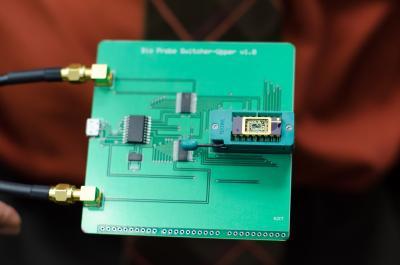
Professors Reginald Farrow and Alokik Kanwal of the New Jersey Institute of Technology have created a carbon nanotube-based device to non-invasively and quickly detect mobile single cells with the potential to maintain a high degree of spatial resolution.  They are now overseeing the manufacture of a prototype lab-on-a-chip that would enable a physician to detect disease or virus from just one drop of liquid, including blood.

The military was the initial funder of the research, in an attempt to identify biological warfare agents.  Farrow believes that it can be applied much more widely to detect viruses, bacteria, or cancer.  The next phase of research will include a study of the device’s ability to assess the health of brain neurons.

Categories
Cancer Monitoring

Nanotube sensor detects skin cancer

http://www.monell.org/news/news_releases/monell_led_research_identifies_scent_of_melanoma

A study from the Monell Center and the University of Pennsylvania suggests that non-invasive odor analysis may be a valuable technique in the detection and early diagnosis of human melanoma.  The researchers used sophisticated sampling and analytical techniques to identify VOCs from melanoma cells at three stages of the disease, as well as from normal melanocytes. All the cells were grown in culture.  They then examined VOCs from normal melanocytes and melanoma cells using a sensor constructed of nano-sized carbon tubes coated with strands of DNA and bioengineered to recognize a wide variety of targets, including specific odor molecules.

Categories
Sensors

Nanotube sensor detects Lyme disease

http://www.upenn.edu/pennnews/news/penn-researchers-attach-lyme-disease-antibodies-nanotubes-paving-way-diagnostic-device

A team led by Professor A. T. Charlie Johnson of the University of Pennsylvania has developed a biosensor from carbon-nanotube transistors that can rapidly detect the antigens of Lyme disease. The device can detect the biomarkers at concentrations as low as 1 ng/ml.

The group’s work is a continuation of similar strategies to detect prostate cancer biomarkers using CNTs. The researchers hope to one day be able to detect any disease with such nanotube devices simply by coating them with the appropriate proteins.

Categories
Diabetes Monitoring

Non-invasive diabetes monitoring through breath analysis

http://www.news.pitt.edu/news/diabetes-breathalyzer
University of Pittsburgh professor Alexander Star, Dan Sorescu of the National Energy Technology Laboratory, and graduate student Mengning Ding have demonstrated sensor technology that could simplify the diagnosis and monitoring of diabetes through breath analysis alone.

The researchers used a “sol-gel approach,” a method for using small molecules (often on a nanoscale level) to produce solid materials. The team combined titanium dioxide with carbon nanotubes, which acted as “skewers” to hold the particles together.  This method effectively combined the electrical properties of the tubes with the light-illuminating powers of the titanium dioxide. They then created the sensor device by using these materials as an electrical semiconductor, measuring its electrical resistance (the sensor’s signal).

The ability to diagnose and monitor diabetes through cheaper, noninvasive methods could completely change the paradigm of self-monitoring.

Categories
Diabetes Sensors

Nanotube sensor detects glucose in saliva

http://www.technologyreview.com/view/514456/carbon-nanotube-sensor-detects-glucose-in-saliva/

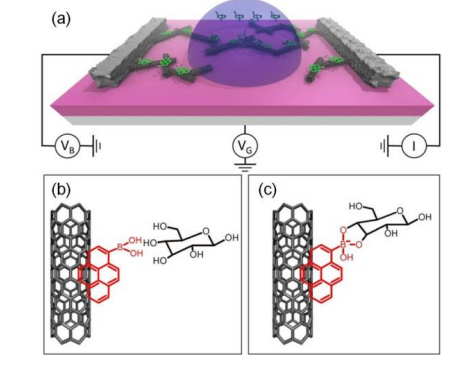
A team led by Mitchell Lerner at the University of Pennsylvania has developed a carbon nanotube based transistor that can detect glucose levels in body fluids, including saliva. The nanotubes are coated with molecules of pyrene-1-boronic acid, which makes them highly sensitive for glucose detection. When exposed to glucose, the nanotube transistor’s current-voltage curve changes, and that change can be measured to indicate the glucose concentration.