Categories
Babies Monitoring Sensors

Smart pacifier monitors baby’s health and location

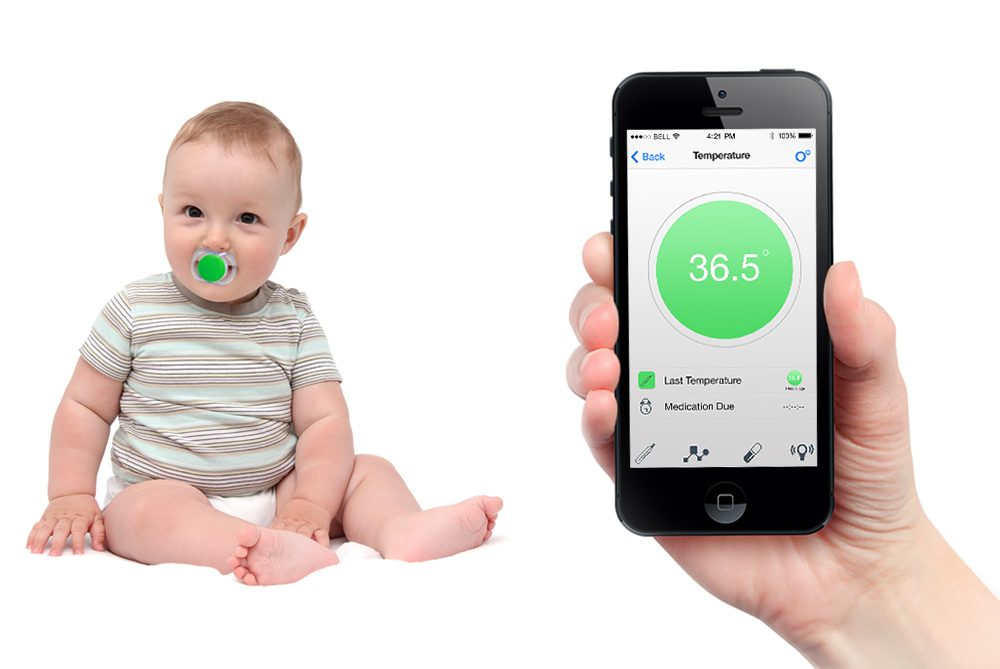
BlueMaestro’s Pacifi monitors a baby’s temperature and transmits the data to a parent’s phone or tablet.  Its app plots the data in a graph.  Parents can record when medication was administered, set-up alerts, and share the information with nannies and doctors.

Pacifi features a built in proximity sensor that allows parents to monitor the pacifier’s location and be alerted if their toddler wanders off.  Parents can set the distance, to a range of 150 feet, for the alarm to be triggered.

Categories
Crowdfunding Seniors Sensors

Sensor shoe detects balance, attempts to improve gait

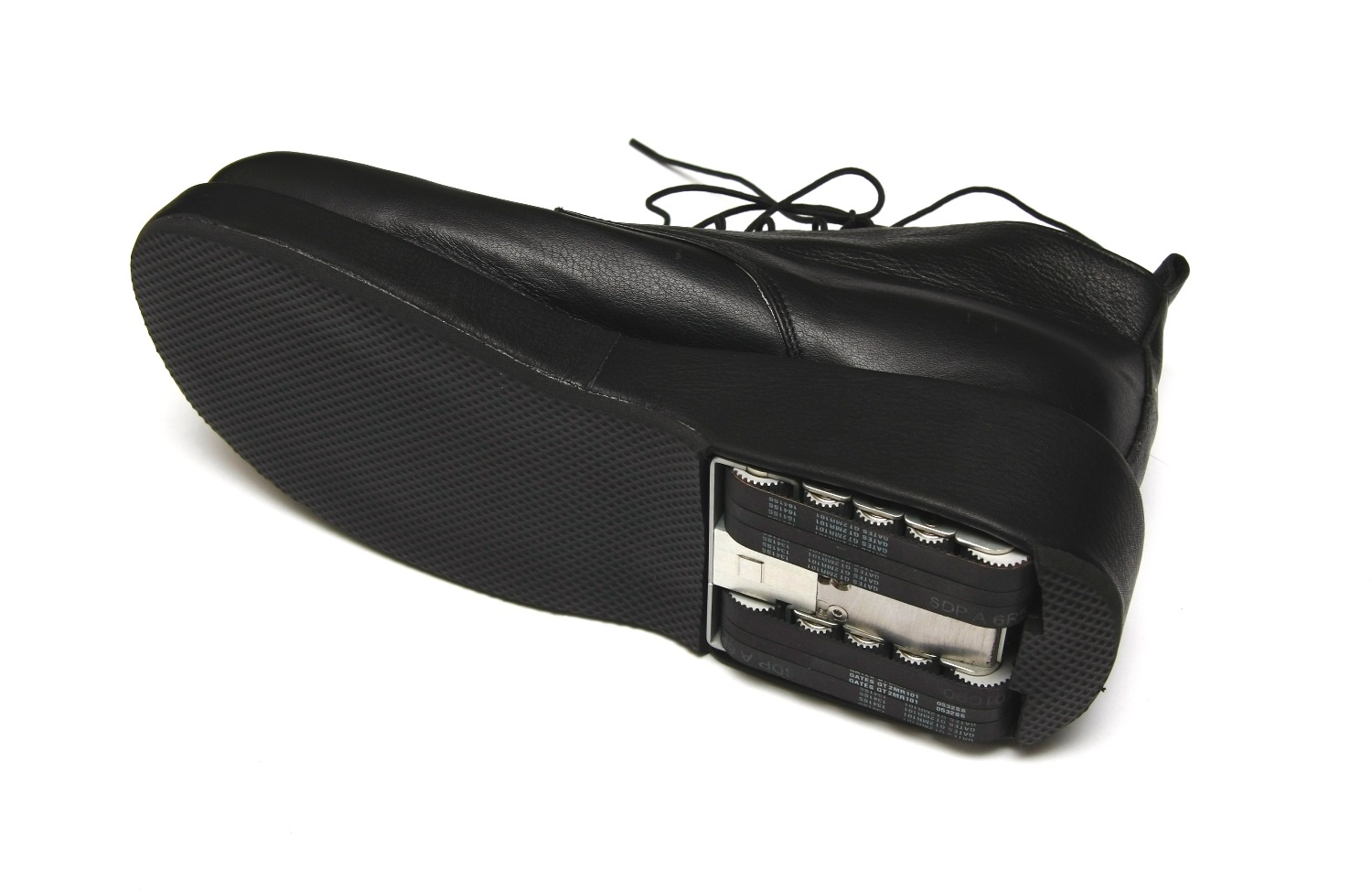
B-Shoe  utilizes sensors and an embedded motion device to detect when a wearer loses balance. Using algorithms and a microprocessor, the motion device gently rolls the shoe backward until the person regains balance. The sensors ensure that the corrective action is taken only when needed.  The projected was crowdfunded on Indiegogo.

It is based on the bio-mechanics of the human body, its center of gravity and base of support, a study of balance maintenance and disorders, and the backward step which healthy and younger people take to regain balance.  Older people often do not take this step because of slowed reflexes.

As seniors fall on average once per year, we anticipate the many sensor based wearable technologies to provide balance monitoring and alerts, and attempt to improve gait.

Categories
AI

Facebook’s DeepFace achieves near human-level face verification

Following its acquisition of Tel Aviv University Professor Lior Wolf‘s face.com, Facebook is developing DeepFace, with near-human level face recognition capabilities.

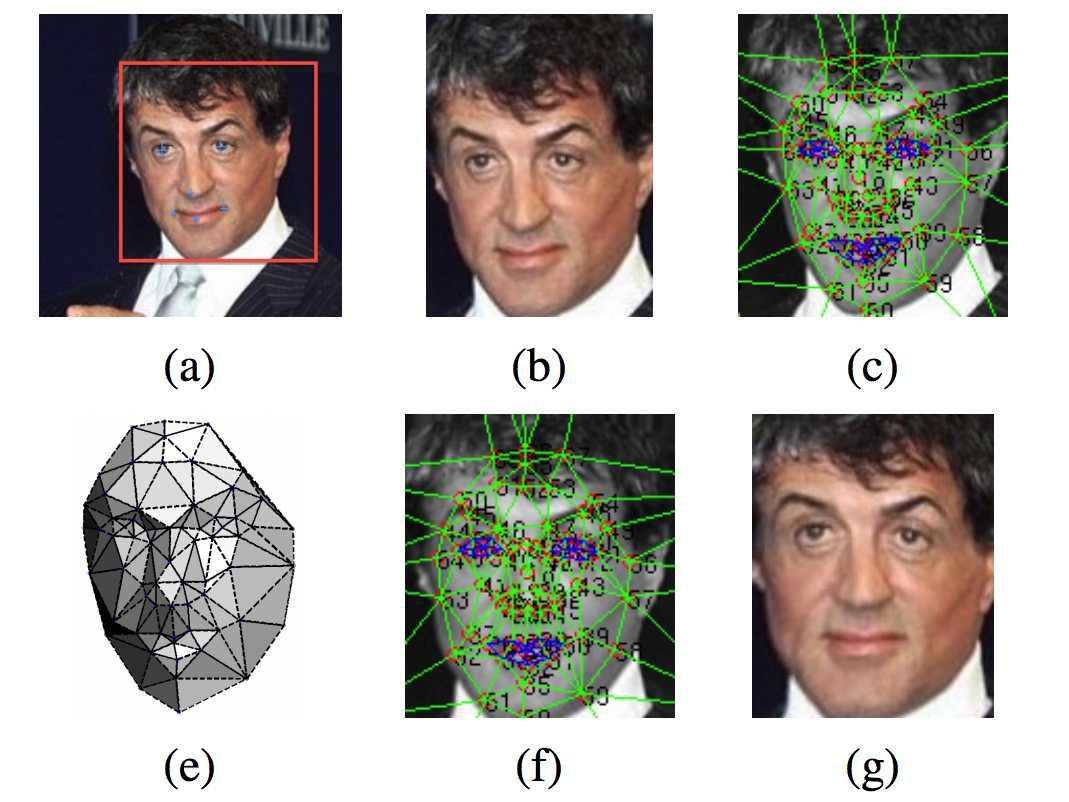
The technology processes images of faces in two steps. First it corrects the angle of a face so that the person in the picture faces forward, using a 3-D model of an “average” forward-looking face. Then a simulated neural network determines a numerical description of the reoriented face. If DeepFace comes up with similar enough descriptions from two different images, it decides they must show the same face.

Categories
Brain Wearables

Electronic headband may prevent migraines

Cefaly

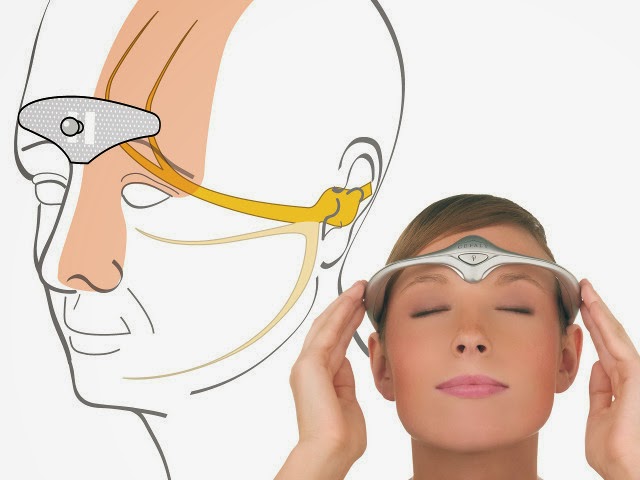
The Cefaly headband is a battery powered device that may prevent migraine headaches.  It works by pressing a self adhesive electrode, positioned at the center of person’s forehead, which sends an electrical signal through the skin to the trigeminal nerve.  By stimulating the nerve, the device was shown to help prevent the migraine headaches in a study of 67 people.  This week the FDA approved it for marketing.

Cefaly is only meant to be used once a day for 20 minutes, and should only be used by people 18 and older.

ApplySci cautions that the long term effect of brain stimulation is unknown, and the size of this study was limited.  Therefore devices like this must be used  carefully, and immediately stopped if  side effects are experienced.

Categories
Brain Crowdfunding Seniors

Crowdfunded virtual reality game engages dementia patients

Pozible campaign

Alzheimer’s Australia Vic‘s Microsoft Kinect sensor app places dementia patients inside a “virtual forest” where breezes blow, snow falls and butterflies fly in a peaceful but interactive environment.  The organization previously developed a virtual dementia simulator for teaching carers about the reality of living with dementia.  They believes that using game technology and sensory therapy will “give back to people with dementia their ability to engage more fully with life.”  The developers claim that this will break new ground in the use of virtual sensory therapies to create feelings of safety, novelty and stimulation.

Categories
Epilepsy Monitoring Sensors Wearables

Wearables track, manage, predict epileptic seizures

Artefact Dialog | SmartMonitor

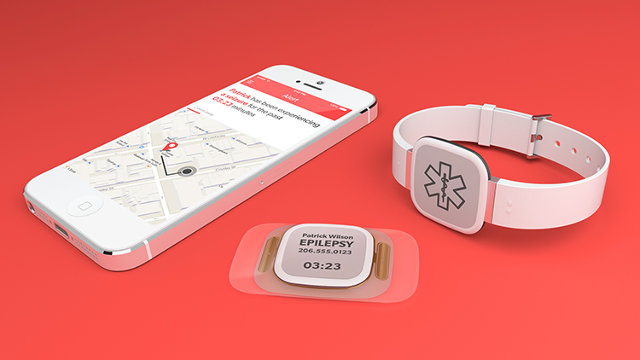
Artefact Dialog allows epilepsy patients to track, manage, and predict seizures.

The patch-like wearable connects via Bluetooth to a smartphone app.  It can help wearers remember to take their medications, warn them about seizures, and alert friends, family, or caregivers when a seizure happens. Connected apps help users analyze where they have been and what they were doing when seizures occurred, and instruct bystanders and responders what to do during an episode.

Featuring a UI based around natural interactions, Dialog allows patients to call for help with a grasp of the patch. A double tap allows a patient to record a pre-seizure aura, and can measure the typical time between an aura and a seizure. Tracing a smile or frown lets wearers track their moods, and vibrations alert users to take their medications.

Last year SmartMonitor released its epilepsy focused smart watch, with similar features but a more traditional design.

Categories
Brain

Biomarkers predict dementia

Nature paper | Georgetown release

Georgetown professor Howard Federoff and colleagues have developed a blood test they claim has the potential to predict whether a person will develop symptoms of dementia within two or three years.

The test was identified in a preliminary study involving 525 people over 70.  The subjects’ cognitive skills, memory skills, and blood were tested annually for five years.  Mass spectrometry  was used to analyze the blood plasma of 53 participants with mild cognitive impairment or Alzheimer’s disease, including 18 who developed symptoms during the study, and 53 who remained cognitively healthy. The researchers found ten phospholipids that were present at consistently lower levels in the blood of most people who had, or went on to develop, cognitive impairment. The team validated the results in a set of 41 further participants.

Categories
Assistive Technologies Brain Eyes

Visual cortex activated by audio stimuli

Current Biology | Wired

Hebrew University professor Amir Amedi has used an augmented reality device to  allow the blind to “see” by converting images to complex sounds.   The user is able to form a mental image of objects, including people, in front of them.

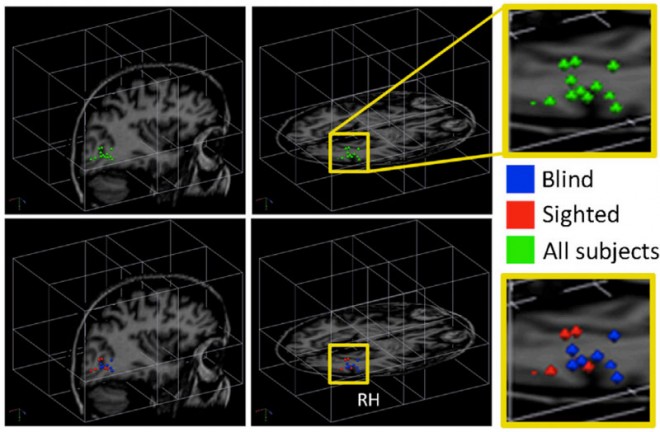
The cerebral cortex is activated when sighted people see an outline of the human body. The extrastriate area responds more strongly to human body images than it does to other objects.  Blindness stops the usual flow of information from the eyes to this part of the brain, and people who’ve been blind since birth have never seen a human form. Their brains must change as they they learn to perceive body shapes using sound.

Ella Striem-Amit and Amir Amedi scanned the brains of seven congenitally blind people who’d trained for an average of 73 hours on the augmented reality system.  The surprising result was that the visual cortex was activated by the auditory stimuli. Participants classified three different types of objects: people, everyday objects, and textured patterns.

Professor Amedi’s lab does groundbreaking research on perception and multisensory relation, sensory substitution approaches and dynamics of brain processes.  Among other innovations, they are now experimenting with an ultrasound stick that measures distances from objects, providing auditory indications.

Categories
3-D Printing

3-D printed organs interlaced with blood vessels

MIT Technology Review

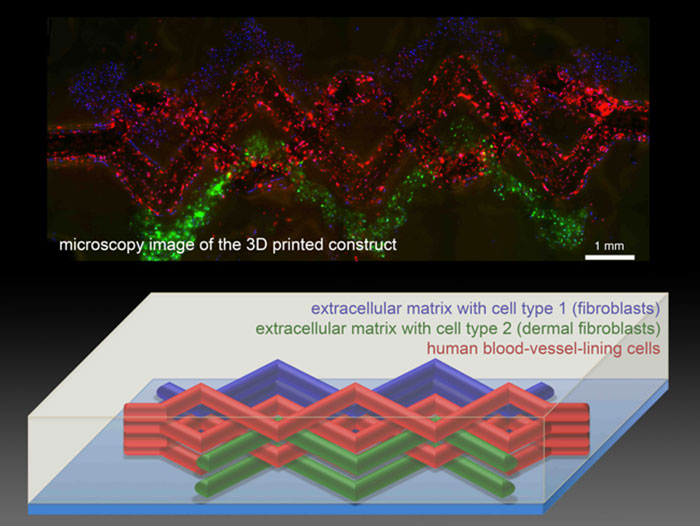
Harvard professor Jennifer Lewis has created a patch of tissue containing skin cells and biological structural material interwoven with blood-vessel-like structures using a 3-D printer and “disappearing” ink.

Lewis’s team created hollow, tube-like structures within a mesh of printed cells using an “ink” that liquefies as it cools. The tissue is built by the 3-D printer in layers. A gelatin-based ink acts as extracellular matrix—the structural mix of proteins and other biological molecules that surrounds cells in the body. Two other inks contained the gelatin material and either mouse or human skin cells. All these inks are viscous enough to maintain their structure after being laid down by the printer.

A third ink with counterintuitive behavior helped them create the hollow tubes. This ink has a Jell-O-like consistency at room temperature, but when cooled it liquefies. The team printed tracks of this ink amongst the others. After chilling the patch of printed tissue, the researchers applied a light vacuum to remove the special ink, leaving behind empty channels within the structure. Then cells that normally line blood vessels in the body can be infused into the channels.

The smallest channels printed were about 75 micrometers in diameter, which is much larger than the tiny capillaries that exchange nutrients and waste throughout the body. The hope is that the 3-D printing method will set the overall architecture of blood vessels within artificial tissue and then smaller blood vessels will develop along with the rest of the tissue.

Categories
Brain

UCSF creates immersive, virtual reality lab to study the brain

Neuroscape Lab

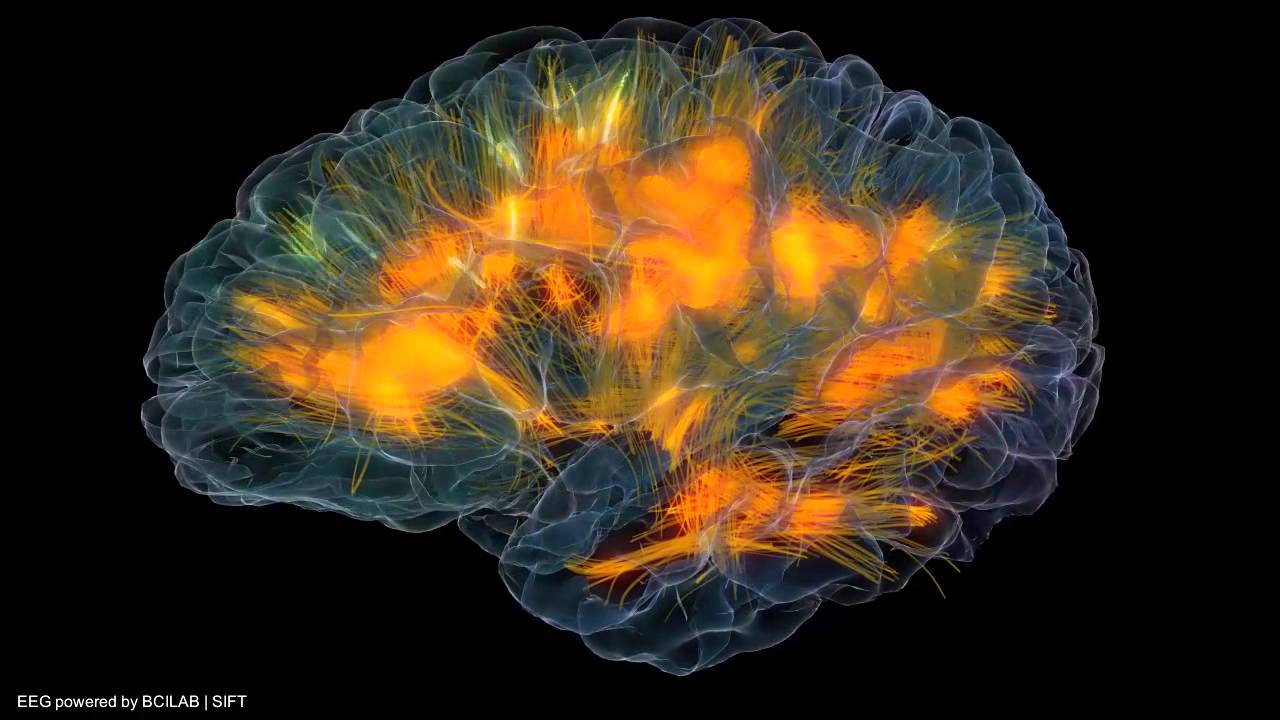
UCSF professor Adam Gazzaley has created Neuroscape Lab, where scientists use various technologies to make functional recordings of research participants as they move around and interact inside 3-D environments.  His goal is to “study novel neuro-diagnostic and therapeutic approaches, with the primary goal of driving rapid translation of neuroscience to real-world solutions.”

This is an admirable attempt to understand  how complex neurological and psychiatric diseases work, create breakthrough technologies,  and also help doctors repurpose technologies built for fitness or fun into targeted therapies for their patients.

The lab will be available to all UCSF researchers who study the brain, with a focus on Alzheimer’s Disease, PTSD, ADHD, schizophrenia, autism, depression and multiple sclerosis.

Categories
Assistive Technologies Crowdfunding Sensors Wearables

Crowdfunded, gesture controlled, bluetooth ring

Kickstarter campaign

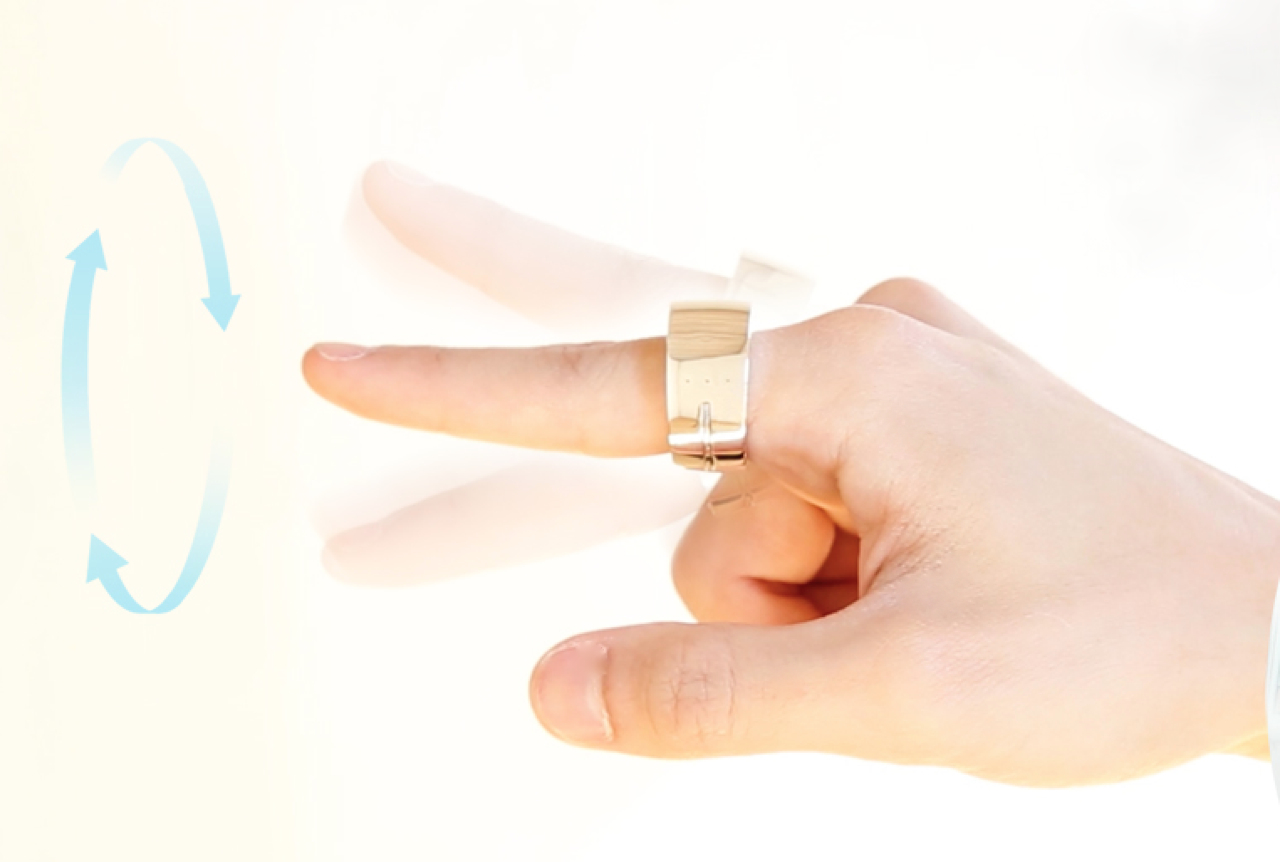
Logbar‘s sensor ring recognizes finger gestures and controls devices.  “Ring” allows the wearer to write text messages by drawing in the air,  make mobile payments,  or control lights or a television.  It is being tested for use with the Pebble watch, quadcopter drones and Google Glass.

It can be programmed to respond to original shape gesture commands, which  could be useful for the disabled or visually impaired.

Wearers can receive vibrating alerts or view LED pinpoints near the button port, performing up to 1,000 gestures before its battery must be recharged.

Categories
Brain

Researchers generate neurons in brains, spinal cords

UT Southwestern release | Nature paper

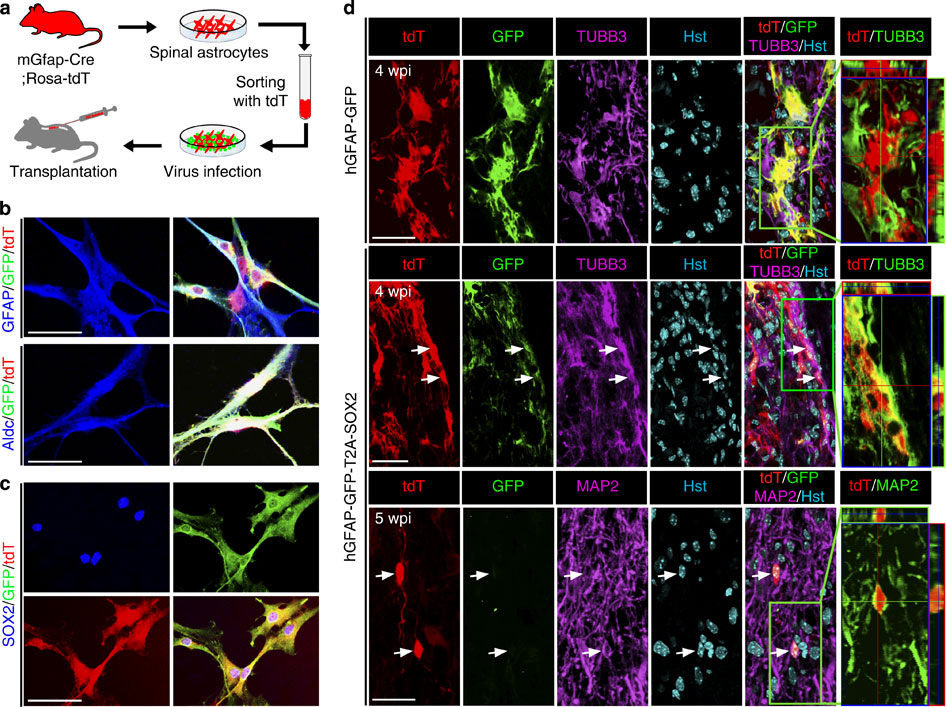
UT Southwestern Medical Center researchers created nerve cells in the brains and spinal cords of living mammals without the need for stem cell transplants to replenish lost cells.  Their goal is to regenerate neurons from the body’s own cells to repair traumatic brain injury or spinal cord damage, and to treat brain diseases.  While promising, it has not yet been proven that the neurons created in these studies resulted in functional improvements. Scientists hope that regenerating cells can repair damage, but adult spinal cords have limited ability to produce new neurons.

The team first turned astrocytes into neurons that formed networks in mice. They have now turned scar-forming astrocytes in the spinal cords of adult mice into neurons.

The two-step approach first introduces a biological substance that regulates the expression of genes into areas of the brain or spinal cord where that factor is not highly expressed in adult mice. Of 12 transcription factors tested, only SOX2 switched fully differentiated, adult astrocytes to an earlier neuronal precursor, or neuroblast, stage of development.

In the second step, the researchers gave the mice a drug called valproic acid that encouraged the survival of the neuroblasts and their maturation into neurons. VPA has been used to treat epilepsy, bipolar disorder and migraine headaches.

The study reports neurogenesis occurred in the spinal cords of adult and aged mice of both sexes, although the response was much weaker in the aged mice. Researchers now are attempting to boost the number and speed of neuron creation.