Categories
Conference

fMRI + EEG used to detect consciousness in ICU patients

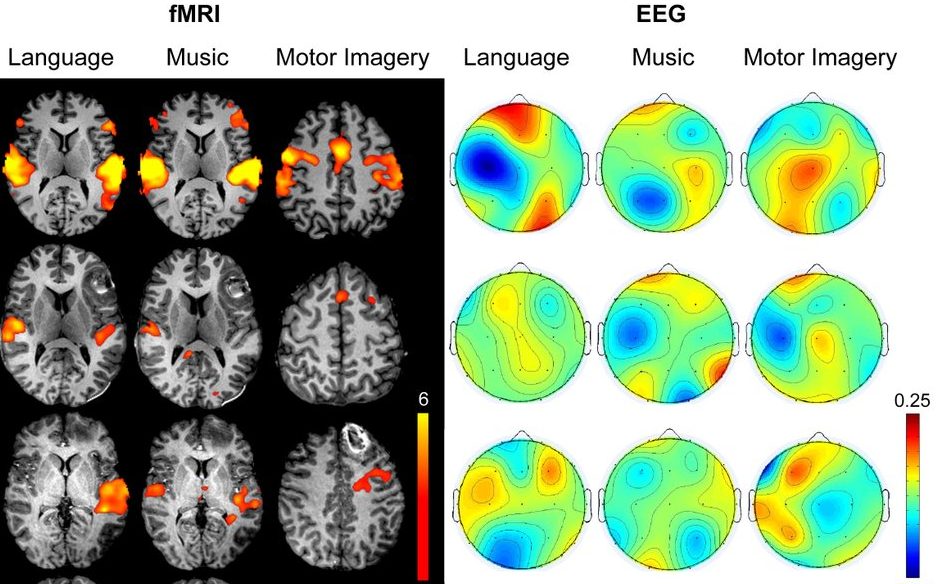
MGH’s  Brian Edlow and colleagues have completed a small study showing the efficacy of using fMRI and EEG in ICU TBI patients to detect consciousness.  Previous research has suggested that up to 40% of conscious patients are misclassified as unconscious.

The goal is to create a more informed care plan, and earlier interventions that could improve outcomes.

16 patients with severe traumatic brain injury at MGH’s ICU were studied. At the start, 8 patients could respond to language, 3 were classified as minimally conscious with no language response, 3 were classified as vegetative, and 2 were in a coma. The study also included a healthy control group 16.

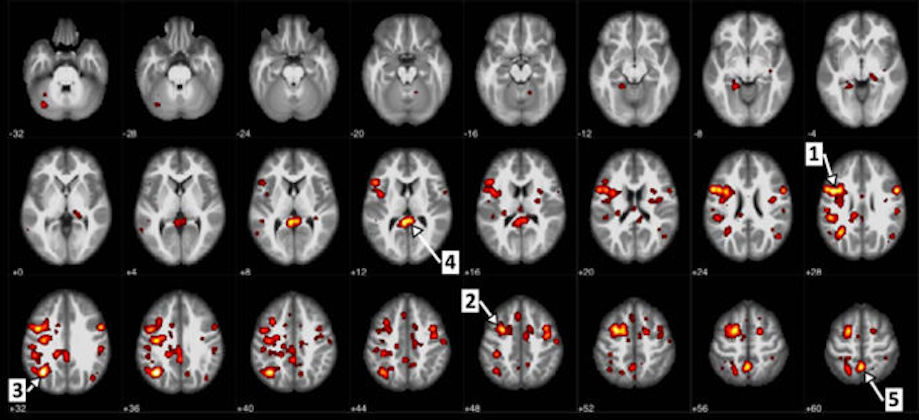
f MRI scans were performed as soon as the subjects were stable. EEG readings were usually taken within 24 hours after the fMRI scan.  Tests were designed to detect a mismatch between their ability to imagine performing a task and their ability to physically express themselves (cognitive motor dissociation.)

Through the study, researchers detected evidence of consciousness in 4 of the 8 patients who were unable to respond to language in bedside exams, including the 3 classified as vegetative. (It was also noted that 25% of the healthy controls had no detectable brain response in a hand-squeeze imagery test.)

The subjects were also exposed to brief recordings of spoken language and music during both fMRI and EEG to detect activity in certain brain regions. Higher-order cortex activity was seen in 2 additional subjects. While higher-order cortical activity doesn’t prove that a patient is conscious, finding a response in those structures could have implications for a patient’s eventual recovery.

A 19 electrode EEG device was used for the study.

Brain health company Neurosteer is attempting to gather similar neural activity data with its continuous, mobile, 3 electrode, EEG wearable.  The company’s CEO, Nathan Intrator, will present this work at ApplySci’s Wearable Tech + Digital Health + Neurotech conference, on September 19th at the MIT Media Lab.


Join ApplySci at Wearable Tech + Digital Health + NeuroTech Boston on September 19, 2017 at the MIT Media Lab – featuring  Joi Ito – Ed Boyden – Roz Picard – George Church – Nathan Intrator –  Tom Insel – John Rogers – Jamshid Ghajar – Phillip Alvelda – Michael Weintraub – Nancy Brown – Steve Kraus – Bill Geary – Mary Lou Jepsen

Registration rates increase Friday, August 18th.


ANNOUNCING WEARABLE TECH + DIGITAL HEALTH + NEUROTECH SILICON VALLEY – FEBRUARY 26 -27, 2018 @ STANFORD UNIVERSITY

Categories
Monitoring Sensors

Apple patents multi-parameter, phone-based health tracking

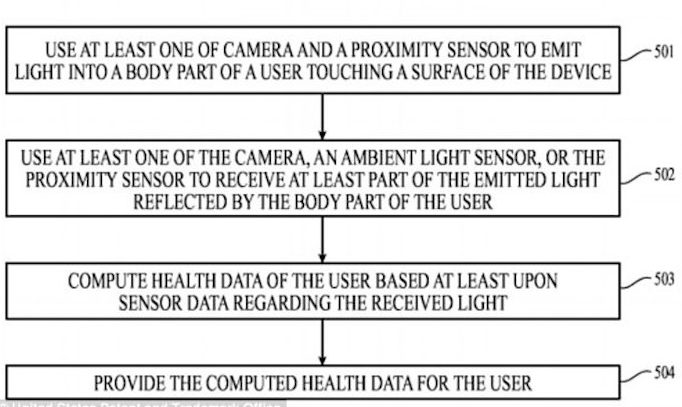
Apple  has been granted a patent for phone technology using a front-facing camera and light, proximity, and multiple sensors to measure body fat, heart rate, circulation, blood pressure, and breathing, as well as emotional state via galvanic skin response. The device computes health data of the user based upon sensor data regarding the received light. It has been reported that Facebook and Google are also developing device driven health monitoring systems. Mindstrong Health, co-founded by former NIMH and Verily Life Science head Tom Insel, is developing phone-based technology to measure and monitor emotional and mental health. Insel will be a featured speaker at ApplySci’s Wearable Tech + Digital Health + Neurotech conference, on September 19th, 2017 at the MIT Media Lab.


Join ApplySci at Wearable Tech + Digital Health + NeuroTech Boston on September 19, 2017 at the MIT Media Lab – featuring  Joi Ito – Ed Boyden – Roz Picard – George Church – Nathan Intrator –  Tom Insel – John Rogers – Jamshid Ghajar – Phillip Alvelda – Michael Weintraub – Nancy Brown – Steve Kraus – Bill Geary – Mary Lou Jepsen – Daniela Rus

Registration rates increase Friday, August 11th.


ANNOUNCING WEARABLE TECH + DIGITAL HEALTH + NEUROTECH SILICON VALLEY – FEBRUARY 26 -27, 2018 @ STANFORD UNIVERSITY


Categories
Disease

Single blood draw detects 1250 pathogens from cell-free DNA

Karius‘s  next-generation sequencing detects fragments of 1250 microbes from a single blood draw.  Identifying microbial cell-free DNA from bacteria, viruses, fungi and protozoa can facilitate the rapid diagnosis of infectious disease.  Current diagnostics only detect a narrow range of pathogens, and may require invasive biopsies.

This fast and comprehensive analysis could enable more effective, targeted treatment, and the ability to monitor infection in high-risk patients, which will save lives.


Join ApplySci at Wearable Tech + Digital Health + NeuroTech Boston on September 19, 2017 at the MIT Media Lab – featuring  Joi Ito – Ed Boyden – Roz Picard – George Church – Nathan Intrator –  Tom Insel – John Rogers – Jamshid Ghajar – Phillip Alvelda – Michael Weintraub – Nancy Brown – Steve Kraus – Bill Geary – Mary Lou Jepsen – Daniela Rus

Registration rates increase Friday, August 11th.


ANNOUNCING WEARABLE TECH + DIGITAL HEALTH + NEUROTECH SILICON VALLEY – FEBRUARY 26 -27, 2018 @ STANFORD UNIVERSITY

Categories
Conference

Wearable, high resolution, continuous opto-electronic monitoring

MRI, disrupted.

Mary Lou Jepsen’s background in consumer electronics, computers, TV, VR, wearables, healthcare and software at Google x,  Facebook, and Oculus has led to the creation of Openwater — a company that will enable us to see the inner workings of the body and brain.  At high resolution, continuously.

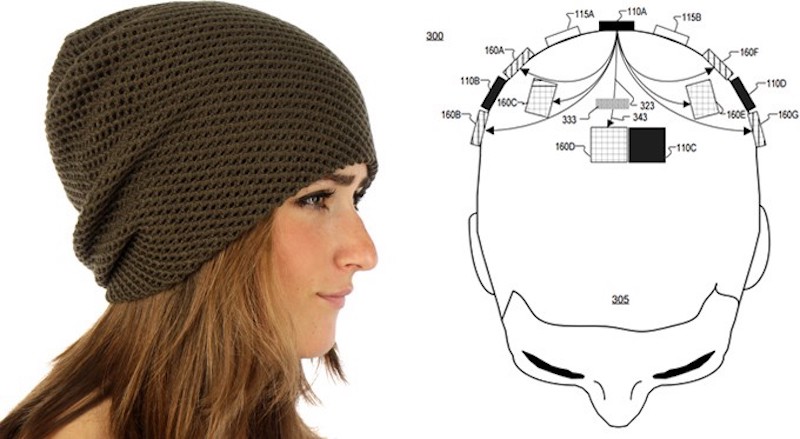
Using novel opto-electronics, the company aims to replace the functionality of MRI with a wearable.  Applications include the  detection and treatment of cancer, cardiovascular diseases, internal bleeding, and brain diseases, and for communication via thought,  and potentially to upload/download and augment memories, thoughts and emotions.

The technology uses the scattering of the body or the brain to focus infrared light to scan itself, bit by bit, or voxel by voxel. This is enabled by LCDs with pixels small enough to create reconstructive holographic images that neutralize the scattering and enable scanning at MRI resolution and depth, coupled with body-temperature detectors.

These LCDs and detectors line the inside of a ski-hat, bandage or other clothing, and are designed to modulate the interference of intensity and phase in the near infrared regime with the video-rate computer generated holograms integrated with embedded detectors. The brain or body will be able to be scanned systematically or selectively. The system can be used in reverse, to focus light to any area of interest in the body or brain (for tumor treatment.)

Once again, Mary Lou Jepsen is pioneering technology that will transform — and save — lives.  We are honored to include her as a speaker at Wearable Tech + Digital Health + Neurotech Boston, on September 19th at the MIT Media Lab.

Click to view Jepsen’s talk at ApplySci’s  February, 2017 Wearable Tech + Digital Health + Neurotech Silicon Valley conference at Stanford University


Join ApplySci at Wearable Tech + Digital Health + NeuroTech Boston on September 19, 2017 at the MIT Media Lab – featuring  Joi Ito – Ed Boyden – Roz Picard – George Church – Nathan Intrator –  Tom Insel – John Rogers – Jamshid Ghajar – Phillip Alvelda – Michael Weintraub – Nancy Brown – Steve Kraus – Bill Geary – Mary Lou Jepsen – Daniela Rus

Registration rates increase Friday, August 4th.


ANNOUNCING WEARABLE TECH + DIGITAL HEALTH + NEUROTECH SILICON VALLEY – FEBRUARY 26 -27, 2018 @ STANFORD UNIVERSITY

Categories
AR

Headset-free mixed reality

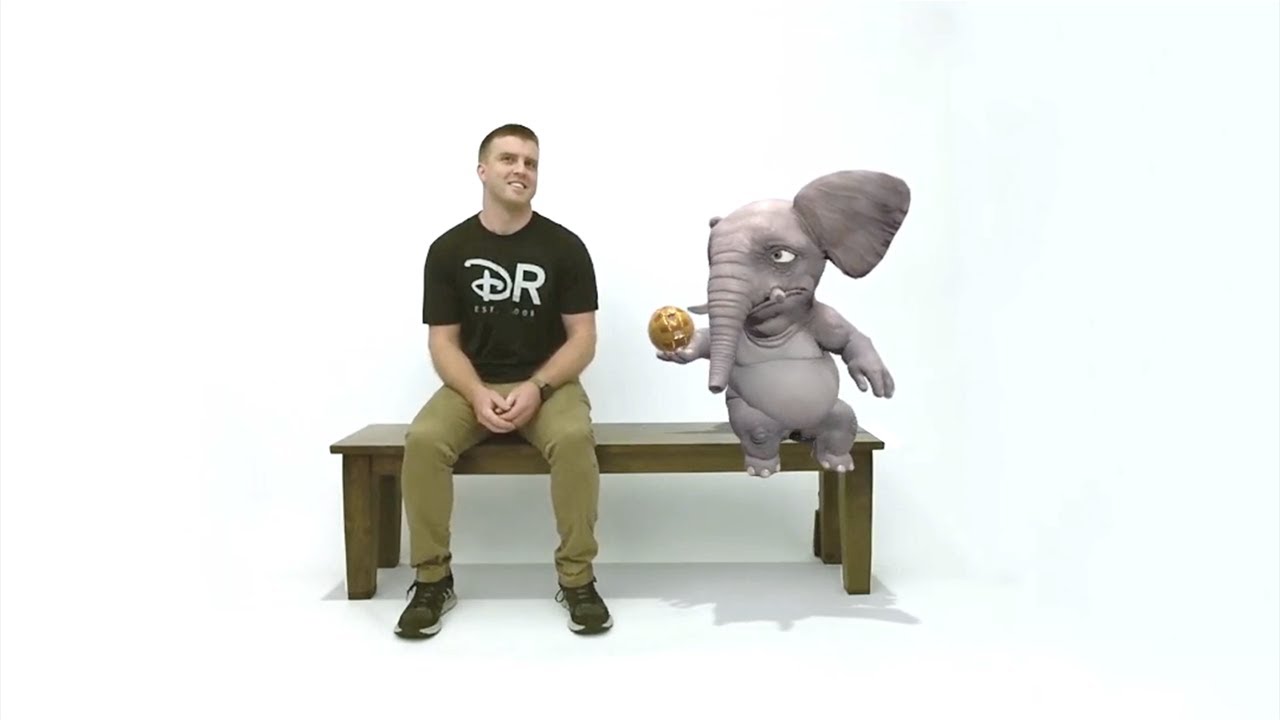
Disney Research’s Magic Bench is a mixed-reality technology that lets multiple users interact with animated characters, with out headsets or handheld devices.


Join ApplySci at Wearable Tech + Digital Health + NeuroTech Boston on September 19, 2017 at the MIT Media Lab – featuring  Joi Ito – Ed Boyden – Roz Picard – George Church – Nathan Intrator –  Tom Insel – John Rogers – Jamshid Ghajar – Phillip Alvelda – Michael Weintraub – Nancy Brown – Steve Kraus – Bill Geary – Mary Lou Jepsen – Daniela Rus

Registration rates increase Friday, August 4th.


ANNOUNCING WEARABLE TECH + DIGITAL HEALTH + NEUROTECH SILICON VALLEY – FEBRUARY 26 -27, 2018 @ STANFORD UNIVERSITY

Categories
Eyes

Fractal-shaped electrodes could improve retinal implants

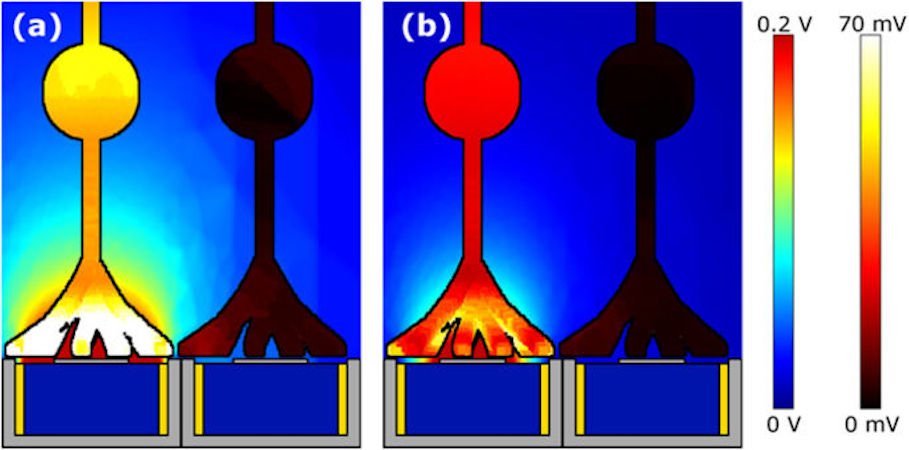
William Watterson and Richard Taylor an the  University of Oregon are in the early stages of developing fractal-shaped electrodes for use as retinal implants to restore sight.  They believe that the square shape of previous generations of electrodes prevented their success.  (86 per cent fail.) The fractal shape mimics the design of the neurons they interact with.

In simulations, the fractal design stimulated 90 per cent more neurons in the retina, while using less voltage than a traditional implant.

The team is working on shrinking the implants before they are tested on mice — therefore the possibility of human use is far off and not guaranteed — but the concept is promising.


Join ApplySci at Wearable Tech + Digital Health + NeuroTech Boston on September 19, 2017 at the MIT Media Lab – featuring  Joi Ito – Ed Boyden – Roz Picard – George Church – Nathan Intrator –  Tom Insel – John Rogers – Jamshid Ghajar – Phillip Alvelda – Michael Weintraub – Nancy Brown – Steve Kraus – Bill Geary – Mary Lou Jepsen – Daniela Rus

Registration rates increase Friday, July 28th.


ANNOUNCING WEARABLE TECH + DIGITAL HEALTH + NEUROTECH SILICON VALLEY – FEBRUARY 26 -27, 2018 @ STANFORD UNIVERSITY

Categories
Brain

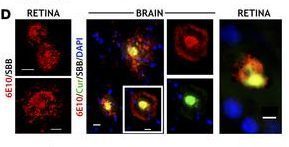
Alzheimer’s diagnosis disputed in up to 50% of PET study subjects

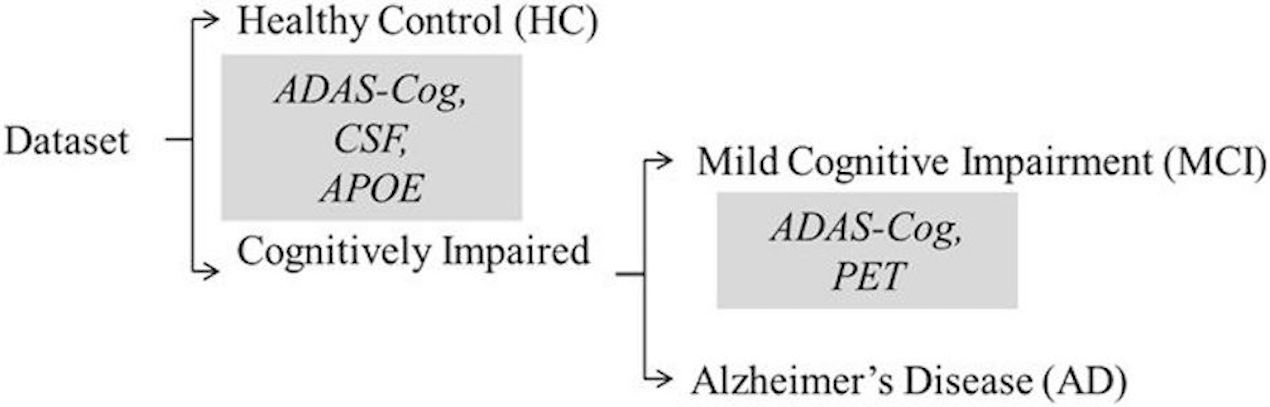
James Hendrix and Alzheimer’s Association colleagues are conducting a study to see how PET scans could change the nature of Alzheimer’s diagnosis and treatment.

4,000 of 18,000 subjects have been tested to date, with a stunning result showing that a significant portion of people with mild cognitive impairment or dementia who are taking medication for Alzheimer’s may not actually have the disease.

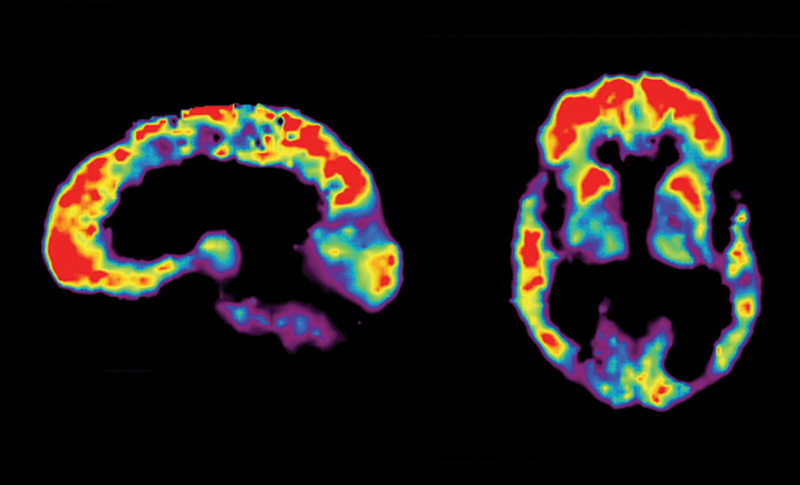
The PET scan determines if  MCI or dementia  patient brains contain the amyloid plaques that are one of the two hallmarks of Alzheimer’s disease. Among the 4,000 people tested, 54.3 percent of MCI patients and 70.5 percent of dementia patients had the plaques. A positive test for amyloid does not mean someone has Alzheimer’s disease, though their presence is thought to precede the disease and increase the risk of progression. A negative test means a person does not have the disease.

After seeing the PET imaging results, doctors changed their care plans for two-thirds of the patients in the study. According to Hendrix, “We thought we would be able to see about a 30 percent change, but we’re getting a 66 percent change, so it’s huge. We see high percentages of people who are on a drug and didn’t need to be on those drugs.”


Join ApplySci at Wearable Tech + Digital Health + NeuroTech Boston on September 19, 2017 at the MIT Media Lab – featuring  Joi Ito – Ed Boyden – Roz Picard – George Church – Nathan Intrator –  Tom Insel – John Rogers – Jamshid Ghajar – Phillip Alvelda – Michael Weintraub – Nancy Brown – Steve Kraus – Bill Geary – Mary Lou Jepsen – Daniela Rus

Registration rates increase Friday, July 28th.


ANNOUNCING WEARABLE TECH + DIGITAL HEALTH + NEUROTECH SILICON VALLEY – FEBRUARY 26 -27, 2018 @ STANFORD UNIVERSITY


Categories
Sensors

Sensor glove translates sign language, mimics gestures

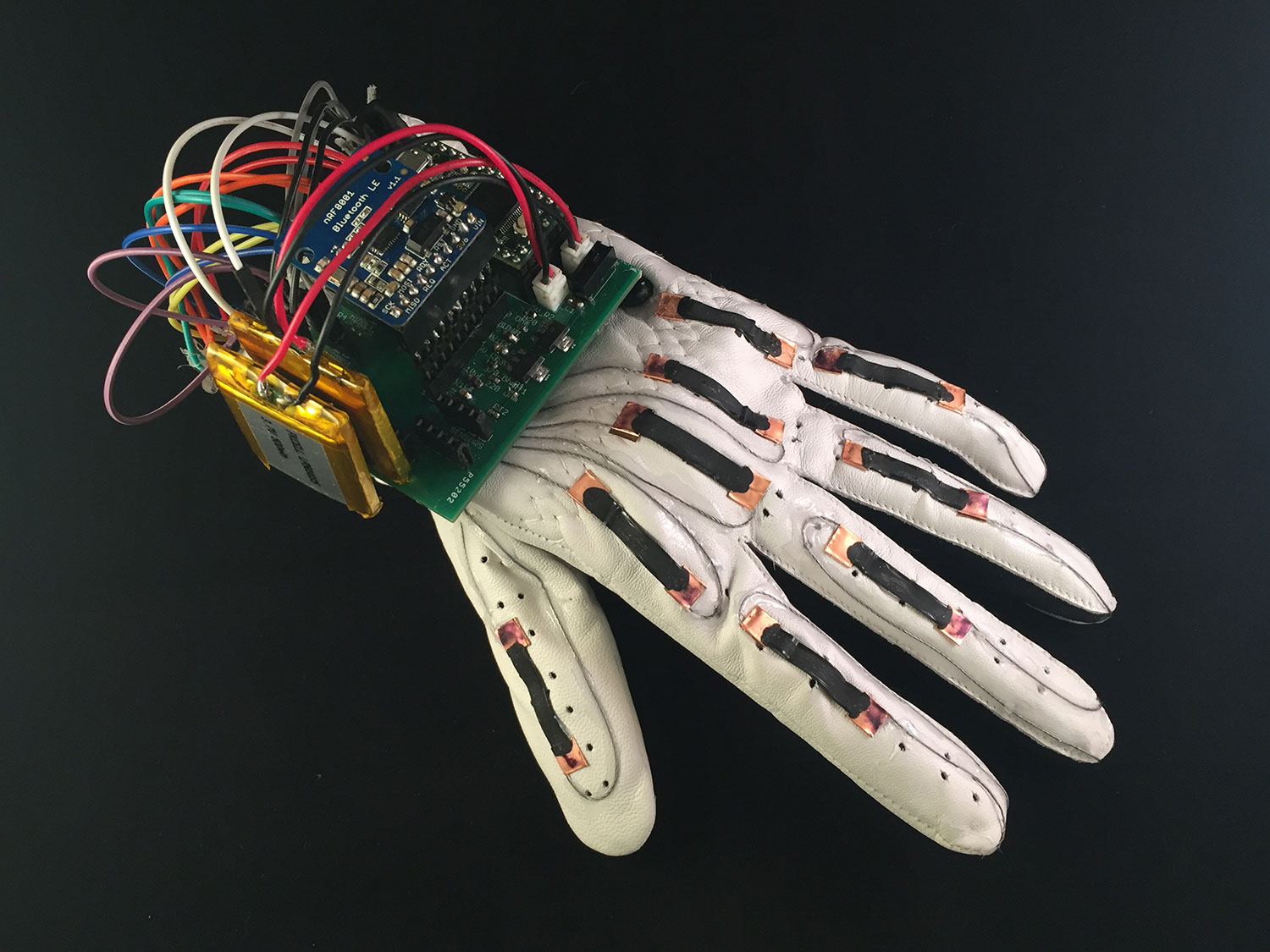
UCSD’s Timothy O’Connor and Darren Lipomi have developed  The Language of Glove — glove that wirelessly translates American Sign Language into text, and controls a virtual hand to mimic sign language gestures. It was built for less than $100 using stretchable and printable electronics.

Nine silicon-based polymer sensors, with a conductive carbon paint, were taped to the back and knuckles of a leather glove.  They  were secured with copper tape, and stainless steel thread connected them to a low power, custom-printed circuit board, at the back of the wrist.

The sensors changed their electrical resistance when stretched or bent. This allowed them to code different letters of the American Sign Language alphabet, based on the positions of all nine knuckles. The circuit board converted the  code into letters, and transmitted the signals via Bluetooth to a  phone or computer.

The team is investigating other uses for the glove, including VR, AR, telesurgery, technical training, and defense. The next version  is intended to have a sense of touch.


Join ApplySci at Wearable Tech + Digital Health + NeuroTech Boston on September 19, 2017 at the MIT Media Lab – featuring  Joi Ito – Ed Boyden – Roz Picard – George Church – Nathan Intrator –  Tom Insel – John Rogers – Jamshid Ghajar – Phillip Alvelda – Michael Weintraub – Nancy Brown – Steve Kraus – Bill Geary – Mary Lou Jepsen – Daniela Rus

Registration rates increase Friday, July 28th.


ANNOUNCING WEARABLE TECH + DIGITAL HEALTH + NEUROTECH SILICON VALLEY – FEBRUARY 26 -27, 2018 @ STANFORD UNIVERSITY

Categories
Brain

AI used to study brain blood flow ties to Schizophrenia

Mina Gheiratmand,  Serdar Dursun, and University of Alberta colleagues used IBM AI tools to try to  identify schizophrenic traits based on a person’s brain blood flow.

95 participant  fMRI images of schizophrenia-diagnosed and healthy patient brains were analyzed.  The researchers claimed to accurately diagnose patients, based on blood flow, 74% of the time. They also claimed to be able to measure the severity of symptoms.

A much larger sample size will be required to determine the validity of this approach to understanding a disease that so little is known about.  ApplySci applauds this perhaps promising attempt.

Categories
Sensors

Sensor detects asthma, cancer, diabetes in breath

KAIST professor Il-doo Kim 김일두 has developed a sensor that can diagnose diseases by measuring the concentration change of the specific gases in the breath, with out blood or imaging tests. Animal protein is used as a catalyst.  The researchers claim that detection can be done at the time of disease metabolism, enabling early diagnosis.

Hydrogen, acetone, toluene, ammonia, hydrogen sulfide, nitrogen monoxide, and moisture are biomarker gases are emitted at high concentrations in patients with  diseases such as asthma, lung cancer, and Type 1 diabetes.  The 16 sensor array system recognizes human fingerprints and individual breathing patterns associated  with each condition.

Technion professor Hossam Haick has been studying non-invasive breath-based detection of disease, including cancer, since 2007, and his Na-Nose technology was commercialized in 2013.

Click to view Il-Doo Kim discussing breath-based disease detection.

Click to view Hossam Haick discussing breath-based disease detection.


Join ApplySci at Wearable Tech + Digital Health + NeuroTech Boston on September 19, 2017 at the MIT Media Lab – featuring  Joi Ito – Ed Boyden – Roz Picard – George Church – Nathan Intrator –  Tom Insel – John Rogers – Jamshid Ghajar – Phillip Alvelda – Michael Weintraub – Nancy Brown – Steve Kraus – Bill Geary – Mary Lou Jepsen – Daniela Rus

Registration rates increase Friday, July 21st

Categories
Sensors Wearables

Hypoallergenic, continuous, week-long health wearable

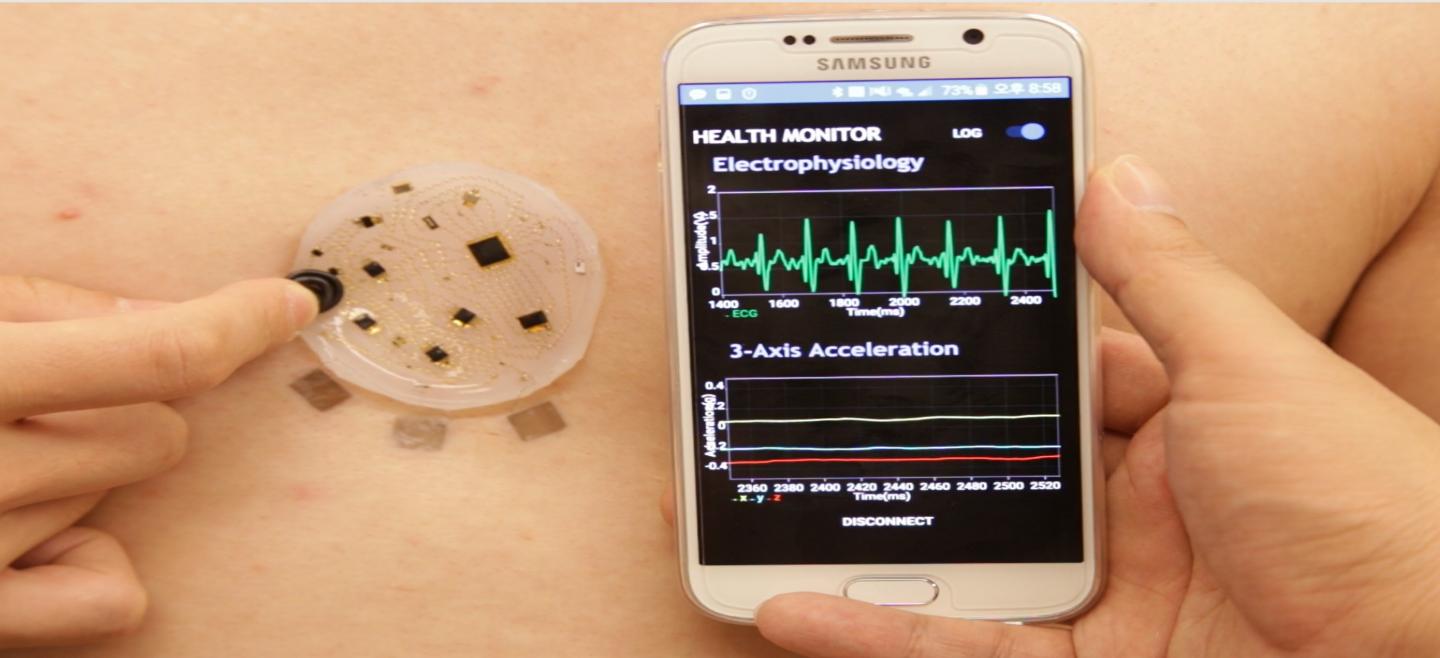
University of Tokyo professor Takao Someya has developed a hypoallergenic, adhesive, continuous health sensor. The device can be worn comfortably for a week because of its nanoscal mesh elastic electrodes.  This allows the skin to breathe, preventing inflammation.

The electrodes contains a  biologically compatible,  water-soluble polymer, polyvinyl alcohol, and a gold layer. The wearable  is applied by spraying a tiny amount of water, which dissolves the PVA nanofibers, and allows it to stick easily to the skin. It conforms to curvilinear surfaces of human skin, such as sweat pores and the ridges of an index finger’s fingerprint pattern.

A study of 20 subjects wearing the device showed that  electrical activity of muscles were comparable to those obtained through conventional gel electrodes.  There was no inflammation after one week, and repeated bending and stretching did not cause damage, making this a potentially disruptive method to monitor health and performance.


Join ApplySci at Wearable Tech + Digital Health + NeuroTech Boston on September 19, 2017 at the MIT Media Lab – featuring  Joi Ito – Ed Boyden – Roz Picard – George Church – Nathan Intrator –  Tom Insel – John Rogers – Jamshid Ghajar – Phillip Alvelda – Michael Weintraub – Nancy Brown – Steve Kraus – Bill Geary – Mary Lou Jepsen – Daniela Rus

Registration rates increase Friday, July 21st

Categories
BCI Brain Ears Eyes

Direct brain path for sight, sound via implanted microscope

Rice University’s Jacob Robinson, with Yale and Columbia colleagues, are developing FlatScope — a flat, brain implanted microscope that monitors and triggers neurons which are modified to be fluorescent when active.

While capturing greater detail than current brain probes, the microscope also goes through deep levels that illustrate  sensory input processing — which they hope to be able to control.

Aiming to produce a super high-resolution neural interface, FlatScope is a part of  DARPA’s NESD program, founded by Phillip Alvelda, and now led by Brad Ringeisen.


Phillip Alvelda will be a featured speaker at ApplySci’s Wearable Tech + Digital Health + NeuroTech Boston conference on September 19, 2017 at the MIT Media Lab.  Other speakers include:  Joi Ito – Ed Boyden – Roz Picard – George Church – Nathan Intrator –  Tom Insel – John Rogers – Jamshid Ghajar  – Michael Weintraub – Nancy Brown – Steve Kraus – Bill Geary – Mary Lou Jepsen – Daniela Rus

Registration rates increase Friday, July 21st