Categories
Sensors

Radar monitor uses appliances to track health wirelessly

Toru Sato and Kyoto University and Panasonic colleagues have refined a wireless, radar-based  vital measuring device they developed last year.

The original sensor combined a radar with signal analysis algorithms to measure how the body moves as the heart beats. Software filters isolated the heart’s minute motions while the body moved.  However it was extremely large.

The team has now integrated:

  •  A wider 79-GHz frequency band
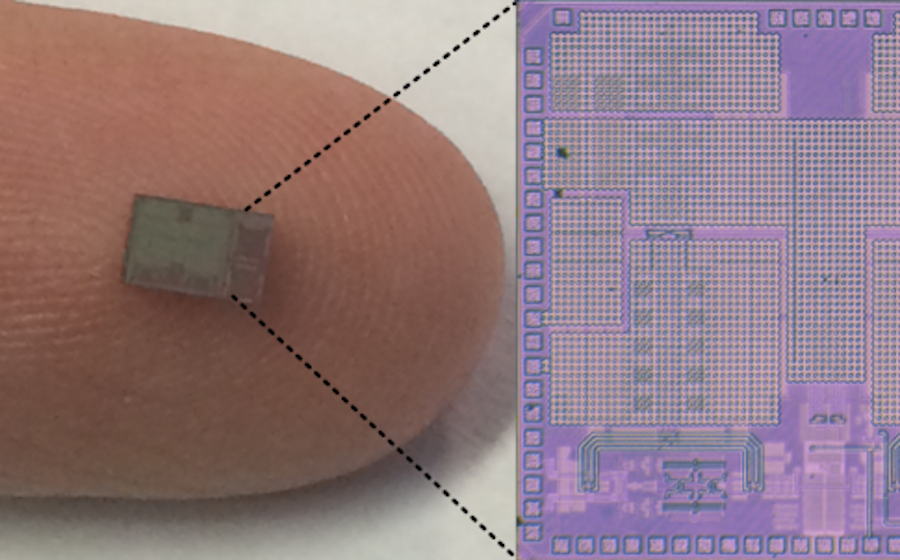
  • Improved measurement sensitivity by integrating CMOS semiconductors into a single chip for millimeter-wave radar
  • Increased sensitivity with finer resolution in the distance direction of the measurement range
  • Precise separation of the noise that would otherwise affect the estimation accuracy of the heartbeat interval in order to simultaneously measure the heartbeat intervals of several people with a single radar

The device is now 1/10 of its predecessor’s size.

The goal is to seamlessly integrate health sensors in household appliances, such as lighting, to safely, accurately, and unobtrusively monitor residents.

Click to view Panasonic video


Join ApplySci at Wearable Tech + Digital Health + Neurotech Silicon Valley on February 26-27, 2018 at Stanford University, featuring:  Vinod KhoslaJustin SanchezBrian OtisBryan JohnsonZhenan BaoNathan IntratorCarla PughJamshid Ghajar – Mark Kendall
Categories
Brain Consciousness

Implanted vagus nerve stimulator partially reverses vegetative state

A person described as being in a vegetative state for 15 years showed partial signs of consciousness after a vagus nerve stimulator was implanted.  University de Lyon’s Angele Sirigu led the research. This challenges the belief that those unconscious for more than 12 months could not be revived.   It also poses a potential challenge to the vegetative diagnosis, and diagnosis in disorders of consciousness generally.

After one month of VNS, the patient’s attention, movements, and brain activity significantly improved, and he began responding to simple orders that were impossible before.

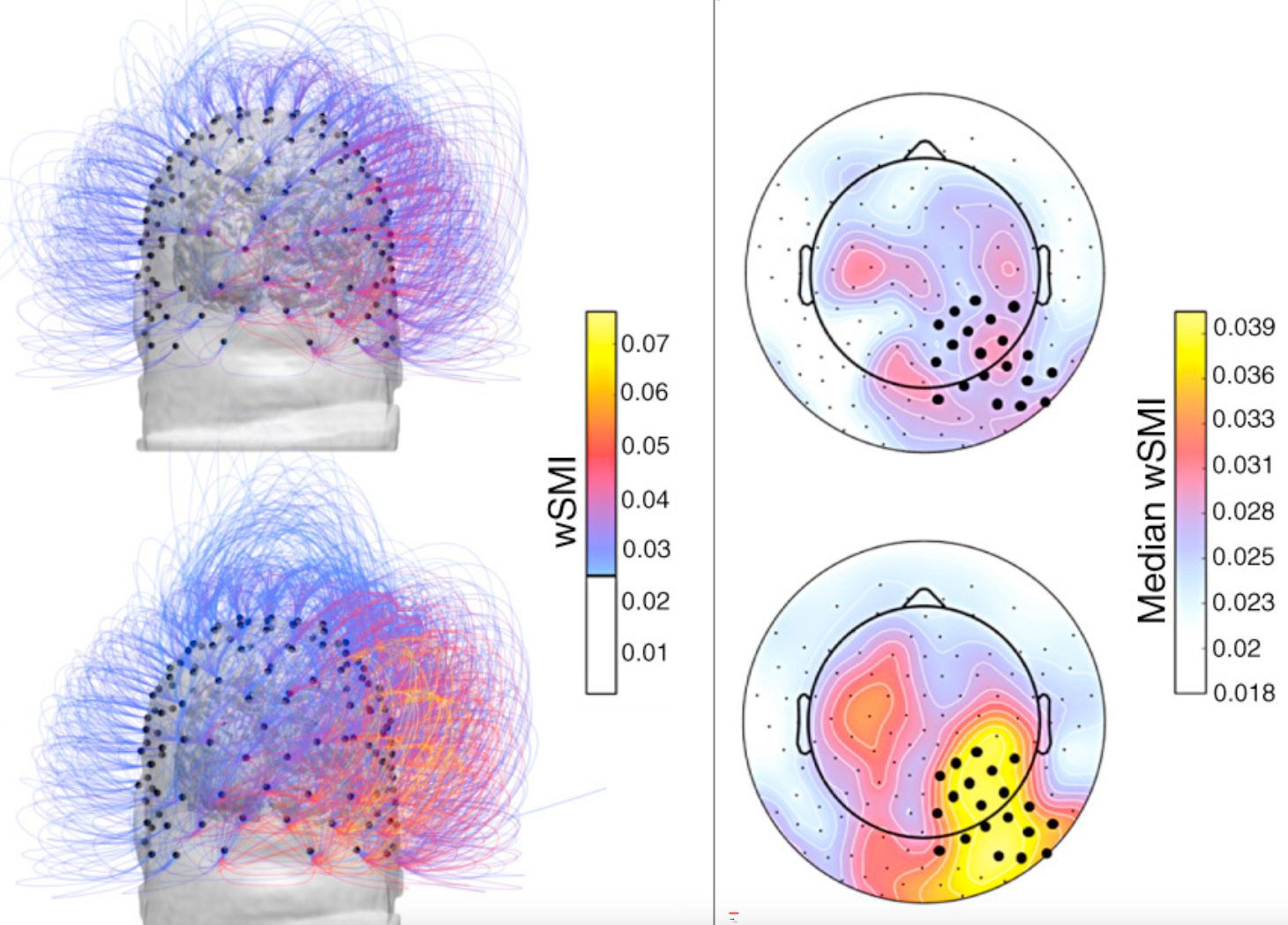
Brain-activity recordings revealed major changes. A theta EEG signal (to distinguish between a vegetative and minimally conscious state) increased significantly in those areas of the brain involved in movement, sensation, and awareness. The brain’s functional connectivity also increased. A PET scan showed increases in metabolic activity in both cortical and subcortical regions of the brain.

The team is now planning a large  study to confirm and extend the therapeutic potential of VNS for patients in a vegetative or minimally conscious state.


Join ApplySci at Wearable Tech + Digital Health + Neurotech Silicon Valley on February 26-27, 2018 at Stanford University, featuring:  Vinod KhoslaJustin SanchezBrian OtisBryan JohnsonZhenan BaoNathan IntratorCarla PughMark Kendall

Categories
Heart

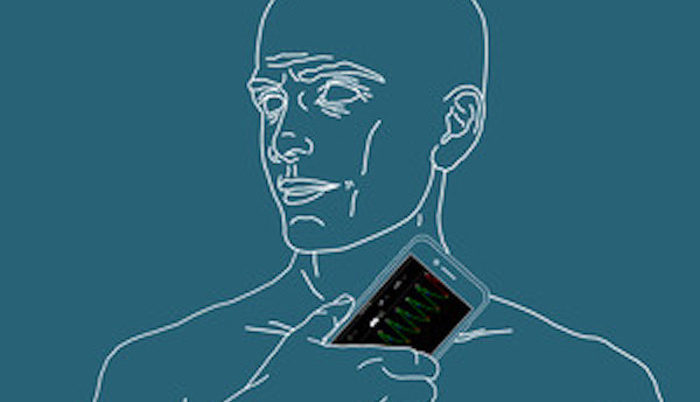
App uses phone’s camera to monitor heart health

Categories
Assistive Technologies

Exoskeleton builds muscle capacity, improves posture in cerebral palsy

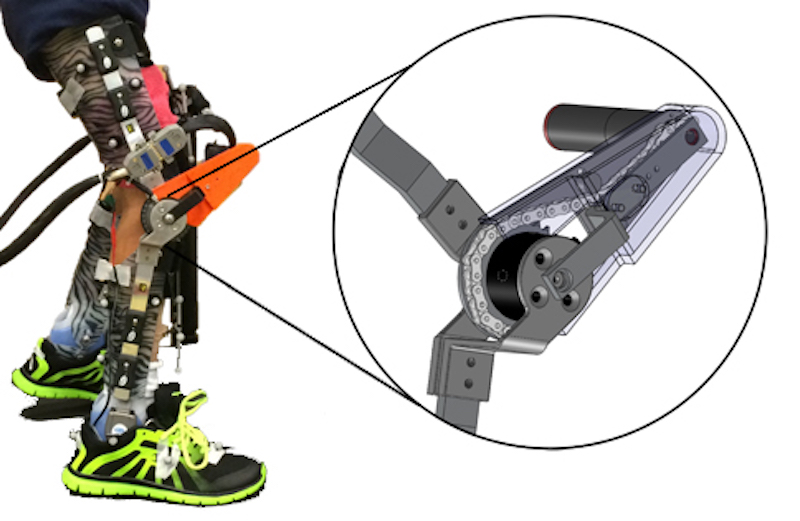
Thomas Bulea and NIH colleagues have developed a robotic exoskeleton for children with cerebral palsy.

“Crouch gait,” where a person walks with a perpetual bend in their knees, is a hallmark of the disease. This damages muscles and joints and  results in  paralysis for half of cerebral palsy patients.

Bulea believes that increasing the amount and intensity of gait training  is key to successful outcomes.  The exoskeleton  is  meant to strengthen  muscles when children are learning to walk,  instead of treating the problem when its already progressed into adulthood.

7 study participants  were able to walk with the exoskeleton ,without the help of other  devices, and without relying on the robot entirely.  Their muscle capacity and posture improved.

According to Bulea: “We do a lot of things early on that weaken their muscles — cut their tendons, inject them,” she said. “We’re trying to come up with solutions that are win-win. … Training them to stay more upright that will keep them walking longer, that’s our pie-in-the-sky goal.”

The next step is to make the system lighter,  and independent of a grounded power source, so that it could be used at home


Join ApplySci at Wearable Tech + Digital Health + NeuroTech Boston on September 19, 2017 at the MIT Media Lab – featuring  Joi Ito – Ed Boyden – Roz Picard – George Church – Nathan Intrator –  Tom Insel – John Rogers – Jamshid Ghajar – Riccardo Sabatini – Phillip Alvelda – Michael Weintraub – Nancy Brown – Steve Kraus – Bill Geary – Mary Lou Jepsen


ANNOUNCING WEARABLE TECH + DIGITAL HEALTH + NEUROTECH SILICON VALLEY – FEBRUARY 26 -27, 2018 @ STANFORD UNIVERSITY –  FEATURING:  ZHENAN BAO – JUSTIN SANCHEZ – BRYAN JOHNSON – NATHAN INTRATOR – VINOD KHOSLA

Categories
Diabetes Sensors

Patch monitors diabetes compounds in sweat for 1 week

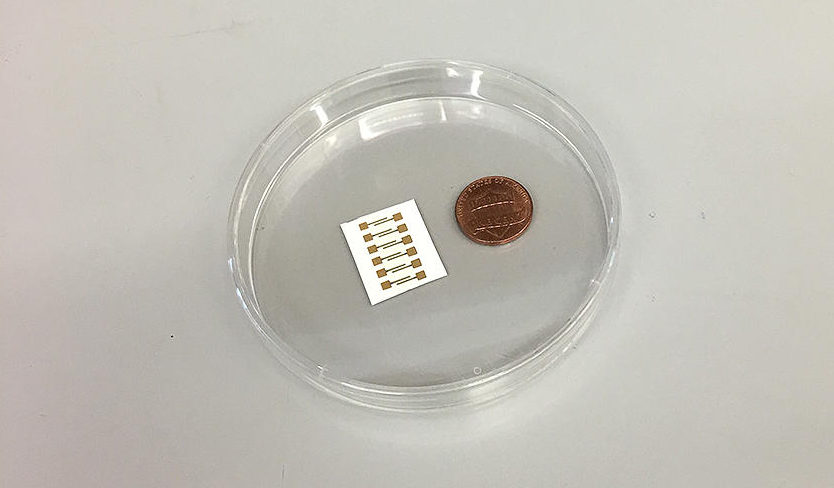
University of Texas professor Shalini Prasad has developed an adhesive sensor that measures diabetes-associated compounds in small amounts of sweat.

Blood glucose levels, cortisol and interleukin-6 are detected in perspiration for one week with full signal integrity.  The device uses ambient sweat, created by the body with out stimulation.

The sensor can be placed anywhere on the skin and takes customized readings up to once an hour.  Data is sent to a user’s phone.

Prasad estimates that the sensors would cost 7 cents each if produced in bulk, making the technology truly accessible.


Join ApplySci at Wearable Tech + Digital Health + NeuroTech Boston on September 19, 2017 at the MIT Media Lab – featuring  Joi Ito – Ed Boyden – Roz Picard – George Church – Nathan Intrator –  Tom Insel – John Rogers – Jamshid Ghajar – Riccardo Sabatini – Phillip Alvelda – Michael Weintraub – Nancy Brown – Steve Kraus – Bill Geary – Mary Lou Jepsen


ANNOUNCING WEARABLE TECH + DIGITAL HEALTH + NEUROTECH SILICON VALLEY – FEBRUARY 26 -27, 2018 @ STANFORD UNIVERSITY –  FEATURING:  ZHENAN BAO – JUSTIN SANCHEZ – BRYAN JOHNSON – NATHAN INTRATOR – VINOD KHOSLA


Categories
Apps Brain

Phone camera + machine learning detect concussion

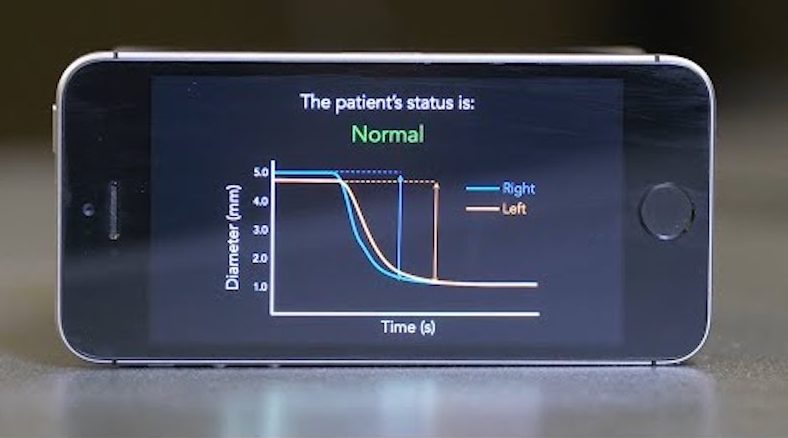
Shwetak Patel and UW colleagues have developed PupilScreen, an app that uses a phone’s camera to detect concussion from the pupil.

The phone’s video camera and flash check the eye for its pupillary light reflex, measures size changes associated with concussion.  Machine learning algorithms confirm the diagnosis.

Hospitals typically use a pen light to check for concussions, which is much less accurate than a pupillometer.

PupilScreen was tested on  48 healthy and tbi patients. The team reported that it “diagnosed brain injuries with almost perfect accuracy using the app’s output alone.”

Click to view University of Washington video


Stanford professor Jamshid Ghajar will discuss the rapid concussion detection and treatment platform SyncThink at ApplySci’s Wearable Tech + Digital Health + Neurotech Boston conference, on September 19th at the MIT Media Lab.


Join ApplySci at Wearable Tech + Digital Health + NeuroTech Boston on September 19, 2017 at the MIT Media Lab – featuring  Joi Ito – Ed Boyden – Roz Picard – George Church – Nathan Intrator –  Tom Insel – John Rogers – Jamshid Ghajar – Riccardo Sabatini – Phillip Alvelda – Michael Weintraub – Nancy Brown – Steve Kraus – Bill Geary – Mary Lou Jepsen


ANNOUNCING WEARABLE TECH + DIGITAL HEALTH + NEUROTECH SILICON VALLEY – FEBRUARY 26 -27, 2018 @ STANFORD UNIVERSITY –  FEATURING:  ZHENAN BAO – JUSTIN SANCHEZ – BRYAN JOHNSON – NATHAN INTRATOR – VINOD KHOSLA

Categories
AI Brain

Detecting dementia with automated speech analysis

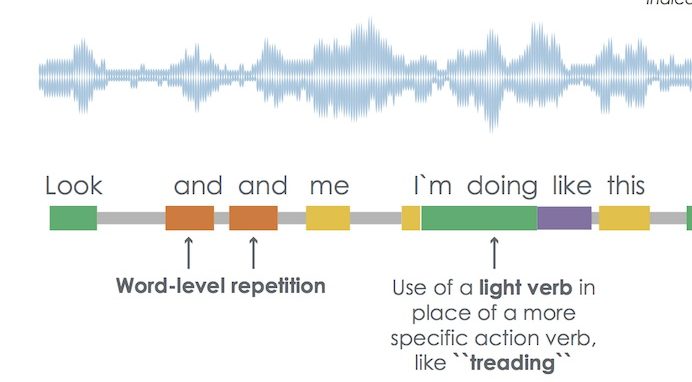
WinterLight Labs is developing speech analyzing algorithms to detect and monitor dementia and aphasia.  A one minute speech sample is used to determine the lexical diversity, syntactic complexity, semantic content, and articulation associated with these conditions.

Clinicians currently conduct similar tests by interviewing patients and writing their impressions on paper.

The company believes that their automated system could inform clinical trials, medical care, and speech training.

If the platform could be used with mobile phones, the potential for widespread early detection is obvious.  Unfortunately, detection, even early detection, does not at this point translate into a cure.  ApplySci looks forward to the day when advanced neurodegenerative disease monitoring will be used to track progress toward healthy brain functioning.


Join ApplySci at Wearable Tech + Digital Health + NeuroTech Boston on September 19, 2017 at the MIT Media Lab – featuring  Joi Ito – Ed Boyden – Roz Picard – George Church – Nathan Intrator –  Tom Insel – John Rogers – Jamshid Ghajar – Riccardo Sabatini – Phillip Alvelda – Michael Weintraub – Nancy Brown – Steve Kraus – Bill Geary – Mary Lou Jepsen


ANNOUNCING WEARABLE TECH + DIGITAL HEALTH + NEUROTECH SILICON VALLEY – FEBRUARY 26 -27, 2018 @ STANFORD UNIVERSITY –  FEATURING:  ZHENAN BAO – JUSTIN SANCHEZ – BRYAN JOHNSON – NATHAN INTRATOR – VINOD KHOSLA

Categories
Brain

Robotic, in-vivo neuron recording

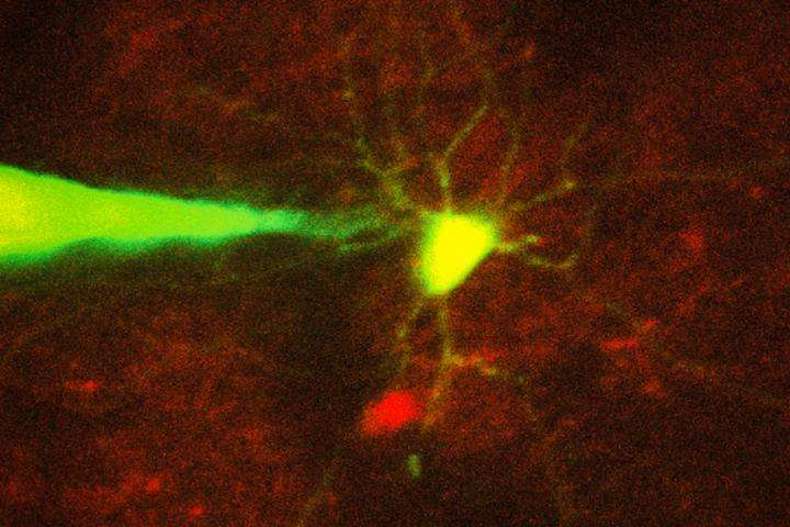
Ed Boyden and MIT colleagues have developed a robotic system capable of monitoring specific neurons.

An algorithm based on multiple image processing methods analyzes microscope images and guides a robotic arm to within 25 microns of a target cell. The system then relies on both imagery and impedance, which more accurately detects contact between the pipette and the target cell than either signal alone. Two-photon microscopy sends infrared light into the brain, lighting up cells that have been engineered to express a fluorescent protein. This enables the targeting of and recording from interneurons and excitatory neurons. With an approximate 20 per cent success rate, the robotic system performs similarly to scientists who perform the process manually.

Studying how single neurons  interact with other cells for cognition, sensory perception, and other brain functions could tell us how neural circuits are affected by disorders such as autism, Alzheimer’s and schizophrenia.

See autopatcher.org for additional details.

Professor Boyden will discuss his research at Wearable Tech + Digital Health + Neurotech Boston, on September 19th at the MIT Media Lab.


Join ApplySci at Wearable Tech + Digital Health + NeuroTech Boston on September 19, 2017 at the MIT Media Lab – featuring  Joi Ito – Ed Boyden – Roz Picard – George Church – Nathan Intrator –  Tom Insel – John Rogers – Jamshid Ghajar – Phillip Alvelda – Michael Weintraub – Nancy Brown – Steve Kraus – Bill Geary – Mary Lou Jepsen

Registration rates increase Friday, September 1st.


ANNOUNCING WEARABLE TECH + DIGITAL HEALTH + NEUROTECH SILICON VALLEY – FEBRUARY 26 -27, 2018 @ STANFORD UNIVERSITY –  FEATURING:  ZHENAN BAO – JUSTIN SANCHEZ – BRYAN JOHNSON – NATHAN INTRATOR – VINOD KHOSLA

Categories
Brain

Google incorporates depression screening in search

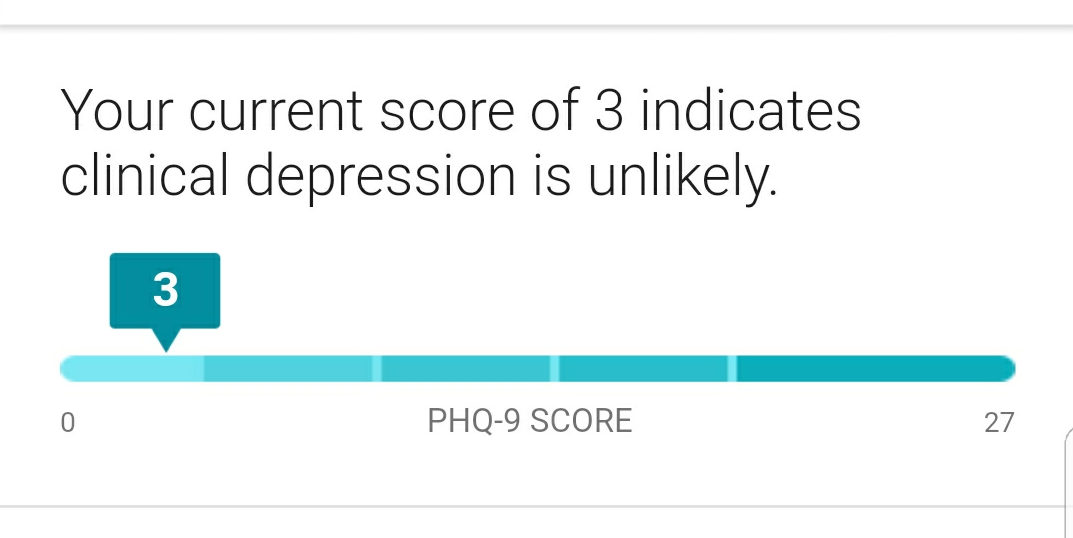
Google has introduced a new depression screening feature.  When the word “depression” is used in search, mobile users are offered a PHQ-9 questionnaire, which recognizes symptoms. A “Knowledge Panel” containing information and potential treatments appears on top of the page.

The goal is self awareness, and encouragement to seek help when needed.

Another company dedicated to improving brain health through mobile technology is Mindstrong Health.  The startup is developing clinically validated, phone-based mental illness screening, monitoring and treatment methods.  Co-founder Tom Insel will discuss their work at ApplySci’s upcoming Wearable Tech + Digital Health + Neurotech conference, on September 19th at the MIT Media Lab.


Join ApplySci at Wearable Tech + Digital Health + NeuroTech Boston on September 19, 2017 at the MIT Media Lab – featuring  Joi Ito – Ed Boyden – Roz Picard – George Church – Nathan Intrator –  Tom Insel – John Rogers – Jamshid Ghajar – Phillip Alvelda – Michael Weintraub – Nancy Brown – Steve Kraus – Bill Geary – Mary Lou Jepsen

Registration rates increase Friday, August 25th.


ANNOUNCING WEARABLE TECH + DIGITAL HEALTH + NEUROTECH SILICON VALLEY – FEBRUARY 26 -27, 2018 @ STANFORD UNIVERSITY –  FEATURING:  ZHENAN BAO – JUSTIN SANCHEZ – BRYAN JOHNSON – NATHAN INTRATOR – VINOD KHOSLA

Categories
Sensors Wearables

Small, adhesive, wireless patch collects, transmits, extensive health data

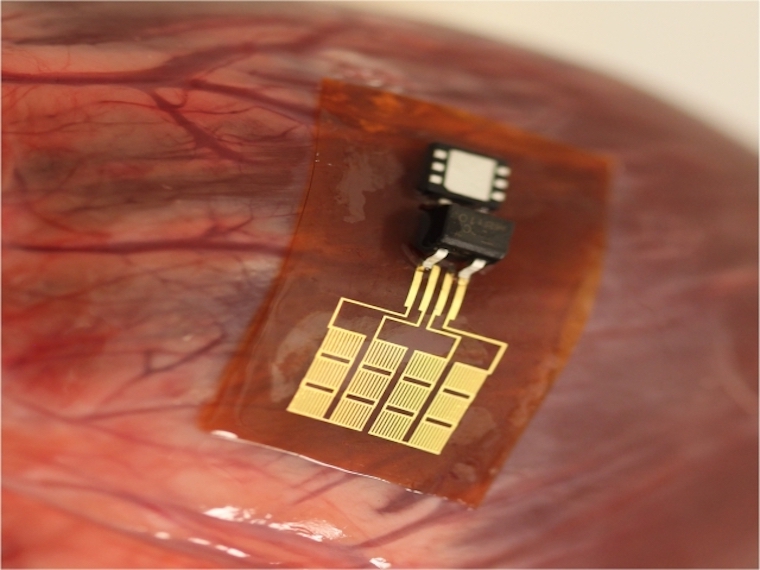
Northwestern’s John Rogers and Kyung-In Jang of the Daegu Gyeongbuk Institute of Science and Technology have developed a small, adhesive, flexible silicone patch capable of monitoring multiple health parameters.

The soft, body-conforming wearable contains 50 components connected by  250  3-D wire coils embedded in protective silicone.  It collects and wirelessly transmits data about movement, respiration, and  electrical activity in the heart, muscles, eyes and brain.

Jang believes that the biosensors could be devloped into a closed loop medical system using big data and AI, and thereby facilitate quality remote healthcare. The team is also exploring the use of the patch in robotics and self-driving cars.

Professor Rogers will present his research at ApplySci’s upcoming Wearable Tech + Digital Health + Neurotech conference, on September 19th at the MIT Media Lab.


Join ApplySci at Wearable Tech + Digital Health + NeuroTech Boston on September 19, 2017 at the MIT Media Lab – featuring  Joi Ito – Ed Boyden – Roz Picard – George Church – Nathan Intrator –  Tom Insel – John Rogers – Jamshid Ghajar – Phillip Alvelda – Michael Weintraub – Nancy Brown – Steve Kraus – Bill Geary – Mary Lou Jepsen

Registration rates increase Friday, August 25th.


ANNOUNCING WEARABLE TECH + DIGITAL HEALTH + NEUROTECH SILICON VALLEY – FEBRUARY 26 -27, 2018 @ STANFORD UNIVERSITY –  FEATURING:  ZHENAN BAO – JUSTIN SANCHEZ – BRYAN JOHNSON – NATHAN INTRATOR – VINOD KHOSLA

Categories
Brain

Retina scan + curcumin for early Alzheimer’s detection

In a recent study, Maya Koronyo-Hamaoui and Keith Black at Cedars-Sinai  used a retina scan to detect amyloid-beta deposits, a predictor of Alzheimer’s disease, up to 20 years before symptoms.

16 Alzheimer’s patients drank a curcumin solution, which caused amyloid plaque in the retina to “light up” and be detected. Another key finding was the discovery of amyloid plaques in peripheral regions of the retina, which correlated with plaque amount in specific areas of the brain.

Keith Black presented this research at ApplySci’s April, 2016 Wearable Tech + Digital Health + Neurotech conference in San Francisco.  His dedication to finding non-invasive, more humane tests and treatments for brain diseases was apparent throughout his talk.  May his vision of  early detection, leading to early medical and lifestyle changes to impact the course of the disease, be widely adopted.


Join ApplySci at Wearable Tech + Digital Health + NeuroTech Boston on September 19, 2017 at the MIT Media Lab – featuring  Joi Ito – Ed Boyden – Roz Picard – George Church – Nathan Intrator –  Tom Insel – John Rogers – Jamshid Ghajar – Phillip Alvelda – Michael Weintraub – Nancy Brown – Steve Kraus – Bill Geary – Mary Lou Jepsen

Registration rates increase Friday, August 25th.


ANNOUNCING WEARABLE TECH + DIGITAL HEALTH + NEUROTECH SILICON VALLEY – FEBRUARY 26 -27, 2018 @ STANFORD UNIVERSITY

Categories
Brain Machine Learning

Machine learning for early Alzheimer’s diagnosis

Anant Madabhushi and Case Western colleagues have used machine learning to diagnose Alzheimer’s disease via imaging data in a small study.  The goal is early intervention, which could potentially extend independence.

149 patients were analyzed using a Cascaded Multi-view Canonical Correlation (CaMCCo) algorithm, which integrates MRI scans, features of the hippocampus, glucose metabolism rates in the brain, proteomics, genomics, and MCI.

Parameters that distinguish between healthy and unhealthy subjects were selected first. The algorithm then selected, from the unhealthy variables, those that best distinguish who has mild cognitive impairment and who has Alzheimer’s disease.

This is an admirable attempt to diagnose a disease which currently has no cure.  ApplySci hopes that we will soon be able to combine early detection with a truly effective treatment.  Millions around the world are waiting.


Join ApplySci at Wearable Tech + Digital Health + NeuroTech Boston on September 19, 2017 at the MIT Media Lab – featuring  Joi Ito – Ed Boyden – Roz Picard – George Church – Nathan Intrator –  Tom Insel – John Rogers – Jamshid Ghajar – Phillip Alvelda – Michael Weintraub – Nancy Brown – Steve Kraus – Bill Geary – Mary Lou Jepsen

Registration rates increase Friday, August 18th.


ANNOUNCING WEARABLE TECH + DIGITAL HEALTH + NEUROTECH SILICON VALLEY – FEBRUARY 26 -27, 2018 @ STANFORD UNIVERSITY