Categories
Aging Brain

Study: Molecular mechanism of accelerated cognitive decline in women with Alzheimer’s

Hermona Soreq, Yonatan Loewenstein, and Hebrew University of Jerusalem colleagues have uncovered a sex-specific molecular mechanism leading to accelerated cognitive decline in women with Alzheimer’s disease.

Current therapeutic protocols are based on structural changes in the brain and aim to delay symptom progression. Women typically experience more severe side effects from these drugs.

This research shows that severe depletion of mitochondrial RNA fragments inherited from the mother, in the affected brain nuclei, correlates with the rapid deterioration of cognitive abilities in women with living Alzheimer’s.

Soreq explained: “Our research presents a significant contribution to the existing body of Alzheimer’s research by uncovering new insights into the factors driving accelerated cognitive decline in women, underscoring crucial distinctions not only in disease progression but also in treatment response.  Moreover, these findings have implications for treating these symptoms by RNA-based therapies, which emerged in recent years, and now present a viable option.”

Categories
Brain Pharmaceuticals

Donanemab slowed memory decline by 35%, disease progression by 39%, in Alzheimer’s trial

Patients who received Eli Lily’s monthly donanemab infusion in an 18-month study demonstrated a 35% slower decline in memory, thinking, and ability to perform activities of daily living, and were 39% less likely to progress to the next stage of the disease. Brain plaque was also reduced significantly.

The risk of the drug is brain swelling and bleeding. Three trial participants died from these complications.

Lilly CSO/CMO Daniel Skovronsky said donanemab demonstrated the highest level of efficacy of any Alzheimer’s treatment in a clinical trial.

The company plans to apply for FDA approval in the coming months.

Categories
Brain

Amyloid beta oligomer blood test could predict Alzheimer’s disease several years in advance

University of Washington’s Valerie Daggett, Dylan Shea, and colleagues, have developed a lab test that can measure levels of amyloid beta oligomers in blood samples. Known as SOBA, the test detected, in a study of 310 subjects, oligomers in the blood of Alzheimer’s patients, but not in most of the control group, which had no cognitive impairment at the time of sample.

SOBA detected oligomers in the blood of 11 individuals from the control group. 10 were diagnosed, years later, with mild cognitive impairment or brain pathology consistent with Alzheimer’s disease. The exam record of the 11th member of the control group was not available.

SOBA (soluble oligomer binding assay) exploits a unique property of the toxic oligomers. When misfolded amyloid beta proteins begin to clump into oligomers, they form a structure known as an alpha sheet. At the heart of SOBA is a synthetic alpha sheet that can bind to oligomers in samples of cerebrospinal fluid or blood. The test then uses standard methods to confirm that the oligomers attached to the test surface are made up of amyloid beta proteins.

UW spinout company AltPep is working to develop SOBA into a diagnostic test for oligomers. In the study, the team also showed that SOBA easily could be modified to detect toxic oligomers of proteins associated with Parkinson’s disease and Lewy body dementia.

Categories
Brain

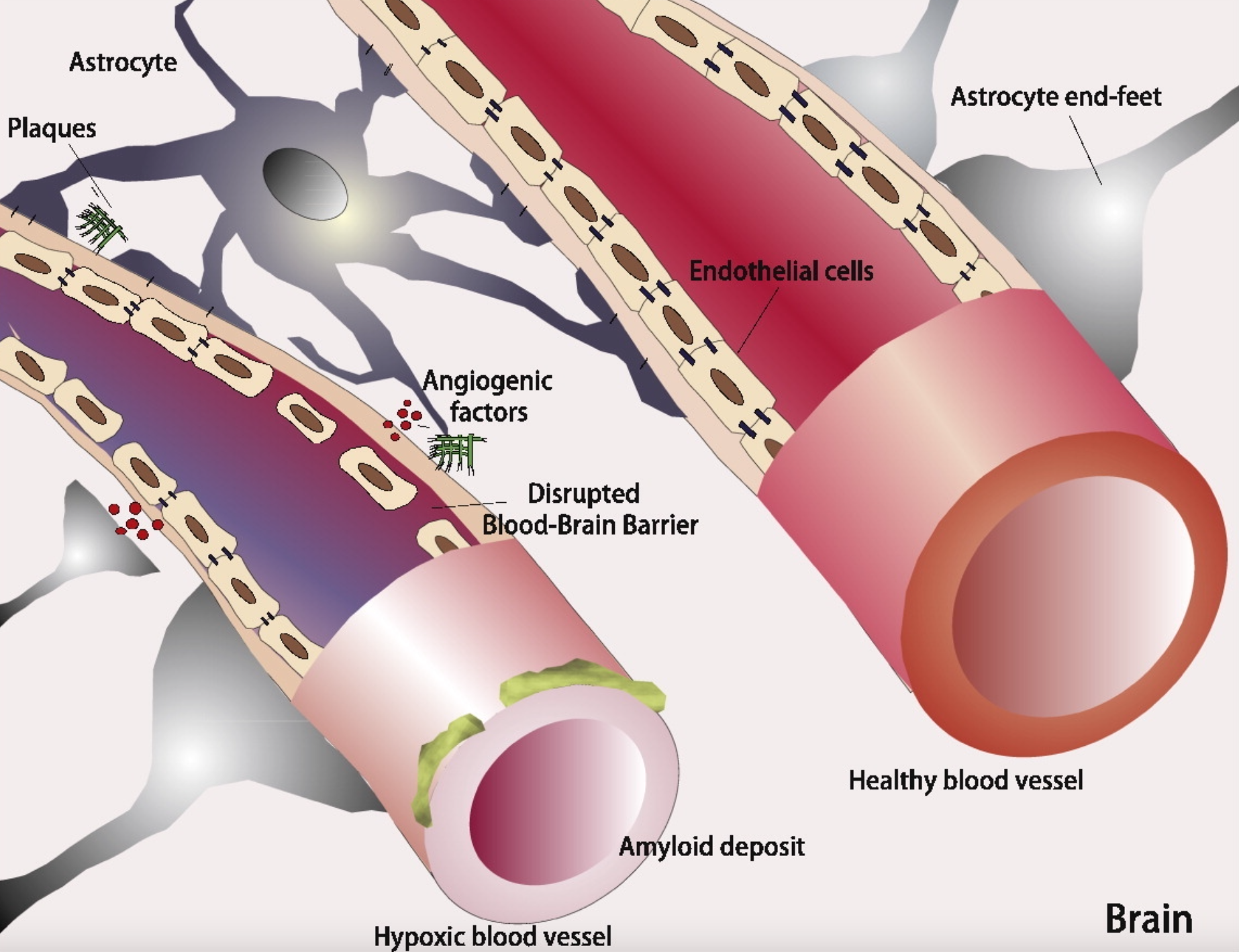
Univ. of Reading study links Alzheimer’s disease to blood brain barrier damage

The “Lipid Invasion Model” argues that lipids entering the brain due to blood brain barrier damage is the determining cause of the Alzheimer’s Disease. The presence of excess lipids in the brain cells of Alzheimer’s patients is an element of Alois Alzheimer’s 1906 research, but little has been published about this connection since.

The hypothesis, published in the Journal of Alzheimer’s Disease Reports, could impact diagnosis and treatment, and supports lifestyle changes (ie diet for cholesterol management) to reduce risk.

According to Post Doc Jonathan Rudge, invading lipids can result in brain shrinkage, and amyloid plaque and tau tangle development.

The new study follows 10 years of research and suggests that risk factors associated with Alzheimer’s Disease are the same factors that damage the blood brain barrier—advanced age, head injury, hypertension, smoking, obesity, diabetes, chronic sleep deprivation and stress.


Join ApplySci at MIT on September 30, 2022 for Deep Tech Health + Neurotech Boston