Categories
BCI Brain

Brain-Kinect Interface for rehabilitation

http://link.springer.com/chapter/10.1007/978-3-658-02897-8_18

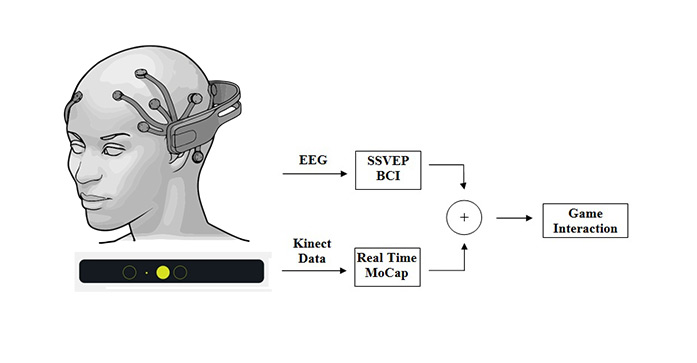
John Edison Muñoz Cardona, a Universidad Tecnológica de Pereira student, has developed a Brain-Kinect Interface for rehabilitation.  It combines bio-mechanical signals acquired by the Kinect sensor with signals from the Emotiv EPOC headset.

The combination of motion capture signals and EEG-based BCI is used for interaction in a rehabilitation game for patients with motor and/or cognitive impairments. The system provides a long and fluid interaction time, enabling effective data collection.  Software is used to objectively describe body movements

The  “Interactive Room for Rehabilitation” is both a real and digital space where patients with neuromotor impairment can interact through movement and thought, allowing motor and cognitive assessment.
Categories
BCI Brain Prosthetics

Cortical-spinal prosthesis directs “targeted movement” in paralyzed limbs

http://www.nature.com/ncomms/2014/140218/ncomms4237/full/ncomms4237.html

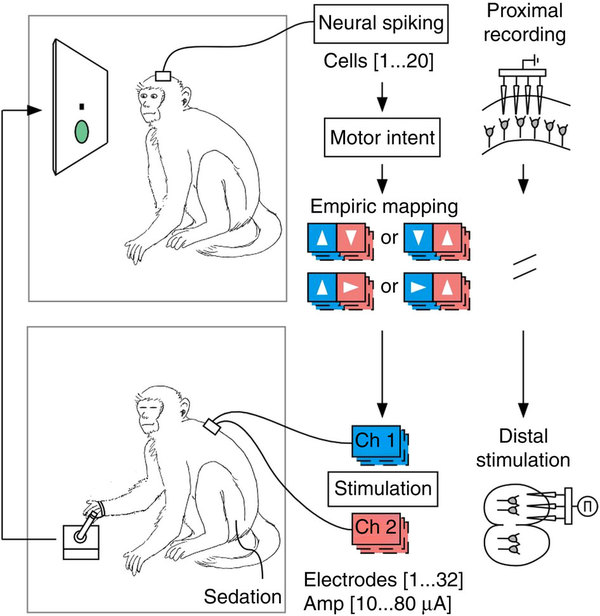
Cornell‘s Maryam ShanechiHarvard‘s Ziv Williams and colleagues developed a cortical-spinal prosthesis that directs “targeted movement” in paralyzed limbs. They tested a prosthesis that connects two subjects by enabling one subject to send its recorded neural activity to control limb movements in a different subject that is temporarily sedated.

The BMI is based on a set of real-time decoding algorithms that process neural signals by predicting their targeted movements. In the experiment, one animal acted as the controller of the movement or the “master,” then “decided” which target location to move to, and generated the neural activity that was decoded into this intended movement. The decoded movement was used to directly control the limb of the other animal by electrically stimulating its spinal cord.

The researchers focused on decoding the target endpoint of the movement as opposed to its detailed kinematics. This allowed them to match the decoded target with a set of spinal stimulation parameters that generated limb movement toward that target. They demonstrated that the alert animal could produce two-dimensional movement in the sedated animal’s limb .

The experiment focused on two different animals, rather than just one with a temporarily paralyzed limb. The scientists contend that this provided a true model of paralysis, since the master animal’s brain and the sedated animal’s limb had no physiological connection, as is the case for a paralyzed patient.

Categories
BCI Brain

Pentagon considers electric brain stimulation for troops

Boston Globe article

APA paper

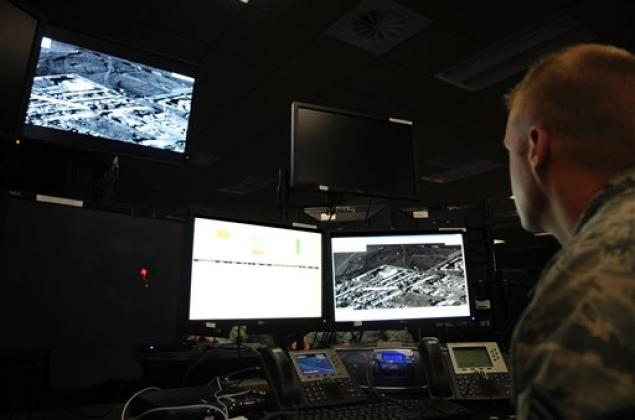
The US Air Force has completed 5 studies to investigate if low level electrical stimulation can replace caffeine for fatigued troops who oversee the processing of digital information, including surveillance and drone footage.

The research grew out of a recognition that while computers have automated many military functions, humans are increasingly needed to monitor massive amounts of information to make battlefield decisions.  It is led by R. Andy McKinley at the Air Force Research Laboratory at Wright-Patterson Air Force Base.

The process relies on controlled doses of electrical current, passed into certain regions of the brain to cause, in effect, a minor seizure, or more rapid nerve impulses.  There have been side effects, including skin irritation from the electrodes and headaches.

“The hard part is to know what to turn on and what to turn off,” said Harvard professor William “Scott” Killgore, who is involved in a separate Pentagon study to help determine which parts of the brain are most effective to stimulate.

The two  techniques being studied  are transcranial magnetic stimulation and transcranial direct current stimulation.  It is described as one of the most in-depth studies of electric stimulation on healthy individuals.

Categories
BCI Brain Signal Processing

Wirelessly charged cochlear implant with no external hardware

http://web.mit.edu/newsoffice/2014/cochlear-implants-with-no-exterior-hardware-0209.html

MIT scientists have developed a low power signal processing chip that could lead to a cochlear implant requiring no external hardware.  Harvard Medical School and Massachusetts Eye and Ear Infirmary doctors collaborated with the researchers.  The implant would be wirelessly recharged and run for eight hours.

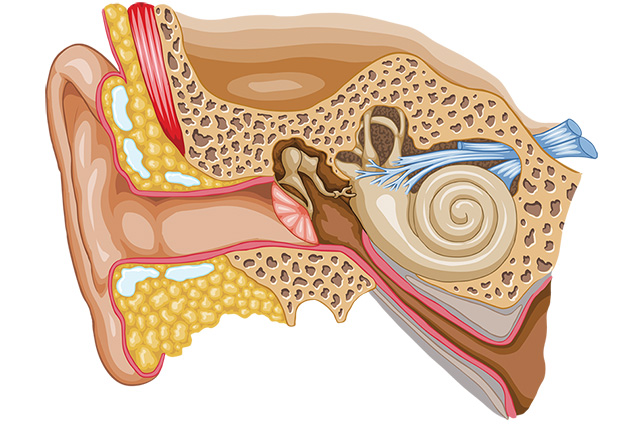
Instead of an external microphone,  the implant would use the natural microphone of the middle ear, which is almost always intact in cochlear implant patients.

The design exploits the mechanism of a middle ear implant. Middle ear ossicles convey the vibrations of the eardrum to the cochlea, which converts acoustic signals to electrical signals. In patients with middle ear implants, the cochlea is functional, but the stapes ossicle doesn’t vibrate with enough force to stimulate the auditory nerve. A middle ear implant consists of a tiny sensor that detects the ossicles’ vibrations and an actuator that helps drive the stapes.

The new device would use the same type of sensor, but the signal it generates would travel to a microchip implanted in the ear, which would convert it to an electrical signal and pass it to an electrode in the cochlea. Lowering the power requirements of the converter chip was the key to eliminating the skull mounted hardware.

Categories
BCI Brain

Neurofeedback alters brain plasticity in PTSD

1. Tel Aviv University paper   2. Schulich School of Medicine paper

Professor Ruth Lanius and colleagues at Western University’s Schulich School of Medicine have published a study showing that neurofeedback can improve subjective wellbeing in PTSD, potentially leading to new treatment options. Schulich researchers claim that this is “the first study to show that key brain networks involved in mediating affect and cognition in PTSD can be volitionally modulated via neurofeedback, with measurable outcomes on subjective well-being. It was achieved by harnessing multiple imaging techniques, including EEG and fMRI. Using fMRI we captured the patients’ resting-state brain activity just before and after a 30-minute neurofeedback training session, which was carried out outside the scanner using EEG. We then searched for any differences in connectivity within well-known brain networks. Interestingly, we discovered significant correlations between EEG and fMRI network activities as well as changes in self-reported calmness. This indicated that neurofeedback was able to directly modulate the brain bases of emotional processing in PTSD.”

A group at the Functional Brain Center at Tel Aviv University is trying to achieve similar results using EEG neurofeedback only.  Yehudit Meir-Hasson, Professor Talma HendlerProfessor Nathan Intrator and colleagues published a recent paper demonstrating the validation of an emotional EEG fingerprint with fMRI in the journal NeuroImage.

Categories
AI BCI Brain Robotics

Collaborative cloud system for human-serving robots

http://www.roboearth.org/what-is-roboearth

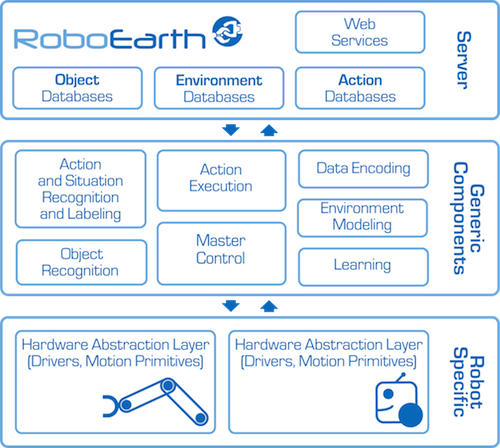
RoboEarth’s goal is to speed the development of human-serving robots. Scientists from five European universities gathered this week for its launch and demonstrated potential applications. This included a robot scanning a room’s physical layout, including the location of the patient’s bed, and the placing a carton of milk on a nearby table.

The system is sometimes called a “Wikipedia” for robots, allowing them, or their programmers,  to share and retrieve information.

Researchers claim that the robots’ technically sophisticated capabilities are comparable to those of high-end robots in car factories. They, however,  look clumsier because robots that interact with humans are not performing repetitive tasks in the controlled, sanitized and predictable surroundings of a factory.

RoboEarth’s system of networked computers enable it to perform intensive computing tasks that smaller computers (or simpler robots) cannot.  It also allows individual robots to communicate between themselves through its “RoboCloud” and robot database. This could facilitate light and cheap robots that use the cloud for computing.

Categories
Assistive Technologies BCI Brain

Minimally invasive multi-channel control system for prosthetics tested

http://www.multivu.com/mnr/65112-alfred-mann-foundation-u-s-marine-subject-fda-study-for-imes-system

The Alfred Mann Foundation‘s first subject, a U.S. Marine, will receive its IMES System (implantable myoelectric sensor).   The experimental system could be the first minimally invasive, intuitive, multi-channel control system for prosthetics, intended for long term use. It is being studied under the Investigational Device Exemption regulations of the U.S. Food and Drug Administration.  AMF’s ongoing trial with injured veterans at the Walter Reed National Medical Military Center anticipates subjects intuitively operating three prosthetic movements simultaneously: opening and closing the hand, rotating the wrist, and moving the thumb.

While the IMES system focuses on muscle activation, it is our opinion that the future of prosthetics will include a combination of brain (possibly non-invasive) and muscle interpretation.

Categories
AI BCI Brain

K supercomputer runs largest neural simulation to date

http://www.telegraph.co.uk/technology/10567942/Supercomputer-models-one-second-of-human-brain-activity.html

RIKEN, Okinawa Institute of Science and Technology, and Forschungszentrum Jülich researchers have used Japan’s K computer to run the longest brain simulation to date.With 705,024 processor cores, running at speeds of over 10 petaflops, it is ranked the world’s fourth-most powerful computer. Using Neural Simulation Technology software and 92,944 of its processors, the computer replicated one second of brain activity across 1.73 billion nerve cells and 10.4 trillion synapses.  This represents one per cent of the brain’s neuronal network and took the K computer 40 minutes.

“The new result paves the way for combined simulations of the brain and the musculoskeletal system using the K computer,” said Kenji Doya of the Okinawa Institute of Science of Technology,. “These results demonstrate that neuroscience can make full use of the existing peta-scale supercomputers.”

“If peta-scale computers like the K computer are capable of representing one per cent of the network of a human brain today, then we know that simulating the whole brain at the level of the individual nerve cell and its synapses will be possible with exa-scale computers hopefully available within the next decade,” said project leader Markus Diesmann.

Categories
Assistive Technologies BCI Brain

Paraplegic may kick off 2014 FIFA World Cup using brain controlled exoskeleton

http://www.copa2014.gov.br/en/noticia/brazilian-neuroscientist-miguel-nicolelis-unveil-walk-again-project-fifa-world-cup-brazil

Duke Professor Miguel Nicolelis‘s brain controlled exoskeleton technology may enable a paraplegic teen to kick off the 2014 World Cup in Brazil.  The plan is for the teenager to walk onto the field, cock back a foot, and swing at a soccer ball, using a mechanical exoskeleton controlled by his/her brain.

Motorized metal braces tested on monkeys will support and bend the kicker’s legs. The braces will be stabilized by gyroscopes and powered by a battery carried by the kicker in a backpack. Sensors will relay a feeling of pressure when each foot touches the ground. Months of training on a virtual-reality simulator will have prepared the teenager to do this using a device that translates thoughts into actions.

Categories
AI Assistive Technologies BCI Brain

Johns Hopkins develops thought controlled prosthetic arm and “targeted innervation” technique

http://hub.jhu.edu/2013/01/02/prosthetic-arm-60-minutes

The number of researchers developing advanced prosthetics, particularly thought controlled limbs, is increasing rapidly. This can significantly impact the lives of many.  In Johns Hopkins Universty’s Applied Physics Lab, a motorized arm with a five fingered hand that operates much like human hand is nearing completion.

Professor Michael McLoughlin and trauma surgeon Albert Chi have developed a technique known as targeted innervations—in which nerves can be rerouted through spare muscle, allowing amputees to operate motorized prosthetics using motor commands.  In a recent surgery, Dr. Chi successfully combined this technique with the aforementioned prosthetic.

“The body is amazing in terms of its will to return to normal function,” Chi says. “When you have a missing limb, all the information is there, but the body has no way to get it out. So we rerouted the pathway for that information so that it can be expressed.”

Categories
BCI Brain

“Neural Dust” records from thousands of sites in the brain

http://arxiv.org/abs/1307.2196

Current Brain-computer interfaces offer finite resolution, are hard to apply to many brain regions, and can only stay directly connected to the brain for a short period of time due to their invasiveness. Berkeley researchers have proposed an ultra-small, ultrasound-based neural recording system called “neural dust”.  It consists of thousands of sensors that are 10-100 micrometers in size containing CMOS circuits and sensors to detect and report local extracellular electrophysiological data.  The neural dust is powered by ultrasonic waves via a transducer that is implanted just below the dura.  The sub-dural unit interrogates the neural dust and sends information to another receiver outside the body.

This could provide a much higher resolution look  inside the brain, as it will be able to record from thousands of sites, in contrast to the hundreds of channels allowed by current technology.

Categories
BCI Brain Stroke

Kinect training promotes brain reorganization after stroke

http://www.nrronline.org/article.asp?issn=1673-5374;year=2013;volume=8;issue=31;spage=2904;epage=2913;aulast=Bao;type=0

Sun Yat-sen University researchers claim that Kinect based virtual reality training could promote the recovery of upper limb motor function in subacute stroke patients, and brain reorganization by Kinect based training may be linked to the contralateral sensorimotor cortex.  They have completed a study in which they located the target brain region for Kinect based intervention and preliminarily explored the mechanism of the system for physical rehabilitation of upper limb dysfunction.