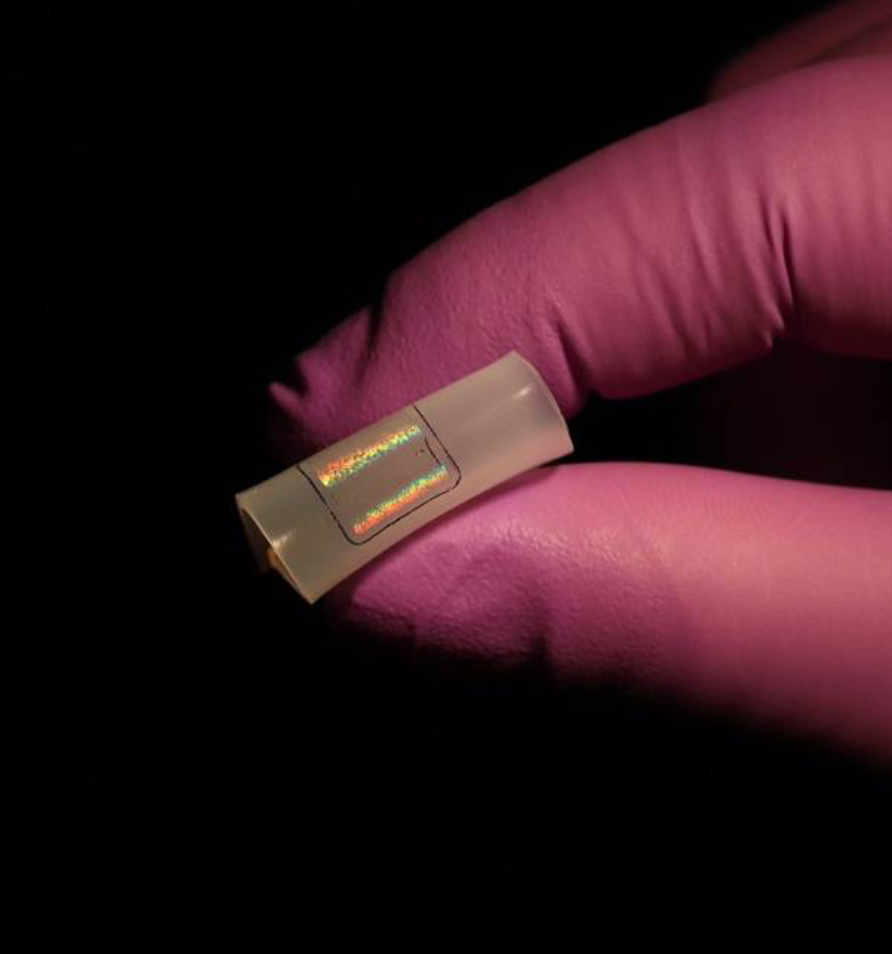
David Gracias and Ishan Barman at Johns Hopkins have developed a COVID 19 sensor which provides fast and accurate results using a drop of saliva placed on a device. No additional chemical modifications like molecular labeling or antibody functionalization are required, which could allow the sensor to be used in wearable devices.
Current PCR tests are highly accurate, but require complicated sample preparation, with results taking hours or even days to process in a laboratory. Rapid tests are less successful at detecting early infections and asymptomatic cases and can lead to erroneous results.
The Gracias/Barman developed sensor is nearly as sensitive as a PCR test and as convenient as a rapid antigen test. In a study, the sensor demonstrated 92% accuracy at detecting SARS-COV-2 in saliva samples—comparable to that of PCR tests. It was also highly successful at rapidly determining the presence of other viruses, including H1N1 and Zika.
The sensor material can be placed on any type of surface, from doorknobs and building entrances to masks and textiles, or potentially be integrated with a hand-held testing device for fast screenings at crowded places like airports or stadiums.
Join ApplySci at MIT on September 30, 2022 for Deep Tech Health + Neurotech Boston
