Categories
Pharmaceuticals Virtual Reality

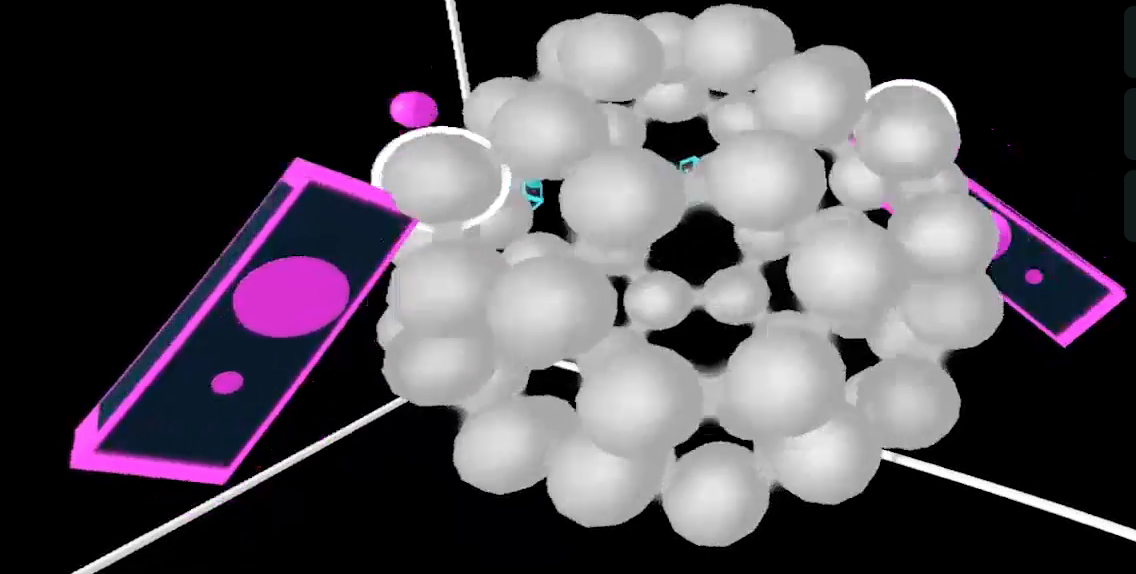
VR-enhanced molecular simulations

University of Bristol researchers, Oracle and Interactive Scientific  have used Oracle’s cloud infrastructure to combine real-time molecular simulations with VR, enabling them to “touch” molecules as they move — highlighting the potential of VR in seeing and manipulating complex 3D structures.  The technology could change how drugs are designed, and transform the teaching of chemical structures and dynamics.

The molecules can be virtually folded, knotted, plucked, and their shape changed to test how they interact.  The cloud allows several people to interact with them  in the same virtual space at the same time.

The team designed a series of molecular tasks to test on a mouse and keyboard, touchscreens and VR. This included threading a small molecule through a nanotube, changing the screw-sense of a small organic helix and tying a small string-like protein into a simple knot.  They said that in complex 3D tasks, VR gave participants up to 10 times more success.

Acocording to Bristol Professor Adrian Mulholland: “Chemists have always made models of molecules to understand their structure – from how atoms are bonded together to Watson and Crick’s famous double helix model of DNA. At one point in their education, most people have held a molecular model, probably made from plastic or metal. Models like these are particularly important for things we can’t see, such as the nanoscale world of molecules.  Thanks to this research we can now apply virtual reality to study a variety of molecular problems which are inherently dynamic, including binding drugs to its target, protein folding and chemical reactions. As simulations become faster we can now do this in real time which will change how drugs are designed and how chemical structures are taught.”

Click to view University of Bristol video


Join ApplySci at the 9th Wearable Tech + Digital Health + Neurotech Boston conference on September 24, 2018 at the MIT Media Lab.  Speakers include:  Rudy Tanzi – Mary Lou Jepsen – George Church – Roz Picard – Nathan Intrator – Keith Johnson – Juan Enriquez – John Mattison – Roozbeh Ghaffari – Poppy Crum – Phillip Alvelda – Marom Bikson

REGISTRATION RATES INCREASE JULY 13th
Categories
Eyes Sensors

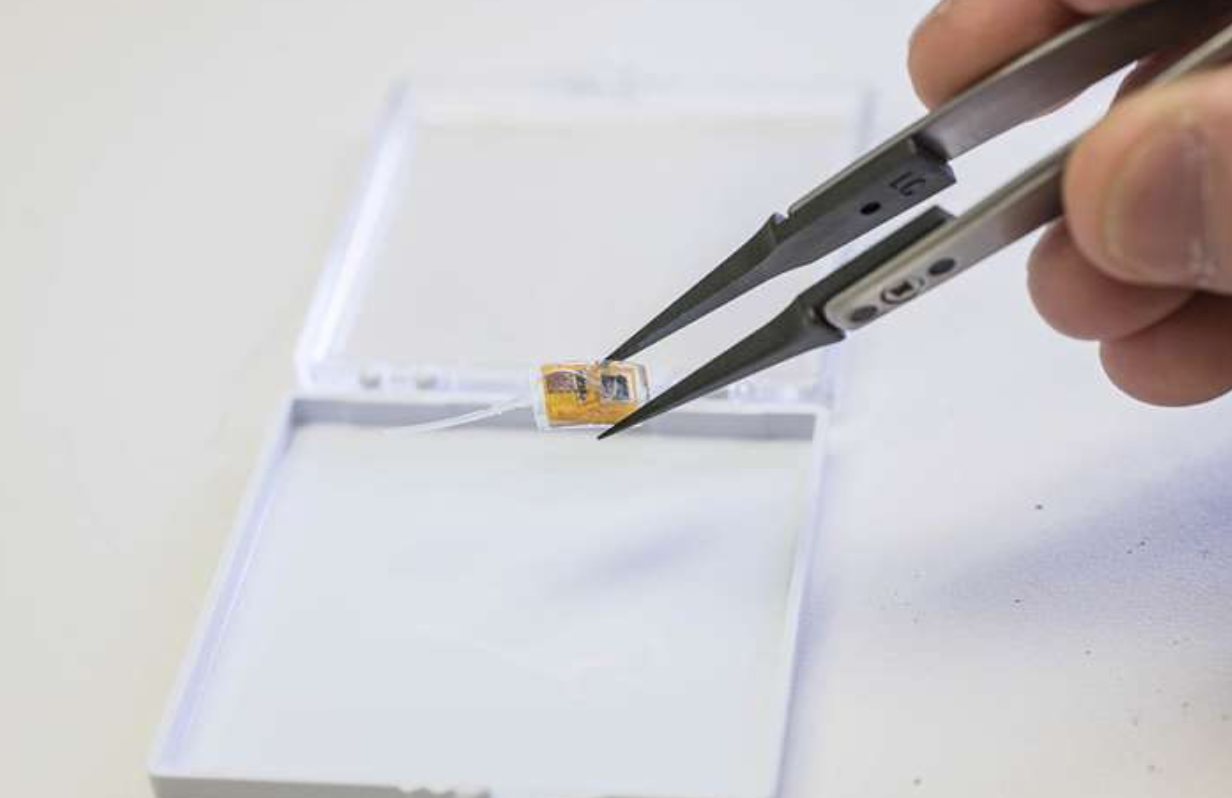
Eye implant measures pressure, releases fluid, in glaucoma

Caltech’s Azita Emami, Aubrey Shapero, Abhinav Agarwal and colleagues have developed a miniaturized, fully wireless, highly-sensitive, implantable, continuous pressure sensor that can remain in the human eye for four years.  The goal is early detection and treatment of glaucoma progression.

Current tonometer measurement, which requires anesthesia, only measures pressure during an appointment, and can miss many daily pressure fluctuations.

The device is implanted on the white of the eye and does not interfere with vision. It consists of a pressure sensor, control circuitry, and an antenna. With no battery, it small and long lasting. Radio waves from a handheld scanner are received by the antenna and generate a small voltage that temporarily powers the device, which then takes a pressure reading and sends the signal back to the reader, using the same antenna.

Encapsulation with liquid silicone and a polymer called parylene allowed the researchers to overcome the impact of fluid corrosion and tissue growth.  This is what enables the implant to remain in the eye much longer than previous devices.

A valve could also be added to release small amounts of fluid as tears, when pressure rises too high, creating a closed-loop glaucoma management system.


Join ApplySci at the 9th Wearable Tech + Digital Health + Neurotech Boston conference on September 24, 2018 at the MIT Media Lab.  Speakers include:  Rudy Tanzi – Mary Lou Jepsen – George Church – Roz Picard – Nathan Intrator – Keith Johnson – Juan Enriquez – John Mattison – Roozbeh Ghaffari – Poppy Crum – Phillip Alvelda – Marom Bikson

REGISTRATION RATES INCREASE JULY 6th

Categories
Brain Heart Virtual Reality

David Axelrod: VR in healthcare & the Stanford Virtual Heart | ApplySci @ Stanford

David Axelrod discussed VR-based learning in healthcare, and the Stanford Virtual Heart, at ApplySci’s recent Wearable Tech + Digital Health + Neurotech conference at Stanford;


Join ApplySci at the 9th Wearable Tech + Digital Health + Neurotech Boston conference on September 24, 2018 at the MIT Media Lab.  Speakers include:  Rudy Tanzi – Mary Lou Jepsen – George Church – Roz Picard – Nathan Intrator – Keith Johnson – Juan Enriquez – John Mattison – Roozbeh Ghaffari – Poppy Crum – Phillip Alvelda – Marom Bikson

REGISTRATION RATES INCREASE JULY 6th

Categories
BCI Brain Stroke

Combined BCI + FES system could improve stroke recovery

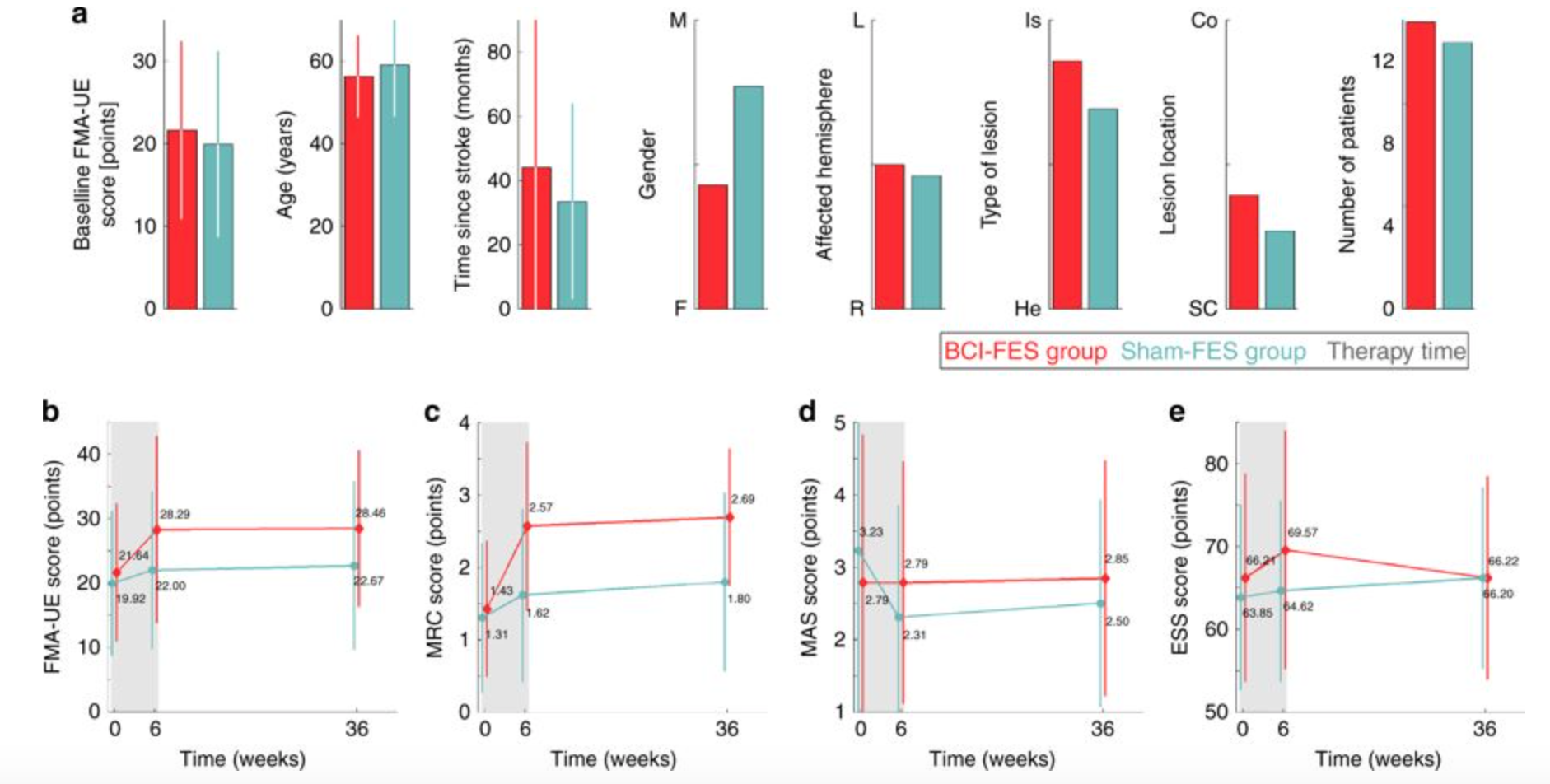
Jose Millan and EPFL colleagues have combined a brain computer interface with functional electrical stimulation in a system that, in a study, showed the ability to enhance the restoration of limb use after a stroke.

According to Millan: “The key is to stimulate the nerves of the paralyzed arm precisely when the stroke-affected part of the brain activates to move the limb, even if the patient can’t actually carry out the movement. That helps re-establish the link between the two nerve pathways where the signal comes in and goes out.”

27 patients with a similar lesion that resulted in moderate to severe arm paralysis following a stroke participated in the trial. Half were treated with the dual-therapy approach, and reported clinically significant improvements.  A BCI system  enabled the researchers to pinpoint where the electrical activity occurred in the brain when they tried to extend their hands. Each time the electrical activity was identified, the system stimulated the muscle controlling the corresponding wrist and finger movements.

The control group received FES only, and had their arm muscles stimulated randomly. This allowed the scientists to understand how much additional motor function improvement could be attributed to the BCI system.


Join ApplySci at the 9th Wearable Tech + Digital Health + Neurotech Boston conference on September 24, 2018 at the MIT Media Lab.  Speakers include:  Rudy Tanzi – Mary Lou Jepsen – George Church – Roz Picard – Nathan Intrator – Keith Johnson – Juan Enriquez – John Mattison – Roozbeh Ghaffari – Poppy Crum – Phillip Alvelda – Marom Bikson

REGISTRATION RATES INCREASE JUNE 29TH

Categories
Sensors

Cheap, molecular-wired, metabolite-measuring sensor

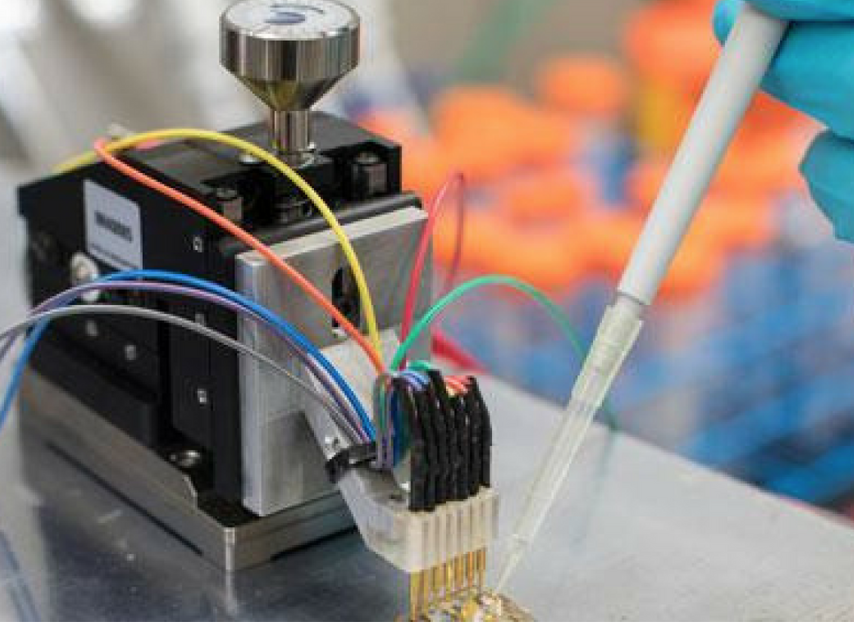
Cambridge’s Anna-Maria Pappa, KAUST’s Sahika Inal, and colleagues have developed a low cost, molecular wired sensor that can measure metabolites in sweat, tears, saliva or blood.  It can be incorporated into flexible and stretchable substrates for cellular-level health monitoring.

A synthesised polymer acts as a molecular wire, accepting electrons produced during electrochemical reactions. It merges with sweat, tears or blood, absorbing ions and swelling, leading to high sensitivity.  The signal can be amplified when incorporated into complex circuits, responding to tiny fluctuations in metabolite concentration.

According to Pappa: “This is the first time that it’s been possible to use an electron accepting polymer that can be tailored to improve communication with the enzymes, which allows for the direct detection of a metabolite. It opens up new directions in biosensing, where materials can be designed to interact with a specific metabolite, resulting in far more sensitive and selective sensors.”


Join ApplySci at the 9th Wearable Tech + Digital Health + Neurotech Boston conference on September 24, 2018 at the MIT Media Lab.  Speakers include:  Rudy Tanzi – Mary Lou Jepsen – George Church – Roz Picard – Nathan Intrator – Keith Johnson – Juan Enriquez – John Mattison – Roozbeh Ghaffari – Poppy Crum – Phillip Alvelda – Marom Bikson

REGISTRATION RATES INCREASE JUNE 29TH

Categories
AI Brain Seniors Sensors Smart Fabric Wearables

Tony Chahine on human presence, reimagined | ApplySci @ Stanford

Myant‘s Tony Chahine reimagined human presence at ApplySci’s recent Wearable Tech + Digital Health + Neurotech conference at Stanford:


Join ApplySci at the 9th Wearable Tech + Digital Health + Neurotech Boston conference on September 24, 2018 at the MIT Media Lab.  Speakers include:  Rudy Tanzi – Mary Lou Jepsen – George Church – Roz Picard – Nathan Intrator – Keith Johnson – Juan Enriquez – John Mattison – Roozbeh Ghaffari – Poppy Crum – Phillip Alvelda – Marom Bikson

REGISTRATION RATES INCREASE JUNE 29TH

Categories
3-D Printing Conference Eyes

Proof of concept 3D printed cornea

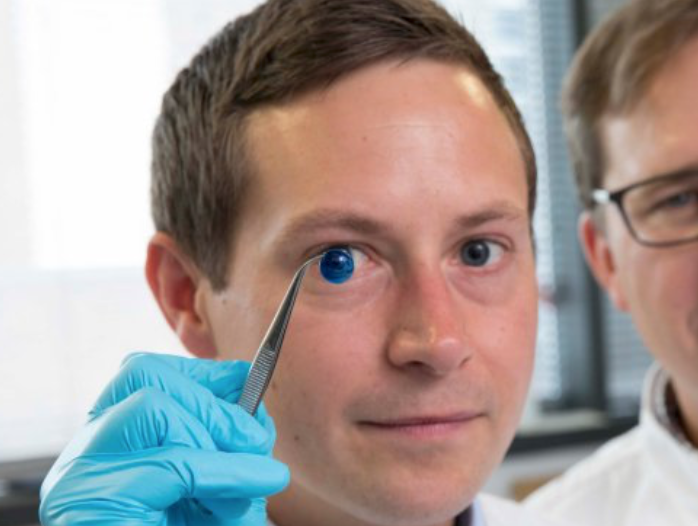
Newcastle University’s Che Connon has developed proof-of-concept research that could lead to a 3D printed cornea.

Stem cells  from a healthy donor cornea were mixed with alginate and collagen to create a printable bio-ink.  A 3D printer extruded the bio-ink in  concentric circles to form the shape of a human cornea in less then 10 minutes. The stem cells then grew.

According to Connon: “Our unique gel – a combination of alginate and collagen – keeps the stem cells alive whilst producing a material which is stiff enough to hold its shape but soft enough to be squeezed out the nozzle of a 3D printer. This builds upon our previous work in which we kept cells alive for weeks at room temperature within a similar hydrogel. Now we have a ready to use bio-ink containing stem cells allowing users to start printing tissues without having to worry about growing the cells separately.”

The team demonstrated that they could build a cornea to match a patient’s unique specifications, but said that it will be several years before this might be used for transplants.

Click to view Newcastle University video


Join ApplySci at the 9th Wearable Tech + Digital Health + Neurotech Boston conference on September 24, 2018 at the MIT Media Lab.  Speakers include:  Rudy Tanzi – Mary Lou Jepsen – George Church – Roz Picard – Nathan Intrator – Keith Johnson – Juan Enriquez – John Mattison – Roozbeh Ghaffari – Poppy Crum – Phillip Alvelda – Marom Bikson

REGISTRATION RATES INCREASE FRIDAY, JUNE 22nd

Categories
Brain Robotics

Thought, gesture-controlled robots

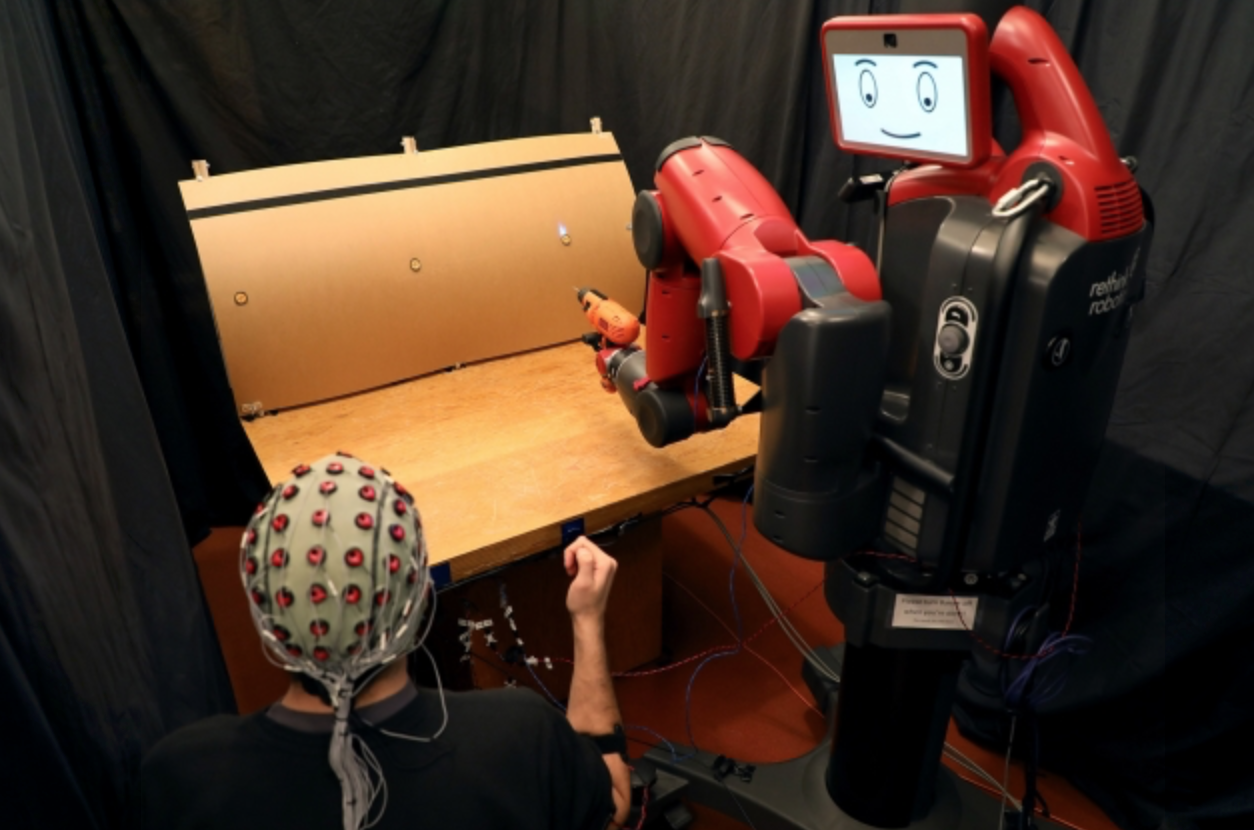
MIT CSAIL’s Daniela Rus has developed an EEG/EMG robot control system based on brain signals and finger gestures.

Building on the team’s previous brain-controlled robot work, the new system detects, in real-time, if a person notices a robot’s error. Muscle activity measurement enables the use of hand gestures to select the correct option.

According to Rus: “This work, combining EEG and EMG feedback, enables natural human-robot interactions for a broader set of applications than we’ve been able to do before using only EEG feedback. By including muscle feedback, we can use gestures to command the robot spatially, with much more nuance and specificity.”

The researchers used  a humanoid robot from Rethink Robotics, while a human controller wore electrodes on her or his head and arm.

Human supervision  increased the choice of correct target from 70 to 97 per cent.

The goal is system that can be used for people with limited mobility or language disorders.

Click to view CSAIL video


Join ApplySci at the 9th Wearable Tech + Digital Health + Neurotech Boston conference on September 24, 2018 at the MIT Media Lab.  Speakers include:  Rudy Tanzi – Mary Lou Jepsen – George Church – Roz Picard – Nathan Intrator – Keith Johnson – Juan Enriquez – John Mattison – Roozbeh Ghaffari – Poppy Crum – Phillip Alvelda – Marom Bikson

REGISTRATION RATES INCREASE FRIDAY, JUNE 22nd

Categories
AI Brain

Phillip Alvelda: More intelligent; less artificial | ApplySci @ Stanford

Phillip Alvelda discussed AI and the brain at ApplySci’s recent Wearable Tech + Digital Health + Neurotech Silicon Valley conference at Stanford:


Dr. Alvelda will join us again at Wearable Tech + Digital Health + Neurotech Boston, on September 24, 2018 at the MIT Media Lab.  Other speakers include: Rudy Tanzi – Mary Lou Jepsen – George Church – Roz Picard – Nathan Intrator – Keith Johnson – Juan Enriquez – John Mattison – Roozbeh Ghaffari – Poppy Crum – Marom Bikson

REGISTRATION RATES INCREASE JUNE 22nd

Categories
Blood Pressure Machine Learning

Algorithm predicts low blood pressure during surgery

UCLA’s Maxime Cannesson has developed an algorithm that, in a recent study, predicted  an intraoperative hypotensive event 15 minutes before it occurred in 84 percent of cases, 10 minutes before in 84 percent of cases, and five minutes before in 87 percent of cases.

The goal is early identification and treatment, to prevent complications, such as postoperative heart attack, acute kidney injury, or death.

The algorithm is based on recordings of the increase and decrease of blood pressure in the arteries during a heartbeat—including episodes of hypotension. For each heartbeat, the researchers were able to derive 3,022 individual features from the arterial pressure waveforms, producing more than 2.6 million bits of information. They then identified which of the features—when they happen together and at the same time—predict hypotension.

Cannesson said that the research “opens the door to the application of these techniques to many other physiological signals, such as EKG for cardiac arrhythmia prediction or EEG for brain function” and “could lead to a whole new field of investigation in clinical and physiological sciences and reshape our understanding of human physiology.”


Join ApplySci at the 9th Wearable Tech + Digital Health + Neurotech Boston conference on September 24, 2018 at the MIT Media Lab.  Speakers include:  Rudy Tanzi – Mary Lou Jepsen – George Church – Roz Picard – Nathan Intrator – Keith Johnson – Juan Enriquez – John Mattison – Roozbeh Ghaffari – Poppy Crum – Phillip Alvelda – Marom Bikson

REGISTRATION RATES INCREASE FRIDAY, JUNE 15TH

Categories
Disease

Nano-robots remove bacteria, toxins from blood

UCSD’s Joe Wang and Liangfang Zhang have developed tiny ultrasound-powered robots that can swim through blood, removing harmful bacteria and toxins.

Gold nanowires were coated with platelet and red blood cell membranes,  allowing the nanorobots to perform the tasks of two different cells at once—platelets, which bind pathogens, and red blood cells, which absorb and neutralize toxins. The gold body responds to ultrasound, giving the nanorobots the ability to swim rapidly without chemical fuel, helping them mix with blood bacteria and toxins and speed detoxification.

The robots are about 25 times smaller than the width of a human hair and can travel 35 micrometers per second in blood. They were tested on MRSA contaminated blood samples, which three times less bacteria and toxins than untreated samples after five minutes.

Click to view UCSD video


Join ApplySci at the 9th Wearable Tech + Digital Health + Neurotech Boston conference on September 24, 2018 at the MIT Media Lab.  Speakers include:  Rudy Tanzi – Mary Lou Jepsen – George Church – Roz Picard – Nathan Intrator – Keith Johnson – Juan Enriquez – John Mattison – Roozbeh Ghaffari – Poppy Crum – Phillip Alvelda – Marom Bikson

REGISTRATION RATES INCREASE FRIDAY, JUNE 15TH

Categories
BCI Brain

Bob Knight on decoding language from direct brain recordings | ApplySci @ Stanford


Berkeley’s Bob Knight discussed (and demonstrated) decoding language from direct brain recordings at ApplySci’s recent Wearable Tech + Digital Health + Neurotech Silicon Valley at Stanford:


Join ApplySci at the 9th Wearable Tech + Digital Health + Neurotech Boston conference on September 24, 2018 at the MIT Media Lab.  Speakers include:  Rudy Tanzi – Mary Lou Jepsen – George Church – Roz Picard – Nathan Intrator – Keith Johnson – Juan Enriquez – John Mattison – Roozbeh Ghaffari – Poppy Crum – Phillip Alvelda

Join Apply Sci at the 10th Wearable Tech + Digital Health + Neurotech Silicon Valley conference on February 21-22, 2019 at Stanford University