Categories
Sensors

Oregon State engineers develop microchip for cheap EEG and ECG

http://www.physbiztech.com/blog/health-sensors-size-postage-stamp

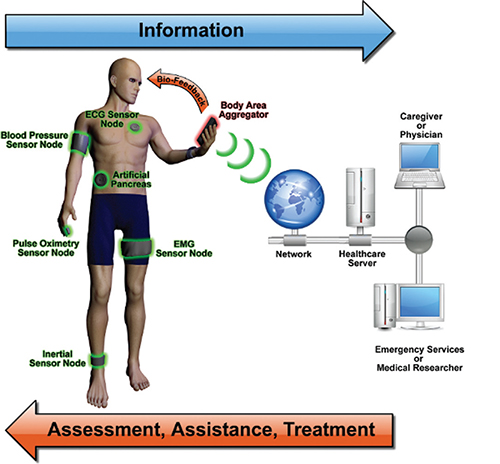
OSU researchers attempt to reduce the cost of wireless EEG and ECG monitoring to less than a dollar.  Applications include self-tracking and enabling doctors to monitor at-risk patients in real time.  Multiple chips around the body can continuously track specific metrics.

Categories
Apps mHealth

Apps aim to detect skin cancer

http://online.wsj.com/article/SB10001424127887323783704578245973988828066.html#

Researchers from the University of Pittsburgh Medical Center tested four apps to analyze images of 188 moles, including 60 melanomas. All of these moles were pre-evaluated by a dermatologist.

The best-performing app forwarded the images to board-certified dermatologists to review at cost of $5 per mole, and claims to be accurate 98% of the time.  Some are skeptical.  We are sure that we will soon see a proliferation of early, at home detection apps.

Categories
mHealth Sensors

Sensor technology protects seniors

http://www.seniorjournal.com/NEWS/Eldercare/2013/20130114-High_Tech_Surveillance.htm

In addition to the remote monitoring of chronic conditions, sensors, computerized pattern recognition and links to human responders can detect and head off health threats to the elderly living alone.

Categories
mHealth Sensors

Health focused sensor technology dominated CES

http://www.huffingtonpost.com/michael-yang/health-devices_b_2424812.html

The “sensorization” of CES was obvious.  Which technologies are meaningful, and which are simply stylish?  The health monitoring sector is set to grow exponentially in 2013. It’s important to understand the science behind the gadgets.  ApplySci, the crowdfunding platform, is committed to bringing you peer reviewed, life enhancing, sensor based mobile health monitoring technology.  And the ApplySci blog will regularly review this technology.  We welcome your input.

Categories
mHealth

15 health devices launched at CES 2013

http://mobihealthnews.com/19784/slideshow-health-devices-that-launched-at-ces-2013/

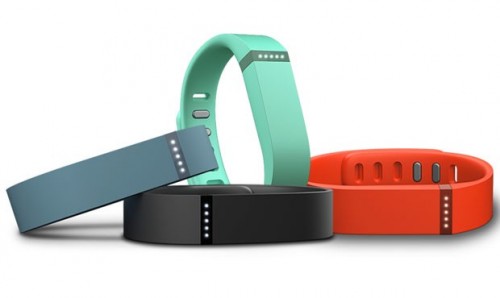
Self-tracking, self-monitoring, and using smartphone peripherals to encourage health habits emerged as big themes at this year’s CES.

Categories
Brain

Radiation in space might harm the brains of astronauts

http://www.msnbc.msn.com/id/50334586/ns/technology_and_science-space/#.UOK82ak2_zI

“This study shows for the first time that exposure to radiation levels equivalent to a mission to Mars could produce cognitive problems and speed up changes in the brain that are associated with Alzheimer’s disease,” study author Kerry O’Banion, a neuroscientist at the University of Rochester Medical Center, said in a statement.

Categories
Heart

Genetically modified virus produces heart’s own pacemaker in animals

http://technorati.com/technology/article/viruses-helped-to-make-the-natural/

Researchers at the Cedars-Sinai Heart Institute had another idea. They knew a gene called Tbx18 is normally activated during the sinoatrial node’s development, when an embryo is forming. So they set out to add Tbx18 into a functioning, fully grown heart. To do it, they inserted the code for this gene into a virus, which they then inserted into the hearts of guinea pigs. The infected hearts beat according to this newly formed pacemaker, Eduardo Marbán and colleagues report in Nature Biotechnology. It also worked in a Petri dish.

The team used ventricular cells, one of three main types of heart cells (along with pacemaker cells and atrial cells). The infected cells changed their appearance, taking on a distinctive tapered shape, and this lasts even after the Tbx18 has faded away. That suggests it’s a permanent structural change, which means this could be a lasting treatment for diminished sinoatrial cells.

“This technology thus represents a promising alternative to electronic pacing devices,” Marbán et al. write. Longer-term experiments are still needed, but the work so far is promising, they say.

Categories
Brain Crowdfunding

Brainwave headband raises $287K via crowdfunding; offers thought controlled computing

http://www.inquisitr.com/424889/interaxon-muse-brainwave-headband-offers-thought-controlled-computing/

Startup Interaxon has announced that it will ship a $199 headset called the Muse next spring.  It will let people use their brainwaves to directly control videogames and other computing operations.

Categories
Genetics

Genetic manipulation in neuroscience, reproductive medicine, cancer

http://www.technologyreview.com/news/508981/its-all-about-the-genes-and-the-brain-machines/

MIT’s Technology Review reports advances in genome sequencing in several areas.  Most applicable to ApplySci is the melding of mind and machine.  Their coverage follows:

“The melding of mind and machine was also big this year. Scientists in Winston-Salem, North Carolina, demonstrated that a brain implant could replace some cognitive function in primates, which could one day help people with brain damage. On the flip side, two research groups published the first accounts of quadriplegic people using brain implants to control robotic limbs. The implants recorded the participants’ intentions to move, which were translated by a computer into instructions for a robotic arm. The idea is that one day people with severe paralysis or amputations could use such neural prosthetics at home to help with the tasks of daily life.

Brain electronics were also implanted into Alzheimer’s patients this year in an attempt to slow a disease that has so far evaded pharmaceutical treatment.  The urgency for treatment is growing, but the community still doesn’t know what sets into motion the cascade of molecular events that robs people of their memory and thinking skills. With better diagnostic tools and the discovery that there are warnings decades before symptoms, scientists are turning to treating patients with a genetic predisposition for the disease before they start having symptoms. Perhaps this will be the key to treatments in future years. ”

MIT Technology Review, December 24, 2012

Categories
mHealth

1/4 of Americans trust mobile health monitoring apps as much as their doctors

http://www.newscenter.philips.com/us_en/standard/news/press/2012/20121212_Philips_Survey_Health_Info_Tech.wpd#.UNb48qk2_zL

A recent Royal Philips Electronics survey found that consumers believe web-enabled, mHealth and mobile apps are part of their health care solutions and key to living long lives.  While about half of Americans (49 percent) are comfortable with symptom checker technologies or home-based vital sign monitors automatically sharing information with their doctor, more than one third of those surveyed believe technology that allows one to monitor his/her own health is now the key to living a long life.

Philips is developing unique healthcare technology solutions that combine superior clinical expertise with deep human insights.

Categories
Conference

IBM 5 focuses on human senses

http://www.ibm.com/smarterplanet/us/en/ibm_predictions_for_future/ideas/index.html

IBM published its annual report, this year focusing on the five basic senses.  Highlighted future abilities of computers include:

-the ability to identify distinctive image features, foregoing the need for tags

-the development a sense of taste

-smelling computers that detect explosives in the public and cancer in our bodies

-touch sensitivity, allowing us to feel textures

Categories
Machine Learning

Ray Kurzweil joins Google

http://www.technologyreview.com/view/508896/what-google-sees-in-new-hire-futurist-ray-kurzweil/

Esteemed futurist Ray Kurzweil has joined Google as Director of Engineering.  His focus will be machine learning and language processing, and will lead to advances in networks, data centers and algorithms.

“I’m thrilled to be teaming up with Google to work on some of the hardest problems in computer science so we can turn the next decade’s ‘unrealistic’ visions into reality,” Kurzweil said.