
Categories
fitness mHealth Monitoring Sensors Wearables

Printable, multi-touch sensors consumers can cut with scissors

http://embodied.mpi-inf.mpg.de/files/2012/11/ACuttableMultiTouchSensor.pdf

Max Planck Institute researchers and the MIT Media Lab have developed printable, multi-touch sensors that are printed with e-ink and can be cut with scissors.  A new circuit layout makes it robust against cuts, damage, and removed areas.  By customizing and pasting such a sensor, one can make every surface interactive, including the wristband of a watch, a fabric or an object.  This implies many digital health and fitness applications.

The scientists use “printed electronics” – electrical components and devices which are printed. The approach is similar to that of inkjet printers. Instead of printing with normal ink, electrically-functional electronic ink is printed on flexible, thin films called substrates.

In the circuit layout, the wires run horizontally, vertically, and parallel to each other. At the intersection of one parallel and one horizontal layer are the touch-sensitive electrodes. Via the wires they are connected to a controller. This type of layout requires only a minimal number of wires, but is not robust. Since each wire addresses several electrodes, a small cut has a huge effect: many electrodes become unusable and possibly large sensor areas do not work anymore. “It was not easy to find an alternative layout, robust enough for our approach” said lead developer Simon Olberding. They took their inspiration from nature, looking at the human nerve system and fungal root networks, and thus came up with two basic layouts. The “star topology” has the controller in the center. It is connected to every electrode separately. The “tree topology” also has the controller in its center connected to each electrode separately. But the wires are bundled similarly to a tree structure. They all run through a vertical line in the middle and then branch off to reach their electrodes.

The scientists found out that the star topology supports  basic forms like triangles, rectangles, or ovals best. It is suited for shapes commonly used for crafts, like stars, clouds, or hearts. In contrast, with the tree topology it is possible to cut out whole areas. The researchers were also able to combine both layouts in a space-saving way, so that the sensor supports all basic forms.
Categories
Apps fitness

Streamlined, simplified, cloud based consumer health data

http://www.wellnessfx.com/

WellnessFX provides consumers with lab test results, real time heart rate data, and long feedback data from sleep sensors in a simple and well designed format.  They seek to empower individuals to control their health and fitness by monitoring themselves, making it “easy to view changes that occur between blood tests, allowing you to adjust your lifestyle for even better health.”

Categories
fitness Heart mHealth Monitoring Wearables

Mayo Clinic studies step tracking data as a post-surgery monitoring tool

http://www.annalsthoracicsurgery.org/article/S0003-4975(13)01253-8/fulltext

Mayo Clinic has published a study using step recording from a  Fitbit activity tracker to monitor recovery in cardiac surgery patients and help hospitals determine the appropriate length of stay.  Those who had the shortest hospital stay walked the most on all days in the study, by a statistically significant margin. Likewise, patients bound for home walked more than those headed for a nursing facility.

Categories
Apps Conference Crowdfunding Data fitness Monitoring Wearables

Angel Health Monitor – Open platform, wearable vital sign sensors

http://www.angelsensor.com/index.html

The Angel Health Monitor is an open platform and SDK that senses motion and acceleration, skin temperature, blood oxygen saturation, and heart rate.  It was created by Eugene Jorov in Israel and will launch a crowdfunding campaign soon.  Developers will be able to use Angel to create apps for iPhone, Android, and other devices that support Bluetooth 4.0. Their SDK, drivers and app templates will be released as open source.

Categories
Apps Data fitness mHealth Monitoring Sensors Sleep Wearables

Home medical device data uploaded to EHRs; patient participation encourages behavior modification

http://www.bostonglobe.com/lifestyle/health-wellness/2013/07/28/century-house-call/tdupWvOQI6b3dKdKcEgdGM/story.html

Boston’s Partners HealthCare has launched a system that allows patients to upload information from their medical devices directly to their electronic records in doctors’ offices.  Patients can regularly use glucometers, blood pressure cuffs, bathroom scales, and pulse oximeters at home, and send the data to their doctors.  Doctors are also becoming increasingly interested in eating habit, movement, and sleep data collected by patients using consumer health-tracking devices.

A recent study by the company showed a significant decrease in diastolic blood pressure among participants who both took their readings and uploaded them to a web interface where they could track and monitor their progress.

Categories
fitness Monitoring Sensors

Biosensor tattoo monitors physical exertion

http://www.jacobsschool.ucsd.edu/news/news_releases/release.sfe?id=1353

Temporary tattoos are emerging as a preferred way to monitor health.  Researchers at the University of California, San Diego have developed a sensor that monitors chemicals in the wearer’s sweat to gauge physical exertion. The temporary electrochemical tattoo relies on a carbon fiber backbone so that it bends with the skin during normal activity without loss of functionality, and a conductive polymer that is sensitive to pH-levels in sweat. The sensor is screen-printed onto the flexible adhesive. The tattoo is noninvasive and the results are immediate.

Categories
Apps fitness mHealth Monitoring

mHealth timeline, 2009 – 2013

http://mobihealthnews.com/22674/timeline-smartphone-enabled-health-devices/

Sensors are becoming smaller, smarter, and more ubiquitous,  and have transformed the way we monitor our health.  Attached is a timeline of health and fitness apps from 2009 through today, providing an interesting look at the development of the mHealth market.

Categories
Apps Asthma fitness mHealth Monitoring Sensors Sleep

Mobile phone microphones as health sensors

http://www.economist.com/news/technology-quarterly/21578518-sensor-technology-microphones-are-designed-capture-sound-they-turn-out
The Economist’s Technology Quarterly describes how mobile phone microphones are being used as versatile sensors with myriad health applications.  Examples follow:

1. Professor Tanzeem Choudhury of Cornell has created StressSense to capture and analyze voice characteristics such as amplitude and frequency. Her team concluded that “it is feasible to implement a computationally demanding stress-classification system on off-the-shelf smartphones”.

2. BeWell’s sleep-tracking feature, also by Professor Choudhury,  determines whether the phone’s user is awake or not by analyzing usage, light and sound levels, and charging habits. Physical activity is monitored using built-in accelerometers for motion-detection. Social activity is measured by sounds that indicate that the user is talking to someone, either in person or over the phone.

3. Professor John Stankovic of the University of Virginia uses microphones to capture heartbeats. Researchers in his group use earphones modified with accelerometers and additional microphones that detect the pulse in arteries in the wearer’s ear. This makes it possible to collect physical state information, including heart rate and activity level, which is transmitted to the smartphone via the audio jack.

4. Shwetak Patel of the University of Washington uses a smartphone to measure lung function when users blow on its microphone. His team has developed the SpiroSmart app, which simulates a digital spirometer, to measure the volume of air a person can expel from his or her lungs. Spirometers help doctors better understand the health status of patients with conditions like asthma, chronic obstructive pulmonary disease and cystic fibrosis.

Categories
Crowdfunding fitness Monitoring Sensors

Another crowdfunded vital sign monitor

http://www.indiegogo.com/projects/scanadu-scout-the-first-medical-tricorder
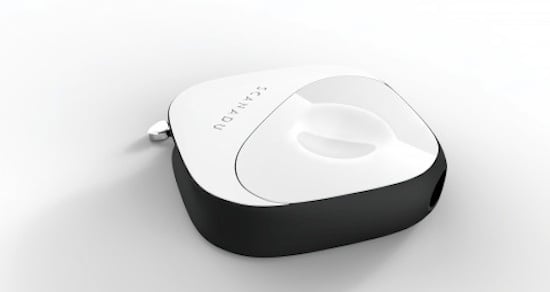
As the crowdfunding of remote health devices increases, another vital sign monitor has launched on Indiegogo.

Scanadu Scout analyzes and tracks temperature, respiratory rate, blood oxygen, heart rate, blood pressure and stress trends.  The company states that it accomplishes this in 10 seconds.

The device is still pre-FDA approval but quite promising. They claim that they can read systolic and diastolic blood pressure at 95% accuracy.  It looks like they are not reading oxygen saturation level.  We hope they’ll add it in the next version.

Categories
Crowdfunding fitness Sensors

Crowdfunding an autonomic nervous system monitor

http://www.kickstarter.com/projects/723246920/finally-a-wearable-device-that-can-improve-your-li?ref=category
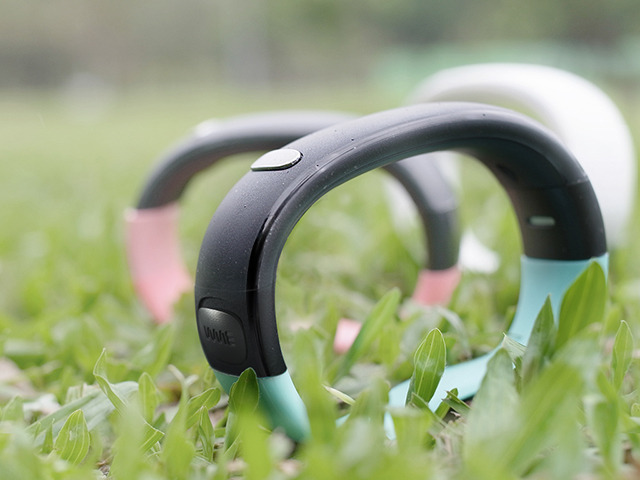
The W/Me sensor has the ability to capture electrical impulses relayed from the sinoatrial (SA) node, a group of specialized cells in the right atrium. It uses a proprietary algorithm to measure heart rate variability, map the autonomic nervous system, and indicate mental state.

Categories
Apps fitness Heart mHealth Monitoring Sensors

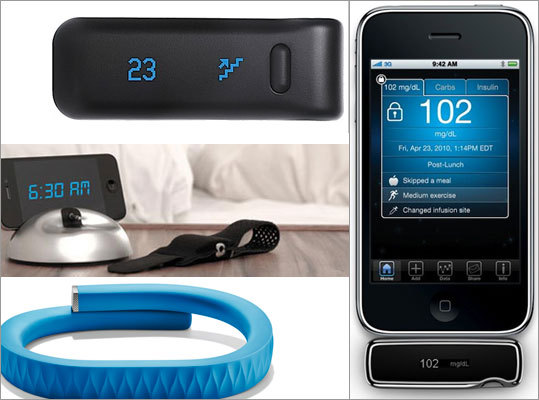
8 new sensor based health tracking devices

http://www.boston.com/lifestyle/health/gallery/wearable_trackers/

An overview of 8 new sensor based health tracking devices.  Some predict that 400 million such products will enter the market by 2014.