Categories
Data Heart Machine Learning Monitoring Respiratory

Machine learning in the ICU

http://www.technologyreview.com/news/515461/machine-learning-and-risk-prediction-in-the-icu/

Etiometry is building a clinical-decision support system to interpret large volumes of real-time patient data and guide diagnosis and treatment.  It integrates and analyzes information from heart monitors, ventilators, and pressure sensors and plugs the data into predictive models that have been built on prior patient outcomes.

Categories
Apps Machine Learning Sensors

Wearable sensors, data analytics track fertility

https://www.glowing.com

http://www.ovuline.com

http://www.duofertility.com

Several recently launched companies are trying to assist couples conceive by using wearable sensors and big data analytics to pinpoint a woman’s most fertile days.

Categories
AI Machine Learning

Quantum computing AI lab from Google, NASA and USRA

http://googleresearch.blogspot.ca/2013/05/launching-quantum-artificial.html

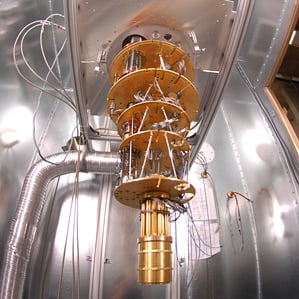
Google, NASA and the Universities Space Research Association will put a 512 qubit machine from D-Wave at the disposal of researchers around the globe.  The USRA will invite teams of scientists and engineers to share time on the unique supercomputer. The goal is to study how quantum computing might be leveraged to advance machine learning.

Categories
BCI Brain EEG Machine Learning Monitoring

Skin mounted electrode arrays measure neural signals

http://coleman.ucsd.edu/lab-research/

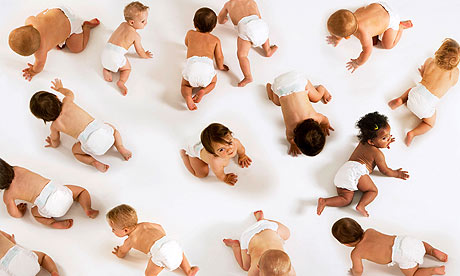
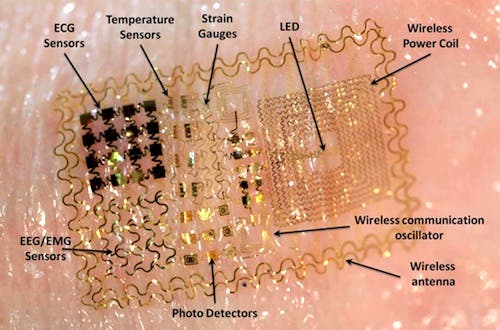
Professor Todd Coleman of UCSD is developing foldable, stretchable electrode arrays that can non-invasively measure neural signals. They can also provide more in-depth analysis by including thermal sensors to monitor skin temperature and light detectors to analyze blood oxygen levels.  The device is powered by micro solar panels and uses antennae to wirelessly transmit or receive data.  Professor Coleman wants to use the device on premature babies to monitor their mental state and detect the onset of seizures that can lead to brain development problems such as epilepsy.

Categories
Machine Learning Parkinson's

Machine learning algorithms analyze mobile phone data for Parkinson’s research

http://mobihealthnews.com/22076/michael-j-fox-foundation-takes-first-step-toward-crowdsourced-research/

The Michael J. Fox Foundation is exploring how data sourced from mobile phones and analyzed with machine learning algorithms can improve Parkinson’s research.  The research was crowdsourced via a public competition.

The initial study included 16 individuals — nine patients, seven control.  For 8 weeks, 4-5 hours per day, each carried a smartphone with seven sensors collecting data. Inputs of a built-in accelerometer, data about the user’s tone of voice, how much the phone was turned on and used, data from the built-in compass and GPS, and an ambient light sensor were analyzed. A machine learning algorithm was developed to use the data to identify the Parkinson’s patients from the control group and identify what stage of the disease users were in.

Categories
Brain Machine Learning

Brain scans link math learning abilities to brain structure

http://scopeblog.stanford.edu/2013/04/29/peering-into-the-brain-to-predict-kids-response-to-math-tutoring/

Researchers from the Stanford University School of Medicine used brain scans to look for a link between math-learning abilities and brain structure or function, and compared neural and cognitive predictors of childrens’ responses to tutoring.

The analysis of the children’s structural brain scans showed that larger gray matter volume in three brain structures predicted greater ability to benefit from math tutoring. The predictions were generated with a machine learning algorithm.

The researchers’ next steps will include comparing brain structure and wiring in children with and without math learning disabilities, analyzing how the wiring of the brain changes in response to tutoring, and examining whether lower-performing children’s brains can be exercised to help them learn math.

Categories
Machine Learning

Ray Kurzweil joins Google

http://www.technologyreview.com/view/508896/what-google-sees-in-new-hire-futurist-ray-kurzweil/

Esteemed futurist Ray Kurzweil has joined Google as Director of Engineering.  His focus will be machine learning and language processing, and will lead to advances in networks, data centers and algorithms.

“I’m thrilled to be teaming up with Google to work on some of the hardest problems in computer science so we can turn the next decade’s ‘unrealistic’ visions into reality,” Kurzweil said.