Categories
Sensors Wearables Wounds

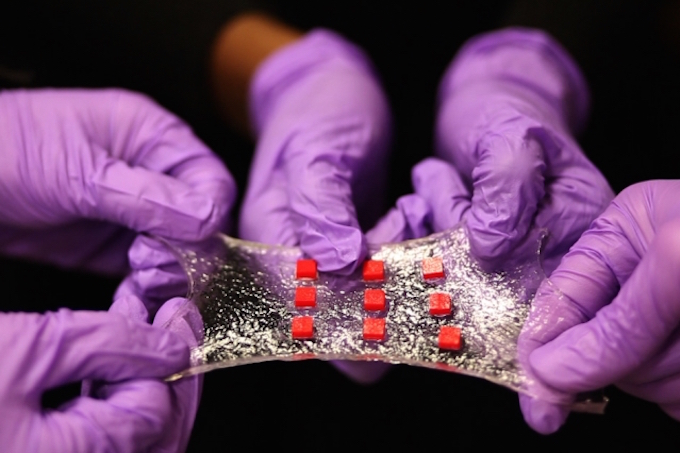
Flexible hydrogel bandage senses temperature, releases medicine

MIT’s Xuanhe Zhao has designed a bandage that  releases medicine in response to changes in skin temperature.  It can be programmed to light if  wound attention is required, such as when medicine is low.

The flexible,  gel-like material  incorporates temperature sensors, LED lights, other electronics, and tiny, drug-delivering reservoirs and channels.

Zhao believes that hydrogel coated electronics  will also be able to be used inside the body.  He suggested that implanted, biocompatible glucose sensors, or  soft, compliant neural probes could be created.


Wearable Tech + Digital Health San Francisco – April 5, 2016 @ the Mission Bay Conference Center

NeuroTech San Francisco – April 6, 2016 @ the Mission Bay Conference Center

Wearable Tech + Digital Health NYC – June 7, 2016 @ the New York Academy of Sciences

NeuroTech NYC – June 8, 2016 @ the New York Academy of Sciences
 

Categories
Apps Asthma Sensors Wearables

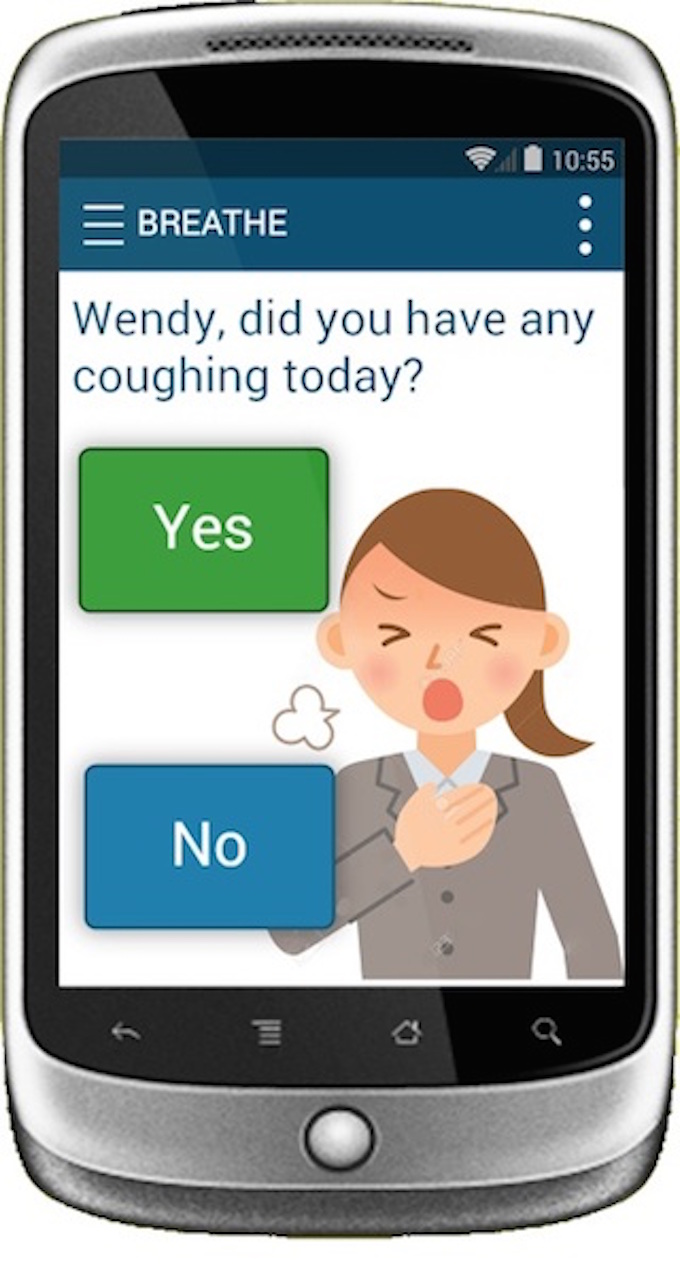
Wearable, home, school sensors + app predict asthma attacks

ApplySci is pleased to report another sensor-based initiative to combat asthma.

Alex Bui and colleagues from UCLA and USC are creating technology for smart phones and watches to identify asthma attack triggers.  The program is part of the National Institute of Biomedical Imaging & Bioengineering’s Pediatric Research using Integrated Sensor Monitoring Systems  initiative.

The  platform will transmit data to a phone from wearable sensors, and those placed in homes and schools. The information is sent to the cloud, where it will be integrated with  electronic health records and real-time weather, air quality, pollen count  reports.


WEARABLE TECH + DIGITAL HEALTH SAN FRANCISCO – APRIL 5, 2016 @ THE MISSION BAY CONFERENCE CENTER

NEUROTECH SAN FRANCISCO – APRIL 6, 2016 @ THE MISSION BAY CONFERENCE CENTER

WEARABLE TECH + DIGITAL HEALTH NYC – JUNE 7, 2016 @ THE NEW YORK ACADEMY OF SCIENCES

NEUROTECH NYC – JUNE 8, 2016 @ THE NEW YORK ACADEMY OF SCIENCES

Categories
Asthma Sensors Wearables

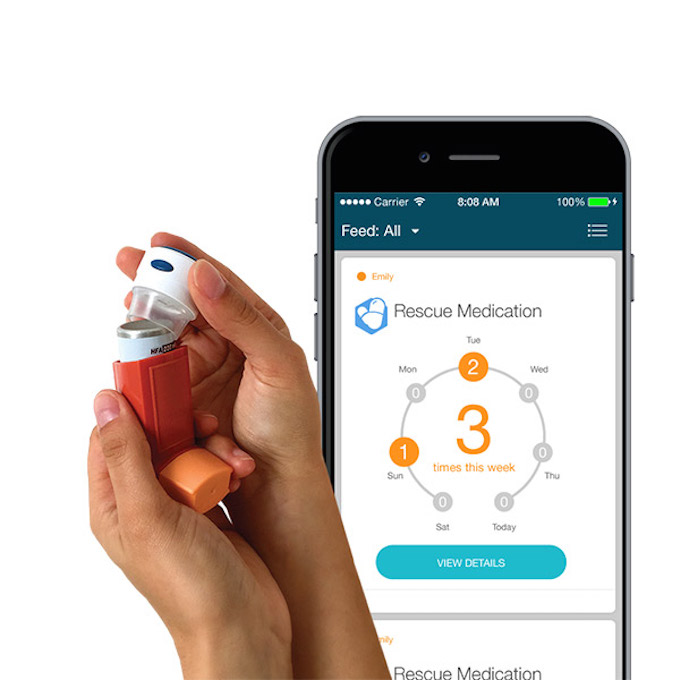
Medication sensing inhaler correlates adherence, attacks

Propeller Health and GSK are developing of an inhaler-integrated medication sensor that will automatically collect and record usage data.  The system combines sensors, mobile apps, analytics, and feedback for patients and caregivers.

The companies believes that it will help doctors better understand asthma and COPD, predict attacks, and reduce hospitalizations.

Information will be collected in a central data repository and analyzed for adherence patterns across patient populations, and correlations between adherence and safety, efficacy and economic outcomes.


WEARABLE TECH + DIGITAL HEALTH SAN FRANCISCO – APRIL 5, 2016 @ THE MISSION BAY CONFERENCE CENTER

NEUROTECH SAN FRANCISCO – APRIL 6, 2016 @ THE MISSION BAY CONFERENCE CENTER

WEARABLE TECH + DIGITAL HEALTH NYC – JUNE 7, 2016 @ THE NEW YORK ACADEMY OF SCIENCES

NEUROTECH NYC – JUNE 8, 2016 @ THE NEW YORK ACADEMY OF SCIENCES

Categories
Heart Wearables

Wearable VR system guides coronary artery surgery

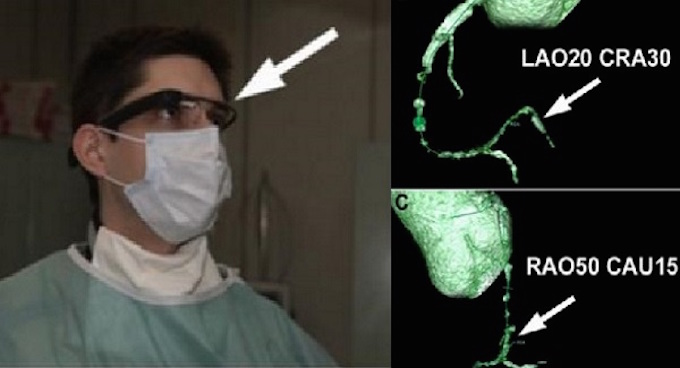
Maksymilian Opolski of the Cardinal Wyszynski Institute of Cardiology used a VR system combining a custom app and Google Glass to clear a blocked coronary artery. The patient had chronic total occlusion, which  is difficult to clear with catheter-based percutaneous coronary intervention.   Surgeons often cannot visualize the blockage with CTA imaging.

The system provided 3D reconstructions of the artery during the procedure, allowing surgeons to verify the direction of the guide wire, to clear the blockage and implant two drug-releasing stents.

The head-mounted display enabled image capture and video.  The hands-free voice recognition system allowed for zoom and changes of images.

According to Opolski, “this case demonstrates the novel application of wearable devices for display of CTA data sets in the catheterization laboratory that can be used for better planning and guidance of interventional procedures, and provides proof of concept that wearable devices can improve operator comfort and procedure efficiency in interventional cardiology.”

WEARABLE TECH + DIGITAL HEALTH SAN FRANCISCO – APRIL 5, 2016 @ THE MISSION BAY CONFERENCE CENTER

NEUROTECH SAN FRANCISCO – APRIL 6, 2016 @ THE MISSION BAY CONFERENCE CENTER

Categories
Seniors Wearables

Gait monitoring wearable to prevent senior falls

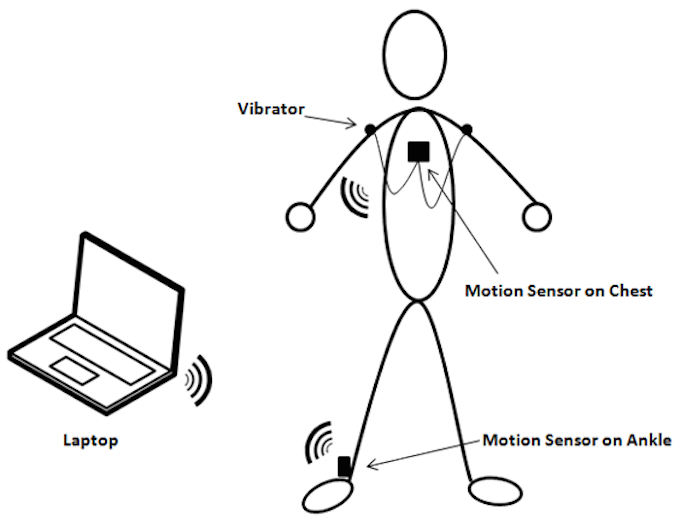
Roozbeh Jafari and Texas A&M colleagues are developing a gait monitoring wearable to  prevent senior falls.  The system will analyze multiple sway and gait parameters while one walks or stands on one leg.   Users will receive auditory and vibration feedback to reduce an unsafe sway and prevent falls. The wearable will be worn on the ankle and chest, and can be used for home monitoring or clinical training/risk assessment.

WEARABLE TECH + DIGITAL HEALTH SAN FRANCISCO – APRL 5, 2016 @ THE NEW YORK ACADEMY OF SCIENCES

NEUROTECH SAN FRANCISCO – APRIL 6, 2016 @ THE NEW YORK ACADEMY OF SCIENCES

Categories
Eyes Wearables

LCD glasses treat amblyopia, correct vision

Amblyz are programmable LCD glasses that can treat amblyopia (colloquially known as “lazy eye”).

Instead of patching, the lens over the affected eye would go dark for a few seconds out of every 30 during the prescribed patching period.  As children with amblyopia often have astigmatism or nearsightedness, the glasses simultaneously corrects vision (when not occluding it).

Researchers compared  Amblyz with traditional patching on 33 children, ages 3-8. For 3 months, one group wore the patch for 2 hours per day, while the other wore Amblyz for 4 hours per day. Both groups showed similar improvement, and were able to see an average of two more lines on a reading chart.

WEARABLE TECH + DIGITAL HEALTH SAN FRANCISCO – APRIL 5, 2016 @ THE MISSION BAY CONFERENCE CENTER

NEUROTECH SAN FRANCISCO – APRIL 6, 2016 @ THE MISSION BAY CONFERENCE CENTER

Categories
Sleep Wearables

Ring monitors vitals 24/7, makes sleep improving suggestions

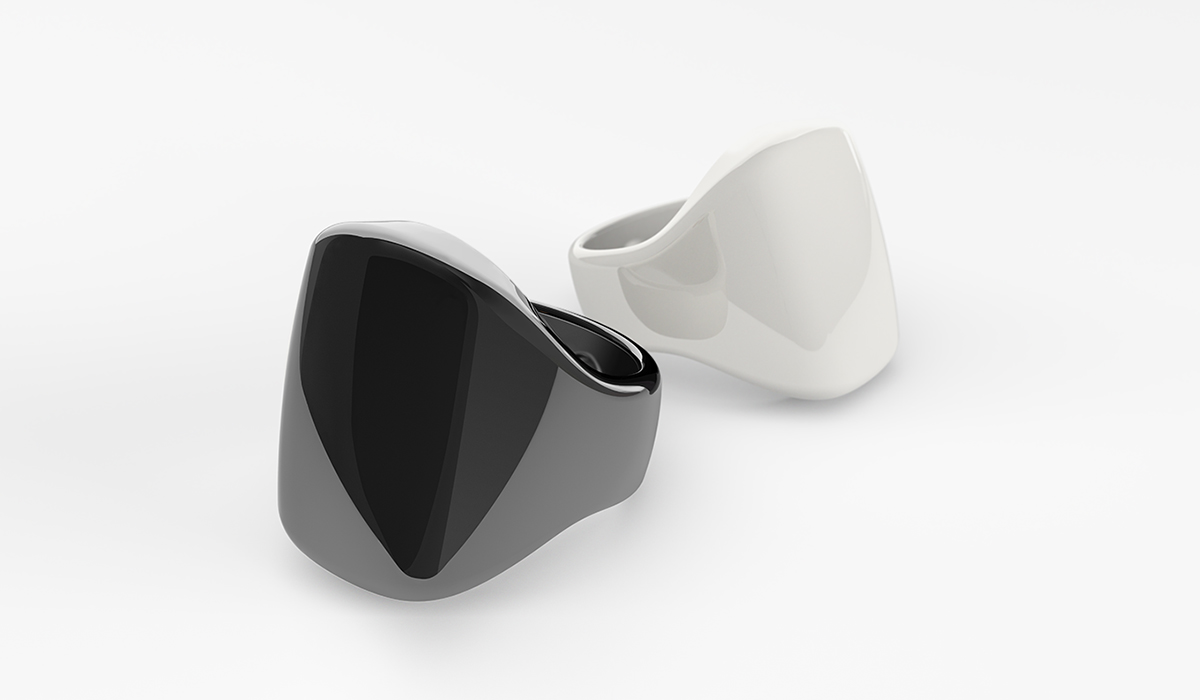
Oura ring is a crowdfunded wearable that monitors heart rate, respiration, temperature, and movement, including time spent sitting.   The ceramic ring uses Bluetooth to share data with the accompanying app, which makes activity suggestions to improve sleep.  It also provides a “readiness score,” which the company claims alerts a user of his/her peak physical and mental performance times. Oura’s battery lasts for three days, and is charged in its ring box.

WEARABLE TECH + DIGITAL HEALTH SAN FRANCISCO – APRIL 5, 2016 @ THE MISSION BAY CONFERENCE CENTER

NEUROTECH SAN FRANCISCO – APRIL 6, 2016 @ THE MISSION BAY CONFERENCE CENTER

Categories
Conference Wearables

Smart airline uniforms improve passenger safety

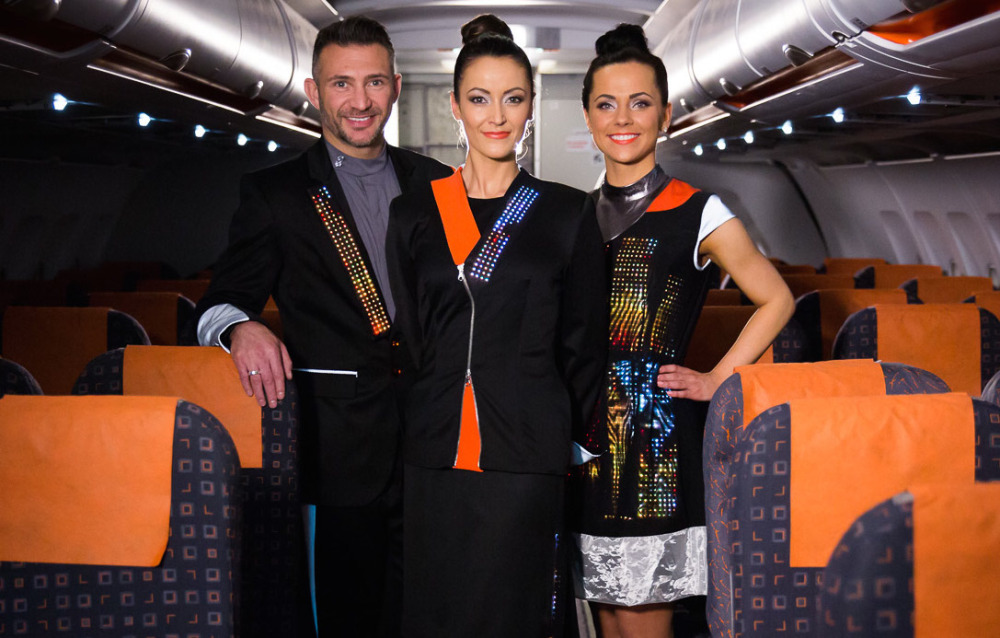
easyJet has partnered with CuteCircuit to create sensor embedded crew uniforms to improve passenger safety.

Cabin crew uniforms have shoulder LEDs and illuminated hems to provide lighting. Lapel LEDs display fight numbers, and microphones  in the fabric enable immediate communication.

Engineers’ uniforms have LEDs in  jacket hoods to illuminate work areas, and built in cameras to share photos for assistance.  Integrated air quality sensors and barometers notify workers of environmental issues, and create a city-by-city air quality map for passengers.

WEARABLE TECH + DIGITAL HEALTH SAN FRANCISCO – APRIL 5, 2016 @ THE MISSION BAY CONFERENCE CENTER

NEUROTECH SAN FRANCISCO – APRIL 6, 2016 @ THE MISSION BAY CONFERENCE CENTER

Categories
Heart Wearables

Chip uses ECG to monitor heart, improving wearable accuracy

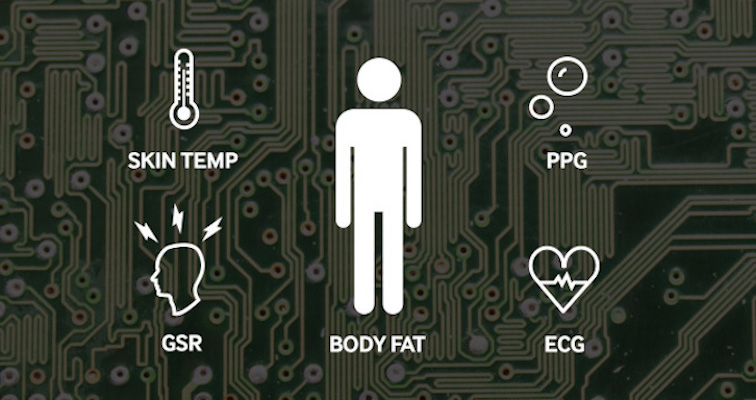
Samsung’s  Bio Processor uses ECG  to continuously measure the electric activity of the heart, improving its accuracy.  It must be worn on the skin near the heart, and includes built-in flash memory and Bluetooth for connecting to one’s phone.  The chip can also monitor PPG, ECG, skin temperature, GSR and body fat. The company describes this as a breakthrough in wearable accuracy.  While not yet available to consumers, it will be used in wearables for health, fitness, or biometric identification purposes.

WEARABLE TECH + DIGITAL HEALTH SAN FRANCISCO – APRIL 5, 2016 @ THE MISSION BAY CONFERENCE CENTER

NEUROTECH SAN FRANCISCO – APRIL 6, 2016 @ THE MISSION BAY CONFERENCE CENTER

Categories
Pain Wearables

Wearable monitors physiological signs of pain

When we experience pain in a clinical setting, we are asked to rate it on a scale of 1-10, which guides our treatment plan.  This method is obviously imprecise, but also irrelevant if a patient cannot communicate or is under anesthesia.

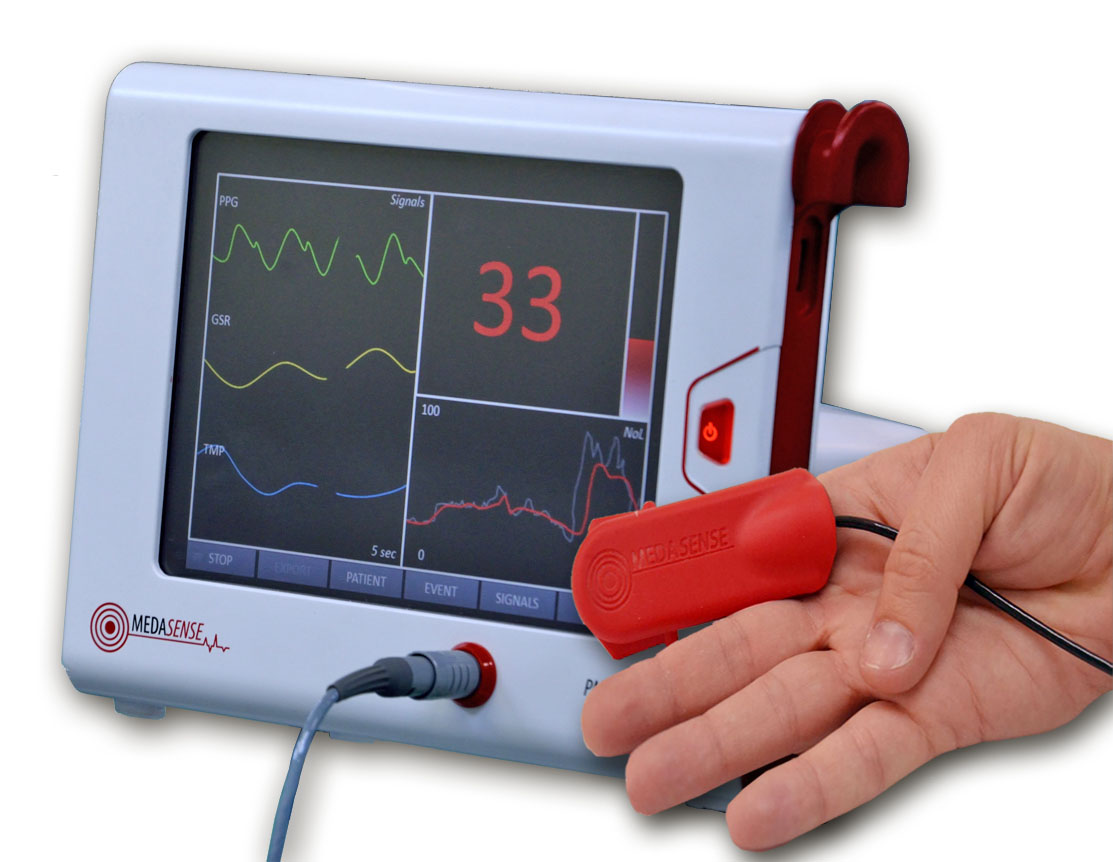
Medasense is developing a finger mounted wearable with a sensor that records physiological signs of pain.  The measurements are derived from the nonlinear composite of heart rate, heart rate variability, amplitude of the photoplethysmogram, skin conductance, fluctuations in skin conductance, and their time derivatives.  Algorithms convert the data into a real-time, continuous index on a bedside monitor.  The system is meant to be used both in the hospital and at home.

WEARABLE TECH + DIGITAL HEALTH SAN FRANCISCO – APRIL 5, 2016 @ THE MISSION BAY CONFERENCE CENTER

NEUROTECH SAN FRANCISCO – APRIL 6, 2016 @ THE MISSION BAY CONFERENCE CENTER

Categories
Pregnancy Wearables

Wireless monitor tracks contractions, fetal heart rate

TrueLabor is a wireless monitor that measures uterine contractions and fetal heart rate throughout all stages of pregnancy and labor.  It’s creator, OB-Tools, claims that it can distinguish between true and false contractions, and is not affected by movement.

A uterine monitor measures electrical activity via surface  EMG electrodes attached to the abdomen.  An algorithm generates a wave pattern that graphically demonstrates the presence, frequency, and intensity of contractions, while filtering excess noise.

WEARABLE TECH + DIGITAL HEALTH SAN FRANCISCO – APRIL 5, 2016 @ THE MISSION BAY CONFERENCE CENTER

NEUROTECH SAN FRANCISCO – APRIL 6, 2016 @ THE MISSION BAY CONFERENCE CENTER

PREFERRED REGISTRATION RATE AVAILABLE THROUGH 11/30/15

Categories
Wearables

Continuous blood flow measuring wearable

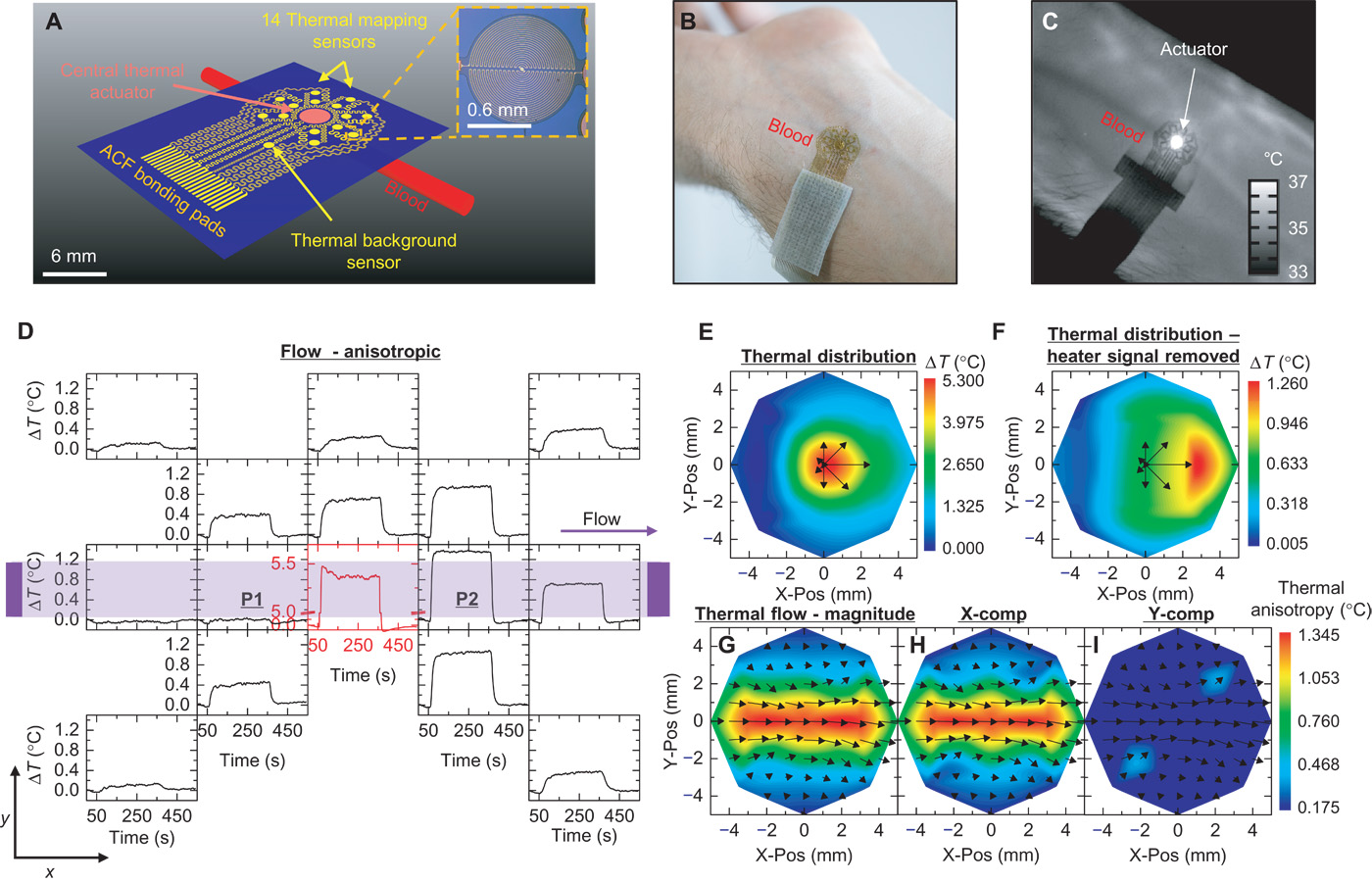
John Rogers, Richard Chad Webb, and colleagues at the University of Illinois have built a flexible (epidermal electronics based) monitor that measures blood flow in the outermost 2 millimeters of skin. Blood flow measuring devices typically use optical imaging, which requires patients to not move.  This technology can be used in a wearable that obtains measurements during motion.

The thin, light device sits on top of the skin, without distorting the blood flow it seeks to measure. It detects differences in heat patterns. Computer algorithms interpret the heat pattern differences as blood flow rate.

The device was  placed above the wrist veins of human volunteers. Blood flow measurements were taken as the subjects stood motionless for 5 minutes; as they stepped up and down on a machine for 3 minutes; and as they lied on their backs. Researchers  compared the results with those of optical imagers to ensure accuracy.

To be used in practice, a self contained power source, and components that allow the data to be wirelessly transmitted, must still be developed.

WEARABLE TECH + DIGITAL HEALTH SAN FRANCISCO – APRIL 5, 2016 @ THE MISSION BAY CONFERENCE CENTER

NEUROTECH SAN FRANCISCO – APRIL 6, 2016 @ THE MISSION BAY CONFERENCE CENTER

REGISTER BY NOVEMBER 30TH TO RECEIVE THE PREFERRED RATE.