Categories
Eyes Sensors

Eye sensor tracks intraocular pressure changes

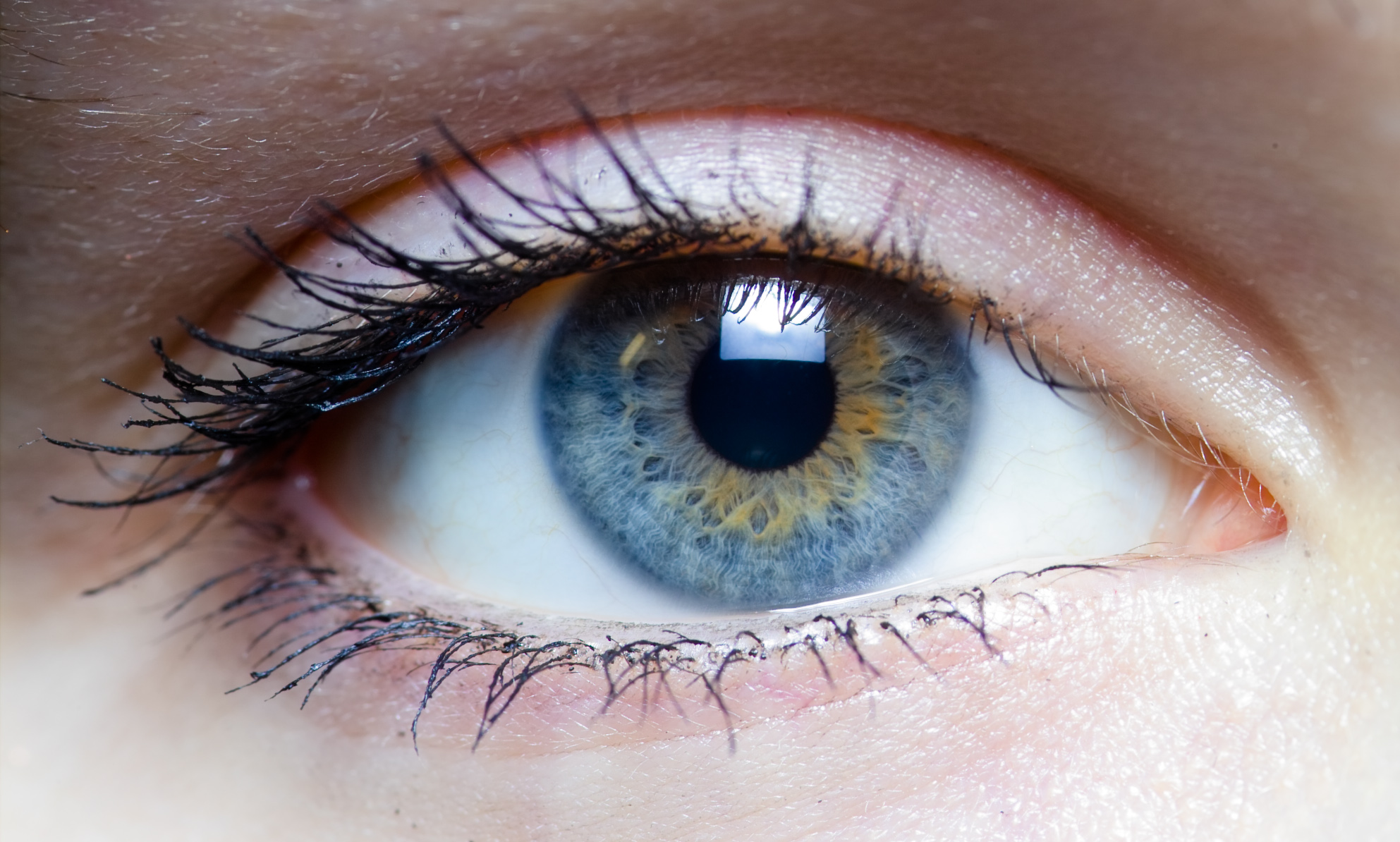
University of Washington researchers have designed a sensor that could be placed permanently in one’s eye to track pressure changes. It would be embedded with an artificial lens during cataract surgery.  The sensor would detect pressure changes instantaneously and then wirelessly transmit the data using radio frequency waves.

Eye pressure is thought to vary throughout the day and with activity levels.  Currently, one must visit an ophthalmologist to check intraocular pressure.  Changes are often noticed too late, when the patient has glaucoma and cannot be treated effectively.

The team built a prototype that uses radio frequency for wireless power and data transfer. A thin, circular antenna spans the perimeter of the device – roughly tracing a person’s iris – and harnesses enough energy from the surrounding field to power a small pressure sensor chip. The chip communicates with a close-by receiver about any shifts in frequency, which signify a change in pressure. Actual pressure is then calculated and changes are tracked and recorded in real time.

The prototype must be miniaturized to fit into an artificial lens, and the research team is working to decrease its size. They have successfully tested the sensing device embedded in the same flexible silicon material that’s used to create artificial lenses in cataract surgeries.

Categories
Diabetes

“Bionic” pancreas passes initial tests

A wearable “artificial pancreas” passed initial tests, constantly monitoring blood sugar and automatically giving insulin or a sugar-boosting drug as needed.  The experimental device is being developed by Boston University professor Edward Damiano, Mass General doctor Steven Russell, and colleagues.

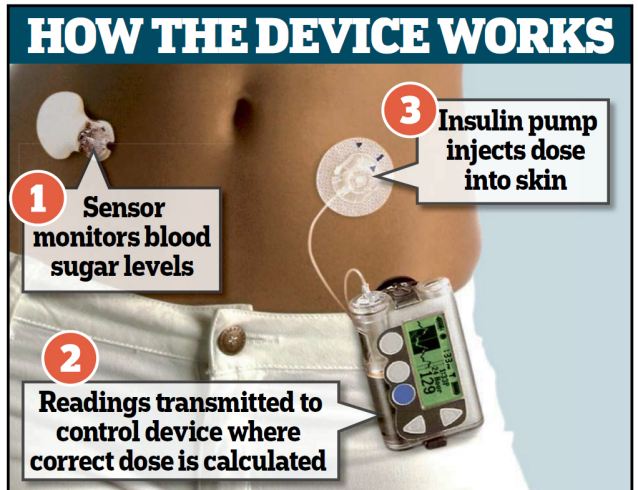
The “bionic” pancreas improved blood-sugar control more than standard monitors and insulin pumps when tested for 5 days on 20 adults and 32 teens. Unlike other artificial pancreases in development, this one can also fix too-low sugar, mimicking a natural pancreas.

It has three parts: two cellphone-sized pumps for insulin and sugar-raising glucagon, and an iPhone wired to a continuous glucose monitor. Three small needles go under the skin, usually in the belly, to connect patients to the components, which can be kept in a pocket.

Patients must still prick their fingers to test blood sugar twice a day to make sure the monitor is accurate, but the system administers insulin or glucagon as needed.

A study of 40 adults, over 11 days, begins Monday.   Within 6 months, researchers hope to have a next-generation version combining all three components in one device.  It will be tested in studies next year, with the goal of FDA approval.

Categories
BCI

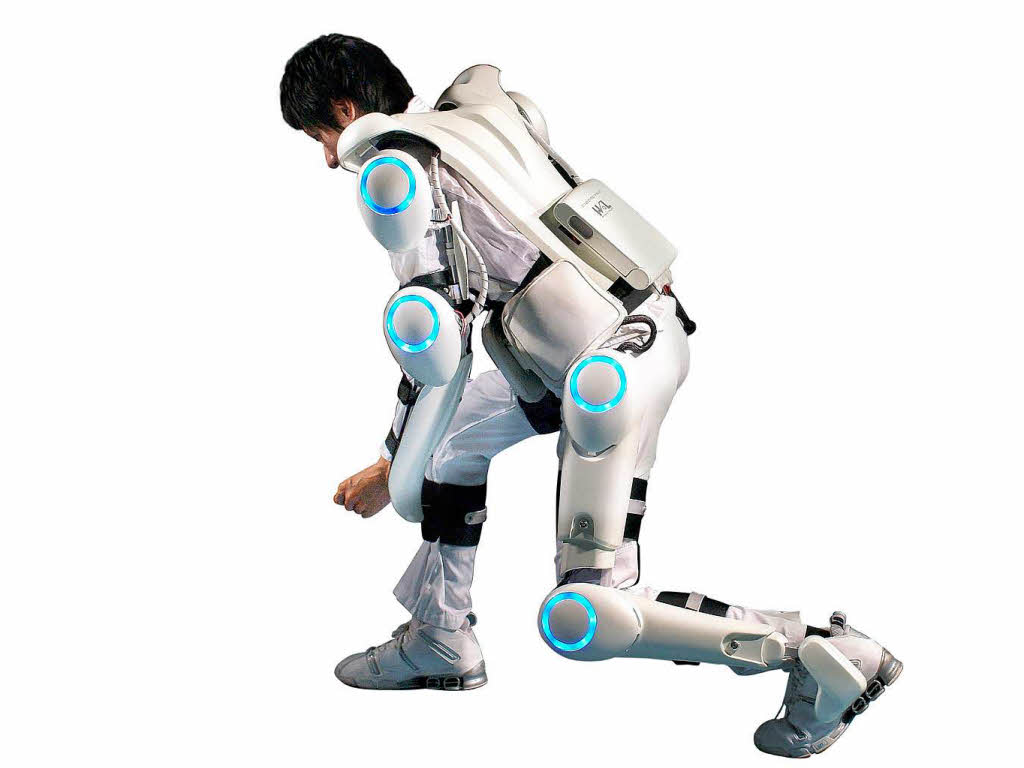
Paraplegic controls exoskeleton with mind, kicks off World Cup

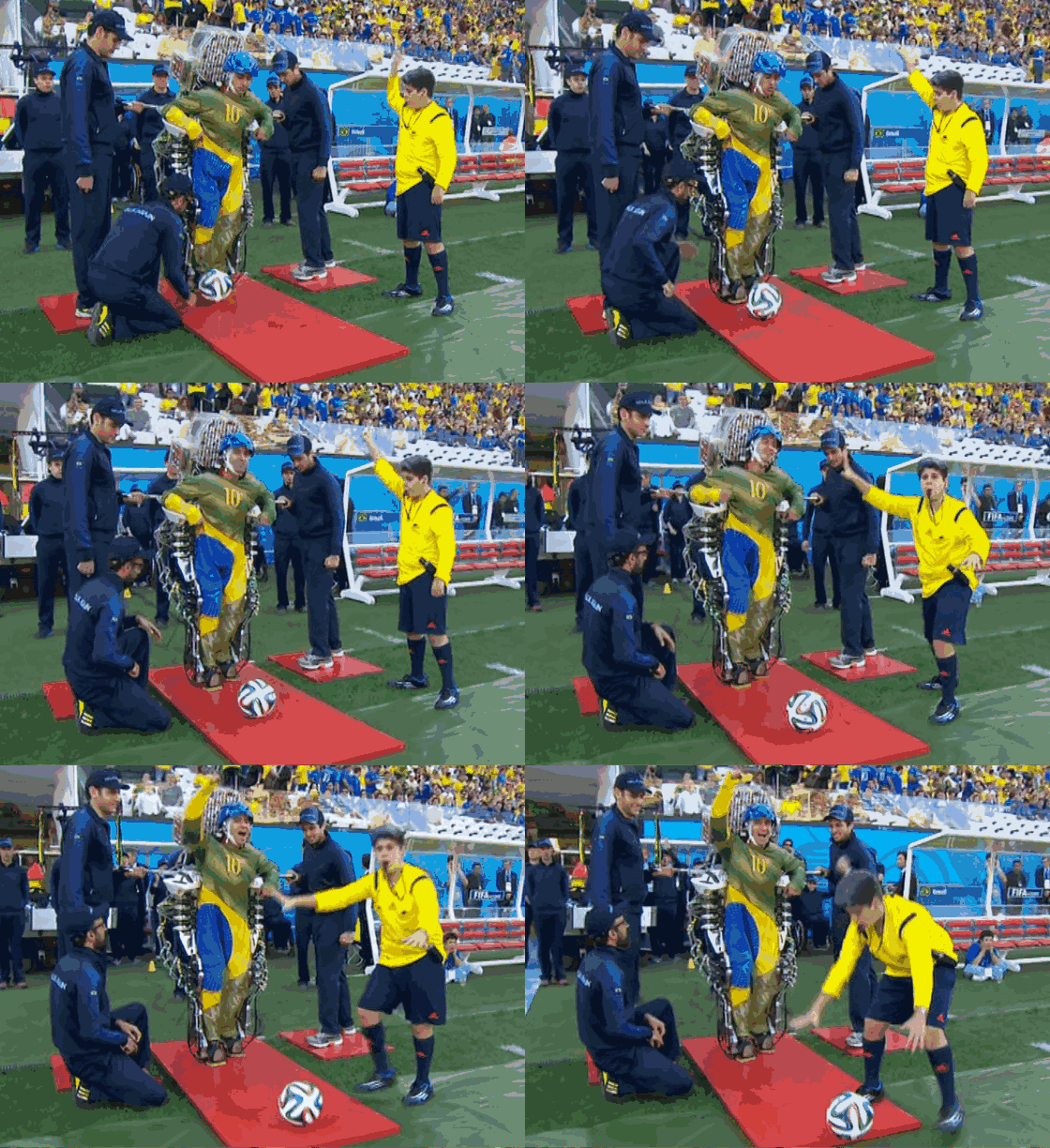
As ApplySci predicted in January, Julian Pinto, a paraplegic, successfully kicked off the World Cup in Brazil this week.

Pinto was aided by a mind-controlled exoskeleton created by Duke Professor Miguel Nicolelis and a team of 150 researchers involved in the Walk Again Project.

They named the device the BRA-Santos Dumont, a combination of the three-letter sporting code for Brazil and Alberto Santos-Dumont, a Brazilian aviator who demonstrated controllable flight was possible by flying his dirigible around the Eiffel Tower.

The robotics work was led by Professor Gordon Cheng at the Technische Universitat Munchen, and French researchers built the exoskeleton. Nicolelis’s team focused on ways to read people’s brain waves, and use those signals to control robotic limbs.

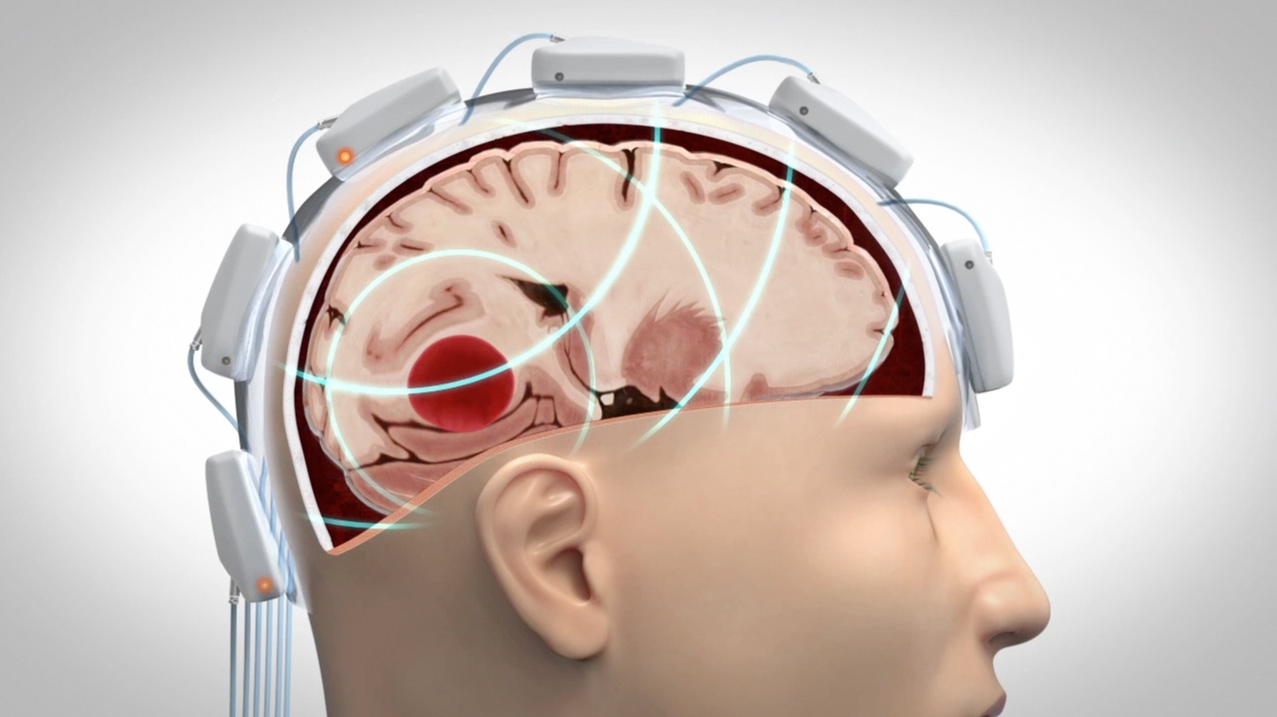
To operate the device, the wearer moves his legs by thinking about it. Sensors inside a cap on the wearer’s head transfer the neuronal information and send it to a computer inside the exoskeleton’s backpack. This information is then sent to the legs of the exoskeleton, which move via hydraulic drivers.

Categories
fitness Sensors Wearables

Apple patents weightlifting tracker

Apple’s U.S. Patent No. 8,749,380 is a “shoe wear-out sensor, body-bar sensing system, unitless activity assessment and associated methods.”   

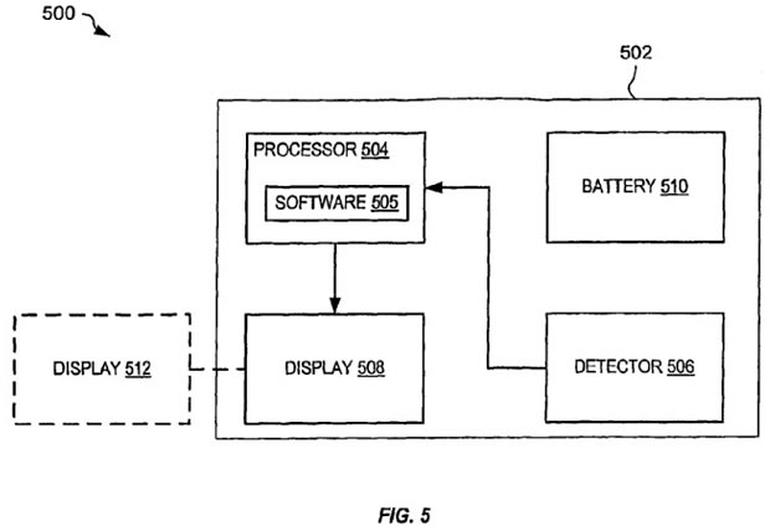
The patent describes a system where a sensor-laden device attaches to a weightlifting bar and counts and displays repetitions.  A watch for remote readings is included.  It is widely thought to be a part of an iWatch weightlifting tracker.

The device incorporates sensors, accelerometers, and processors with its display. Data can be sent wirelessly to a watch. Sensor hardware clips to fitness equipment, including bars, dumbbells and machines, and monitors movement and number of repetitions. 

Categories
AI

Chatbot passes Turing Test

A chatterbot named Eugene Goostman has become the first to pass the Turing Test.

“Eugene” and four other contenders participated in the Turing Test 2014 Competition at the Royal Society in London.  Each chatterbox was required to engage in a series of five-minute text-based conversations with a panel of judges.  A computer passes the test if it is mistaken for a human more than 30% of the time. Eugene convinced 33% of the judges it was human– the only machine in history to do so.

The competition was held on the 60th anniversary of the death of Alan Turing, the great British mathematician, logician, cryptanalyst , computer scientist and philosopher.

During World War II, Turing worked for the Government Code and Cypher School (GC&CS) at Bletchley Park, Britain’s code breaking center.  He led Hut 8, the section responsible for German naval cryptanalysis. He devised a number of techniques for breaking German ciphers, and improved the pre-war Polish bombe method, an electromechanical machine that could find settings for the Enigma machine.

After the war, he worked at the National Physical Laboratory, where he designed the ACE, among the first designs for a stored-program computer.

The great Alan Turing was highly influential in the development of computer science, providing a formalization of the concepts of “algorithm” and “computation”. Turing is widely considered  the “father” of theoretical computer science and artificial intelligence.

The shameful British government prosecuted Turing  for being gay, showing no respect for a man whose contributions to Britain and the world were enormous.  He accepted treatment with estrogen injections (chemical castration) as an alternative to prison, and later committed suicide.

Categories
BCI Brain Robotics

“Neurotic Robots” mimic human brain function

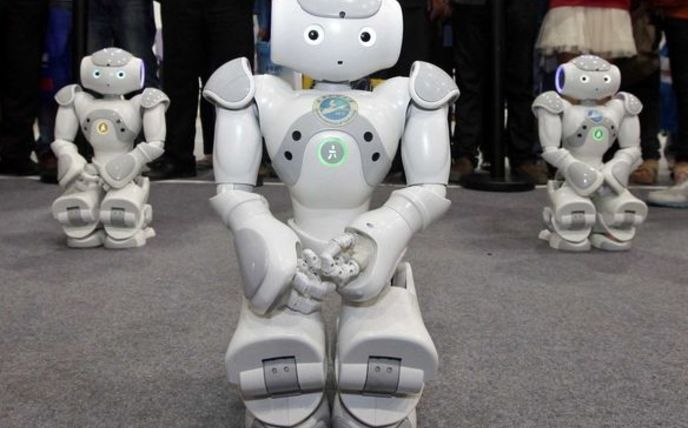
UC Irvine professor Jeff Krichmar and colleagues are experimenting with robotic awareness and trying to teach mechanical brains to behave more like human and animal brains by programming traits that mimic obsessive-compulsive disorder or a fear of open spaces.

Professor Krichmar presented his research this week at the IEEE International Conference on Robotics and Automation in Hong Kong.

The team studied the actions of serotonin and dopamine in mice as they solved a maze or reacted to an unfamiliar environment.   The scientists then mimicked the actions of the brain chemicals by translating them into equations in the robots’ cognitive software.

Teaching a robot to feel fear or anxiousness could contribute to its ability to adapt to changing conditions and instill in it a sense of self-preservation.  For example, a search-and-rescue robot could analyze weather conditions before attempting a mission.

Krichmar has already developed a robot named Carl’s Junior  that responds to verbal commands and other external signals. It is used as a therapeutic tool for children on the autism spectrum who are less comfortable interacting with humans than they are with inanimate,  but responsive, objects.

Categories
Apps Data fitness

Apple focuses on digital health

This week, Apple announced its Health app and Healthkit framework in an attempt to standardize and the collection, display, and interpretation of of personal health data.

In a new ad, aired yesterday, the company highlights fitness hardware, including Misfit Shine, Zepp Golf Sensor, Adidas miCoach Smart Ball, Wahoo Fitness Blue and Withings Healthmate, and health apps including Nike+ Running, Strong Lifts, Sprinttimer, Argus and Johnson & Johnson Official 7 Minute Workout App.

“Developers have created a vast array of healthcare devices and accompanying applications – everything from monitoring your activity level, to your heart rate, to your weight, and chronic medical conditions like high blood pressure and diabetes. But up until now the information gathered by those applications has lived in silos,” said Software Engineering SVP Craig Federighi. “You can’t get a single comprehensive picture of your health situation. But now you can with HealthKit.”

Categories
Brain

First 3D synapse model

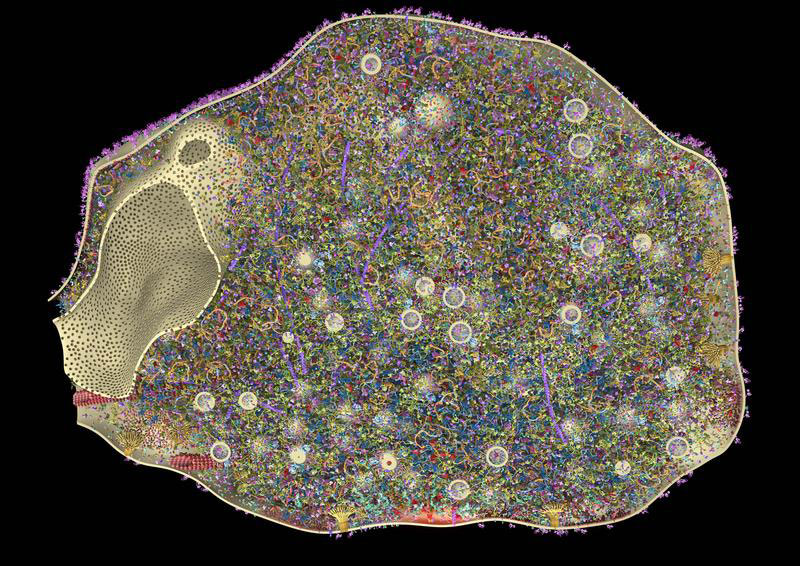
Benjamin Wilhelm and colleagues the University of Göttingen Medical Center have developed a detailed 3D model of a synapse.  Millions of nerve terminals from rat brains were isolated.  A combination of electron microscopymass spectrometry, antibody staining, and super-resolution fluorescence microscopy determined the abundance and distribution of 62 proteins crucial for the synaptic vesicle cycle.

“Our model shows that the proteins involved in neurotransmitter release can be enormously abundant, with up to 27,000 copies per synapse,” said Professor Silvio Rizzoli, “whereas proteins involved in recycling are present in only 1,000-4,000 copies.”

The numbers of proteins involved in recycling are much lower than expected. They give the terminal the capacity to recycle 10% of its entire vesicle pool.  Recycling takes place slowly, in the seconds following vesicle fusion, therefore does not contribute when multiple vesicles fuse in quick succession.  As Rizzoli describes the advantage, “the cell does not need to produce huge numbers of recycling proteins, which saves energy.”

The model also shows that the proteins involved in the same steps of the vesicle cycle are present in roughly equal amounts within the terminal, raising the question of how their synthesis is regulated so that each set of proteins is present at the right concentration.

The researchers hope are to generate a similar model of an entire neuron within the next five years.

Categories
fitness Sensors Wearables

Samsung announces Simband health tracker

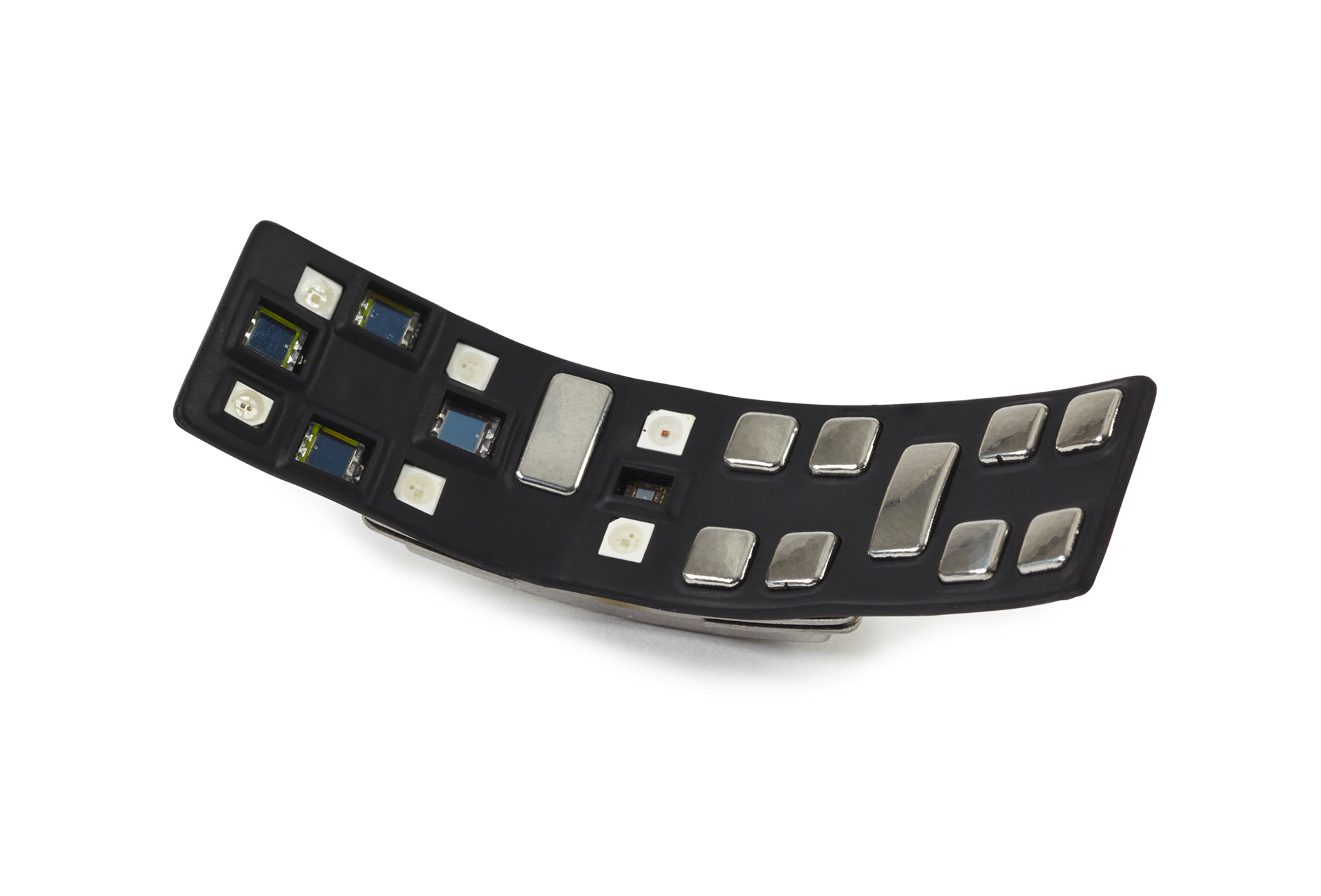
Samsung’s forthcoming Simband, pitched as a common platform for wearable health sensor development,  will record and analyze user vital signs in real time.  Data will be uploaded directly to the cloud, with out the need for a smartphone.

Simband has multiple sensors, a thin removable battery and a small motherboard. It is powered by a 1GHz dual-core Arm A7 processor and equipped with Bluetooth and Wi-Fi radios.

It contains the Simband Sensor Module, which can house optical, electrical and physical sensors. Data collected can be forwarded to SAMI (Samsung Architecture for Multimodal Interactions) and used with third party apps.

Categories
BCI Brain EEG

Brainflight project for BCI enabled flying

Professor Florian Holzapfel and colleagues at the Institute of Flight System Dynamics of the Technische Universität München have demonstrated the feasibility of flying via brain control.

Brainwaves of the pilots are measured with EEG electrodes connected to a cap.  An algorithm developed by Team PhyPa at the Berlin Institute of Technology deciphers electrical potentials and converts them into control commands.  Only very clearly defined electrical brain impulses required for  are recognized by the brain-computer interface.

Called Brainflight, the EU-funded project aims to prove that brain-controlled flight is possible and that pilots with little or no experience can use a BCI to fly.  Some of the pilots were able to land the plane, in a simulator, under conditions of poor visibility using their thoughts.

Categories
Monitoring Sensors Wearables

Sensor “band-aid” assesses physical and cognitive performance

Airmen at the Wright-Patterson Air Force Base are testing bandage-like sensors that analyze sweat to assess physical and cognitive performance.  This is based on a study by Dr. Josh Hagen of the Air Force Research Lab.  The sensors notify users when stress, dehydration, and other health issues are detected.

“Our vision is that every Airman at the beginning of their week, will be able to put on an electronic band aid that will quantify everything about them,” said Hagen. “It would measure the typical things a doctor would measure in a checkup.”

Some  Air Force Marathoners wore the sensor patch while running this year.  While typical performance monitoring is done by measuring heart rate, skin temperature and blood pressure, biological chemical/molecular data is obtained from fluids.  These include blood, urine, saliva and – in the case of the biosensor patch – sweat.

Categories
Heart Monitoring Sensors

Arrhythmia monitoring patch

The iRythm Zio patch is a wearable sensor used to monitor arrhythmias in cardiac patients for up to two weeks. While it is a continuous monitor, the device also has a large button on top for patients to capture symptomatic events. This is an alternative to the 24 hour Holter monitor. The FDA approved device does not wirelessly transmit data to a mobile device. Readings are stored in the patch itself, which is then mailedto iRhythm at the end of the monitoring period.  iRythm analyzes the data and produces a report for the physician.