Categories
Brain Sensors

Carbon nanotube sensor precisely measures dopamine

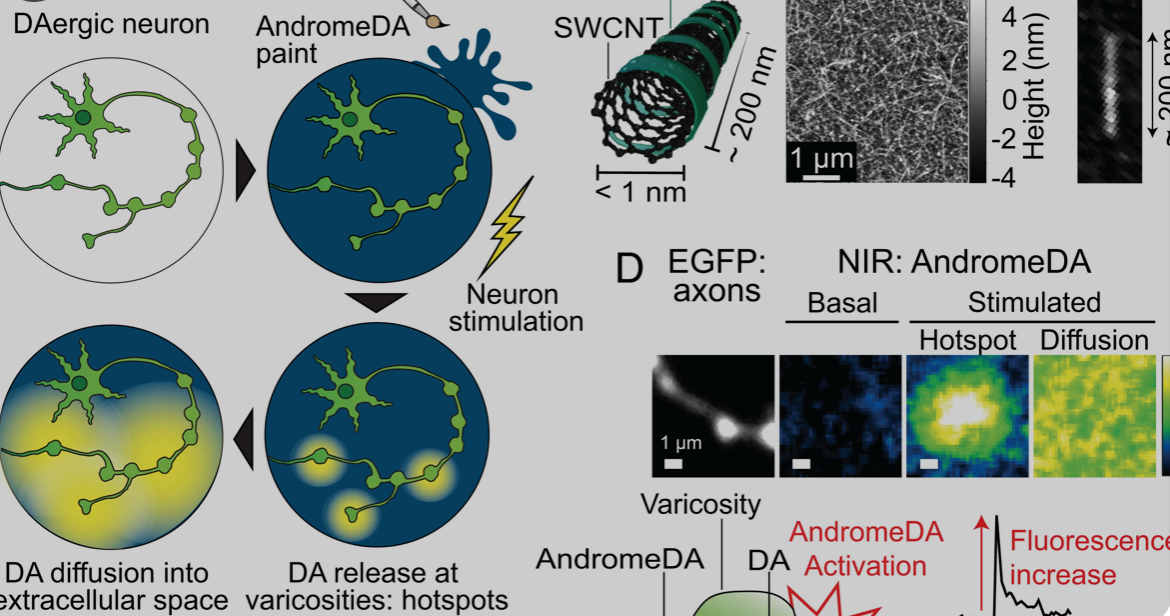
Ruhr University professor Sebastian Kruss, with Max Planck researchers Sofia Elizarova and James Daniel, has developed a sensor that can visualize the release of dopamine from nerve cells with unprecedented resolution. The team used modified carbon nanotubes that glow brighter in the presence of the messenger substance dopamine.

Eizarova said that the sensor “provides new insights into the plasticity and regulation of dopamine signals. In the long term, they could also facilitate progress in the treatment of diseases such as Parkinson’s.”


Join ApplySci at MIT on September 30th for Deep Tech Health + Neurotech Boston

Categories
COVID 19 Sensors

DNA sensor detects whether virus is present and infectious, including COVID 19

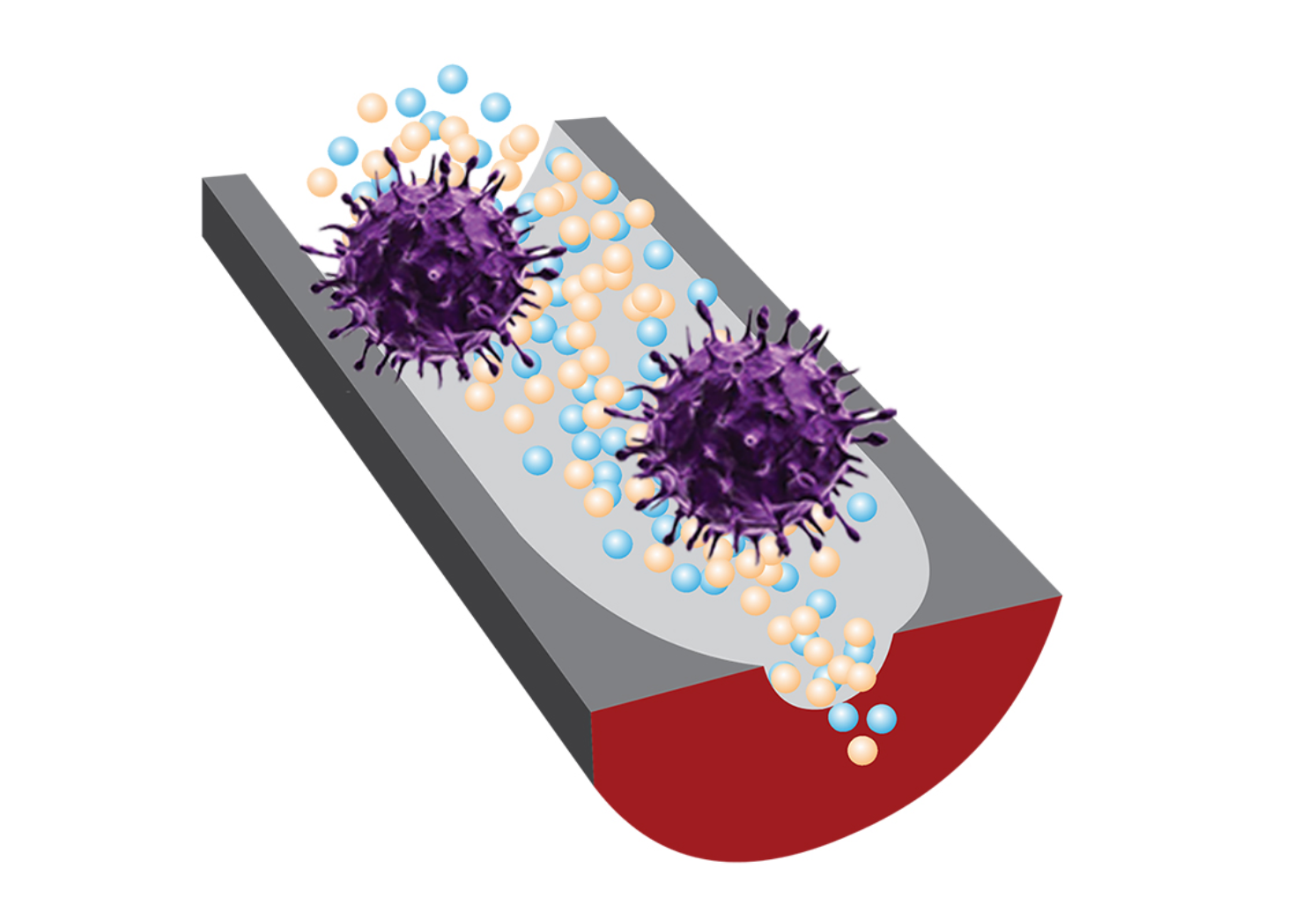
Yi Lu and Benito Marinas at the University of Illinois and University of Texas have developed a sensor that detects both the presence of a virus and whether or not it is infectious, integrating purpose designed DNA fragments and nanopore sensing. They have already studied its potential with the adenovirus and COVID 19.

Current PCR tests detect viral genetic material but cannot distinguish whether a sample is infectious or determine whether a person is contagious.

DNA aptamers bind selectively to infectious viruses. In addition to the nanopore sensor, they could be integrated into other platforms such as color-changing dipsticks.

According to Lu: “With the virus that causes COVID-19, it has been shown that the level of viral RNA has minimal correlation with the virus’s infectivity. In the early stage when a person is infected, the viral RNA is low and difficult to detect, but the person is highly contagious. When a person is recovered and not infectious, the viral RNA level can be very high. Antigen tests follow a similar pattern, though even later than viral RNA. Therefore, viral RNA and antigen tests are both poor in informing whether a virus is infectious or not. It may result in delayed treatment or quarantine, or premature release of those who may still be contagious.”

Plaque assay Tests that detect infectious viruses require special preparation and days of incubation. The new method produces results in 30 minutes to two hours. Since it requires no pre-treatment of the sample, it can be used on viruses that will not grow in the lab.

The sensing technique could be applied to other viruses by tweaking the DNA to target different pathogens. The DNA aptamers used in the sensor can be readily produced with widely available DNA synthesizers, similarly to the RNA probes produced for PCR tests. Nanopore sensors are also commercially available, making the sensing technique readily scalable.

The researchers are working to integrate the sensors into easy to use detection methods, including dipsticks or smartphones.


Join ApplySci at MIT on April 8, 2022 for the 14th Wearable Tech + Digital Health + Neurotech Conference

Categories
Pharmaceuticals Sensors

Sweat sensor monitors drug levels, informs dosage

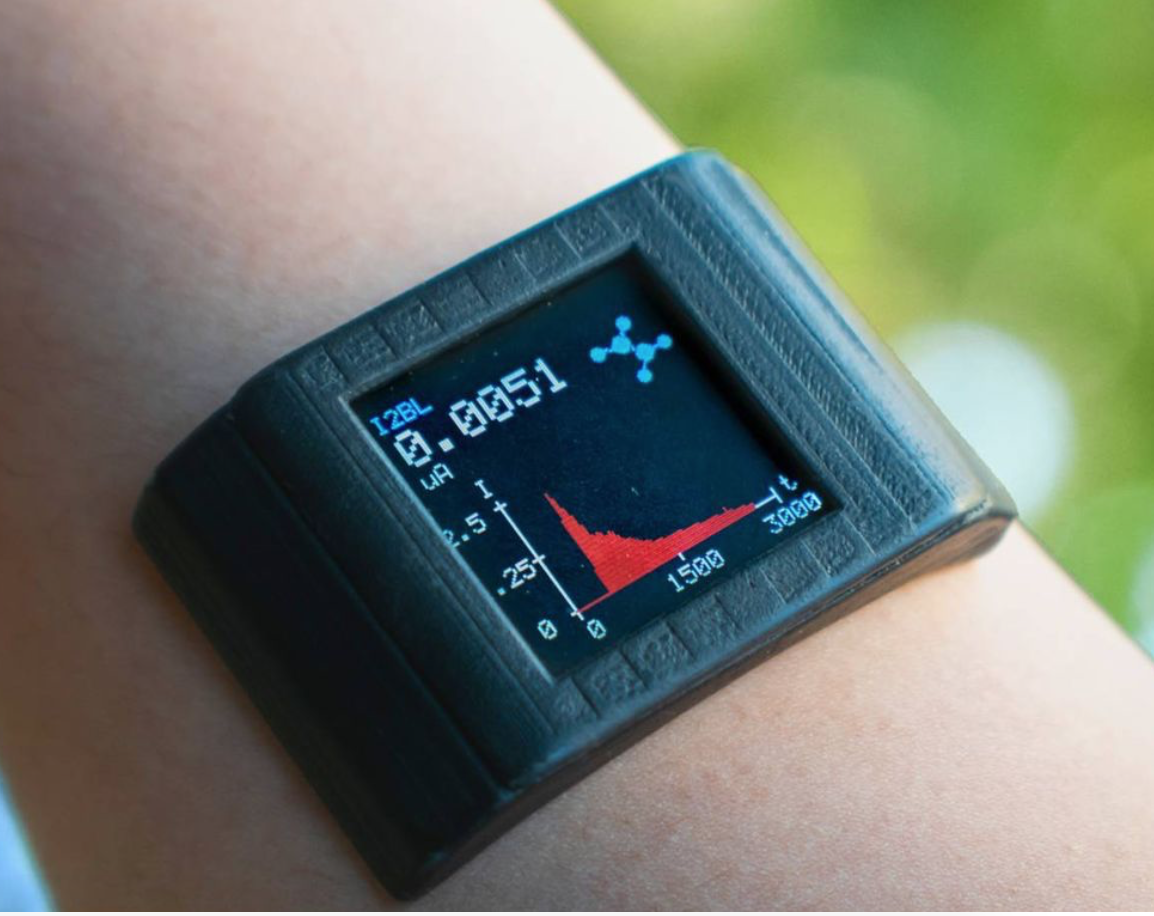
Sam Emaminejad, Shuyu Lin, Carlos Milla, Ronald Davis and UCLA and Stanford colleagues have developed a watch which monitors drug levels inside the body by analyzing a wearer’s sweat. The goal is individually tailored drug dosages.

Dosages are currently prescribed based on statistical effectiveness averages driven by weight and age. However, constantly changing body chemistry and an ones genetic makeup affect how fast drugs are absorbed, take effect and are eliminated from the body.

Current efforts to personalize the drug dosage rely heavily on repeated blood draws at the hospital. The samples are then sent out to be analyzed in central labs. These solutions are inconvenient, time-consuming, invasive and expensive. That is why they are only performed on a small subset of patients and on rare occasions.

Emaminjegad wanted to “create a wearable technology that can track the profile of medication inside the body continuously and non-invasively” and he seems to have succeeded, using tiny droplets of sweat.

In a recent study, he tracked the effect of acetaminophen, over a period of hours, by stimulating sweat glands with an electric current, and accurately detecting the drug’s unique electrochemical signal, against the backdrop of signals from many other molecules that may be circulating in the body and in higher concentrations than the drug.

The technology can personalize pharmacotherapy approaches, and, according to Emaminejad also be used to monitor medication adherence and drug abuse.

Categories
Parkinson's Sensors

Wearable haptic feedback/stimulation band to address Parkinson’s symptoms

Microsoft has submitted a patent application for a wearable band that uses haptic feedback for stimulation when wrapped around limbs or joints.  It is meant to alleviate Parkinson’s symptoms, including tremors and muscle stiffness.

Haptic actuators are distributed across a band that is adjusted to a  “duty cycle” which responds to data derived from wearable sensors, including accelerometers, gyroscopes, heart-rate sensors, and electromyography sensors, as well as tablets or phones.

Examples include stylus sensors communicating with a wrist-worn device to detect involuntary motion while writing. The actuators would then be used to reduce the involuntary motion.  The wearable itself could also detect the motion of the actuators.

The patent describes stimulation “provided through the vibration of two or more actuators within the wearable device. In various examples, the wearable device may additionally comprise a second channel for the provision of therapeutic stimulation, such as an audio channel (e.g. the wearable device may additionally comprise a speaker or buzzer),”

The sensors could be integrated into a patch on a shoulder or other joint, or into clothing.


Join ApplySci at the 10th Wearable Tech + Digital Health + Neurotech Silicon Valley conference on February 21-22 at Stanford University — Featuring:  Zhenan BaoChristof KochVinod KhoslaWalter Greenleaf – Nathan IntratorJohn MattisonDavid EaglemanUnity Stoakes Shahin Farshchi Emmanuel Mignot Michael Snyder Joe Wang – Josh Duyan – Aviad Hai Anne Andrews Tan Le – Anima Anandkumar – Hugo Mercier

Categories
Brain Sensors

Wearable sensor monitors shunt function in hydrocephalus

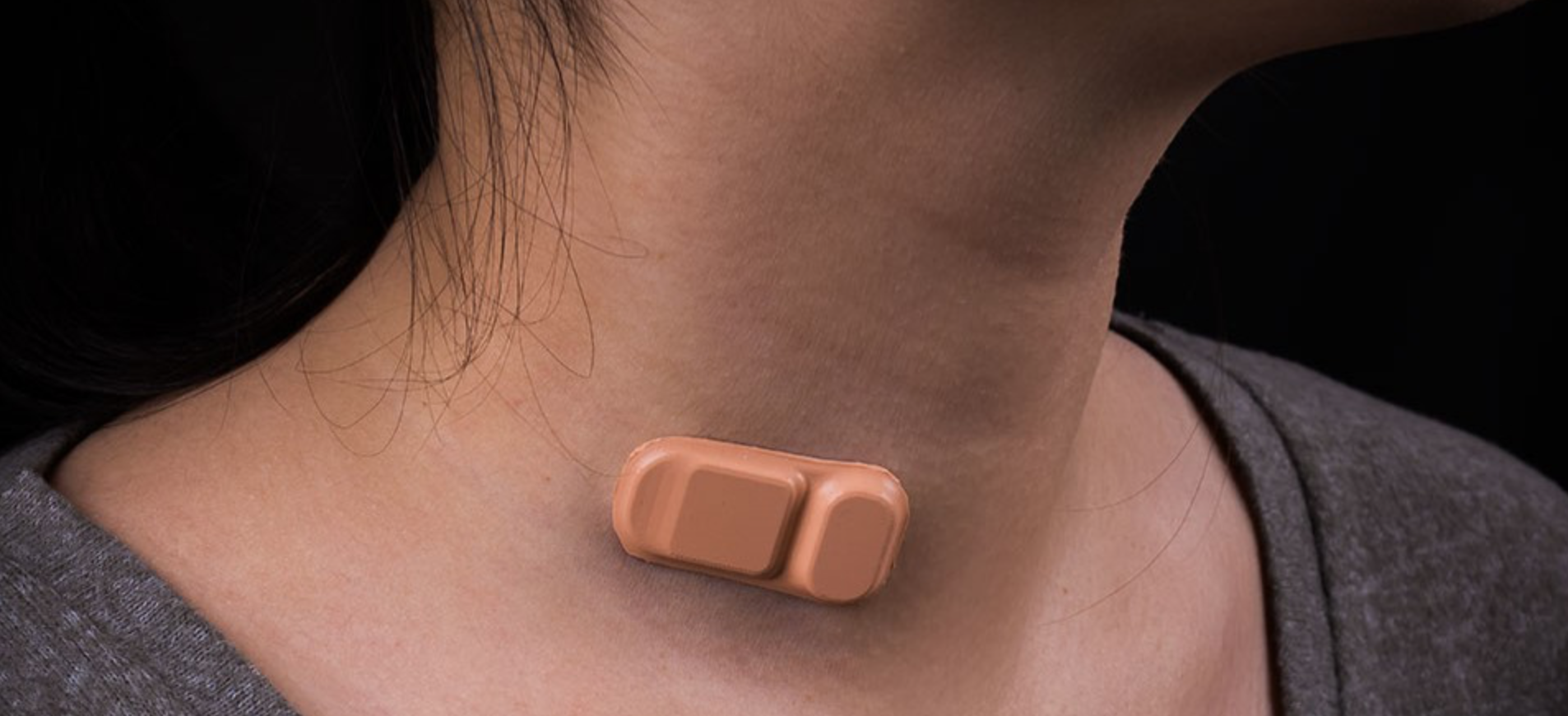
Northwestern’s John Rogers has created another minimal, flexible, wireless, adhesive wearable — this time to help hydrocephalus patients manage their condition.

The band-aid like sensor determines whether a shunt is working properly.

Shunts often fail.  When this happens, a patient can experience headaches, nausea and low energy, and must go to a hospital immediately.  However, a patient can have similar symptoms with a properly working shunt. The wearable determines, in five minutes, if the shunt is functioning, and if it is, a patient could avoid a hospital visit, CT, MRI, and potential surgery to determine the shunt’s functionality.

Click to view Northwestern University video


Join ApplySci at the 10th Wearable Tech + Digital Health + Neurotech Silicon Valley conference on February 21-22 at Stanford University — Featuring:  Zhenan BaoChristof KochVinod KhoslaWalter Greenleaf – Nathan IntratorJohn MattisonDavid EaglemanUnity Stoakes Shahin Farshchi Emmanuel Mignot Michael Snyder Joe Wang – Josh Duyan – Aviad Hai Anne Andrews Tan Le

Categories
Brain

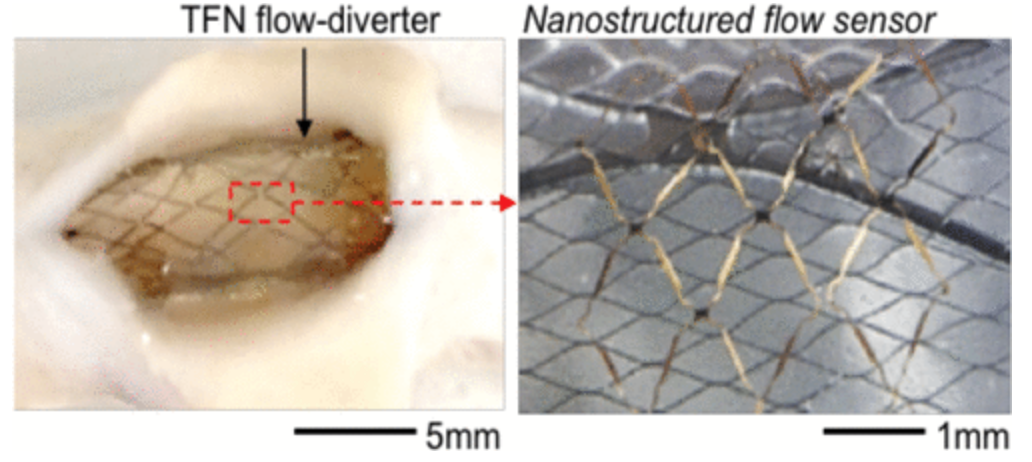
Sensor could continuously monitor brain aneurysm treatment

Georgia Tech’s Woon-Hong Yeo has  developed a proof of concept, flexible, stretchable sensor that can continuously monitor hemodynamics when integrated with a stent like flow diverter after a brain aneurysm. Blood flow is measured using  capacitance changes.

According to Pittsburgh professor Youngjae Chun, who collaborated with Yeo, “We have developed a highly stretchable, hyper-elastic flow diverter using a highly-porous thin film nitinol,” Chun explained. “None of the existing flow diverters, however, provide quantitative, real-time monitoring of hemodynamics within the sac of cerebral aneurysm. Through the collaboration with Dr. Yeo’s group at Georgia Tech, we have developed a smart flow-diverter system that can actively monitor the flow alterations during and after surgery.”

The goal is a batteryless, wireless device that is extremely stretchable and flexible that can be miniaturized enough to be routed through the tiny and complex blood vessels of the brain and then deployed without damage  According to Yeo, “It’s a very challenging to insert such electronic system into the brain’s narrow and contoured blood vessels.”

The sensor uses a micro-membrane made of two metal layers surrounding a dielectric material, and wraps around the flow diverter. The device is a few hundred nanometers thick, and is produced using nanofabrication and material transfer printing techniques, encapsulated in a soft elastomeric material.

“The membrane is deflected by the flow through the diverter, and depending on the strength of the flow, the velocity difference, the amount of deflection changes,” Yeo explained. “We measure the amount of deflection based on the capacitance change, because the capacitance is inversely proportional to the distance between two metal layers.”

Because the brain’s blood vessels are so small, the flow diverters can be no more than five to ten millimeters long and a few millimeters in diameter. That rules out the use of conventional sensors with rigid and bulky electronic circuits.

“Putting functional materials and circuits into something that size is pretty much impossible right now,” Yeo said. “What we are doing is very challenging based on conventional materials and design strategies.”

The researchers tested three materials for their sensors: gold, magnesium and the nickel-titanium alloy known as nitinol. All can be safely used in the body, but magnesium offers the potential to be dissolved into the bloodstream after it is no longer needed.

The proof-of-principle sensor was connected to a guide wire in the in vitro testing, but Yeo and his colleagues are now working on a wireless version that could be implanted in a living animal model. While implantable sensors are being used clinically to monitor abdominal blood vessels, application in the brain creates significant challenges.

“The sensor has to be completely compressed for placement, so it must be capable of stretching 300 or 400 percent,” said Yeo. “The sensor structure has to be able to endure that kind of handling while being conformable and bending to fit inside the blood vessel.”


Join ApplySci at the 9th Wearable Tech + Digital Health + Neurotech Boston conference on September 24, 2018 at the MIT Media Lab.  Speakers include:  Rudy Tanzi – Mary Lou Jepsen – George ChurchRoz PicardNathan IntratorKeith JohnsonJuan EnriquezJohn MattisonRoozbeh GhaffariPoppy Crum – Phillip Alvelda Marom Bikson – Ed Simcox – Sean Lane