Categories
Covid-19 Sensors Wearables

Presymptomatic COVID detection with wearables

Stanford’s Michael Snyder and colleagues have used smartwatch data to detect early, presymptomatic COVID-19 in 31 individuals out of a cohort of 5,000.

They demonstrated that COVID-19 infections are associated with alterations in heart rate, steps and sleep in 80% of cases. Physiological alterations were detected prior to, or at, symptom onset in 85% of the positive cases, in some cases nine or more days before symptoms.

A method to detect onset of COVID-19 infection in real-time was developed, which detected 67% of infection cases at or before symptom onset.

The study intends to provide a roadmap to a rapid and universal diagnostic method for the large-scale detection of respiratory viral infections in advance of symptoms.

—————————————————————————-

Click to view Professor Snyder’s talk at the 2019 ApplySci conference at Stanford.
Categories
Pharmaceuticals Sensors

Sweat sensor monitors drug levels, informs dosage

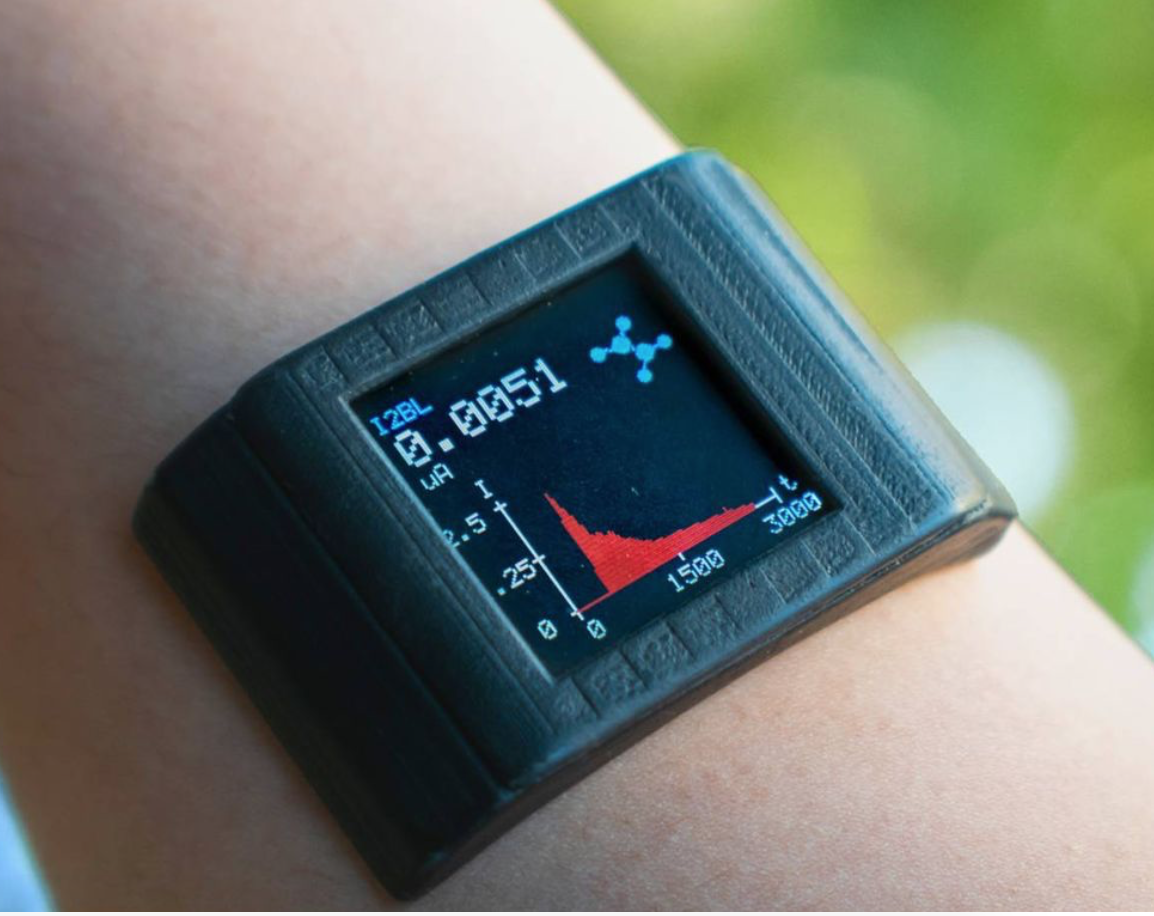
Sam Emaminejad, Shuyu Lin, Carlos Milla, Ronald Davis and UCLA and Stanford colleagues have developed a watch which monitors drug levels inside the body by analyzing a wearer’s sweat. The goal is individually tailored drug dosages.

Dosages are currently prescribed based on statistical effectiveness averages driven by weight and age. However, constantly changing body chemistry and an ones genetic makeup affect how fast drugs are absorbed, take effect and are eliminated from the body.

Current efforts to personalize the drug dosage rely heavily on repeated blood draws at the hospital. The samples are then sent out to be analyzed in central labs. These solutions are inconvenient, time-consuming, invasive and expensive. That is why they are only performed on a small subset of patients and on rare occasions.

Emaminjegad wanted to “create a wearable technology that can track the profile of medication inside the body continuously and non-invasively” and he seems to have succeeded, using tiny droplets of sweat.

In a recent study, he tracked the effect of acetaminophen, over a period of hours, by stimulating sweat glands with an electric current, and accurately detecting the drug’s unique electrochemical signal, against the backdrop of signals from many other molecules that may be circulating in the body and in higher concentrations than the drug.

The technology can personalize pharmacotherapy approaches, and, according to Emaminejad also be used to monitor medication adherence and drug abuse.

Categories
Featured Sensors

Stretchable, degradable semiconductors for health monitoring

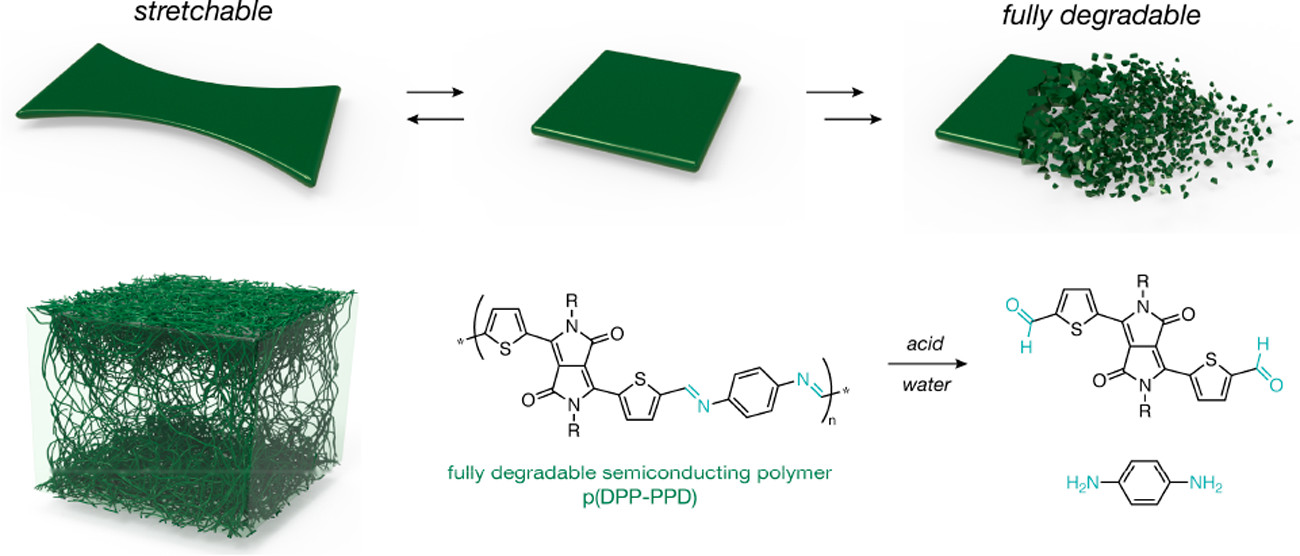
Zhenan Bao has developed stretchable, degradable semiconductors, with the ability to conform to internal organ surfaces, and dissolve and disappear when no longer needed.

This is the first example of a material that simultaneously possesses the three qualities of semiconductivity, intrinsic stretchability and full degradability. Other attempts resulted in semiconductors that either did not break down completely, or had reduced electrical performance when stretched.

Zhenan Bao has solved this problem – by combining a rubbery organic polymer with a semiconducting one.

Her team synthesized and mixed the two degradable polymers, which self-assembled into semiconducting nanofibers embedded in an elastic matrix. Thin films made of these fibers could be stretched to twice their normal length without cracking or compromising electrical performance. When placed in a weak acid, the new material degraded completely within 10 days.   (Bao said that it would take much longer in the human body.) The semiconductor was  non-toxic to human cells growing on the material in a petri dish.


Zhenan Bao will discuss this technology, and more of her latest work, at Wearable Tech + Digital Health + Neurotech Silicon Valley on Feb 11-12
Categories
BCI Brain

CTRL-Labs acquired by Facebook for 500M – 1B

Congratulations to CTRL-Labs and Lux Capital on Facebook’s acquisition of the four year old Neurotech startup. The company, whose technology assists in decoding brain activity and intention, will join Facebook’s AR/VR team.

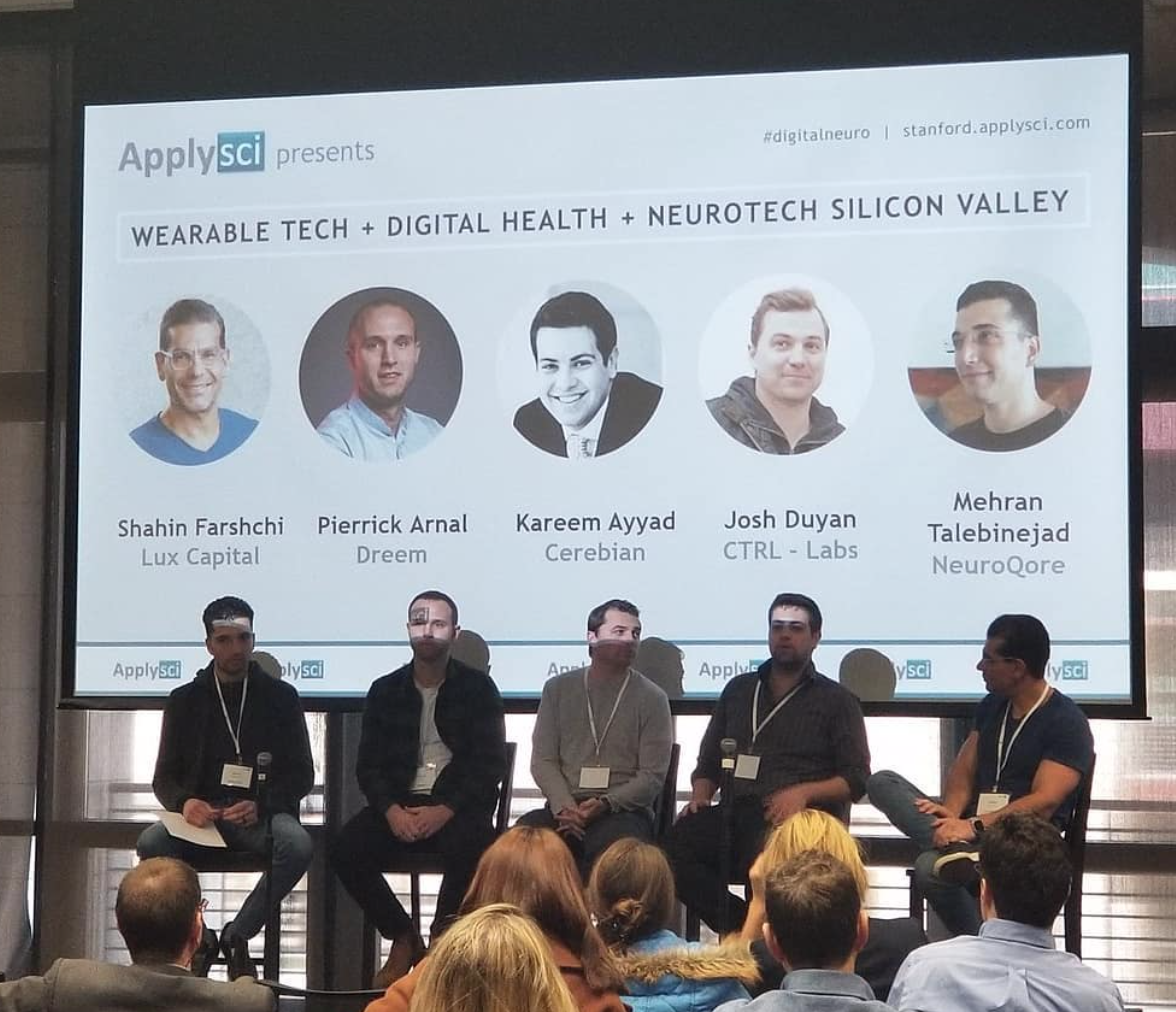
CTRL-Labs participated in a recent ApplySci panel of startups at Stanford led by Lux Capital’s Shahin Farshchi. Facebook presented its Brain Computer Interface work at the ApplySci conference at the MIT Media Lab in 2017.

ApplySci’s next conference, at Harvard Medical School, will take place on November 14, 2019. It will again include a panel of startups — perhaps the next unicorns — and a series of talks by leading brain and body health scientists.

I hope that you’ll join us.


Join ApplySci at the 12th Wearable Tech + Digital Health + Neurotech Boston conference on November 14, 2019 at Harvard Medical School featuring talks by Brad Ringeisen, DARPA – Joe Wang, UCSD – Carlos Pena, FDA  – George Church, Harvard – Diane Chan, MIT – Giovanni Traverso, Harvard | Brigham & Womens – Anupam Goel, UnitedHealthcare  – Nathan Intrator, Tel Aviv University | Neurosteer – Arto Nurmikko, Brown – Constance Lehman, Harvard | MGH – Mikael Eliasson, Roche – Nicola Neretti – Brown