Categories
fitness Heart Wearables

Sports camera collects, overlays health data

As part of its new developer program, GoPro has partnered with Polar to overlay health data on videos. Similar to video games, sports videos will be able to display heart rate, speed, distance, and altitude.  This has been presented as a fun feature, but could also provide physicians with a better understanding of one’s health in various scenarios.

Click to view Polar video


Wearable Tech + Digital Health NYC – June 7, 2016 @ the New York Academy of Sciences

NeuroTech NYC – June 8, 2016 @ the New York Academy of Sciences

Categories
Heart

Heart monitoring patch tracks patients post-discharge

BeVITAL by Vital Connect, in partnership with BePatient, is a clinical grade, continuous, heart monitoring wearable, and data sharing system, for the early detection of abnormalities post-discharge. The thin, disposable patch adheres to the chest, and tracks heart activity, breathing, temperature, movement, posture, and falls. It can be used for 4 days, and transmits data to a phone or hub before it is stored in the cloud.

The system has been tested on 100 patients in Europe, and will soon be trialed at the John Muir Medical Center.  The study will compare data quality and patient outcomes of BeVITAL wearers with inpatient care.

Click to view KTVU News video


Wearable Tech + Digital Health NYC – June 7, 2016 @ the New York Academy of Sciences

NeuroTech NYC – June 8, 2016 @ the New York Academy of Sciences

Categories
Conference Virtual Reality

“Mixed Reality” headset could support surgery, rehab, learning

Magic Leap has unveiled its “mixed reality” headset, where  virtual objects are integrated into the real world.  In addition to obvious gaming and entertainment applications, the system could be used in healthcare (including in surgery, surgery preparation, and orthopedic rehabilitation) and education.

The company remains vague in its description of its technology, but head and hand tracking functionality appear to have been added.   According to founder Rony Abramovitz, “Magic Leap doesn’t trick the brain. Rather it shoots photons into the eye that stimulate the cones and rods as if the hologram were real, or neurologically true.”

Click to view Magic Leap video.


Wearable Tech + Digital Health NYC – June 7, 2016 @ the New York Academy of Sciences

NeuroTech NYC – June 8, 2016 @ the New York Academy of Sciences
Categories
Brain EEG

EEG “password” uses stimulus response to confirm identity

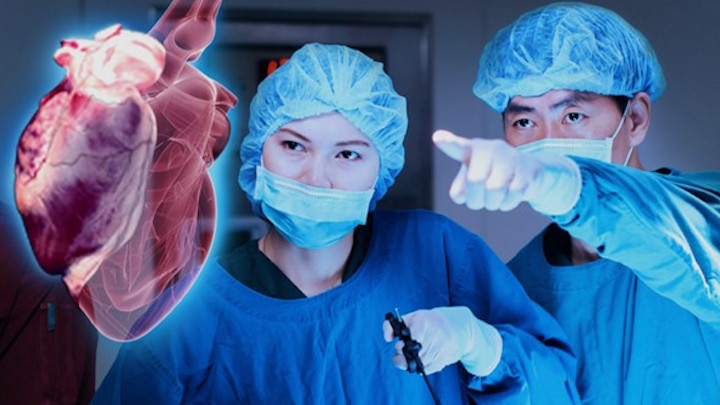
Binghamton researchers have developed an EEG “brainprint” system that can identify people with 100 per cent accuracy, according to a recent study.

A brain-password is recorded when a user’s stimulus response activity is recorded via EEG. Identity is then confirmed by exposing the user to the same stimulus,  recording their response, and using a pattern classification system to compare the results.

ApplySci described the team’s initial “brain as password” work in 2015, and similar research done at UC Berkeley in 2013.


Wearable Tech + Digital Health NYC – June 7, 2016 @ the New York Academy of Sciences

NeuroTech NYC – June 8, 2016 @ the New York Academy of Sciences

Categories
Wearables

Ultraflexible OLED “skin” can monitor pulse, blood oxygen

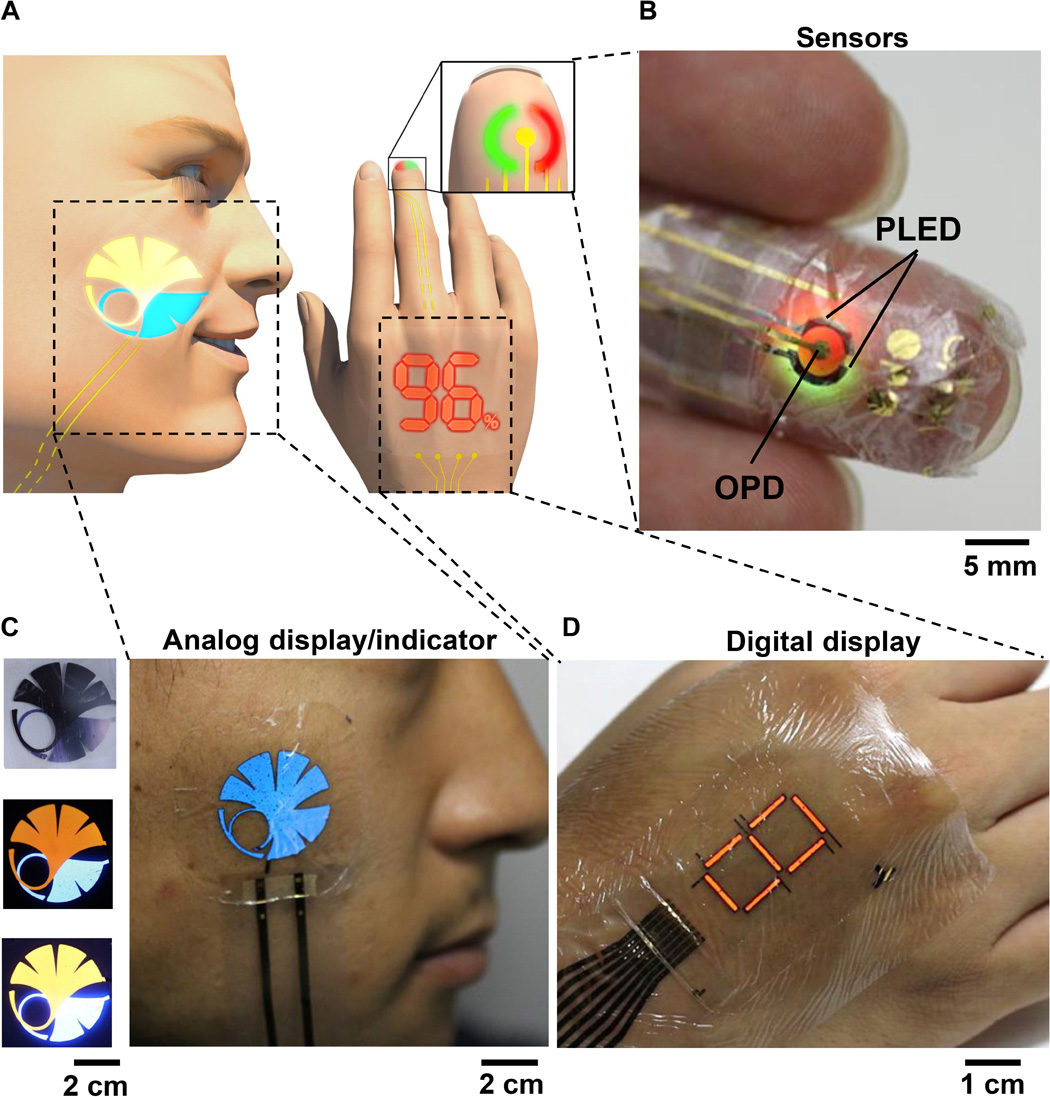
Takao Someya  has developed OLED-embedded electronic “skin” for health monitoring applications –particularly pulse monitoring and blood oxygen sensing — at the University of Tokyo. It is thin, and can move with the skin and body, eliminating the need for rigid glass or plastic substrates, and potentially replacing health monitoring devices.

Previous attempts at skin-display tech could only last a few hours, because oxygen and water vapor in the air penetrated the skin, damaging it.  A protective film allows the new “skin” to last for several days. Indium tin oxide electrodes are attached to a very thin substrate, powering ultrathin polymer light-emitting diodes  and organic photodetectors in the skin.


Wearable Tech + Digital Health NYC – June 7, 2016 @ the New York Academy of Sciences

NeuroTech NYC – June 8, 2016 @ the New York Academy of Sciences
Categories
Brain

Avatar and robot based games to treat social anxiety

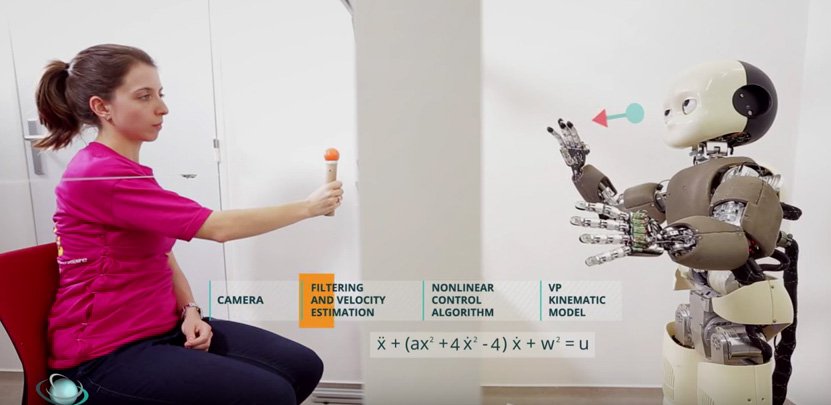
AlterEgo is  an interdisciplinary collaboration that is investigating  a “new robotic-based clinical method” to help people suffering from social anxiety.  The scientists believe that lookalike avatars and robots can be a more comfortable interaction for patients, facilitating a more effective therapeutic experience.

According to project lead Krasimira Tsaneve-Atanasova: “This resemblance can be morphological (form of a person), behavioral (his actions), or kinematic (the way he moves).”

Click to view AlterEgo video.


Wearable Tech + Digital Health NYC – June 7, 2016 @ the New York Academy of Sciences

NeuroTech NYC – June 8, 2016 @ the New York Academy of Sciencces

PREFERRED REGISTRATION RATES AVAILABLE THROUGH 4/15

Categories
BCI Brain

Implanted chip enables quadriplegic to move arm with thoughts

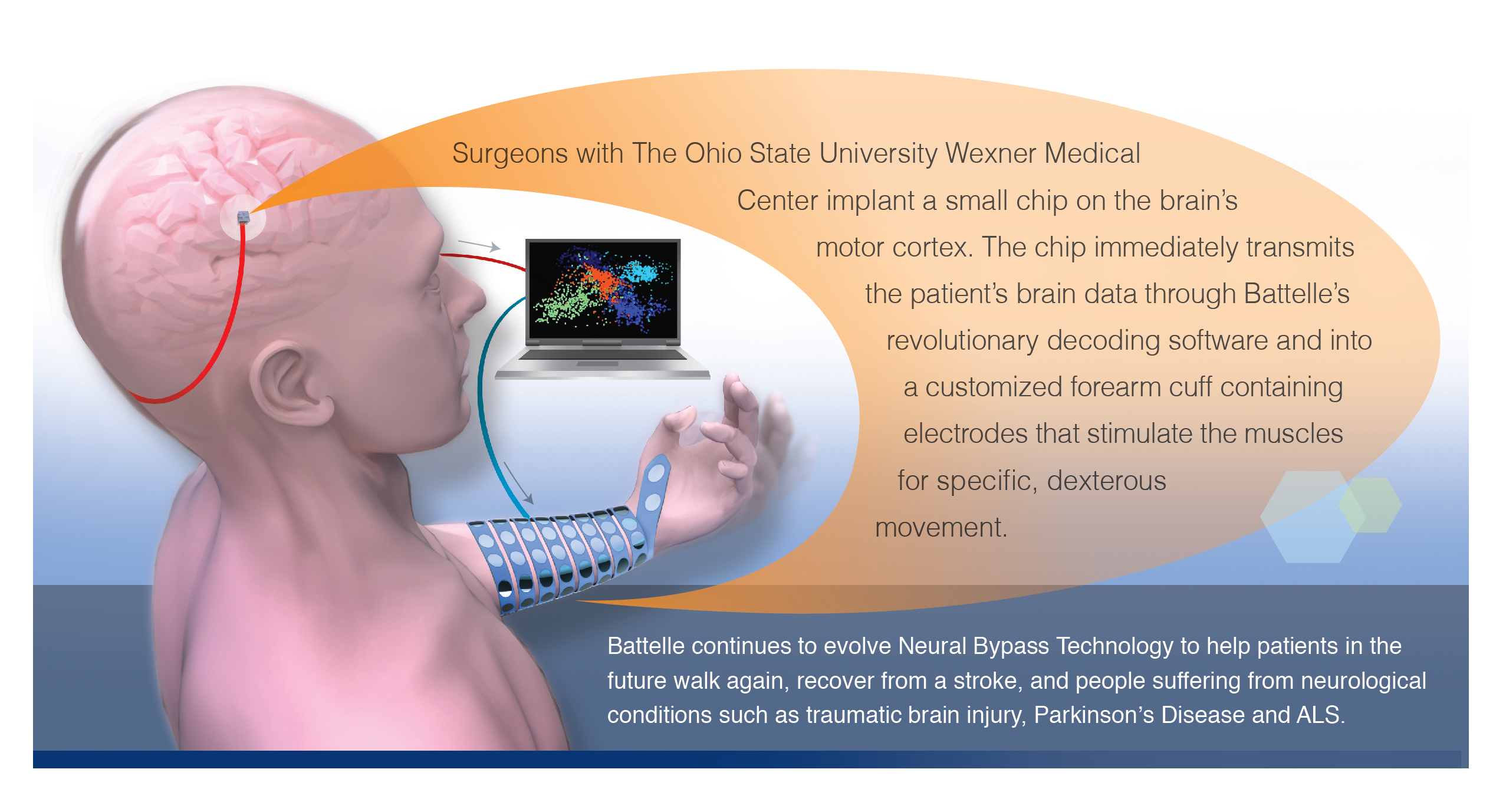
Battelle’s NeuroLife system has allowed a quadriplegic man to to make complex movements with his hand and fingers, using signals from his brain.

The breakthrough invasive device uses an artificial neural bypass that reroutes signals from the brain to the affected muscles. A tiny, 96 channel microelectrode array was implanted in the patient’s motor cortex. A cable port was positioned at the back of his head. The device taps into a few hundred motor neurons, providing enough information for the execution of basic physical tasks. A computer was then trained to understand the signals emitted by the motor cortex, resulting in the patient’s ability to move his hand with his thoughts.

Click to view Ohio State University video


Wearable Tech + Digital Health NYC – June 7, 2016 @ the New York Academy of Sciences

NeuroTech NYC – June 8, 2016 @ the New York Academy of Sciences
 

Categories
Robotics Seniors

Voice, image,language identifying robot responds to human dialogue

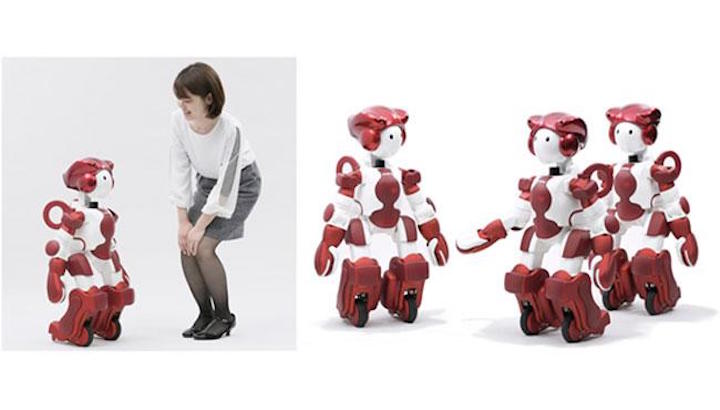
Hitachi’s EMIEW3 robot, designed to provide customer service in commercial environments, could be an ideal companion for the elderly or disabled. Its “remote brain” allows it to identify voices, images and language in its surroundings (which it can process with background street noise).  AI enables it to  respond to human dialogue and avoid collisions.  It is light enough to lift,can move at 6km per hour,  and stand on its own if knocked over. A cosmetic LED-light “beating heart” makes the robot seem more human.


Wearable Tech + Digital Health NYC – June 7, 2016 @ the New York Academy of Sciences

NeuroTech NYC – June 8, 2016 @ the New York Academy of Sciences
Categories
Brain Robotics

“Socially assistive” robot helps children learn

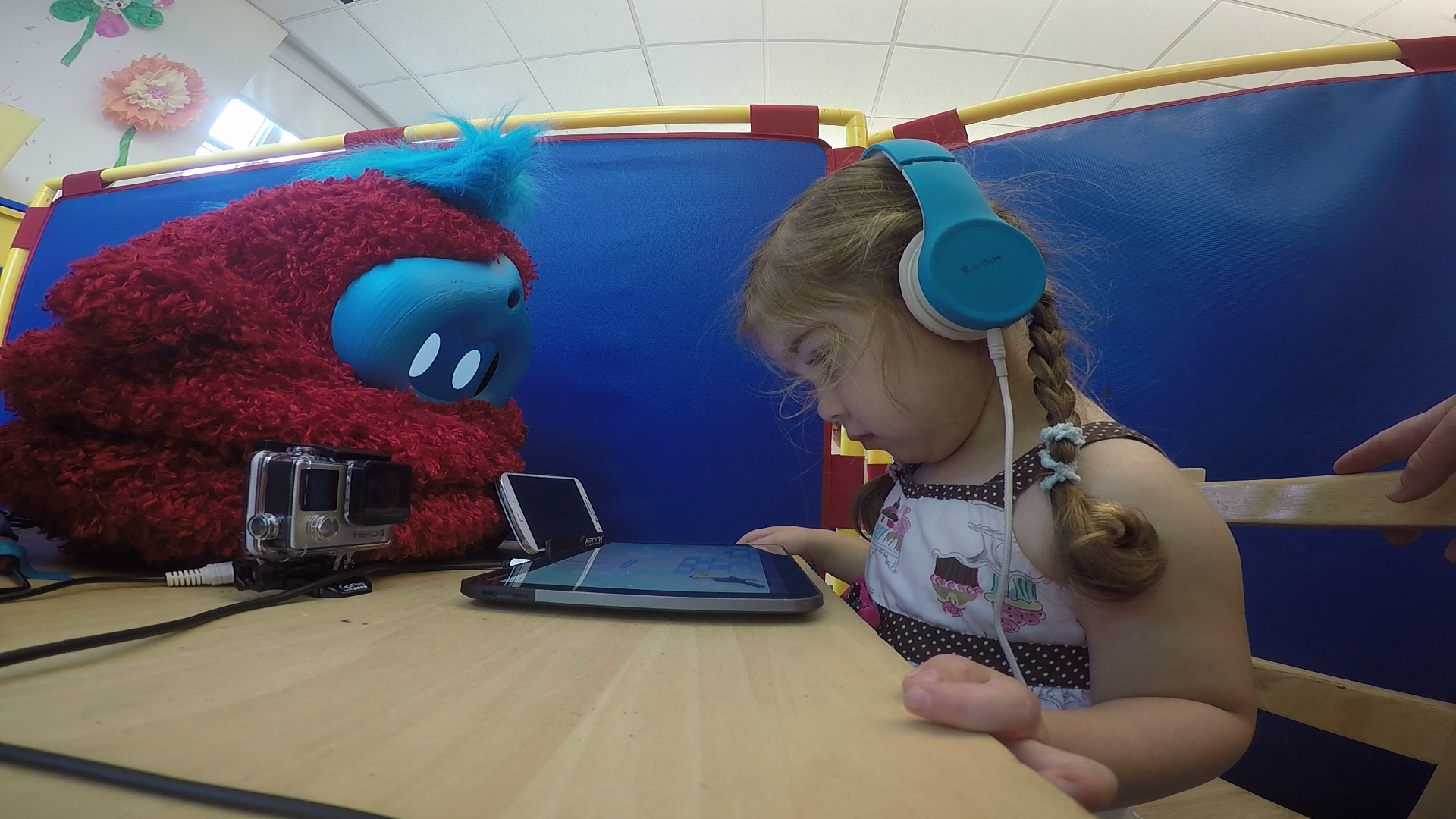
Tega is a “socially assistive” robot  that senses the emotional state of a learner, and based on those cues, creates a personalized motivational strategy.  It was developed by Cynthia Breazeal at MIT to enable long-term educational interactions with children. It uses an AFFDEX Android device with emotion/facial expression recognition software by Rosalind Picard‘s Affectiva, to process movement, perception and thinking, and can respond to individual children’s behaviors.

In a learning trial, the system mirrored the emotional response of students ­­— getting excited when they were excited, and distracted when they lost focus — and tracked the impact of each of these cues on the student. Over time, it learned how the cues influenced a student’s engagement, happiness, and learning successes. As the sessions continued, it personalized its responses to optimize each student’s experience.

Click to view MIT video.

Rosalind Picard will be a keynote speaker at NeuroTech NYC on June 8th.


Wearable Tech + Digital Health NYC – June 7, 2016 @ the New York Academy of Sciences

NeuroTech NYC – June 8, 2016 @ the New York Academy of Sciences


Categories
Pain Virtual Reality

VR + sound to control pain

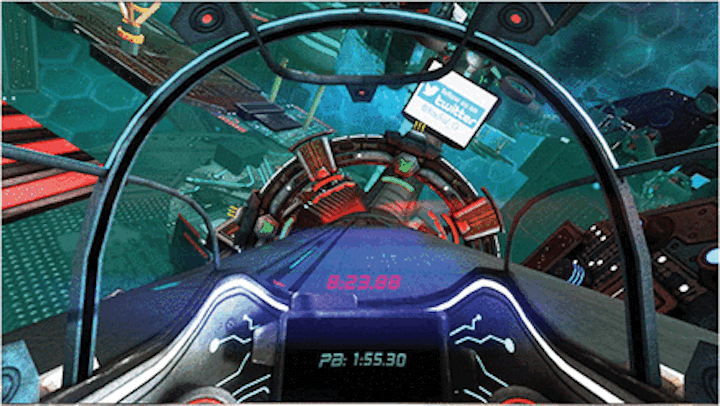
In a recent study, York St. John University researchers have demonstrated the use of virtual reality headsets to control pain.  Discomfort was further reduced when sound was incorporated into the process.

In the experiment, a small group of adults submerged one hand in ice water while playing an Oculus VR  based game, with and with out sound.  While playing and hearing accompanying sounds, subjects could tolerate the discomfort for 79 seconds. With out sound, it was reduced to 56 seconds.  With out any VR support, they could tolerate the cold water for 30 seconds (on average).

If verified with a much larger group of subjects and a broader spectrum of pain/discomfort tested, this discovery could potentially bring a non-drug pain reducing method to individuals at home.


Wearable Tech + Digital Health San Francisco – April 5, 2016 @ the Mission Bay Conference Center

NeuroTech San Francisco – April 6, 2016 @ the Mission Bay Conference Center

Wearable Tech + Digital Health NYC – June 7, 2016 @ the New York Academy of Sciences

NeuroTech NYC – June 8, 2016 @ the New York Academy of Sciences


Categories
Cancer Sensors

Optical sensor could detect cancer, other diseases, earlier

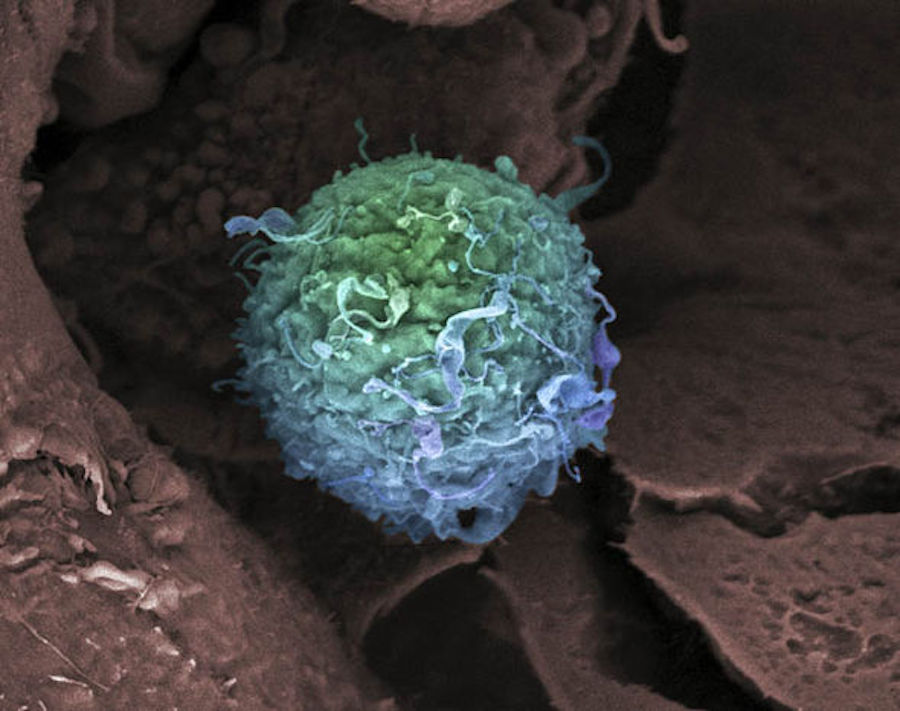
Guiseppe Strangi and Case Western colleagues have developed a highly sensitive optical sensor, based on nanostructured metamaterials.  The researchers claim that is is 1 million times more sensitive than current sensors, and capable of identifying a single lightweight molecule in a highly dilute solution.  This could dramatically improve the detection of cancer and other diseases.

If doctors could detect a single molecule of an enzyme produced by circulating cancer cells, significantly earlier diagnosis is possible, which could dramatically improve one’s prognosis.

According to Strangi:”Very early, most circulating tumor cells express proteins of a very low molecular weight, less than 500 Daltons. These proteins are usually too small and in too low a concentration to detect with current test methods, yielding false negative results. With this platform, we’ve detected proteins of 244 Daltons, which should enable doctors to detect cancers earlier–we don’t know how much earlier yet.”


Wearable Tech + Digital Health San Francisco – April 5, 2016 @ the Mission Bay Conference Center

NeuroTech San Francisco – April 6, 2016 @ the Mission Bay Conference Center

Wearable Tech + Digital Health NYC – June 7, 2016 @ the New York Academy of Sciences
NeuroTech San Francisco – June 8, 2016 @ the New York Academy of Sciences
 

Categories
Diabetes Sensors

Study: Graphene patch monitors glucose, delivers insulin

MC10 and Seoul National University researchers, led by Dae-Hyeong Kim, have created a prototype skin patch that could both monitor blood glucose levels and administer insulin to diabetics.  This is the first time that monitoring and drug deivery have been combined.

The graphene and gold mesh patch measures humidity, glucose, pH, and temperature in sweat. While the technology has only been tested on mice, it has shown that it is able to reduce blood glucose levels.  We look forward to the results of human trials.

MC10 co-founder and VP of Technology Roozbeh Ghaffari is a featured speaker at ApplySci’s Wearable Tech + Digital Health conference on April 5th in San Francisco.  He will discuss the future of less invasive, more precise approaches to disease management.


Wearable Tech + Digital Health San Francisco – April 5, 2016 @ the Mission Bay Conference Center

NeuroTech San Francisco – April 6, 2016 @ the Mission Bay Conference Center

Wearable Tech + Digital Health NYC – June 7, 2016 @ the New York Academy of Sciences

NeuroTech NYC – June 8, 2016 @ the New York Academy of Sciences