Categories
Heart Wearables

Google Glass monitors heart and breathing in real time

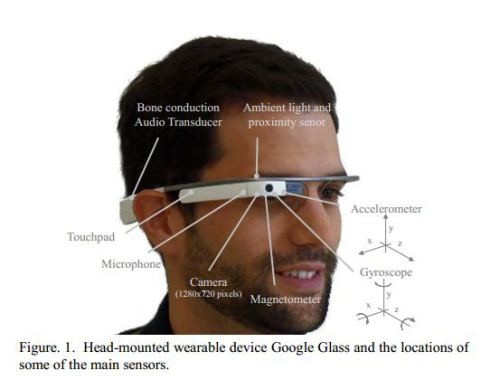
paper released this week by MIT Media Lab and Georgia Tech researchers claims that Google Glass can detect pulse and respiration rhythms in real time.  The responses were measured using a built-in gyroscope, accelerometer and camera, with no external sensors.

According to lead author Javier Hernandez, “Glass detects these physiological indicators with a very high accuracy when compared to FDA-approved sensors — both pulse and respiration had only about one beat or breath per minute of error.  The data is so much richer, because people use it in their regular lives. “

Categories
BCI Brain Epilepsy

DARPA neuromodulation tech for physical and mental health

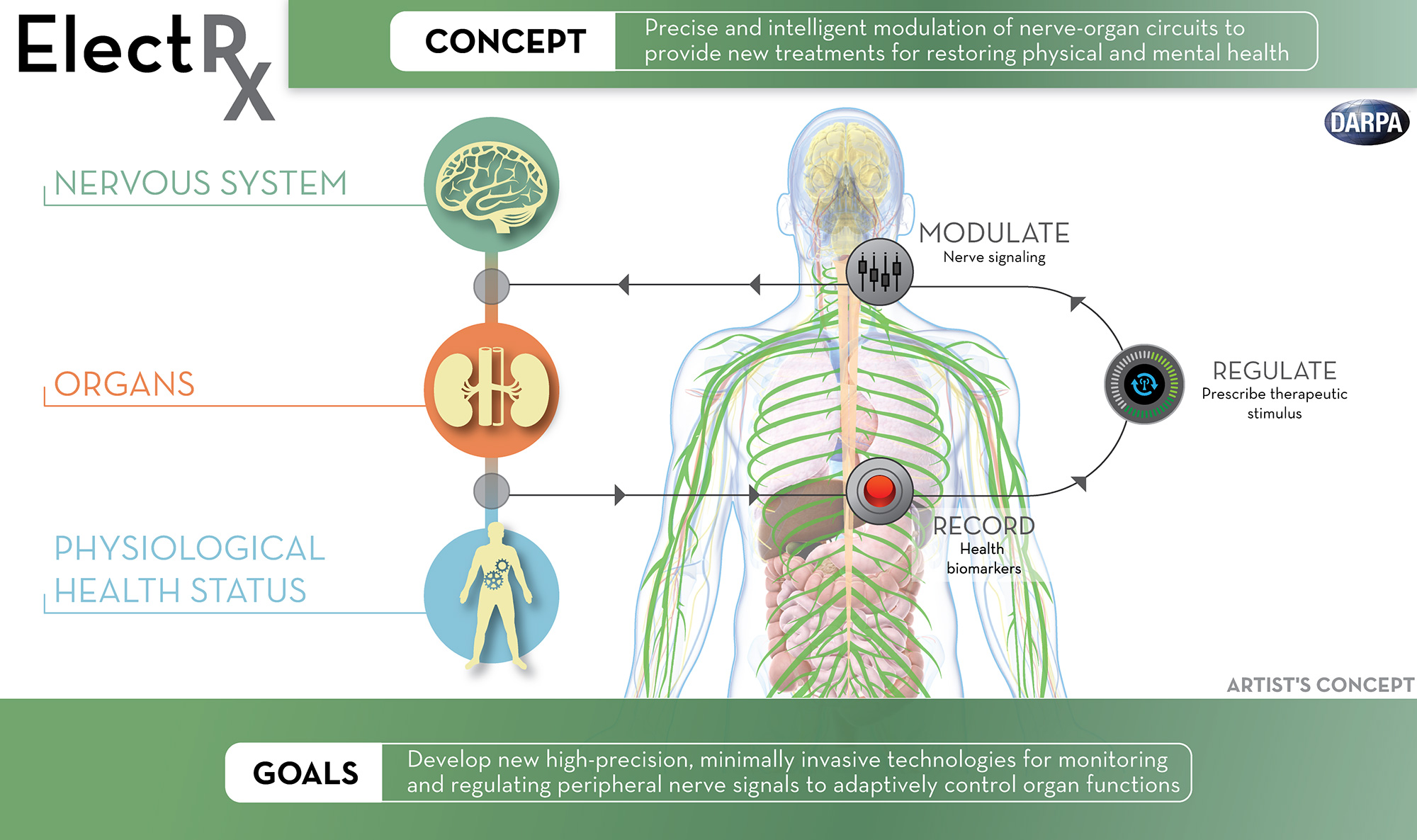
DARPA‘s ElectRx research program aims to develop high precision, minimally-invasive neuromodulation technologies to treat diseases including rheumatoid arthritis, epilepsy and PTSD.

Implanted ultraminiaturized devices would modulate the peripheral nervous system’s response to infections, injuries or other imbalances.

Project manager Doug Weber claims that ElectRX technologies “would continually assess conditions and provide stimulus patterns tailored to help maintain healthy organ function, helping patients get healthy and stay healthy using their body’s own systems.”


Categories
Heart Machine Learning Sensors

Face video scan detects heart disease

According to University of Rochester professor Jean-Philippe Couderc, cardiac disease can be identified and diagnosed using contactless video monitoring of the face.

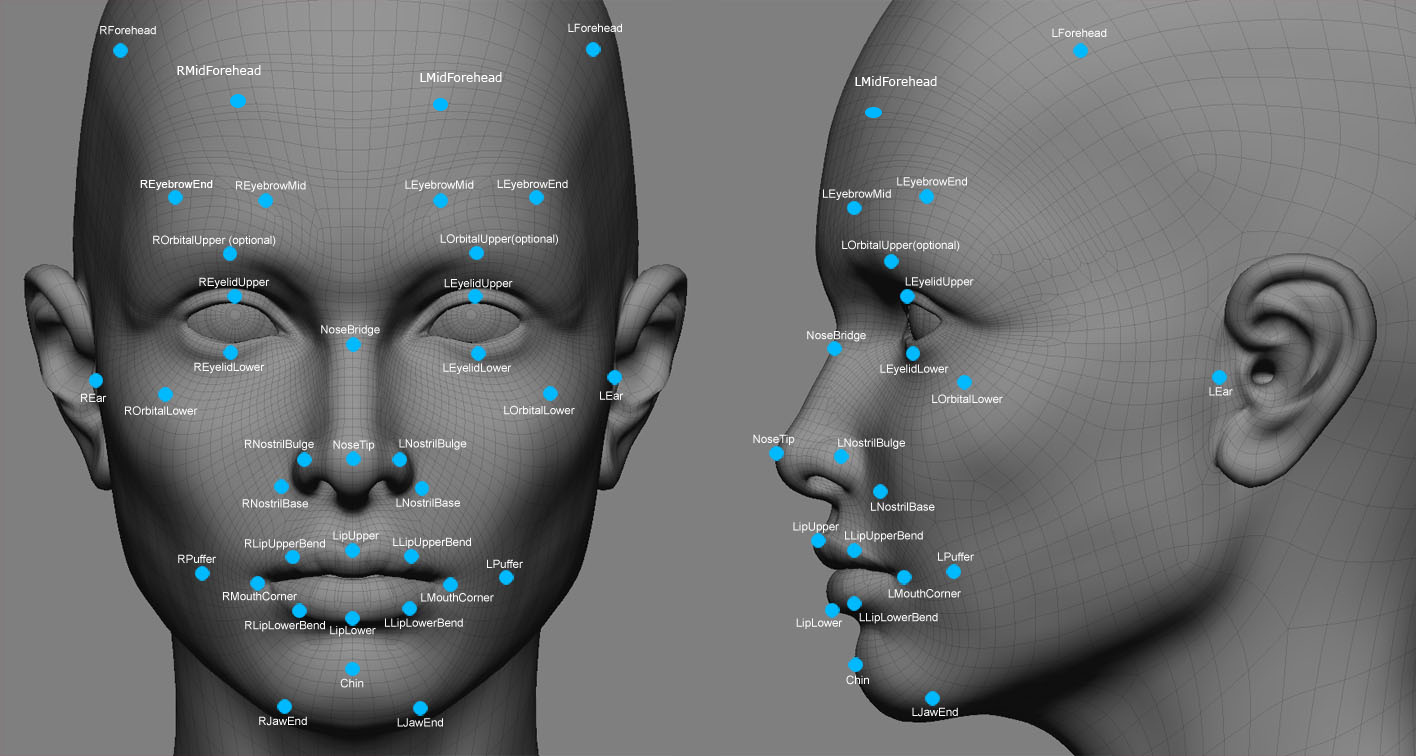
A recent study describes technology and an algorithm that scan the face and detect skin color changes imperceptible to the naked eye.

Sensors in digital cameras record the colors red, green, and blue. Hemoglobin  “absorbs” more of the green spectrum of light, which can be detected by the camera’s sensor. The face is the ideal place to detect this phenomenon, because the skin is thinner and blood vessels are closer to the surface. Participants were connected to an electrocardiogram to compare results from the facial scan to the heart’s electrical activity. Color changes detected by video monitoring corresponded with an individual’s heart rate as detected on an ECG.  Irregular electrical activity of the heart found in people with atrial fibrillation could be identified by observing the pulses of blood flowing through the veins on the face as it absorbed or reflected green light with each heartbeat.

The video monitoring technique – “videoplethymography” – had an error rate of 20 percent, comparable to the 17 to 29 percent error rate associated with automated ECG measurements.

Categories
fitness Sensors Wearables

Crowdfunded kinematic wearable assesses joint health

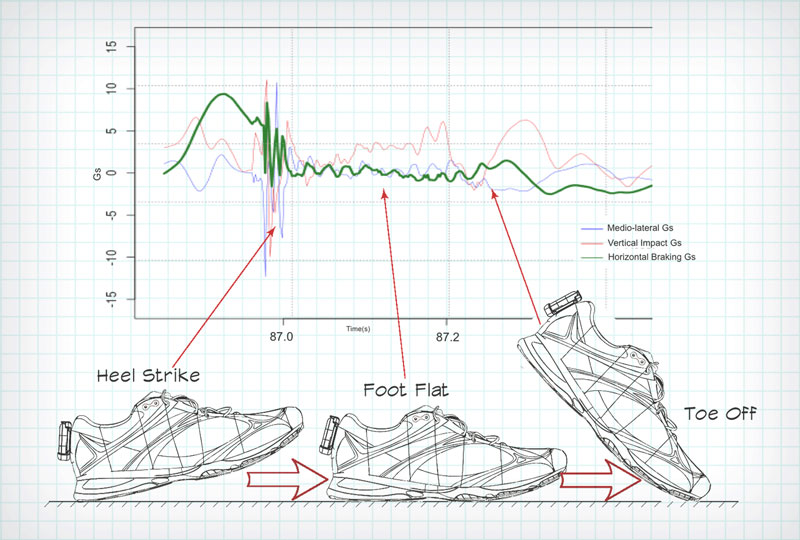
runScribe, a wearable being crowdfunded on Kickstarter, has a 9-axis kinematic sensor, capturing 3D images of a runner’s gait.  It assesses foot strike type, stride length and contact time.  Upgraded versions access 13 kinematic metrics, including degrees of pronation and accelerometer data.

The company claims that casual through ultra-runners can benefit from the device.  They are also creating a crowdsourced, global kinematic running database.

creation of the world’s first crowdsourced kinematic running database.

Categories
BCI Brain EEG Wearables

EEG enables ALS patients to control devices, communicate

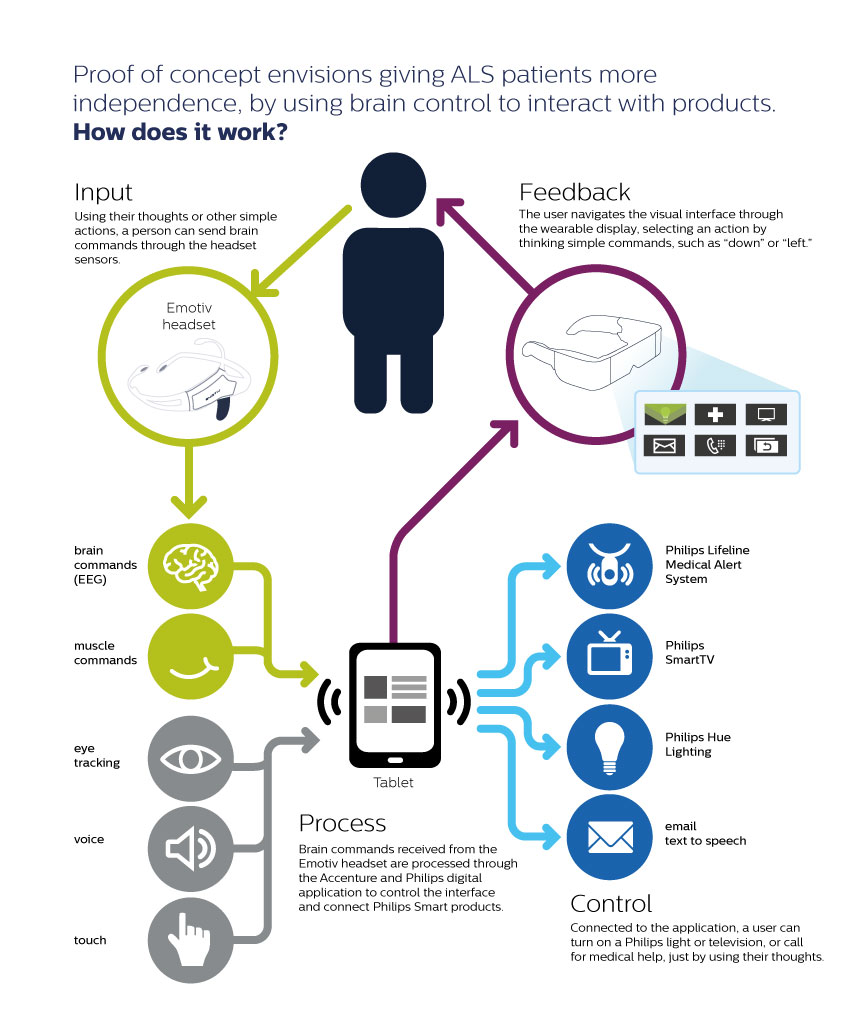
Philips and Accenture are using EEG brainwaves to help ALS patients command electronic devices via a wearable display, a tablet and software. The system can access a medical alert service, a smart TV and wireless lighting, and communicate via pre-configured messages. The wearable display provides visual feedback that allows the user to navigate the application menu.


Categories
fitness Wearables

Foot sensor for health, fitness, immersive gaming

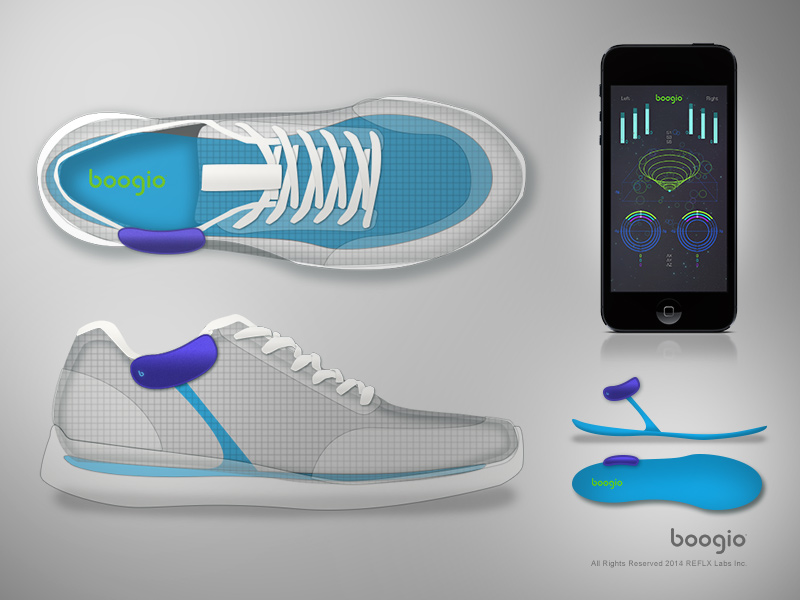
Boogio detects up to 65,000 points of pressure via  sensor layers that clip into shoes, plus and accelerometer and Bluetooth LE radio to communicate with a user’s phone.  It detects body weight, gravitational force exerted, balance, and pressure along the feet to determine if a user is leaning.  

Applications include monitoring injury recovery, the gamification of fitness, and immersive gaming.  Boogio can pair with the Oculus Rift to detect movement in 3D space and translate it into a virtual world, and also be used with Google Glass and Pebble.


Categories
Assistive Technologies Prosthetics

Virtual reality movement training for amputees

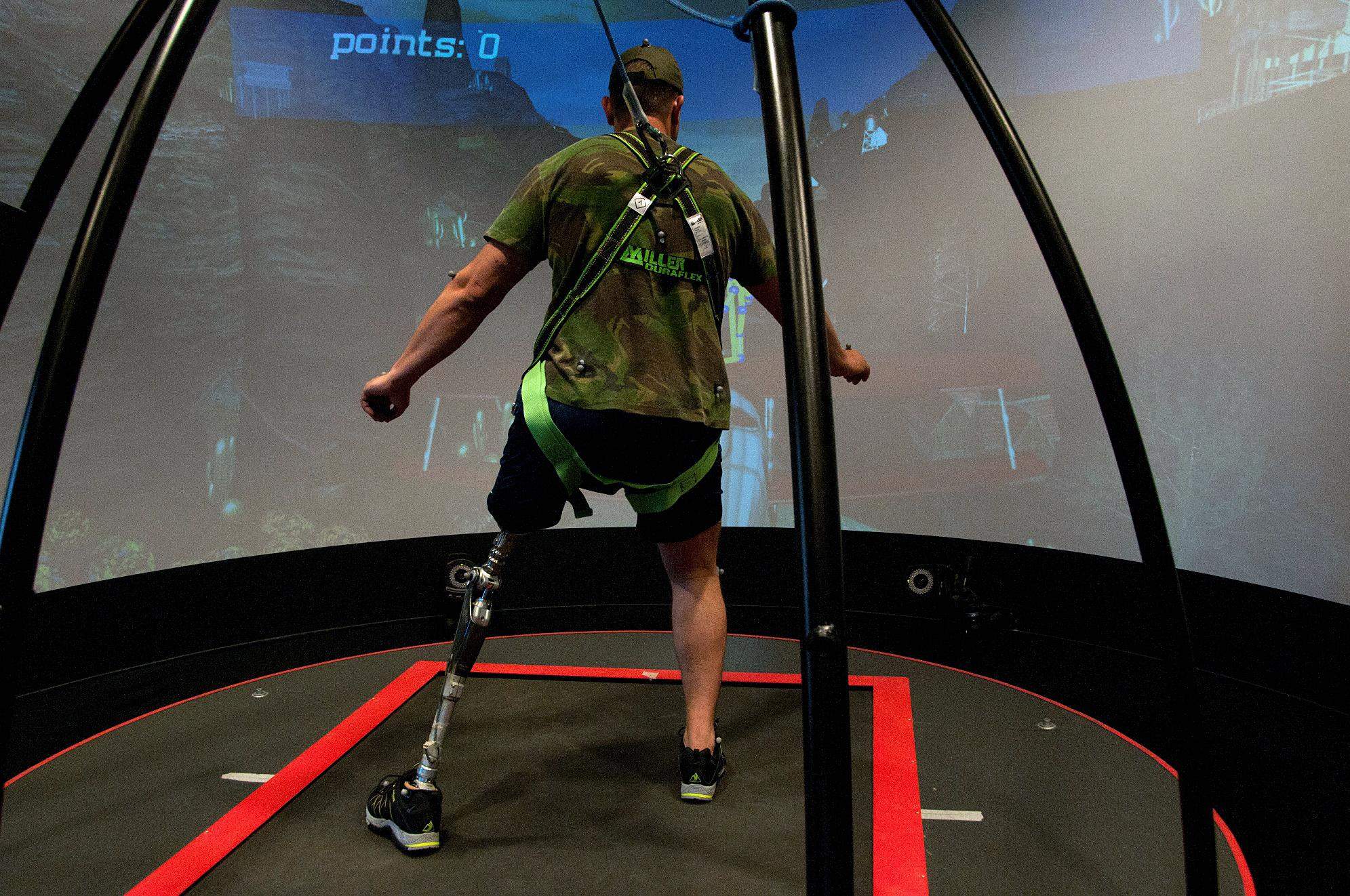
CAREN, developed at the University of South Florida, helps those with limb loss and prosthetics improve basic function, symmetry and walking efficiency.  It is also a tool for researchers to study ways to improve mobility and balance.

Wearing a safety harness and walking on a  treadmill in the room-sized system, participants of a recent study engaged in audio-visual balance games, explored virtual environments, and used an avatar to simulate activities fro on a surround screen.

CAREN’s interactive games allow for physical rehabilitation, combined with cognitive tasks, such as requiring someone to dig for objects in a virtual world while still walking on a treadmill. Distraction gait training could help  balance, mobility and coordination in PTSD, traumatic brain injury or stroke patients.

Boat driving, walking in a combat environment or mountain hiking  can be simulated. Visual tracking technology allows researchers to evaluate a patient’s gait or performance in real time, and immediately adjust the system to customize the rehab/training process.

Categories
Heart Sensors Wearables

50 Cent/Intel headphones combine music and health

Following Dr. Dre‘s enormously successful Beats by Dre,  celebrities are entering the wearable/headphone market,  combining audio with health/fitness monitoring features.

Intel and rapper 50 Cent, through his SMS Audio venture,  have announced a partnered to develop BioSport headphones.   Their key feature is a series of biometric sensors integrated into a custom heart rate monitor.  An optical sensor measures a user’s heart rate during exercise, relaxation and in between.  Intel claims that the sensors can remove noise signals caused by body motion and ambient light.  They will feature support for the RunKeeper app, and other app support is planned.  Basketball player Carmelo Anthony will be the product’s spokesperson.

Categories
Parkinson's Sensors Wearables

Wearable and app for Parkinson’s tracking

Intel and the Michael J. Fox Foundation have combined smartwatches with analytics software to gauge the impact of Parkinson’s medications.  (Intel press release here.)

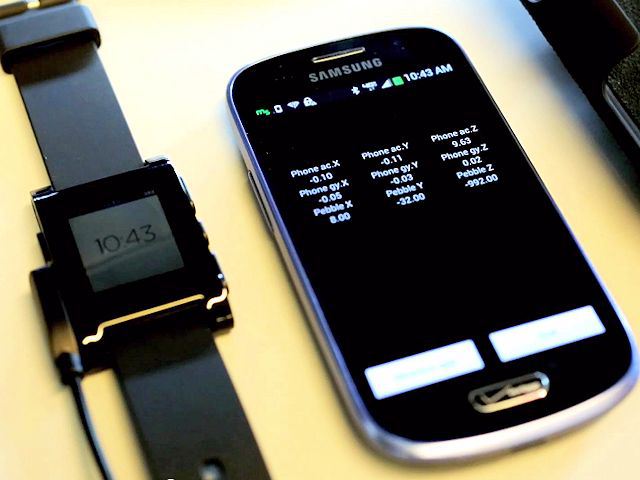
25 clinical trial participants wore (originally crowdfunded) Pebble watches to track tremors, gait, sleep patterns and other indicators for four days.  300 data points per second per patient were relayed to the cloud every day. Machine learning tools analyzed the data to understand medication and treatment effectiveness and disease progression.

Intel and the foundation will launch an app for Parkinson’s patients to report their medication intake and how they are feeling. They aim to study the effects of medication on motor symptoms, based on changes detected in patient data collected from the smartwatches.

Categories
Monitoring Sensors

Wearable sensor detects chemical disease markers

University of Michigan professors Sherman Fan and Zhaohui Zhong‘s newly developed graphene-based wearable sensor detects airborne chemicals that serve as disease indicators.   This could be the first wearable that monitors a broad array of chemical, rather than physical attributes. The sensor could detect acetone, a biomarker for diabetes, or abnormal levels of nitric oxide and oxygen, indicators of high blood pressure, anemia, or lung disease.

Categories
Monitoring Sensors

Biosensor monitor for post-surgery GI disorder

AbStats is a plastic, disposable, non-invasive acoustic gastrointestinal surveillance biosensor that attaches to the abdomen after surgery. It was developed by UCLA professor Brennan Spiegel and described in a paper published in the Journal of Gastrointestinal Surgery this week.

The device can help doctors determine which post-operative patients should be fed, and which should not, by monitoring for post-operative ileus, a malfunction of the intestines.  The condition causes patients to become ill if they eat too soon.

AbStats is also being tested for use in the diagnosis of irritable bowel syndrome and inflammatory bowel disease.

Categories
AI

One step closer to “brain-like” sensory computing

Based on DARPA’s SyNAPSE, IBM has unveiled its TrueNorth chip, published in Science this week.  The processor can handle large volumes of data with minimal power, which IBM claims is similar to how the human brain functions.

Containing 5.4 billion transistors, TrueNorth consumes  70 milliwatts of power, significantly less than a typical microprocessor. IBM says that the chip’s intense processing power and low energy consumption enable it to compute sensory data including images, sound, and smell.