Categories
BCI Brain

Brain-Kinect Interface for rehabilitation

http://link.springer.com/chapter/10.1007/978-3-658-02897-8_18

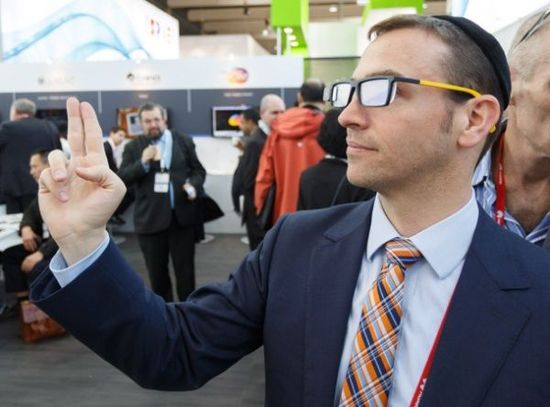
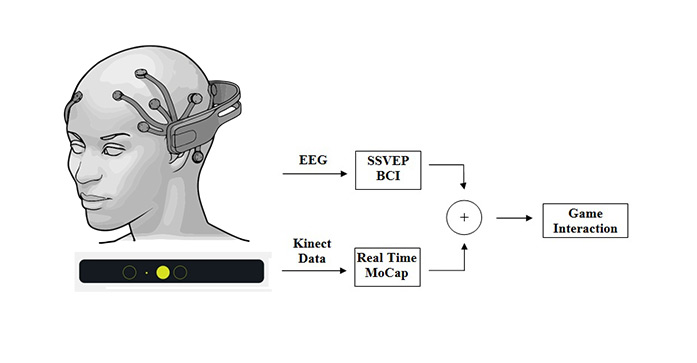
John Edison Muñoz Cardona, a Universidad Tecnológica de Pereira student, has developed a Brain-Kinect Interface for rehabilitation.  It combines bio-mechanical signals acquired by the Kinect sensor with signals from the Emotiv EPOC headset.

The combination of motion capture signals and EEG-based BCI is used for interaction in a rehabilitation game for patients with motor and/or cognitive impairments. The system provides a long and fluid interaction time, enabling effective data collection.  Software is used to objectively describe body movements

The  “Interactive Room for Rehabilitation” is both a real and digital space where patients with neuromotor impairment can interact through movement and thought, allowing motor and cognitive assessment.

Categories
Heart Sensors

Custom fitted, 3D printed, sensor based, implantable cardiac device

Nature paper |  Washington University | University of Illinois

A custom-fitted, implantable device with embedded sensors, while invasive, may offer an improved method for detecting and treating heart issues.

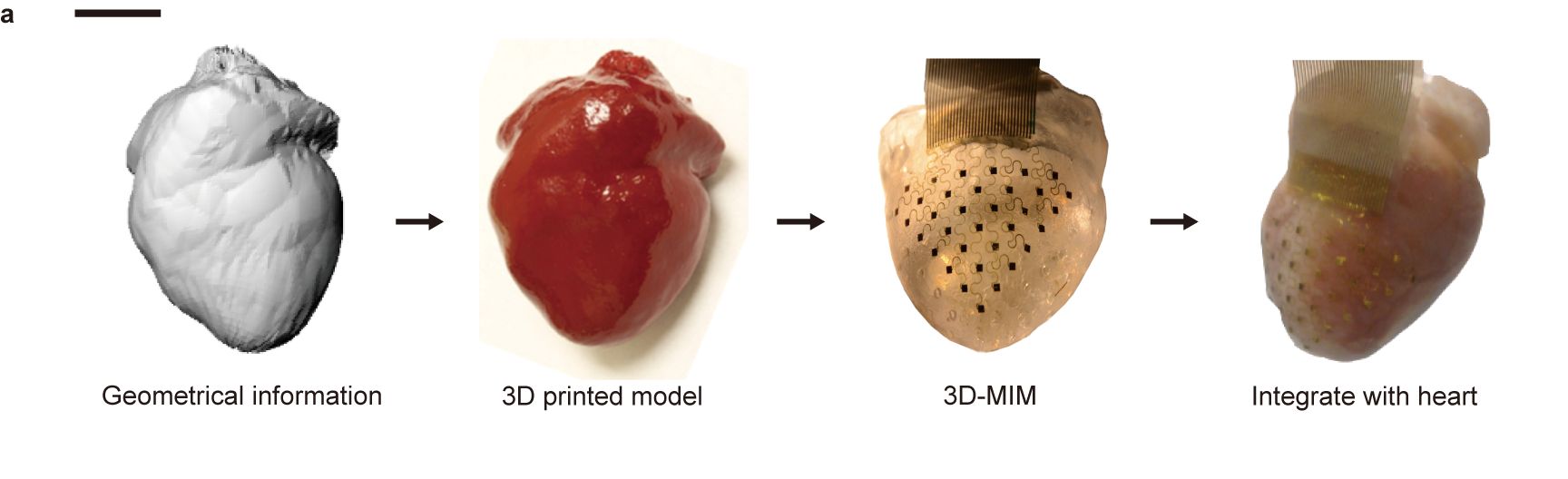
Washington University professor Igor Efimov and University of Illinois professor John Rogers (see previous ApplySci Rogers coverage) have created a 3-D elastic membrane made of a soft, flexible, silicon material that is precisely shaped to match the heart’s epicardium, or the outer layer of the wall of the heart. Current technology is two-dimensional and cannot cover the full surface of the epicardium or maintain reliable contact for continual use without sutures or adhesives.

Tiny sensors can then be printed onto the membrane that can precisely measure temperature, mechanical strain and pH, among other markers, or deliver a pulse of electricity in cases of arrhythmia. Those sensors could assist physicians with determining the health of the heart, deliver treatment or predict an impending heart attack before a patient exhibits any physical signs.

Categories
fitness Heart mHealth Monitoring Sleep

Update: Samsung increases health applications with Gear 2 watch, Gear Fit, Galaxy S5

Samsung has updated its devices as it tries to establish dominance in the health and fitness tracking market.

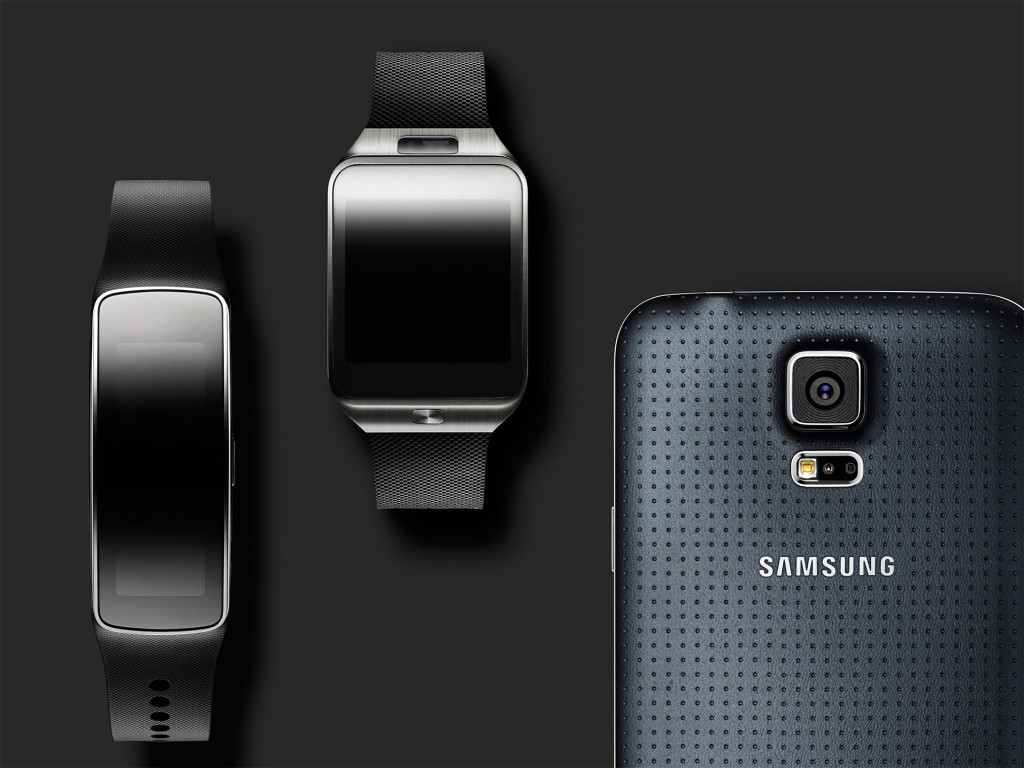
Its Gear 2 watch is now based on Samsung’s Tizen operating system rather than Android. It includes an accelerometer and gyroscope – capable of acting as a pedometer and an optical heart rate monitor. This allows the watch to integrate with Samsung’s health and fitness tracking applications, replacing the need for additional tracking gadgets.  Its various tools will measure exercise, sleep and stress levels.

Apple is expected to release a smartwatch in the near future with a strong focus on fitness and health tracking, as well as a “Healthbook” application for its next iteration of its iOS iPhone and iPad software.

The Gear Fit band tracks movement, heart rate and sleep patterns. It is water-resistant and includes phone notifications, a timer, stopwatch and a curved OLED screen.

The Galaxy S5 smartphone features an enhanced S Health 3.0 app, a comprehensive personal fitness tracker, a pedometer, diet and exercise records, and a built-in heart rate monitor. It will pair seamlessly with the next generation Gear products for real-time fitness coaching.

Categories
Brain

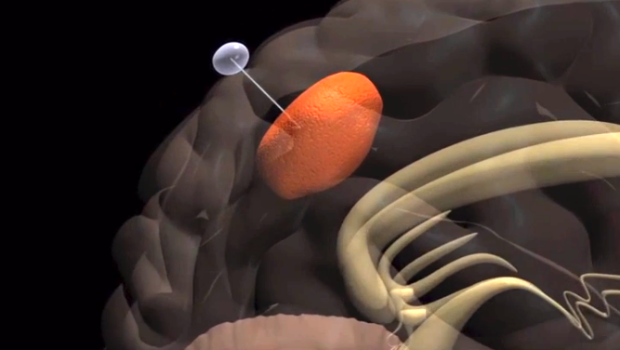
Optogenetics for pain control

http://news.stanford.edu/news/2014/february/biox-numb-pain-021914.html

http://www.nature.com/nbt/journal/vaop/ncurrent/full/nbt.2834.html

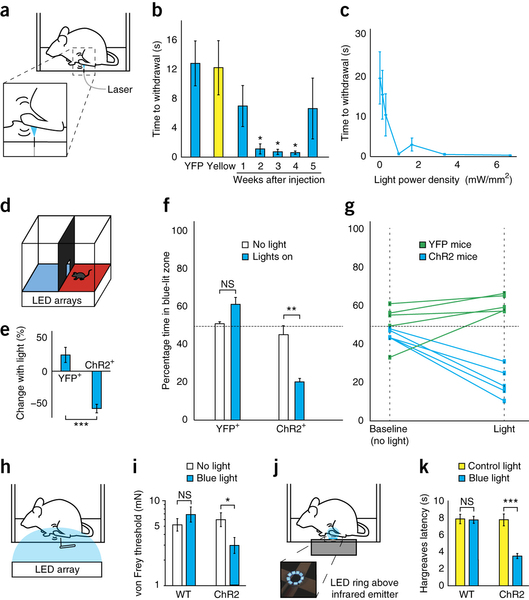
Stanford professor Scott Delp is exploring the use of optogenetics for pain control.  He is experimenting with mice with the hope that this research could be used to understand and treat pain in humans.  The optogenetics process is invasive, and therefore not suitable for all.

The mice are modified with gene therapy to have pain-sensing nerves that can be controlled by light. One color of light makes the mice more sensitive to pain. Another reduces pain. The scientists shone a light on the paws of mice through the Plexiglas bottom of the cage.

Increasing or decreasing the sensation of pain in these mice could help scientists understand why pain seems to continue in people after an injury has healed. The researchers hope to learn if persistent pain change nerves, and if so, how they can be changed back to a state where they stop sending pain messages to the brain.

Categories
BCI Brain Prosthetics

Cortical-spinal prosthesis directs “targeted movement” in paralyzed limbs

http://www.nature.com/ncomms/2014/140218/ncomms4237/full/ncomms4237.html

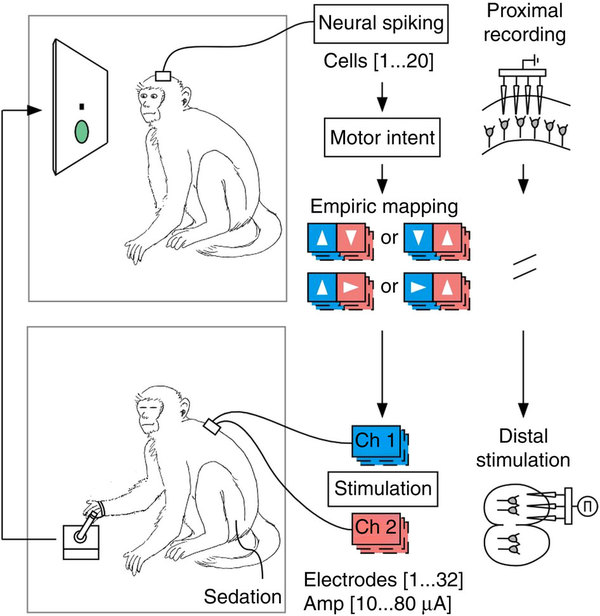
Cornell‘s Maryam ShanechiHarvard‘s Ziv Williams and colleagues developed a cortical-spinal prosthesis that directs “targeted movement” in paralyzed limbs. They tested a prosthesis that connects two subjects by enabling one subject to send its recorded neural activity to control limb movements in a different subject that is temporarily sedated.

The BMI is based on a set of real-time decoding algorithms that process neural signals by predicting their targeted movements. In the experiment, one animal acted as the controller of the movement or the “master,” then “decided” which target location to move to, and generated the neural activity that was decoded into this intended movement. The decoded movement was used to directly control the limb of the other animal by electrically stimulating its spinal cord.

The researchers focused on decoding the target endpoint of the movement as opposed to its detailed kinematics. This allowed them to match the decoded target with a set of spinal stimulation parameters that generated limb movement toward that target. They demonstrated that the alert animal could produce two-dimensional movement in the sedated animal’s limb .

The experiment focused on two different animals, rather than just one with a temporarily paralyzed limb. The scientists contend that this provided a true model of paralysis, since the master animal’s brain and the sedated animal’s limb had no physiological connection, as is the case for a paralyzed patient.

Categories
BCI Brain

Pentagon considers electric brain stimulation for troops

Boston Globe article

APA paper

The US Air Force has completed 5 studies to investigate if low level electrical stimulation can replace caffeine for fatigued troops who oversee the processing of digital information, including surveillance and drone footage.

The research grew out of a recognition that while computers have automated many military functions, humans are increasingly needed to monitor massive amounts of information to make battlefield decisions.  It is led by R. Andy McKinley at the Air Force Research Laboratory at Wright-Patterson Air Force Base.

The process relies on controlled doses of electrical current, passed into certain regions of the brain to cause, in effect, a minor seizure, or more rapid nerve impulses.  There have been side effects, including skin irritation from the electrodes and headaches.

“The hard part is to know what to turn on and what to turn off,” said Harvard professor William “Scott” Killgore, who is involved in a separate Pentagon study to help determine which parts of the brain are most effective to stimulate.

The two  techniques being studied  are transcranial magnetic stimulation and transcranial direct current stimulation.  It is described as one of the most in-depth studies of electric stimulation on healthy individuals.

Categories
mHealth Monitoring Sensors

Apple patents health monitoring earbuds

United States Patent 8655004

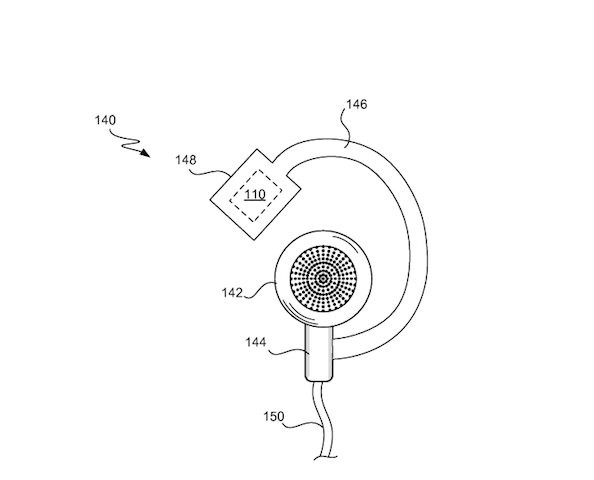
As the sensor based health monitoring market continues to expand, the USPTO on has granted Apple a patent for a biometric headphone system.

By positioning the headset in or near the ear, an embedded activity sensor can measure temperature, perspiration and heart rate data, among other metrics.  In addition to skin-based readings, an accelerometer may also be incorporated into the earbud chassis to facilitate the collection of accurate movement data.

Categories
Brain Eyes

Perceptual learning training improves vision

http://www.cell.com/current-biology/retrieve/pii/S0960982214000050

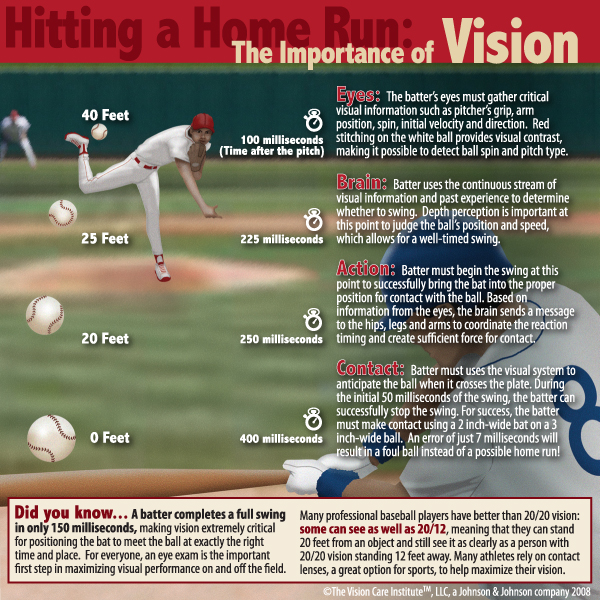
Professor Aaron Seitz, Professor Daniel Ozer , and Jenni Deveau at UC Riverside combined perceptual learning approaches to determine if improvements gained from an integrated, perceptual learning based training program would transfer to real world tasks. They found that  the brain-training technique significantly improved the vision of baseball players.

Before the start of the 2013 NCAA Division 1 baseball season, 19 baseball players completed thirty 25 minute sessions of a vision training video game.  18 team members received no training.  Players who participated in the training saw a 31 percent improvement in visual acuity — some gaining as much as two lines on the Snellen eye chart — and greater sensitivity to contrasts in light.  The researchers claim that the trained players had 4.4 percent fewer strikeouts and scored 41 more runs during the season.

Categories
Brain Cancer

Study: Nanofibers partially “move” brain tumors to accessible locations

http://www.nature.com/nmat/journal/vaop/ncurrent/full/nmat3878.html

http://www.research.gatech.edu/news/researchers-hijack-cancer-migration-mechanism-“move”-brain-tumors

Glioblastoma cancers are difficult to treat because malignant cells spread through the brain by following nerve fibers and blood vessels to invade new locations.  Professor Ravi Bellamkonda and Georgia Tech and Emory colleagues developed a technique they claim hijacks this migratory mechanism, turning it against the cancer by using a film of thin nanofibers to lure tumor cells away.

Instead of invading new areas, the migrating cells latch onto the specially-designed nanofibers and follow them to a location – potentially outside the brain – where they can be captured and killed. Researchers claim that they can partially move tumors from inoperable locations to more accessible ones. The technique reduced the size of brain tumors in animal models, suggesting that this form of brain cancer might one day be treated more like a chronic disease.

Categories
Apps Cancer Sensors

Chemical sensor app for lung cancer detection

Vantage Health/ STSI Press Release

Vantage Health and Scripps Translational Science Institute are developing point-of-care chemical sensor apps.

STSI will help validate the sensors, which can detect basic volatile organic compounds by using gas chromatography and mass spectrometry. They intend to use the sensor to detect VOCs commonly associated with lung cancer.

Last month Vantage Health partnered with NASA to commercialize its patents in nanotechnology, chemical sensing, carbon nanotubes, medical diagnoses, and environmental sensing as mobile health products.  Their stated initial application was lung cancer.

Categories
Brain Cancer Eyes

Cancer cells glow when viewed through surgical glasses

https://news.wustl.edu/news/Pages/26496.aspx

Washington University Professor Samuel Achilefu has developed surgical glasses that detect tumors by making cancer cells glow and appear blue in color.  This is accomplished through custom video technology, a head mounted display, and a targeted molecular agent that attaches to cancer cells.  Tumors as small as 1 mm in diameter could be detected.  The glasses are designed to enable surgeons to distinguish cancer cells from healthy cells, helping to ensure that no stray tumor cells are left behind during surgery.

Categories
BCI Brain Signal Processing

Wirelessly charged cochlear implant with no external hardware

http://web.mit.edu/newsoffice/2014/cochlear-implants-with-no-exterior-hardware-0209.html

MIT scientists have developed a low power signal processing chip that could lead to a cochlear implant requiring no external hardware.  Harvard Medical School and Massachusetts Eye and Ear Infirmary doctors collaborated with the researchers.  The implant would be wirelessly recharged and run for eight hours.

Instead of an external microphone,  the implant would use the natural microphone of the middle ear, which is almost always intact in cochlear implant patients.

The design exploits the mechanism of a middle ear implant. Middle ear ossicles convey the vibrations of the eardrum to the cochlea, which converts acoustic signals to electrical signals. In patients with middle ear implants, the cochlea is functional, but the stapes ossicle doesn’t vibrate with enough force to stimulate the auditory nerve. A middle ear implant consists of a tiny sensor that detects the ossicles’ vibrations and an actuator that helps drive the stapes.

The new device would use the same type of sensor, but the signal it generates would travel to a microchip implanted in the ear, which would convert it to an electrical signal and pass it to an electrode in the cochlea. Lowering the power requirements of the converter chip was the key to eliminating the skull mounted hardware.