Categories
Brain

Teleneurology for remote, underserved populations

Neurodegenerative disease cases have, unfortunately, far outpaced the number of neurologists able to diagnose and treat patients, particularly in rural areas. A recent study highlighted 20 states that were or would become “dementia neurology deserts,”

Remote tele-neurology is being introduced to fill the gap.

The American Academy of Neurology has announced a new curriculum to train students and providers to use video conferencing, sensors, and text and image communication tools to connect  with patients. Five training areas, developed by the University of Missouri, are the focus: technology; legal and ethical issues; “webside” manners; privacy; and, of course, neurology expertise

The University of Texas, Vanderbilt University, and Tufts Medical Center are already using teleneurology..


Join ApplySci at Wearable Tech + Digital Health + Neurotech Silicon Valley on February 26-27, 2018 at Stanford University, featuring:  Vinod KhoslaJustin SanchezBrian OtisBryan JohnsonZhenan BaoNathan IntratorCarla PughJamshid Ghajar – Mark Kendall – Robert Greenberg Darin Okuda Jason Heikenfeld

Categories
Robotics

Robot “patients” for medical research, training

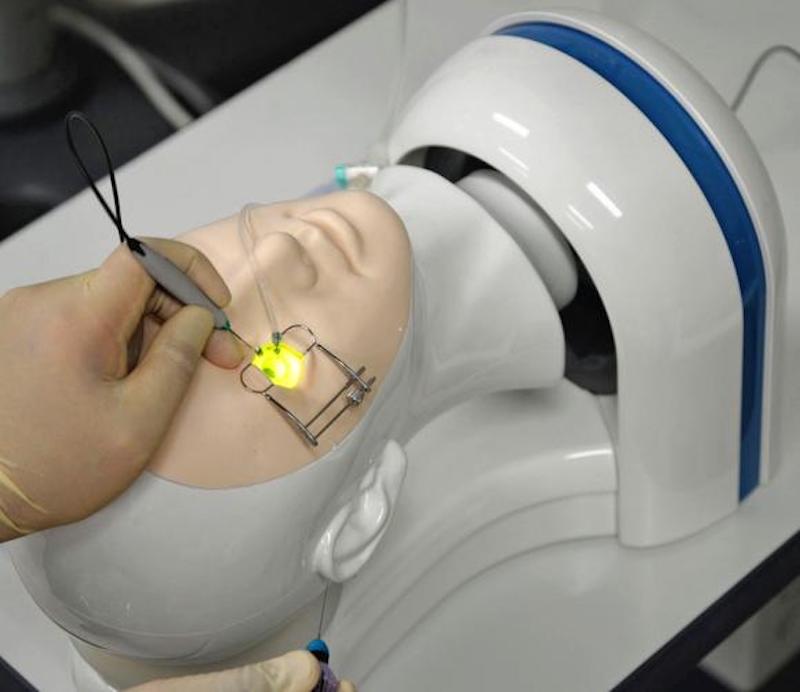
In addition to robots with increasingly human-like faces, being used as companions, “patient” robots are being developed to test medical equipment and procedures on babies and adults.

Yoshio Matsumoto  and AIST colleagues created a robotic skeletal structure of the lower half of the body, with 22 moveable joints.  Its skeleton is made of metal, and its skin, fat and muscles of silicone. Embedded sensors measure pressure on various parts of the lower body. It is being used to develop hospital beds with a reduced risk of pressure wounds.

Waseda University’s Hiroyuki Ishii has developed a robot baby for practicing  breathing protocols after birth. If non-breathing babies do not respond to sensory stimulation, a tube is inserted into the trachea.  This happens in  1-2% of newborns, and poses obvious risks. The robot is designed to train medical staff to properly insert the tube into the baby’s windpipe.

The use  of robots as personal assistants, and to test procedures, will increase rapidly as advanced sensors are built into the devices.


Join ApplySci at Wearable Tech + Digital Health + Neurotech Silicon Valley on February 26-27, 2018 at Stanford University, featuring:  Vinod KhoslaJustin SanchezBrian OtisBryan JohnsonZhenan BaoNathan IntratorCarla PughJamshid Ghajar – Mark Kendall – Robert Greenberg Darin Okuda Jason Heikenfeld

Categories
Prosthetics Sensors

Prosthetic “skin” senses force, vibration

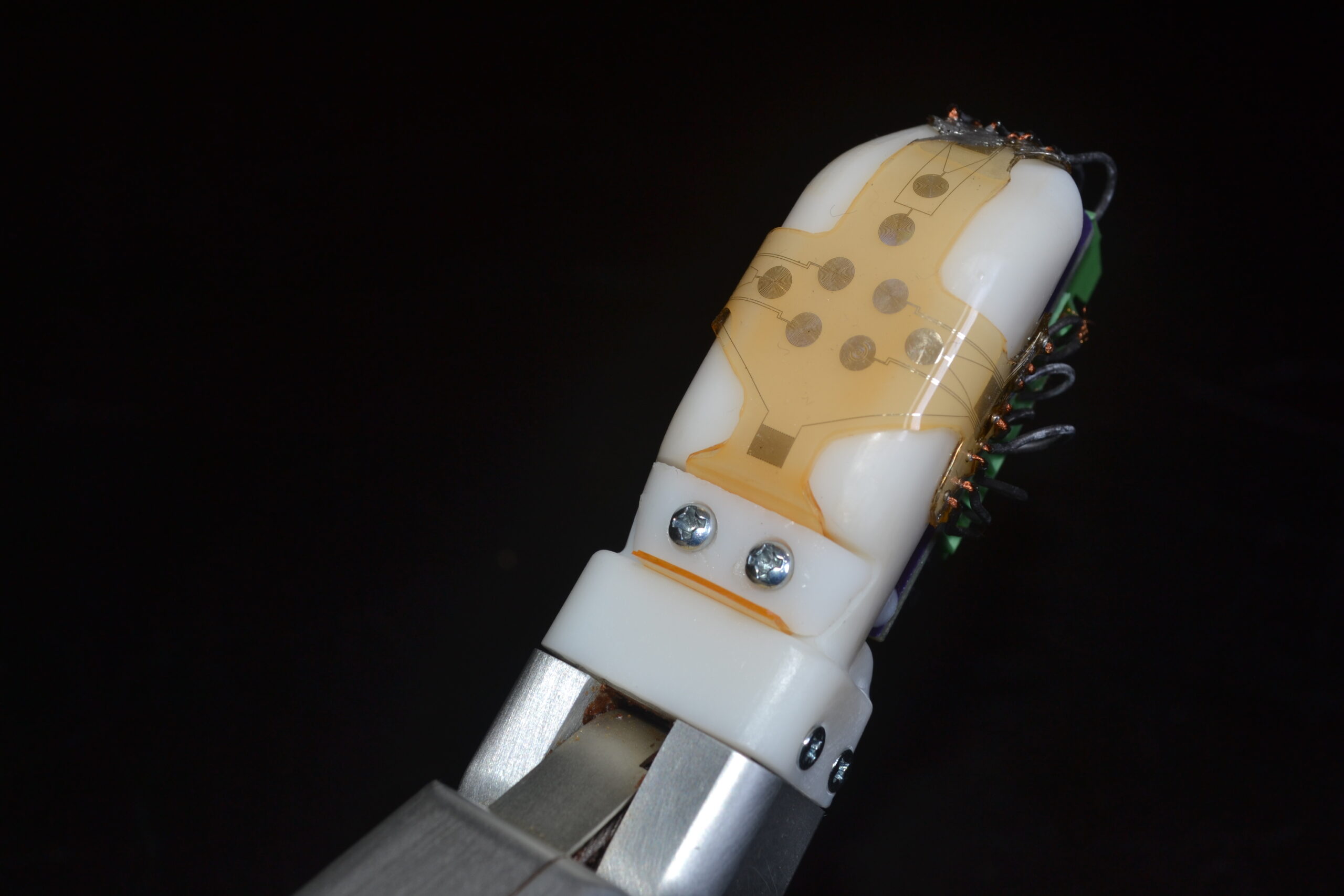
Jonathan Posner, with University of Washington and UCLA colleagues, has developed a flexible sensor “skin” that can be stretched over prostheses to determine force and vibration.

The skin mimics the way a human finger responds to tension and compression, as it slides along a surface or distinguishes among different textures. This could allow users to sense when something is slipping out of their grasp.

Tiny electrically conductive liquid metal channels are placed on both sides of of a prosthetic finger. As it is slid across a surface, the channels on one side compress while those on the other side stretch, similar to a natural limb.  As the channel geometry changes, so does the amount of electricity. Differences in electrical resistance correlate with force and vibrations.

The researchers believe that the sensor skin will enable users to better be able to open a door, use a phone, shake hands, or lift packages.


Join ApplySci at Wearable Tech + Digital Health + Neurotech Silicon Valley on February 26-27, 2018 at Stanford University, featuring:  Vinod KhoslaJustin SanchezBrian OtisBryan JohnsonZhenan BaoNathan IntratorCarla PughJamshid Ghajar – Mark Kendall – Robert Greenberg Darin Okuda Jason Heikenfeld

Categories
BCI Stroke Virtual Reality

VR + neurofeedback for movement training after stroke


Join ApplySci at Wearable Tech + Digital Health + Neurotech Silicon Valley on February 26-27, 2018 at Stanford University, featuring:  Vinod KhoslaJustin SanchezBrian OtisBryan JohnsonZhenan BaoNathan IntratorCarla PughJamshid Ghajar – Mark Kendall – Robert Greenberg

Categories
Sensors

Pressure sensors generated from pattern-forming bacteria

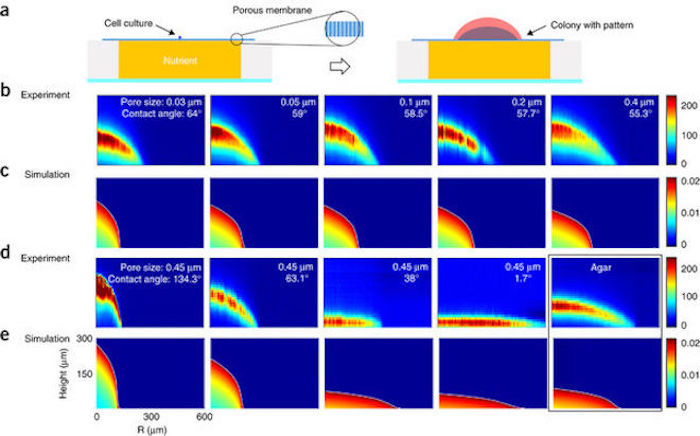
Paul Ruffin Scarborough, Stefan Zauscher, and Duke colleagues have programmed bacteria with a synthetic gene circuit to turn them into working devices.

As a bacterial colony grows into the shape of a hemisphere, the gene circuit triggers the production of a protein, to distribute within the colony, that recruits inorganic materials. Gold nanoparticles enable  the system to form a shell around the bacterial colony, resulting in  a pressure sensor.

This is the first time that a composite structure was produced by programming the cells themselves, and controlling their access to nutrients, but still leaving the bacteria free to grow in three dimensions.

Click to view Duke University video


Join ApplySci at Wearable Tech + Digital Health + Neurotech Silicon Valley on February 26-27, 2018 at Stanford University, featuring:  Vinod KhoslaJustin SanchezBrian OtisBryan JohnsonZhenan BaoNathan IntratorCarla PughJamshid Ghajar – Mark Kendall – Robert Greenberg

Categories
Brain Digital Health Venture Capital Wearables

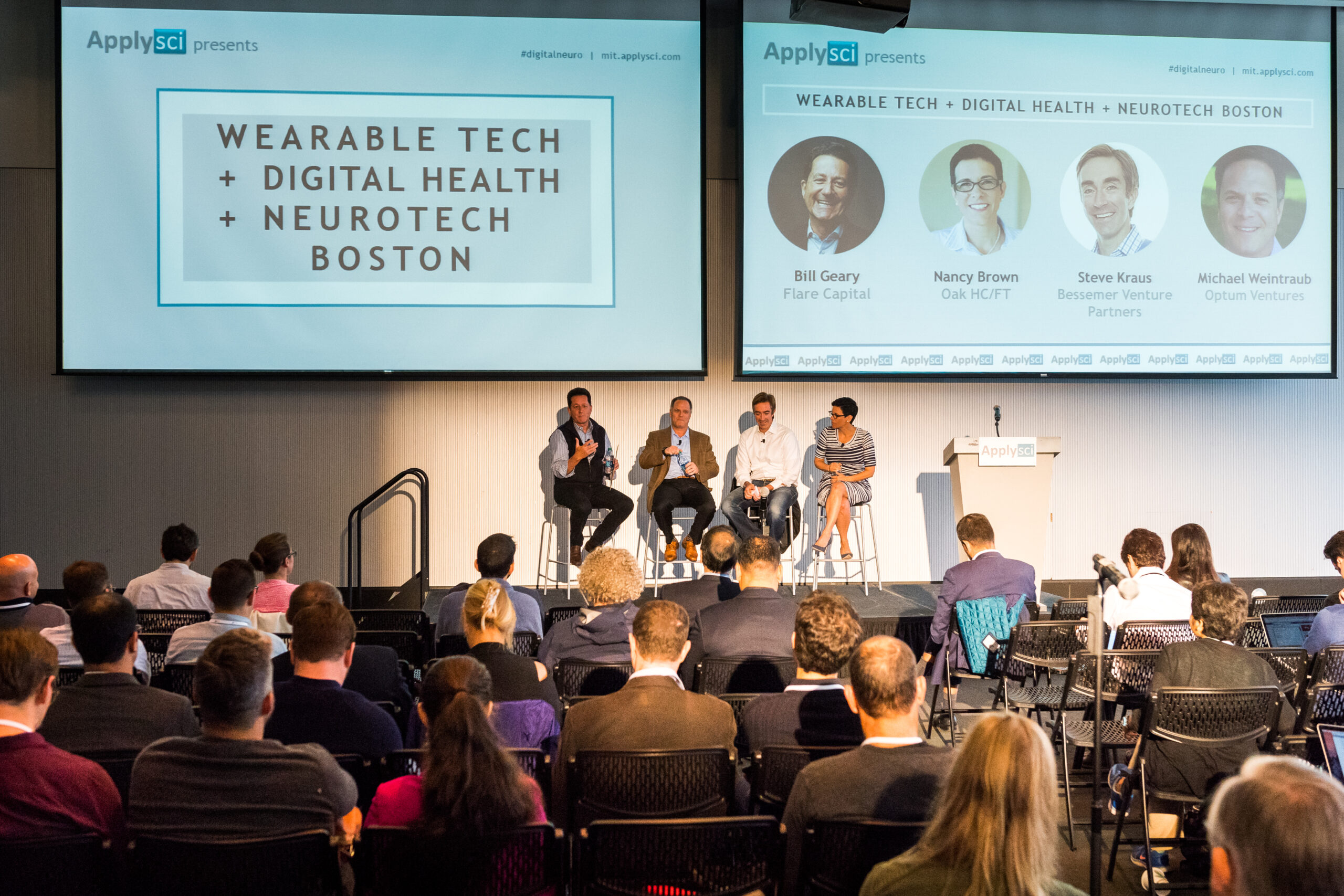
Video: Boston VC’s on funding digital health innovation

Video:  Flare Capital’s Bill Geary, Bessemer’s Steve Kraus, Oak HC/FT’s Nancy Brown, and Optum Ventures’ Michael Weintraub on funding and commercializing innovation.

Recorded at ApplySci’s Digital Health + Neurotech conference at the MIT Media Lab, September 19, 2017


Join ApplySci at Wearable Tech + Digital Health + Neurotech Silicon Valley on February 26-27, 2018 at Stanford University, featuring:  Vinod KhoslaJustin SanchezBrian OtisBryan JohnsonZhenan BaoNathan IntratorCarla PughJamshid Ghajar – Mark Kendall
Categories
Sensors

Ingestible, flexible sensor to diagnose gastrointestinal disorders

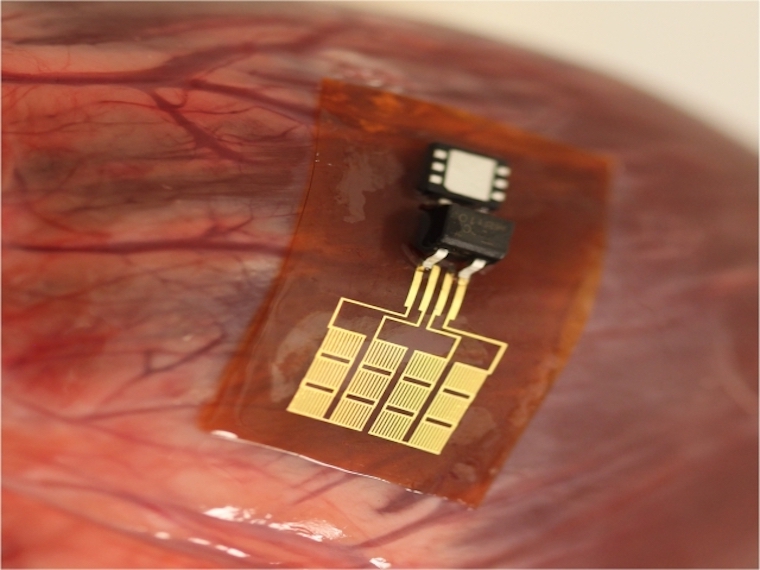
Canan Dagdeviren, Giovanni Traverso, Bob Langer, and MIT and Brigham and Women’s colleagues have built a swallowable, flexible sensor that adheres to the stomach wall or intestinal lining to measure digestive track contractions.  It could be used to help diagnose gastrointestinal disorders or to monitor food intake.

The piezoelectric device generates a current and voltage when mechanically deformed. Elastic polymers allow it to conform to and stretch with skin.

The sensor has only been tested on pigs.  It was able to remain active for 2 days.  If found safe to be used in humans, its flexibility could help avoid the side effects associated with current, rigid ingestible devices. Future versions will include the harvesting of some of the piezoelectric generated energy to power additional sensors and wireless transmitters.  The elimination of a battery would further improve safety.


Join ApplySci at Wearable Tech + Digital Health + Neurotech Silicon Valley on February 26-27, 2018 at Stanford University, featuring:  Vinod KhoslaJustin SanchezBrian OtisBryan JohnsonZhenan BaoNathan IntratorCarla PughJamshid Ghajar – Mark Kendall

Categories
Prosthetics Sensors

Sensor-embedded prosthetic monitors gait, detects infection

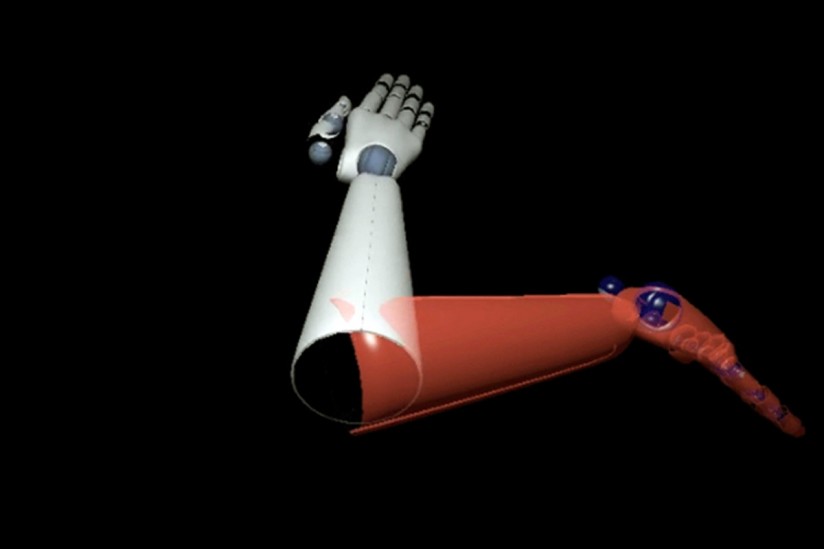
The Monitoring OsseoIntegrated Prostheses uses a limb which includes a titanium fixture surgically implanted into the femur. Bone grows at the implant’s connection point, leaving  a small metallic connector protruding from the remaining leg.  An accompanying artificial limb then can be attached or detached. The same procedure can be performed for upper limbs.

Advantages include less pain, a fluid walking motion, and a more stable, better-fitting limb. However, infection risk is increased due to the metal profusion. This is meant to be addressed by electrochemical and skin sensors, including a  bio-compatible array embedded within the residual limb. The array tracks changes in body temperature and pH balance, which indicate infection. It also monitors the fit of the bone and prosthetic limb, and the healing process, which could help doctors to speed recuperation.


Join ApplySci at Wearable Tech + Digital Health + Neurotech Silicon Valley on February 26-27, 2018 at Stanford University, featuring:  Vinod KhoslaJustin SanchezBrian OtisBryan JohnsonZhenan BaoNathan IntratorCarla PughJamshid Ghajar – Mark Kendall

Categories
Infectious Disease Pharmaceuticals Sensors

Piezoelectric sensor determines antibiotic efficacy in 1 hour

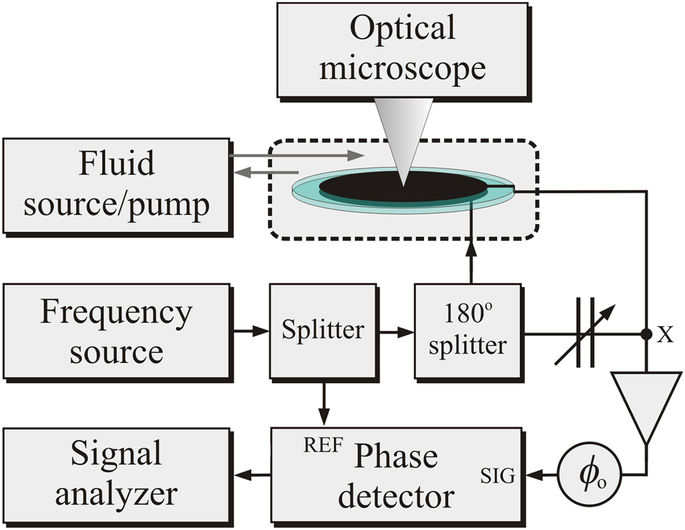
Ward Johnson and NIST colleagues have developed a piezoelectric sensor to rapidly determine whether an antibiotic combats an infection. Quartz-crystal resonators, with varying vibrations, measure surface particle changes, to quickly sense mechanical fluctuations of bacterial cells and changes induced by an antibiotic.

 Results are provided in less than an hour.  Current antimicrobial tests require days to grow colonies of bacterial cells, which could result in the progression of infections before an effective treatment is identified, and lead to antibiotic resistant bacterial infections.

Click to view NIST video.


Join ApplySci at Wearable Tech + Digital Health + Neurotech Silicon Valley on February 26-27, 2018 at Stanford University, featuring:  Vinod KhoslaJustin SanchezBrian OtisBryan JohnsonZhenan BaoNathan IntratorCarla PughJamshid Ghajar – Mark Kendall


Categories
Sensors

Radar monitor uses appliances to track health wirelessly

Toru Sato and Kyoto University and Panasonic colleagues have refined a wireless, radar-based  vital measuring device they developed last year.

The original sensor combined a radar with signal analysis algorithms to measure how the body moves as the heart beats. Software filters isolated the heart’s minute motions while the body moved.  However it was extremely large.

The team has now integrated:

  •  A wider 79-GHz frequency band
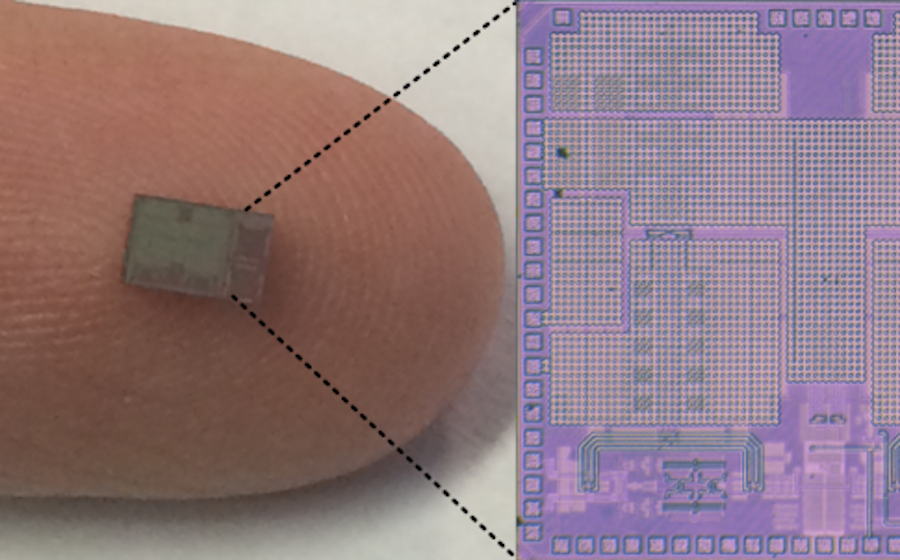
  • Improved measurement sensitivity by integrating CMOS semiconductors into a single chip for millimeter-wave radar
  • Increased sensitivity with finer resolution in the distance direction of the measurement range
  • Precise separation of the noise that would otherwise affect the estimation accuracy of the heartbeat interval in order to simultaneously measure the heartbeat intervals of several people with a single radar

The device is now 1/10 of its predecessor’s size.

The goal is to seamlessly integrate health sensors in household appliances, such as lighting, to safely, accurately, and unobtrusively monitor residents.

Click to view Panasonic video


Join ApplySci at Wearable Tech + Digital Health + Neurotech Silicon Valley on February 26-27, 2018 at Stanford University, featuring:  Vinod KhoslaJustin SanchezBrian OtisBryan JohnsonZhenan BaoNathan IntratorCarla PughJamshid Ghajar – Mark Kendall

Categories
Brain Consciousness

Implanted vagus nerve stimulator partially reverses vegetative state

A person described as being in a vegetative state for 15 years showed partial signs of consciousness after a vagus nerve stimulator was implanted.  University de Lyon’s Angele Sirigu led the research. This challenges the belief that those unconscious for more than 12 months could not be revived.   It also poses a potential challenge to the vegetative diagnosis, and diagnosis in disorders of consciousness generally.

After one month of VNS, the patient’s attention, movements, and brain activity significantly improved, and he began responding to simple orders that were impossible before.

Brain-activity recordings revealed major changes. A theta EEG signal (to distinguish between a vegetative and minimally conscious state) increased significantly in those areas of the brain involved in movement, sensation, and awareness. The brain’s functional connectivity also increased. A PET scan showed increases in metabolic activity in both cortical and subcortical regions of the brain.

The team is now planning a large  study to confirm and extend the therapeutic potential of VNS for patients in a vegetative or minimally conscious state.


Join ApplySci at Wearable Tech + Digital Health + Neurotech Silicon Valley on February 26-27, 2018 at Stanford University, featuring:  Vinod KhoslaJustin SanchezBrian OtisBryan JohnsonZhenan BaoNathan IntratorCarla PughMark Kendall

Categories
Heart

App uses phone’s camera to monitor heart health