Categories
AI

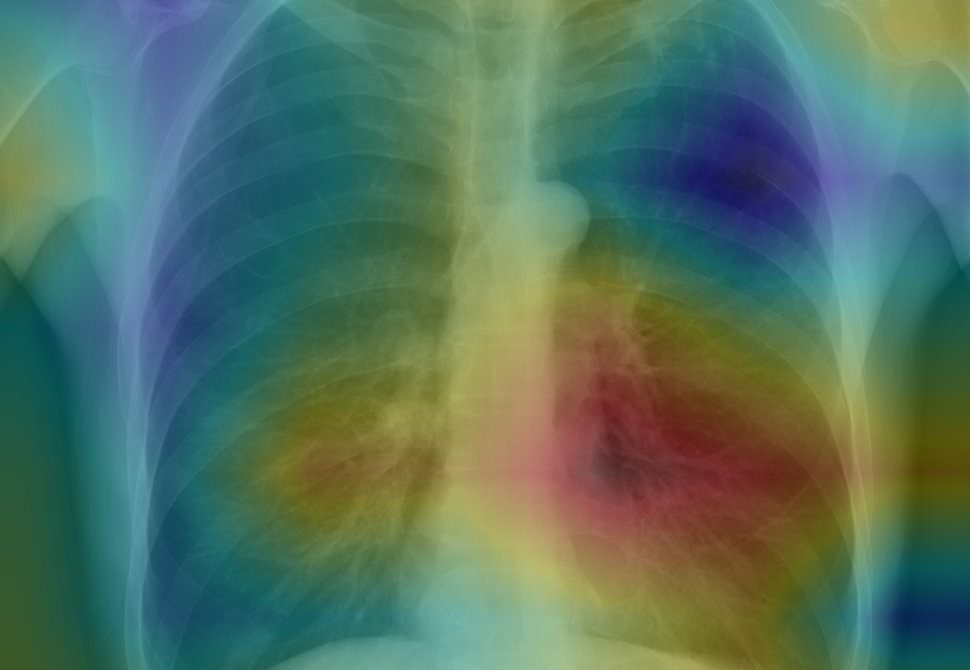
AI detects pneumonia from chest X-rays

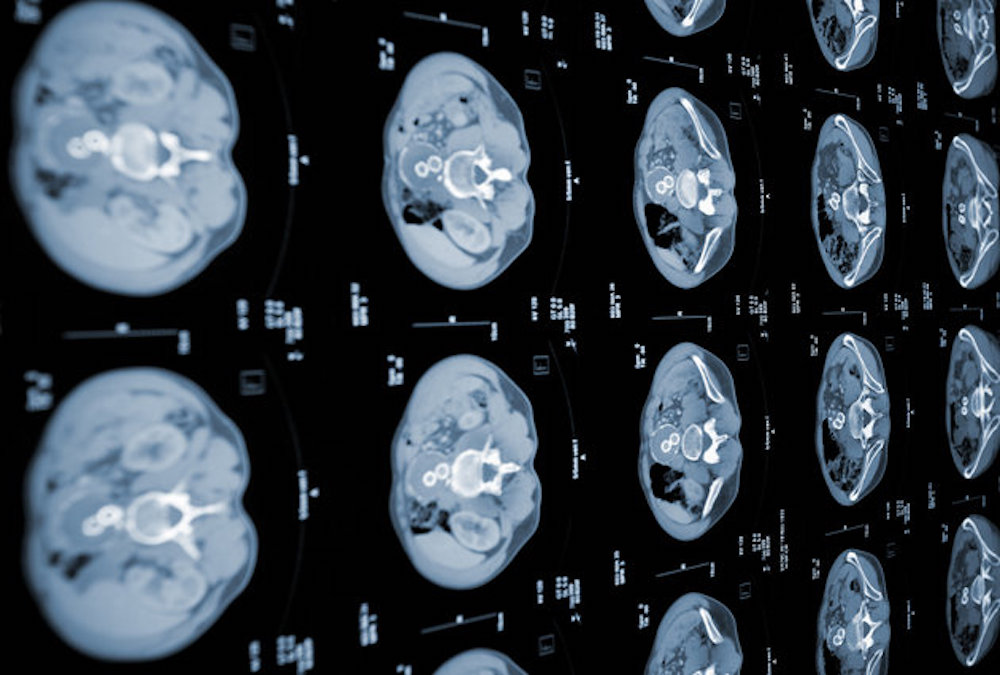
Andrew Ng and Stanford colleagues used AI to detect pneumonia from x-rays with similar accuracy to trained radiologists.  The CheXNet model analyzed 112,200 frontal-view X-ray images of 30,805 unique patients released by the NIH (ChestX-ray14.)

Deep Learning algorithms also detected14 diseases including fibrosis, hernias, and cell masses, with fewer false positives and negatives than NIH benchmark research.


Join ApplySci at Wearable Tech + Digital Health + Neurotech Silicon Valley on February 26-27, 2018 at Stanford University. Speakers include:  Vinod Khosla – Justin Sanchez – Brian Otis – Bryan Johnson – Zhenan Bao – Nathan Intrator – Carla Pugh – Jamshid Ghajar – Mark Kendall – Robert Greenberg – Darin Okuda – Jason Heikenfeld – Bob Knight – Phillip Alvelda – Paul Nuyujukian –  Peter Fischer – Tony Chahine – Shahin Farshchi – Ambar Bhattacharyya – Adam D’Augelli

Registration rates increase today, November 17th, 2017
Categories
Brain

Researchers claim to improve human memory with implanted electrodes

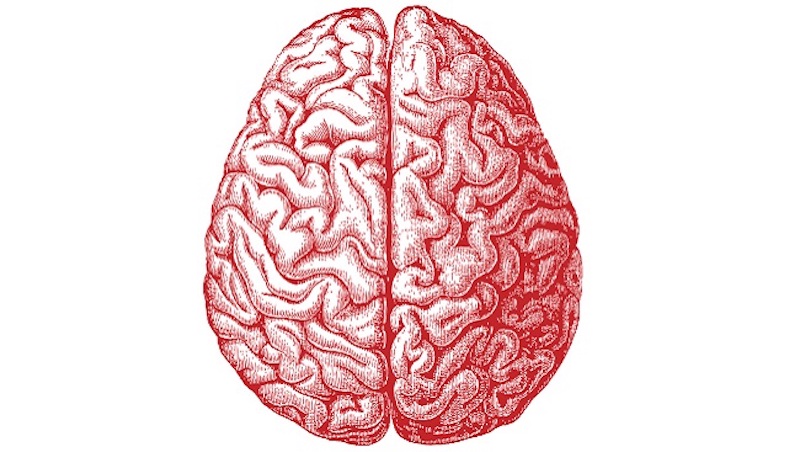
In a small study, USC’s Dong Song demonstrated the efficacy of an implantable “memory prosthesis.”   Dr. Song presented his work at the Society for Neuroscience conference in Washington this week.

20 volunteers had the device implanted at the same time as electrodes for epilepsy treatment, a procedure which they had already planned.

The “prosthesis” collected brain activity data during tests designed to stimulate  short-term memory or working memory. The researchers then determined and used optimal memory performance patterns to stimulate the brain during later tests.

They claimed that the procedure improved short-term memory by  approximately 15 percent, and working memory by 25 percent. When the brain was stimulated randomly, performance worsened.


Join ApplySci at Wearable Tech + Digital Health + Neurotech Silicon Valley on February 26-27, 2018 at Stanford University. Speakers include:  Vinod Khosla – Justin Sanchez – Brian Otis – Bryan Johnson – Zhenan Bao – Nathan Intrator – Carla Pugh – Jamshid Ghajar – Mark Kendall – Robert Greenberg – Darin Okuda – Jason Heikenfeld – Bob Knight – Phillip Alvelda – Paul Nuyujukian –  Peter Fischer – Tony Chahine – Shahin Farshchi – Ambar Bhattacharyya – Adam D’Augelli

Registration rates increase November 17th, 2017

Categories
Brain

Optogenetic technique controls single neurons

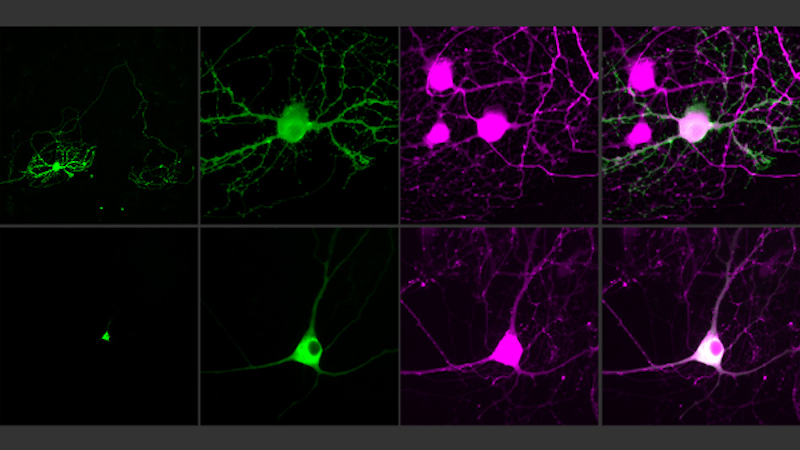
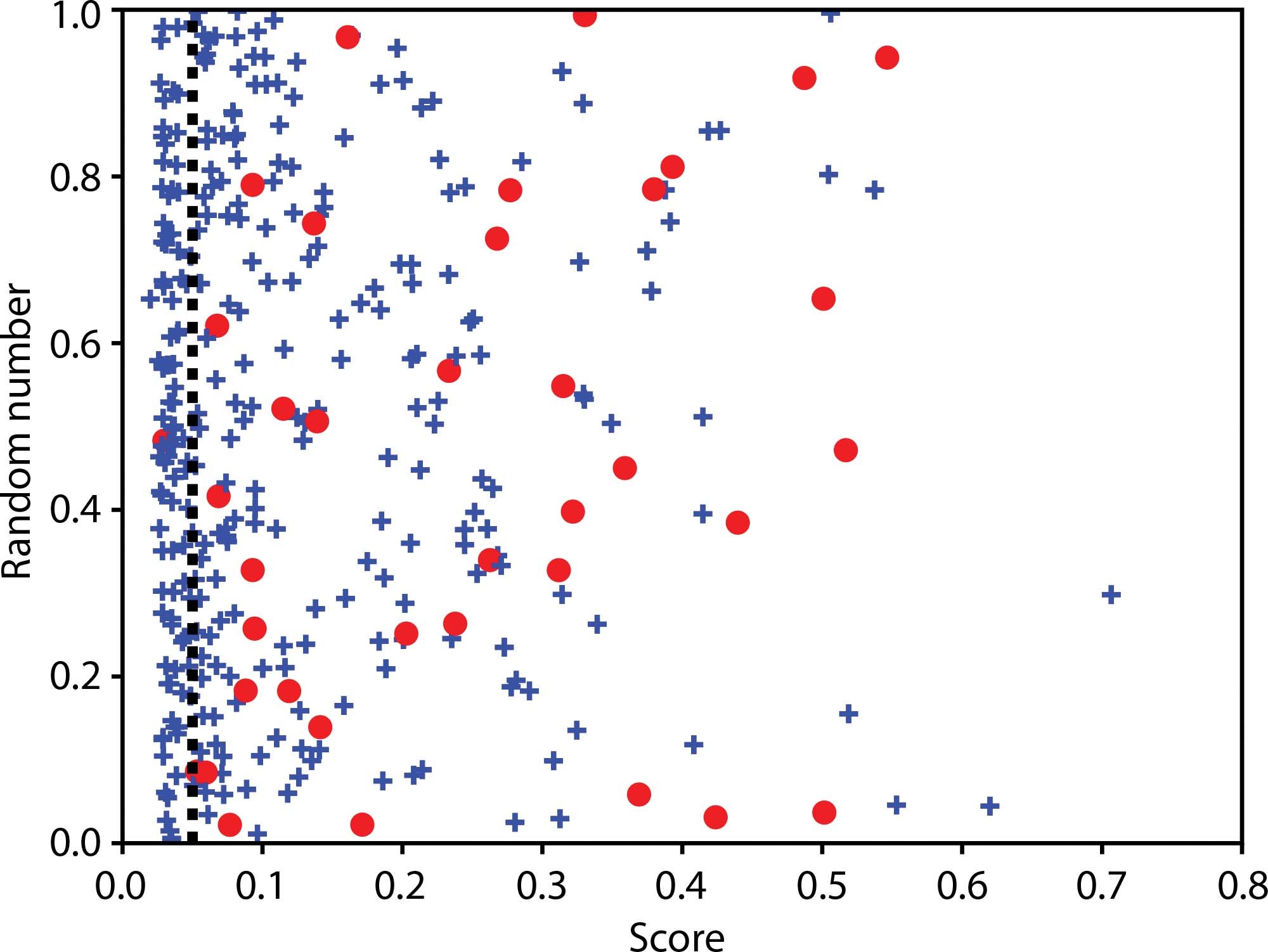
MIT’s Ed Boyden and Paris Descartes University’s Valentina Emiliani have developed a new optogenetic technique, combined with new opsins, that stimulates individual cells with precise control over both the timing and location of the activation.

This will allow the study of how individual cells, and connections among those cells, generate specific behaviors such as initiating a movement or learning a new skill.

The study‘s lead authors are Or Shemesh from MIT and Dimitrii Tanese and Valeria Zampini from CNRS.


Join ApplySci at Wearable Tech + Digital Health + Neurotech Silicon Valley on February 26-27, 2018 at Stanford University. Speakers include:  Vinod Khosla – Justin Sanchez – Brian Otis – Bryan Johnson – Zhenan Bao – Nathan Intrator – Carla Pugh – Jamshid Ghajar – Mark Kendall – Robert Greenberg – Darin Okuda – Jason Heikenfeld – Bob Knight – Phillip Alvelda – Paul Nuyujukian –  Peter Fischer – Tony Chahine – Shahin Farshchi

Registration rates increase – November 17th, 2017


Categories
Sensors

Video: John Rogers on soft electronics for the human body

Recorded at ApplySci’s Wearable Tech + Digital Health + Neurotech Boston conference on September 19th at the MIT Media Lab.


Join ApplySci at Wearable Tech + Digital Health + Neurotech Silicon Valley on February 26-27, 2018 at Stanford University. Speakers include:  Vinod Khosla – Justin Sanchez – Brian Otis – Bryan Johnson – Zhenan Bao – Nathan Intrator – Carla Pugh – Jamshid Ghajar – Mark Kendall – Robert Greenberg – Darin Okuda – Jason Heikenfeld – Bob Knight – Phillip Alvelda – Paul Nuyujukian –  Peter Fischer – Tony Chahine

Registration rates increase today – November 10th, 2017

Categories
Brain

Silicon probes record hundreds of neurons simultaneously

Neuropixels, developed by HHMI’s Tim Harris, are electrodes that record brain activity from hundreds of neurons. Previously, it was not possible to measure the joint activity of individual neurons distributed across brain regions. Recording methods could either resolve the activity of individual neurons or monitor multiple brain regions.

UCL, Allen Institute for Brain Science, IMEC researchers collaborated on the study. The team is now developing a four-shank probe with a smaller base, for chronic recordings, and optrodes that combine recording with optical stimulation, for optogenetic experiments.


Join ApplySci at Wearable Tech + Digital Health + Neurotech Silicon Valley on February 26-27, 2018 at Stanford University. Speakers include:  Vinod Khosla – Justin Sanchez – Brian Otis – Bryan Johnson – Zhenan Bao – Nathan Intrator – Carla Pugh – Jamshid Ghajar – Mark Kendall – Robert Greenberg – Darin Okuda – Jason Heikenfeld – Bob Knight – Phillip Alvelda – Paul Nuyujukian –  Peter Fischer – Tony Chahine

Registration rates increase November 10th.

Categories
Wounds

Phone camera measures wound depth, severity

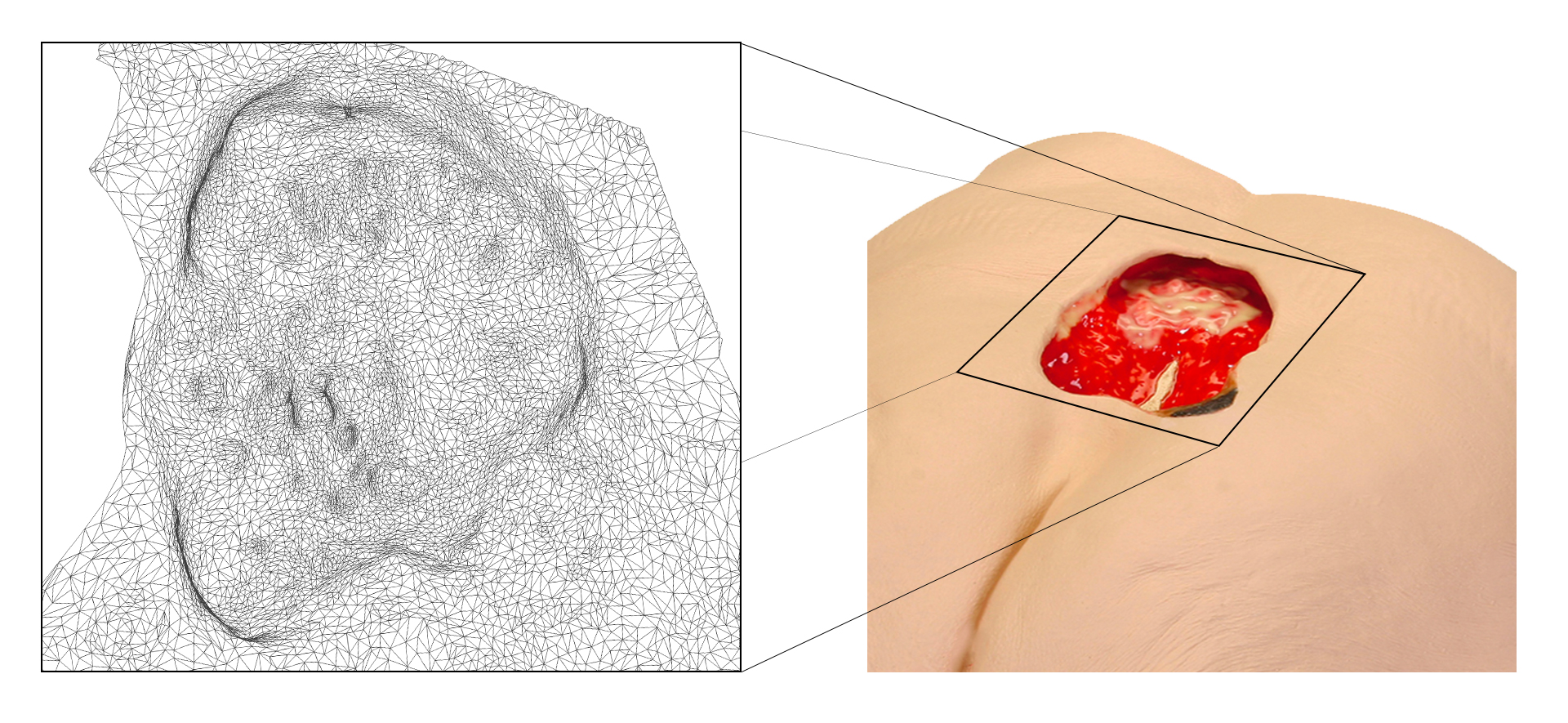
AutoDepth by Swift Medical uses a phone’s camera to understand a wound’s depth and severity.  Algorithms process dynamic changes over time. Depth can indicate whether a wound is healing properly.

The system is noninvasive, and can be widely accessible to clinicians. In addition to gauging the wound healing process, it  can be used for measuring the progression of pressure ulcers, or in the analysis of moles on the skin, where volume, depth, and surface texture are considered.


Join ApplySci at Wearable Tech + Digital Health + Neurotech Silicon Valley on February 26-27, 2018 at Stanford University. Speakers include:  Vinod Khosla – Justin Sanchez – Brian Otis – Bryan Johnson – Zhenan Bao – Nathan Intrator – Carla Pugh – Jamshid Ghajar – Mark Kendall – Robert Greenberg – Darin Okuda – Jason Heikenfeld – Bob Knight – Phillip Alvelda – Paul Nuyujukian –  Peter Fischer

Registration rates increase November 10th.

Categories
Brain

AI detects suicidal thoughts from brain scans in small study

David Brent and PIttsburgh and Carnegie Mellon colleagues used machine learning to identify suicidal thoughts in subjects based on fMRI scans.

In a recent study, 18 suicidal participants and 18 members of a control group  were presented with three lists of 10 words related to suicide, positive, or negative effects. Previously mapped neural signatures  showing  brain patterns of emotions like “shame” and “anger” were incorporated.

5 brain locations, and 6 words, were distinguished suicidal patients from the controls. Using those locations and words,  a machine-learning classifier was trained and able to identify 15 of the 17 suicidal patients and 16 of 17 control subjects.

Suicidal patients were divided into those that had attempted suicide (9) and those that had not (8). Another classifier was then able to identify 16 of the 17 patients.

If healthy patients and those with suicidal thoughts are proven to have such different reactions to words, this work could impact therapy and, it is our hope, prevent lost lives.


Join ApplySci at Wearable Tech + Digital Health + Neurotech Silicon Valley on February 26-27, 2018 at Stanford University. Speakers include:  Vinod Khosla – Justin Sanchez – Brian Otis – Bryan Johnson – Zhenan Bao – Nathan Intrator – Carla Pugh – Jamshid Ghajar – Mark Kendall – Robert Greenberg – Darin Okuda – Jason Heikenfeld – Bob Knight – Phillip Alvelda – Paul Nuyujukian –  Peter Fischer

Categories
Apps Machine Learning

Weather, activity, sleep, stress data used to predict migraines

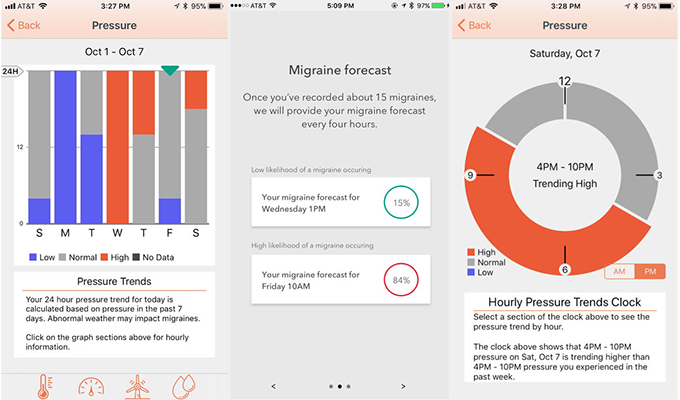
Migraine Alert by Second Opinion Health uses machine learning to analayze weather, activity, sleep, and stress, to determine if a user will have a migraine headache.

The company claims that the algorithm is effective after 15 episodes are logged. They have launched a multi patient study with the Mayo Clinic, in which subjects use a phone and a fitbit to log this lifestyle data. The goal is prediction, earlier treatment, and, hopefully, symptom reduction.  No EEG-derived brain activity data is incorporated into the prediction method.


Join ApplySci at Wearable Tech + Digital Health + Neurotech Silicon Valley on February 26-27, 2018 at Stanford University. Speakers include:  Vinod Khosla – Justin Sanchez – Brian Otis – Bryan Johnson – Zhenan Bao – Nathan Intrator – Carla Pugh – Jamshid Ghajar – Mark Kendall – Robert Greenberg – Darin Okuda – Jason Heikenfeld – Bob Knight – Phillip Alvelda – Paul Nuyujukian –  Peter Fischer

Categories
Brain

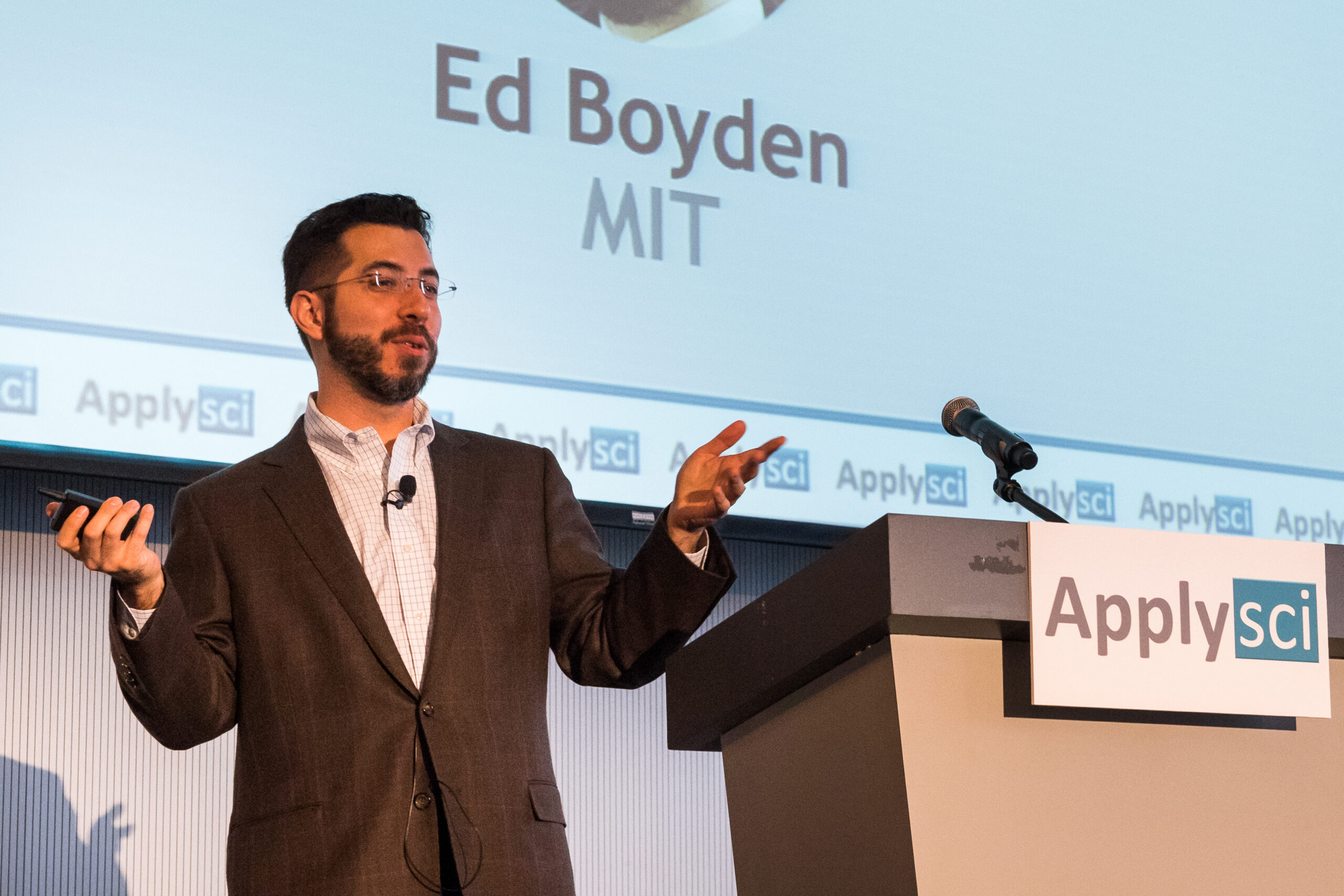
Video: Ed Boyden on technologies for analyzing & repairing the brain

Recorded at ApplySci’s Wearable Tech + Digital Health + Neurotech conference on September 19th at the MIT Media Lab.


Join ApplySci at Wearable Tech + Digital Health + Neurotech Silicon Valley on February 26-27, 2018 at Stanford University. Speakers include:  Vinod Khosla – Justin Sanchez – Brian Otis – Bryan Johnson – Zhenan Bao – Nathan Intrator – Carla Pugh – Jamshid Ghajar – Mark Kendall – Robert Greenberg – Darin Okuda – Jason Heikenfeld – Bob Knight – Phillip Alvelda

Categories
AI Cancer

AI detects bowel cancer in less than 1 second in small study

Yuichi Mori and Showa University colleagues haved used AI to identify bowel cancer by analyzing colonoscopy derived polyps in less than a second.

The  system compares a magnified view of a colorectal polyp with 30,000 endocytoscopic images. The researchers claimed  86% accuracy, based on a study of 300 polyps.

While further testing the technology, Mori said that the team will focus on creating a system that can automatically detect polyps.

Click to view Endoscopy Thieme video


Join ApplySci at Wearable Tech + Digital Health + Neurotech Silicon Valley on February 26-27, 2018 at Stanford University. Speakers include:  Vinod Khosla – Justin Sanchez – Brian Otis – Bryan Johnson – Zhenan Bao – Nathan Intrator – Carla Pugh – Jamshid Ghajar – Mark Kendall – Robert Greenberg – Darin Okuda – Jason Heikenfeld – Bob Knight – Phillip Alvelda

Categories
Brain

3D neuron reconstruction reveals electrical behavior

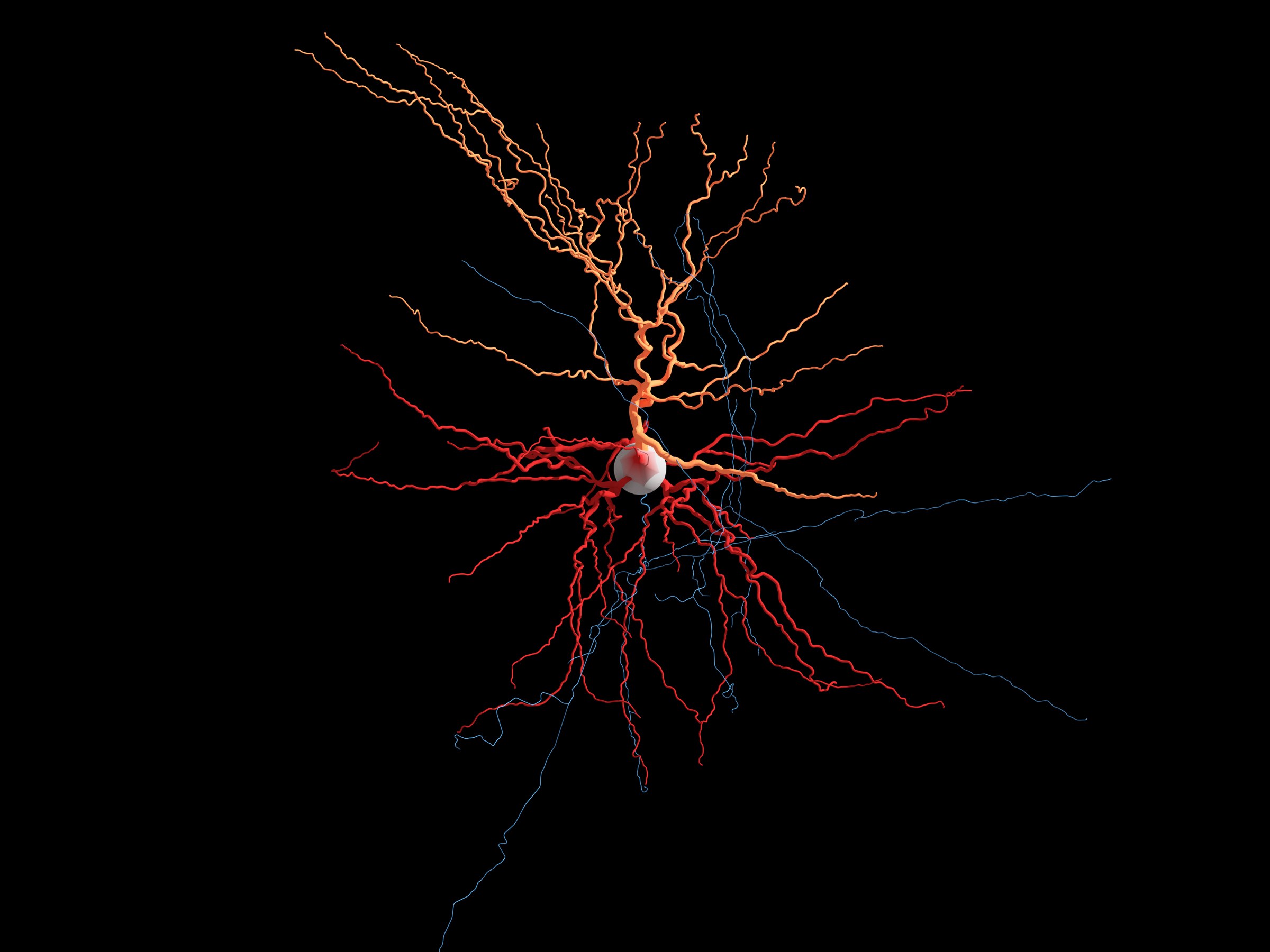
Christof Koch and Allen Institute colleagues  have created 3D computer reconstructions of living human brain cells using discarded surgical tissue.  As the tissue is still alive when it reaches the lab, the virtual cells are able to capture electrical signals, in addition to cell shape and anatomy.

This is the first time that scientists have been able to study the electrical behavior of living brain cells in humans.

Koch believes that this will enhance our understanding of how brain diseases, including Alzheimer’s and schizophrenia, impact the behavior of brain cells.

The institute has captured electrical data from 300 living neurons, taken from 36 patient brains.  100 cells have been reconstructed in 3D.  Genetic information about some of the cells will eventually be added to the database.

Click to view the  Allen Institute video.


Join ApplySci at Wearable Tech + Digital Health + Neurotech Silicon Valley on February 26-27, 2018 at Stanford University. Speakers include:  Vinod Khosla – Justin Sanchez – Brian Otis – Bryan Johnson – Zhenan Bao – Nathan Intrator – Carla Pugh – Jamshid Ghajar – Mark Kendall – Robert Greenberg – Darin Okuda – Jason Heikenfeld – Bob Knight

Categories
AI Cancer

Machine learning improves breast cancer detection

MIT’s Regina Barzilay has used AI to improve breast cancer detection and diagnosis. Machine learning tools predict if a high-risk lesion identified on needle biopsy after a mammogram will upgrade to cancer at surgery, potentially eliminating unnecessary procedures.

In current practice, when a mammogram detects a suspicious lesion, a needle biopsy is performed to determine if it is cancer. Approximately 70 percent of the lesions are benign, 20 percent are malignant, and 10 percent are high-risk.

Using a method known as a “random-forest classifier,” the AI model resulted in 30 per cent fewer  surgeries, compared to the strategy of always doing surgery, while diagnosing more cancerous lesions (97 per cent vs 79 per cent) than the strategy of only doing surgery on traditional “high-risk lesions.”

Trained on information about 600 high-risk lesions, the technology looks for data patterns that include demographics, family history, past biopsies, and pathology reports.

MGH radiologists will begin incorporating the method into their clinical practice over the next year.


Join ApplySci at Wearable Tech + Digital Health + Neurotech Silicon Valley on February 26-27, 2018 at Stanford University, featuring:  Vinod KhoslaJustin SanchezBrian OtisBryan JohnsonZhenan BaoNathan IntratorCarla PughJamshid Ghajar – Mark Kendall – Robert Greenberg Darin Okuda Jason Heikenfeld