
Categories
Autism Brain Eyes Machine Learning Parkinson's

Eye tracking data helps diagnose autism, ADHD, Parkinson’s

http://www.scientificamerican.com/article.cfm?id=eye-tracking-software-may-reveal-autism-and-other-brain-disorders

USC’s Laurent Itti and researchers from Queen’s University in Ontario have created a data heavy, low cost method of identifying brain disorders through eye tracking.  Subjects watch a video for 15 minutes while their eye movements are recorded. An enormous amount of data is generated as the average person makes three to five saccadic eye movements per second.  Itti’s team uses advanced machine learning algorithms to enable a computer to recognize patterns without explicit human instruction.

The proof of concept study found that the algorithm could classify mental disorders through eye movement patterns.  Parkinson’s patients were identified with nearly 90 percent accuracy.  Children with ADHD or fetal alcohol spectrum disorder were identified with 77 percent accuracy.  “This is very different from what people have done before. We’re trying to have completely automated interpretation of the eye movement data,” said Itti.
Categories
Sensors

Non-invasive nanotube device detects disease with one drop of blood

http://www.njit.edu/news/2013/2013-218.php

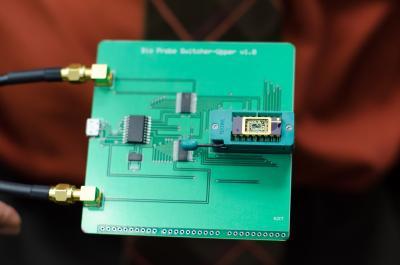
Professors Reginald Farrow and Alokik Kanwal of the New Jersey Institute of Technology have created a carbon nanotube-based device to non-invasively and quickly detect mobile single cells with the potential to maintain a high degree of spatial resolution.  They are now overseeing the manufacture of a prototype lab-on-a-chip that would enable a physician to detect disease or virus from just one drop of liquid, including blood.

The military was the initial funder of the research, in an attempt to identify biological warfare agents.  Farrow believes that it can be applied much more widely to detect viruses, bacteria, or cancer.  The next phase of research will include a study of the device’s ability to assess the health of brain neurons.

Categories
AI Heart

Algorithm analyzes head movements to measure heart rate

http://web.mit.edu/newsoffice/2013/seeing-the-human-pulse-0620.html
MIT researchers have developed an algorithm that gauges heart rate by measuring tiny head movements in video data.  A subject’s heart rate was consistently measured within a few beats per minute when compared to results from electrocardiograms. The algorithm was also able to provide estimates of time intervals between beats, which can be used to identify patients who are at risk for cardiac events.

The algorithm uses face recognition to differentiate between the person’s head and the rest of the image.  It then randomly picks 500 to 1,000 exact points, clustered around the person’s mouth and nose.  Movements are followed from frame to frame, and filtered when the temporal frequency falls below the range of a regular heartbeat – about 0.5 to 5 hertz, or 30 to 300 cycles per minute. This eliminates movements that continue at a lower frequency, such as those caused by regular breathing and slow alterations in posture.  Principal component analysis is used to break down the resulting signal into many constituent signals, which stand as part of the uncorrelated leftover movements. Of those signals, it chooses one that appears to be the most regular and that drops within the typical frequency band of the human pulse.

Categories
Brain fMRI Machine Learning

fMRI and machine learning identify emotions

http://www.plosone.org/article/info%3Adoi%2F10.1371%2Fjournal.pone.0066032

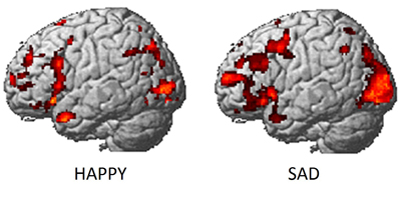
Carnegie Mellon researchers have developed “a new method with the potential to identify emotions without relying on people’s ability to self-report” using a combination of fMRI and machine learning.

They recruited 10 actors from the university’s drama school to act out emotions including anger, happiness, pride and shame, while inside an fMRI scanner,  multiple times in random order.  To ensure that researchers were able to measure actual emotions and not just the acting out of emotions, participants viewed emotion-eliciting images while undergoing fMRI scans.

The findings illustrate how the brain categorizes feelings, giving researchers the first reliable process to analyze emotions.  Emotion research has been difficult because of a lack of reliable evaluation methods, caused by a subject’s reluctance to honestly report feelings and the potential of emotional responses not being consciously experienced. Researchers plan to apply this new identification method to a number of problems, including identifying emotions that individuals are attempting to suppress and multiple emotions experienced simultaneously.

Categories
Conference

Insulin pump detects overnight hypoglycemia, shuts off automatically

http://www.bloomberg.com/news/2013-06-22/medtronic-insulin-pump-cuts-deadly-night-blood-sugar-lows.html
Medtronic has designed an insulin pump that temporarily shuts off when blood sugar levels fall too low—a key advance in the effort to fully automate the delivery of insulin in diabetes patients.  Current technology allows people who use insulin pumps to wear a sensor that measures the amount of blood sugar in the body, which helps them program pumps to deliver the appropriate amount of insulin. Researchers have been trying to link the two technologies in order to automate insulin delivery, to create what has been referred to as an artificial pancreas.


Categories
Assistive Technologies

Crowdfunded, 3D printed “Robohands” provide dexterity to children with out fingers

http://www.npr.org/blogs/health/2013/06/18/191279201/3-d-printer-brings-dexterity-to-children-with-no-fingers

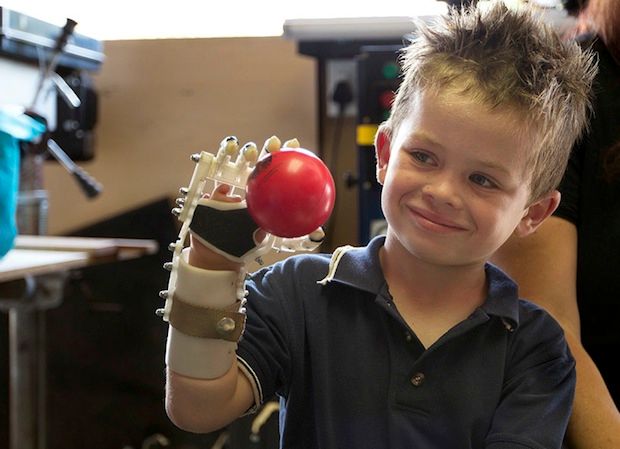
A Robohand is a customized, fitted set of mechanical fingers that open and close to grasp things based on the motion of the wrist.  When the wrist folds and contracts, the cables attaching the fingers to the base structure cause the fingers to curl.  Nearly all the parts of a Robohand are 3D printed on MakerBot Replicator 2 Desktop 3D printers.

Categories
Conference

Artificial spleen-on-a-chip to treat sepsis

http://wyss.harvard.edu/viewpressrelease/108/

Harvard researchers are developing a device that could be used to rapidly remove pathogens from the blood of patients with sepsis.  The dialysis-like machine acts as an artificial spleen, filtering the blood using injectable magnetic nanobeads engineered to stick to microorganisms and toxins.  After the beads are injected, blood is removed and run through a device that uses a magnetic-field gradient to extract the nanobead-bound germs. The blood is then returned to the body.  The team at the Wyss Institute for Biologically Inspired Engineering hopes that the device will be able to identify the specific microorganism causing the patient’s blood infection.  This could help physicians more quickly determine the most effective antibiotic treatment.

Categories
Brain

Highly detailed 3-D brain image unveiled

http://spectrum.ieee.org/tech-talk/biomedical/imaging/bigbrain-project-makes-terabyte-map-of-a-human-brain

Canadian and German neuroscientists have unveiled the most detailed 3-D image of the human brain to date.  It reveals structures as tiny as 20 microns, 50 times smaller than those created using the best MRI technology.  The image, created as part of a project called the BigBrain, is part of a larger effort to create a high-resolution computer model of the human brain that can serve as a reference point for future studies.  Data from other studies can be combined with this model to allow scientists to link brain function to specific groups of nerve cells.  The information can be used to test theories about brain activity and lead to treatments for diseases.  Until now, brain scans used MRI and PET technology, which can only capture structures as small as a millimeter. This had not been enough to understand what happens when a person gets Alzheimer’s disease or epilepsy.

Categories
AI BCI Brain

Low cost GPU based neural network simulates the brain

http://stanford.edu/~acoates/papers/CoatesHuvalWangWuNgCatanzaro_icml2013.pdf

In a new paper, Stanford’s Andrew Ng describes how to use graphics microprocessors to build a $20,000 computerized brain that is similar to the cat-detector he developed with Google last year for $1M.

To test his hypothesis about GPU-driven Deep Learning, he also built a larger version of the platform for $100,000.  It utilized 64 Nvidia GTX 680 GPUs on 16 computers. It was able to accomplish the same cat-spotting tasks as the Google system, which needed 1,000 computers to operate.  That system, modeling the activities and processes of the human brain, was able to learn what a cat looks like, and then translate that knowledge into spotting different cats across multiple YouTube videos.

Categories
Monitoring Seniors Sensors

Sensor based fall detector for seniors

http://www.theengineer.co.uk/medical-and-healthcare/news/fall-sensor-for-elderly-receives-2m-to-improve-technology/1016542.article

Vigi’Fall detects falls using multidimensional contextual analysis.  It is a miniature accelerometric box attached to the chest with an adhesive patch.  Motion sensors are placed in several rooms of the home and doubt-removal software is placed in a home box.  The system is linked to a remote call center which contacts rescue teams in the event of a fall.  The next phase of the product will incorporate heartbeat monitoring.

Categories
Brain mHealth Monitoring Sensors

Sports sensors warn of head injury

http://www.nytimes.com/2013/06/16/business/a-wearable-alert-to-head-injuries-in-sports.html?_r=0

The New York Times reports on the growing trend of sensor based protection/early warning systems for athletes. The devices, packed with sensors and microprocessors, register a blow to a player’s skull and immediately signal the news by blinking brightly, or by sending a wireless alert.  Algorithms evaluate the impact and determine severity.


Categories
Parkinson's

Brain imaging technique for early movement disorder diagnosis

http://news.ufl.edu/2013/06/13/brain-imaging/

Professor David Vaillancourt of the University of Florida believes that a diffusion tensor imaging technique could allow clinicians to assess movement disorders earlier, leading to improved treatment interventions and therapies.

Movement disorders such as Parkinson’s disease, essential tremor, multiple system atrophy and progressive supranuclear palsy exhibit similar symptoms in the early stages, which can make it challenging to assign a specific diagnosis. Often, the original diagnosis changes as the disease progresses.

Diffusion tensor imaging, known as DTI, is a non-invasive method that examines the diffusion of water molecules within the brain and can identify key areas that have been affected as a result of damage to gray matter and white matter in the brain. Vaillancourt and his team measured areas of the basal ganglia and cerebellum in individuals, and used a statistical approach to predict group classification. By asking different questions within the data and comparing different groups to one another, they were able to show distinct separation among disorders.