
Categories
Brain

Brain scans and depression treatment outcomes

http://archpsyc.jamanetwork.com/article.aspx?articleid=1696349

In an NIH funded clinical trial, researchers at Emory University have discovered that specific patterns of brain activity may indicate whether a depressed patient will or will not respond to treatment with medication or psychotherapy.

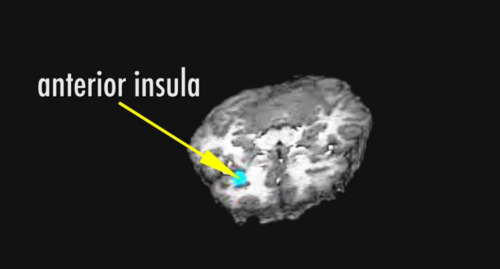
Professor Helen Mayberg, MD and colleagues used PET scans to measure brain glucose metabolism, an important index of brain functioning to test this hypothesis.  Participants in the trial were randomly assigned to receive a 12-week course of either the SSRI medication escitalopram or cognitive behavior therapy after first undergoing a pretreatment PET scan.  The team found that activity in one particular region of the brain, the anterior insula, could discriminate patients who recovered from those who were non-responders to the treatment assigned. Specifically, patients with low activity in the insula showed remission with CBT, but poor response to medication; patients with high activity in the insula did well with medication, and poorly with CBT.

Categories
Cancer Monitoring

Nanotube sensor detects skin cancer

http://www.monell.org/news/news_releases/monell_led_research_identifies_scent_of_melanoma

A study from the Monell Center and the University of Pennsylvania suggests that non-invasive odor analysis may be a valuable technique in the detection and early diagnosis of human melanoma.  The researchers used sophisticated sampling and analytical techniques to identify VOCs from melanoma cells at three stages of the disease, as well as from normal melanocytes. All the cells were grown in culture.  They then examined VOCs from normal melanocytes and melanoma cells using a sensor constructed of nano-sized carbon tubes coated with strands of DNA and bioengineered to recognize a wide variety of targets, including specific odor molecules.

Categories
Sensors

Nanotube sensor detects Lyme disease

http://www.upenn.edu/pennnews/news/penn-researchers-attach-lyme-disease-antibodies-nanotubes-paving-way-diagnostic-device

A team led by Professor A. T. Charlie Johnson of the University of Pennsylvania has developed a biosensor from carbon-nanotube transistors that can rapidly detect the antigens of Lyme disease. The device can detect the biomarkers at concentrations as low as 1 ng/ml.

The group’s work is a continuation of similar strategies to detect prostate cancer biomarkers using CNTs. The researchers hope to one day be able to detect any disease with such nanotube devices simply by coating them with the appropriate proteins.

Categories
mHealth Monitoring

Emotionally reactive avatars treat patients at home

http://www.technologyreview.com/news/514881/the-avatar-will-see-you-now/

Remote monitoring systems are increasing able to capture a patient’s state of mind and body.

Using Sense.ly’s platform, patients can communicate their condition to an emotionally reactive avatar through their phone, desktop, or TV. The avatar asks the patient simple questions, and if programmed by a doctor, it can also answer questions—such as what a diabetes patient with high blood-sugar readings should eat that day. The software also collects data from other medical devices that a patient uses, such as a glucose meter, and can capture gestures with Kinect. The reports sent to the doctor include red-flag notifications to act on right away; charts, graphs, and analytics tracing the patient’s progress over time; and a transcript of the voice interaction.

Categories
Babies Monitoring Sensors Sleep

Sensor and smartphone based baby monitor

http://medcitynews.com/2013/06/sensors-and-smartphones-bring-the-baby-monitor-into-2013/

Sensible Baby’s “Smart One”  is a small, round sensor worn inside a newborn’s onesie. It constantly measures a baby’s temperature, position and chest movement, and sends the data to a smartphone app once per second.  Parents can program their app to set off an alert when the baby isn’t moving, reaches a temperature above a certain threshold, or is sleeping on its stomach.

Categories
Diabetes Monitoring

Non-invasive diabetes monitoring through breath analysis

http://www.news.pitt.edu/news/diabetes-breathalyzer

University of Pittsburgh professor Alexander Star, Dan Sorescu of the National Energy Technology Laboratory, and graduate student Mengning Ding have demonstrated sensor technology that could simplify the diagnosis and monitoring of diabetes through breath analysis alone.

The researchers used a “sol-gel approach,” a method for using small molecules (often on a nanoscale level) to produce solid materials. The team combined titanium dioxide with carbon nanotubes, which acted as “skewers” to hold the particles together.  This method effectively combined the electrical properties of the tubes with the light-illuminating powers of the titanium dioxide. They then created the sensor device by using these materials as an electrical semiconductor, measuring its electrical resistance (the sensor’s signal).

The ability to diagnose and monitor diabetes through cheaper, noninvasive methods could completely change the paradigm of self-monitoring.

Categories
Assistive Technologies BCI EEG

Thought-controlled flying robot

http://www.livescience.com/27849-mind-controlled-devices-brain-awareness-nsf.html

University of Minnesota researchers led by Professor Bin He have been able to control a small helicopter using only their minds, pushing the potential of technology that could help paralyzed or motion-impaired people interact with the world around them.

An EEG cap with 64 electrodes was put on head of the person controlling the helicopter. The researchers mapped the controller’s brain activity while they performed certain tasks (for example, making a fist or looking up). They then mapped those patterns to controls in the helicopter. If the researchers mapped “go up” to a clenched fist, the copter went up. After that, the copter would go up automatically when the controller clenches a fist.

Categories
Apps fitness mHealth Monitoring

mHealth timeline, 2009 – 2013

http://mobihealthnews.com/22674/timeline-smartphone-enabled-health-devices/

Sensors are becoming smaller, smarter, and more ubiquitous,  and have transformed the way we monitor our health.  Attached is a timeline of health and fitness apps from 2009 through today, providing an interesting look at the development of the mHealth market.

Categories
Conference Monitoring Sensors

Bio-integrated electronic tattoo measures vital signs and muscle movement

http://www.utexas.edu/know/2013/06/07/high-tech-tattoos-health-care-solutions/

Professor Nanshu Lu at The University of Texas is developing the next-generation of flexible/stretchable electronics, photonics and therapeutics.  Pioneered by John Rogers at the University of Illionois, flexible skin “tattoos” measure vital signs and muscle movement, transmitting data wirelessly and harvesting solar energy. Future versions may play critical roles inside the body in watching for signs of disease or damage, or treating problems automatically.

Professor Lu has designed a bio-integrated electronic tattoo. The ultrathin, ultrasoft stamp-sized patch clings to the human skin without adhesive, which would interrupt electrical connectivity.  Lu’s area of expertise — the interface of flexible electronics with biosystems — is one of three areas crucial to the future of bio-integrated electronics, the others being wireless data transmission and wireless power transmission.

Categories
Data Heart Machine Learning Monitoring Respiratory

Machine learning in the ICU

http://www.technologyreview.com/news/515461/machine-learning-and-risk-prediction-in-the-icu/

Etiometry is building a clinical-decision support system to interpret large volumes of real-time patient data and guide diagnosis and treatment.  It integrates and analyzes information from heart monitors, ventilators, and pressure sensors and plugs the data into predictive models that have been built on prior patient outcomes.

Categories
Diabetes Heart Sensors Ultrasound

Medical device data shared via ultrasound, real-time treatment enabled

http://www.buffalo.edu/news/releases/2013/05/0570.html

Navy sonar technology is being miniaturized by University at Buffalo professor Tommaso Melodia to be applied inside the human body to treat diseases like diabetes and heart failure in real time.

A network of wireless body sensors that use ultrasounds could be used to wirelessly share information between medical devices implanted in or worn by diabetic/heart failure patients.

Previously, researchers focused on linking sensors together via electromagnetic radio frequency waves – the same type used in cellular phones, GPS and wireless devices. Radio waves can be effective, but they generate heat and require large amounts of energy to propagate through skin, muscle and tissue.  Ultrasound may be a more efficient way to share information as 65 percent of the body is composed of water.  This suggests that medical devices, such as a pacemaker and a blood oxygen level monitor, could communicate more effectively via ultrasounds compared to radio waves.

Melodia highlights the technology’s use in diabetes patients, where wireless blood glucose sensors could be connected to implantable insulin pumps. The sensors would monitor the blood and, via the pumps, control the dosage of insulin as needed in real time.

Categories
Monitoring Respiratory

Fiber optic device for lung disease detection

http://www.cir.ed.ac.uk/news/multidisciplinary-optical-imaging-team-awarded-£115m

Researchers at the University of Edinburgh, Heriot-Watt University and the University of Bath have developed a fiber-optic device to detect potentially fatal lung conditions in intensive care patients.   Its sensors will also continuously monitor blood in critically ill adults and babies with out the need for blood sampling.

The microscopic probe will detect and monitor up to 20 signs of disease in people on breathing support.  Infections, inflammation and scarring will be picked up by the probe, which is designed to be passed into the lungs and blood vessels.

Researchers hope that the probe will also help in the diagnosis of acute urinary, gastrointestinal and reproductive tract problems.