
Categories
Autism Brain

Reaction to smells, autism, linked

Weizmann Institute of Science researchers may have developed a test to detect autism based on a child’s reaction to smells.

The study suggests that children with autism spectrum disorder don’t adjust their sniffing instinctively when they encounter pleasant or foul scents. 18 children with an autism diagnosis, and 18 typically developing children, were presented with pleasant and unpleasant odors, and their sniff responses were measured.  Typically developing children adjusted their sniffing within 305 milliseconds. Children with autism did not respond as quickly

The researchers, who had not been told which children had autism, were able to identify those with autism 81 percent of the time. They also found that the farther removed an autistic child’s sniff response was from the average, the more severe the child’s symptoms were.

The goal is to be able to diagnose and address autism as early as possible.
Categories
BCI Brain Signal Processing

Spoken sentences recreated from brain activity patterns

KIT‘s Tanja Schultz has reconstructed spoken sentences from brain activity patterns.

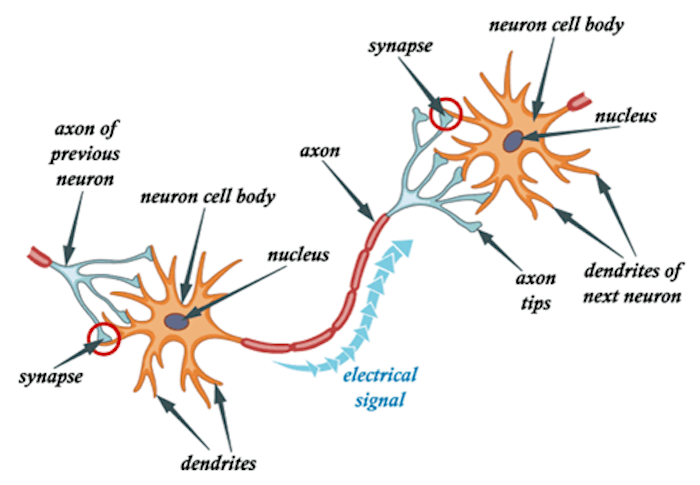
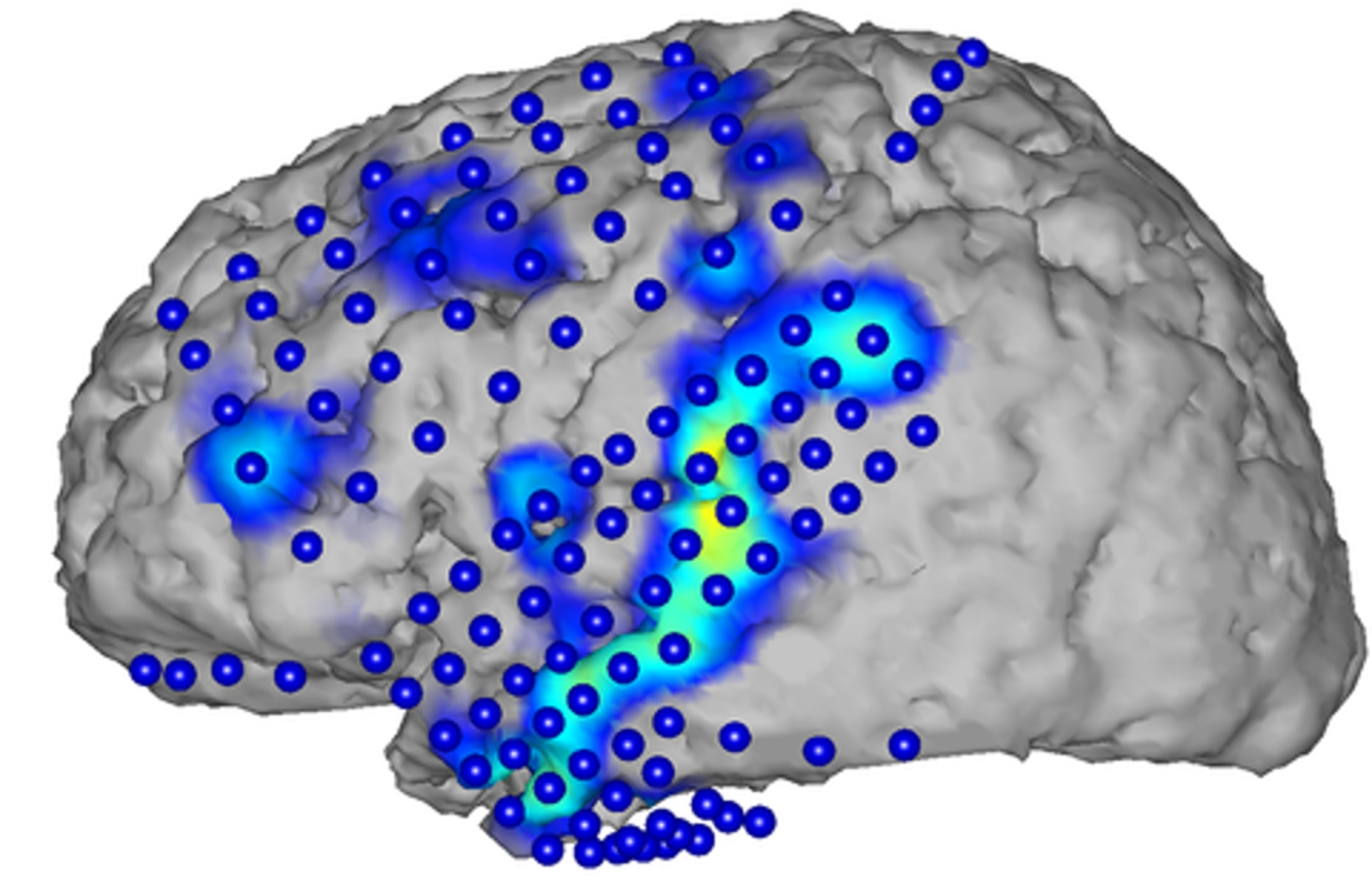
Speech is produced in the cerebral cortex. Associated brain waves can be  recorded with surface electrodes. Schultz reconstructed basic units, words, and complete sentences from brain waves, and generated corresponding text.

This was achieved by a combination of advanced signal processing and automatic speech recognition.  Speech was continuously decoded  and transformed into a textual representation. Cortical information was combined with linguistic knowledge and machine learning algorithms to extract the most likely word sequence. Brain-to-Text is currently based on audible speech. The goal is to be able to recognize speech from thought alone.

WEARABLE TECH + DIGITAL HEALTH NYC 2015 – JUNE 30 @ NEW YORK ACADEMY OF SCIENCES.  REGISTER HERE.

Categories
Brain Heart Monitoring

Car-based heart, brain activity monitoring

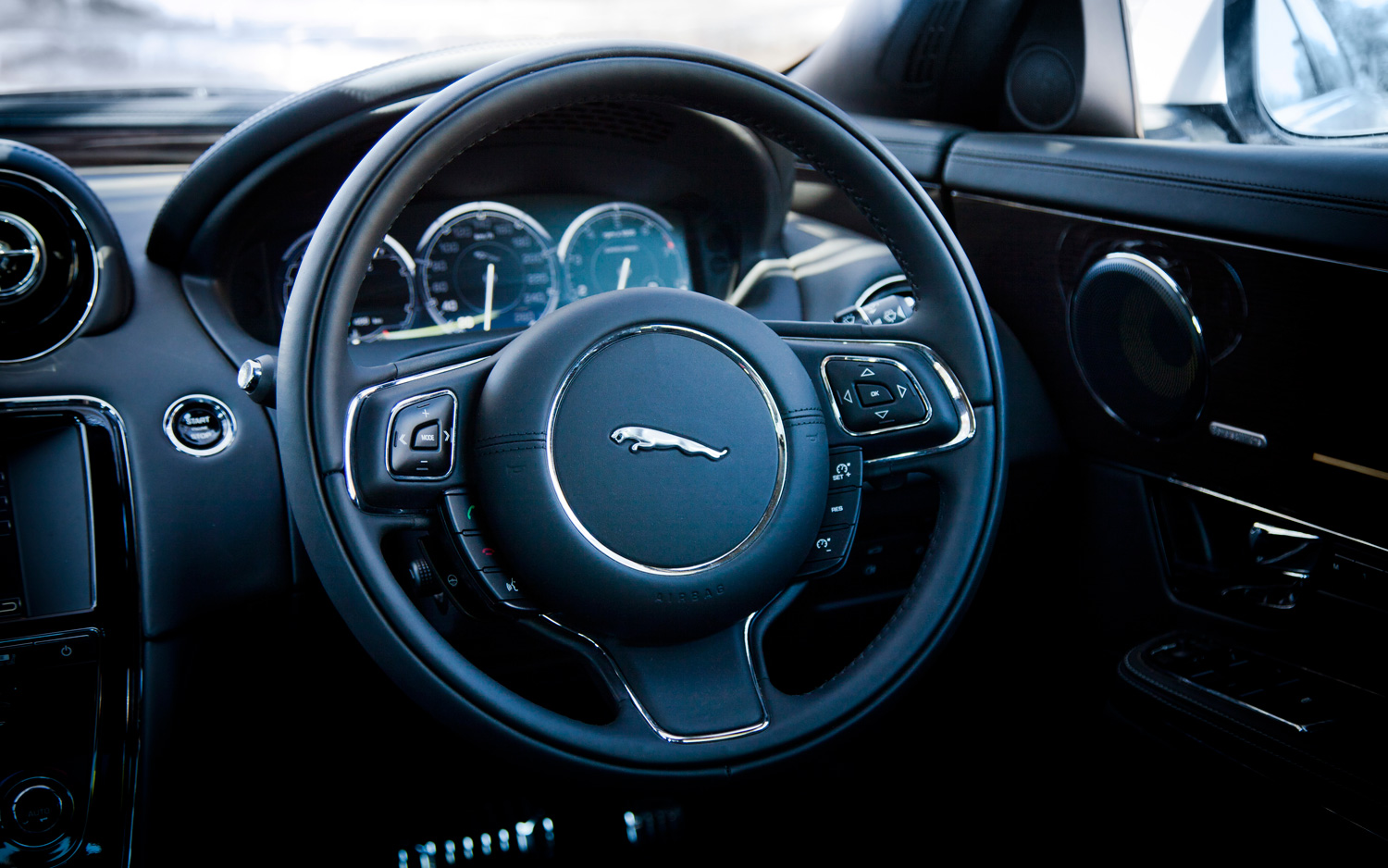
“Sixth Sense” by Jaguar/LandRover attempts to monitor a driver’s heart rate, respiration and  brain activity to identify stress, fatigue and lack of concentration.

The  XJ “wellness seat” analyzes heart rate and breathing, has  touchscreens that predict which button a user wants to press with fingers mid-air, and has a vibrating  accelerator pedal that communicates hazards.

The  company claims that its “MindSense” project can determine if a driver is distracted or tired using sensors in the steering wheel.  They did not detail the science behind this, but said that their software can amplify a steering wheel sensor captured brain signal and filter background noise.  ApplySci believes that a minimal EEG headband could provide much more accurate driver alertness data.

WEARABLE TECH + DIGITAL HEALTH NYC 2015 – JUNE 30 @ NEW YORK ACADEMY OF SCIENCES.  REGISTER HERE.

Categories
Brain

Injectable electronics treat neurodegenerative disorders

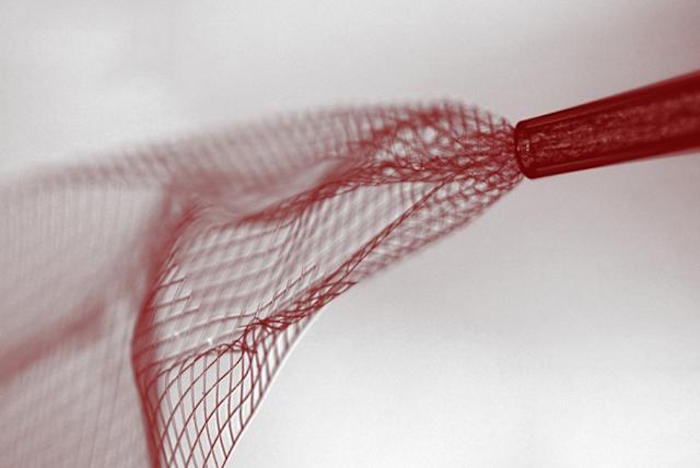
Harvard‘s Charles Lieber has developed a device that can be injected into the brain to treat neurodegenerative disorders and paralysis.

The nanoscale electronic scaffold is injected with a syringe. The scaffolds then connect to devices used to monitor neural activity, stimulate tissues, or  promote neuron regeneration.

In an earlier study, Lieber demonstrated that cardiac or nerve cells grown with embedded scaffolds could be used to create “cyborg” tissue. He was able to record electrical signals generated by the tissue, and  measure changes in those signals as he administered cardio or neuro stimulating drugs.

WEARABLE TECH + DIGITAL HEALTH NYC 2015 – JUNE 30 @ NEW YORK ACADEMY OF SCIENCES.  REGISTER HERE.

Categories
Brain EEG

Brain reactions could replace passwords

Binghamton professors Sarah Laszlo and Zhanpeng Jin believe that they can  verify a person’s identity by using EEG to monitor the way brains respond to words.  Their Neurocomputing paper puts forth the view that thoughts can replace passwords.

In April, 2013,  ApplySci described a similar study by Berkeley‘s John Chuang.

The researchers observed brain signals of 45 volunteers as they read a list of 75 acronyms. They recorded the brain’s reaction to each group of letters, focusing on the part of the brain associated with reading and recognizing words.  Participants’ brains reacted differently to each acronym, and a computer was able to identify each volunteer with 94 percent accuracy.  Laszlo and Jin believe that the results show that brainwaves could be used by security systems to verify identity.  They further suggest that this method is more secure than fingerprints or retinal patterns in the eye.

WEARABLE TECH + DIGITAL HEALTH NYC 2015 – JUNE 30 @ NEW YORK ACADEMY OF SCIENCES.  REGISTER HERE.

Categories
Brain

Brain – immune system link

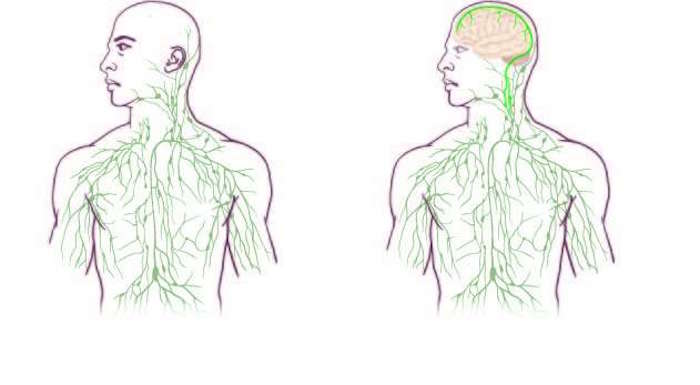
Antoine Louveau,  of  University of Virginia‘s Kipnis Lab, has discovered a direct connection between the brain and the immune system via previously unknown vessels.

The finding could have significant implications for the study and treatment of neurological diseases, including  autism, Alzheimer’s, and multiple sclerosis.

According to Professor Kipnis: “It changes entirely the way we perceive the neuro-immune interaction. We always perceived it before as something esoteric that can’t be studied. But now we can ask mechanistic questions.”

WEARABLE TECH + DIGITAL HEALTH NYC 2015 – JUNE 30 @ NEW YORK ACADEMY OF SCIENCES.  REGISTER HERE.

Categories
Brain

Headphones to diagnose brain injury, infection

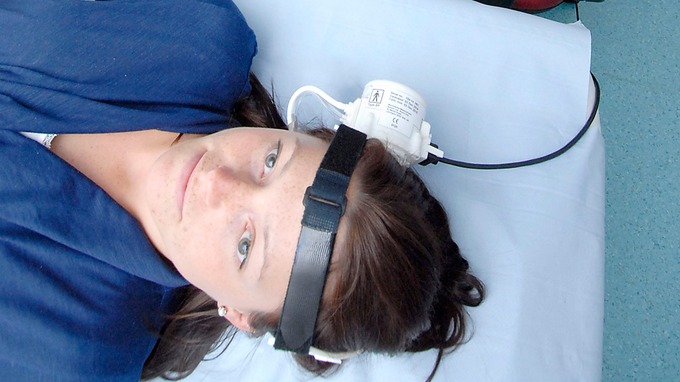
Robert Marchbanks and Tony Birch at University Hospital Southampton have developed a noninvasive  brain pressure test to detect head injuries and infections.

The cerebral and cochlear fluid pressure (CCFP) test uses patient headphones  to measure ICP via a channel which links the inner ear with the brain. As fluids in the ear and brain are connected, a change in pressure in the brain is reflected by a pressure change in the ear.  Changes to ICP occur when the brain swells due to injury or infection and prevents blood flow.

ICP is currently measured by drilling a hole through the skull to implant a pressure probe, or by lumbar puncture, where a spinal cord fluid sample is removed with a needle.

WEARABLE TECH + DIGITAL HEALTH NYC 2015 – JUNE 30 @ NEW YORK ACADEMY OF SCIENCES.  REGISTER HERE.

Categories
BCI Brain Prosthetics

Intent controlled robotic arm with neuroprosthetic implant

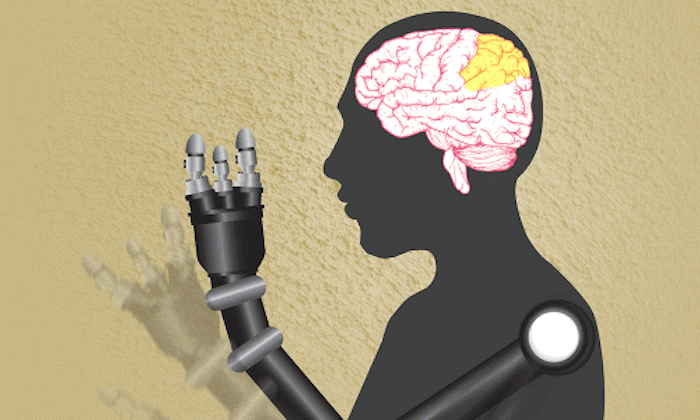
Caltech and Keck researchers implanted neuroprosthetics in a part of the brain that controls the intent to move, with the goal of producing more natural and fluid motions.   The study, published in Science, was led by Richard Andersen.  A quadriplegic implanted with the device was able to perform a fluid handshaking gesture and  play “rock, paper, scissors” using a separate robotic arm.

Andersen  and colleagues improved the versatility of movement that a neuroprosthetic can offer by recording signals from  the PPC brain region.  He said: “The PPC is earlier in the pathway (than the motor-cortex, a target of earlier neuroprosthetics,) so signals there are more related to movement planning—what you actually intend to do—rather than the details of the movement execution.  We hoped that the signals from the PPC would be easier for the patients to use, ultimately making the movement process more intuitive. Our future studies will investigate ways to combine the detailed motor cortex signals with more cognitive PPC signals to take advantage of each area’s specializations.”

WEARABLE TECH + DIGITAL HEALTH NYC 2015 – JUNE 30 @ NEW YORK ACADEMY OF SCIENCES.  REGISTER HERE.

Categories
BCI Brain Prosthetics

Intent controlled prosthetic foot using myoelectric sensors

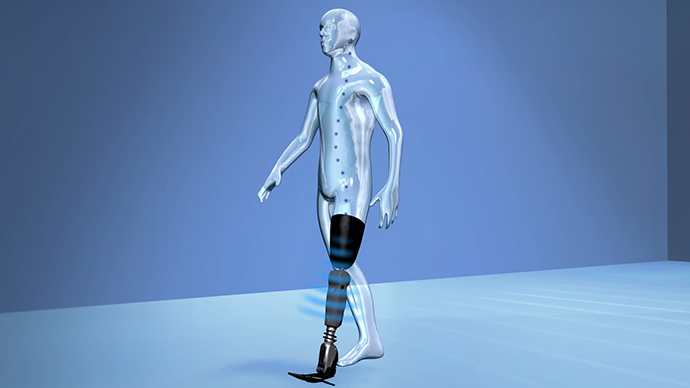
Ossur‘s sensor implant allows amputees to control  bionic prosthetic limbs with their minds.  Myoelectric sensors are surgically placed in residual muscle tissue.  Prosthetic movement is triggered via a receiver.

Ossur’s existing “smart limbs”  are capable of real-time learning and automatically adjust to a user’s gait, speed and terrain.   However,  conscious thought is still required.

According to Thorvaldur Ingvarsson, the company’s R&D lead, “the (implant) technology allows the user’s experience with their prosthesis to become more intuitive and integrative. The result is the instantaneous physical movement of the prosthesis however the amputee intended. They no longer need to think about their movements because their unconscious reflexes are automatically converted into myoelectric impulses that control their Bionic prosthesis.”

WEARABLE TECH + DIGITAL HEALTH NYC 2015 – JUNE 30 @ NEW YORK ACADEMY OF SCIENCES.  REGISTER HERE.

Categories
Brain mHealth Parkinson's Sensors

Phone based Parkinson’s research

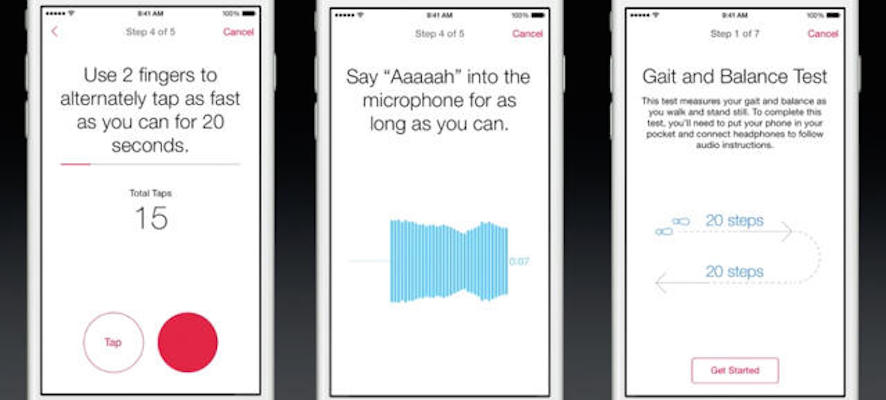
mPower is a mobile Parkinson’s Disease study, powered by HealthKit.  It attempts to understand why people experience different symptoms, and why a person’s symptoms and side effects can vary over time.

The process includes surveys and tasks that activate phone sensors. Progression symptoms, including dexterity, balance and gait, are tracked. The goal is to understand variations, improve the way variations are described, and learn how mobile devices and sensors can help measure the disease and its progression.

This study is sponsored by Sage Bionetworks and the Robert Wood Johnson Foundation, and builds on the work of Max Little.

WEARABLE TECH + DIGITAL HEALTH NYC 2015 – JUNE 30 @ NEW YORK ACADEMY OF SCIENCES.  REGISTER HERE.

Categories
BCI Brain Prosthetics

Implant to enable prosthetic sensations

Washington University‘s Daniel Moran has received a DARPA grant to test a device that would stimulate nerves in the upper arm and forearm of prosthetic users.  The goal is for the wearer to be able to feel hot, cold, and a sense of touch.  In a related development last year, MC10‘s Roozbeh Ghaffari developed artificial skin for prosthetics that mimics the sensitivity of real skin.  Its silicon and gold sensors detect pressure, moisture, heat and cold (see ApplySci, 12/30/14).

Moran’s electrode is designed to stimulate sensory nerve cells in the ulnar and median nerves in the arms. The ulnar nerve is the largest  in the body unprotected by muscle or bone and is connected to the ring finger and pinkie finger on the hand. The median nerve in the upper arm and shoulder is connected to the other fingers on the hand. Together, the two nerves control movement and sensations including touch, pressure, vibration, heat, cold and pain in all of the fingers.

This novel  macro-sieve peripheral nerve interface is designed to stimulate regeneration of the ulnar and median nerves to transmit information back into the central nervous system.

The device is in an early stage, and will only be implanted in non-human primates at this time.

WEARABLE TECH + DIGITAL HEALTH NYC 2015 – JUNE 30 @ NEW YORK ACADEMY OF SCIENCES.  

EARLY REGISTRATION RATE ENDS TODAY, 5/15/15.

Categories
Brain Eyes

Wireless brain chip restores vision, bypasses eye

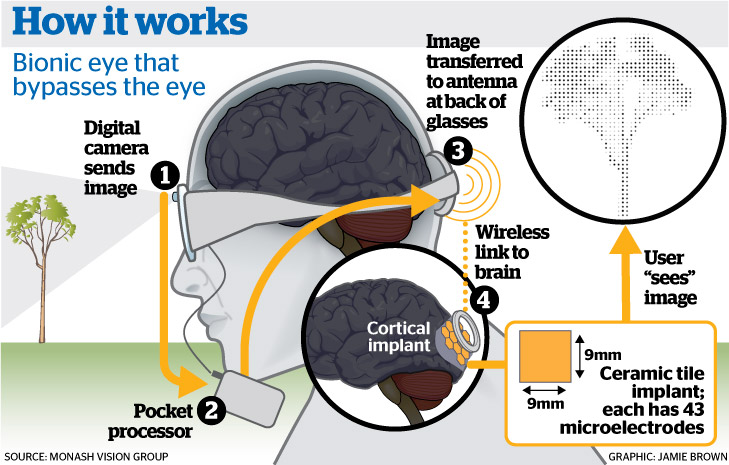
Monash University’s Bionic Eye will be trialed in humans next year. The study is being led by Professor Jeffrey V. Rosenfeld.

Patients who have lost their sight will have tiny “ceramic tiles” implanted into their brain’s visual cortex. The device bypasses the normal visual pathway, unlike the other bionic eyes in development, which rely on an implant in the retina.

A glasses mounted digital camera  captures images before transferring them to a small vision processing device. Once processed, the image is transferred to an antenna attached to the back of a glasses frame. It is then wirelessly transmitted to the brain, where it is received by the small ceramic tiles implanted during surgery. The tiny tiles, each containing 43 microelectrodes​, measure 9mm by 9mm.

WEARABLE TECH + DIGITAL HEALTH NYC 2015 – JUNE 30 @ NEW YORK ACADEMY OF SCIENCES.  EARLY REGISTRATION RATE ENDS FRIDAY, 5/15.