Categories
BCI Brain Prosthetics

Closed loop EEG/BCI/VR/physical therapy system to control gait, prosthetics

Earlier this year, University of Houston’s Jose Luis Contreras-Vidal developed a closed-loop BCI/EEG/VR/physical therapy system to control gait as part of a stroke/spinal cord injury rehab program.  The goal was to promote and enhance cortical involvement during walking.

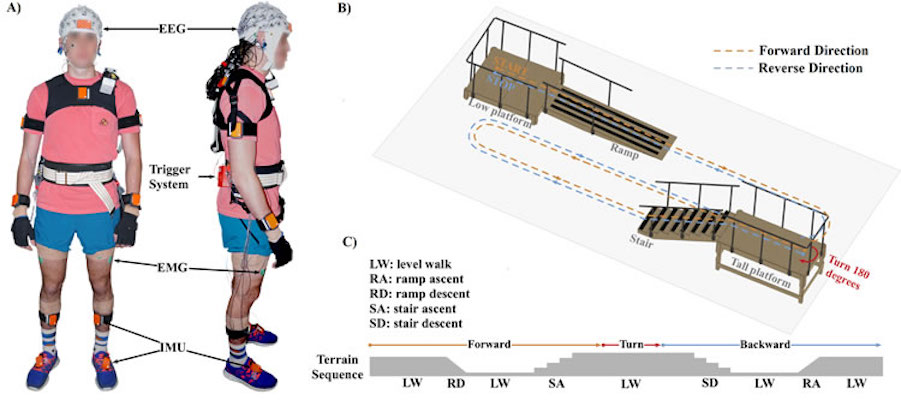
In a study, 8 subjects walked on a treadmill while watching an avatar and wearing a 64 channel EEG headset and motion sensors at the hip, knee and ankle.

The avatar was first activated by the motion sensors, allowing its movement to precisely mimic that of the test subject. It was  then controlled by the brain-computer interface, although this was less precise than the movement with the motion sensors. Contreras-Vidal believes that as subjects learn how to use the interface, the result will be closer to that of the sensors. The researchers reported increased activity in the posterior parietal cortex and the inferior parietal lobe, along with increased involvement of the anterior cingulate cortex.

The team built on this reasearch  to demonstrate how brain activity is used to identify different terrains to develop prosthetics that automatically adjust to changing ground conditions in real time. 

Click to view University of Houston video


Join ApplySci at Wearable Tech + Digital Health + Neurotech Silicon Valley on February 26-27, 2018 at Stanford University. Speakers include:  Vinod Khosla – Justin Sanchez – Brian Otis – Bryan Johnson – Zhenan Bao – Nathan Intrator – Carla Pugh – Jamshid Ghajar – Mark Kendall – Robert Greenberg – Darin Okuda – Jason Heikenfeld – Bob Knight – Phillip Alvelda – Paul Nuyujukian –  Peter Fischer – Tony Chahine – Shahin Farshchi – Ambar Bhattacharyya – Adam D’Augelli – Juan-Pablo Mas – Michael Eggleston – Walter Greenleaf – Jacobo Penide – David Sarno – Peter Fischer

Registration rates increase on January 26th
Categories
Brain Respiratory Sensors

Biodegradable piezoelectric sensor monitors lungs, brain

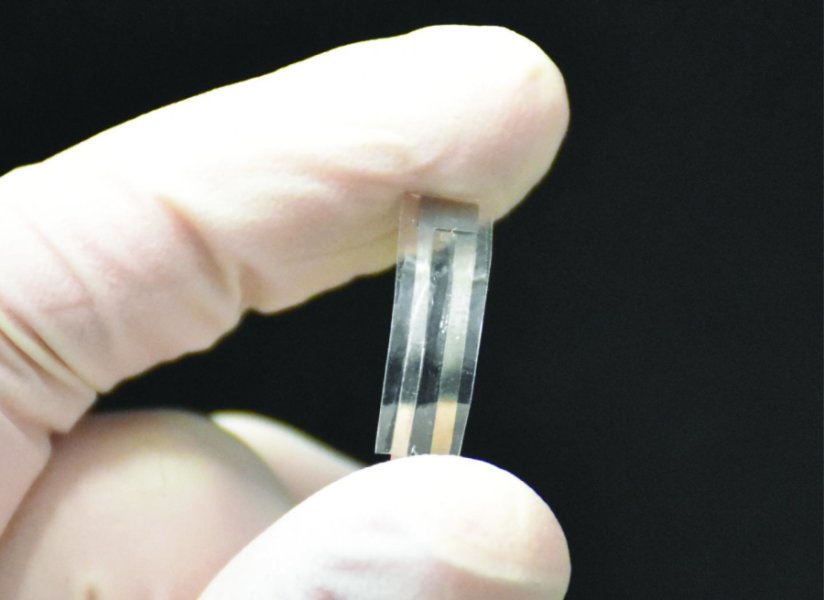
UConn’s Thanh Duc Nguyen has developed a biodegradable pressure sensor to monitor chronic lung disease, swelling of the brain, and other health issues.

It is small and flexible and designed to replace existing, potentially toxic, implantable pressure sensors. Those sensors must be removed, subjecting patients to another invasive procedure, prolonging recovery, and increasing infection risk.

The piezoelectric device can also be used for electrical stimulation of tissue, as it emits a small electrical charge when pressure is applied. Other potential applications include monitoring glaucoma, heart disease, and bladder cancer.


Join ApplySci at Wearable Tech + Digital Health + Neurotech Silicon Valley on February 26-27, 2018 at Stanford University. Speakers include:  Vinod Khosla – Justin Sanchez – Brian Otis – Bryan Johnson – Zhenan Bao – Nathan Intrator – Carla Pugh – Jamshid Ghajar – Mark Kendall – Robert Greenberg – Darin Okuda – Jason Heikenfeld – Bob Knight – Phillip Alvelda – Paul Nuyujukian –  Peter Fischer – Tony Chahine – Shahin Farshchi – Ambar Bhattacharyya – Adam D’Augelli – Juan-Pablo Mas – Michael Eggleston – Walter Greenleaf – Jacobo Penide – David Sarno – Peter Fischer

Registration rates increase – January 19th

Categories
Brain

Neural microcircuits mapped in greater detail; surrounding tissue left intact

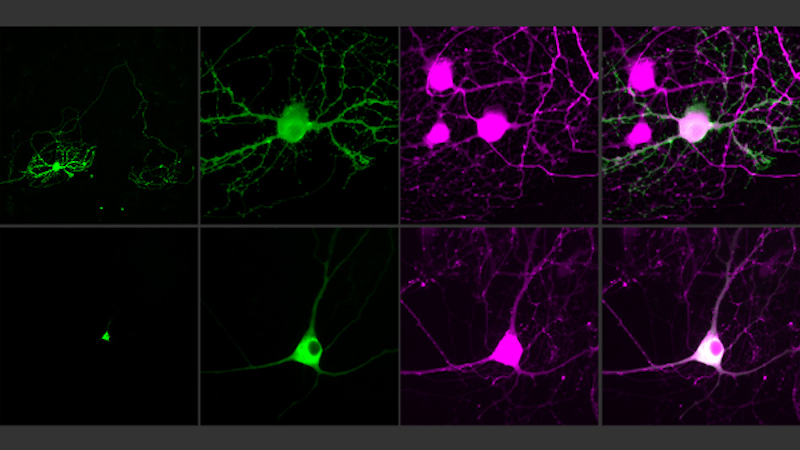
Andreas Schaefer and Francis Crick Institute colleagues have developed a brain mapping technique that is said to be far more comprehensive than previous methods, and could be a breakthrough if successfully tested on human brains.  It has, so far, only been tested on mice.

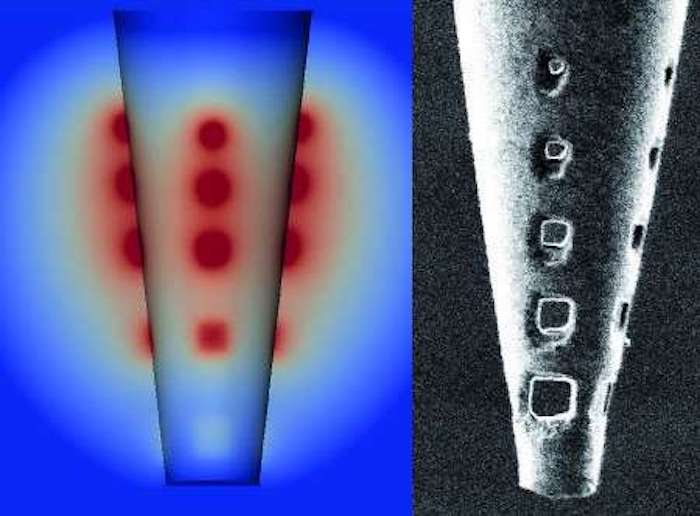
250 cells that make up a microcircuit in part of a mouse brain that processes smell can now be mapped, with out the surrounding tissue being damaged. This is unprecedented, and can be used to understand the architecture of different parts of the brain.

A series of tiny holes near the end of a micropipette enabled the use of charged dyes that distribute electrical current over a wide area,  staining cells without damaging them. Unlike when viral vectors are used, 100% of the cells in the microcircuit could be stained.

According to Schaefer, “now that we have a tool of mapping these tiny units, we can start to interfere with specific cell types to see how they directly control behaviour and sensory processing.”


Join ApplySci at Wearable Tech + Digital Health + Neurotech Silicon Valley on February 26-27, 2018 at Stanford University. Speakers include:  Vinod Khosla – Justin Sanchez – Brian Otis – Bryan Johnson – Zhenan Bao – Nathan Intrator – Carla Pugh – Jamshid Ghajar – Mark Kendall – Robert Greenberg – Darin Okuda – Jason Heikenfeld – Bob Knight – Phillip Alvelda – Paul Nuyujukian –  Peter Fischer – Tony Chahine – Shahin Farshchi – Ambar Bhattacharyya – Adam D’Augelli – Juan-Pablo Mas – Michael Eggleston – Walter Greenleaf – Jacobo Penide – David Sarno – Peter Fischer

Registration rates increase today – January 16th

Categories
Brain PTSD

Acoustic stimulation reduced PTSD symptoms in small study

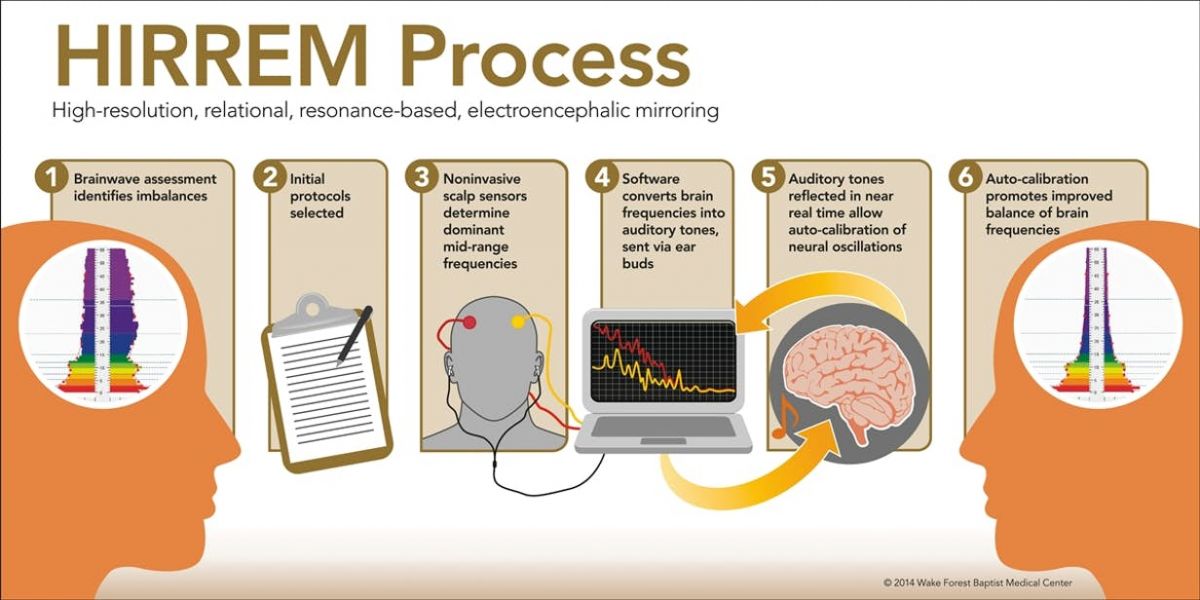
Wake Forest’s Charles H. Tegeler has found that non-invasive brainwave mirroring technology significantly reduced symptoms of post-traumatic stress in soldiers.

High-resolution, relational, resonance-based, electroencephalic mirroring (HIRREM) is used as a non-invasive, closed-loop, acoustic stimulation approach. Algorithms translate brain frequencies into audible tones in real-time.

Tegeler compares this to an “acoustic mirror.” Through resonance between brain frequencies and acoustic stimulation, the brain makes self-adjustments to improve balance and reduce hyperarousal, with no conscious, cognitive activity. This supports the brain to reset stress response patterns that  caused by repetitive traumatic events.

In a small study, reductions in post-traumatic symptoms, including insomnia, depressive mood, and anxiety were observed in subjects for  six months after the HIRREM protocol.


Join ApplySci at Wearable Tech + Digital Health + Neurotech Silicon Valley on February 26-27, 2018 at Stanford University. Speakers include:  Vinod Khosla – Justin Sanchez – Brian Otis – Bryan Johnson – Zhenan Bao – Nathan Intrator – Carla Pugh – Jamshid Ghajar – Mark Kendall – Robert Greenberg – Darin Okuda – Jason Heikenfeld – Bob Knight – Phillip Alvelda – Paul Nuyujukian –  Peter Fischer – Tony Chahine – Shahin Farshchi – Ambar Bhattacharyya – Adam D’Augelli – Juan-Pablo Mas – Michael Eggleston – Walter Greenleaf – Jacobo Penide

Registration rates increase Friday, January 5th.

Categories
Brain Genomics

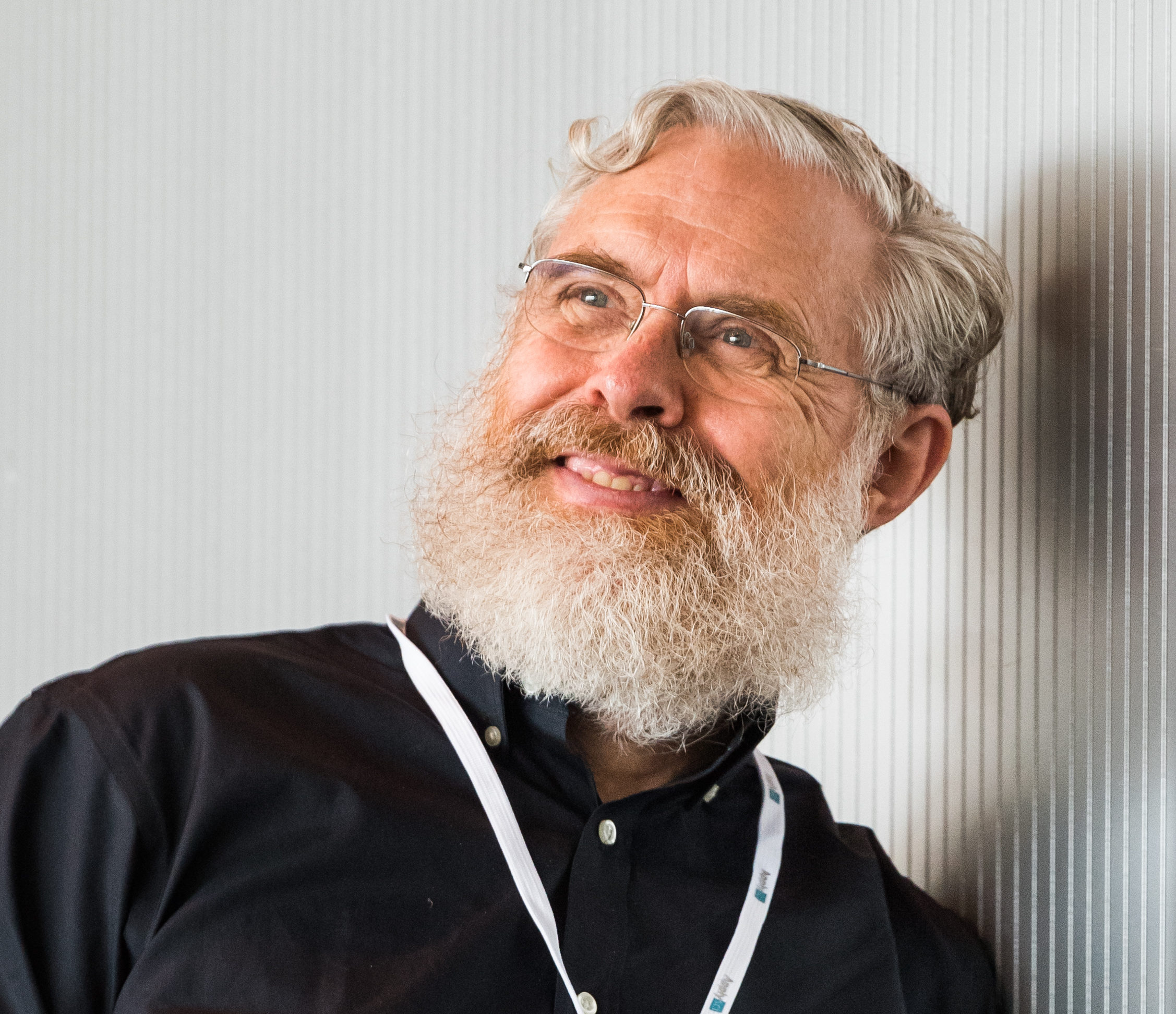
Video: George Church on reading and writing brain structures and functions

Recorded at ApplySci’s Wearable Tech + Digital Health + Neurotech Boston conference on September 19th at the MIT Media Lab


Join ApplySci at Wearable Tech + Digital Health + Neurotech Silicon Valley on February 26-27, 2018 at Stanford University. Speakers include:  Vinod Khosla – Justin Sanchez – Brian Otis – Bryan Johnson – Zhenan Bao – Nathan Intrator – Carla Pugh – Jamshid Ghajar – Mark Kendall – Robert Greenberg – Darin Okuda – Jason Heikenfeld – Bob Knight – Phillip Alvelda – Paul Nuyujukian –  Peter Fischer – Tony Chahine – Shahin Farshchi – Ambar Bhattacharyya – Adam D’Augelli – Juan-Pablo Mas – Michael Eggleston – Walter Greenleaf – Jacobo Penide

Categories
Brain Epilepsy Wearables

Video: Roz Picard on wrist-sensed stress, seizure & brain data

Recorded at ApplySci’s Wearable Tech + Digital Health + Neurotech Boston conference on September 19th at the MIT Media Lab


Join ApplySci at Wearable Tech + Digital Health + Neurotech Silicon Valley on February 26-27, 2018 at Stanford University. Speakers include:  Vinod Khosla – Justin Sanchez – Brian Otis – Bryan Johnson – Zhenan Bao – Nathan Intrator – Carla Pugh – Jamshid Ghajar – Mark Kendall – Robert Greenberg – Darin Okuda – Jason Heikenfeld – Bob Knight – Phillip Alvelda – Paul Nuyujukian –  Peter Fischer – Tony Chahine – Shahin Farshchi – Ambar Bhattacharyya – Adam D’Augelli – Juan-Pablo Mas – Michael Eggleston

Registration rates increase today, December 1st

Categories
Brain Sensors

Vibrating sensors could detect TBI, disease, infection in drop of blood

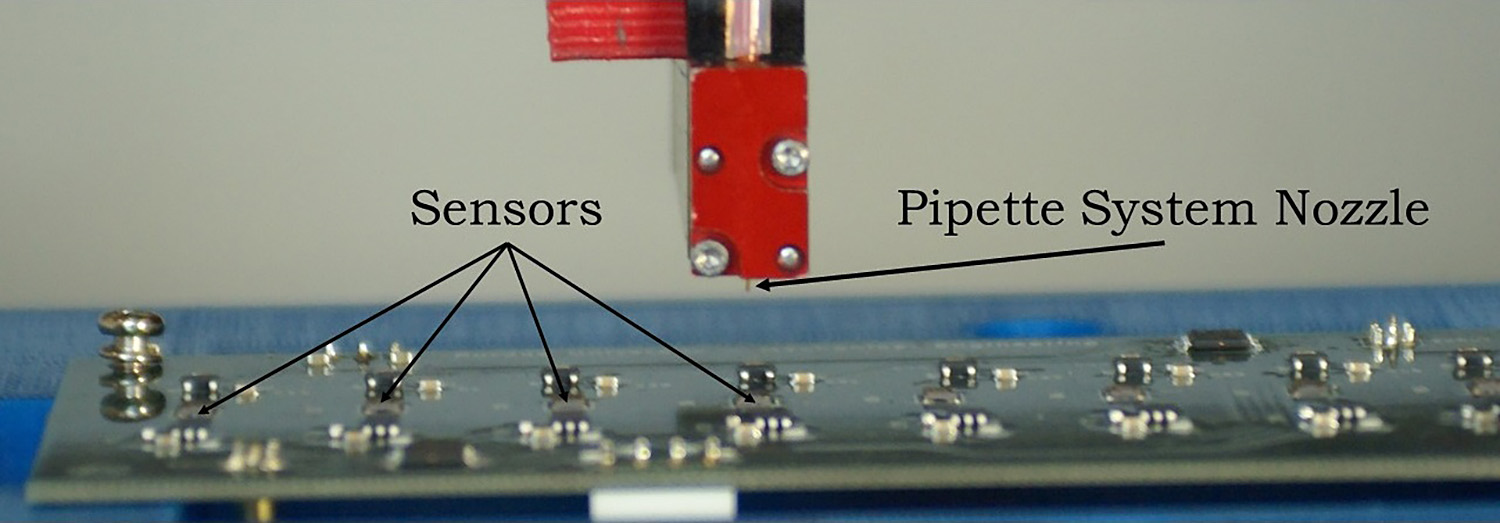
Purdue’s Jeffrey RhoadsGeorge Chiu, and Eric Nauman have developed a method to identify biological markers in small amounts of blood that they believe can detect diseases and infections and conditions such as traumatic brain injury at an early stage. An array of sensors  enable statistical-based detection

The small, cheap vibrating sensors use a piezoelectrically actuated resonant microsystem to detect biomarkers in one or two drops of blood. When driven by electricity, they can sense a change in mass. The sensitivity of the resonator increases as the resonant frequency increases.

The technology  could be used for the early detection of traumatic brain injury in athletes  The Purdue Neurotrauma Group found that concussions are usually caused by multiple hits over time, and not by a single blow. Research into the effects of repeated head impacts on high school football players has shown changes in brain chemistry and metabolism, even in players who have not been diagnosed with concussions.

The test can detect minute amounts of proteins, including protein from glial cells, which surround neurons in the brain. The proteins are secreted in relatively high concentrations in cerebrospinal fluid of victims of traumatic brain injury. Prior studies have found that a small amount of fluid leaked through the blood-brain barrier and got into the bloodstream of victims.


Join ApplySci at Wearable Tech + Digital Health + Neurotech Silicon Valley on February 26-27, 2018 at Stanford University. Speakers include:  Vinod Khosla – Justin Sanchez – Brian Otis – Bryan Johnson – Zhenan Bao – Nathan Intrator – Carla Pugh – Jamshid Ghajar – Mark Kendall – Robert Greenberg – Darin Okuda – Jason Heikenfeld – Bob Knight – Phillip Alvelda – Paul Nuyujukian –  Peter Fischer – Tony Chahine – Shahin Farshchi – Ambar Bhattacharyya – Adam D’Augelli

Registration rates increase December 1, 2017


Categories
Brain Heart Wearables

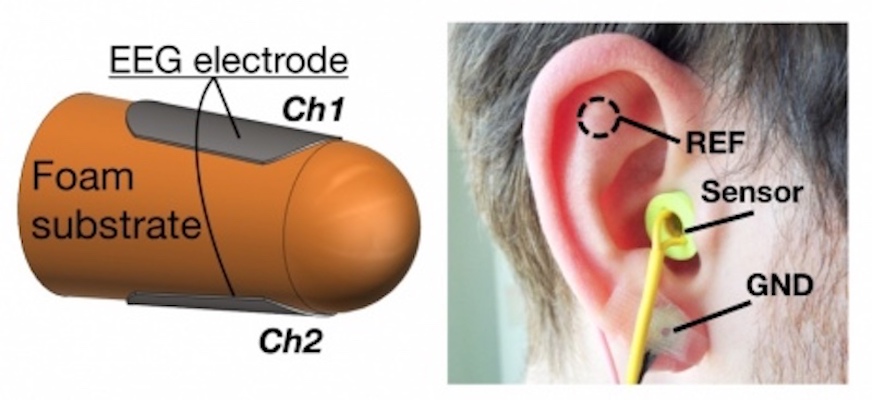
Small, foam hearable captures heart data

In a small study, Danilo Mandic from Imperial College London has shown that his hearable can be used to capture heart data. The device detected heart pulse by sensing the dilation and constriction of tiny blood vessels in the ear canal, using the mechanical part of the electro-mechanical sensor. The hearable is made of foam and molds to the shape of the ear. The goal is a comfortable and discreet continuous monitor that will enable physicians to receive extensive data. In addition to the device’s mechanical sensors, Mandic, a signal processing experter, claims that electrical sensors detect brain activity that could  monitor sleep, epilepsy, and drug delivery, and be used in personal authentication and cyber security.

Join ApplySci at Wearable Tech + Digital Health + Neurotech Silicon Valley on February 26-27, 2018 at Stanford University. Speakers include:  Vinod Khosla – Justin Sanchez – Brian Otis – Bryan Johnson – Zhenan Bao – Nathan Intrator – Carla Pugh – Jamshid Ghajar – Mark Kendall – Robert Greenberg – Darin Okuda – Jason Heikenfeld – Bob Knight – Phillip Alvelda – Paul Nuyujukian –  Peter Fischer – Tony Chahine – Shahin Farshchi – Ambar Bhattacharyya – Adam D’Augelli

Registration rates increase November 24th, 2017


Categories
Brain

Closed-loop control of drug delivery across the blood brain barrier

Tao Sun, Nathan McDannold, Eric Miller and Brigham & Women’s and Tufts colleagues have developed a controller that offers a finer degree of control in penetrating the blood brain barrier for drug delivery.  The technology, only tested in rats, could improve safety in humans if found effective.

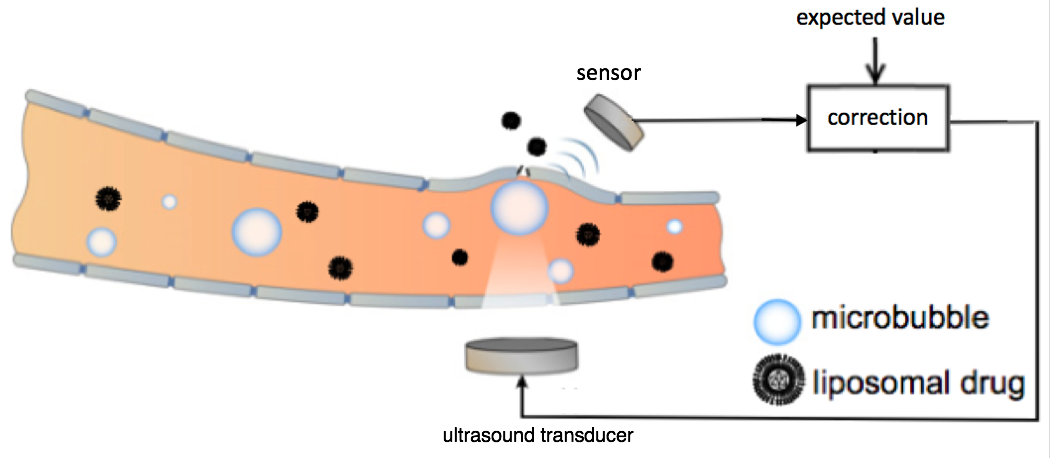
Using focused ultrasound and microbubbles as before, the team is now able to listen to echoes for instantaneous feedback on microbubble oscillation stability, providing fast, real-time control and analysis.

Microbubbles can help temporarily open the blood-brain barrier without incision or radiation, but can destabilize and collapse, damaging the brain’s critical vasculature.

The team used a rat model to develop a closed-loop controller. Sensors were placed on the outside of the brain, as microphones, enabling researchers to listen to ultrasound echoes bouncing off the microbubbles, to determine stability. They then tuned and adjusted the ultrasound input, instantly, to stabilize the bubbles, excite them to open the barrier, and deliver a drug of a predefined dose, while maintaining safe ultrasound exposure.

The approach was tested in healthy rats as well as an animal model of glioma brain cancer. Further research is needed to adapt the technique for humans. Clinical trials  are now underway in Canada.


Join ApplySci at Wearable Tech + Digital Health + Neurotech Silicon Valley on February 26-27, 2018 at Stanford University. Speakers include:  Vinod Khosla – Justin Sanchez – Brian Otis – Bryan Johnson – Zhenan Bao – Nathan Intrator – Carla Pugh – Jamshid Ghajar – Mark Kendall – Robert Greenberg – Darin Okuda – Jason Heikenfeld – Bob Knight – Phillip Alvelda – Paul Nuyujukian –  Peter Fischer – Tony Chahine – Shahin Farshchi – Ambar Bhattacharyya – Adam D’Augelli

Registration rates increase November 24th, 2017

Categories
Brain

Researchers claim to improve human memory with implanted electrodes

In a small study, USC’s Dong Song demonstrated the efficacy of an implantable “memory prosthesis.”   Dr. Song presented his work at the Society for Neuroscience conference in Washington this week.

20 volunteers had the device implanted at the same time as electrodes for epilepsy treatment, a procedure which they had already planned.

The “prosthesis” collected brain activity data during tests designed to stimulate  short-term memory or working memory. The researchers then determined and used optimal memory performance patterns to stimulate the brain during later tests.

They claimed that the procedure improved short-term memory by  approximately 15 percent, and working memory by 25 percent. When the brain was stimulated randomly, performance worsened.


Join ApplySci at Wearable Tech + Digital Health + Neurotech Silicon Valley on February 26-27, 2018 at Stanford University. Speakers include:  Vinod Khosla – Justin Sanchez – Brian Otis – Bryan Johnson – Zhenan Bao – Nathan Intrator – Carla Pugh – Jamshid Ghajar – Mark Kendall – Robert Greenberg – Darin Okuda – Jason Heikenfeld – Bob Knight – Phillip Alvelda – Paul Nuyujukian –  Peter Fischer – Tony Chahine – Shahin Farshchi – Ambar Bhattacharyya – Adam D’Augelli

Registration rates increase November 17th, 2017

Categories
Brain

Optogenetic technique controls single neurons

MIT’s Ed Boyden and Paris Descartes University’s Valentina Emiliani have developed a new optogenetic technique, combined with new opsins, that stimulates individual cells with precise control over both the timing and location of the activation.

This will allow the study of how individual cells, and connections among those cells, generate specific behaviors such as initiating a movement or learning a new skill.

The study‘s lead authors are Or Shemesh from MIT and Dimitrii Tanese and Valeria Zampini from CNRS.


Join ApplySci at Wearable Tech + Digital Health + Neurotech Silicon Valley on February 26-27, 2018 at Stanford University. Speakers include:  Vinod Khosla – Justin Sanchez – Brian Otis – Bryan Johnson – Zhenan Bao – Nathan Intrator – Carla Pugh – Jamshid Ghajar – Mark Kendall – Robert Greenberg – Darin Okuda – Jason Heikenfeld – Bob Knight – Phillip Alvelda – Paul Nuyujukian –  Peter Fischer – Tony Chahine – Shahin Farshchi

Registration rates increase – November 17th, 2017


Categories
Brain

Silicon probes record hundreds of neurons simultaneously

Neuropixels, developed by HHMI’s Tim Harris, are electrodes that record brain activity from hundreds of neurons. Previously, it was not possible to measure the joint activity of individual neurons distributed across brain regions. Recording methods could either resolve the activity of individual neurons or monitor multiple brain regions.

UCL, Allen Institute for Brain Science, IMEC researchers collaborated on the study. The team is now developing a four-shank probe with a smaller base, for chronic recordings, and optrodes that combine recording with optical stimulation, for optogenetic experiments.


Join ApplySci at Wearable Tech + Digital Health + Neurotech Silicon Valley on February 26-27, 2018 at Stanford University. Speakers include:  Vinod Khosla – Justin Sanchez – Brian Otis – Bryan Johnson – Zhenan Bao – Nathan Intrator – Carla Pugh – Jamshid Ghajar – Mark Kendall – Robert Greenberg – Darin Okuda – Jason Heikenfeld – Bob Knight – Phillip Alvelda – Paul Nuyujukian –  Peter Fischer – Tony Chahine

Registration rates increase November 10th.