Categories
fitness Sensors Wearables

Wearable patch monitors lactate, glucose, and pH in sweat

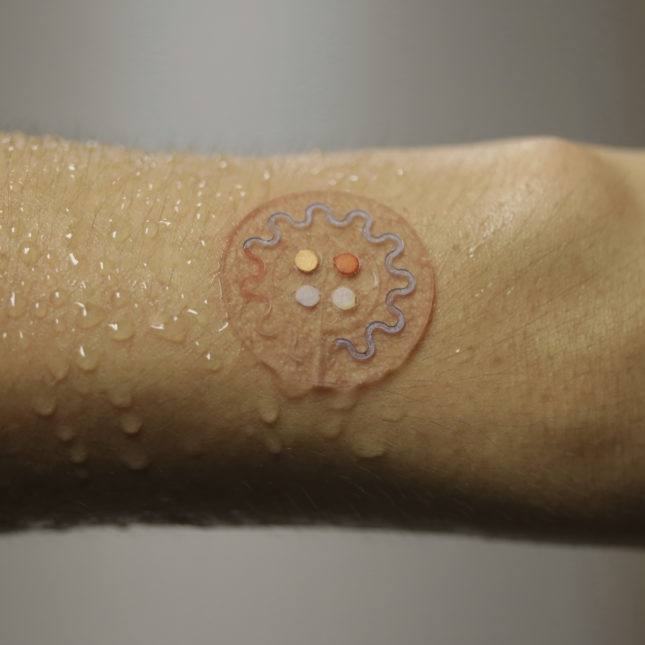
Northwestern’s John Rogers has developed a wearable, sweat analyzing patch.  The flexible microfluidic device uses colorimetric biochemical assays and integrates smartphone image capture analysis to monitor lactate, glucose, chloride ion concentrations, and pH.  The wearable, with sports, military, and disease monitoring applications,  can be adapted to test tears and saliva.

Professor Rogers will be a keynote speaker at Wearable Tech + Digital Health + NeuroTech Silicon Valley on February 7-8, 2017 at Stanford University — co-sponsored by the Stanford Wearable Electronics Initiative (e-WEAR).


ApplySci’s 6th   Wearable Tech + Digital Health + NeuroTech Silicon Valley  –  February 7-8 2017 @ Stanford   |   Featuring:   Vinod Khosla – Tom Insel – Zhenan Bao – Phillip Alvelda – Nathan Intrator – John Rogers – Roozbeh Ghaffari –Tarun Wadhwa – Eythor Bender – Unity Stoakes – Mounir Zok – Krishna Shenoy – Karl Deisseroth – Shahin Farshchi – Casper de Clercq – Mary Lou Jepsen – Vivek Wadhwa – Dirk Schapeler – Miguel Nicolelis

ApplySci is delighted to welcome the Bayer LifeScience iHUB as a sponsor of Digital Health + NeuroTech at Stanford.

Categories
Heart Sensors

Implanted sensors predict heart failure events

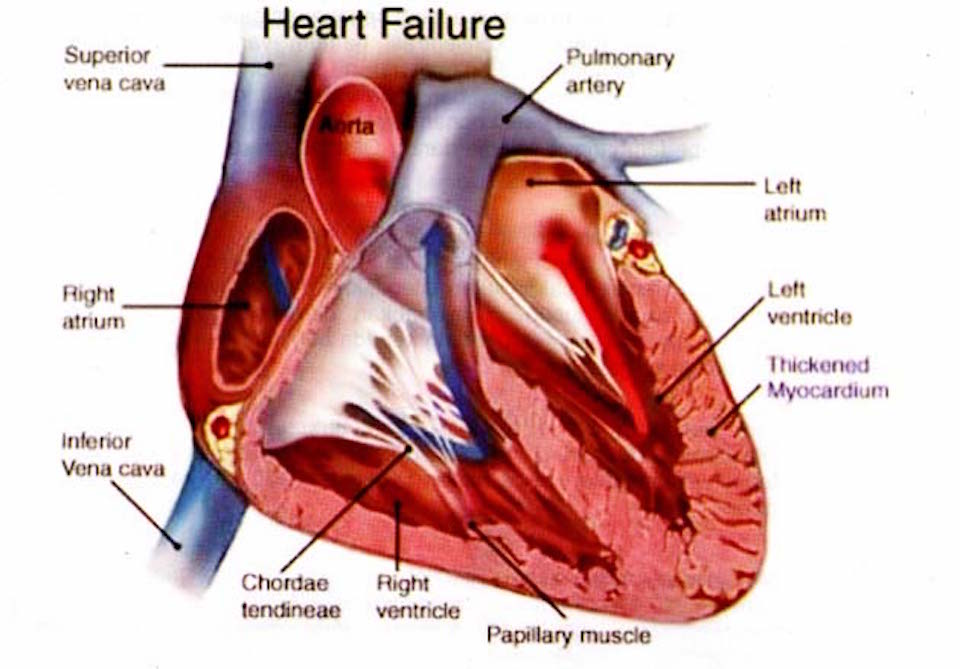
Penn State’s John Boehmer used Boston Scientific’s HeartLogic sensors (retrofitted in already implanted devices) to track heart failure in a study of 900 patients. The goal was continuous monitoring and early event detection and prevention.

Currently, heart failure is (not very successfully) managed by monitoring weight and reported symptoms.   One in five patients are readmitted within 30 days after being hospitalized for the condition.

The 900 patients were followed for one year. Software was uploaded to an implanted defibrillator, allowing it to act as sensors. Heart rate, activity, breathing, heart sounds and electrical activity in the chest were tracked.

70 percent of heart failure events were detected, usually more than a month before their occurance.  False positives were also reported,  which the researchers deemed to be in an ” acceptable range.”


ApplySci’s 6th   Wearable Tech + Digital Health + NeuroTech Silicon Valley  –  February 7-8 2017 @ Stanford   |   Featuring:   Vinod Khosla – Tom Insel – Zhenan Bao – Phillip Alvelda – Nathan Intrator – John Rogers – Mary Lou Jepsen – Vivek Wadhwa – Miguel Nicolelis – Roozbeh Ghaffari –Tarun Wadhwa – Eythor Bender – Unity Stoakes – Mounir Zok – Krishna Shenoy – Karl Deisseroth


Categories
Heart Sensors Wearables

Tiny sensor monitors the heart, recognizes speech, enables human-machine interfaces

Northwestern professor John Rogers has released a paper detailing his latest tiny, wearable, flexible, highly accurate health sensor, which monitors the heart, recognizes speech, and can enable human-machine interfaces.  Professor Yonggang Huang is the corresponding author.

The soft, continuous monitor adheres to any part of the body, detecting mechanical waves that propagate through tissues and fluids in physiological activity — revealing acoustical signatures of individual events.  These include the opening and closing of heart valves, vocal cord vibration, and gastrointestinal tract movement.  ECG and EMG  electrodes can also be integrated.

Obvious practical applications include remote health monitoring, enabling seniors to age in place, and battlefield health and robot/drone control.  The vocal cord monitoring feature could also be used to assist the disabled communicate or control a keyboard.

ApplySci is honored to include Professor Rogers as a keynote speaker at Digital Health + NeuroTech Silicon Valley, on February 7-8, 2017, at Stanford University.


ApplySci’s 6th   Wearable Tech + Digital Health + NeuroTech Silicon Valley  –  February 7-8 2017 @ Stanford   |   Featuring:   Vinod Khosla – Tom Insel – Zhenan Bao – Phillip Alvelda – Nathan Intrator – John Rogers – Mary Lou Jepsen – Vivek Wadhwa – Miguel Nicolelis – Roozbeh Ghaffari –Tarun Wadhwa – Eythor Bender – Unity Stoakes – Mounir Zok – Krishna Shenoy – Karl Deisseroth

Registration rates increase today, November 18, 2016


Categories
Diabetes Eyes Sensors

Fully transparent, glucose monitoring contact lens

Oregon State’s Greg Herman has developed a transparent sensor to monitor glucose (via tears) in a contact lens.  The device could also be used to control insulin infusions, by transmitting real-time data to a pump.

Similar technology has been developed by Google, although their lens is not (currently) fully transparent, and Noviosense, which requires a user to insert a device in the lower lid.

Herman believes that the lens sensor could also be used to monitor stress hormones, uric acid, and  ocular pressure in glaucoma.


ApplySci’s 6th   Wearable Tech + Digital Health + NeuroTech Silicon Valley  –  February 7-8 2017 @ Stanford   |   Featuring:   Vinod Khosla – Tom Insel – Zhenan Bao – Phillip Alvelda – Nathan Intrator – John Rogers – Mary Lou Jepsen – Vivek Wadhwa – Miguel Nicolelis – Roozbeh Ghaffari –Tarun Wadhwa – Eythor Bender – Unity Stoakes – Mounir Zok – Krishna Shenoy – Karl Deisseroth

Categories
Diabetes Sensors Wearables

Non-invasive tear sensor continuously monitors glucose

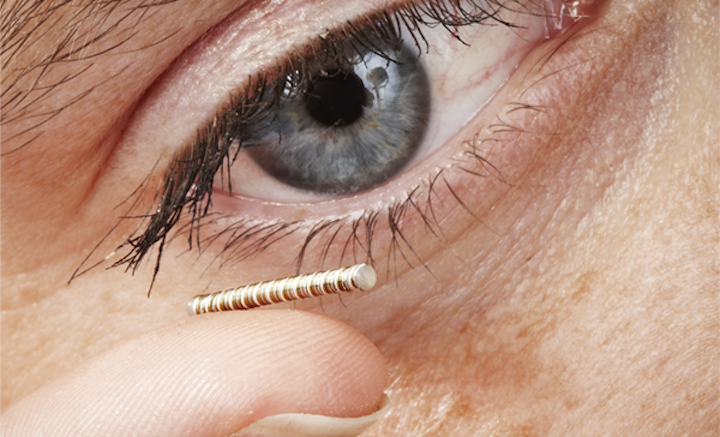
Noviosense is a flexible sensor glucose monitor, worn in a lower eyelid. The wireless, battery-free wearable tracks glucose levels in tears, and continuously sends measurements to one’s phone.

One of three electrodes is coated with an immobilized enzyme, which converts glucose into gluconic acid, leaving the co-enzyme FAD reduced to FADH. An  oxygen molecule oxidizes the co-factor and produces a short lived molecule of hydrogen peroxide, that is converted on the electrode surface to water. This results in an electric current, measured using the other two electrodes. The electrical signal is then converted into a radio frequency signal, transmitted via antenna.

It is possible to connect the sensor to an insulin pump, creating a closed loop system.


ApplySci’s 6th   Wearable Tech + Digital Health + NeuroTech Silicon Valley  –  February 7-8 2017 @ Stanford   |   Featuring:   Vinod Khosla – Tom Insel – Zhenan Bao – Phillip Alvelda – Nathan Intrator – John Rogers – Mary Lou Jepsen – Vivek Wadhwa – Miguel Nicolelis – Roozbeh Ghaffari –Tarun Wadhwa – Eythor Bender – Unity Stoakes – Mounir Zok – Krishna Shenoy – Karl Deisseroth

REGISTRATION FEE INCREASES ON NOVEMBER 1, 2016

Categories
Brain Data Machine Learning Sensors Wearables

Wearable + cloud analysis track Huntington’s disease progression

In the latest pharma/tech partnership, Teva and Intel are developing a wearable platform to track the progression of Huntington’s disease.  There is no cure for the disease, which causes a breakdown of nerve cells in the brain, resulting in a  decline in motor control, cognition and mental stability.

The technology can be used to assess the effectiveness of drugs that treat symptoms, and in developing new drugs.  (Teva will use it in a  mid-stage study.)

Wearable sensors (in this case a watch, but the concept could progress to patches)  continuously measure patient functioning.  Data is wirelessly transmitted to the cloud, and algorithms score motor symptom severity.

In recent months, ApplySci has described similar pharma/device/big data/machine learning alliances, including:

  •  Sanofi and Verily’s Onduo platiform to treat diabetes
  • GlaxoSmithKline and Verily targeting electrical signals in the body
  • A Verily and Novartis smart contact lense glucose monitor
  • A Biogen /Alphabet MS study

ApplySci looks forward to the use of brain-monitoring wearables to enable users to see and address neurodegenerative changes before symptoms appear.


ApplySci’s 6th   Wearable Tech + Digital Health + NeuroTech Silicon Valley  –  February 7-8 2017 @ Stanford   |   Featuring:   Vinod Khosla – Tom Insel – Zhenan Bao – Phillip Alvelda – Nathan Intrator – John Rogers – Mary Lou Jepsen – Vivek Wadhwa – Miguel Nicolelis – Roozbeh Ghaffari – Unity Stoakes – Mounir Zok

Categories
Seniors Sensors Wearables

Gait sensors predict falls, allowing preventive intervention

University of Missouri’s Marjorie Skubic has used sensors to measure gait speed and stride length, to predict falls.  The goals is to use wearables and smart home technology to preserve independence and allow seniors to age in place.

Data was collected at an independent-living style retirement residence. Images and nurse alert emails were generated when irregular motion was detected. The researchers determined that a gait speed decline of 5 centimeters per second was associated with an 86.3 percent probability of falling within three weeks.  A shortened stride length was associated with a 50.6 percent probability of falling within three weeks.


Wearable Tech + Digital Health + NeuroTech Silicon Valley – February 7-8 @ Stanford University – Featuring:   Vinod Khosla – Tom Insel – Zhenan Bao – Phillip Alvelda – Nathan Intrator – John Rogers – Mary Lou Jepsen – Vivek Wadhwa – Miguel Nicolelis

Categories
Seniors Sensors Wearables

Affective computing system responds to dementia patient emotions

SenseCare (Sensor Enabled Affective Computing for Enhancing Medical Care) is a Cork Institute of Technology led project meant to teach computers how to recognize and respond to human emotions.  The goal is to use applied psychology to monitor and improve the care of dementia patients.

The affective computing based system will manage data from voice and face recognition systems, and wearables that measure health, wellness, and activity levels. The open platform’s goal is “full emotional analytics” and will work with companion robots and other technologies to manage care.


Digital Health + NeuroTech Silicon Valley – February 7-8, 2016 @ Stanford University

Categories
Sensors

NFC powered ultra-thin health monitoring patch

Powering wearables for efficient, long term, continuous, use remains a challenge.

Illinois professor John Rogers has, again, disrupted himself.   His new, stretchable, ultra-thin, health monitoring patches are wirelessly powered via smartphone near field communication.  This enables the devices to be 5-10 times thinner than before —  increasing comfort and therefore the willingness of people to wear them.

LEDs illuminate the skin. Some light is absorbed, and reflected light is picked up by light sensors. Data is transmitted to an external device. Ultraviolet ray exposure can be measured (see the MC10/L’Oreal UV monitor) as well as skin temperature.

In a recent study, the NFC powered patch was used to monitor heart rate, blood oxygen level, skin temperature, ultraviolet radiation exposure, and changes in skin color.

Click to view ApplySci’s coverage of John Rogers’ work, which can also be seen in the presentations of many of our conference speakers.


Digital Health + NeuroTech Silicon Valley – February 7-8, 2017@ Stanford University

Categories
Asthma Diabetes Orthopedics Sensors Wearables

GSK/Verily “biolectronic medicine” partnership for disease management

Galvani Biolectronics is a Verily/GSK company, created to accelerate the research, development and commercialization of bioelectronic medicines. The goal is to find solutions to manage chronic diseases, such as arthritis, diabetes, and asthma, using  miniaturized electronics.  Implanted devices would  modify electrical signals that pass along nerves, including irregular impulses that occur in illness.

Initial work will focus on developing precision devices for inflammatory, metabolic and endocrine disorders, including type 2 diabetes, where substantial evidence already exists in animal models.

Every major pharmaceutical company (globally) attended  ApplySci’s recent Wearable Tech + Digital Health + NeuroTech conferences in San Francisco and New York.  We believe that partnerships similar to the Verily/GSK venture will proliferate — and that they will improve the lives of those with chronic diseases.


Digital Health + NeuroTech Silicon Valley – February 7-8, 2017 @ Stanford University

Categories
Sensors

Implanted thread provides real-time diagnostic data

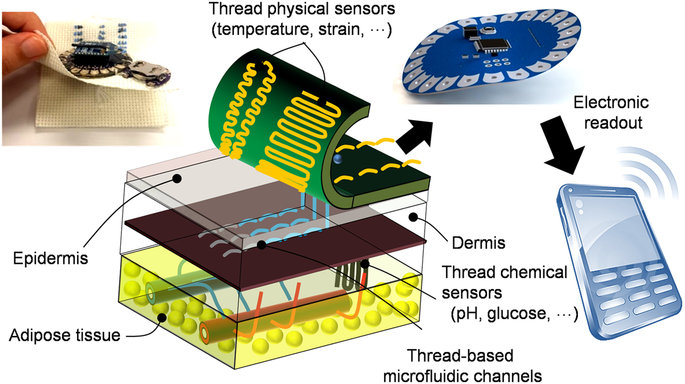
Tufts University researchers have created  a thread-based diagnostic platform to provide real-time health data for implanted devices and wearables.

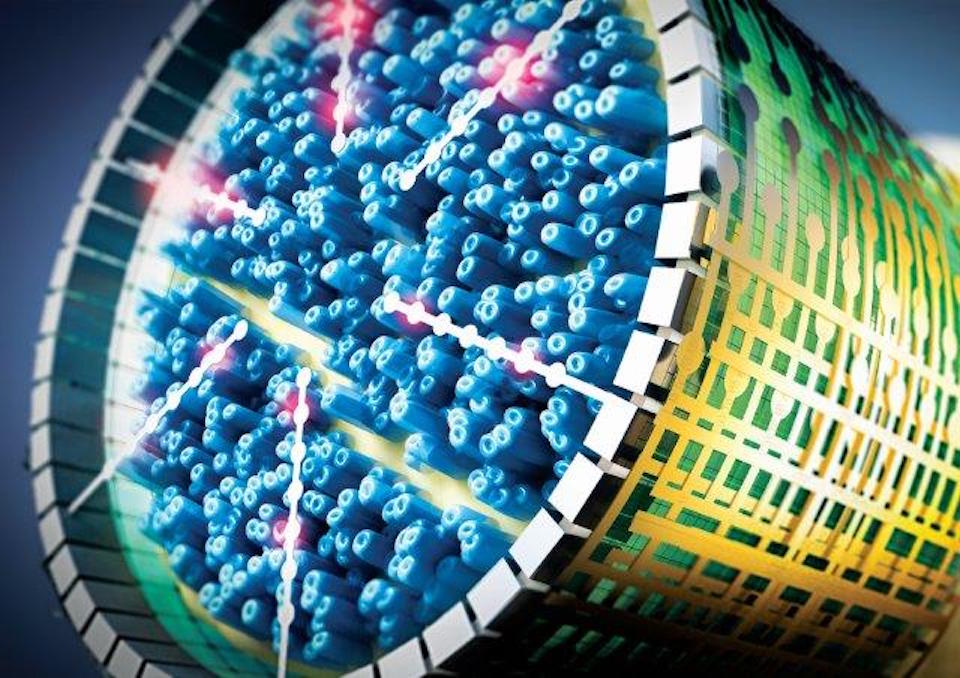
Thread-integrated nano-scale sensors, electronics and microfluidics can be sutured through multiple layers of tissue . Measures of tissue health (pressure, stress, strain and temperature), pH and glucose levels are collected.  Results are transmitted wirelessly.

The system can be used to determine how a wound is healing, whether infection is emerging, or whether the body’s chemistry is out of balance.

The three-dimensional platform can conform to  organs, wounds or orthopedic implants. Previously, substrate structures for implantable devices have  been two-dimensional, limiting their use to flat tissue, such as skin.


Join ApplySci at Digital Health + NeuroTech Silicon Valley 2017 – February 7-8 @ Stanford University

Categories
Sensors

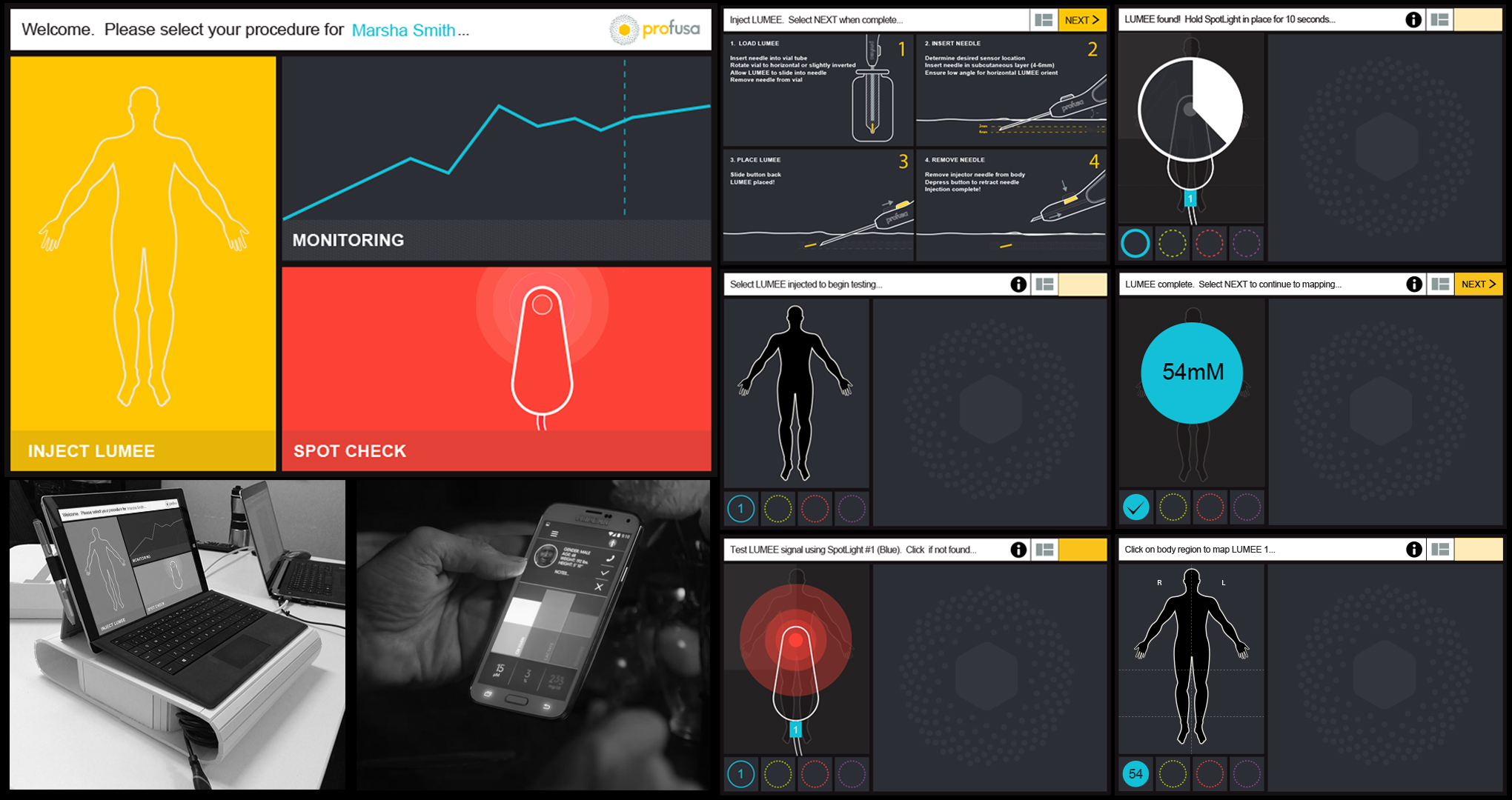
Injectable sensor continuously monitors multiple body chemistries

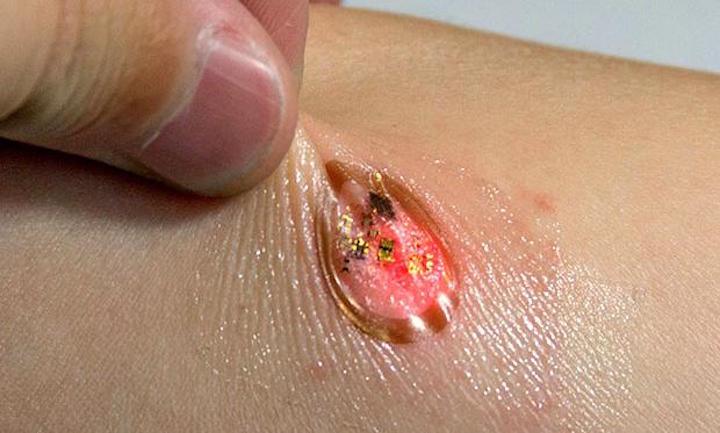
Profusa injectable sensors are  designed for the simultaneous, continuous monitoring of multiple body chemistries including metabolic and dehydration status, ion panels, blood gases, and other  biomarkers.  The company will initially provide real-time monitoring of soldier’s health, but its sensors can be used to manage peripheral artery disease, diabetes or COPD, or enhance sport performance.

The small, flexible, fiber sensor is based on a “smart hydrogel” and is designed to be integrated into the body’s tissue to overcome the foreign body response for more than 1 year.

Click to view Profusa video