Categories
IoT Robotics Sensors Wearables

Tiny, ingestible robot can deliver medicine, patch wounds, remove objects

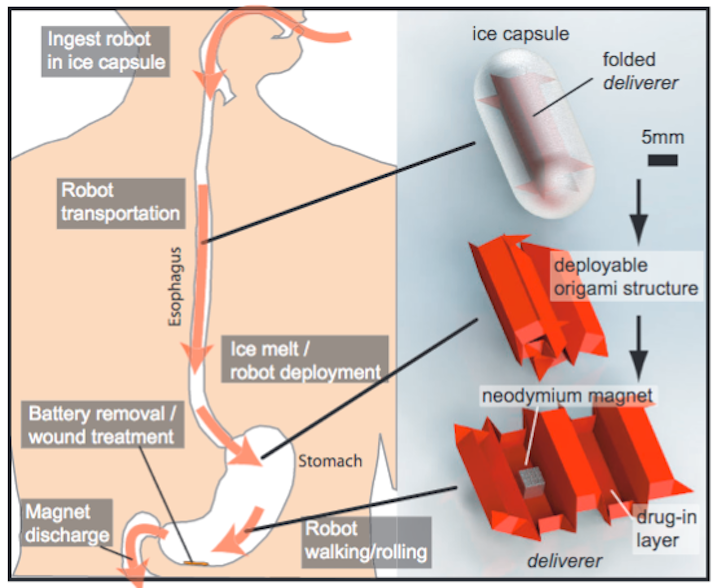
Daniela Rus and MIT, University of  Sheffield, and Tokyo Institute of Technology colleagues have developed an ingestible origami robot designed to patch wounds, deliver medicine or remove foreign objects from a person’s stomach.

The tiny robot, made of pig intestines, can unfold itself from a swallowed capsule. Steered by a doctor using external magnetic fields, the “microsurgeon” crawls across the stomach wall, and propels itself using a “stick-slip” motion.

Click to view MIT video


Wearable Tech + Digital Health NYC – June 7, 2016 @ the New York Academy of Sciences

NeuroTech NYC – June 8, 2016 @ the New York Academy of Sciences

Categories
Cancer Sensors

Optical sensor could detect cancer, other diseases, earlier

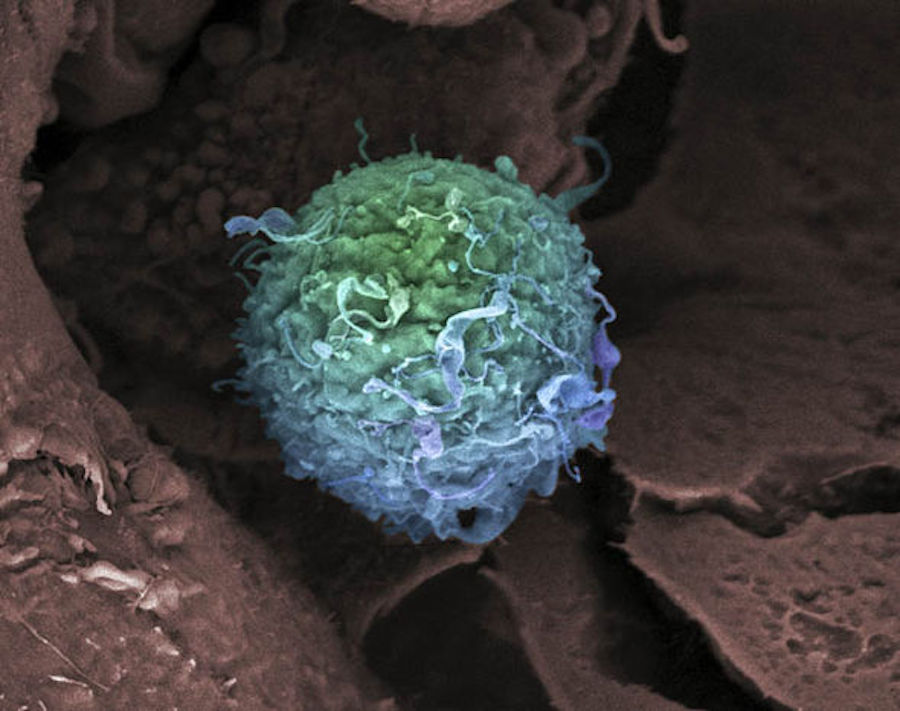
Guiseppe Strangi and Case Western colleagues have developed a highly sensitive optical sensor, based on nanostructured metamaterials.  The researchers claim that is is 1 million times more sensitive than current sensors, and capable of identifying a single lightweight molecule in a highly dilute solution.  This could dramatically improve the detection of cancer and other diseases.

If doctors could detect a single molecule of an enzyme produced by circulating cancer cells, significantly earlier diagnosis is possible, which could dramatically improve one’s prognosis.

According to Strangi:”Very early, most circulating tumor cells express proteins of a very low molecular weight, less than 500 Daltons. These proteins are usually too small and in too low a concentration to detect with current test methods, yielding false negative results. With this platform, we’ve detected proteins of 244 Daltons, which should enable doctors to detect cancers earlier–we don’t know how much earlier yet.”


Wearable Tech + Digital Health San Francisco – April 5, 2016 @ the Mission Bay Conference Center

NeuroTech San Francisco – April 6, 2016 @ the Mission Bay Conference Center

Wearable Tech + Digital Health NYC – June 7, 2016 @ the New York Academy of Sciences

NeuroTech San Francisco – June 8, 2016 @ the New York Academy of Sciences

 

Categories
Diabetes Sensors

Study: Graphene patch monitors glucose, delivers insulin

MC10 and Seoul National University researchers, led by Dae-Hyeong Kim, have created a prototype skin patch that could both monitor blood glucose levels and administer insulin to diabetics.  This is the first time that monitoring and drug deivery have been combined.

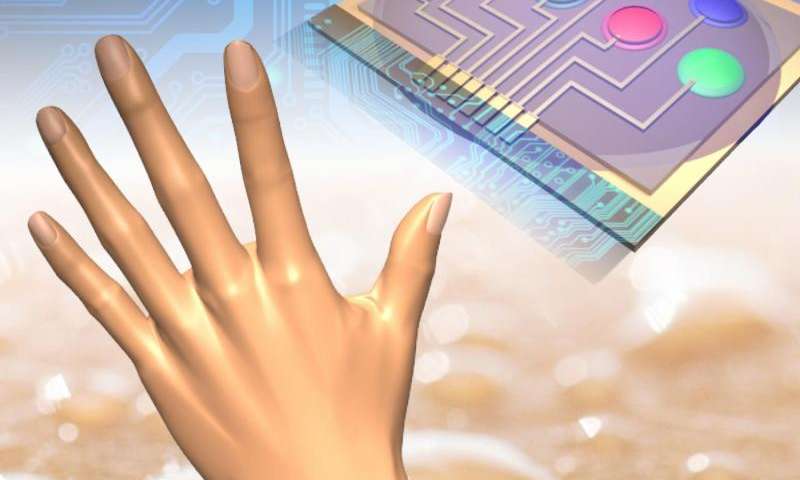
The graphene and gold mesh patch measures humidity, glucose, pH, and temperature in sweat. While the technology has only been tested on mice, it has shown that it is able to reduce blood glucose levels.  We look forward to the results of human trials.

MC10 co-founder and VP of Technology Roozbeh Ghaffari is a featured speaker at ApplySci’s Wearable Tech + Digital Health conference on April 5th in San Francisco.  He will discuss the future of less invasive, more precise approaches to disease management.


Wearable Tech + Digital Health San Francisco – April 5, 2016 @ the Mission Bay Conference Center

NeuroTech San Francisco – April 6, 2016 @ the Mission Bay Conference Center

Wearable Tech + Digital Health NYC – June 7, 2016 @ the New York Academy of Sciences
NeuroTech NYC – June 8, 2016 @ the New York Academy of Sciences
 

Categories
Data Sensors

Wireless hub syncs health data at home, in clinic

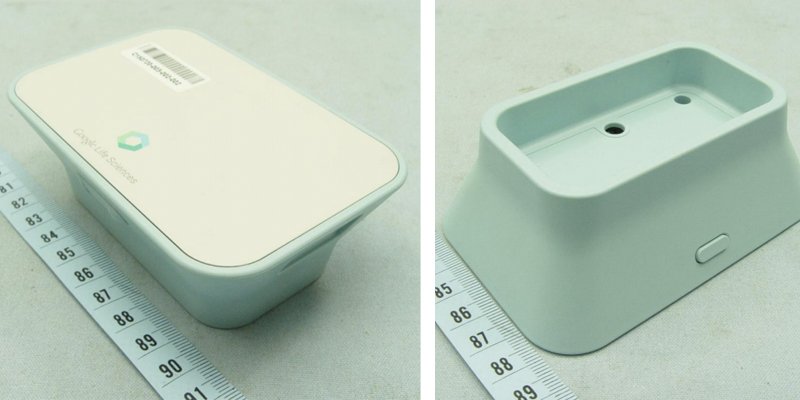
Google’s “Connectivity Bridge” appears to be a wireless hub meant to  collect and sync medical data in clinical studies, according to an FCC filing reported by Business Insider.  (No company announcement has been made.)

The hub can be installed in facilities or homes, and sensor data can be quickly uploaded to the cloud for analysis. It uses open source software and lets users charge and sync Study Kit devices.


Wearable Tech + Digital Health San Francisco – April 5, 2016 @ the Mission Bay Conference Center

NeuroTech San Francisco – April 6, 2016 @ the Mission Bay Conference Center

Wearable Tech + Digital Health NYC – June 7, 2016 @ the New York Academy of Sciences

NeuroTech NYC – June 8, 2016 @ the New York Academy of Sciences


Categories
Eyes Sensors Wearables

Self-adjusting lenses adapt to user needs

DeepOptics is developing is vision-enhancing wearable lenses, with sensors that gauge viewing distance, and precisely adjust the lenses to bring an object into focus.

Electronic volts are sent into three layered liquid crystal lenses, changing the refractive index to provide the specific optical compensation needed to correct vision in every situation.

The company also believes that its technology can offer VR/AR devices the ability to deliver better experiences.

Click to view the DeepOptics video:


Wearable Tech + Digital Health San Francisco – April 5, 2016 @ the Mission Bay Conference Center

NeuroTech San Francisco – April 6, 2016 @ the Mission Bay Conference Center

Wearable Tech + Digital Health NYC – June 7, 2016 @ the New York Academy of Sciences

NeuroTech NYC – June 8, 2016 @ the New York Academy of Sciences
 

Categories
fitness Monitoring Sensors Wearables

Ultra slim sensors for next generation wearables

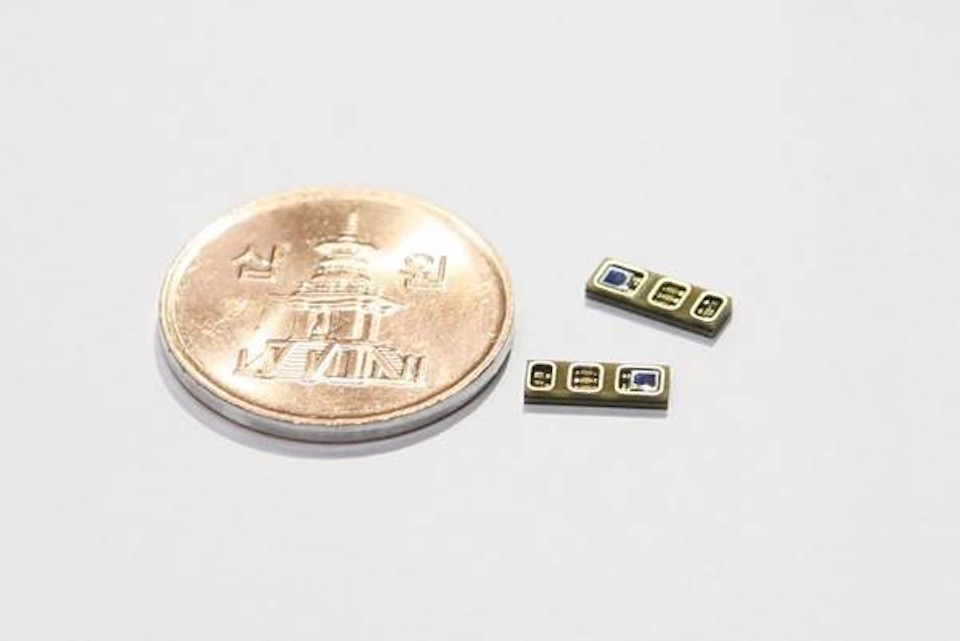
LG Innotek has developed an ultra-thin optical bio sensor module for monitoring heart rate, blood oxygen, and stress.

High-end smartphones typically include these  modules, which complement fitness wearables and apps.

LG claims that the new module is more accurate and uses less energy than current sensors. Because of its size,  is can be used in very small devices with out compromising accuracy.


Wearable Tech + Digital Health San Francisco – April 5, 2016

NeuroTech San Francisco – April 6, 2016

Wearable Tech + Digital Health NYC – June 7, 2016

NeuroTech NYC – June 8, 2016

.

Categories
Cancer Sensors

Sensor + algorithm detect prostate cancer in urine

Chris Probert and University of Liverpool and UWE Bristol colleagues are creating a test that uses gas chromatography to “smell” prostrate cancer in urine.  If proven accurate, the test might be able to be used instead of current invasive diagnostic procedures, at an earlier stage.

155 men were tested. 58 were diagnosed with prostate cancer, 24 with bladder cancer and 73 with hematuria or poor stream without cancer.  The sensor successfully identified patterns of volatile compounds that allow classification of urine in patients with urological cancers.

Urine samples are inserted into the  “Odoreader” and measured using algorithms.  A 30 meter column enables the urine compounds to travel through it at different rate. The algorithm detects cancer by reading the patterns.


Wearable Tech + Digital Health San Francisco – April 5, 2016 @ the Mission Bay Conference Center

NeuroTech San Francisco – April 6, 2016 @ the Mission Bay Conference Center

Wearable Tech + Digital Health NYC -June 7, 2016 @ the New York Academy of Sciences

NeuroTech NYC – June 8, 2016 @ the New York Academy of Sciences
 

Categories
Diabetes Sensors Smart Fabric Wearables

Smart socks sense pain, pressure in diabetic neuropathy

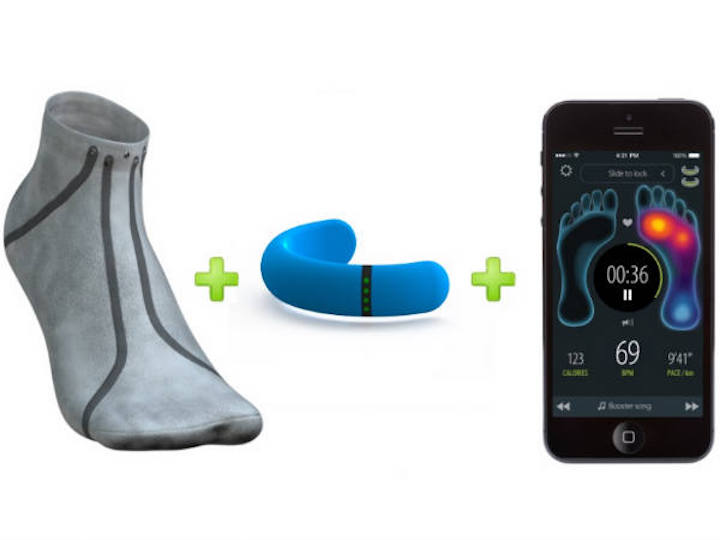
SenseGo smart socks have multiple sensors that monitor  pressure from poor posture, over-exertion, or ill-fitting shoes, all which could lead to diabetic foot ulcers.  Pressure points are registered as electrical signals, and relayed to an app which  informs the patient of a developing risk.

The washable sensor socks, developed by Hebrew University professor Yaakov Nahmias, can compensate for damaged nerve sensations,  providing patients with data on pain that they are unable to feel.  Failure to treat these issues could  lead to foot ulcers, sores, or wounds that do not heal, hence the benefit of this “early warning” system.


Wearable Tech + Digital Health San Francisco – April 5, 2016 @ the Mission Bay Conference Center

NeuroTech San Francisco – April 6, 2016 @ the Mission Bay Conference Center

Wearable Tech + Digital Health NYC – June 7, 2016 @ the New York Academy of Sciences
NeuroTech NYC – June 8, 2016 @ the New York Academy of Sciences
 

Categories
Sensors Wearables

Flexible, sweat sensing, health wearable

Berkeley’s Ali Javey has developed a prototype band that uses sweat non-invasively assess medical conditions.  It could also spot drug abuse, or provide information to optimize sports performance.  The flexibility and computing power of the device build on the capabilities of earlier sweat sensors.

A flexible plastic band contains sensors that measure the concentrations of sodium and potassium ions, glucose and lactate, which provide insights into cell processes.  A temperature sensor calibrates the information.  A flexible circuit board with 11  computer interprets the data and transmits it wirelessly to a phone or computer.

Cincinnati professor Jason Heikenfeld developed sweat sensing technology for wearables in 2014, described by ApplySci here.


Wearable Tech + Digital Health San Francisco – April 5, 2016 @ the Mission Bay Conference Center

NeuroTech San Francisco – April 6, 2016 @ the Mission Bay Conference Center

Wearable Tech + Digital Health NYC – June 7, 2016 @ the New York Academy of Sciences
NeuroTech NYC – June 8, 2016 @ the New York Academy of Sciences


Categories
Apps Data Sensors Virtual Reality Wearables

Virtual clinic uses apps, VR, data, wearables in remote care

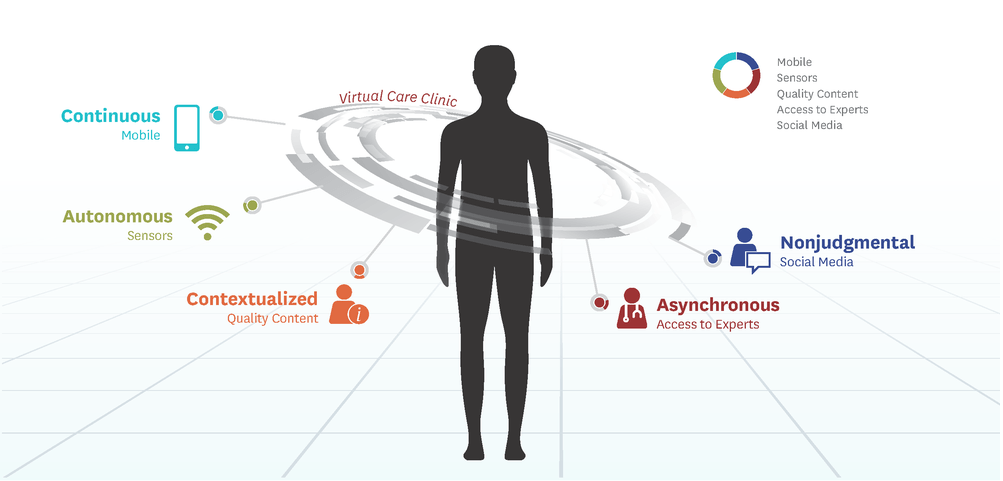
USC’s Center for Body Computing, led by Professor Leslie Saxon, has created the Virtual Care Clinic, featuring vetted, best of class partners providing integrated remote healthcare solutions.  The eight initial partners are Doctor Evidence, IMS Health, Karten Design, Medable, Planet Grande, Proteus Digital Health and VSP Global.

Mobile apps, virtual doctors, data collection and analysis systems,  and diagnostic and monitoring wearables  will provide on-demand access to care.


Wearable Tech + Digital Health San Francisco – April 5, 2016 @ the Mission Bay Conference Center

NeuroTech San Francisco – April 6, 2016 @ the Mission Bay Conference Center

Wearable Tech + Digital Health NYC – June 7, 2016 @ the New York Academy of Sciences

NeuroTech NYC – June 8, 2016 @ the New York Academy of Sciences


Categories
Cancer Sensors

Nanofiber sensor glove could detect breast cancer

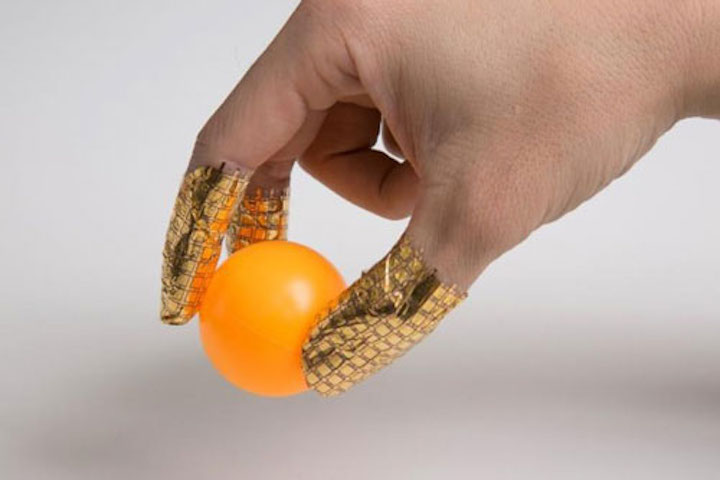
Tokyo University’s Takao Someya and Harvard’s Zhigang Suo are developing thin, bendable, pressure sensitive, nanofiber sensors that could be be incorporated into gloves to detect breast tumors.

The 1.9 inch square sheet has 144  pressure measuring locations, and can detect pressure even when twisted.  Many researchers are developing flexible pressure sensors, but they are vulnerable when bent and twisted.

According to  Someya, “Sensitive human fingers of a veteran doctor may be able to find a small tumor, but such perceived sensation cannot be measured. The digitization of the sensations means that they could be shared with other doctors who could theoretically experience the same sensations as the physician who performed the examination.”


Wearable Tech + Digital Health San Francisco – April 5, 2016 @ the Mission Bay Conference Center

NeuroTech San Francisco – April 6, 2016 @ the Mission Bay Conference Center

Wearable Tech + Digital Health NYC – June 7, 2016 @ the New York Academy of Sciences

NeuroTech NYC – June 8, 2016 @ the New York Academy of Sciences

Categories
Sensors

Sensor monitors, regulates IV fluid flow

The Singapore-MIT Alliance for Research and Technology‘s Ajay Kottapalli has developed a cheap IV drip sensor to monitor and regulate fluid flow.  A signal is sent to a control unit which can adjust the flow speed or alert staff.  This can reduce the amount of time nurses spend checking patient IVs — which is estimated at 30% of their time, according to the researchers.

More importantly, better monitoring can save lives.  Infusion of fluids into the body at the wrong rate can be fatal.


Wearable Tech + Digital Health San Francisco – April 5, 2016 @ the Mission Bay Conference Center

NeuroTech San Francisco – April 6, 2016 @ the Mission Bay Conference Center

Wearable Tech + Digital Health NYC – June 7, 2016 @ the New York Academy of Sciences

NeuroTech NYC – June 8, 2016 @ the New York Academy of Sciences