Categories
mHealth Monitoring Sensors

Patch monitors muscle activity, dispenses medicine

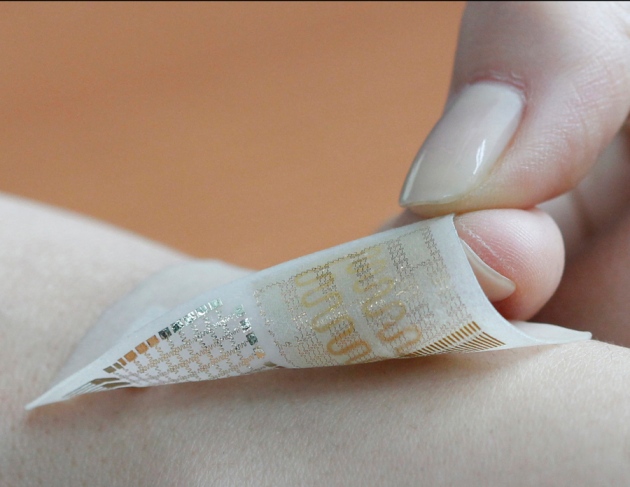
Kim Dae-Hyeong and colleagues at Seoul National University have created a dermal patch that measures and records muscle activity, dispenses medicine continuously, and stops drug delivery when appropriate.  The study was published in Nature Nanotechnology today.

The system is ideal for Parkinson’s patients, as tremors that accompany the movement disorder are not constant.  The patch senses tremors early and immediately releases a small amount of the drug it contains.

Silicon nano membranes were used in the motion sensors, gold nanoparticles in the non-volatile memory and silica nanoparticles loaded with drugs in a thermal actuator. All were integrated in a patch capable of resisting stretch and bend forces, suitable for skin.  Wireless components will be incorporated in the future to make the device fully mobile.
Categories
Babies Monitoring Sensors

Smart pacifier monitors baby’s health and location

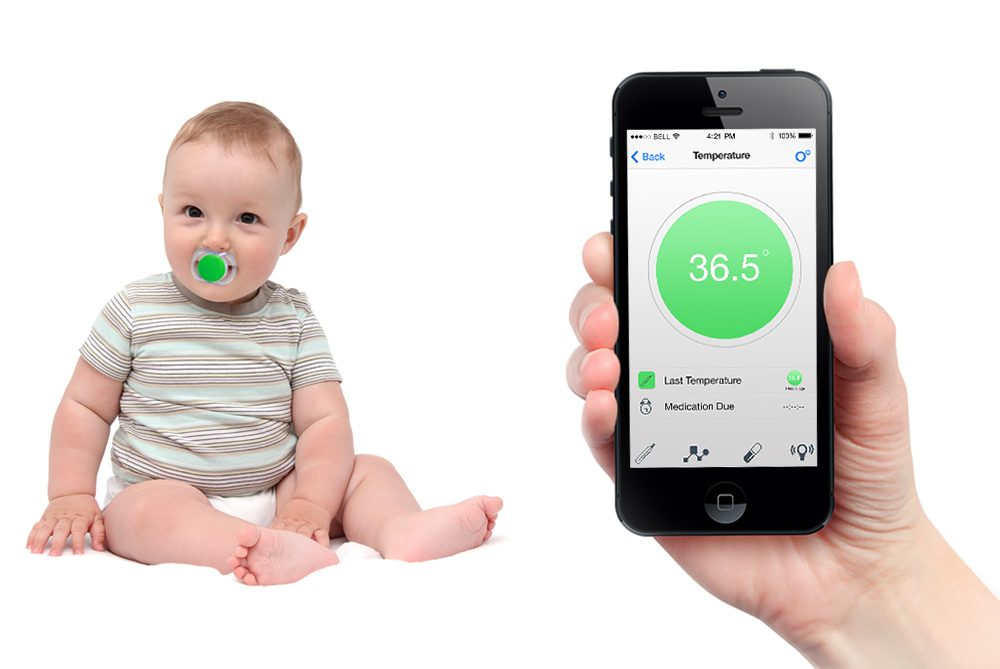
BlueMaestro’s Pacifi monitors a baby’s temperature and transmits the data to a parent’s phone or tablet.  Its app plots the data in a graph.  Parents can record when medication was administered, set-up alerts, and share the information with nannies and doctors.

Pacifi features a built in proximity sensor that allows parents to monitor the pacifier’s location and be alerted if their toddler wanders off.  Parents can set the distance, to a range of 150 feet, for the alarm to be triggered.

Categories
Crowdfunding Seniors Sensors

Sensor shoe detects balance, attempts to improve gait

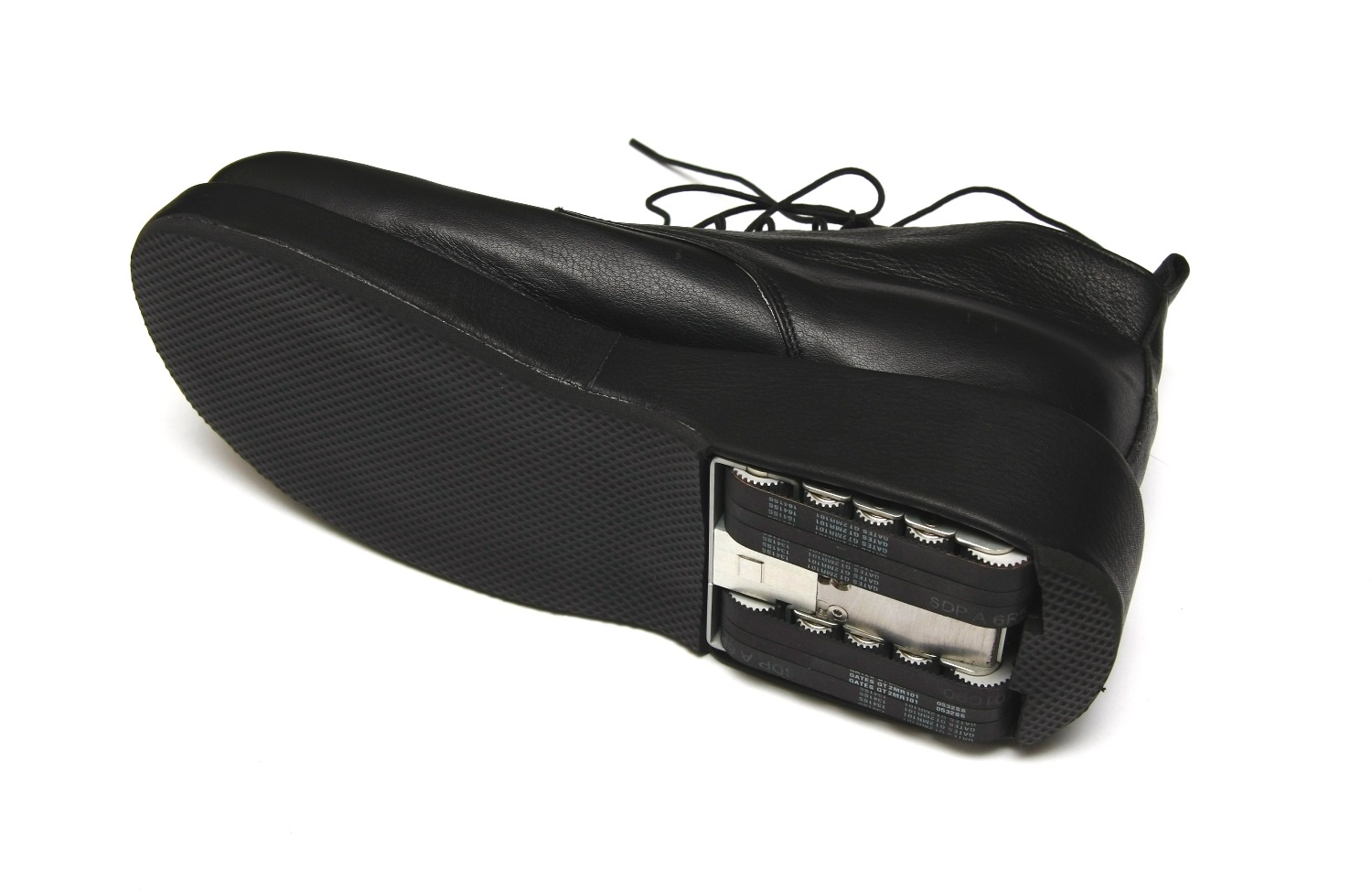
B-Shoe  utilizes sensors and an embedded motion device to detect when a wearer loses balance. Using algorithms and a microprocessor, the motion device gently rolls the shoe backward until the person regains balance. The sensors ensure that the corrective action is taken only when needed.  The projected was crowdfunded on Indiegogo.

It is based on the bio-mechanics of the human body, its center of gravity and base of support, a study of balance maintenance and disorders, and the backward step which healthy and younger people take to regain balance.  Older people often do not take this step because of slowed reflexes.

As seniors fall on average once per year, we anticipate the many sensor based wearable technologies to provide balance monitoring and alerts, and attempt to improve gait.

Categories
Epilepsy Monitoring Sensors Wearables

Wearables track, manage, predict epileptic seizures

Artefact Dialog | SmartMonitor

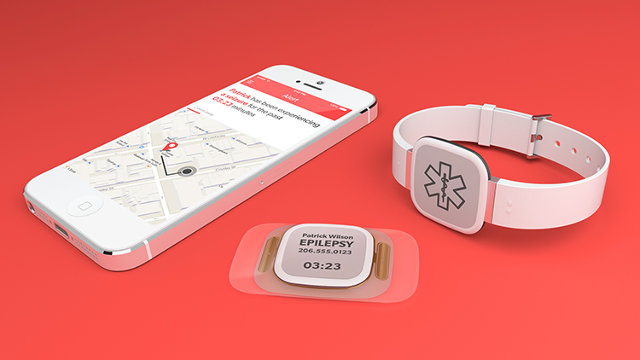
Artefact Dialog allows epilepsy patients to track, manage, and predict seizures.

The patch-like wearable connects via Bluetooth to a smartphone app.  It can help wearers remember to take their medications, warn them about seizures, and alert friends, family, or caregivers when a seizure happens. Connected apps help users analyze where they have been and what they were doing when seizures occurred, and instruct bystanders and responders what to do during an episode.

Featuring a UI based around natural interactions, Dialog allows patients to call for help with a grasp of the patch. A double tap allows a patient to record a pre-seizure aura, and can measure the typical time between an aura and a seizure. Tracing a smile or frown lets wearers track their moods, and vibrations alert users to take their medications.

Last year SmartMonitor released its epilepsy focused smart watch, with similar features but a more traditional design.

Categories
Assistive Technologies Crowdfunding Sensors Wearables

Crowdfunded, gesture controlled, bluetooth ring

Kickstarter campaign

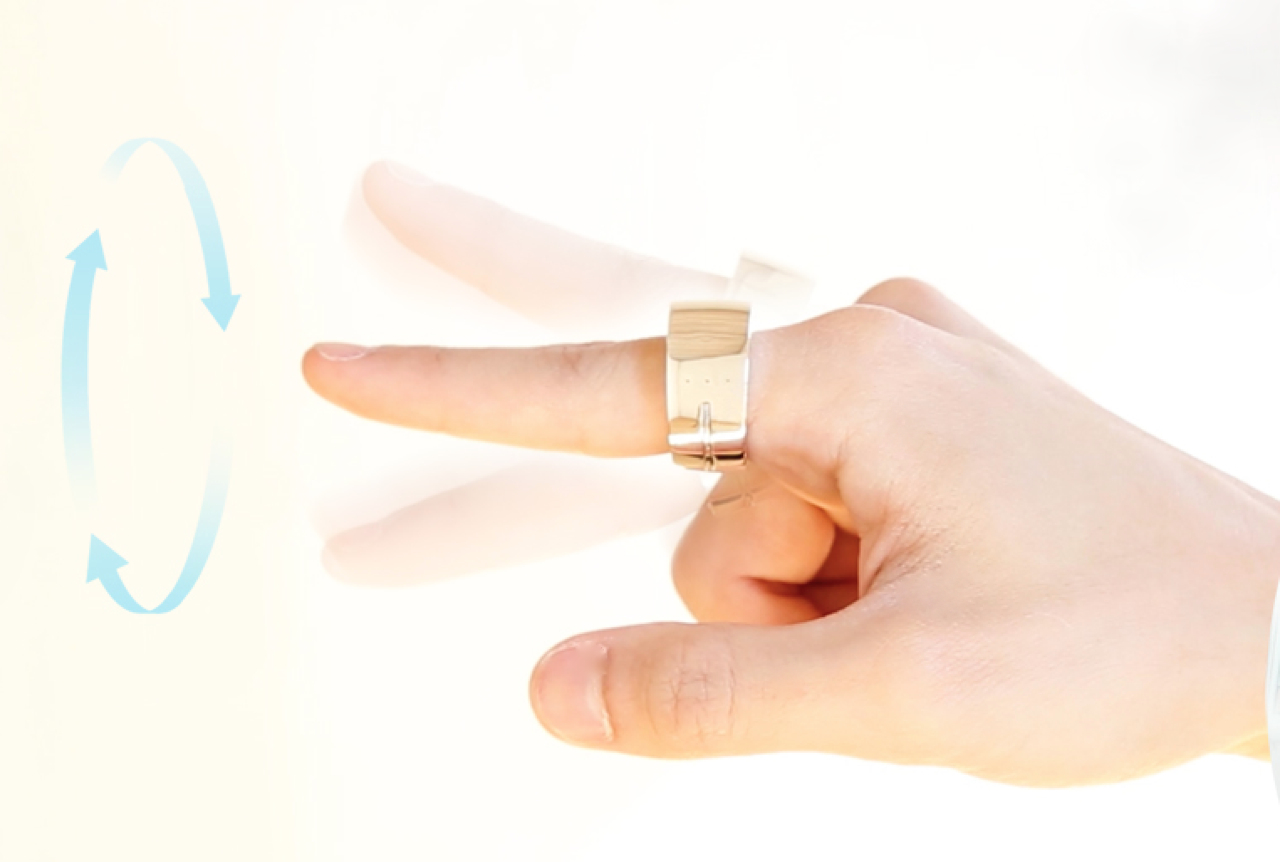
Logbar‘s sensor ring recognizes finger gestures and controls devices.  “Ring” allows the wearer to write text messages by drawing in the air,  make mobile payments,  or control lights or a television.  It is being tested for use with the Pebble watch, quadcopter drones and Google Glass.

It can be programmed to respond to original shape gesture commands, which  could be useful for the disabled or visually impaired.

Wearers can receive vibrating alerts or view LED pinpoints near the button port, performing up to 1,000 gestures before its battery must be recharged.

Categories
BCI Brain Monitoring Seniors Sensors Wearables

Facial expression controlled ear computer/health monitor

AFP | Japan Times

Kazuhiro Taniguchi of Hiroshima City University has developed a 17 gram “Earclip-type Wearable PC”  equipped with a GPS, compass, gyrosensor, battery, barometer, speaker and microphone.  A microchip and data storage enable users to load software.   The device is being tested now, with promising applications for the elderly and disabled.

The system can be connected to a smartphone and allow the user to navigate through software programs using facial expressions, such as a raised eyebrow, a stuck-out tongue, a wiggle of the nose or by clenching teeth.

The device uses infrared sensors that monitor tiny movements in the ear, which differ depending on how the eyes and mouth move. Because the user does not have to move either hand, its developers say it can serve as “a third hand” caregivers, rock-climbers, motorcyclists, astronauts, and people with disabilities.

The earpiece could also function as a hearing aid,  and could monitor the wearer’s health, including pulse and body temperature, while logging how often they eat and sneeze.  An accelerometer could tell when the user falls and instruct the smartphone to notify relatives, or call an ambulance based on GPS data.

Categories
Heart Sensors

Custom fitted, 3D printed, sensor based, implantable cardiac device

Nature paper |  Washington University | University of Illinois

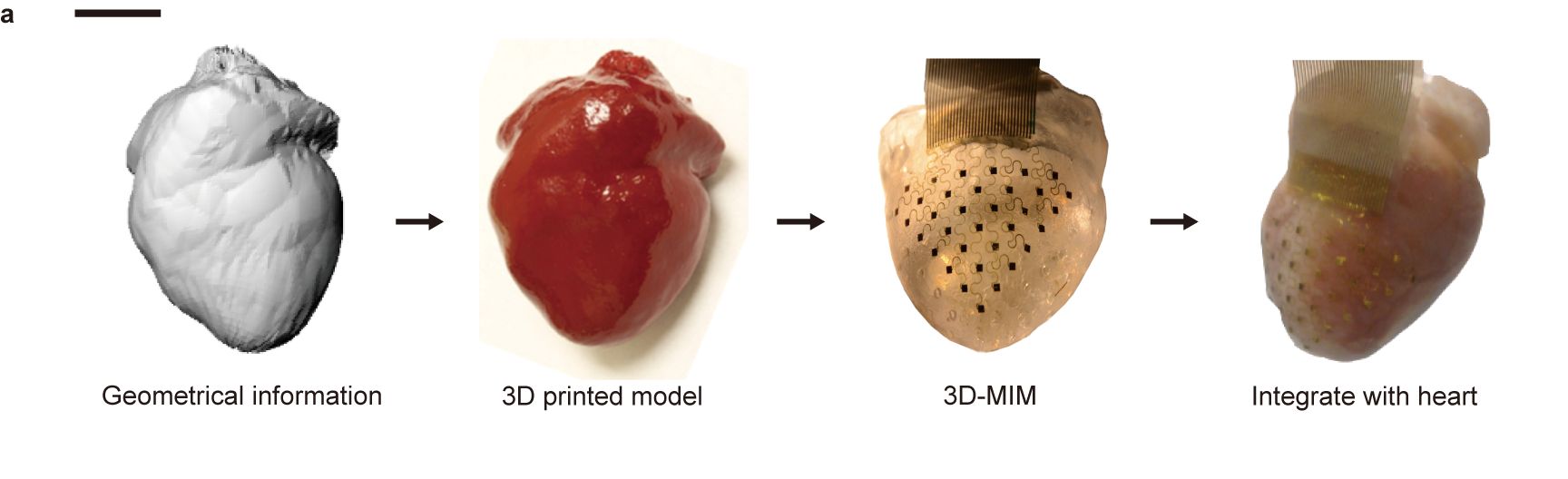
A custom-fitted, implantable device with embedded sensors, while invasive, may offer an improved method for detecting and treating heart issues.

Washington University professor Igor Efimov and University of Illinois professor John Rogers (see previous ApplySci Rogers coverage) have created a 3-D elastic membrane made of a soft, flexible, silicon material that is precisely shaped to match the heart’s epicardium, or the outer layer of the wall of the heart. Current technology is two-dimensional and cannot cover the full surface of the epicardium or maintain reliable contact for continual use without sutures or adhesives.

Tiny sensors can then be printed onto the membrane that can precisely measure temperature, mechanical strain and pH, among other markers, or deliver a pulse of electricity in cases of arrhythmia. Those sensors could assist physicians with determining the health of the heart, deliver treatment or predict an impending heart attack before a patient exhibits any physical signs.

Categories
mHealth Monitoring Sensors

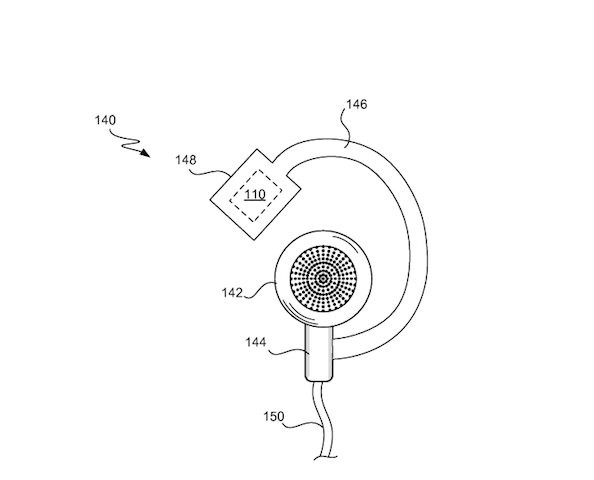
Apple patents health monitoring earbuds

United States Patent 8655004

As the sensor based health monitoring market continues to expand, the USPTO on has granted Apple a patent for a biometric headphone system.

By positioning the headset in or near the ear, an embedded activity sensor can measure temperature, perspiration and heart rate data, among other metrics.  In addition to skin-based readings, an accelerometer may also be incorporated into the earbud chassis to facilitate the collection of accurate movement data.

Categories
Apps Cancer Sensors

Chemical sensor app for lung cancer detection

Vantage Health/ STSI Press Release

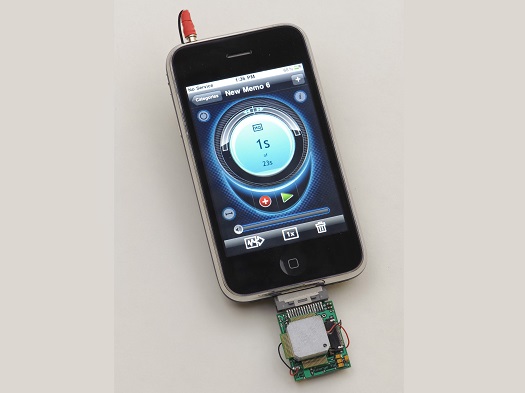
Vantage Health and Scripps Translational Science Institute are developing point-of-care chemical sensor apps.

STSI will help validate the sensors, which can detect basic volatile organic compounds by using gas chromatography and mass spectrometry. They intend to use the sensor to detect VOCs commonly associated with lung cancer.

Last month Vantage Health partnered with NASA to commercialize its patents in nanotechnology, chemical sensing, carbon nanotubes, medical diagnoses, and environmental sensing as mobile health products.  Their stated initial application was lung cancer.

Categories
Prosthetics Robotics Sensors

Trial: Improved sense of touch and control in prosthetic hand

http://stm.sciencemag.org/content/6/222/222ra19

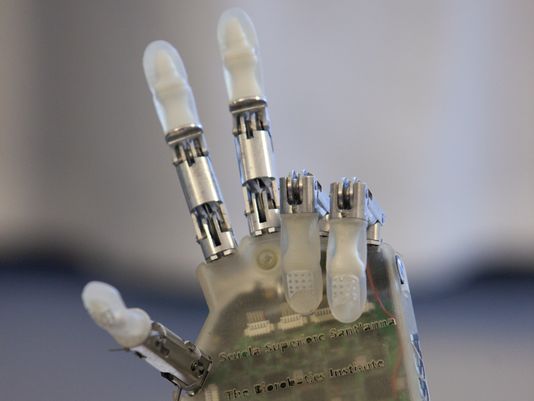
In the ongoing effort to improve the dexterity of prosthetics, a recent trial showed an improved sense of touch and control over a prosthetic hand.  EPFL professor Silvestro Micera and colleagues surgically attached electrodes from a robotic hand to a volunteer’s median and ulnar nerves. Those nerves carry sensations that correspond with the volunteer’s index finger and thumb, and with his pinky finger and the edge of his hand, respectively. The volunteer controlled the prosthetic with small muscle movements detected by sEMG, a non-invasive method that measures electrical signals through the skin.

Over seven days, the volunteer was asked to grasp something with a light grip, a medium grip, and a hard grip, and to evaluate the shape and stiffness of three kinds of objects. During 710 tests, he wore a blindfold and earphones so that he could not use his vision or sound to guide the prosthetic. The researchers also sometimes turned off the sensory feedback to test whether he was using time to modulate his grip.

The subject was able to complete the requested tasks with his prosthetic thumb and index finger 67 percent of the time the first day and 93 percent of the time by the seventh day of the experiment. His pinky finger was harder to control: he was only able to accomplish the requested grip 83 percent of the time. In both the grip strength tests and in detecting the stiffness of objects, the volunteer made mistakes with the medium setting and object, but he never confused the softest and hardest objects. The ability to modulate his grip strength is this study’s main progress over previous work by the same group.

Categories
Eyes Monitoring Sensors

Smart holograms diagnose and monitor medical conditions

http://www.cam.ac.uk/research/news/holographic-diagnostics-0

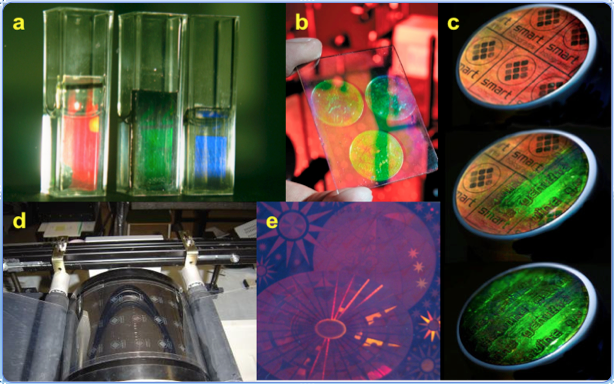
Cambridge researchers are developing responsive, color-changing diagnostic holograms.  Silver nanoparticles are formed into three dimensional holograms of predetermined shapes in a fraction of a second using a single laser pulse.  They will be used for portable medical tests and devices, to monitor diabetes, cardiac function, infections, electrolyte or hormone imbalance easily,inexpensively, and non-invasively.

The ‘smart’ holograms can be used to test blood, breath, urine, saliva or tears for a wide range of compounds, such as glucose, alcohol, hormones, drugs, or bacteria. When one of these compounds is present, the hologram changes color, potentially making the monitoring of various conditions as simple as checking the color of the hologram against a color gradient. Clinical trials of the holographic sensors to monitor glucose levels and urinary tract infections in diabetic patients are currently underway.

Categories
Eyes Sensors

Miniature 3D sensor maps surgical field; scope small enough for use in neurosurgery

http://www.visionsense.com/hp.html

Visionsense’s miniature 3D sensor optically maps the surgical field, based on (and imitating) the eye of a bee. A single sensor is divided into hundreds of thousands of tiny “eyes” looking in different directions, using an array of micron-sized elements.  The elemental information is translated into left and right eye images, resulting in a clear stereoscopic view,  bypassing the diffraction limit that restricts current miniature cameras.

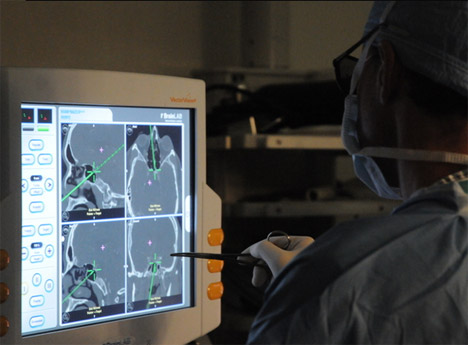
In neurosurgery, scopes must be very small in diameter to pass through narrow ports, such as the nose.  Most 3D scopes rely on two optical channels, each containing a single sensor. Each sensor collects two separate images that are combined to give the appearance of three dimensions as a user looks at the screen – mirroring the sight of the human eye.   Using their single sensor system, Visionsense has developed a high quality image producing scope that is small enough to operate on the brain.