Categories
Sensors Stroke

Sensor detects swallowing problems in stroke patients

http://www.futurity.org/health-medicine/stick-on-sensor-detects-trouble-swallowing/

 A small, external sensor developed at the University of Pittsburgh records how a person swallows and could result in more efficient and less invasive testing for stroke patients.

Dysphagia can have dire consequences like malnutrition, dehydration, pneumonia, and even death. Current evaluation and monitoring methods are often cumbersome and not as effective as they need to be.

Categories
Assistive Technologies EEG

EPSRC funds 15 creative healthcare engineering projects

http://www.epsrc.ac.uk/newsevents/news/2013/Pages/enghealthcare.aspx

The EPSRC is funding technologies in three health areas:

1. Medical Imaging.  Projects include technology which could:

-lead to better diagnosis and treatment for epilepsy, multiple sclerosis, depression, dementia as well as breast cancers and osteoporosis

-reduce risks during brain surgery by creating ultrasound devices in needles

-improve therapies for brain injured patients and help severely disabled people interact with the world around them

2. Acute Treatment Technology.  Projects include:

-a multiphoton scanner and a multiphoton endoscope to collect images of tissue at depth and sub-cellular level, allowing immediate diagnosis during surgery

-ultrasonic bone-penetrating needles to deliver drugs and obtain biopsies in bone

-laser spectroscopy to quickly analyze tissue in cancer patient

-a pulsed laser system to restore tooth enamel

3. Assistive Technology and Rehabilitation.  Projects aim to:

-improve prosthetics, hearing aids, and develop a wearable material to support healing muscles or create an exoskeleton.

Categories
Brain Sleep

Study shows babies, children and adults learn in their sleep

http://www.sciencedaily.com/releases/2013/02/130226081155.htm
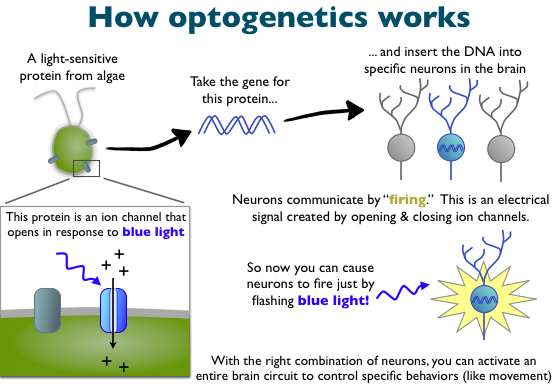
Sleep helps us to learn. It may just be too hard for a brain to take in the flood of new experiences and make sense of them at the same time. Instead, our brains look at the world for a while and then shut out new input and sort through what they have seen.

Both children and adults who had more slow-wave sleep–an especially deep, dreamless kind of sleep–learned better.

Categories
Apps fitness Heart mHealth Monitoring Sensors

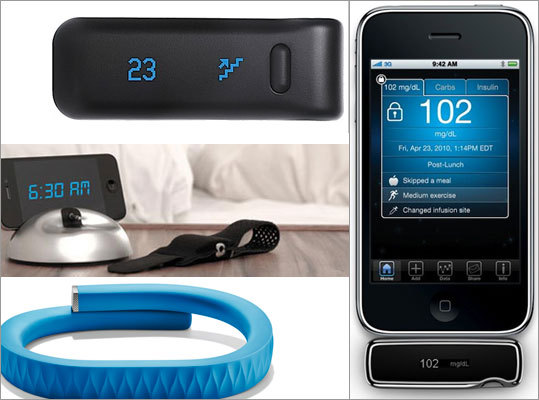
8 new sensor based health tracking devices

http://www.boston.com/lifestyle/health/gallery/wearable_trackers/

An overview of 8 new sensor based health tracking devices.  Some predict that 400 million such products will enter the market by 2014.

Categories
mHealth Monitoring Sensors

Implantable chip analyzes blood and sends data to doctors

http://www.wired.co.uk/news/archive/2013-03/20/implantable-chip-doctor

A multidisciplinary Swiss team has developed a tiny, implantable device that instantly analyses the blood before wirelessly sending the data to a doctor.

The device can be used for monitoring general health, but the team also sees immediate applications in monitoring the efficacy of treatments such as chemotherapy in order to tailor drug delivery to a patient’s unique needs.

Categories
Apps Heart mHealth Monitoring Sensors

Study charts heart risk in 1M adults in real time

http://online.wsj.com/article/SB10001424127887324323904578368572640617966.html

The Health eHeart Study will use smartphone apps, sensors and other devices to gather data on a wide variety of measures associated with cardiovascular health—including blood pressure, physical activity, diet and sleep habits—in real time.

Categories
Apps Heart mHealth Monitoring Sensors

Fujitsu facial imaging technology measures pulse

http://www.sys-con.com/node/2582171

A Fujitsu research lab has developed software that can accurately measure a subject’s pulse using the small digital cameras attached to smartphones and tablets.

The technology is based on the fact that the brightness of an individual’s face changes slightly as their heart beats, due to their blood flow. Hemoglobin, which carries oxygen around the body, absorbs green light, so analyzing the change in color of parts of the face reveals their heart rate.

As most image sensors capture pixel information in red, blue and green, they have the ability to detect hemoglobin built in. Fujitsu’s technology keeps track of specific regions of the face over time to take pulse measurements.

Categories
Brain Neural Computation

Neural circuitry-like advances in machine reliability

http://www.scientificamerican.com/article.cfm?id=how-self-healing-microchips

Redundancy is arriving to commercial electrical circuits. A circuit, reminiscent of neural computation, enables backup circuitry to be engaged when main functioning breaks.

Categories
Apps Diabetes Heart mHealth Monitoring Sensors Sleep

A move toward aggregating health data from various devices and apps

http://gigaom.com/2013/03/15/tictrac-emerges-to-help-make-health-tracking-more-mainstream/

It seems that every day a new app or device promising the ultimate in health or fitness monitoring enters the market.  A startup has created a personal analytics dashboard which gives people a big picture view of their own aggregated data and underlying patterns, helping them make sense of the numbers.

Categories
Apps mHealth Sensors

Samsung Galaxy S4 introduces health tracking features

http://www.techradar.com/news/phone-and-communications/mobile-phones/samsung-galaxy-s4-health-tracking-features-rival-fitbit-fuelband-1137737

Sensor technology will enable smartphone users to keep track of sleep patterns, heart rate, exercise, and weight.

Categories
mHealth Monitoring Sensors

Ultra thin sensors printed on skin to monitor health

http://www.biometricupdate.com/201303/super-thin-wearable-sensor-monitors-health-transmits-data/

Eliminating the elastomer backing makes the device one-thirtieth as thick, and thus “more conformal to the kind of roughness that’s present naturally on the surface of the skin,” says John Rogers at the University of Illinois. It can be worn for up to two weeks and can measure temperature, strain, and the hydration state of the skin, and also be used to monitor wound healing.

Categories
Brain

NFL and GE partner to study the brain

http://www.reuters.com/article/2013/03/11/us-nfl-concussion-idUSBRE92A0UT20130311

The National Football League and GE announced a $60 million effort to speed up research into brain injuries and the development of new technologies to help protect the brain from traumatic injury to benefit athletes, the military and the broader public.

The initiative includes a $40 million research program into imaging technologies to improve diagnoses and an additional $20 million pool of funds open to researchers and businesses trying to improve the prevention, identification and management of brain injuries.