Categories
BCI Brain Prosthetics

Closed loop EEG/BCI/VR/physical therapy system to control gait, prosthetics

Earlier this year, University of Houston’s Jose Luis Contreras-Vidal developed a closed-loop BCI/EEG/VR/physical therapy system to control gait as part of a stroke/spinal cord injury rehab program.  The goal was to promote and enhance cortical involvement during walking.

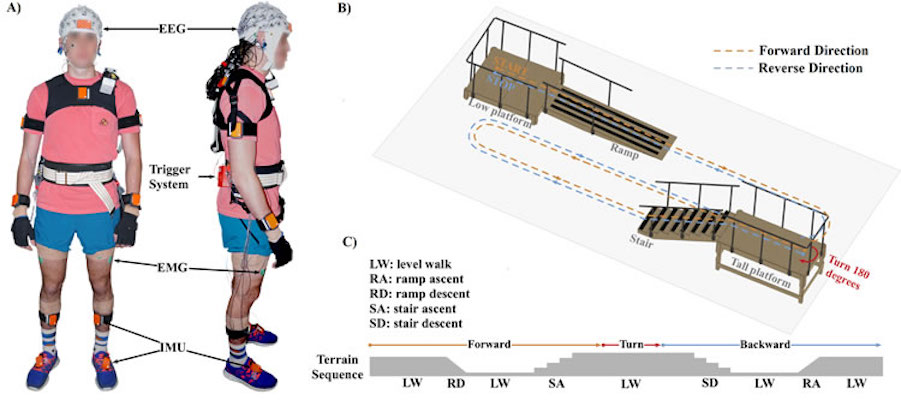
In a study, 8 subjects walked on a treadmill while watching an avatar and wearing a 64 channel EEG headset and motion sensors at the hip, knee and ankle.

The avatar was first activated by the motion sensors, allowing its movement to precisely mimic that of the test subject. It was  then controlled by the brain-computer interface, although this was less precise than the movement with the motion sensors. Contreras-Vidal believes that as subjects learn how to use the interface, the result will be closer to that of the sensors. The researchers reported increased activity in the posterior parietal cortex and the inferior parietal lobe, along with increased involvement of the anterior cingulate cortex.

The team built on this reasearch  to demonstrate how brain activity is used to identify different terrains to develop prosthetics that automatically adjust to changing ground conditions in real time. 

Click to view University of Houston video


Join ApplySci at Wearable Tech + Digital Health + Neurotech Silicon Valley on February 26-27, 2018 at Stanford University. Speakers include:  Vinod Khosla – Justin Sanchez – Brian Otis – Bryan Johnson – Zhenan Bao – Nathan Intrator – Carla Pugh – Jamshid Ghajar – Mark Kendall – Robert Greenberg – Darin Okuda – Jason Heikenfeld – Bob Knight – Phillip Alvelda – Paul Nuyujukian –  Peter Fischer – Tony Chahine – Shahin Farshchi – Ambar Bhattacharyya – Adam D’Augelli – Juan-Pablo Mas – Michael Eggleston – Walter Greenleaf – Jacobo Penide – David Sarno – Peter Fischer

Registration rates increase on January 26th
Categories
Brain Respiratory Sensors

Biodegradable piezoelectric sensor monitors lungs, brain

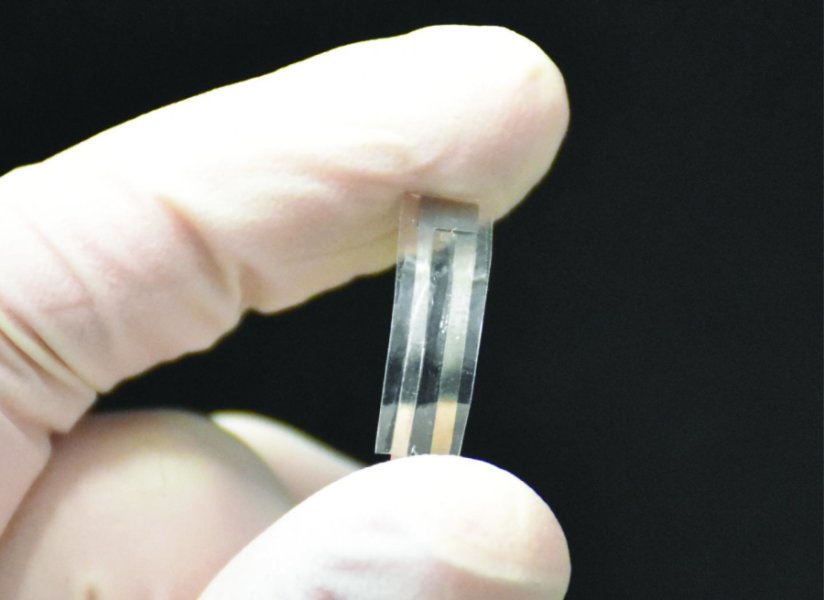
UConn’s Thanh Duc Nguyen has developed a biodegradable pressure sensor to monitor chronic lung disease, swelling of the brain, and other health issues.

It is small and flexible and designed to replace existing, potentially toxic, implantable pressure sensors. Those sensors must be removed, subjecting patients to another invasive procedure, prolonging recovery, and increasing infection risk.

The piezoelectric device can also be used for electrical stimulation of tissue, as it emits a small electrical charge when pressure is applied. Other potential applications include monitoring glaucoma, heart disease, and bladder cancer.


Join ApplySci at Wearable Tech + Digital Health + Neurotech Silicon Valley on February 26-27, 2018 at Stanford University. Speakers include:  Vinod Khosla – Justin Sanchez – Brian Otis – Bryan Johnson – Zhenan Bao – Nathan Intrator – Carla Pugh – Jamshid Ghajar – Mark Kendall – Robert Greenberg – Darin Okuda – Jason Heikenfeld – Bob Knight – Phillip Alvelda – Paul Nuyujukian –  Peter Fischer – Tony Chahine – Shahin Farshchi – Ambar Bhattacharyya – Adam D’Augelli – Juan-Pablo Mas – Michael Eggleston – Walter Greenleaf – Jacobo Penide – David Sarno – Peter Fischer

Registration rates increase – January 19th

Categories
Brain

Neural microcircuits mapped in greater detail; surrounding tissue left intact

Andreas Schaefer and Francis Crick Institute colleagues have developed a brain mapping technique that is said to be far more comprehensive than previous methods, and could be a breakthrough if successfully tested on human brains.  It has, so far, only been tested on mice.

250 cells that make up a microcircuit in part of a mouse brain that processes smell can now be mapped, with out the surrounding tissue being damaged. This is unprecedented, and can be used to understand the architecture of different parts of the brain.

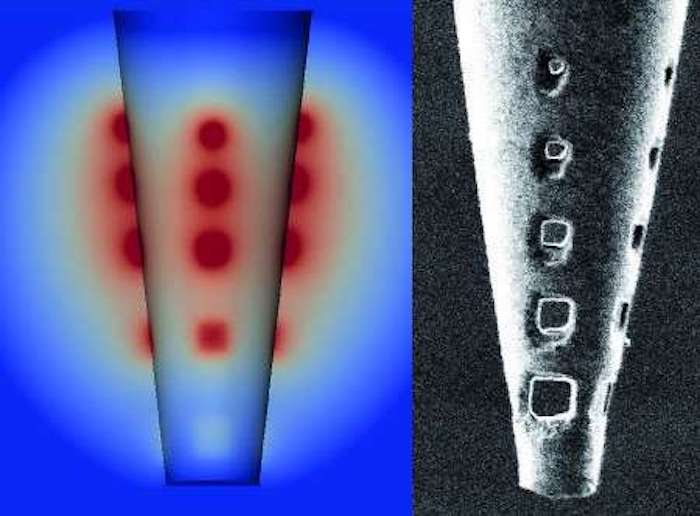
A series of tiny holes near the end of a micropipette enabled the use of charged dyes that distribute electrical current over a wide area,  staining cells without damaging them. Unlike when viral vectors are used, 100% of the cells in the microcircuit could be stained.

According to Schaefer, “now that we have a tool of mapping these tiny units, we can start to interfere with specific cell types to see how they directly control behaviour and sensory processing.”


Join ApplySci at Wearable Tech + Digital Health + Neurotech Silicon Valley on February 26-27, 2018 at Stanford University. Speakers include:  Vinod Khosla – Justin Sanchez – Brian Otis – Bryan Johnson – Zhenan Bao – Nathan Intrator – Carla Pugh – Jamshid Ghajar – Mark Kendall – Robert Greenberg – Darin Okuda – Jason Heikenfeld – Bob Knight – Phillip Alvelda – Paul Nuyujukian –  Peter Fischer – Tony Chahine – Shahin Farshchi – Ambar Bhattacharyya – Adam D’Augelli – Juan-Pablo Mas – Michael Eggleston – Walter Greenleaf – Jacobo Penide – David Sarno – Peter Fischer

Registration rates increase today – January 16th

Categories
Sensors

Ingestible sensor monitors gut oxygen, hydrogen, carbon dioxide

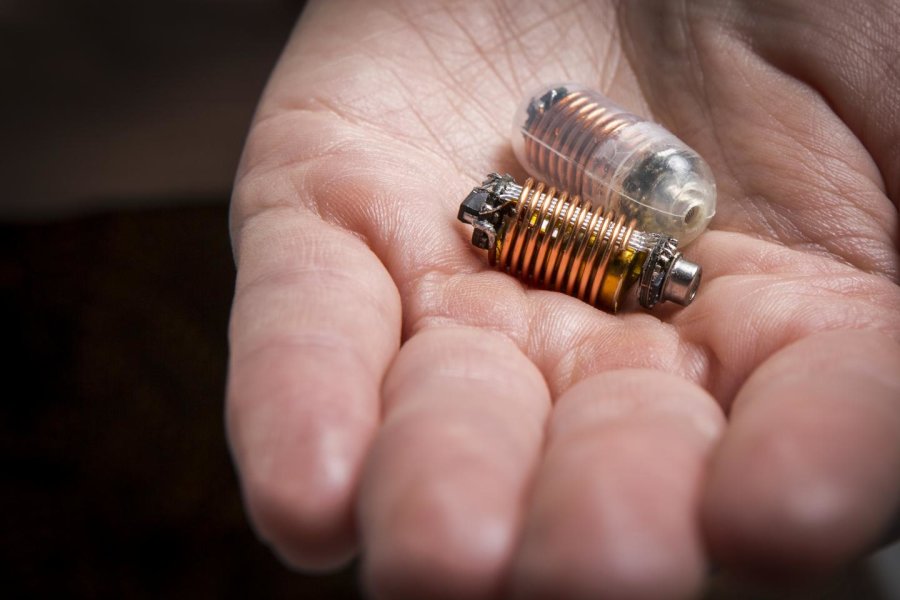
Peter Gibson, Kyle Berean and  RMIT colleagues have developed an ingestible sensor that measures oxygen, hydrogen, and carbon dioxide in the gut.

In a recent study, subjects were monitored while modulating gut microbial fermentative activities by altering their intake of dietary fiber. Ultrasound imaging confirmed that the oxygen-equivalent concentration profile could be used as an accurate marker for the location of the capsule. Variations of fiber intake were found to be associated with differing small intestinal and colonic transit times, and gut fermentation. Regional fermentation patterns could be defined via hydrogen gas profiles.

The capsule could be used as a tool for monitoring the impact of one’s diet, and as a gut disorder diagnostic tool.


Join ApplySci at Wearable Tech + Digital Health + Neurotech Silicon Valley on February 26-27, 2018 at Stanford University. Speakers include:  Vinod Khosla – Justin Sanchez – Brian Otis – Bryan Johnson – Zhenan Bao – Nathan Intrator – Carla Pugh – Jamshid Ghajar – Mark Kendall – Robert Greenberg – Darin Okuda – Jason Heikenfeld – Bob Knight – Phillip Alvelda – Paul Nuyujukian –  Peter Fischer – Tony Chahine – Shahin Farshchi – Ambar Bhattacharyya – Adam D’Augelli – Juan-Pablo Mas – Michael Eggleston – Walter Greenleaf – Jacobo Penide – David Sarno – Peter Fischer

Registration rates increase – January 19th.

Categories
AI Autonomous cars EEG

EEG + AI assists drivers in manual and autonomous cars

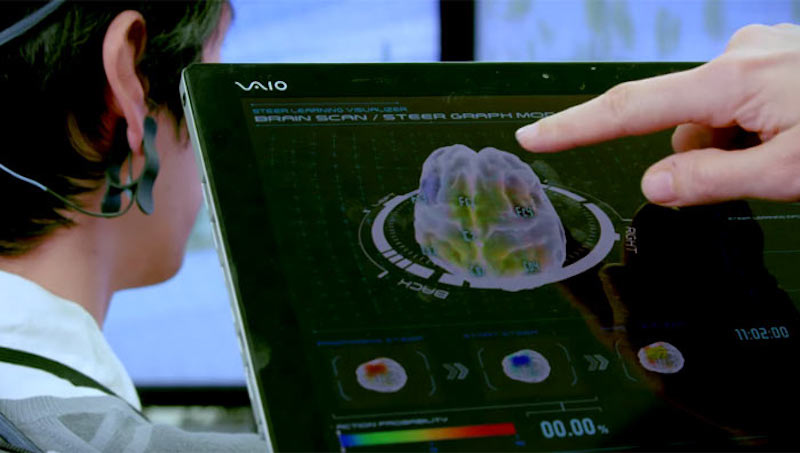
Nissan’s Brain-to-Vehicle (B2V) technology will enable vehicles to interpret signals from a driver’s brain.

The company describes two aspects of the system — prediction and detection, which depend on a driver wearing EEG electrodes:

Predicton: By detecting, via the brain, that the driver is about to move, including turning the steering wheel or pushing the accelerator pedal, B2V can begin the action more quickly.

Detection: When driver discomfort is detected, and the car is in autonomous mode, AI tools change the driving configuration or style.

Lucian Gheorghe, an innovation researcher Nissan, said that the system can use AR to adjust what the driver sees, and can turn the wheel or slow the car  0.2 to 0.5 seconds faster than the driver.


Join ApplySci at Wearable Tech + Digital Health + Neurotech Silicon Valley on February 26-27, 2018 at Stanford University. Speakers include:  Vinod Khosla – Justin Sanchez – Brian Otis – Bryan Johnson – Zhenan Bao – Nathan Intrator – Carla Pugh – Jamshid Ghajar – Mark Kendall – Robert Greenberg – Darin Okuda – Jason Heikenfeld – Bob Knight – Phillip Alvelda – Paul Nuyujukian –  Peter Fischer – Tony Chahine – Shahin Farshchi – Ambar Bhattacharyya – Adam D’Augelli – Juan-Pablo Mas – Michael Eggleston – Walter Greenleaf – Jacobo Penide – David Sarno

Registration rates increase today – January 5th.

Categories
Brain PTSD

Acoustic stimulation reduced PTSD symptoms in small study

Wake Forest’s Charles H. Tegeler has found that non-invasive brainwave mirroring technology significantly reduced symptoms of post-traumatic stress in soldiers.

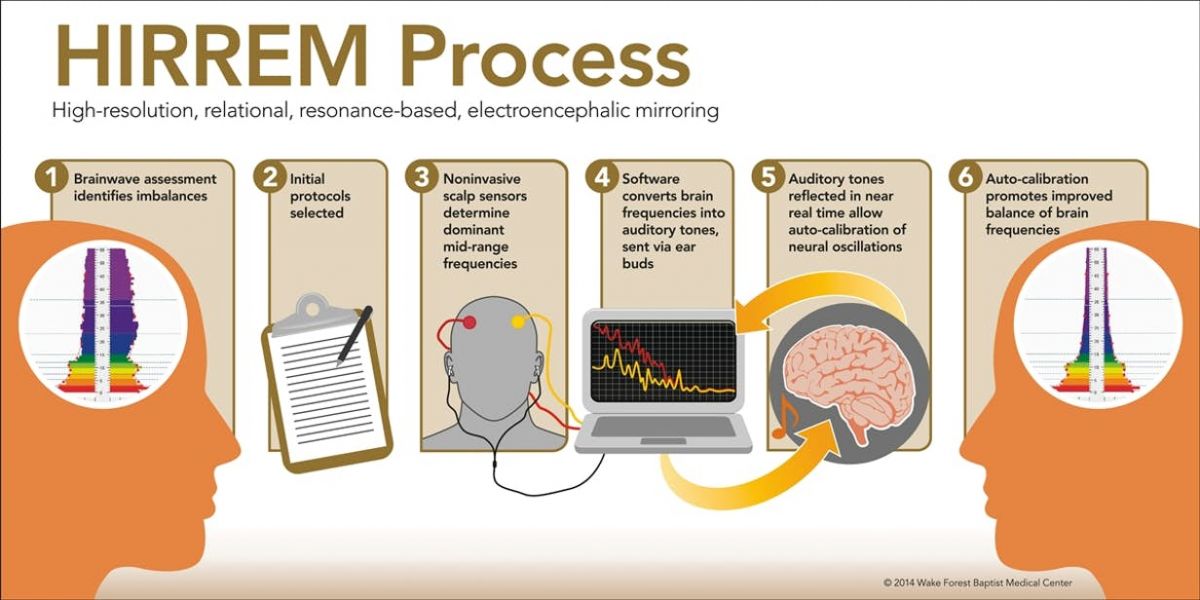
High-resolution, relational, resonance-based, electroencephalic mirroring (HIRREM) is used as a non-invasive, closed-loop, acoustic stimulation approach. Algorithms translate brain frequencies into audible tones in real-time.

Tegeler compares this to an “acoustic mirror.” Through resonance between brain frequencies and acoustic stimulation, the brain makes self-adjustments to improve balance and reduce hyperarousal, with no conscious, cognitive activity. This supports the brain to reset stress response patterns that  caused by repetitive traumatic events.

In a small study, reductions in post-traumatic symptoms, including insomnia, depressive mood, and anxiety were observed in subjects for  six months after the HIRREM protocol.


Join ApplySci at Wearable Tech + Digital Health + Neurotech Silicon Valley on February 26-27, 2018 at Stanford University. Speakers include:  Vinod Khosla – Justin Sanchez – Brian Otis – Bryan Johnson – Zhenan Bao – Nathan Intrator – Carla Pugh – Jamshid Ghajar – Mark Kendall – Robert Greenberg – Darin Okuda – Jason Heikenfeld – Bob Knight – Phillip Alvelda – Paul Nuyujukian –  Peter Fischer – Tony Chahine – Shahin Farshchi – Ambar Bhattacharyya – Adam D’Augelli – Juan-Pablo Mas – Michael Eggleston – Walter Greenleaf – Jacobo Penide

Registration rates increase Friday, January 5th.

Categories
Heart Sensors

Contact-free blood pressure, heart and breath rate monitoring

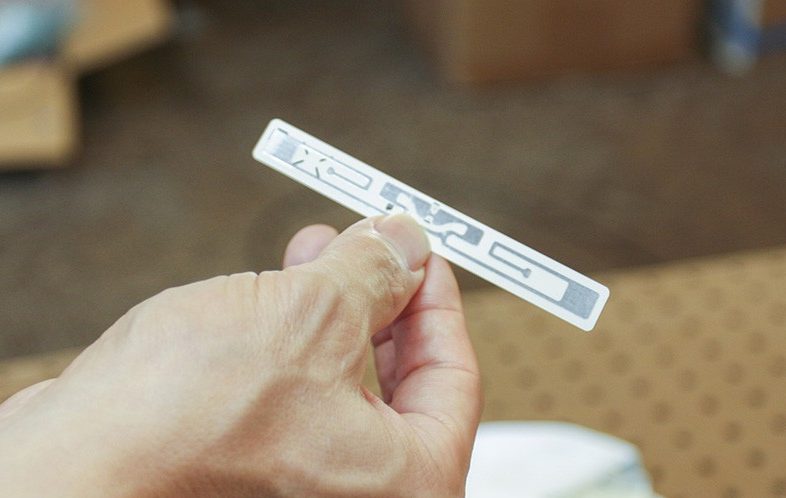
Cornell’s Edwin Kan has developed a contact-free vital sign monitor  using radio-frequency signals and microchip tags. Blood pressure, heart rate and breath rate  are measured when radio waves bounce off the body and internal organs, and are detected by an electronic reader from a location anywhere in the room.  200 people can be monitored simultaneously.

According to Kan, the signal is as accurate as an ECG or blood-pressure cuff.  He believes that the technology could be used to measure bowel movement, eye movement and other internal mechanical motions.


Join ApplySci at Wearable Tech + Digital Health + Neurotech Silicon Valley on February 26-27, 2018 at Stanford University. Speakers include:  Vinod Khosla – Justin Sanchez – Brian Otis – Bryan Johnson – Zhenan Bao – Nathan Intrator – Carla Pugh – Jamshid Ghajar – Mark Kendall – Robert Greenberg – Darin Okuda – Jason Heikenfeld – Bob Knight – Phillip Alvelda – Paul Nuyujukian –  Peter Fischer – Tony Chahine – Shahin Farshchi – Ambar Bhattacharyya – Adam D’Augelli – Juan-Pablo Mas – Michael Eggleston – Walter Greenleaf – Jacobo Penide

Registration rates increase today, Friday, December 22nd.

Categories
Brain Genomics

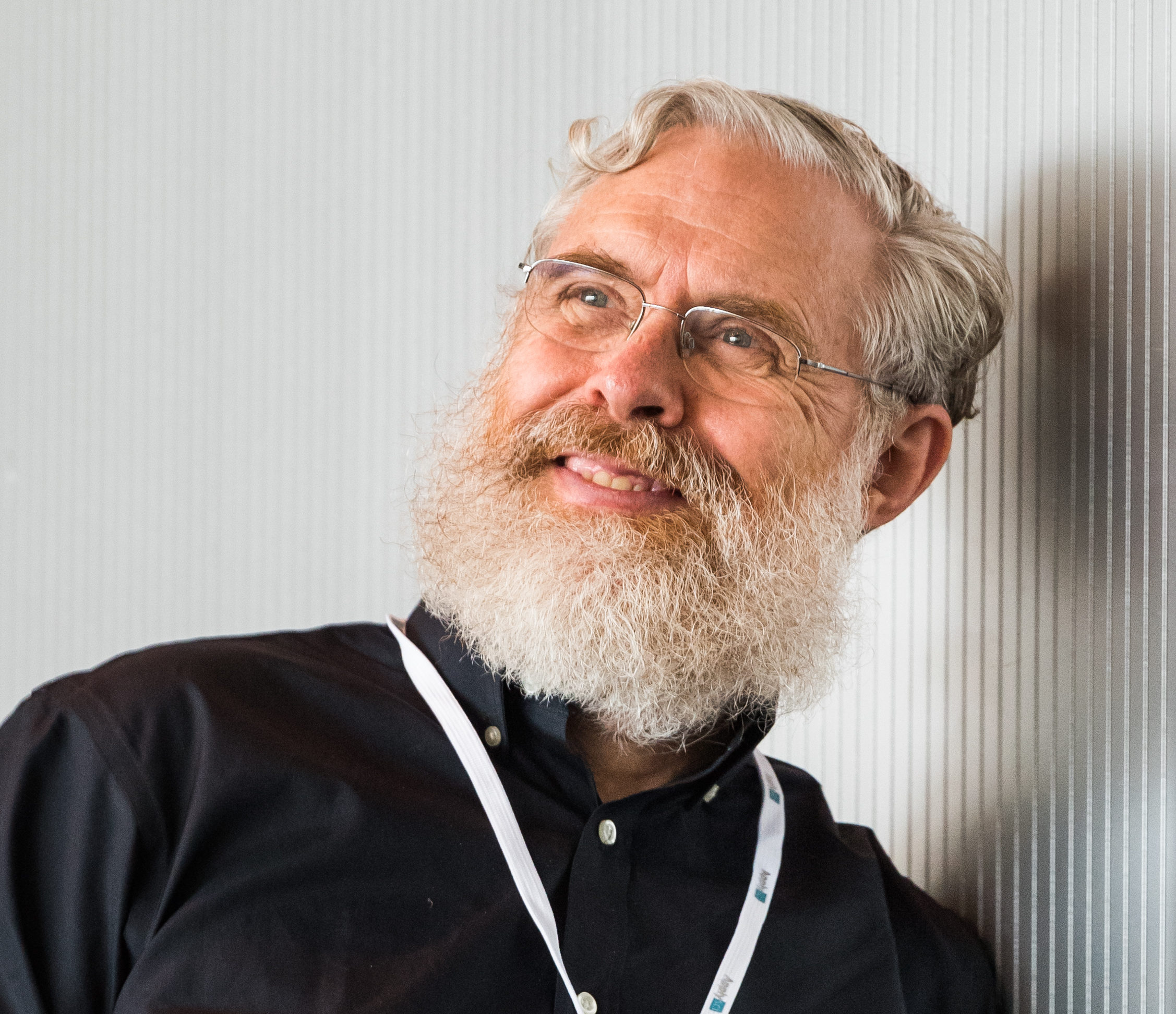
Video: George Church on reading and writing brain structures and functions

Recorded at ApplySci’s Wearable Tech + Digital Health + Neurotech Boston conference on September 19th at the MIT Media Lab


Join ApplySci at Wearable Tech + Digital Health + Neurotech Silicon Valley on February 26-27, 2018 at Stanford University. Speakers include:  Vinod Khosla – Justin Sanchez – Brian Otis – Bryan Johnson – Zhenan Bao – Nathan Intrator – Carla Pugh – Jamshid Ghajar – Mark Kendall – Robert Greenberg – Darin Okuda – Jason Heikenfeld – Bob Knight – Phillip Alvelda – Paul Nuyujukian –  Peter Fischer – Tony Chahine – Shahin Farshchi – Ambar Bhattacharyya – Adam D’Augelli – Juan-Pablo Mas – Michael Eggleston – Walter Greenleaf – Jacobo Penide

Categories
Heart Sensors

Single phone sensor tracks heart rate, HR variability, BP, oxygen saturation, ECG, PPG

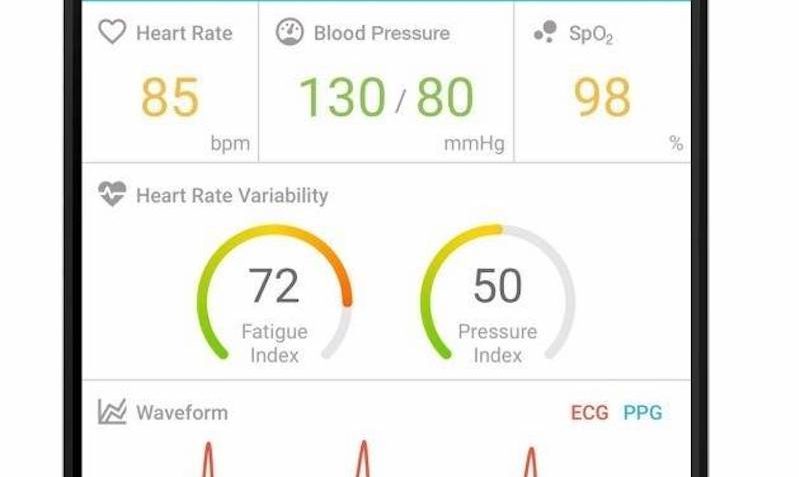
 Sensio by MediaTek is a  biosensor that monitors  heart rate, heart rate variability,  blood pressure, peripheral oxygen saturation levels, ECG and PPG, from a smartphone, in 60 seconds.  This could allow continuous monitoring with out multiple sensors.

LEDs and a light sensitive sensor measure the absorption of red and infrared light from a  user’s fingertips. Touching a sensor allows the measurement of ECG and PPG waveforms.


Join ApplySci at Wearable Tech + Digital Health + Neurotech Silicon Valley on February 26-27, 2018 at Stanford University. Speakers include:  Vinod Khosla – Justin Sanchez – Brian Otis – Bryan Johnson – Zhenan Bao – Nathan Intrator – Carla Pugh – Jamshid Ghajar – Mark Kendall – Robert Greenberg – Darin Okuda – Jason Heikenfeld – Bob Knight – Phillip Alvelda – Paul Nuyujukian –  Peter Fischer – Tony Chahine – Shahin Farshchi – Ambar Bhattacharyya – Adam D’Augelli – Juan-Pablo Mas – Michael Eggleston – Walter Greenleaf – Jacobo Penide

Categories
AI Robotics

Robots visualize actions, plan, with out human instruction

Sergey Levine and UC Berkeley colleagues have developed robotic learning technology that enables robots to visualize how different behaviors will affect the world around them, with out human instruction.  This ability to plan, in various scenarios,  could improve self-driving cars and robotic home assistants.

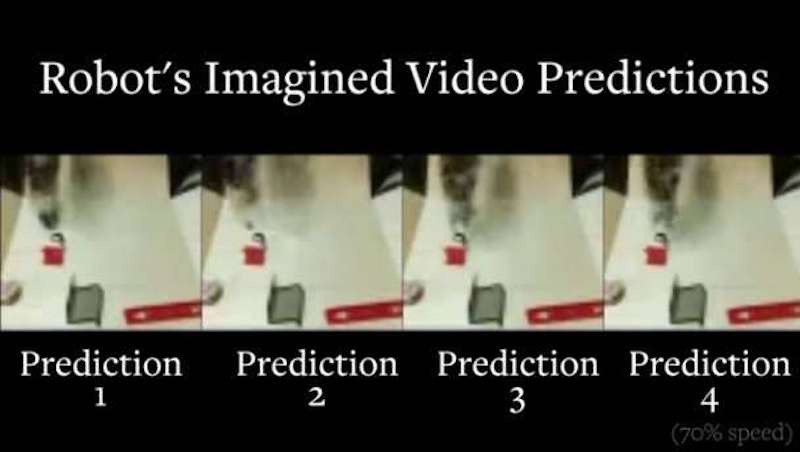
Visual foresight allows robots to predict what their cameras will see if they perform a particular sequence of movements. The robot can then learn to perform tasks without human help  or prior knowledge of physics, its environment or what the objects are.

The deep learning technology is based on dynamic neural advection. These  models predict how pixels in an image will move from one frame to the next, based on the robot’s actions. This has enabled robotic control based on video prediction to perform increasingly complex tasks.

Click to view UC Berkeley video


Join ApplySci at Wearable Tech + Digital Health + Neurotech Silicon Valley on February 26-27, 2018 at Stanford University. Speakers include:  Vinod Khosla – Justin Sanchez – Brian Otis – Bryan Johnson – Zhenan Bao – Nathan Intrator – Carla Pugh – Jamshid Ghajar – Mark Kendall – Robert Greenberg – Darin Okuda – Jason Heikenfeld – Bob Knight – Phillip Alvelda – Paul Nuyujukian –  Peter Fischer – Tony Chahine – Shahin Farshchi – Ambar Bhattacharyya – Adam D’Augelli – Juan-Pablo Mas – Michael Eggleston – Walter Greenleaf

Categories
Diabetes Sensors

Glucose-monitoring smartphone case

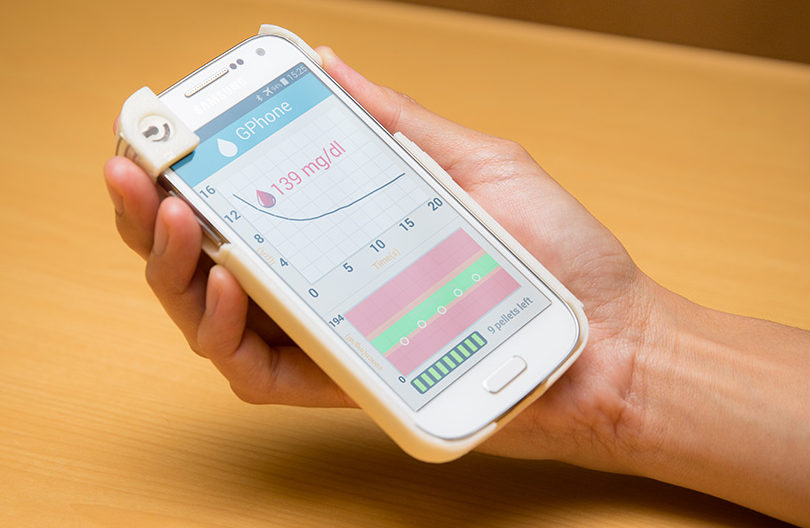
GPhone, developed by UCSD’s Joe Wang and Patrick Mercier, is a  smartphone case and accompanying app that records and tracks glucose readings. It is 3D-printed and has a permanent, reusable sensor on its corner. Enzyme pellets magnetically attach to the sensor, and are stored in a 3D stylus on the side.

Users dispense a pellet from the stylus onto a bare strip on the case, activating the sensor.  A drop of blood is then put on the sensor strip.  Results are displayed on the screen, and the pellet is then discarded.

The next step is to integrate glucose sensing directly into the smartphone.  This is now in the proof of concept stage.


Join ApplySci at Wearable Tech + Digital Health + Neurotech Silicon Valley on February 26-27, 2018 at Stanford University. Speakers include:  Vinod Khosla – Justin Sanchez – Brian Otis – Bryan Johnson – Zhenan Bao – Nathan Intrator – Carla Pugh – Jamshid Ghajar – Mark Kendall – Robert Greenberg – Darin Okuda – Jason Heikenfeld – Bob Knight – Phillip Alvelda – Paul Nuyujukian –  Peter Fischer – Tony Chahine – Shahin Farshchi – Ambar Bhattacharyya – Adam D’Augelli – Juan-Pablo Mas – Michael Eggleston – Walter Greenleaf

Registration rates increase Friday, December 15th

Categories
Sensors

Tiny sensor analyzes biomarkers in sweat

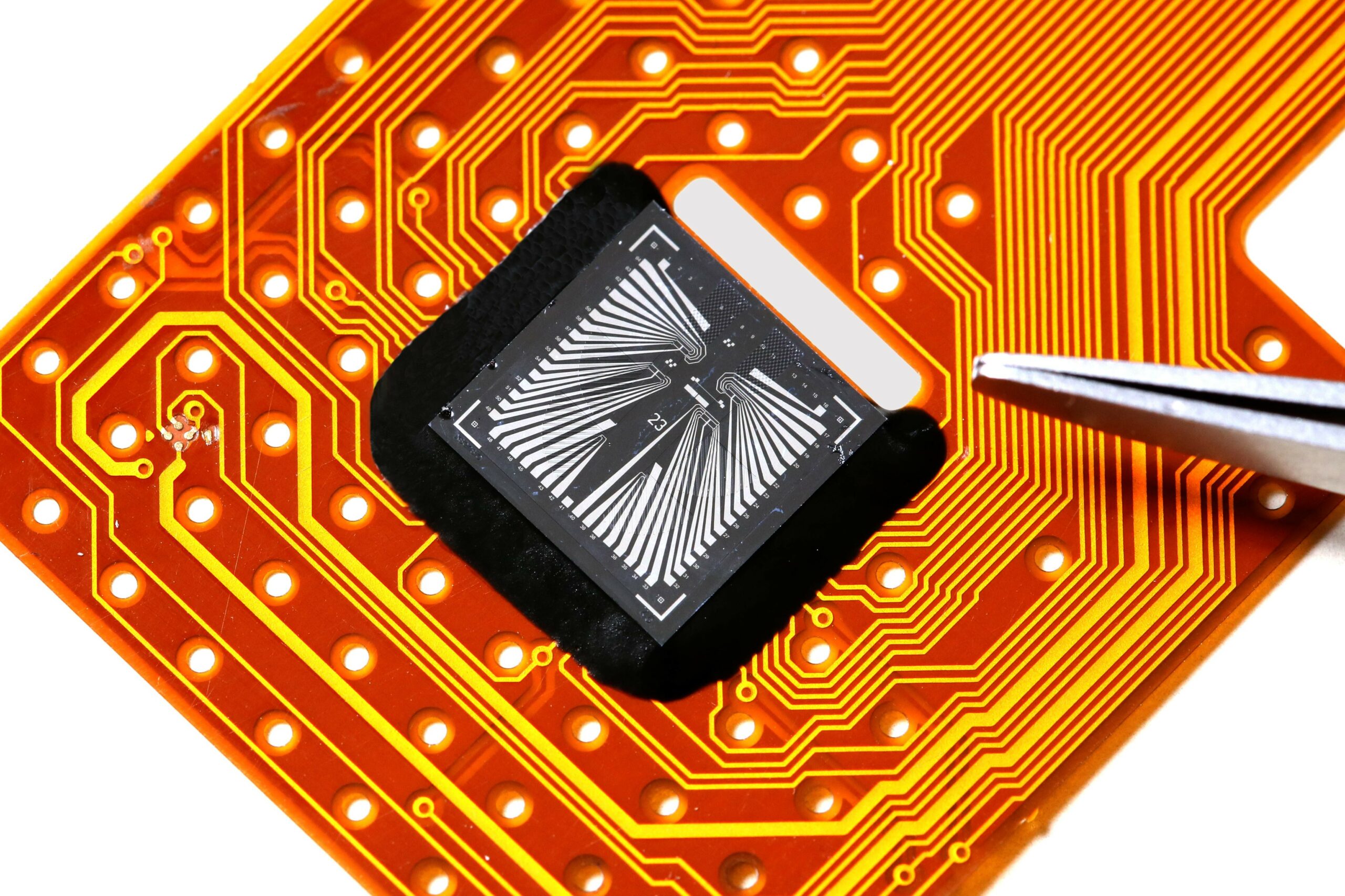
EPFL’s Adrian Ionescu  has developed a miniature chip  that analyzes biomarkers in sweat to understand a wearer’s health. It is the basis of a modular system that can measure sodium and potassium concentrations (that signal dehydration); body temperature and pH (to detect bacteria and risk factors for other illnesses); chlorine levels (as an early indication of cystic fibrosis); and other biomarkers that suggest fatigue and stress.

The chip contains four, 20 nanometer thick, extremely sensitive, silicon sensors. Each sensor is coated with a different material to detect different biomarkers. Two fluidic layers, between the chip and the user’s skin, pump sweat from the skin to the sensors.  The pump relies on capillary action, allowing it to run continuously, without electricity.


Sweat-sensing for health and disease prediction will be discussed by University of Cincinnati professor Jason Heikenfeld at ApplySci’s Wearable Tech + Digital Health + Neurotech conference, on February 26-27, 2018, at Stanford University.

Other speakers include:  Vinod Khosla – Justin Sanchez – Brian Otis – Bryan Johnson – Zhenan Bao – Nathan Intrator – Carla Pugh – Jamshid Ghajar – Mark Kendall – Robert Greenberg – Darin Okuda – Jason Heikenfeld – Bob Knight – Phillip Alvelda – Paul Nuyujukian –  Peter Fischer – Tony Chahine – Shahin Farshchi – Ambar Bhattacharyya – Adam D’Augelli – Juan-Pablo Mas – Michael Eggleston – Walter Greenleaf.

Registration rates increase Friday, December 8th