Categories
BCI Brain

Implanted device enables slow, but more reliable, brain-driven typing

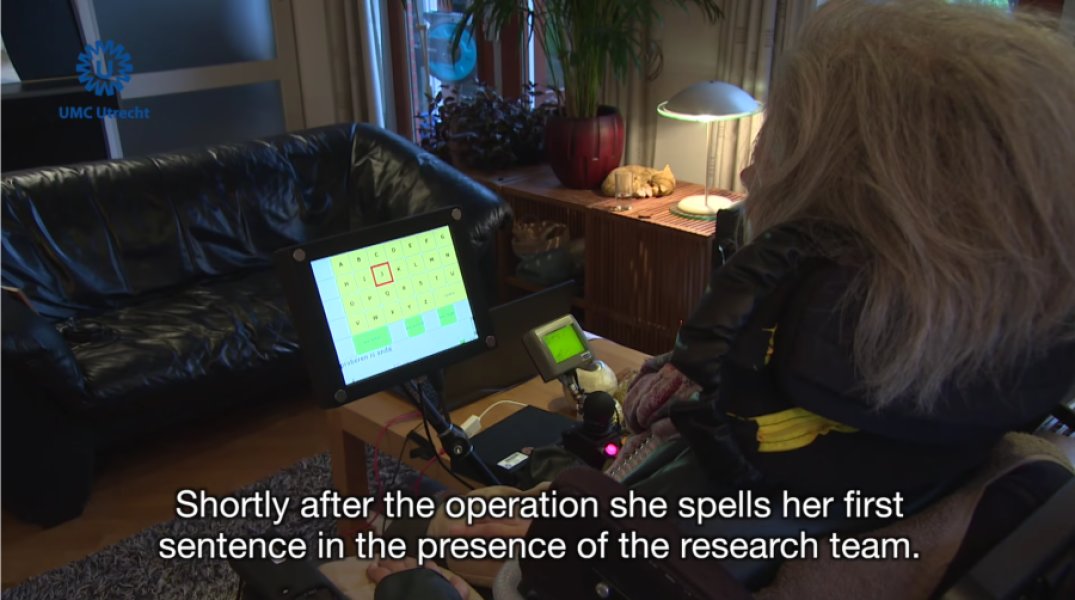
UMC Utrecht professor Nick Ramsey has developed an implantable brain computer interface that allowed a locked-in ALS patient to (very slowly) translate her thoughts into text.

Until recently, the patient used eye tracking to spell words on a computer screen, as many ALS patients do.  However, as 1/3 of patients lose the ability to control their eyes, scientists have been looking for thought controlled alternatives, both invasive, implant-driven, and non invasive, EEG-driven.

The success of this implant, while it only allows the user to “type” 2 letters per minute, is that it does not require the constant calibration of earlier devices, which required them to be used in the lab, or were unreliable.

Ramsey simplified the process by focusing on detecting only brain signals that fire when the brain counts backwards and commands the body to click a mouse.

Click to view UMC Utrecht video


ApplySci’s 6th   Wearable Tech + Digital Health + NeuroTech Silicon Valley  –  February 7-8 2017 @ Stanford   |   Featuring:   Vinod Khosla – Tom Insel – Zhenan Bao – Phillip Alvelda – Nathan Intrator – John Rogers – Mary Lou Jepsen – Vivek Wadhwa – Miguel Nicolelis – Roozbeh Ghaffari –Tarun Wadhwa – Eythor Bender – Unity Stoakes – Mounir Zok – Krishna Shenoy – Karl Deisseroth
Categories
Apps Heart

Voice analysis as a diagnostic tool

Beyond Verbal recently used its emotion-detecting voice analysis app in an attempt to predict coronary artery disease in 150 study participants, 120 of whom had presented for angiography.  The company claims to have identified 13 voice features  associated with CAD – and one associated with a 19-fold increase in its likelihood.

The researchers said that the voice indicator was strongest when a subject described a negative experience.  As this suggests an emotional connection to heart disease, could a neurotech wearable, that provides brain activity analysis, validate the process?  The company is already studying voice changes in Autism and Parkinson’s disease, but this was the first time they used their voice diagnostic tool in a non-brain disease study.


ApplySci’s 6th   Wearable Tech + Digital Health + NeuroTech Silicon Valley  –  February 7-8 2017 @ Stanford   |   Featuring:   Vinod Khosla – Tom Insel – Zhenan Bao – Phillip Alvelda – Nathan Intrator – John Rogers – Mary Lou Jepsen – Vivek Wadhwa – Miguel Nicolelis – Roozbeh Ghaffari –Tarun Wadhwa – Eythor Bender – Unity Stoakes – Mounir Zok – Krishna Shenoy – Karl Deisseroth
Registration rates increase Friday, November 18th

Categories
Conference

Science, not walls.

Reactionary politics must not deter our focus. On the future. On science. On technology. On healthcare. On progress. On our shared humanity.

It is my honor to gather the brilliant, for interdisciplinary exchanges about improving health, treating disease, and assisting the disabled. About enhancing life.  At our Digital Health + NeuroTech conferences at  Stanford and MIT.

Thank you to our speakers:  Phillip Alvelda, Zhenan Bao, Eythor Bender, Sky Christopherson, Casper de Clercq, Karl Deisseroth, Shahin Farshchi, Roozbeh Ghaffari, Tom Insel, Nathan Intrator, Mary Lou Jepsen, Vinod Khosla, Miguel Nicolelis, John Rogers, Krishna Shenoy, Unity Stoakes, Tarun Wadhwa, Vivek Wadhwa, and Mounir Zok.

You are the bright lights of our future.

Lisa Weiner Intrator, November 9, 2016

Categories
Digital Health

Virtual visits, digital second opinions, remote urgent care at NYC hospital system

NYP OnDemand is the system-wide telemedicine platform of NY Presbyterian Hospital, Columbia Doctors and Weill Cornell Medicine.  It includes virtual visits, digital second opinions, remote access to urgent care (for non life-threatening issues), and the ability for doctors to collaborate on patient cases.

Faster care and less crowded hospitals can of course improve the quality of life for New Yorkers. But in rural America and the developing world, similar systems could dramatically increase access to physicians.

Health technology as an equalizer in care, irrespective of wealth and location, will be a focus of the Wearable Tech + Digital Health + NeuroTech Silicon Valley conference at Stanford University this February.


ApplySci’s 6th   Wearable Tech + Digital Health + NeuroTech Silicon Valley  –  February 7-8 2017 @ Stanford   |   Featuring:   Vinod Khosla – Tom Insel – Zhenan Bao – Phillip Alvelda – Nathan Intrator – John Rogers – Mary Lou Jepsen – Vivek Wadhwa – Miguel Nicolelis – Roozbeh Ghaffari –Tarun Wadhwa – Eythor Bender – Unity Stoakes – Mounir Zok – Krishna Shenoy – Karl Deisseroth

Categories
Autism Wearables

Neurofeedback to suppress delta frequencies in autism

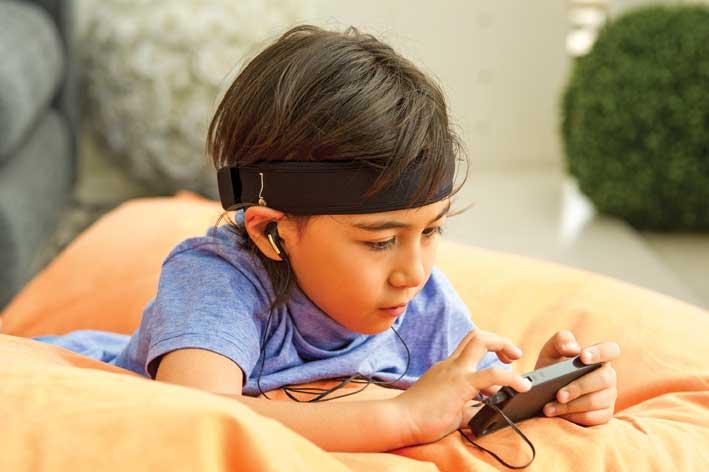
Mente is a neurofeedback system for autistic kids that creates personalized binaural beats, to suppress excessive delta frequencies, using auditory pathways in the brain.

Delta waves are typically associated with sleep and closed eyes, but autistic people experience high delta wave frequencies while awake. This  could be attributed to a feeling of isolation.

The company claims that Mente training should begin between ages 3 and 12, and that positive effects can be seen after 4 to 8 weeks of daily 40-minute  sessions.  The goal is enhanced concentration and communication.


ApplySci’s 6th   Wearable Tech + Digital Health + NeuroTech Silicon Valley  –  February 7-8 2017 @ Stanford   |   Featuring:   Vinod Khosla – Tom Insel – Zhenan Bao – Phillip Alvelda – Nathan Intrator – John Rogers – Mary Lou Jepsen – Vivek Wadhwa – Miguel Nicolelis – Roozbeh Ghaffari –Tarun Wadhwa – Eythor Bender – Unity Stoakes – Mounir Zok – Krishna Shenoy – Karl Deisseroth
Categories
Apps

Curated, enterprise-wide, health app prescription system

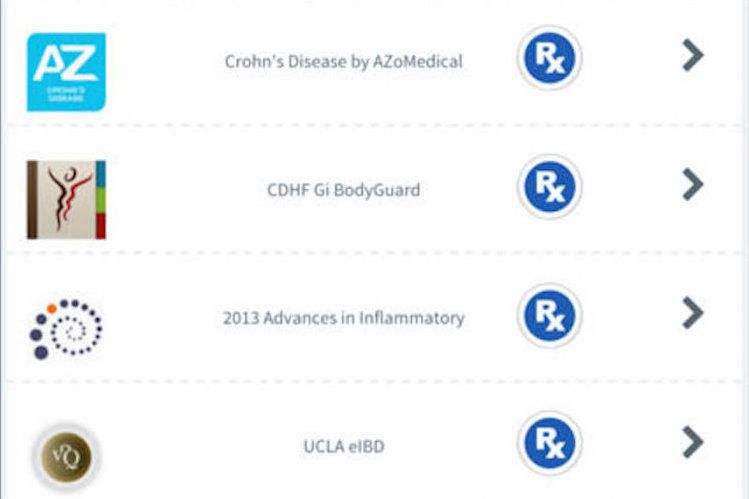
Mount Sinai Health System (with 7,100 physicians) has launched RxUniverse, an enterprise wide, curated app prescription system. Included apps have have been evaluated based on published evidence, to help physicians utilize digital health solutions, with an increased level of safety.

A pilot platform was launched throughout five clinical areas at Mount Sinai earlier this year.  Physicians have since prescribed 2,000 apps.  Their startup company, Responsive Health,  will license RxUniverse to other health systems.

RxUniverse was developed in the Sinai App Lab, under the direction of Ashish Atreja.  Integrating the latest consumer medical and lifestyle apps throughout such an enormous system is no easy task — and ApplySci applauds Mt Sinai for its vision of delivering healthcare in an integrated, efficient, vetted, and patient-friendly manner.


ApplySci’s 6th   Wearable Tech + Digital Health + NeuroTech Silicon Valley  –  February 7-8 2017 @ Stanford   |   Featuring:   Vinod Khosla – Tom Insel – Zhenan Bao – Phillip Alvelda – Nathan Intrator – John Rogers – Mary Lou Jepsen – Vivek Wadhwa – Miguel Nicolelis – Roozbeh Ghaffari –Tarun Wadhwa – Eythor Bender – Unity Stoakes – Mounir Zok – Krishna Shenoy – Karl Deisseroth
Categories
Diabetes Eyes Sensors

Fully transparent, glucose monitoring contact lens

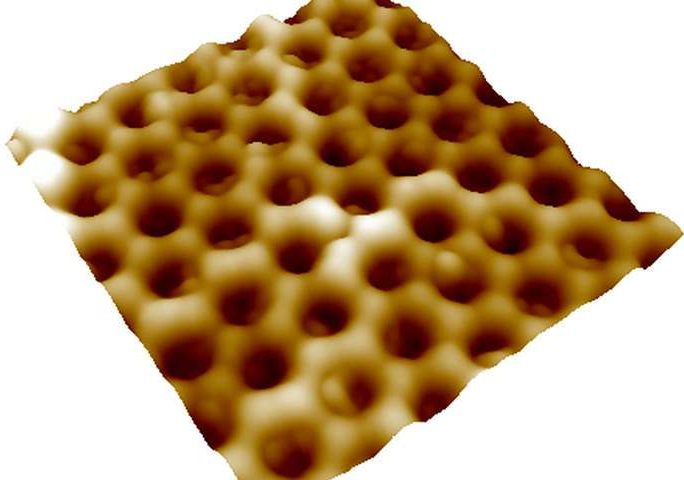
Oregon State’s Greg Herman has developed a transparent sensor to monitor glucose (via tears) in a contact lens.  The device could also be used to control insulin infusions, by transmitting real-time data to a pump.

Similar technology has been developed by Google, although their lens is not (currently) fully transparent, and Noviosense, which requires a user to insert a device in the lower lid.

Herman believes that the lens sensor could also be used to monitor stress hormones, uric acid, and  ocular pressure in glaucoma.


ApplySci’s 6th   Wearable Tech + Digital Health + NeuroTech Silicon Valley  –  February 7-8 2017 @ Stanford   |   Featuring:   Vinod Khosla – Tom Insel – Zhenan Bao – Phillip Alvelda – Nathan Intrator – John Rogers – Mary Lou Jepsen – Vivek Wadhwa – Miguel Nicolelis – Roozbeh Ghaffari –Tarun Wadhwa – Eythor Bender – Unity Stoakes – Mounir Zok – Krishna Shenoy – Karl Deisseroth
Categories
Diabetes Sensors Wearables

Non-invasive tear sensor continuously monitors glucose

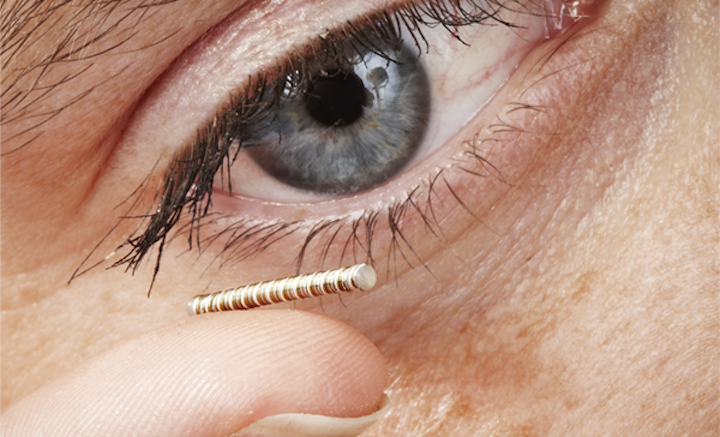
Noviosense is a flexible sensor glucose monitor, worn in a lower eyelid. The wireless, battery-free wearable tracks glucose levels in tears, and continuously sends measurements to one’s phone.

One of three electrodes is coated with an immobilized enzyme, which converts glucose into gluconic acid, leaving the co-enzyme FAD reduced to FADH. An  oxygen molecule oxidizes the co-factor and produces a short lived molecule of hydrogen peroxide, that is converted on the electrode surface to water. This results in an electric current, measured using the other two electrodes. The electrical signal is then converted into a radio frequency signal, transmitted via antenna.

It is possible to connect the sensor to an insulin pump, creating a closed loop system.


ApplySci’s 6th   Wearable Tech + Digital Health + NeuroTech Silicon Valley  –  February 7-8 2017 @ Stanford   |   Featuring:   Vinod Khosla – Tom Insel – Zhenan Bao – Phillip Alvelda – Nathan Intrator – John Rogers – Mary Lou Jepsen – Vivek Wadhwa – Miguel Nicolelis – Roozbeh Ghaffari –Tarun Wadhwa – Eythor Bender – Unity Stoakes – Mounir Zok – Krishna Shenoy – Karl Deisseroth
REGISTRATION FEE INCREASES ON NOVEMBER 1, 2016

Categories
Brain Eyes Virtual Reality

Eye tracking + VR to improve brain injury diagnosis, track recovery

Eye tracking technology, combined with VR, is proliferating, with myriad medical, gaming, and education applications.

SyncThink uses eye tracking, built into an Oculus Rift,  to detect if a person has the ability to keep

the eyes synced with moving objects, to determine brain injury and track recovery.

The company has been granted 10 patents, for  eye-tracking hardware, and analytical techniques for stimulating, measuring, and training brain attention networks. It has been used to detect concussions on the field and evaluate soldier readiness and brain impairment after injury. The company describes additional applications including characterizing and monitoring fatigue, performance, and developmental or neurodegenerative conditions.

Eyefluence, which was today acquired by Google, creates head-mounted display AR, VR, and mixed reality interfaces. According to the company,  its AR application allows critical care professionals to access patient data with their eyes while their hands treat the injured.  VR integrations humanize experiences, reduce nausea, optimize image resolution, and increase speed.

ApplySci believes that the next step in AR/VR enhancement is integrating mobile EEG into headsets, combining eye tracking, GSR, and  brainwave data into various applications.


ApplySci’s 6th   Wearable Tech + Digital Health + NeuroTech Silicon Valley  –  February 7-8 2017 @ Stanford   |   Featuring:   Vinod Khosla – Tom Insel – Zhenan Bao – Phillip Alvelda – Nathan Intrator – John Rogers – Mary Lou Jepsen – Vivek Wadhwa – Miguel Nicolelis – Roozbeh Ghaffari –Tarun Wadhwa – Eythor Bender – Unity Stoakes – Mounir Zok – Krishna Shenoy – Karl Deisseroth
Categories
Brain

Optogenetics + CLARITY to understand, treat mental illness, addiction

Allen Institute President Christof Koch  “likens (Professor Karl) Deisseroth to Galileo, whose early improvements of the telescope afforded a huge advance in our understanding of the cosmos.” (New Yorker profile, 2015)

Professor Deissoroth will discuss his pioneering methods of understanding and treating the brain at ApplySci’s Digital Health + NeuroTech Silicon Valley conference, on February 7-8, 2017.

Deisseroth created optogenetics — in which neurons in the brain are genetically engineered to express a light-sensitive protein that can change their electric properties. Light can then be used to switch neurons on or off, allowing the mapping of neuronal networks that regulate behaviour and that are often disrupted in mental illness.

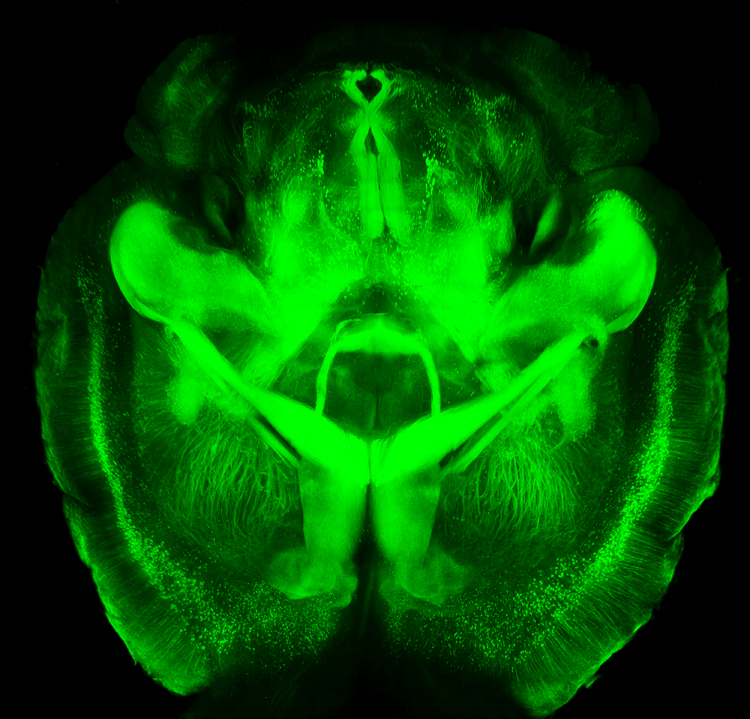
He also developed CLARITY (Clear Lipid-exchanged Anatomically Rigid Imaging/Immunostaining-compatible Tissue hYdrogel), a technique  that makes tissues transparent but leaves cells and their connections intact. This allows an unprecedented view into complex brain circuits, and could be used for a new type of depression treatment, or  to understand electrical pathways in the heart or learn why damaged fibers in the spinal cord cause pain.

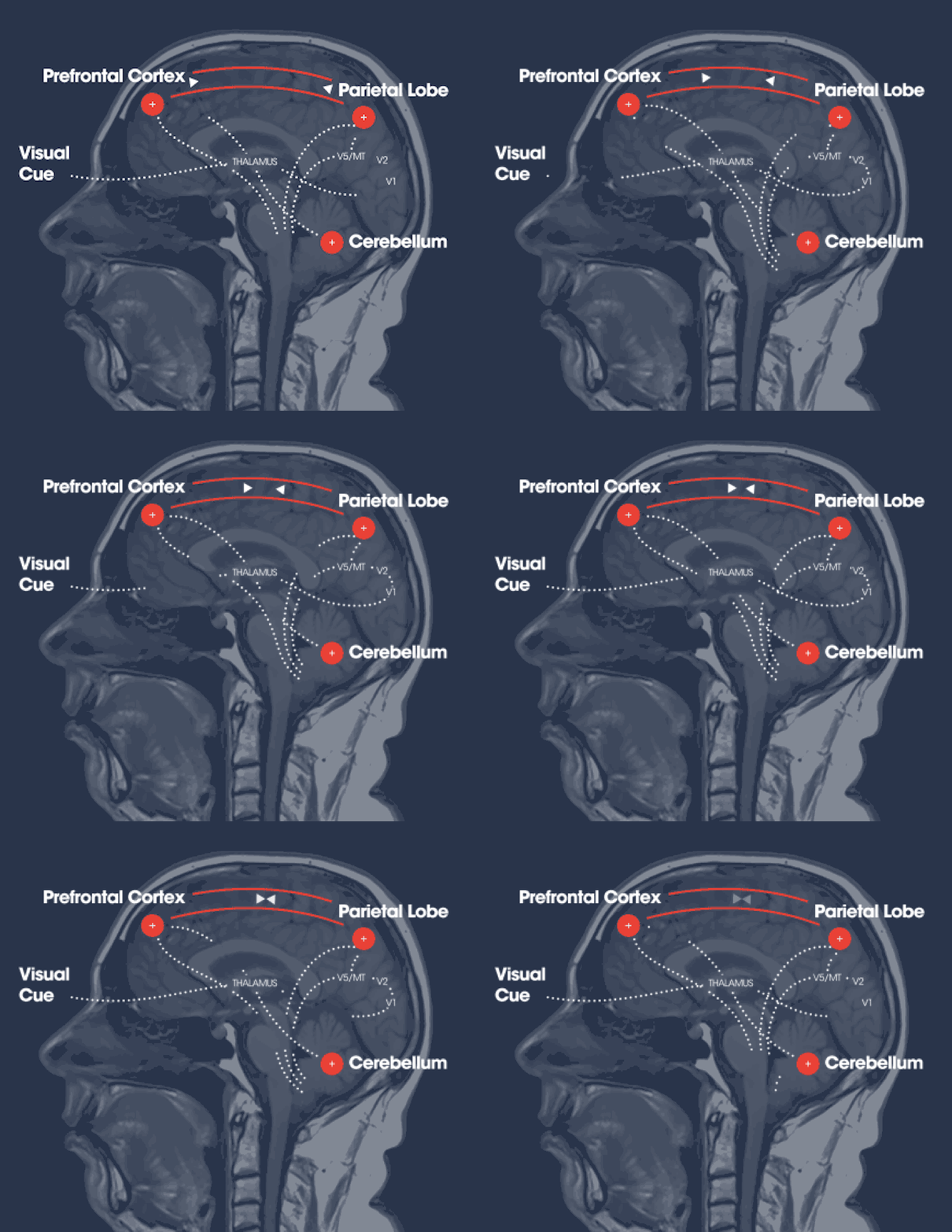
Deisseroth recently combined CLARITY with optogenetics, demonstrating how certain neurons in the prefrontal cortex are built to respond to reward or aversion,  which could lead to more effective treatments for mental illness and addiction.


ApplySci’s 6th   Wearable Tech + Digital Health + NeuroTech Silicon Valley  –  February 7-8 2017 @ Stanford   |   Featuring:   Vinod Khosla – Tom Insel – Zhenan Bao – Phillip Alvelda – Nathan Intrator – John Rogers – Mary Lou Jepsen – Vivek Wadhwa – Miguel Nicolelis – Roozbeh Ghaffari –Tarun Wadhwa – Eythor Bender – Unity Stoakes – Mounir Zok – Krishna Shenoy – Karl Deisseroth
Categories
Apps Brain

Mental illness symptoms self reported, empowering patients and alerting caregivers

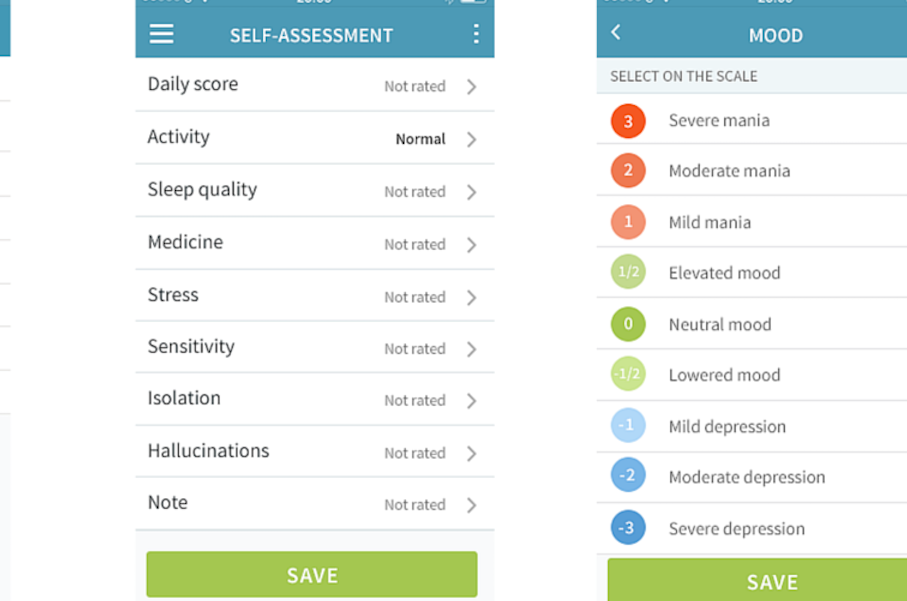
Monsenso is an app created to help those who suffer from mental illness gauge their own symptoms.   ApplySci applauds this and other attempts to empower the patient (as long as privacy is protected), which in itself could produce positive outcomes.  Data is continuously sent to clinicians, and emergency interventions are facilitated.

Monsenso users complete daily self-assessments on their phones, describing medication taken, stress, and sleep quality.  Physical activity, social interaction and mobility data is also phone-gathered.

The app identifies triggers and early warning signs, and notifies a doctor and/or emergency contact.  Instant messages requesting emergency consultations can be sent to users — which could speed appointments, and also let patients know that they are not alone.

The use of apps in mental health is growing rapidly, and is studied by Harvard’s John Torous, who frequently writes about research, ethical, and patient perspectives of digital psychiatry.


ApplySci’s 6th   Wearable Tech + Digital Health + NeuroTech Silicon Valley  –  February 7-8 2017 @ Stanford   |   Featuring:   Vinod Khosla – Tom Insel – Zhenan Bao – Phillip Alvelda – Nathan Intrator – John Rogers – Mary Lou Jepsen – Vivek Wadhwa – Miguel Nicolelis – Roozbeh Ghaffari –Tarun Wadhwa – Eythor Bender – Unity Stoakes – Mounir Zok – Krishna Shenoy – Karl Deisseroth
Categories
3-D Printing

3D printed renal architecture

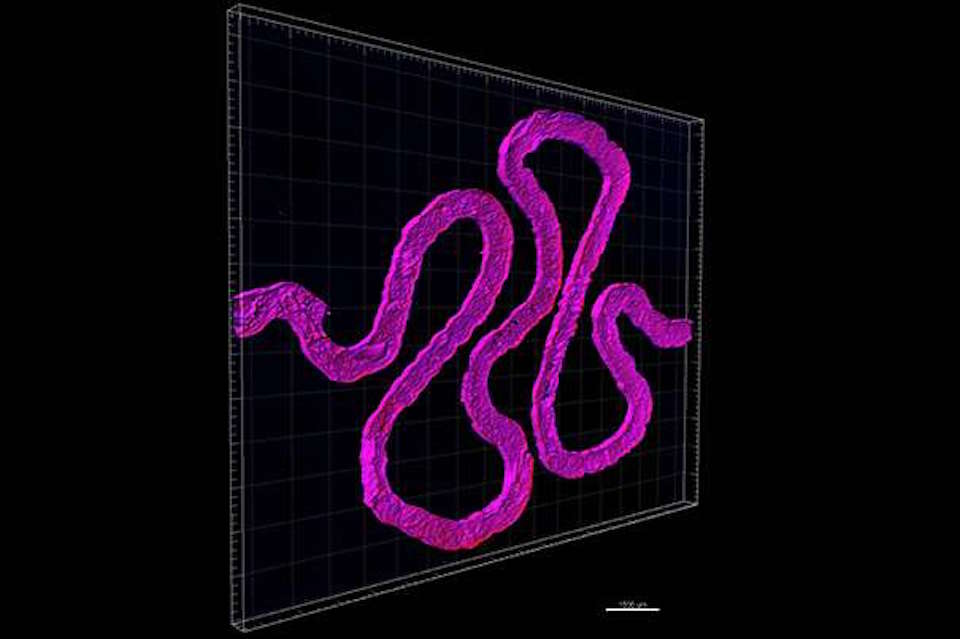
Harvard’s Jennifer Lewis and Roche’s  Annie Moisan have used 3D printing to fabricate a small but critical subunit of a kidney.  The renal architecture contains living epithelial cells.

Earlier bioprinting approaches were adapted to form thick tissues.  A 3D-printed silicone gasket was used to cast an engineered extracellular matrix as a base layer. “Fugitive ink” was printed in a shape similar to that of renal proximal tubules, and encapsulated with another layer of extracellular matrix.

The in vitro model functions like living kidney tissue, representing a significant advance from traditional 2D cell culture.  The result could be an implant or assistive device, and/or more effective clinical trials.

Click to view Wyss Institute video.


ApplySci’s 6th   Wearable Tech + Digital Health + NeuroTech Silicon Valley  –  February 7-8 2017 @ Stanford   |   Featuring:   Vinod Khosla – Tom Insel – Zhenan Bao – Phillip Alvelda – Nathan Intrator – John Rogers – Mary Lou Jepsen – Vivek Wadhwa – Miguel Nicolelis – Roozbeh Ghaffari –Tarun Wadhwa – Eythor Bender – Unity Stoakes – Mounir Zok – Krishna Shenoy – Karl Deisseroth