Categories
BCI

BCI for astronaut equipment control, ground communication

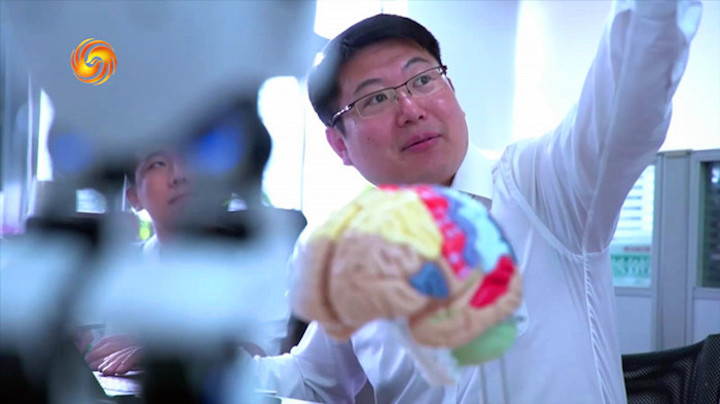
The China Astronaut Research and Training Center and Tianjin University are developing a BCI system to allow astronauts to control spacecraft equipment with their thoughts. Brain impulses will be translated into words, to operate instruments and  communicate with ground control.

The system will be tested by astronauts in space, and information is currently displayed at the International Simulation Expo in Beijing.


ApplySci’s 6th   Wearable Tech + Digital Health + NeuroTech Silicon Valley  –  February 7-8 2017 @ Stanford   |   Featuring:   Vinod Khosla – Tom Insel – Zhenan Bao – Phillip Alvelda – Nathan Intrator – John Rogers – Mary Lou Jepsen – Vivek Wadhwa – Miguel Nicolelis – Roozbeh Ghaffari –Tarun Wadhwa – Eythor Bender – Unity Stoakes – Mounir Zok – Krishna Shenoy – Karl Deisseroth

Categories
Assistive Technologies BCI

“Cybathlon” features robotic exoskeleton, BCI competitions

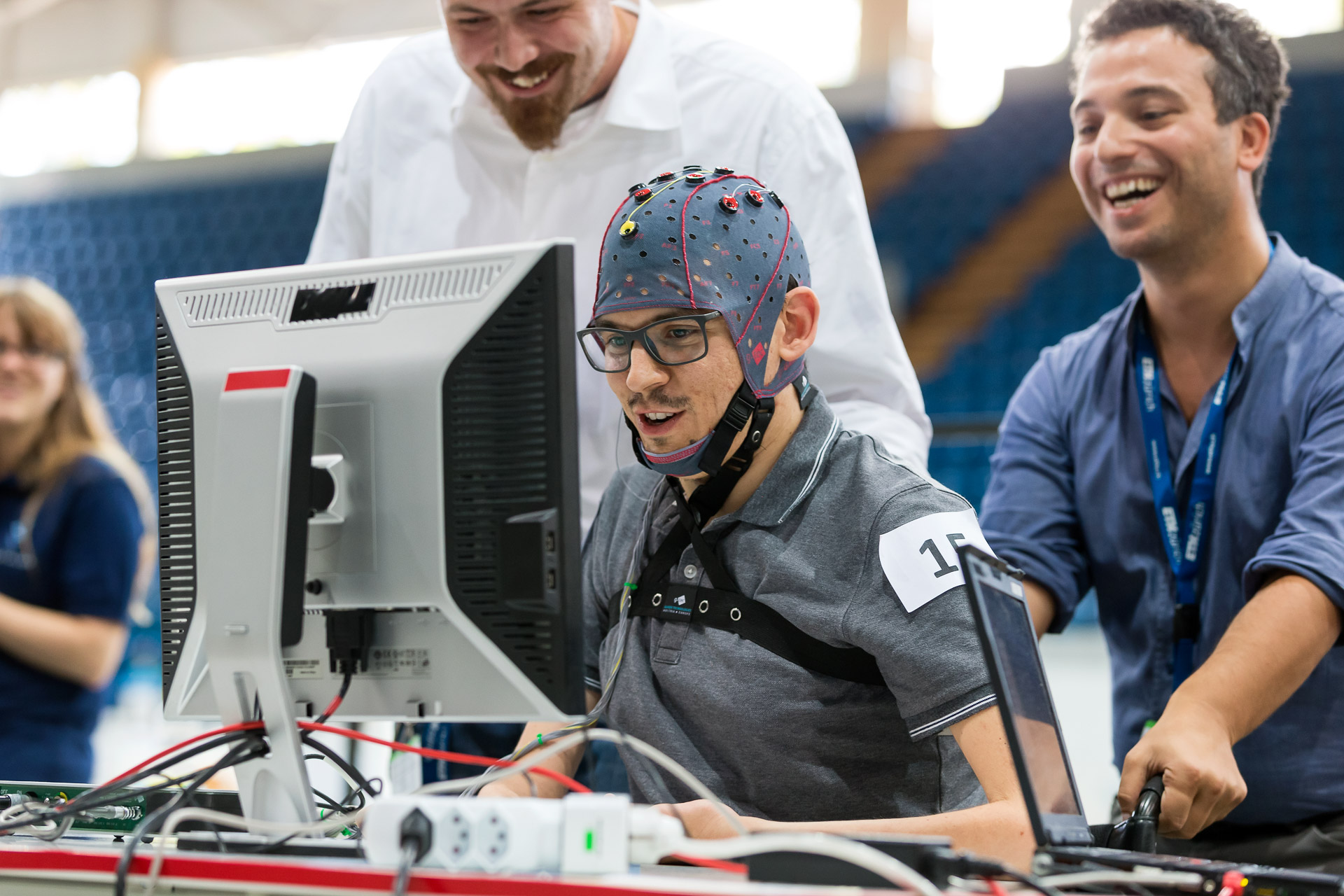
ETH professor Robert Riener‘s first Cybathlon will feature competitions using robotic prostheses and brain computer interfaces.  Disabled participants will compete in brain controlled races and exoskeleton controlled tasks.  Many  will include common obstacles, like doors, ramps, and stairs, as the goal is to develop technology to increase independence and make the activities of daily living less difficult.

Click to view the Cybathlon trailer


ApplySci’s 6th   Wearable Tech + Digital Health + NeuroTech Silicon Valley  –  February 7-8 2017 @ Stanford   |   Featuring:   Vinod Khosla – Tom Insel – Zhenan Bao – Phillip Alvelda – Nathan Intrator – John Rogers – Mary Lou Jepsen – Vivek Wadhwa – Miguel Nicolelis – Roozbeh Ghaffari –Tarun Wadhwa – Eythor Bender – Unity Stoakes – Mounir Zok – Krishna Shenoy – Karl Deisseroth


Categories
Brain

Paris Fashion Week: Smart glasses detect runway model stress

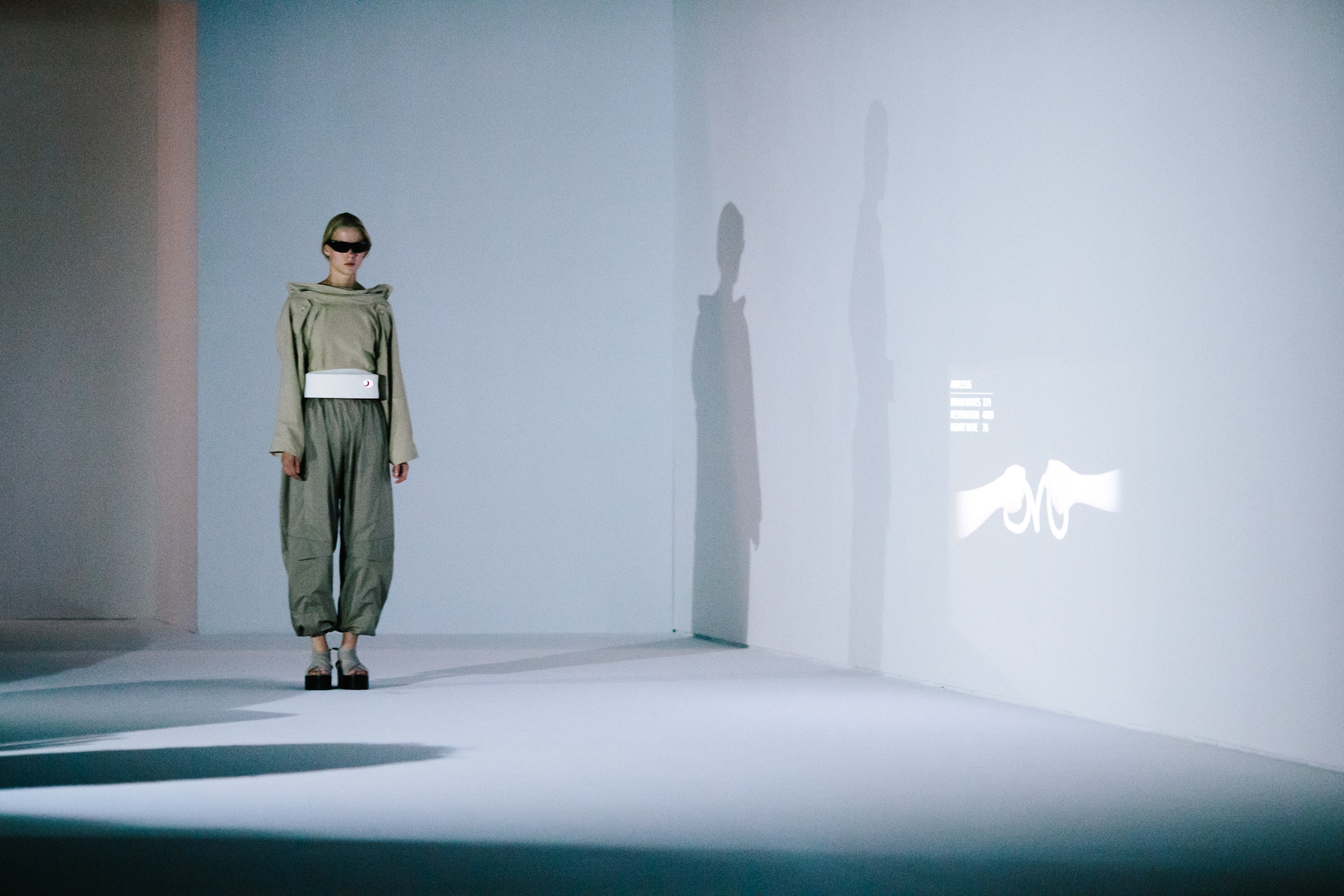
Intel has partnered with designer Hussein Chalayan to create smart glasses and belts to detect the stress level of models in his Paris runway show.

The glasses have EEG electrodes near both temples, to collect brain waves.  The nose bridge includes an optical sensor, to measure heart rate variability, and a microphone, to measure breathing. Data is processed using a Curie module,  and sent, via Bluetooth, to a 3D printed belt worn by the models. Belt integrated Curie modules receive the data, and an Intel Compute Stick processes the defined stress metric. A waist projector sent the images to a wall, indicating real-time stress levels, while the models walked.

The company has not released details of its EEG sensors and signal processing techniques, which influence the accuracy of the wearable technology.

ApplySci’s 6th   Wearable Tech + Digital Health + NeuroTech Silicon Valley  –  February 7-8 2017 @ Stanford   |   Featuring:   Vinod Khosla – Tom Insel – Zhenan Bao – Phillip Alvelda – Nathan Intrator – John Rogers – Mary Lou Jepsen – Vivek Wadhwa – Miguel Nicolelis – Roozbeh Ghaffari –Tarun Wadhwa – Eythor Bender – Unity Stoakes – Mounir Zok – Krishna Shenoy – Karl Deisseroth

Categories
Heart Wearables

Verily developing low-power health wearable

While visiting Verily last week, an MIT Technology Review journalist saw and described the company’s wearable vital tracker, called the “Cardiac and Activity Monitor” by  CTO Brian Otis.  Its novelty is a low-power e-paper display, which will address the universal problem of battery life.  Only with guaranteed continuous measurement can meaningful data be gathered and health analyzed.

The watch is reported to track pulse, heart rythm, skin temperature, light exposure, and noise levels — and perhaps cuffless blood pressure monitoring will be added to the mix.

The device is meant for use in medical research, with the goal of predicting disease.  According to scientific adviser (and former Mass General Physician-in-Chief) Dennis Ausiello: “The watch is one of several hardware activities that have a common goal, which is how to better manage the human condition and interrogate the human organism at scale across health and illness.”


ApplySci’s 6th   Wearable Tech + Digital Health + NeuroTech Silicon Valley  –  February 7-8 2017 @ Stanford   |   Featuring:   Vinod Khosla – Tom Insel – Zhenan Bao – Phillip Alvelda – Nathan Intrator – John Rogers – Mary Lou Jepsen – Vivek Wadhwa – Miguel Nicolelis – Roozbeh Ghaffari –Tarun Wadhwa – Eythor Bender – Unity Stoakes – Mounir Zok – Krishna Shenoy – Karl Deisseroth

Categories
BCI

Monkeys type Shakespeare with thoughts; human trials underway

Stanford professor Krishna Shenoy has developed technology that reads brain signals in monkeys, from implanted electrodes,  to control a cursor moving over a keyboard.   A clinical trial will begin soon, with the goal of creating brain computer interfaces to help paralyzed people communicate.  This could overcome the limitations of eye-controlled keyboards, which do not work when one loses control of the muscles around his or her eyes.

Two monkeys were taught to point to patterns of on-screen yellow and green dots, which spelled letters. Electrodes were then implanted in their brains. They were shown flashing dot letter patterns that spelled Hamlet and New York Times texts. The arrays measured  brain activity when a monkey thought of the where to point its arm, which it had learned to point to the next letter to spell.

The monkeys were able to, with their thoughts, type the texts at a speed of 12 words per minute.

Click to view Stanford University video.


Professor Shenoy will discuss this experiment, and current human trials, at ApplySci’s upcoming Wearable Tech + Digital Health + NeuroTech Silicon Valley conference, on February 7-8 at Stanford University.


Categories
BCI Robotics Stroke

Robotic hand exoskeleton for stroke patients

ETH professor Roger Gassert has developed a robotic exoskeleton that allows stroke patients  to perform daily activities by supporting motor and somatosensory functions.

His vision is that “instead of performing exercises in an abstract situation at the clinic, patients will be able to integrate them into their daily life at home, supported by a robot.” He observes that existing exoskeletons are heavy, rendering patients unable to lift their hands. They also have difficulty feeling objects and exerting the right amount of force. To address this, the palm of the hand is left free in the new device.

Gassert’s Kyushu University colleague Jumpei Arata developed a mechanism for the finger featuring three overlapping leaf springs. A motor moves the middle spring, which transmits the force to the different segments of the finger through the other two springs. The fingers thus automatically adapt to the shape of the object the patient wants to grasp.

To reduce the weight of the exoskeleton, motors are placed on the patient’s back and  force is transmitted using a bicycle brake cable. ApplySci hopes that the size and weight of the motor can be reduced, allowing it to be integrated into the exoskeleton in its next phase.

Gassert wants to make the exoskeleton thought controlled, and is using MRI and EEG to detect, in the brain,  a patient’s intention to move his or her hand, and communicating this to the device.


ApplySci’s 6th   Wearable Tech + Digital Health + NeuroTech Silicon Valley  –  February 7-8 2017 @ Stanford   |   Featuring:   Vinod Khosla – Tom Insel – Zhenan Bao – Phillip Alvelda – Nathan Intrator – John Rogers – Mary Lou Jepsen – Vivek Wadhwa – Miguel Nicolelis – Roozbeh Ghaffari – Unity Stoakes – Mounir Zok – Krishna Shenoy

Categories
BCI Brain EEG

Mobile brain health management

After scanning the brains of ALS, epilepsy, minimally conscious, schizophrenia, memory impaired, and healthy patients, to monitor brain health and treatment effectiveness, Brown and Tel Aviv University professor Nathan Intrator has commercialized his algorithms and launched Neurosteer.

At ApplySci’s recent NeuroTech NYC conference, Professor Intrator discussed dramatic advances in BCI, monitoring, and neurofeedback, in his keynote, and in a panel with DARPA’s Biological Technologies Office Director Justin Sanchez.  He also described Neurosteer’s progress — and the rapidly developing world of technology for cognitive and emotional wellness — in an interview with StartUp Health’s Unity Stoakes.  Click to view the June, 2016 StartUp Health NOW interview, or Steve Krein and Intrator’s June, 2015 interview here.


ApplySci’s 6th   Wearable Tech + Digital Health + NeuroTech Silicon Valley  –  February 7-8 2017 @ Stanford   |   Featuring:   Vinod Khosla – Tom Insel – Zhenan Bao – Phillip Alvelda – Nathan Intrator – John Rogers – Mary Lou Jepsen – Vivek Wadhwa – Miguel Nicolelis – Roozbeh Ghaffari – Unity Stoakes – Mounir Zok

Categories
Brain

Wireless signals detect emotions

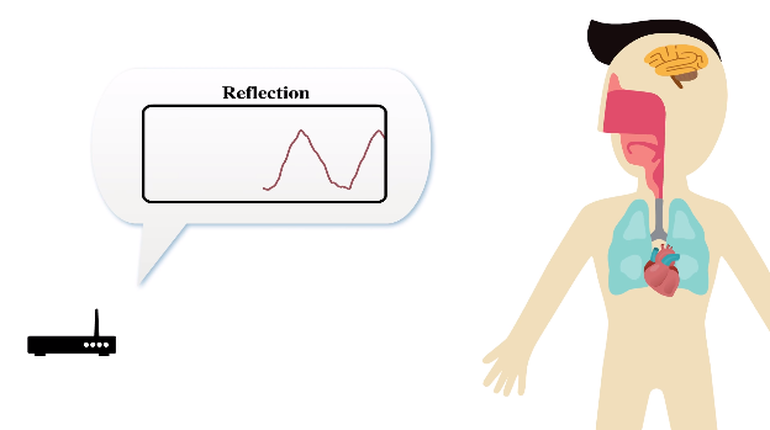
Mingmin Zhao and MIT colleagues have developed a device that detects emotions remotely, emitting wireless signals to measure heartbeat and breathing.

EQ-Radio detects whether a person is excited, happy, angry or sad without wearable sensors or using face recognition technology.

Radio signals are reflected off a person’s body, and back to the device. Algorithms detect individual heartbeats from  radio echoes with an accuracy comparable to wearable ECG monitors.

This could be a breakthrough in the detection and monitoring of mental health issues, eliminating the need for uncomfortable chest bands and other gear.

30 subjects tested the EQ Radio while listening to music, looking at photos, or watching videos that triggered emotions.  They sat one meter away from the device.  The system collected 130,000 heartbeats, and examined differences in length that indicated happiness, sadness, excitement, anger, and neutrality.  It accurately determined state of mind  72.3 percent of the time.

Click to view an MIT video describing EQ-Radio


ApplySci’s 6th   Wearable Tech + Digital Health + NeuroTech Silicon Valley  –  February 7-8 2017 @ Stanford   |   Featuring:   Vinod Khosla – Tom Insel – Zhenan Bao – Phillip Alvelda – Nathan Intrator – John Rogers – Mary Lou Jepsen – Vivek Wadhwa – Miguel Nicolelis – Roozbeh Ghaffari – Unity Stoakes – Mounir Zok


Categories
Data Wearables

Continuously generated “small data” analysis to improve health

The discussion of “big data” analysis in healthcare continues, unabated.  At ApplySci’s recent Wearable Tech + Digital Health + NeuroTech NYC conference, Cornell professor Deborah Estrin, who is also a founder of Open mHealth, described how “small data” — our digital patterns and interactions — can help physicians by creating a more meaningful representation of our personal health.

Click to view Professor Estrin’s interview with StartUp Health’s Unity Stoakes, filmed at the conference.


ApplySci’s 6th   Wearable Tech + Digital Health + NeuroTech Silicon Valley  –  February 7-8 2017 @ Stanford   |   Featuring:   Vinod Khosla – Tom Insel – Zhenan Bao – Phillip Alvelda – Nathan Intrator – John Rogers – Mary Lou Jepsen – Vivek Wadhwa – Miguel Nicolelis – Roozbeh Ghaffari – Unity Stoakes – Mounir Zok

Categories
Brain Data Machine Learning Sensors Wearables

Wearable + cloud analysis track Huntington’s disease progression

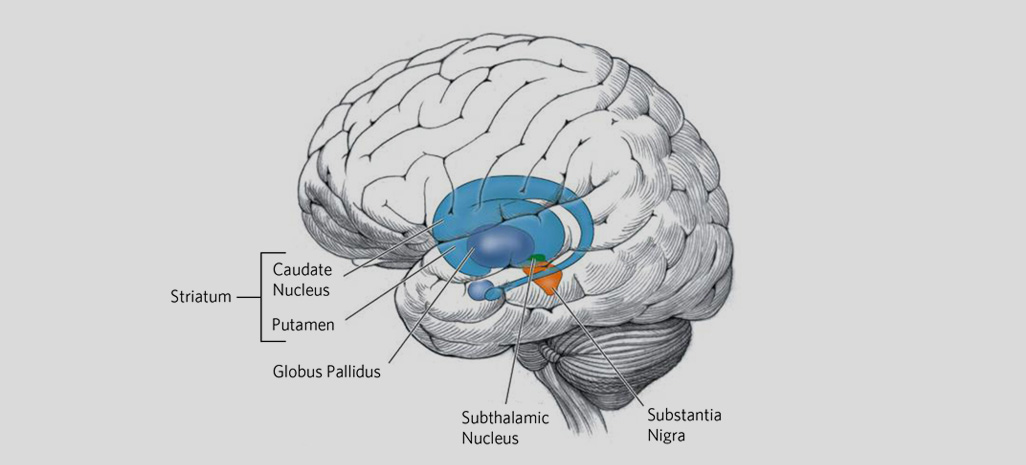
In the latest pharma/tech partnership, Teva and Intel are developing a wearable platform to track the progression of Huntington’s disease.  There is no cure for the disease, which causes a breakdown of nerve cells in the brain, resulting in a  decline in motor control, cognition and mental stability.

The technology can be used to assess the effectiveness of drugs that treat symptoms, and in developing new drugs.  (Teva will use it in a  mid-stage study.)

Wearable sensors (in this case a watch, but the concept could progress to patches)  continuously measure patient functioning.  Data is wirelessly transmitted to the cloud, and algorithms score motor symptom severity.

In recent months, ApplySci has described similar pharma/device/big data/machine learning alliances, including:

  •  Sanofi and Verily’s Onduo platiform to treat diabetes
  • GlaxoSmithKline and Verily targeting electrical signals in the body
  • A Verily and Novartis smart contact lense glucose monitor
  • A Biogen /Alphabet MS study

ApplySci looks forward to the use of brain-monitoring wearables to enable users to see and address neurodegenerative changes before symptoms appear.


ApplySci’s 6th   Wearable Tech + Digital Health + NeuroTech Silicon Valley  –  February 7-8 2017 @ Stanford   |   Featuring:   Vinod Khosla – Tom Insel – Zhenan Bao – Phillip Alvelda – Nathan Intrator – John Rogers – Mary Lou Jepsen – Vivek Wadhwa – Miguel Nicolelis – Roozbeh Ghaffari – Unity Stoakes – Mounir Zok

Categories
Data Diabetes Pharmaceuticals Wearables

Sanofi/Verily joint venture to fight diabetes

Big pharma + big tech/data partnerships continue to proliferate.

Onduo is a Sanofi/Verily joint venture that will use each company’s expertise to help manage diabetes  — Sanofi’s drugs  plus Verily’s software, data analysis, and devices. CEO Josh Riff and has not announced a project pipeline, as they are taking “a thoughtful approach to finding lasting solutions.”

Sutter Health and Allegheny Health Network will  be the first systems to test Onduo solutions.


ApplySci’s 6th   Wearable Tech + Digital Health + NeuroTech Silicon Valley  –  February 7-8 2017 @ Stanford   |   Featuring:   Vinod Khosla – Tom Insel – Zhenan Bao – Phillip Alvelda – Nathan Intrator – John Rogers – Mary Lou Jepsen – Vivek Wadhwa – Miguel Nicolelis – Roozbeh Ghaffari – Unity Stoakes

Categories
Parkinson's Virtual Reality

VR for early neurodegenerative disease detection, personalized rehabilitation

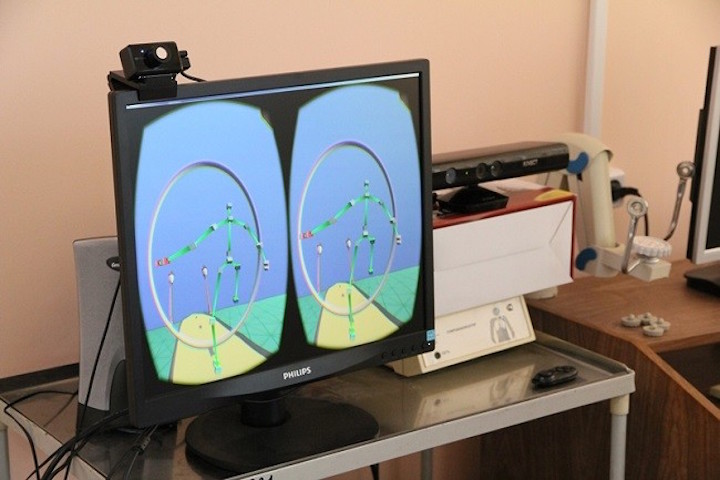
Tomsk Polytechnic and Siberian State University scientists David Khachaturyan  and  Ivan Tolmachov have developed a VR based neurodegenerative disorder diagnosis system.  The goal is the early detection and tretment of diseases, including MS and Parkinson’s.  The next step is the use of VR systems, like Glass and Kinect, for personalized rehabilitation.

50 subjects, both healthy and already diagnosed, used VR headsets,  a non-contact sensor controller and a mobile platform during a variety of activities.  Changes in posture and balance were detected, and compared to a human  skeleton model of 20 points on the body.  Deviations from the model indicated disease.  Differences in reactions of those with difference diseases was also noted —  Parkinson’s patients experienced hand tremors, and others experienced compromised coordination.

A clinical trial  will be completed in 2017.


ApplySci’s 6th   Wearable Tech + Digital Health + NeuroTech Silicon Valley  –  February 7-8 2017 @ Stanford   |   Featuring:   Vinod Khosla – Tom Insel – Zhenan Bao – Phillip Alvelda – Nathan Intrator – John Rogers – Mary Lou Jepsen – Vivek Wadhwa – Miguel Nicolelis – Roozbeh Ghaffari – Unity Stoakes