Categories
Sensors

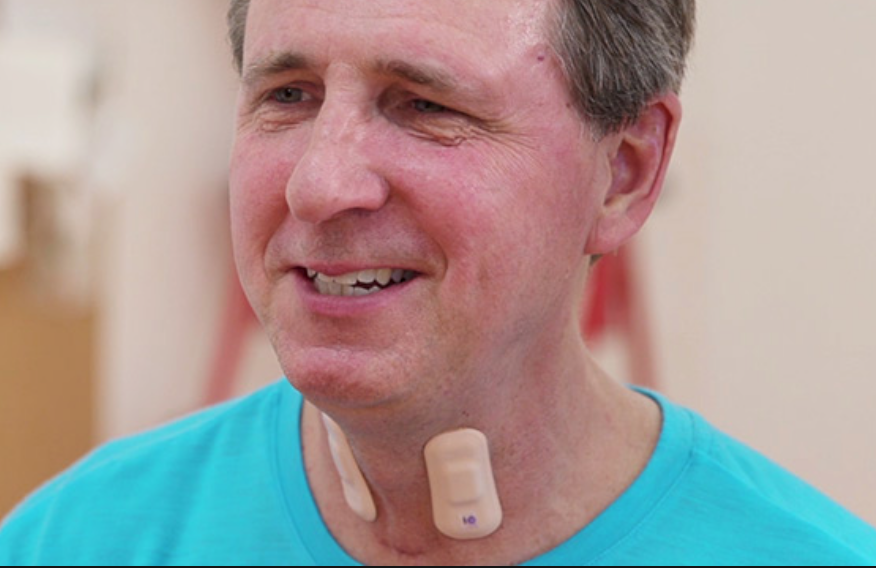
Throat-worn sensor-sticker transforms stroke rehab

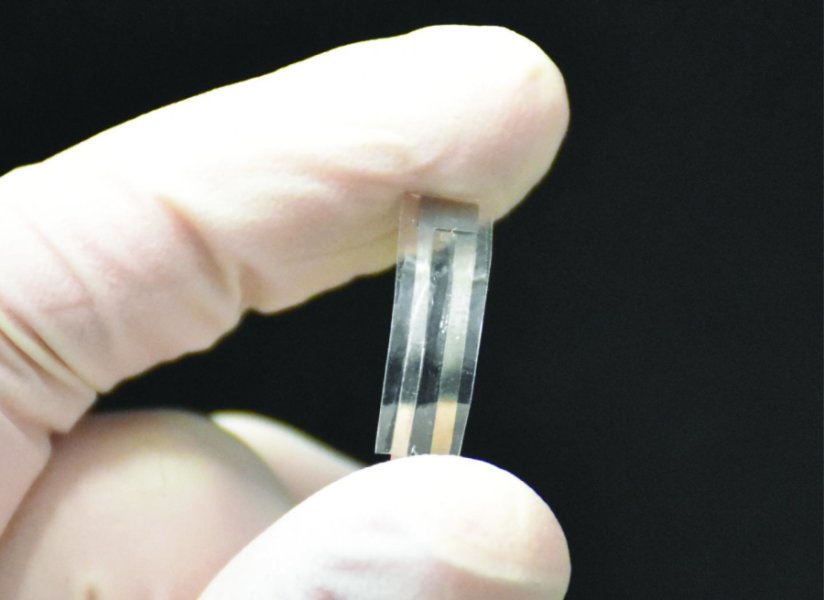
John Rogers‘ latest stretchable electronics breakthrough will transform stroke rehabilitation.

The throat-worn wearable, developed with the  Shirley Ryan AbilityLab, measures patients’ swallowing ability and patterns of speech, and aids in aphasia diagnosis.

The Shirley Ryan AbilityLab uses the throat sensor in conjunction with Rogers-developed biosensors on the legs, arms and chest to monitor stroke patients’ recovery progress. Data is sent to clinicians’ phones and computers, providing real-time, quantitative, full-body analysis of patients’ advanced physical and physiological responses.

Click to view Shirley Ryan Ability Lab video

Click to view John Rogers’ talk at ApplySci’s Wearable Tech + Digital Health + Neurotech conference, on September 19, 2017 at the MIT Media Lab


Join ApplySci at Wearable Tech + Digital Health + Neurotech Silicon Valley on February 26-27, 2018 at Stanford University. Speakers include:  Vinod Khosla – Justin Sanchez – Brian Otis – Bryan Johnson – Zhenan Bao – Nathan Intrator – Carla Pugh – Jamshid Ghajar – Mark Kendall – Robert Greenberg – Darin Okuda – Jason Heikenfeld – Bob Knight – Phillip Alvelda – Paul Nuyujukian –  Peter Fischer – Tony Chahine – Shahin Farshchi – Ambar Bhattacharyya – Adam D’Augelli – Juan-Pablo Mas – Shreyas Shah– Walter Greenleaf – Jacobo Penide  – Peter Fischer – Ed Boyden

**LAST TICKETS AVAILABLE
Categories
Sensors

Tissue-paper sensor tracks pulse, finger and eye movement, gait


University of Washington’s Jae-Hyun Chung has developed a  disposable wearable sensor made with tissue paper. It can detect a heartbeat, finger force, finger movement, eyeball movement, gait patterns, and other actions.

Tearing the nanocomposite paper breaks its fibers and makes it act as a sensor. It is light, flexible and cheap, and meant to be thrown away after one use.


Join ApplySci at Wearable Tech + Digital Health + Neurotech Silicon Valley on February 26-27, 2018 at Stanford University. Speakers include:  Vinod Khosla – Justin Sanchez – Brian Otis – Bryan Johnson – Zhenan Bao – Nathan Intrator – Carla Pugh – Jamshid Ghajar – Mark Kendall – Robert Greenberg – Darin Okuda – Jason Heikenfeld – Bob Knight – Phillip Alvelda – Paul Nuyujukian –  Peter Fischer – Tony Chahine – Shahin Farshchi – Ambar Bhattacharyya – Adam D’Augelli – Juan-Pablo Mas – Shreyas Shah– Walter Greenleaf – Jacobo Penide  – Peter Fischer – Ed Boyden

**LAST TICKETS AVAILABLE
Categories
3-D Printing Brain

3D, real-scale blood brain barrier model used to study new therapeutics

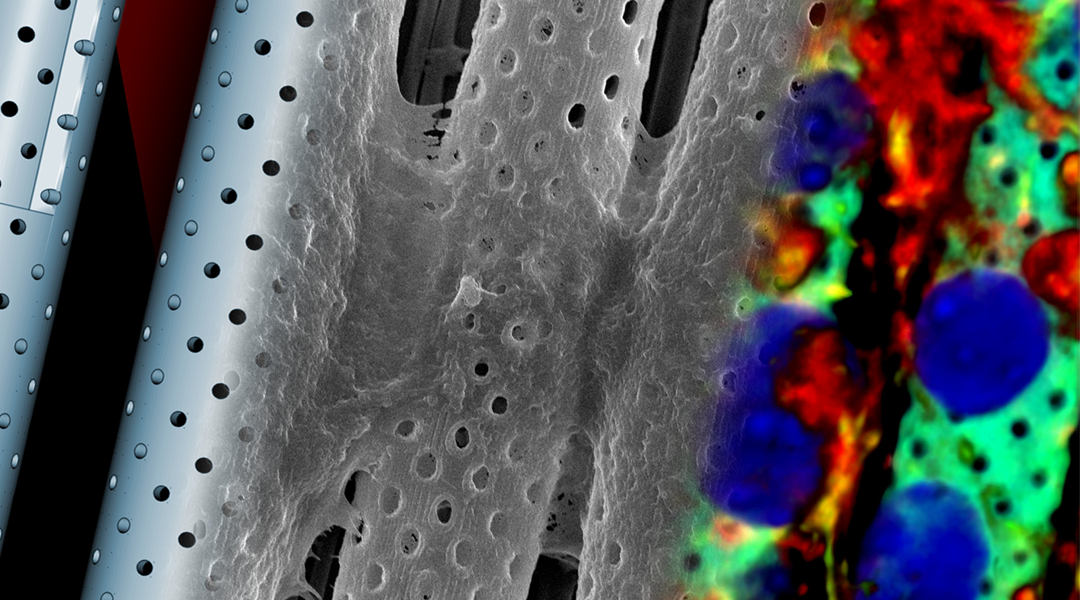
Gianni Ciofani  of ITT Pisa has created a device that reproduces a 1:1 scale model of the blood-brain barrier.  The combination of 3D printed artificial and biological components will allow the study of new therapeutic strategies to overcome the blood-brain barrier and treat brain diseases, including tumors, Alzheimers, and multiple sclerosis.

A laser that scans through a liquid photopolymer and solidifies the material locally and layer by layer built complex 3D objects with submicron resolution.  This enabled the researchers to engineer an accurate real-scale model of the BBB made from a photopolymer resin. Mimicking the brain microcapillaries, the model consists of a microfluidic system of 50 parallel cylindrical channels connected by junctions and featuring pores on the cylinder walls. Each of the tubular structures has a diameter of 10 μm and pores of 1 μm diameter uniformly distributed on all cylinders. After the fabrication of the complex scaffold-like polymer structure, endothelial cells were cultivated around the porous microcapillary system. Covering the 3D printed structure, the cells built a biological barrier resulting in a biohybrid system which resembles its natural model. The device is few millimeters big and fluids can pass through it at the same pressure as blood in brain vessels.


Join ApplySci at Wearable Tech + Digital Health + Neurotech Silicon Valley on February 26-27, 2018 at Stanford University. Speakers include:  Vinod Khosla – Justin Sanchez – Brian Otis – Bryan Johnson – Zhenan Bao – Nathan Intrator – Carla Pugh – Jamshid Ghajar – Mark Kendall – Robert Greenberg – Darin Okuda – Jason Heikenfeld – Bob Knight – Phillip Alvelda – Paul Nuyujukian –  Peter Fischer – Tony Chahine – Shahin Farshchi – Ambar Bhattacharyya – Adam D’Augelli – Juan-Pablo Mas – Shreyas Shah– Walter Greenleaf – Jacobo Penide – David Sarno – Peter Fischer

**LAST TICKETS AVAILABLE

Categories
Sensors

Inflammation-free e-skin sensor monitors health for one week

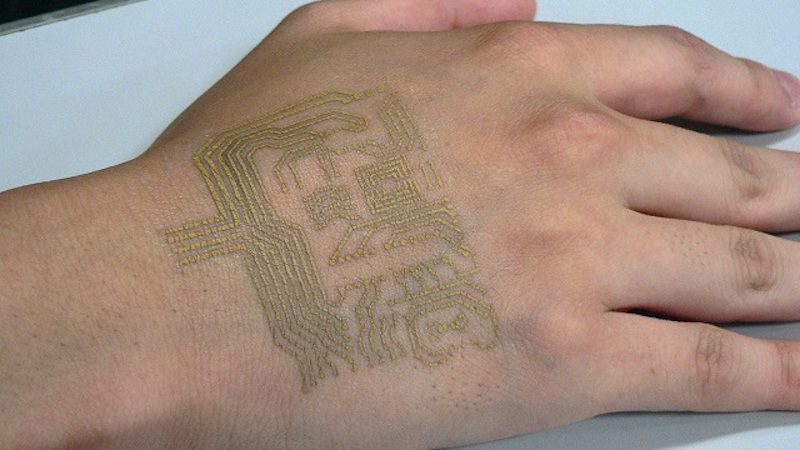
Takao Someya at the University of Tokyo has developed a hypoallergenic, inflammation free, wearable e-skin health sensor that can be worn comfortably for a week.  Somaya believes that this technology is the basis for truly long term, continuous health monitoring.

The electrode is based on nanoscale meshes containing a water-soluble polymer, polyvinyl alcohol and gold. A small amount of water  is required to dissolve the PVA and attach the sensor to the skin.

Mechanical durability was tested by repeated bending and stretching (more than10,000 times) of a conductor attached to the forefinger of 20 people.

EMG recordings with the new sensor were as accurate as those using conventional electrodes.


Join ApplySci at Wearable Tech + Digital Health + Neurotech Silicon Valley on February 26-27, 2018 at Stanford University. Speakers include:  Vinod Khosla – Justin Sanchez – Brian Otis – Bryan Johnson – Zhenan Bao – Nathan Intrator – Carla Pugh – Jamshid Ghajar – Mark Kendall – Robert Greenberg – Darin Okuda – Jason Heikenfeld – Bob Knight – Phillip Alvelda – Paul Nuyujukian –  Peter Fischer – Tony Chahine – Shahin Farshchi – Ambar Bhattacharyya – Adam D’Augelli – Juan-Pablo Mas – Shreyas Shah– Walter Greenleaf – Jacobo Penide – David Sarno – Peter Fischer

Registration rates increase on February 9th

Categories
Cancer

Remote photodynamic therapy targets inner-organ tumors

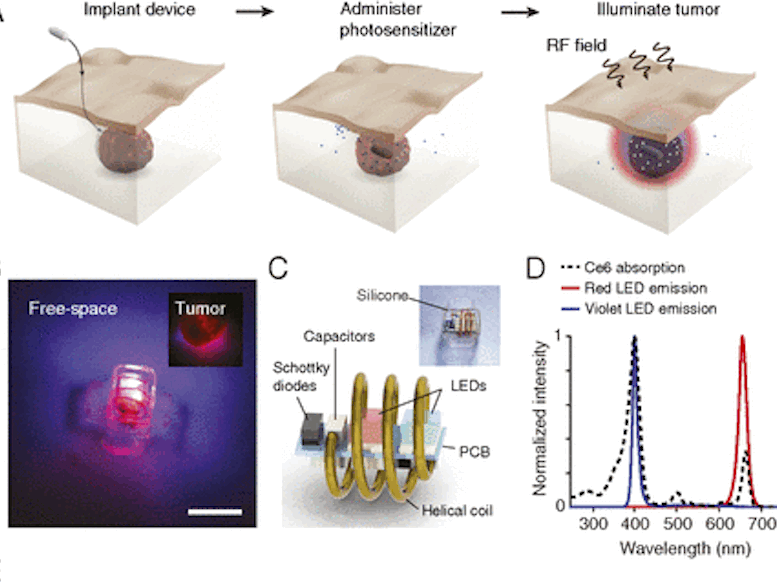
NUS researchers Zhang Yong and John Ho have developed a tumor-targeting method that remotely conveys light  for  photodynamic treatment.

The tiny, wireless, implanted device delivers doses of light over a long period  in a programmable and repeatable manner.

PDT is usually used on surface diseases because of  low infiltration of light through organic tissue. This remote approach to light conveyance allows PDT to be used on the inner organs with fine control.  The team believes that it could successfully treat brain and liver malignancies in the future, and allow therapies that could be tailored during the course of treatment.


Join ApplySci at Wearable Tech + Digital Health + Neurotech Silicon Valley on February 26-27, 2018 at Stanford University. Speakers include:  Vinod Khosla – Justin Sanchez – Brian Otis – Bryan Johnson – Zhenan Bao – Nathan Intrator – Carla Pugh – Jamshid Ghajar – Mark Kendall – Robert Greenberg – Darin Okuda – Jason Heikenfeld – Bob Knight – Phillip Alvelda – Paul Nuyujukian –  Peter Fischer – Tony Chahine – Shahin Farshchi – Ambar Bhattacharyya – Adam D’Augelli – Juan-Pablo Mas – Shreyas Shah– Walter Greenleaf – Jacobo Penide – David Sarno – Peter Fischer

Registration rates increase on February 2nd


Categories
BCI Brain

Lightweight, highly portable, brain-controlled exoskeleton

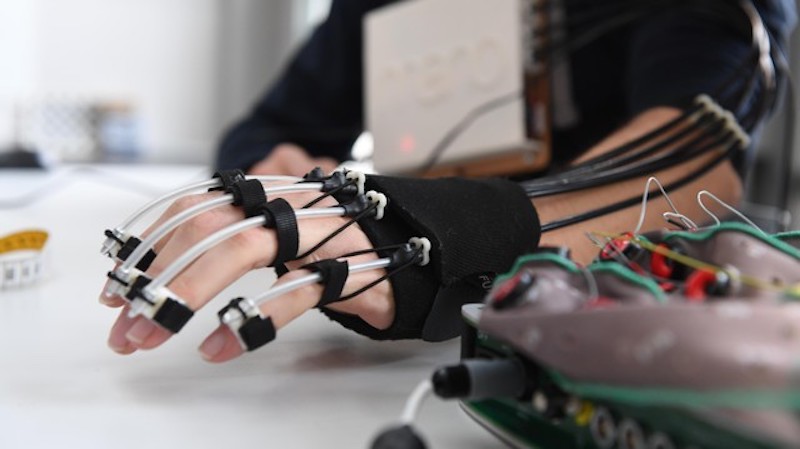
EPFL’s José Millán has developed a brain-controlled, highly portable exoskeleton, that can be quickly  secured around joints with velcro. Metal cables act as soft tendons on the back of each finger, with the palm free to feel hand sensations.  Motors that push and pull the cables are worn on the chest. Fingers are flexed when the cables are pushed and extended when they are pulled.

The control interface can be eye-movement monitoring, phone-based voice controls, residual muscular activity, or EEG-driven brainwave analysis. Hand motions induced by the device elicited brain patterns typical of healthy hand motions.  Exoskeleton-induced hand motions combined with the brain interface lead to unusual neural patterns that could facilitate control of the device. Contralateral brain activity was observed in people who passively received hand motion by the exoskeleton. When subjects were asked to control the exoskeleton with their thoughts, same-side patterns were consistent.

Click to view EPFL video


Join ApplySci at Wearable Tech + Digital Health + Neurotech Silicon Valley on February 26-27, 2018 at Stanford University. Speakers include:  Vinod Khosla – Justin Sanchez – Brian Otis – Bryan Johnson – Zhenan Bao – Nathan Intrator – Carla Pugh – Jamshid Ghajar – Mark Kendall – Robert Greenberg – Darin Okuda – Jason Heikenfeld – Bob Knight – Phillip Alvelda – Paul Nuyujukian –  Peter Fischer – Tony Chahine – Shahin Farshchi – Ambar Bhattacharyya – Adam D’Augelli – Juan-Pablo Mas – Michael Eggleston – Walter Greenleaf – Jacobo Penide – David Sarno – Peter Fischer

Registration rates increase on January 26th


Categories
BCI Brain Prosthetics

Closed loop EEG/BCI/VR/physical therapy system to control gait, prosthetics

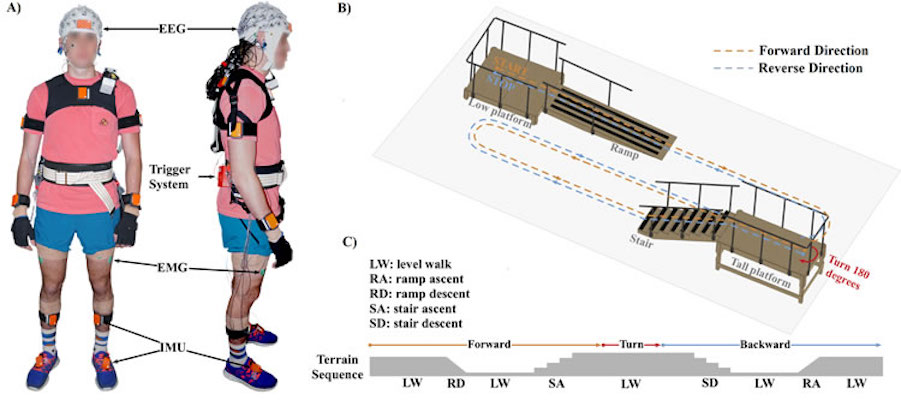
Earlier this year, University of Houston’s Jose Luis Contreras-Vidal developed a closed-loop BCI/EEG/VR/physical therapy system to control gait as part of a stroke/spinal cord injury rehab program.  The goal was to promote and enhance cortical involvement during walking.

In a study, 8 subjects walked on a treadmill while watching an avatar and wearing a 64 channel EEG headset and motion sensors at the hip, knee and ankle.

The avatar was first activated by the motion sensors, allowing its movement to precisely mimic that of the test subject. It was  then controlled by the brain-computer interface, although this was less precise than the movement with the motion sensors. Contreras-Vidal believes that as subjects learn how to use the interface, the result will be closer to that of the sensors. The researchers reported increased activity in the posterior parietal cortex and the inferior parietal lobe, along with increased involvement of the anterior cingulate cortex.

The team built on this reasearch  to demonstrate how brain activity is used to identify different terrains to develop prosthetics that automatically adjust to changing ground conditions in real time. 

Click to view University of Houston video


Join ApplySci at Wearable Tech + Digital Health + Neurotech Silicon Valley on February 26-27, 2018 at Stanford University. Speakers include:  Vinod Khosla – Justin Sanchez – Brian Otis – Bryan Johnson – Zhenan Bao – Nathan Intrator – Carla Pugh – Jamshid Ghajar – Mark Kendall – Robert Greenberg – Darin Okuda – Jason Heikenfeld – Bob Knight – Phillip Alvelda – Paul Nuyujukian –  Peter Fischer – Tony Chahine – Shahin Farshchi – Ambar Bhattacharyya – Adam D’Augelli – Juan-Pablo Mas – Michael Eggleston – Walter Greenleaf – Jacobo Penide – David Sarno – Peter Fischer

Registration rates increase on January 26th

Categories
Brain Respiratory Sensors

Biodegradable piezoelectric sensor monitors lungs, brain

UConn’s Thanh Duc Nguyen has developed a biodegradable pressure sensor to monitor chronic lung disease, swelling of the brain, and other health issues.

It is small and flexible and designed to replace existing, potentially toxic, implantable pressure sensors. Those sensors must be removed, subjecting patients to another invasive procedure, prolonging recovery, and increasing infection risk.

The piezoelectric device can also be used for electrical stimulation of tissue, as it emits a small electrical charge when pressure is applied. Other potential applications include monitoring glaucoma, heart disease, and bladder cancer.


Join ApplySci at Wearable Tech + Digital Health + Neurotech Silicon Valley on February 26-27, 2018 at Stanford University. Speakers include:  Vinod Khosla – Justin Sanchez – Brian Otis – Bryan Johnson – Zhenan Bao – Nathan Intrator – Carla Pugh – Jamshid Ghajar – Mark Kendall – Robert Greenberg – Darin Okuda – Jason Heikenfeld – Bob Knight – Phillip Alvelda – Paul Nuyujukian –  Peter Fischer – Tony Chahine – Shahin Farshchi – Ambar Bhattacharyya – Adam D’Augelli – Juan-Pablo Mas – Michael Eggleston – Walter Greenleaf – Jacobo Penide – David Sarno – Peter Fischer

Registration rates increase – January 19th

Categories
Brain

Neural microcircuits mapped in greater detail; surrounding tissue left intact

Andreas Schaefer and Francis Crick Institute colleagues have developed a brain mapping technique that is said to be far more comprehensive than previous methods, and could be a breakthrough if successfully tested on human brains.  It has, so far, only been tested on mice.

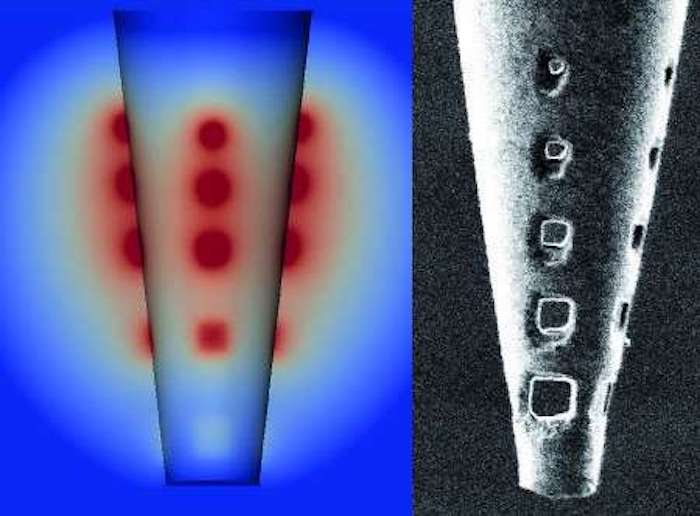
250 cells that make up a microcircuit in part of a mouse brain that processes smell can now be mapped, with out the surrounding tissue being damaged. This is unprecedented, and can be used to understand the architecture of different parts of the brain.

A series of tiny holes near the end of a micropipette enabled the use of charged dyes that distribute electrical current over a wide area,  staining cells without damaging them. Unlike when viral vectors are used, 100% of the cells in the microcircuit could be stained.

According to Schaefer, “now that we have a tool of mapping these tiny units, we can start to interfere with specific cell types to see how they directly control behaviour and sensory processing.”


Join ApplySci at Wearable Tech + Digital Health + Neurotech Silicon Valley on February 26-27, 2018 at Stanford University. Speakers include:  Vinod Khosla – Justin Sanchez – Brian Otis – Bryan Johnson – Zhenan Bao – Nathan Intrator – Carla Pugh – Jamshid Ghajar – Mark Kendall – Robert Greenberg – Darin Okuda – Jason Heikenfeld – Bob Knight – Phillip Alvelda – Paul Nuyujukian –  Peter Fischer – Tony Chahine – Shahin Farshchi – Ambar Bhattacharyya – Adam D’Augelli – Juan-Pablo Mas – Michael Eggleston – Walter Greenleaf – Jacobo Penide – David Sarno – Peter Fischer

Registration rates increase today – January 16th

Categories
Sensors

Ingestible sensor monitors gut oxygen, hydrogen, carbon dioxide

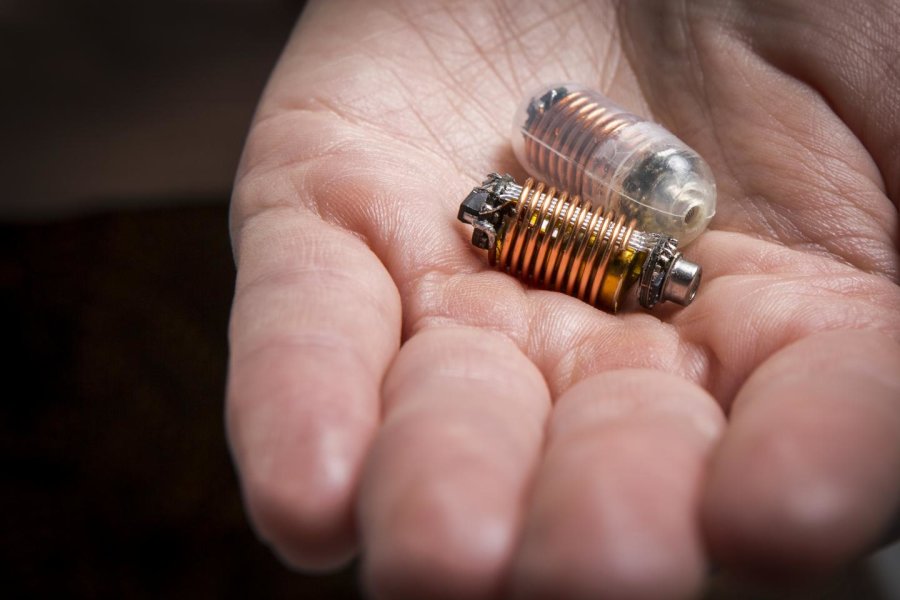
Peter Gibson, Kyle Berean and  RMIT colleagues have developed an ingestible sensor that measures oxygen, hydrogen, and carbon dioxide in the gut.

In a recent study, subjects were monitored while modulating gut microbial fermentative activities by altering their intake of dietary fiber. Ultrasound imaging confirmed that the oxygen-equivalent concentration profile could be used as an accurate marker for the location of the capsule. Variations of fiber intake were found to be associated with differing small intestinal and colonic transit times, and gut fermentation. Regional fermentation patterns could be defined via hydrogen gas profiles.

The capsule could be used as a tool for monitoring the impact of one’s diet, and as a gut disorder diagnostic tool.


Join ApplySci at Wearable Tech + Digital Health + Neurotech Silicon Valley on February 26-27, 2018 at Stanford University. Speakers include:  Vinod Khosla – Justin Sanchez – Brian Otis – Bryan Johnson – Zhenan Bao – Nathan Intrator – Carla Pugh – Jamshid Ghajar – Mark Kendall – Robert Greenberg – Darin Okuda – Jason Heikenfeld – Bob Knight – Phillip Alvelda – Paul Nuyujukian –  Peter Fischer – Tony Chahine – Shahin Farshchi – Ambar Bhattacharyya – Adam D’Augelli – Juan-Pablo Mas – Michael Eggleston – Walter Greenleaf – Jacobo Penide – David Sarno – Peter Fischer

Registration rates increase – January 19th.

Categories
AI Autonomous cars EEG

EEG + AI assists drivers in manual and autonomous cars

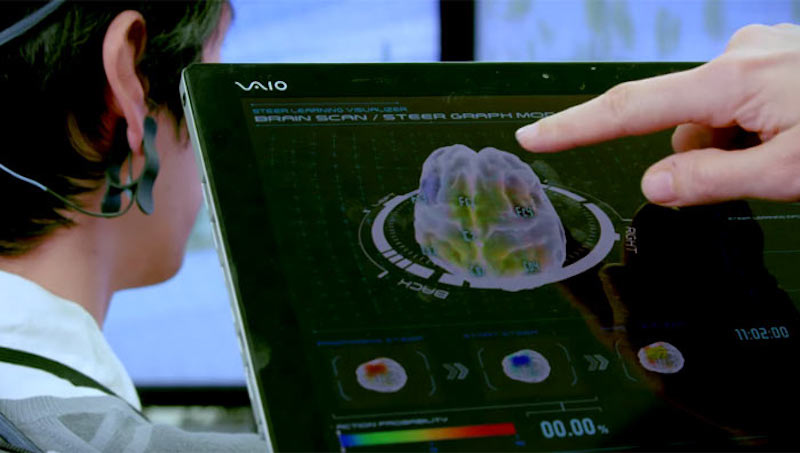
Nissan’s Brain-to-Vehicle (B2V) technology will enable vehicles to interpret signals from a driver’s brain.

The company describes two aspects of the system — prediction and detection, which depend on a driver wearing EEG electrodes:

Predicton: By detecting, via the brain, that the driver is about to move, including turning the steering wheel or pushing the accelerator pedal, B2V can begin the action more quickly.

Detection: When driver discomfort is detected, and the car is in autonomous mode, AI tools change the driving configuration or style.

Lucian Gheorghe, an innovation researcher Nissan, said that the system can use AR to adjust what the driver sees, and can turn the wheel or slow the car  0.2 to 0.5 seconds faster than the driver.


Join ApplySci at Wearable Tech + Digital Health + Neurotech Silicon Valley on February 26-27, 2018 at Stanford University. Speakers include:  Vinod Khosla – Justin Sanchez – Brian Otis – Bryan Johnson – Zhenan Bao – Nathan Intrator – Carla Pugh – Jamshid Ghajar – Mark Kendall – Robert Greenberg – Darin Okuda – Jason Heikenfeld – Bob Knight – Phillip Alvelda – Paul Nuyujukian –  Peter Fischer – Tony Chahine – Shahin Farshchi – Ambar Bhattacharyya – Adam D’Augelli – Juan-Pablo Mas – Michael Eggleston – Walter Greenleaf – Jacobo Penide – David Sarno

Registration rates increase today – January 5th.

Categories
Brain PTSD

Acoustic stimulation reduced PTSD symptoms in small study

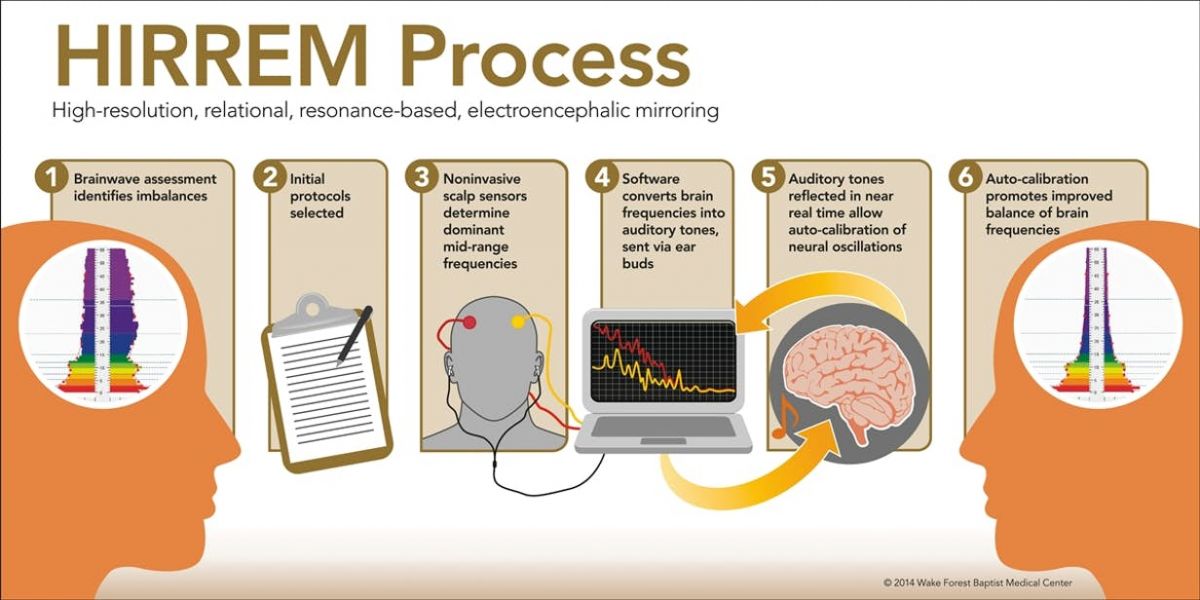
Wake Forest’s Charles H. Tegeler has found that non-invasive brainwave mirroring technology significantly reduced symptoms of post-traumatic stress in soldiers.

High-resolution, relational, resonance-based, electroencephalic mirroring (HIRREM) is used as a non-invasive, closed-loop, acoustic stimulation approach. Algorithms translate brain frequencies into audible tones in real-time.

Tegeler compares this to an “acoustic mirror.” Through resonance between brain frequencies and acoustic stimulation, the brain makes self-adjustments to improve balance and reduce hyperarousal, with no conscious, cognitive activity. This supports the brain to reset stress response patterns that  caused by repetitive traumatic events.

In a small study, reductions in post-traumatic symptoms, including insomnia, depressive mood, and anxiety were observed in subjects for  six months after the HIRREM protocol.


Join ApplySci at Wearable Tech + Digital Health + Neurotech Silicon Valley on February 26-27, 2018 at Stanford University. Speakers include:  Vinod Khosla – Justin Sanchez – Brian Otis – Bryan Johnson – Zhenan Bao – Nathan Intrator – Carla Pugh – Jamshid Ghajar – Mark Kendall – Robert Greenberg – Darin Okuda – Jason Heikenfeld – Bob Knight – Phillip Alvelda – Paul Nuyujukian –  Peter Fischer – Tony Chahine – Shahin Farshchi – Ambar Bhattacharyya – Adam D’Augelli – Juan-Pablo Mas – Michael Eggleston – Walter Greenleaf – Jacobo Penide

Registration rates increase Friday, January 5th.