Categories
Robotics Seniors

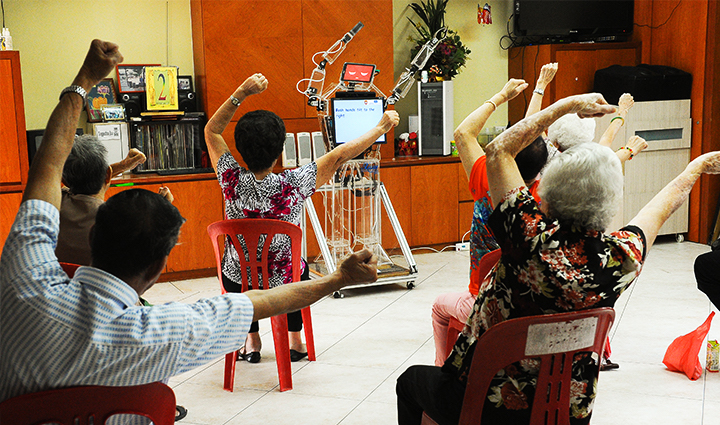
Robot leads senior fitness classes, corrects participant form

Robocoach uses motion-sensor technology to coach seniors during exercise classes. Created by Ngee Ann Polytechnic student Lim Pei Xuan, the robot has blue eyes and two teeth, and mimics human movements,

Voices are recognized, including instructions to start the session. In large group workouts, the pace is slowed, to ensure that everyone can keep up.   Robocoach can also guide and correct individuals during personalized exercises, including asking them to raise their arms higher.

Categories
Conference

Norwest’s Robert Mittendorff on digital health investing

Norwest Venture Partners’ Robert Mittendorff participated in ApplySci’s recent Wearable Tech + Digital Health NYC conference.  Here is his interview with StartUp Health’s Steven Krein on digital health investing.

UPCOMING APPLYSCI CONFERENCES:

Wearable Tech + Digital Health San Francisco – April 5, 2016 – Early registration discount ends October 10th

NeuroTech San Francisco – April 6, 2016 – Early registration discount ends October 10th.

Categories
Conference

Wearable Tech + Digital Health San Francisco – April 5, 2016

As sensors, connected devices and data analysis techniques are continually refined, the life enhancing and saving potential of wearable tech grows exponentially.

Health systems are incorporating wearables and digital health protocols into patient care plans. Consumers are buying smart watches, smart clothes, smart jewelry, and of course the latest phones and gadgets, to quantify their own health and fitness. Doctors welcome fitness data to understand the longer, fuller picture of patient health. Hospitals incorporate wearables to better monitor vitals, and send patients home with them to improve outcomes. And, of course, all are concerned with ensuring accurate, reliable, data acquisition, and its private and secure transfer.

Wearable Tech + Digital Health SF will take place on April 5, 2016. It is a conference driven by the latest digital health breakthroughs. It follows Wearable Tech + Digital Health NYC, where 250 healthcare thinkers gathered to discuss devices, data, tech driven patient care in the real world, and the next generation of health monitoring, from sweat sensors to EEG tattoos.

WTDHSF will be followed by NeuroTech SF, on April 6, 2016 – a full day event dedicated to brain monitoring, neurofeedback, BCI and stimulation – a natural and needed extension of the Wearable Tech + Digital Health conference.

If you’d like to register to attend, click here. The early registration period, with corresponding lowest rates, ends on October 10th.

We are now curating the agenda.  Speakers include:

  • Douglas Wood – Medical Director, Mayo Clinic Center for Innovation
  • Vivek Wadhwa – Professor, Stanford & Duke Universities
  • Roozbeh Ghaffari – Co-Founder and VP of Technology, MC10
  • Jack Young – General Partner, dRx Capital & Head of the Qualcomm Life Fund
  • Lynne Chou – Partner , Kleiner Perkins Caulfield Byers
  • Nathan Intrator – Professor, Tel Aviv & Brown Universities; Founder, neurosteer

The event series is hosted and curated by ApplySci, editors of the ApplySci discoveries blog, which features daily innovation snapshots and predictive analysis for the future of wearable tech, digital health, neurotech and IoT.  We welcome like-minded companies and individuals to join the conversation on April 5th and 6th in San Francisco.

Categories
Orthopedics Smart Fabric Wearables

Smart shirt monitors posture, sends correcting alerts

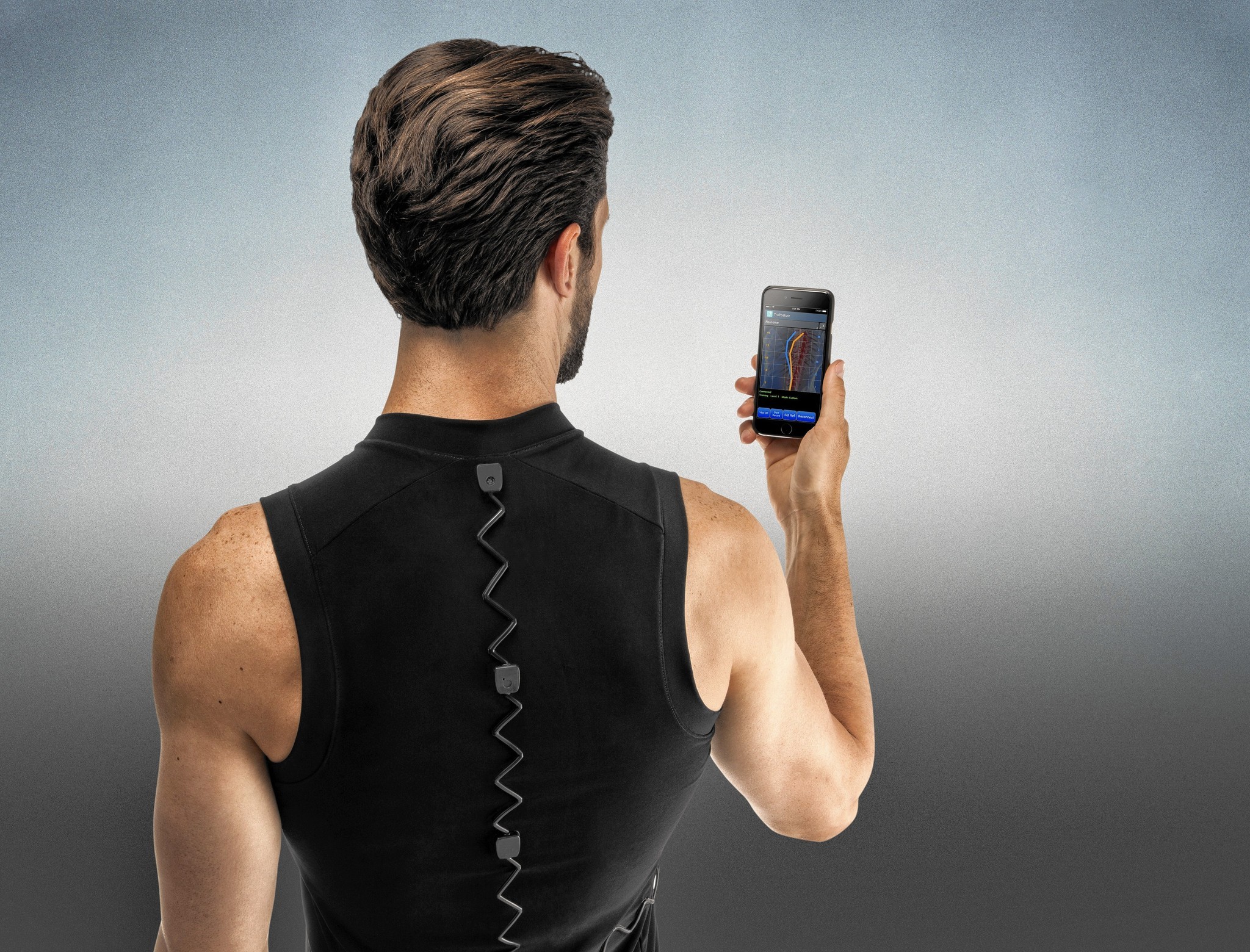
TruPosture is a smart shirt with embedded nanosensors that continuously measure the curvature of one’s spine.  It is being crowdfunded on indiegogo.

The wearer, and a physical therapist, set a personalized posture goal.  When the spine diverges, vibrations  are sent as posture reminders. One vibration burst happens when a wearer is leaning too far forward, and two bursts happen when he/she leans too far back.

Posture performance is tracked over time through an app.  The data can be shared with doctors or therapists, or integrated with fitness wearables.

Categories
3-D Printing Heart

Faster, personalized, 3D printed heart models for surgery planning

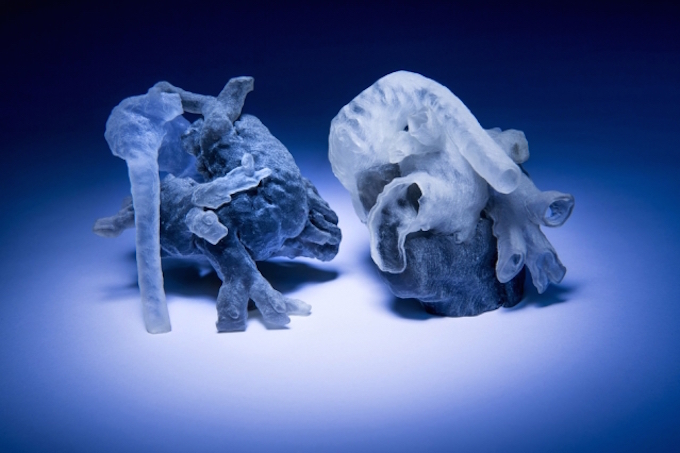
MIT and Boston Children’s Hospital researchers are converting heart MRI scans into 3D printed physical models,  for surgical planning,  in 3-4 hours.  Previously, the process took 10 hours. The project, which limits human input to increase accuracy, is led by Professor Polina Golland.  Physicist Medhi Moghari enhanced the precision of the MRI, decreasing the dependence on generic models, and enabling the the team to create the algorithm and print the model in the shorter time frame.

The algorithm examines patches of unsegmented cross sections and looks for similar features in the nearest segmented cross sections. Golland believes that its performance might be improved if it also examined patches that ran obliquely across several cross sections, which will be the next phase of research.

Categories
Virtual Reality

Personalized medicine via “medical avatars”

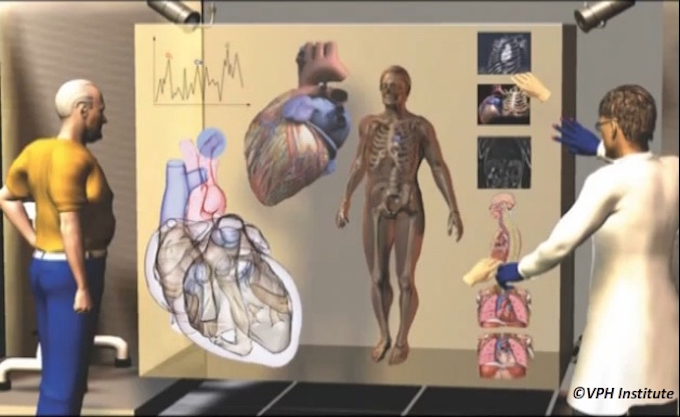
The European Commission’s DISCIPULUS project, led by UCL researcher Vanessa Diaz,  aims to build a roadmap towards the “digital patient”.  The  dynamic, virtual version of an individual, which Diaz describes as a “medical avatar” could run simulations of treatments to find the best course of action.

If a symptomatic patient arrives at hospital, a  virtual “twin” is created, based on scans. Multiple testing is done on the avatar,  and new scans are continuously uploaded, to determine the outcomes of various treatments.

The best and most tailored plan is then carried out. The patient is discharged with wearables, or other sensor based devices, to monitor key metrics at home, and continue to update the virtual twin during recovery.

Categories
BCI

Paraplegic walks, lightly supported, for 12 feet, with BCI triggered muscle stimulation

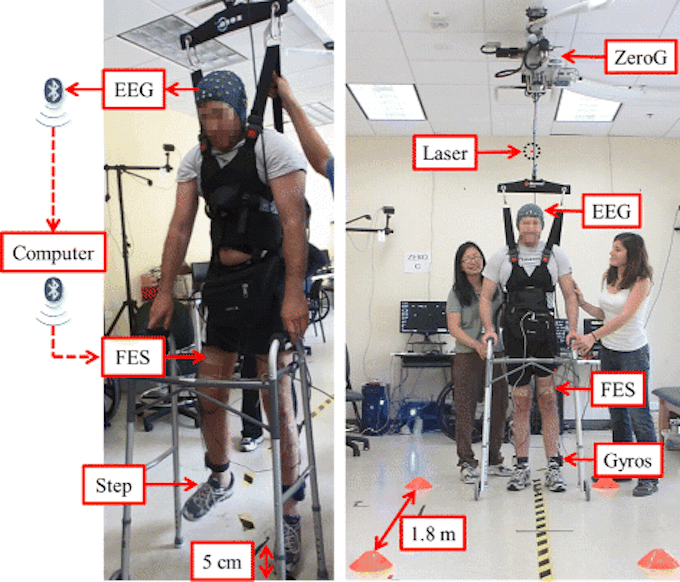
UC Irvine BCI research has enabled a a paraplegic to walk, with support,  for 12 feet, without an exoskeleton.   The hope is that this will lead to a new generation of BCI stimulation technology that will allow the disabled to walk for longer periods with minimal support. The study was led by Samueli School of Engineering‘s  Zoran Nenadic and An Do.

A computer linked the 28 year old man’s  brain to his legs over a Bluetooth connection, bypassing the severed region of his spinal cord. EEG derived brain signals were relayed to electrodes on his knee, triggering walking movements.

Prior to the experiment, the man underwent extensive training to strengthen his muscles and learn to control a virtual avatar using the BCI device. He also made similar movements in the lab while slightly suspended.

The team would like to miniaturize and implant the EEG components in the brain.  They believe that this could give patients more precise control the and the ability to “sense” pressure.

View UC Irvine video here.

Categories
BCI Brain

Brain-to-brain link allows one person to read another’s thoughts

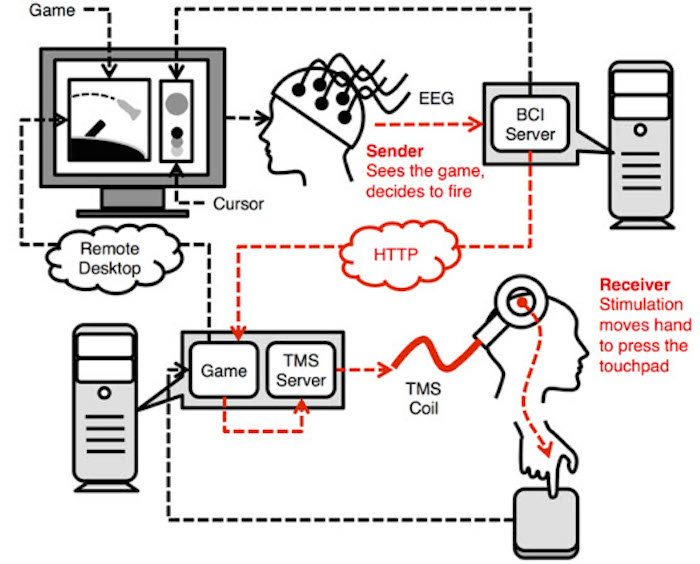
University of Washington researchers used a direct brain-to-brain connection to enable pairs of participants to play a question-and-answer game by transmitting signals from one brain to the other over the Internet. The experiment is thought to be the first to show that two brains can be directly linked to allow one person to guess what’s on another person’s mind.

Lead author Andrea Stocco believes  that “This is the most complex brain-to-brain experiment that’s been done to date in humans. It uses conscious experiences through signals that are experienced visually, and it requires two people to collaborate.”  Chanel Prat, Darbey Losey, Jeneva Cronin, Joseph Wu and Justin Abernathy co-authored the paper.

The study builds on the UW team’s 2013 experiment demonstrating a direct brain-to-brain connection between humans. Other scientists have connected the brains of rats and monkeys, and transmitted brain signals from a human to a rat, using electrodes inserted into animals’ brains. The UW team used noninvasive technology to send a person’s brain signals over the Internet to control the hand motions of another person.

Click to watch the University of Washington video.

Categories
Heart Monitoring Respiratory

Piezoelectric sensor car seat monitors respiration, heart rate

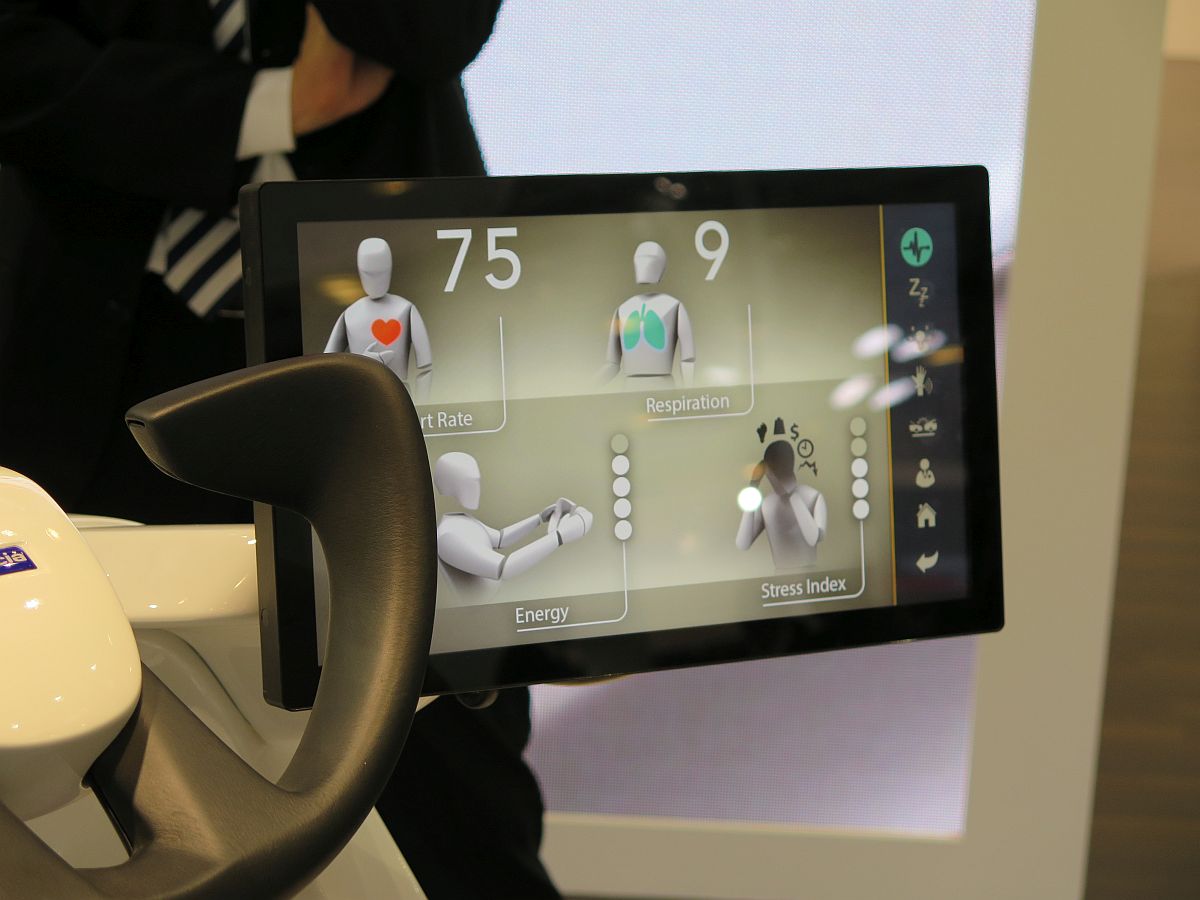
Faurecia‘s “Active Welness” car seat monitors respiration and heart rate with embedded piezoelectric sensors.  The goal is to detect driver stress or alertness.  When low energy is detected, the seat responds with specific massage patterns and air flow through the ventilation system.  The non-contact sensors were developed by Hoana Medical.  Combined with advanced algorithms and signal processing, Faurecia claims that they can accommodate noise and vibration from the moving vehicle without compromising effectiveness.

Categories
Assistive Technologies Brain Gaming

Virtual coaching for TBI patients

The Office of Naval Research is developing MOVER (Mobile, Virtual Enhancements for Rehabilitation) to help TBI patients maintain therapy regimens.  Confusion, forgetfulness or depression can prevent injured veterans from completing necessary exercises for rehabilitation. Featured movements include including lunges, knee raises and squats, which are standard for TBI therapy.

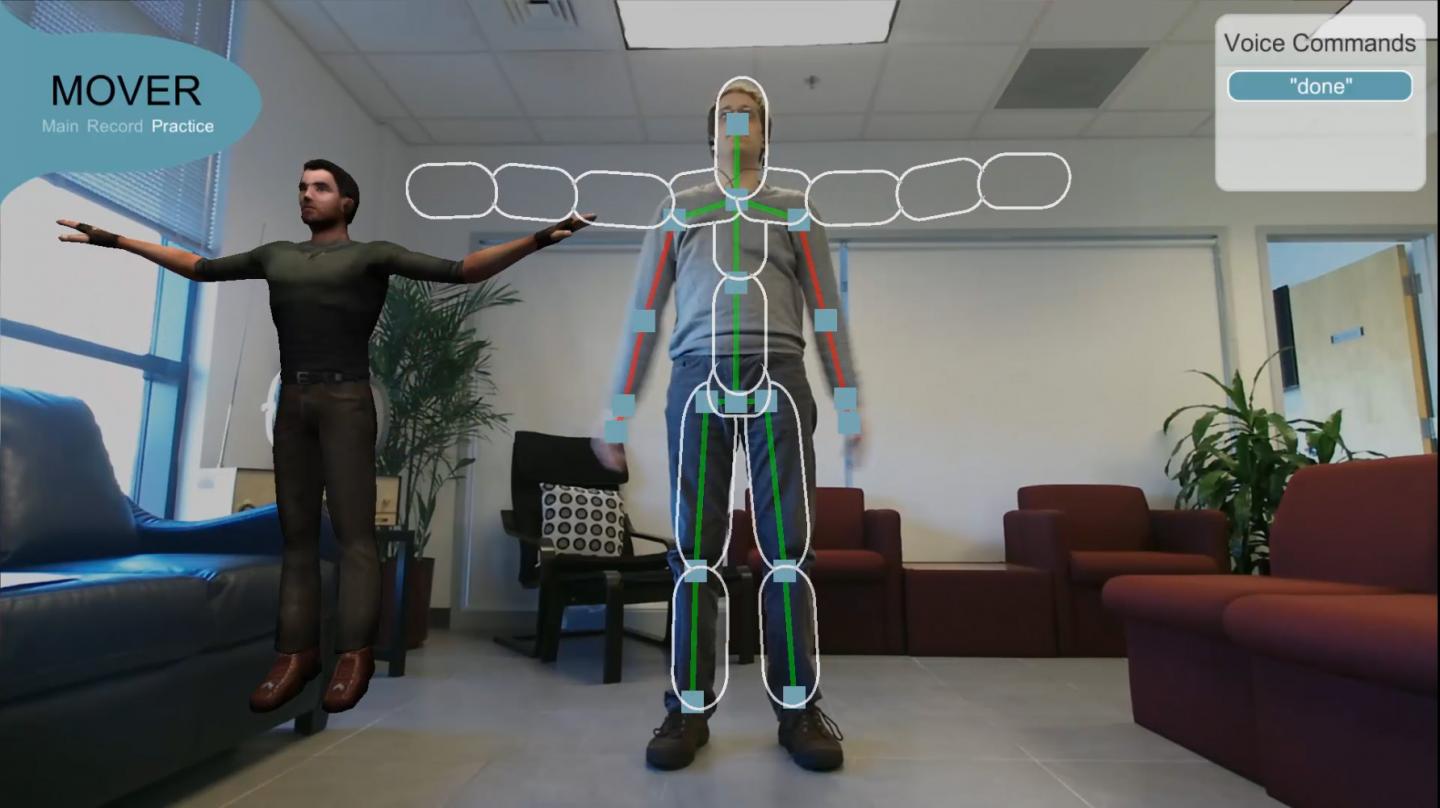
When a user turns on a computer and camera, he/she stands still, while MOVER maps a virtual “skeleton” of brightly colored lines and shapes.  Movements are mirrored through each exercise. To increase visibility, users can connect MOVER to a television using Microsoft Kinect.

The system coaches by displaying pop-up text boxes or color shading in areas of the virtual skeleton, highlighting where and how to correct one’s form.

A six-month pilot study of the software, with 40 TBI patients and therapists at Spaulding Rehabilitation Hospital, will soon begin.

Categories
Cancer Sensors

Remotely controlled capsule endoscope captures lower GI images

A new type of capsule endoscope may improve cancer diagnostics, providing comprehensive, non-invasive imaging, including lower GI images.

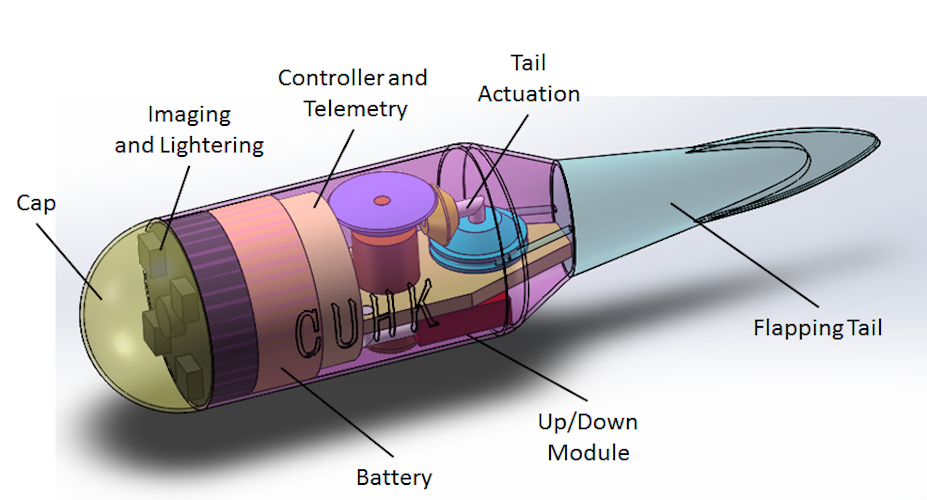
The 3D printed Tadpole Endoscope (TE) has a soft tail that allows it to be  remotely guided around the stomach.  The technology was developed by Yong ZHONG, Ruxu DU and Prof Phillip W Y CHIU of the Chinese University of Hong Kong.

The TE is activated immediately after being swallowed. Once it reaches the stomach, a doctor can guide the device to gather images. By adjusting a patient’s posture, the whole stomach can be viewed. The TE moves into the lower GI tract via natural peristalsis. The patient is sent home, wearing a sensor patch, to record  the lower GI images, which are transmitted to the doctor.

Currently, esophagus and stomach cancer can be diagnosed using gastroscopy; intestinal cancer can be diagnosed using capsule endoscopy; and colorectal cancer can be diagnosed using colonoscopy.

Click to view the Chinese University of Hong Kong video.

Categories
Brain Ultrasound

Sonogenetics: Neuron stimulation via ultrasound

Salk‘s Sreekanth Chalasani‘s “sonogenetics” technique uses ultrasound to stimulate individual brain cells.  A nature paper describes the technology as tested on worms.  The goal is noninvasive stimulation of specific cell types or individual neurons in humans, with out using implanted electrodes or fiber-optic cables.

Current optogenetics therapies  rely on inserting light-sensitive channel proteins into neurons. When hit by the correct color of light, usually sent by a fiber-optic cable, the channels open, allowing ions to flood in.

The new technique relies on touch-sensitive  “channel” proteins, which can be added to specific brain cells through genetic engineering. The channels open when hit by an ultrasonic pulse, allowing ions to flood into a neuron and cause it to turn on.

Click to view Salk Institute video.