Categories
Monitoring Sensors Wearables

Sensors, software to understand MS progression

Biogen Idec and Google X  will use sensors and software to collect and analyze data from MS patients.  The goals is to understand  environmental and biological factors that contribute to the disease’s progression, and why it progresses differently in every patient.  Andrew Conrad, head of Life Sciences at Google X, believes that this will lead to earlier interventions and better outcomes.

Wearable Tech + Digital Health NYC 2015 – The Health Sensor Revolution.  June 30 @ New York Academy of Sciences.

Categories
Sensors Wearables

Silver nanowire wearable claims greater accuracy

Yong Zhu and North Carolina State colleagues  have developed a silver nanowire wearable sensor to monitor EKG and EMG.  They claim that the dry sensor is as accurate as wet electrode hospital sensors and  works while a wearer is moving.

According to Zhu,  “the silver nanowire sensors conform to a patient’s skin, creating close contact.  Because the nanowires are so flexible, the sensor maintains that close contact even when the patient moves. The nanowires are also highly conductive, which is key to the high signal quality.”

In January, 2014, ApplySci described Professor Zhu’s early silver nanowire sensor work, which led to this wearable.  The accuracy of wearables will be a main focus of Wearable Tech + Digital Health NYC 2015 – June 30 @ New York Academy of Sciences

Categories
Sensors Wearables

Ear sensor monitors driver alertness

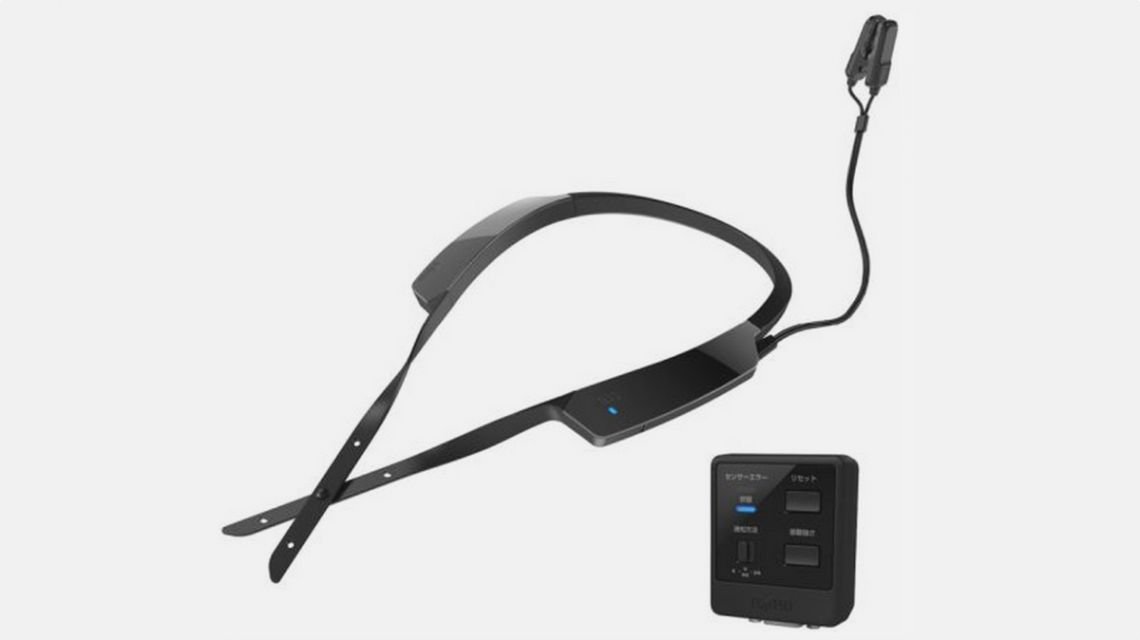
Fujitsu’s FEELythm is a wearable sensor that tracks pulse to detect drowsiness in drivers.  An algorithm monitors vital signs via a sensor attached to the earlobe, gauges drowsiness, and notifies the driver.  When used commercially,  it notifies the driver’s fleet manager. It can connect to onboard devices and link to fleet management systems for real time monitoring.

The company claims to be able to predict  commercial driving dangers before they occur by creating a hazard map for fleet managers based on sensor data indicating fatigue, stress, and tension.

Wearable Tech + Digital Health NYC 2015 – June 30 @ New York Academy of Sciences

Categories
Diabetes Sensors Wearables

Noninvasive sensor tattoo detects glucose levels

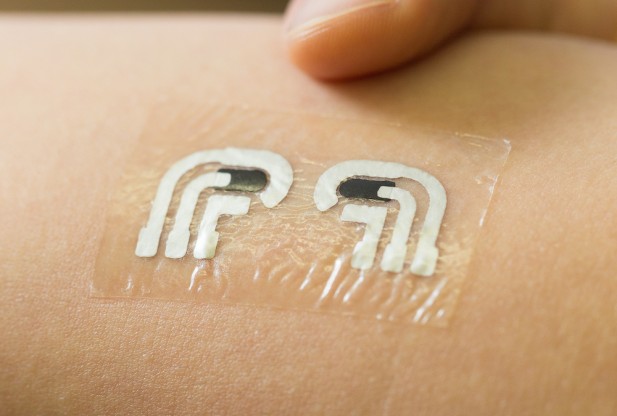
UC San Diego professor Joseph Wang has developed an ultra-thin, flexible device that sticks to skin like a tattoo and can detect glucose levels.  The sensor  has the potential to eliminate finger-pricking for diabetes.

The wearable, non-irritating sensor tattoo can detect glucose in the fluid just under the skin.  It is based on integrating glucose extraction and electrochemical biosensing.  Testing on seven volunteers showed  that it was able to accurately determine glucose levels. The sensor response correlated with that of a commercial glucose monitor.

Noninvasive monitoring will be one of the disruptive innovations discussed at  Wearable Tech + Digital Health NYC 2015:  The health sensor revoltion on June 30, 2015 at the New York Academy of Sciences.

Categories
fitness Heart Sensors Wearables

Smart earring monitors heart rate, calories, activity

Ear-o-smart is a crowdfunded smart earring that monitors heart rate, calories, and activity level.   Its sensor is combined with a changeable earring.  Its app, via voice instruction, tells wearers to speed up or slow down based on heart rate data.

The tiny  wearable was created by minimizing PPG Technology and Bluetooth data transfer.  PPG Technology gauges heart rate through infrared light that blood reflects if present under the skin.  The sensor works better if worn on the earlobe than on the wrist, as the many blood vessels in the  ear make PPG more effective.

Categories
fitness Heart Sensors Wearables

Multiple measurements, including blood pressure, from shirt sensor insert

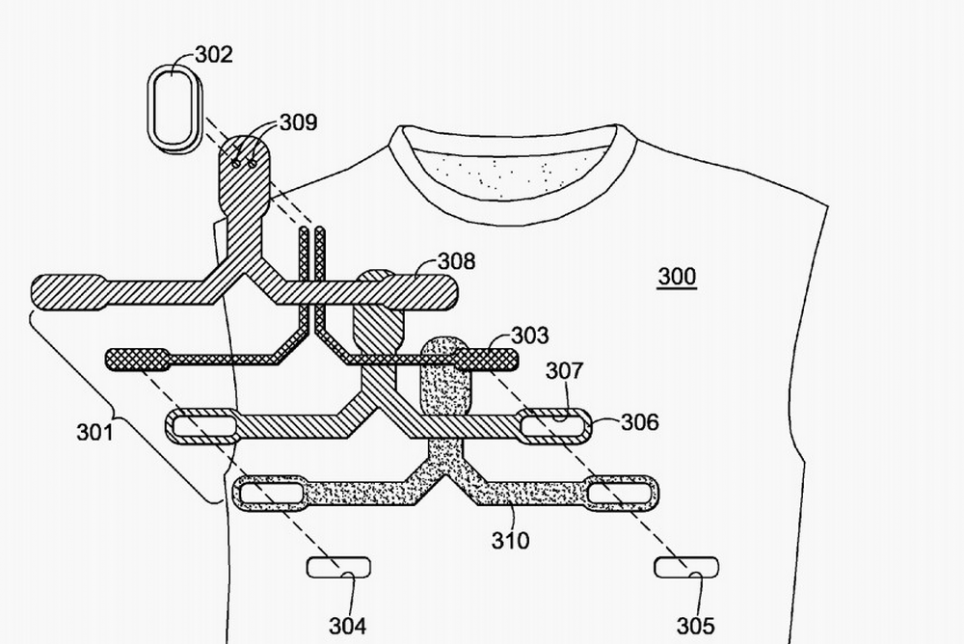
Nike was recently awarded a patent for a skin-touching sensor system that can be inserted into a shirt.  It can measure heart rate, blood pressure, hydration, and skin temperature, and transmit the data over radio frequencies, Bluetooth and WiFi.

If it works, the ability measure blood pressure from shirt sensors, combined with other vital signs, is new and promising.

A Quartz article quoted Loyola sports medicine doctor James Winger describing the potential impact on cardiac rehabilitation. He said that this could be a substitute for bulky EKG and other sensors patients use at the gym in the first stages of rehab.  He is also optimistic about use in professional sports, although he believes that  skin temperature and hydration levels, as monitored by this system, wouldn’t  correlate to internal temperatures indicating serious health issue on the field.

Categories
Assistive Technologies Prosthetics Sensors

Artificial skin detects pressure, moisture, heat, cold

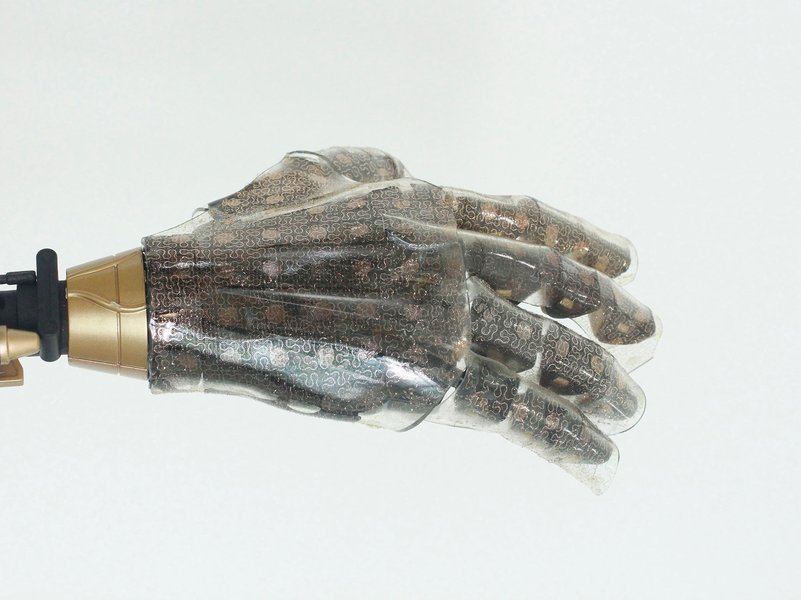
MC10‘s Roozbeh Ghaffari and a team of researchers from the US and Korea have developed artificial skin for prosthetics that mimics the sensitivity of real skin.  Its silicon and gold sensors detect pressure, moisture, heat and cold.   It is elastic enough for users to stretch and move a bionic hand’s fingers as they would real fingers.  According to Ghaffari, “If you have these sensors at high resolution across the finger, you can give the same tactile touch that the normal hand would convey to the brain.”  A paper detailing the research was published in Nature earlier this month.

Categories
Apps Monitoring Sensors

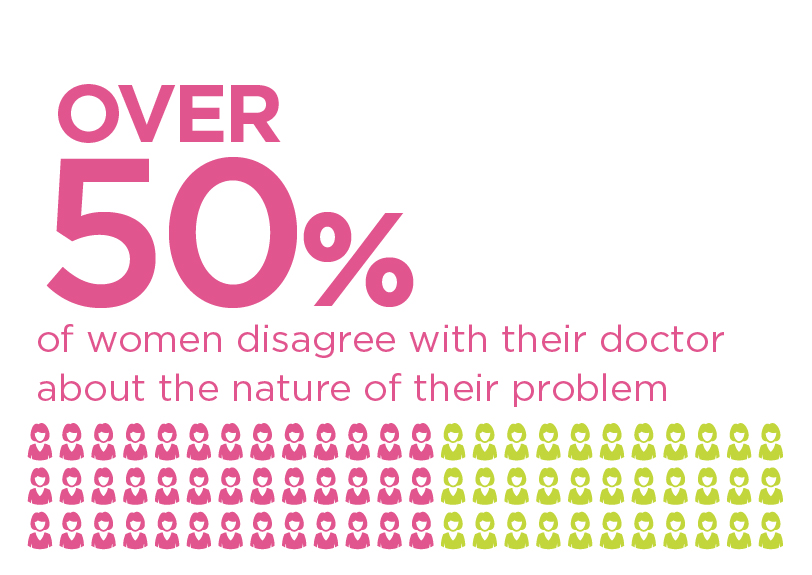
Hormone sensor + cloud platform for women

Open Source Health, a cloud based women’s healthcare platform, has unveiled a device for  self-measuring hormones using a drop of blood from one’s finger.  Each single use  bio-sensor chip performs up to 5 tests at home.  Estrogens, progestogens and androgens can be measured. Future plans include the ability to measure thyroid hormones (TSH, T3 and T4)  and nutrition and vitamin levels.

The device uses hyper-spectral sensing technology and advanced protein synthesis.  A single drop of blood in the sensor sends real time results to a smartphone, which are then uploaded to a cloud-based platform for analysis.


Categories
Apps Brain Sensors Wearables

Light tracking wearable to prevent seasonal depression

As the shortest day of the year approaches, we all risk the impact of a lack of sun on our personal wellness.

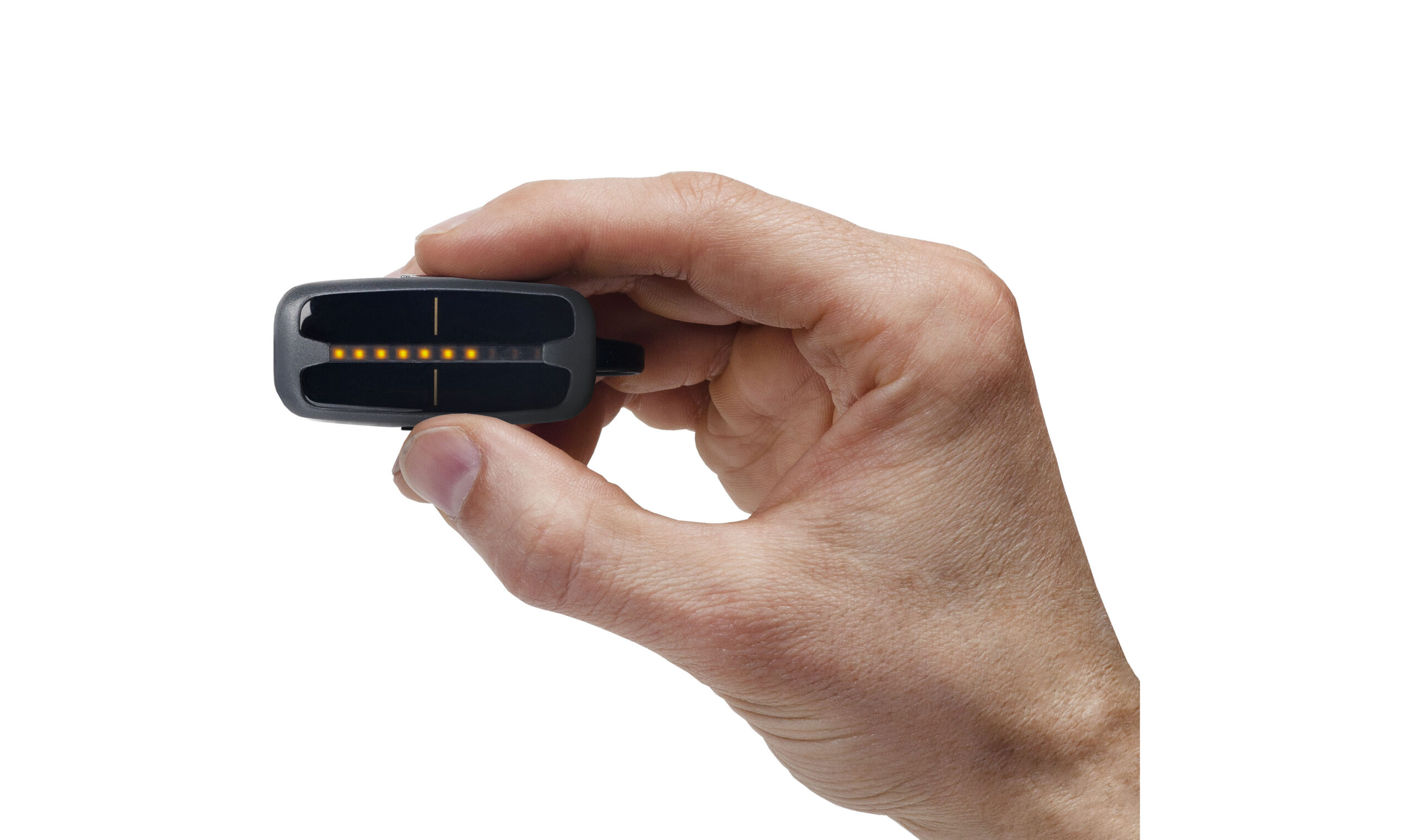
Bright light exposure has myriad mental health benefits, including improved mood, and enhanced digestion, energy and sleep.   Studies show that light therapy is as effective as antidepressant medication, with additional benefits and no side effects.  SunSprite is a wearable that empowers users to prevent seasonal depression (and other light-associated problems) by quantifying their own exposure to daily bright light.  Light affects hormone levels, key to many aspects of health, which ApplySci believes will be one of the key measurables in the next generation of wearables.

Bright light is absorbed through the eyes, travels through receptor cells on the retina, and then onto the brain, which controls hormonal cycles.  It is not absorbed through the skin, as is commonly thought.  SunSprite is solar powered and has dual sensors that measure visible and UV light.  It contains 10 LED lights, each representing 10% of a person’s daily goal.  A button is pushed to view progress and sync with a mobile phone via Bluetooth.  Users receive instant sun exposure feedback via the device’s display, and deeper analysis from the mobile app.  Personalized coaching is offered,  goals are set, and trends are tracked.

The company  is run by Ed Likovich and a team of Harvard scientists.  The device is compatible with iPhone, will soon be compatible with Android, and can also provide light feedback with out the mobile app.


Categories
Monitoring Sensors Sleep

Less obtrusive sleep monitoring

Stevens Institute of Technology and Florida State University researchers have developed a sleep monitoring system using earbuds with an in-line microphone plugged into an iPhone. The microphone monitored study participants’ breathing to within half a breath per minute of what could be recorded with a chest-worn respiration monitor and collar clipped microphone.  The novelty of the system is the ability to place the earphones on a table next to the bed, making the process much less obtrusive. Ambient noise was filtered out, allowing  focus on breathing, snoring and coughing.

Lead researcher Yingying Chen believes that the system will help diagnose health problems, such as sleep apnea.  This is typically studied at hospitals, where sensors are attached to a patient’s body and sleep is monitored. Chen believes that it is difficult for doctors to capture irregular patterns in a hospital setting.

The team plans to release a related smartphone app next year.

Categories
fitness Sensors Wearables

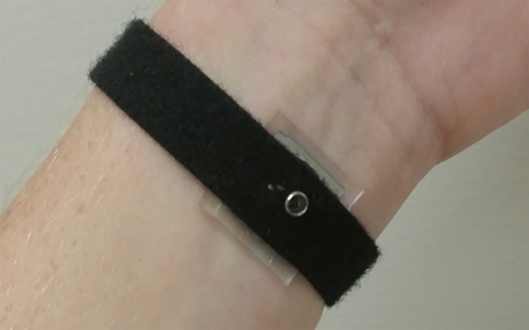
Flexible, wearable, disposable pulse oximeter

Conventional pulse oximeters use LEDs to send red and infrared light through one’s fingertip or earlobe. Bright, oxygen-rich blood absorbs more infrared light, and darker, oxygen-poor blood absorbs more red light. The ratio of the two wavelengths, determined by sensors, reveals how much oxygen is in the blood.

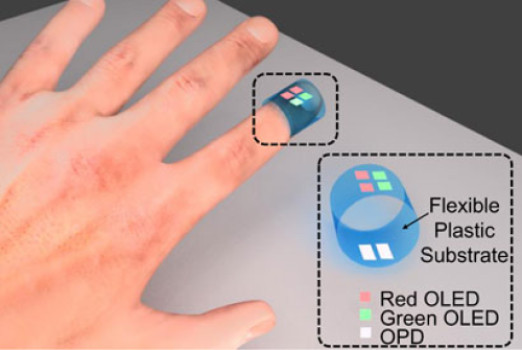
Berkeley professor Ana Clauda Arias has built pulse oximeter functions into flexible carbon-based materials, instead of rigid chips fabricated with silicon. She used red and green light, which yield comparable differences to red and infrared when distinguishing high and low levels of oxygen in the blood.  Arias compares the “organic electronics” to band-aids,  as they are disposable, cheap and flexible. Her study was published in Nature Communications this week.

The organic LEDs were printed on flexible plastic,with a spin coating that uses centrifugal force to deposit a solution with the material in a thin, uniform film. An organic photodiode converted the light received through the tissue into a current, enabling it to be configured into flexible forms.

Minimal, flexible pulse oximetry can be incorporated into the next generation of fitness wearables, enhancing performance metrics.

Categories
Prosthetics Sensors

Wearable optical sensor controls prosthetic limbs

Ifor Samuel and Ashu Bansal at the University of St. Andrews have developed a wearable optical sensor that can be used to control the movement of artificial limbs.

Plastic semiconductor based sensors detect muscle contraction. Light is shined into fibrous muscle, and the scattering of the light is observed. When muscle is contracted, the light scatters less, because  muscle fibers are further apart. Sensors detect the changed scattering signals, and relay the information, as photocurrents, to a prosthetic limb, triggering movement.  A robotic arm was controlled using this method in a recent study.

Using disposable wearable optical sensors could eliminate patient risks associated with electrical based sensors, including electromagnetic interference, pain caused by sensing needles, and immune responses.