Categories
BCI Brain Prosthetics

Biocompatible neural prosthetics

Spinal injury patients, and those with lost limbs, sometimes have neural prosthetic devices implanted in an attempt to regain independence.  They are used for deep brain stimulation and brain controlled external prosthetics.  However, neural prosthetics are often rejected by the immune system, and can  fail because of a mismatch between soft brain tissue and rigid devices.

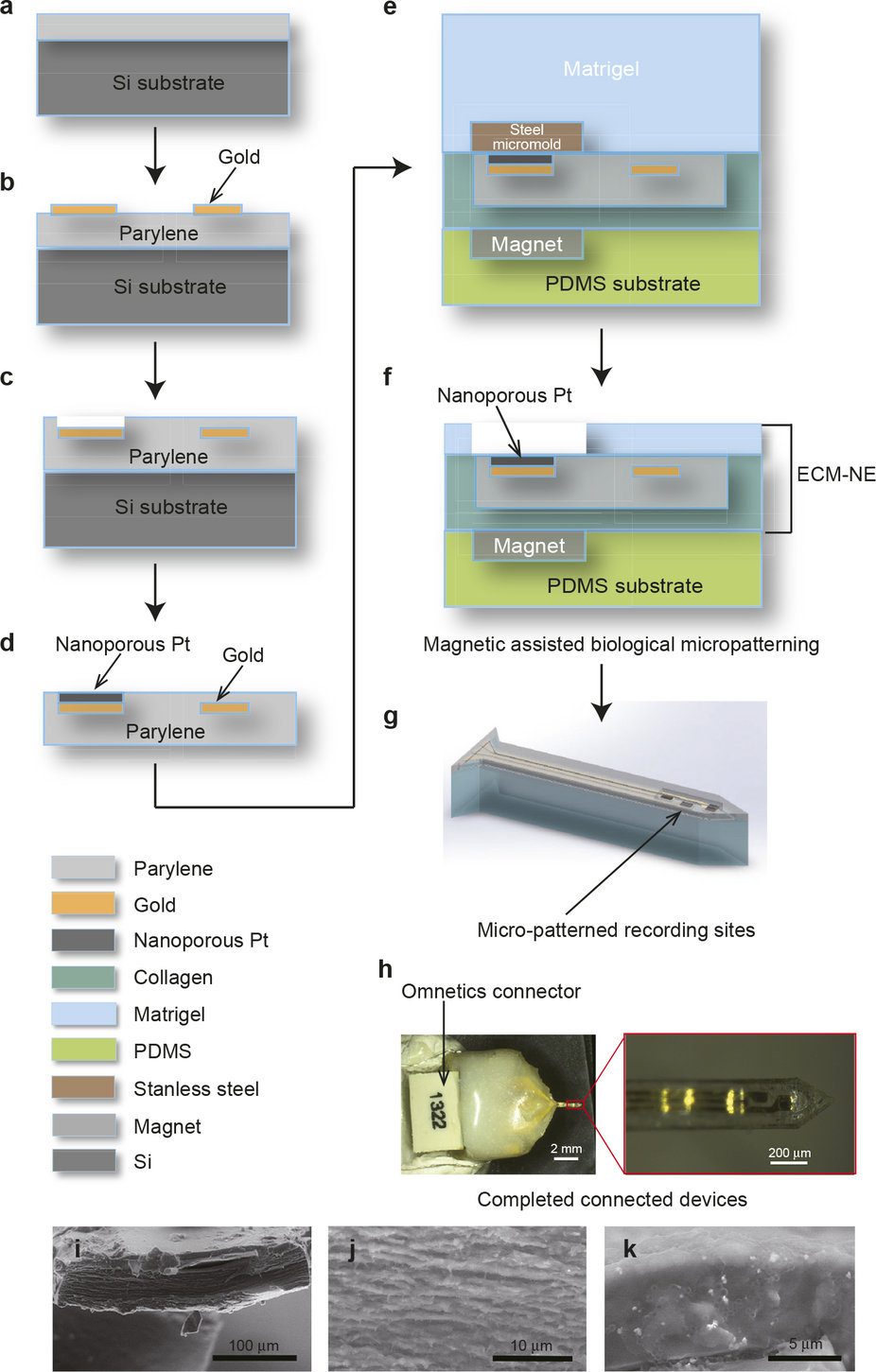
University of Pennsylvania‘s Mark Allen and colleagues have created an implantable neural prosthetic device that is biocompatible and replaces silicon and noble metal. The goal is to avoid immune-system rejection, failures due to tissue strain, neurodegeneration, and decreased fidelity of recorded neural signals.

Categories
Brain Seniors

Study: Emotions linked to learning and memory

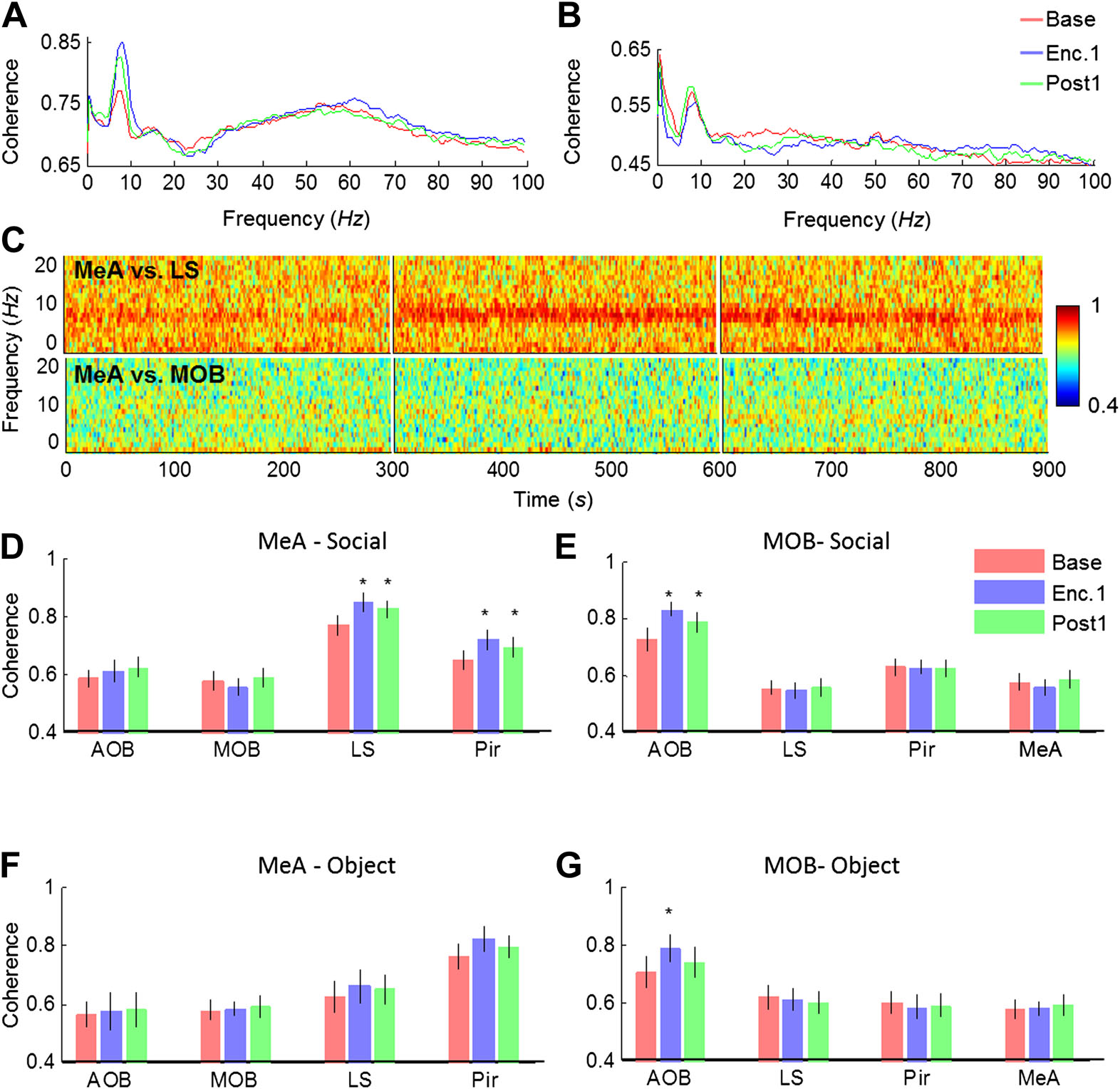
Shlomo Wagner at the University of Haifa has published a paper linking emotions to the processes of learning and memory.   For the first time, electrical activity that takes place in the brain during the formation of social memory was identified.

Wagner believes that “different emotions cause the brain to work differently and on distinct frequencies.”  He found a connection between the feeling of excitement, rhythmical activity in specific brain areas, and the cognitive process of memory formation.

While only studied in animals, if human trial results are consistent, this could impact the treatment of age-related memory and ADHD learning issues.

Categories
Heart IoT Sensors

Mirror sensors, imaging systems, assess cardio-metabolic risk

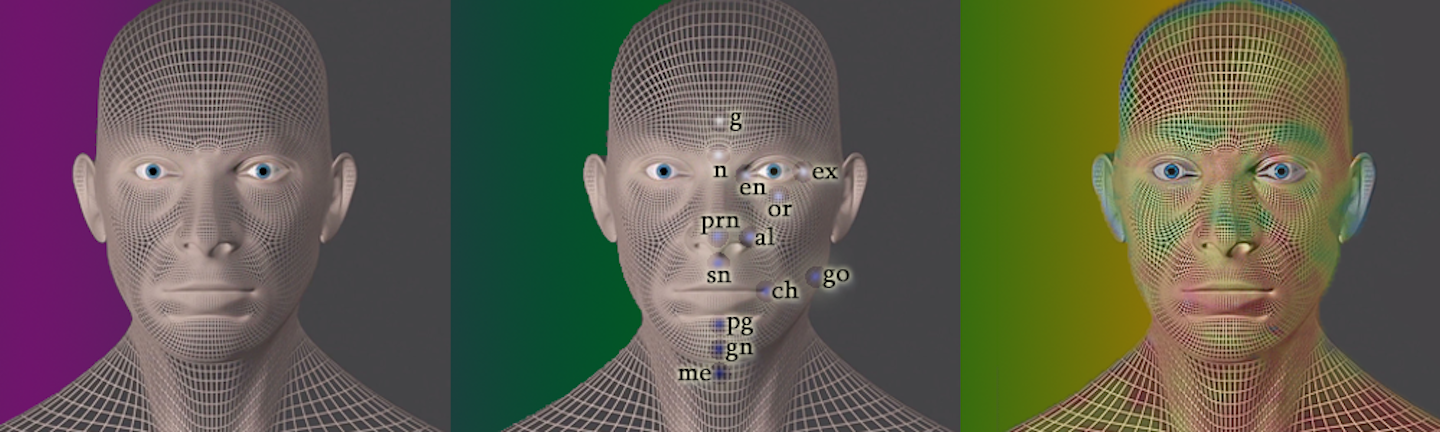
Wize is a mirror that its developers claim can monitor health with breath monitors, 3D scanners, video cameras, and imaging systems. It assesses cardio-metabolic risk through changes in face shape and circulation, signs of anxiety, and  breath tests for heart attack-inducing chemicals.  After a user looks into the mirror for one minute, a health score is produced, and tips for improving health are sent.

Categories
Assistive Technologies BCI Brain

Continuously correcting BCI technique improves precision

Stanford‘s Krishna Shenoy has developed a more precise brain-controlled cursor for a virtual keyboard using a technique that continuously corrects brain readings.

An algorithm analyzes the measured electrical signals that a prosthetic device obtained from sampled neurons. It adjusts  the signals so that the sample’s dynamics were more like baseline brain dynamics.

The thought-controlled keypad would allow a person with paralysis or ALS to run an electronic wheelchair and use a computer or tablet. Today an eye-tracking system is used to direct cursors, or a “head mouse, ” which tracks the movement of the head.  Both are fatiguing, and  neither provides the natural and intuitive control of readings taken directly from the brain.

Stanford University video detailing single trial dynamics of motor cortex and their applications to brain-machine-interfaces:

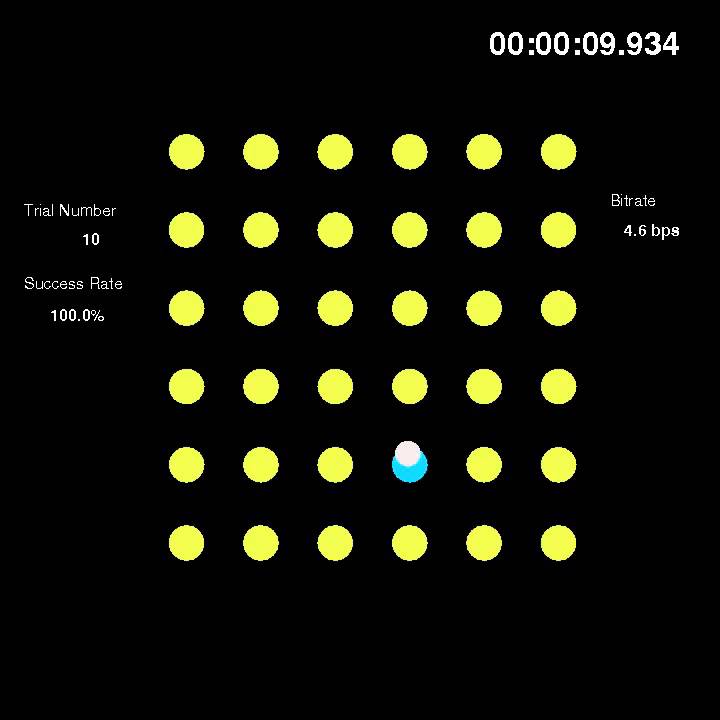
This video includes two clips. In the first, flashing targets on a virtual keypad are hit by monkeys (not shown) using their hands. The second clip also shows targets being hit. But this time, the motion is directed by an experimental device that taps into the monkey’s brain. This device discerns their intention to hit the target and translates this thought into an electronic command that controls a virtual cursor. In the first clip the monkeys hit 10 targets in 9.9 second with their hands. It takes 11.4 seconds to hit 10 targets using the thought-control device.

Categories
Cancer Sensors

Biochemical sensor helps refine cancer treatment

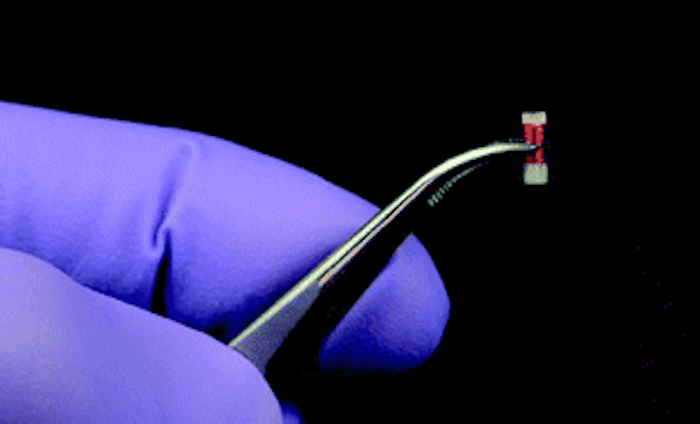
MIT professor Michael Cima is developing a tiny biochemical sensor that can be implanted in cancerous tissue during a biopsy.  It wirelessly sends  biomarker data to an external device,  allowing doctors to monitor progress, and adjust dosages or switch therapies accordingly.

The sensor fits into the tip of a biopsy needle. It contains 10 microliters of chemical contrast agents typically used for MRI, and an on-board circuit to communicate with the external reader. Real-time, on-demand data concerning two biomarkers linked to a tumor’s response to treatment, pH and dissolved oxygen, is provided.

The goal is to make treatments more targeted and precise, to improve their efficacy and reduce side effects.

Categories
Apps Ears

Video messaging app for the hearing impaired

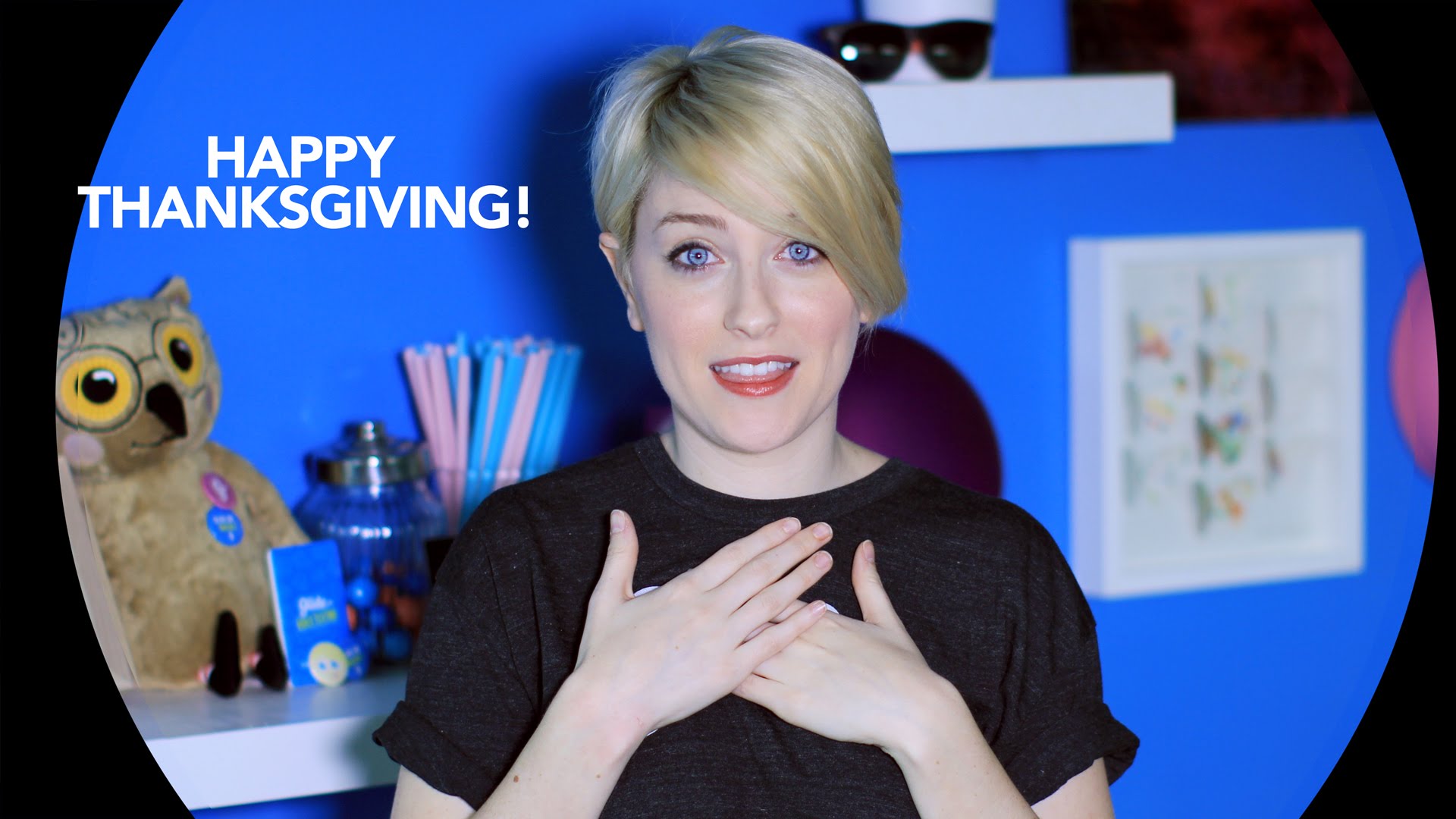
Glide combines the concepts of WhatsApp with Skype, enabling users to send short videos of themselves. It has become a popular communication tool for the hearing impaired, who use it for sign language messaging.

The app has 20 million registered users.  The company hopes to soon offer instant subtitles for sign language, and the ability to convert text into visual graphics.

Categories
Orthopedics

Gesture controlled driver’s seat improves ergonomics

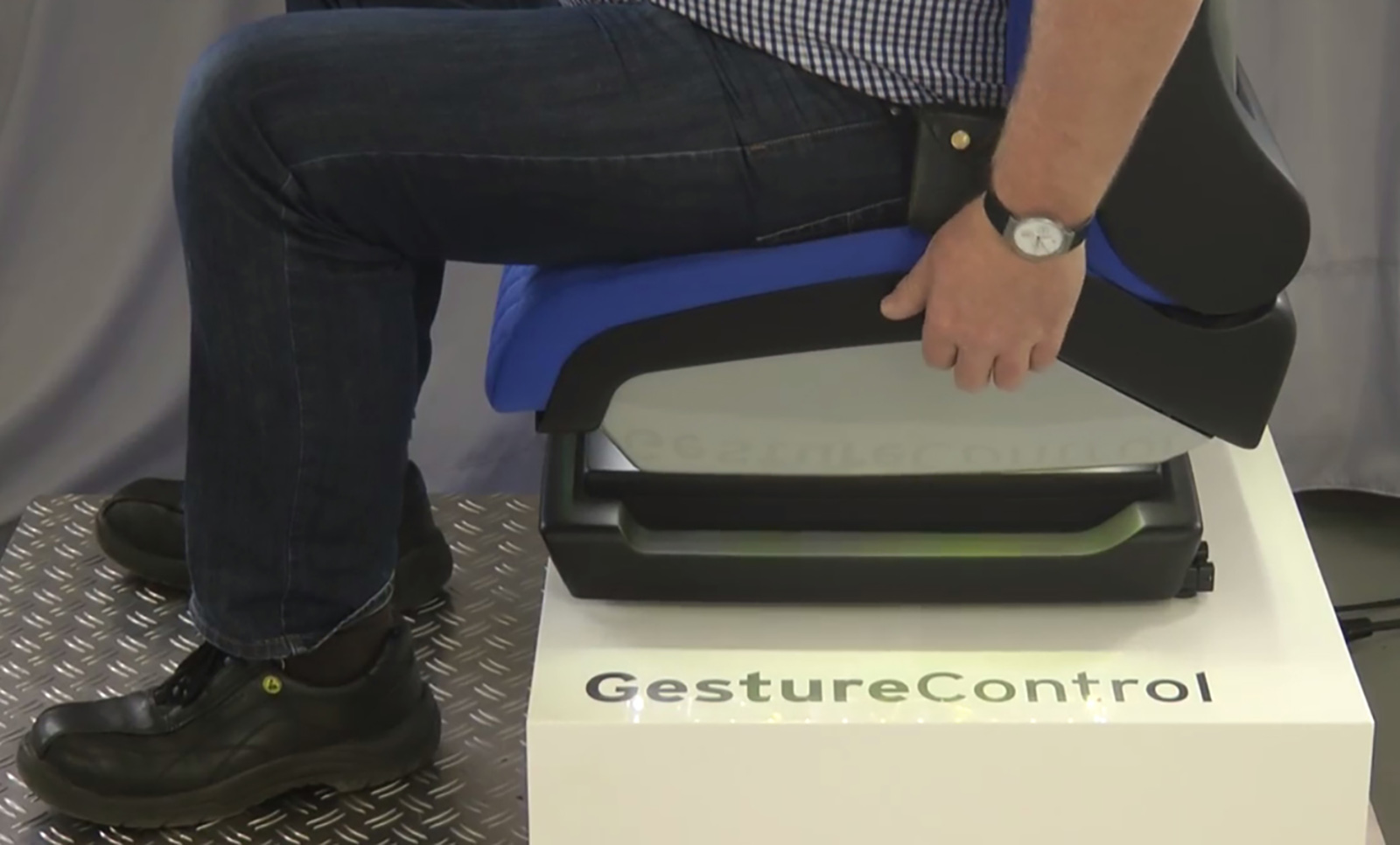
The Fraunhofer driver’s seat is adjusted with hand gestures to optimize ergonomics and prevent spinal strain.

Pressure responding piezoensors are integrated into the side of the seat to activate the motion controlled system. Seat positions can be stored. Proximity sensors detect changes in electrical fields, as triggered by hand motions. Software interprets the data and determines the hand’s direction of motion, moving the seat accordingly.  An algorithm enables multiple electrodes to be evaluated simultaneously.

Categories
Assistive Technologies

Paralyzed patients move legs with non-surgical stimulation

UCLA and Pavlov Institute‘s transcutaneous stimulation technique helped paralyzed patients regain voluntary movement without surgery.

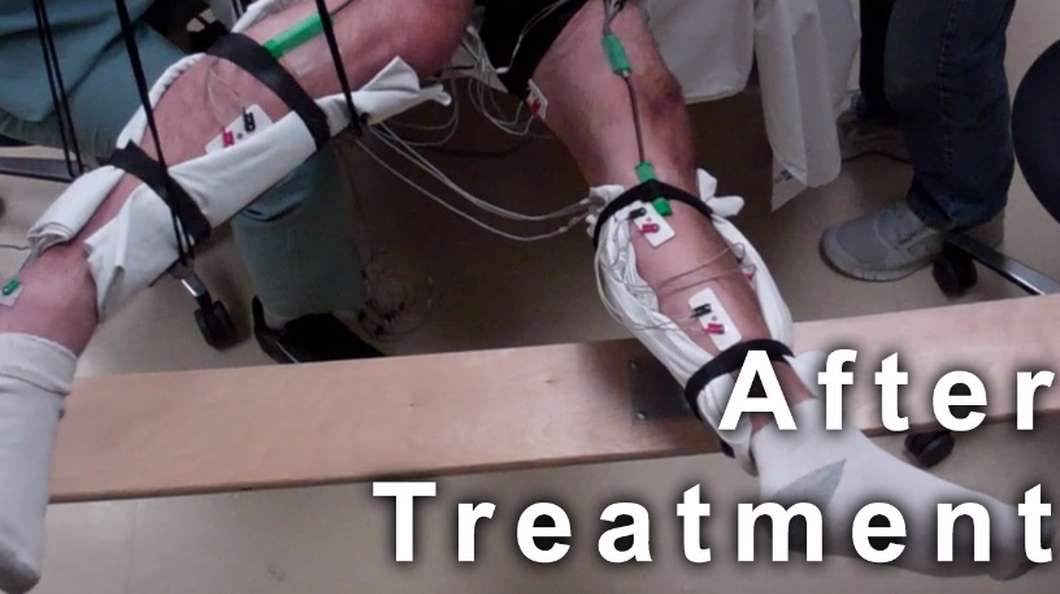
In a recent study, 5 men, who had been paralyzed for 2-6 years, moved their own legs (with out stimulation) after several weeks of electrical stimulation, physical therapy, and an experimental drug.

Transcutaneous stimulation delivers electrical current to the spinal cord, via electrodes placed on the lower back. This is the first time the stimulation was delivered non-invasively. Previously, an electrical stimulation device had to be surgically implanted on the spinal cord.

Categories
Conference

Jack Young interview at Wearable Tech + Digital Health NYC 2015

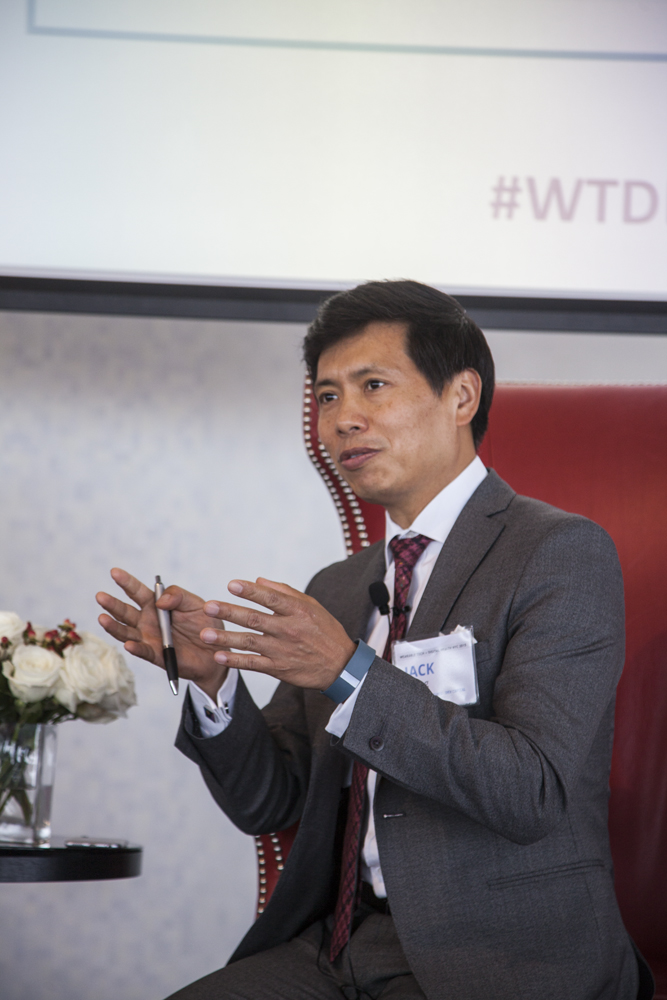
Startup Health‘s Unity Stoakes did a series of interviews at ApplySci’s recent Wearable Tech + Digital Health NYC 2015 conference.  Here is his discussion with Jack Young, General Partner at dRx Capital and Head of the Qualcomm Life Fund.  Click to hear Jack’s thoughts  about the future of wearables, venture capital strategy in healthcare, and the Fitbit IPO.

Photo by Yuko Torihara at Wearable Tech + Digital Health NYC 2015.

Categories
Sensors Wearables

Sensor pill for 3D colon imaging

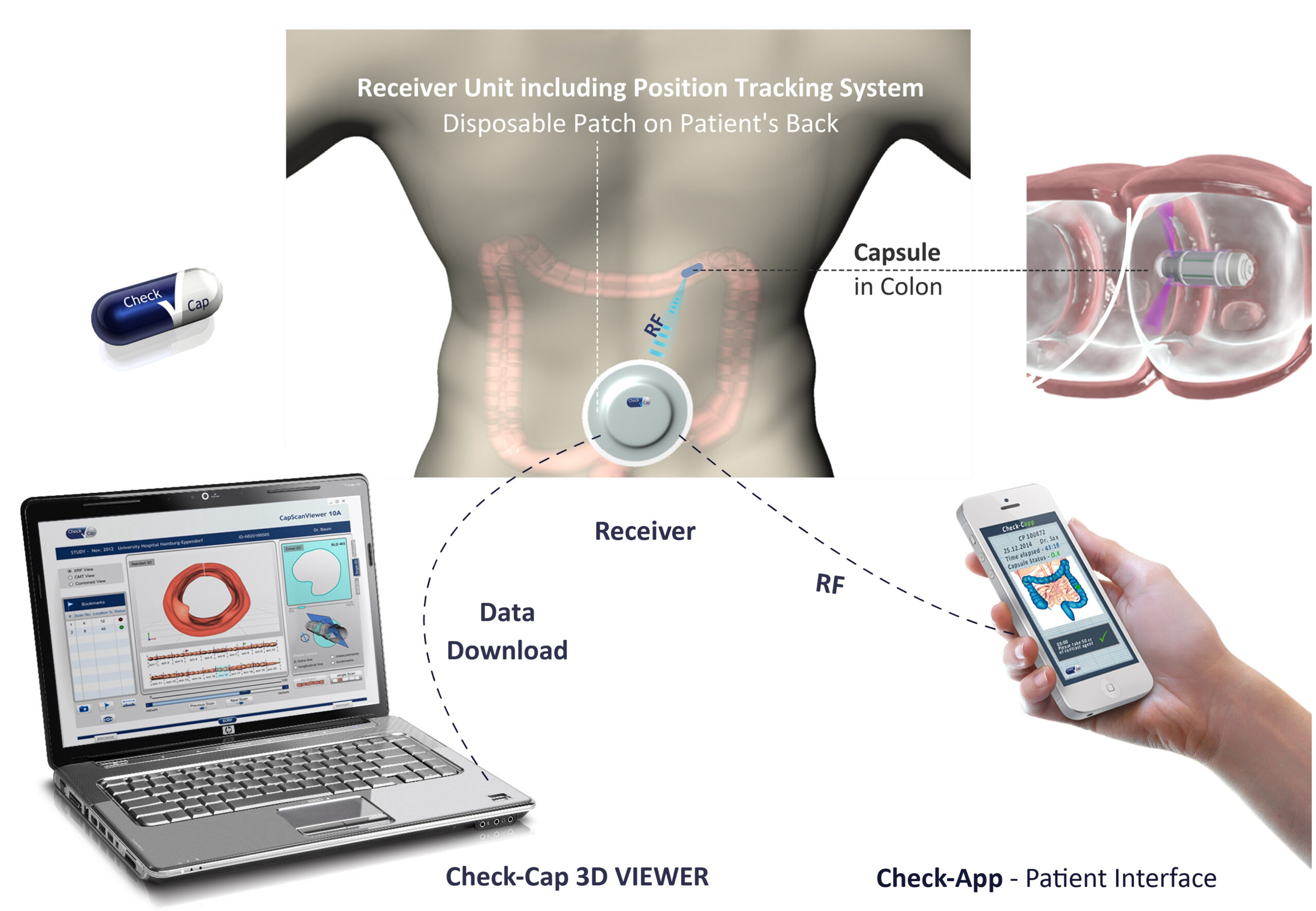
Check Cap, developed by Yoav Kimchy,  is a colon imaging sensor pill.  A patient takes small amounts of a contrast agent with meals.  The pill is swallowed, and after reaching the colon, a signal is emitted in every direction, providing 3D imaging. The data is sent to a wireless patch worn by the patient, and his/her doctor receives a rendering of the colon in 10 minutes.

The technology is based on a gallium nitride microchip that can withstand the high voltage needed by the sensors.  As it is miniaturized, its developers believe that it be used to scan narrower body parts, such as  blood vessels.

Check Cap said that a patient’s radiation exposure is equivalent to a chest-X-ray, or 1/300 of a CTC analysis.

Categories
Asthma Sensors

Street View cars map health-impacting pollutants

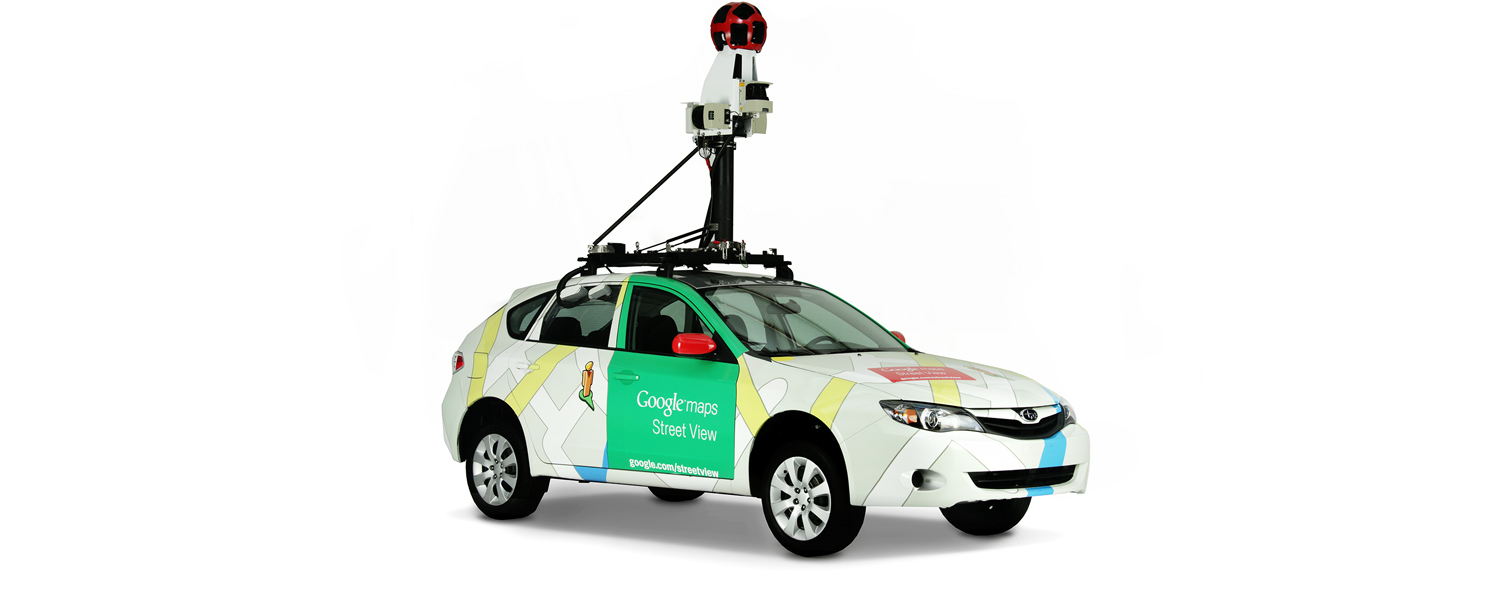
Google has partnered with Aclima to map urban air quality through Street View cars.

Mobile sensors on the  cars will  measure nitrogen dioxide, nitric oxide, ozone, carbon monoxide, carbon dioxide, and other  pollutants that can affect health.

A  experiment was conductedin Denver.  The cars drove for 750 hours, over 30 days, and gathered 150 million data points. The testing was done during the DISCOVER-AQ study conducted by NASA and the EPA.

The project will be expanded, beginning in San Francisco this fall.

Categories
Computer Vision

Deep neural networks for face recognition in darkness

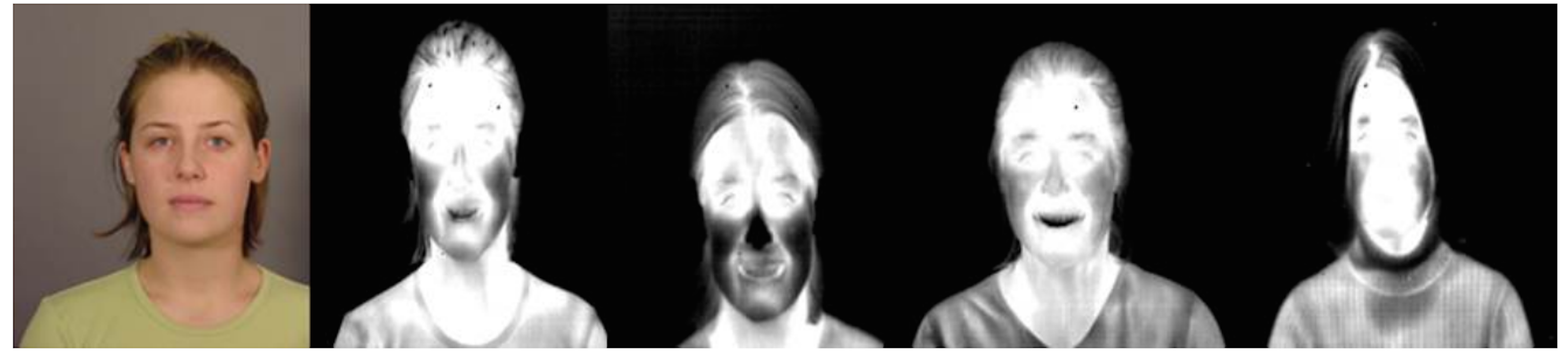
Karlsruhe Institute of Technology researchers have used the heat from one’s face to enable facial recognition in darkness. Thermal imaging creates an infrared picture, which can then be matched to a photograph taken in the light.

In a recent study, a “deep neural network” accurately identified faces in the dark 80 percent of the time when shown a large number of photos.  However,  the technology is at an early stage, and was only successful 55 percent of the time when presented with a single  image.