Categories
BCI Brain

EEG device enables thought controlled car

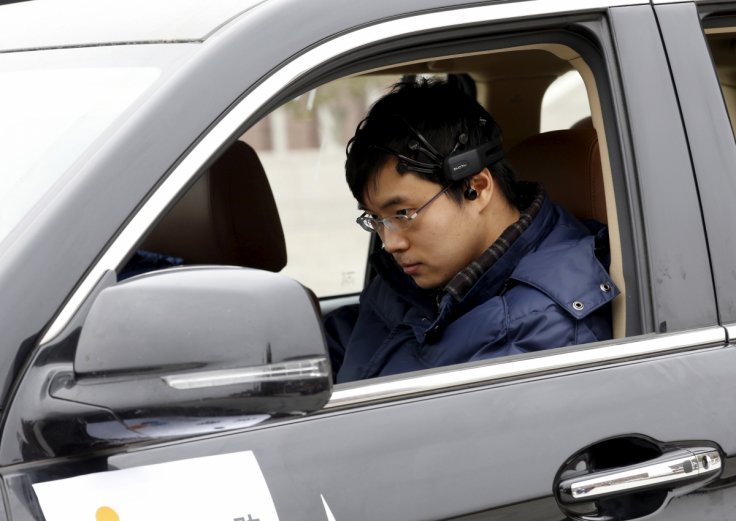
Duan Feng of Nankai University, in collaboration with Great Wall Motor, has developed a car that can be controlled with the brain.  A 16 sensor EEG device allows a driver to move the car forward and backward, stop, and lock and unlock the vehicle. At this point, fully operating the car with thoughts is not possible.

According to researcher Zhang Zhao, the goal is to create a way for the disabled to drive, and aid healthy people with a more “intellectualized driving mode.”

Click to view Reuters video.


Wearable Tech + Digital Health San Francisco – April 5, 2016 @ the Mission Bay Conference Center

NeuroTech San Francisco – April 6, 2016 @ the Mission Bay Conference Center

Wearable Tech + Digital Health NYC – June 7, 2016 @ the New York Academy of Sciences

NeuroTech NYC – June 8, 2016 @ the New York Academy of Sciences


Categories
Sensors Wearables Wounds

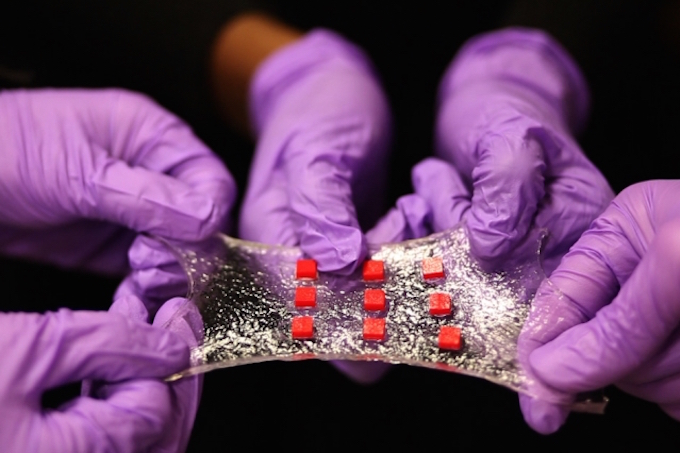
Flexible hydrogel bandage senses temperature, releases medicine

MIT’s Xuanhe Zhao has designed a bandage that  releases medicine in response to changes in skin temperature.  It can be programmed to light if  wound attention is required, such as when medicine is low.

The flexible,  gel-like material  incorporates temperature sensors, LED lights, other electronics, and tiny, drug-delivering reservoirs and channels.

Zhao believes that hydrogel coated electronics  will also be able to be used inside the body.  He suggested that implanted, biocompatible glucose sensors, or  soft, compliant neural probes could be created.


Wearable Tech + Digital Health San Francisco – April 5, 2016 @ the Mission Bay Conference Center

NeuroTech San Francisco – April 6, 2016 @ the Mission Bay Conference Center

Wearable Tech + Digital Health NYC – June 7, 2016 @ the New York Academy of Sciences

NeuroTech NYC – June 8, 2016 @ the New York Academy of Sciences
 

Categories
Babies Brain

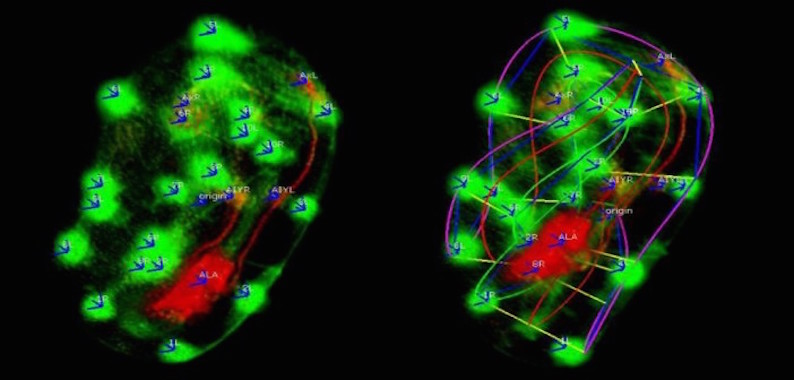
Toward embryo brain activity tracking

Hari Shroff and NBIB colleagues have developed open-source 3D software that might lead to the ability to track a human embryo’s brain activity and development.

To date, the technology has only been tested on worms and will be part of a 4D neurodevelopmental “worm atlas” that attempts to catalogue the formation of a worm’s nervous system.

Shroff believes that  it will enable the understanding of fundamental mechanisms by which human  nervous systems assemble. He expects that the concepts, such combining neuronal data from multiple embryos, can be applied to additional model organisms.


Wearable Tech + Digital Health San Francisco – April 5, 2016 @ the Mission Bay Conference Center

NeuroTech San Francisco – April 6, 2016 @ the Mission Bay Conference Center

Wearable Tech + Digital Health NYC – June 7, 2016 @ the New York Academy of Sciences

NeuroTech NYC – June 8, 2016 @ the New York Academy of Sciences
 

Categories
Diabetes

Needle-free blood draw + smartwatch

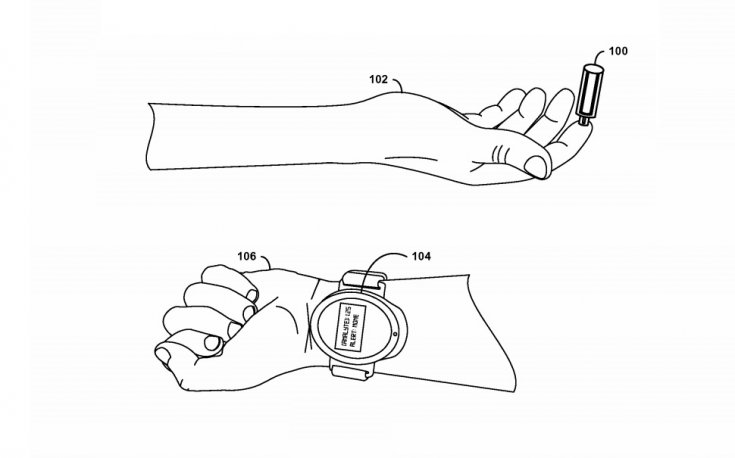
Google has filed a patent for a “needle-free blood draw” system that could be incorporated into a wearable.

The filing describes a machine that sends a pulse of gas into a barrel containing a “micro-particle” that can puncture the skin and draw a small drop of blood.

This could dramatically improve the management of diabetes, and continues Google’s diabetes initiative.  The company is  currently developing smart contact lenses and cloud-connected sensors to help monitor glucose.


ApplySci presents:

Wearable Tech + Digital Health San Francisco – April 5, 2016 @ the Mission Bay Conference Center

NeuroTech San Francisco – April 6, 2016 @ the Mission Bay Conference Center

Wearable Tech + Digital Health NYC  – June 7, 2016 @ the New York Academy of Sciences

NeuroTech NYC – June 8, 2016 @ the  New York Academy of Sciences

Categories
Brain Gaming

VR game to combat anxiety

Games designed to improve attention and memory are growing rapidly.   Now the neurogaming movement is tackling panic and stress.

Deep is an Oculus VR based game by Owen Harris that is meant to relieve symptoms of anxiety.

The headset, headphones, and  a belt that matches a player’s breathing  with on-screen movements, are used to encourage breathing patterns that relax the body and mind.

The creator tells users to “allow the game to sweep you into its relaxing embrace as it teaches you yogic breathing techniques that can relieve stress, anxiety and mild depression.”


WEARABLE TECH + DIGITAL HEALTH SAN FRANCISCO – APRIL 5, 2016 @ THE MISSION BAY CONFERENCE CENTER

NEUROTECH SAN FRANCISCO – APRIL 6, 2016 @ THE MISSION BAY CONFERENCE CENTER

WEARABLE TECH + DIGITAL HEALTH NYC – JUNE 7, 2016 @ THE NEW YORK ACADEMY OF SCIENCES

NEUROTECH NYC – JUNE 8, 2016 @ THE NEW  YORK ACADEMY OF SCIENCES


Categories
Apps Asthma Sensors Wearables

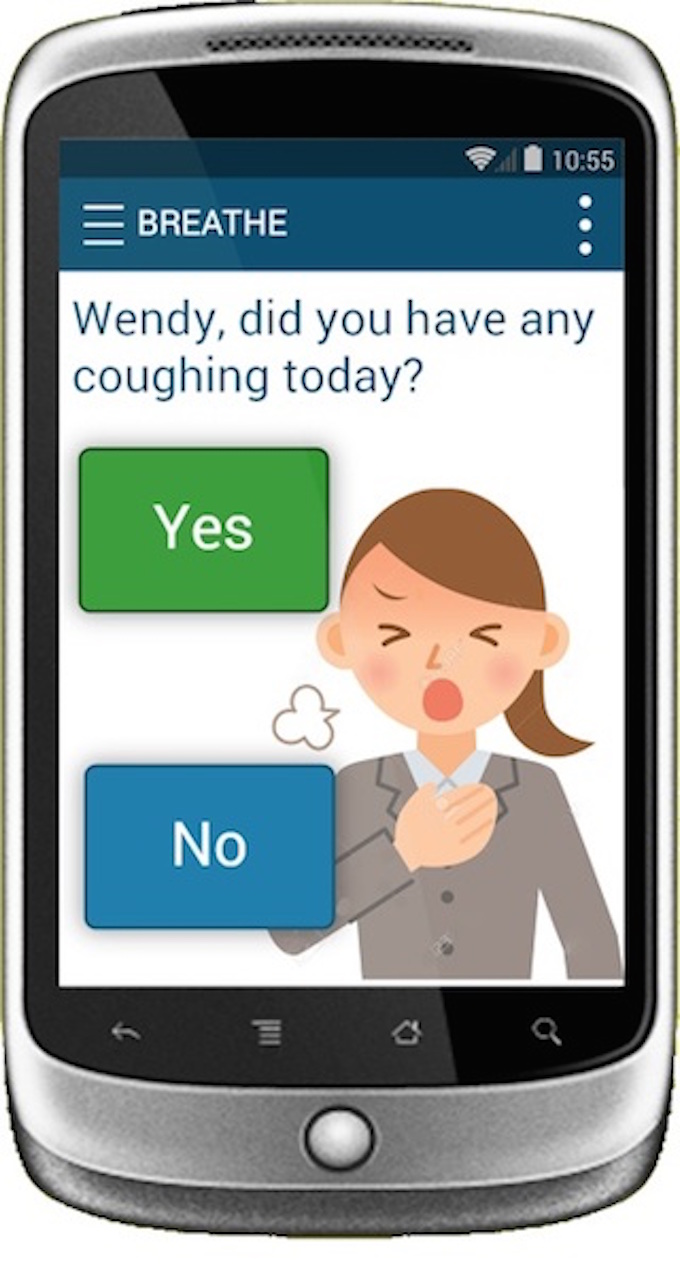
Wearable, home, school sensors + app predict asthma attacks

ApplySci is pleased to report another sensor-based initiative to combat asthma.

Alex Bui and colleagues from UCLA and USC are creating technology for smart phones and watches to identify asthma attack triggers.  The program is part of the National Institute of Biomedical Imaging & Bioengineering’s Pediatric Research using Integrated Sensor Monitoring Systems  initiative.

The  platform will transmit data to a phone from wearable sensors, and those placed in homes and schools. The information is sent to the cloud, where it will be integrated with  electronic health records and real-time weather, air quality, pollen count  reports.


WEARABLE TECH + DIGITAL HEALTH SAN FRANCISCO – APRIL 5, 2016 @ THE MISSION BAY CONFERENCE CENTER

NEUROTECH SAN FRANCISCO – APRIL 6, 2016 @ THE MISSION BAY CONFERENCE CENTER

WEARABLE TECH + DIGITAL HEALTH NYC – JUNE 7, 2016 @ THE NEW YORK ACADEMY OF SCIENCES

NEUROTECH NYC – JUNE 8, 2016 @ THE NEW YORK ACADEMY OF SCIENCES

Categories
Asthma Sensors Wearables

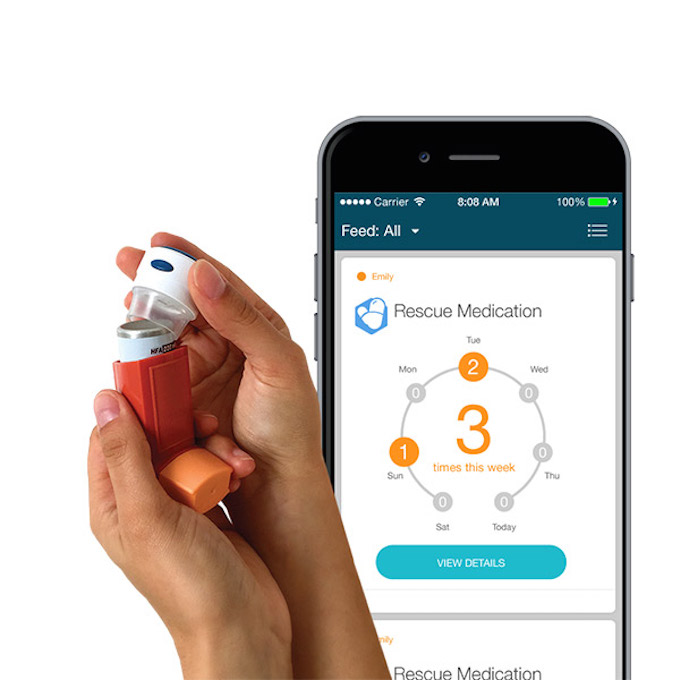
Medication sensing inhaler correlates adherence, attacks

Propeller Health and GSK are developing of an inhaler-integrated medication sensor that will automatically collect and record usage data.  The system combines sensors, mobile apps, analytics, and feedback for patients and caregivers.

The companies believes that it will help doctors better understand asthma and COPD, predict attacks, and reduce hospitalizations.

Information will be collected in a central data repository and analyzed for adherence patterns across patient populations, and correlations between adherence and safety, efficacy and economic outcomes.


WEARABLE TECH + DIGITAL HEALTH SAN FRANCISCO – APRIL 5, 2016 @ THE MISSION BAY CONFERENCE CENTER

NEUROTECH SAN FRANCISCO – APRIL 6, 2016 @ THE MISSION BAY CONFERENCE CENTER

WEARABLE TECH + DIGITAL HEALTH NYC – JUNE 7, 2016 @ THE NEW YORK ACADEMY OF SCIENCES

NEUROTECH NYC – JUNE 8, 2016 @ THE NEW YORK ACADEMY OF SCIENCES

Categories
Conference

Injectable nanotech device continuously monitors glucose

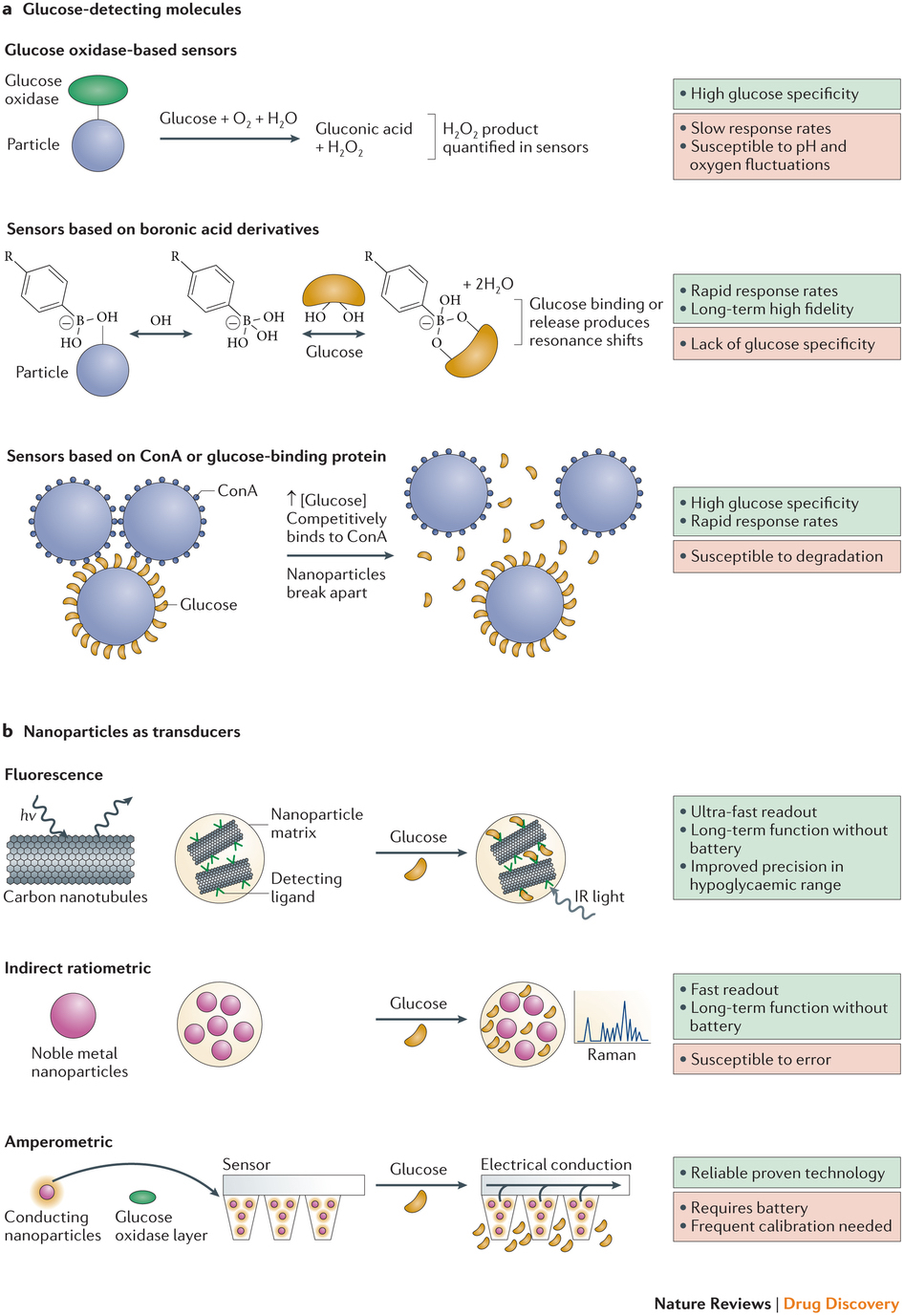
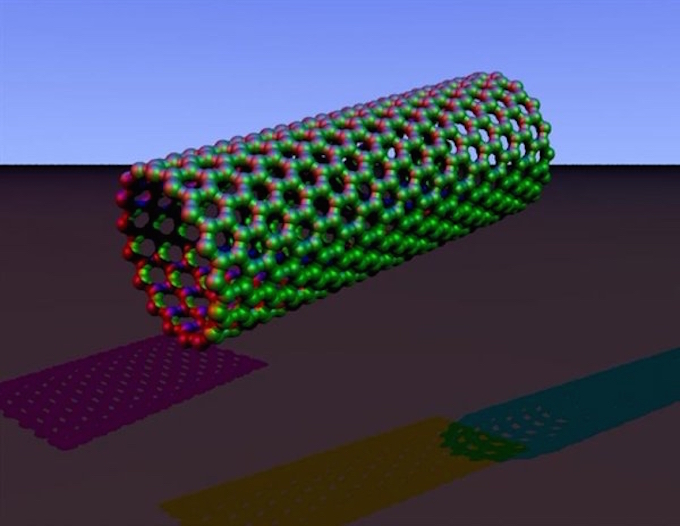
Kyungsuk Yum at the University of Texas is developing an internal, nanoscale device to continuously analyze blood sugar.   A near infrared optical biosensor nanotube is injected, and an optical scanner accesses data for constant monitoring .

Current continuous monitoring technology for diabetes requires a tube inserted through the abdomen.  This reads glucose levels in tissue, which is not as accurate as blood reading.  It must be calibrated several times per day, and changed every week.

The traditional glucometer system requires blood-drawing finger pricks throughout  the day.

WEARABLE TECH + DIGITAL HEALTH SAN FRANCISCO – APRIL 5, 2106 @ THE MISSION BAY CONFERENCE CENTER

NEUROTECH SAN FRANCISCO – APRIL 6, 2016 @ THE MISSION BAY CONFERENCE CENTER

WEARABLE TECH + DIGITAL HEALTH NYC – JUNE 7, 2016 @ THE NEW YORK ACADEMY OF SCIENCES

NEUROTECH NYC – JUNE 8, 2016 @ THE NEW YORK ACADEMY OF SCIENCES

Categories
Hormones Sensors

Real-time estrogen sensor

Natalie Plank and Victoria University colleagues have developed an estrogen sensor that sends an electrical signal when it detects the hormone in liquids.   The device attracts DNA pieces called aptamers, which attach to estrogen molecules, to carbon nanotubes. The nanotubes act like transistors, emitting an electric signal if estrogen molecules are present.

The technology could be used with body fluids to track fertility, or test for hormone contamination in waterways.

ApplySci believes that hormone sensing will be a focus of the next generation of wearables, and will improve health monitoring.

WEARABLE TECH + DIGITAL HEALTH SAN FRANCISCO – APRIL 5, 2016 @ THE MISSION BAY CONFERENCE CENTER

NEUROTECH SAN FRANCISCO – APRIL 6, 2016 @ THE MISSION BAY CONFERENCE CENTER

WEARABLE TECH + DIGITAL HEALTH NYC – JUNE 7, 2016 @ THE NEW YORK ACADEMY OF SCIENCES

NEUROTECH NYC – JUNE 8, 2016 @ THE NEW YORK ACADEMY OF SCIENCES

Categories
Cancer Data Machine Learning

Machine learning based cancer diagnostics

Search engine giant Yandex is using its advanced machine learning capabilities to detect cancer predisposition.

Yandex Data Factory has partnered with AstraZeneca to develop the RAY platform, which analyzes DNA testing results, generates a report about patient genome mutations, and provides treatment recommendations and side effect information. Testing will begin next month.

The two companies have signed a cooperation agreement  to launch big data projects in epidemiology, pathologic physiology, diagnostics and treatment of diseases (focused on contagious diseases, cancer, endocrinology, cardiology, pulmonology, and psychiatry).

WEARABLE TECH + DIGITAL HEALTH SAN FRANCISCO – APRIL 5, 2016 @ THE MISSION BAY CONFERENCE CENTER

NEUROTECH SAN FRANCISCO – APRIL 6, 2016 @ THE MISSION BAY CONFERENCE CENTER

Categories
3-D Printing Brain

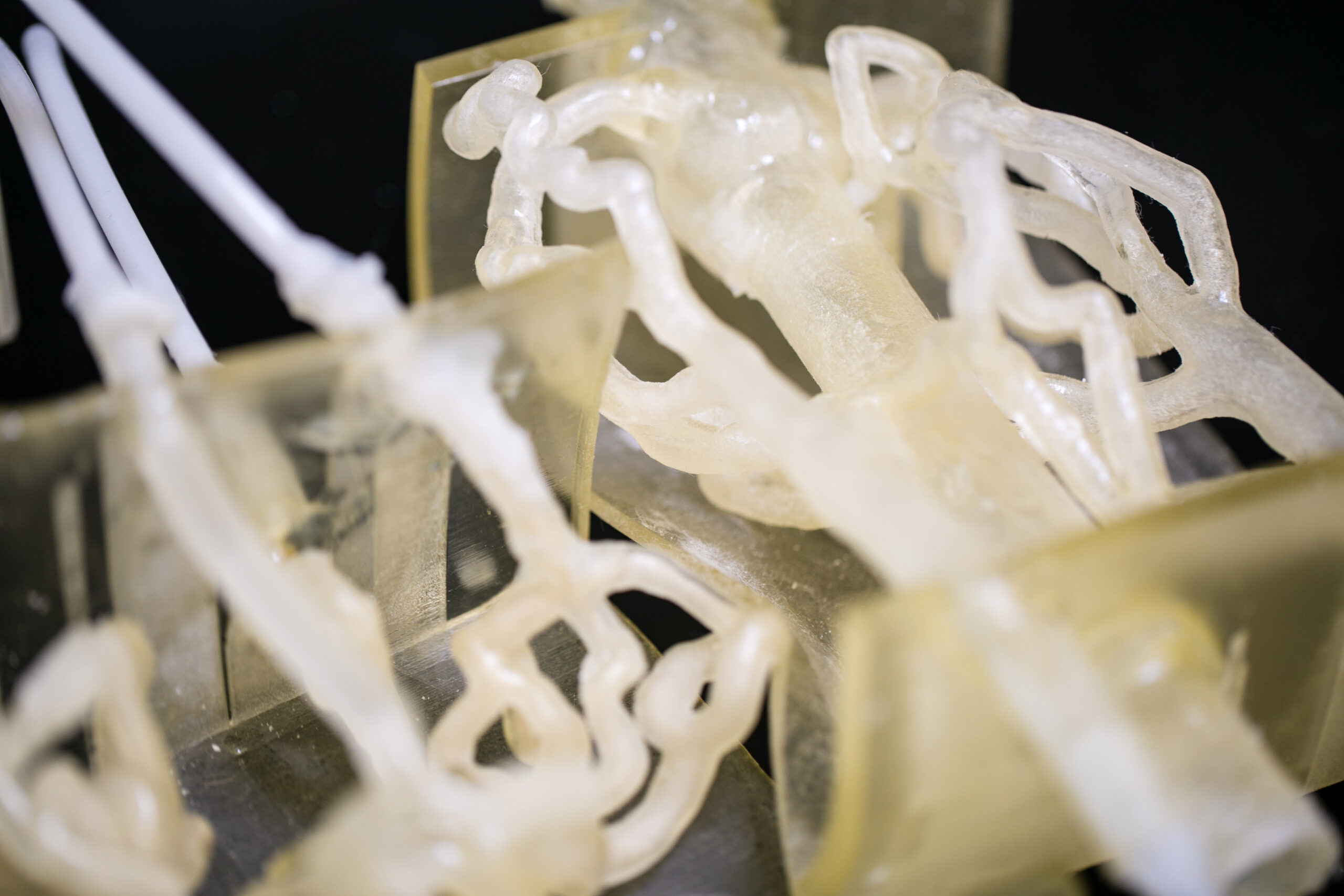
3D printed model for brain aneurysm surgery planning

Stratasys and the Jacobs Institute have used 3D printing for brain surgery planning in an effort to reduce risk. Anatomical models of a patient’s entire brain vessel anatomy were 3D printed before she underwent an aneurysm procedure.

The replica, built of a polymer that mimics human tissue, allowing the surgeons to plan their approach and practice the operation, was based on CT scans.

In this case. the accurate model enabled surgeons to fine-tune the procedure.  “While we were doing that mock procedure, we realized that we had to change some of the tools we wanted to use, given her anatomy,” said  Adnan Siddiqui, Jacobs’ Chief Medical Officer.

WEARABLE TECH + DIGITAL HEALTH SAN FRANCISCO – APRIL 5, 2016 @ THE MISSION BAY CONFERENCE CENTER

NEUROTECH SAN FRANCISCO – APRIL 6, 2016 @ THE MISSION BAY CONFERENCE CENTER

Categories
Brain Gaming Seniors

Interactive senior health and brain training app

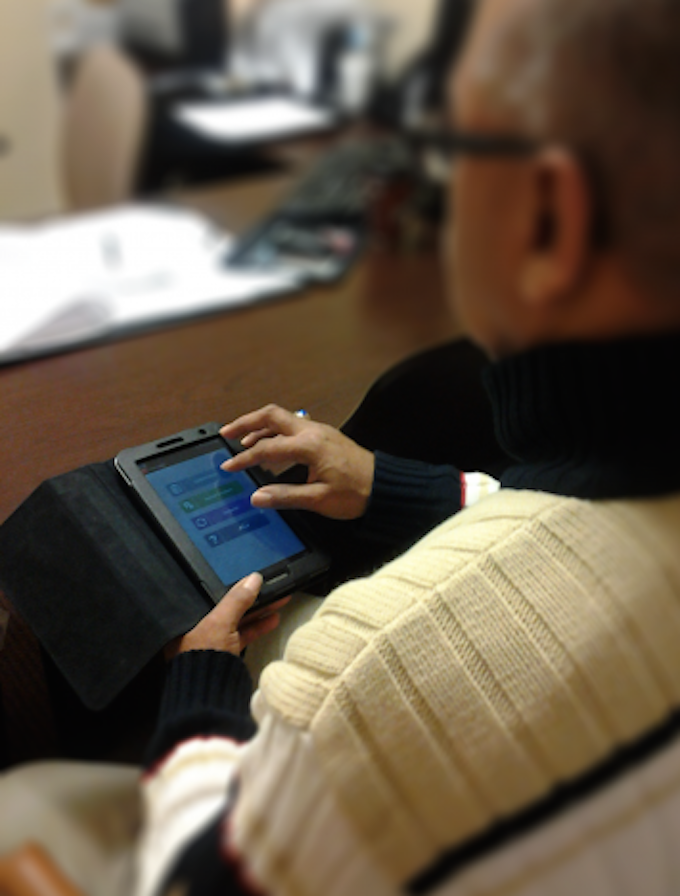
Notre Dame’s Nitesh Chawla has created eSeniorCare, a personalized, social app to help seniors age in place.

Several existing apps  track data.  eSeniorCare is meant to engage and stimulate seniors, and be interactive.  Users can connect with carers by sending questions and concerns through text or voice recordings.

Health goals are tracked and sent to supporters who can provide guidance and motivation.  Video, audio and text medication reminders can be sent.  Stimulating brain games, designed to enhance cognition and prevent degeneration, can be played.

The goal is senior independence, combined with a support system with enough data to proactively reach out when needed.

WEARABLE TECH + DIGITAL HEALTH SAN FRANCISCO – APRIL 5, 2016 @ THE MISSION BAY CONFERENCE CENER

NEUROTECH SAN FRANCISCO – APRIL 6, 2016 @ THE MISSION BAY CONFERENCE CENTER