Categories
Brain

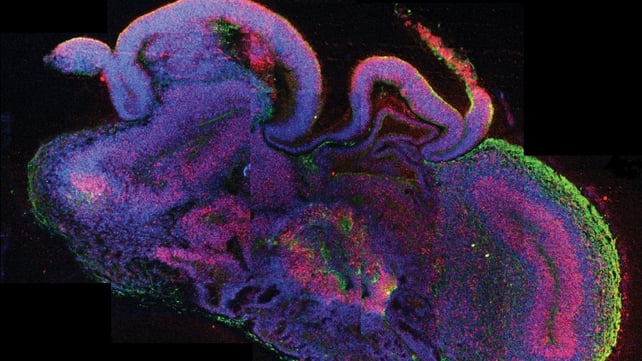
Vienna scientists create 3-D human brain tissue from stem cells

http://www.technologyreview.com/news/518716/researchers-grow-3-d-human-brain-tissues/

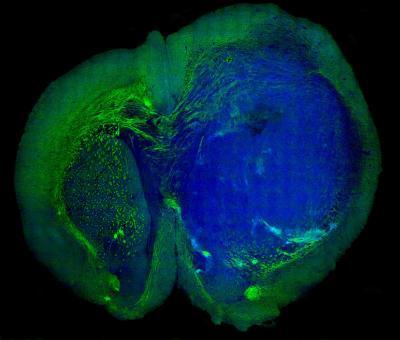
Scientists at the Austrian Academy of Sciences have turned human stem cells into pea-sized mini-brains with a neural structure similar to the brain of a developing embryo.  These “cerebral organoids”, as they are termed formally, are the best living model of a human brain created to date.

The researchers have already used their mini-brains to investigate one neuronal disorder, microcephaly, in which the brain does not grow properly. They hope to apply the technique to more complex conditions such as autism and schizophrenia, for which no good animal models are available.
Categories
BCI Brain Conference

Human-to-human brain interface – UW researcher controls colleague’s movement

http://www.washington.edu/news/2013/08/27/researcher-controls-colleagues-motions-in-1st-human-brain-to-brain-interface/
University of Washington researchers have performed what they believe is the first noninvasive human-to-human brain interface, with one researcher able to send a brain signal via the Internet to control the hand motions of a fellow researcher.

Using electrical brain recordings and a form of magnetic stimulation, Rajesh Rao sent a brain signal to Andrea Stocco on the other side of the UW campus, causing Stocco’s finger to move on a keyboard.

While researchers at Duke University have demonstrated brain-to-brain communication between two rats, and Harvard researchers have demonstrated it between a human and a rat, Rao and Stocco believe this is the first demonstration of human-to-human brain interfacing.

Magnetic stimulation as a direct brain communication channel is very intriguing.

Categories
Babies Monitoring Respiratory Sensors Sleep Wearables

Crowdfunded “smart sock” monitors baby’s breathing

http://www.owletcare.com

Owlet Baby Monitors has created a baby “smart sock” with sensors that transmit a child’s heart rate, oxygen levels, skin temperature, sleep quality, and sleep position (rollover alerts) to a parent’s smartphone.  The company has launched a crowdfunding campaign as it goes through the FDA approval process.

Categories
EEG mHealth Monitoring

Non-invasive EEG ear device to detect seizures

http://www.technologyreview.com/news/518356/device-could-spot-seizures-by-reading-brainwaves-through-the-ear/

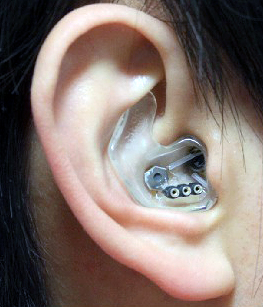
Danilo Mandic at Imperial College in London has developed an EEG device that can be worn inside the ear, like a hearing aid.  It will enable scientists to record EEGs for several days at a time,  allowing doctors to monitor patients who have recurring problems such as seizures or microsleep.

By nestling the EEG inside the ear, a lot of signal noise usually introduced by body movement is avoided. The engineers can also ensure that the electrodes are always placed in exactly the same spot to make repeated readings more reliable.

Categories
Apps mHealth Monitoring Sensors

Crowdfunded breast exam sensor and software

http://eclipsebreasthealth.com

Eclipse Breast Health Technologies has launched a crowdfunding campaign to test and eventually bring to market a wireless sensor meant to aid in the early detection of breast cancer and the tracking of patients being treated for the disease.  The campaign is meant to support the company as it goes through the FDA approval process.  With the simplicity of the home self-check, and  the potential vast amount of data that the company can gather on its servers, this is a potentially disruptive clinical tool.  Clearly those cases where the device did not detect cancer when it should have will make or break this product.

The system consists of a handheld imaging device paired with imaging software that tracks changes in breast density over time, and also incorporates an element of social networking. Eclipse says the device, which uses what the company calls “transphotonic” technology – combining low-energy photons and light sensors, without the need for radiation – is as much as five times as sensitive as the human hand.

The imaging device links wirelessly or by USB to a PC, smartphone or tablet, where a Web application creates a visual representation of the self-exam and helps quantify observations. Data is uploaded to patient accounts on a platform that calls Pink Cloud. From there, women can compare readings over time, share the information with their physicians or connect with others on Pink Cloud, which incorporates a social network of Eclipse users.

Categories
AI Apps Assistive Technologies Brain mHealth Monitoring Seniors Sensors

Personalized robot companion for seniors

http://cordis.europa.eu/fetch?CALLER=OFFR_TM_EN&ACTION=D&RCN=11525

A European consortium of research institutes, universities and technology companies has developed a highly customizable robot companion to help seniors to maintain their quality of life, stay healthy and avoid social exclusion.

The robot, a mobile wheeled semi-humanoid figure equipped with cameras, sensors, audio, and a touch screen interface, can remind users to take their medicine, suggest they have their favorite drink, or prompt them to go for a walk or visit friends if they haven’t been out for a while. As part of a larger smart-home environment that can include smart clothing to monitor vital signs, the system can monitor user’s health and safety, and alert emergency services if necessary.

Categories
Cancer Conference

Eliminating sugar slows cancer growth

http://www.scotsman.com/news/health/cutting-off-sugar-could-stop-cancer-growth-1-3024411

Old but important news: Eliminating sugar can slow cancer growth.

Researchers were aware that all cancer cells are attracted to sugar, grabbing it from the blood before using it to fuel their growth.  In breast cancer the process involves binding proteins called CtBPs together to form pairs known as dimers. These in turn help the cells to multiply and proliferate.  Dr Jeremy Blaydes of the University of Southampton found that chemicals called cyclic peptide inhibitors can block CtBPs and prevent the dimers forming.  The most successful of CtBP blocker, known as CP61, is now being developed as a potential new breast cancer drug.

This concept was put forth in the lecture given by Otto Warburg at his Nobel ceremony in 1931.  The short story: cancerous cells rely more on sugar for their energy consumption than normal cells.

In related news, a new technique for detecting cancer by imaging the consumption of sugar with MRI  has been unveiled by University College London scientists.

Categories
Apps Data Heart mHealth Monitoring Sensors

Elfi-Tech – non-invasive sensor captures more meaningful health data

http://elfi-tech.com

Elfi-Tech of Israel, led by Dr. Ilya Fine,  has disrupted digital healthcare.  They are the only Israeli finalist in the Nokia XCHALLENGE competition, which “envisions a future of access to affordable, personalized healthcare through sophisticated sensing technologies”.  The company has developed a sensor that is more suitable as a continuous monitor with minimal discomfort. This is due to lower power consumption of the laser technology and less of a need to be very tightly secured to skin. Perhaps its most exciting feature is the non invasive measurement of many blood flow parameters, providing a more complete cardiac perspective at home.

Categories
Brain

MRI identified brain neuromarkers predict response to antipsychotic medications

http://archpsyc.jamanetwork.com/article.aspx?articleid=1727437

Dr. Paola Dazzan and researchers at King’s College London have identified neuroimaging markers in the brain which could help predict whether people with psychosis respond to antipsychotic medicatins or not.

The team used MRI to scan the brains of 126 people – 80 who had experienced a first episode of psychosis and 46 healthy controls.  The scans were done shortly after the psychotic episodes, and the participants were assessed again 12 weeks later to see whether symptoms had improved after initial treatment with antipsychotic medications.
The researchers looked at a feature of the brain called “cortical gyrification” – the extent of folding or wrinkling of the cerebral cortex, the outermost sheet of brain tissue that plays a key role in memory, language and consciousness.  They found that people who did not respond to treatment had less gyrification in many brain regions – particularly in areas considered important in psychosis such as the temporal and frontal lobes.

Categories
Apps Data Monitoring Wearables

Health tracking sensors embedded in commonly used items

http://teddytheguardian.com/fp-sections/about/

Health tracking technology is becoming increasingly accessible and aesthetically pleasing. Examples include Teddy the Guardian, a cute teddy bear used to monitor children’s health.  It measures a child’s heart rate, blood pressure, oxygen saturation, and body temperature, and sends the data using wireless technologies to a paqrent’s smartphone.  Miniature and advanced sensors will continue to enable product designers to discreetly incorporate vital sign sensing technology into commonly used objects.  We look forward to more developments in this fast-growing segment of the continuous monitoring industry.

Categories
Conference

Piezo-Phototronic LEDs may help robots feel

http://www.nature.com/nphoton/journal/vaop/ncurrent/full/nphoton.2013.191.html

In a related development to Berkeley’s touch responsive e skin, Georgia Tech Professor Zhong Lin Wang  has proposed a new “piezo-phototronic” approach to the human-machine interface.  Zinc-oxide nanowires serve as tiny LEDs which have an emission intensity dependent on the local strain put on them.  The nanowire array could act as artificial skin for robots to give them human-like touch sensitivity.  Additional uses include inkless fingerprint scanners, biological imaging, or performance enhancement of micro-electro-mechanical systems.  ApplySci hopes that this technology will find its way into body tactile sensors in the near future.

Categories
Apps Conference Crowdfunding Data fitness Monitoring Wearables

Angel Health Monitor – Open platform, wearable vital sign sensors

http://www.angelsensor.com/index.html

The Angel Health Monitor is an open platform and SDK that senses motion and acceleration, skin temperature, blood oxygen saturation, and heart rate.  It was created by Eugene Jorov in Israel and will launch a crowdfunding campaign soon.  Developers will be able to use Angel to create apps for iPhone, Android, and other devices that support Bluetooth 4.0. Their SDK, drivers and app templates will be released as open source.